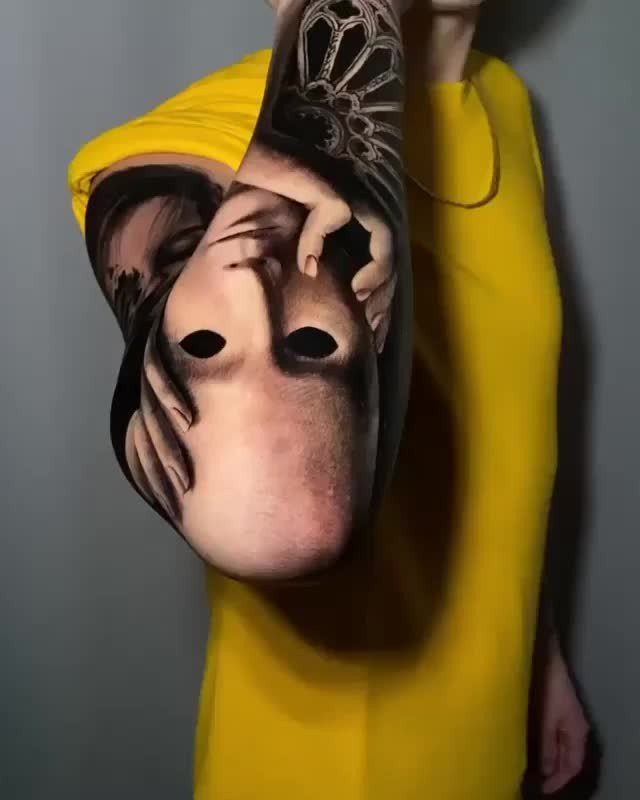
Black and grey realism builds dimension through shading alone, from solid black to nearly bare skin, and the style ages better than color because there is no pigment to fade or shift.
The choice comes down to subject and placement: a portrait needs an artist with repeatable accuracy and a spot that won’t distort over time, while a samurai sleeve or guardian lion takes longer sessions and costs more because of the layering and texture work involved.
A samurai sleeve takes months and runs into the thousands, so commit to finishing it or pick a single piece that fits one area cleanly.
1. Black and Grey Realism
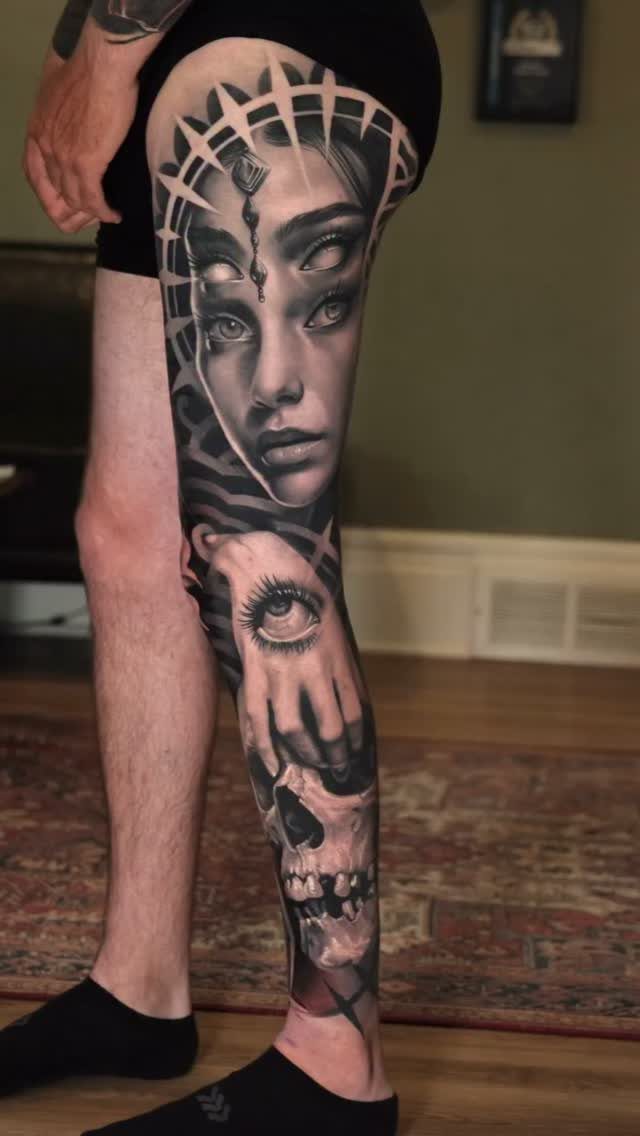
Black and grey realism strips out color and builds dimension entirely through shading.
The result looks almost photographic when an artist nails the gradation, but it takes someone who can push value all the way from solid black to nearly bare skin without banding or muddiness.
This style ages well. Without color pigment to fade or shift, your tattoo holds its contrast longer than full-color work.
I would put a piece like this on an area with enough real estate to let the detail breathe: thigh, back, ribs, or wrapping the arm from shoulder to wrist.
Black and gray realism leans on value rather than outline. Instead of bold black lines holding shapes together, the forms are defined by light and shadow, the same way a photograph or a charcoal drawing works.
2. Portrait Tattoos
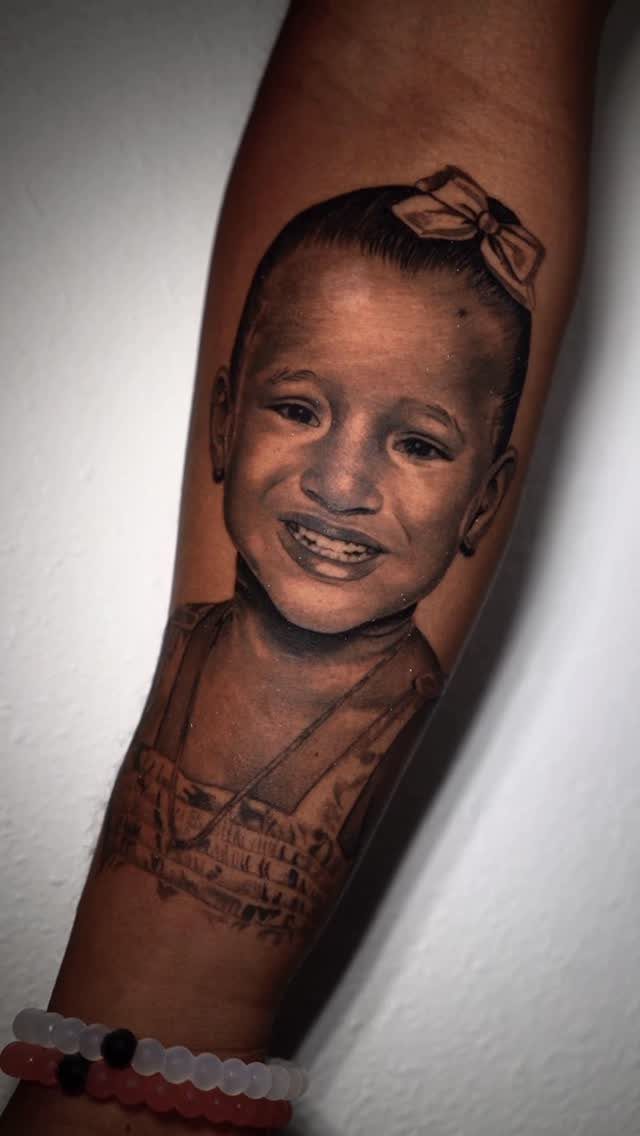
Portrait tattoos capture a specific face, and the margin for error is narrow.
If the proportions are even slightly off, the likeness fails. You need an artist whose portfolio shows repeatable accuracy, not one good example.
Placement matters. Forearms and upper arms move less than ribs or thighs, which helps the tattoo hold its shape over time.
I would avoid areas that gain or lose weight easily. Faces are hard enough to get right without adding distortion years later.
Expect to pay more. A portrait takes longer than most other black and grey work, and the skill required justifies the rate.
3. Fine Line Tattoos
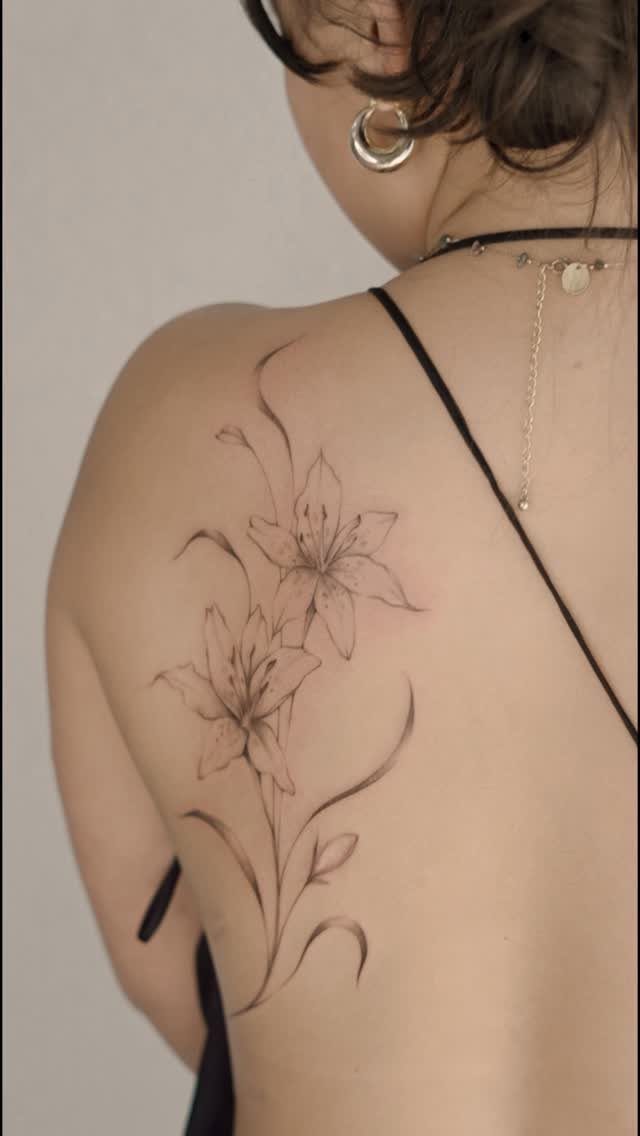
Fine line tattoos rely on thin, precise needles to create delicate detail. You get a soft, elegant look that feels less bold than traditional realism, but the lines may not hold as long.
Lines this thin can blur or lose sharpness faster than heavier work, especially on hands, feet, or anywhere skin moves a lot.
I would place a fine line piece somewhere relatively flat and low-friction: upper back, shoulder blade, forearm. Keep it out of direct sun and the lines will hold better over time.
4. Animal and Wildlife Tattoos
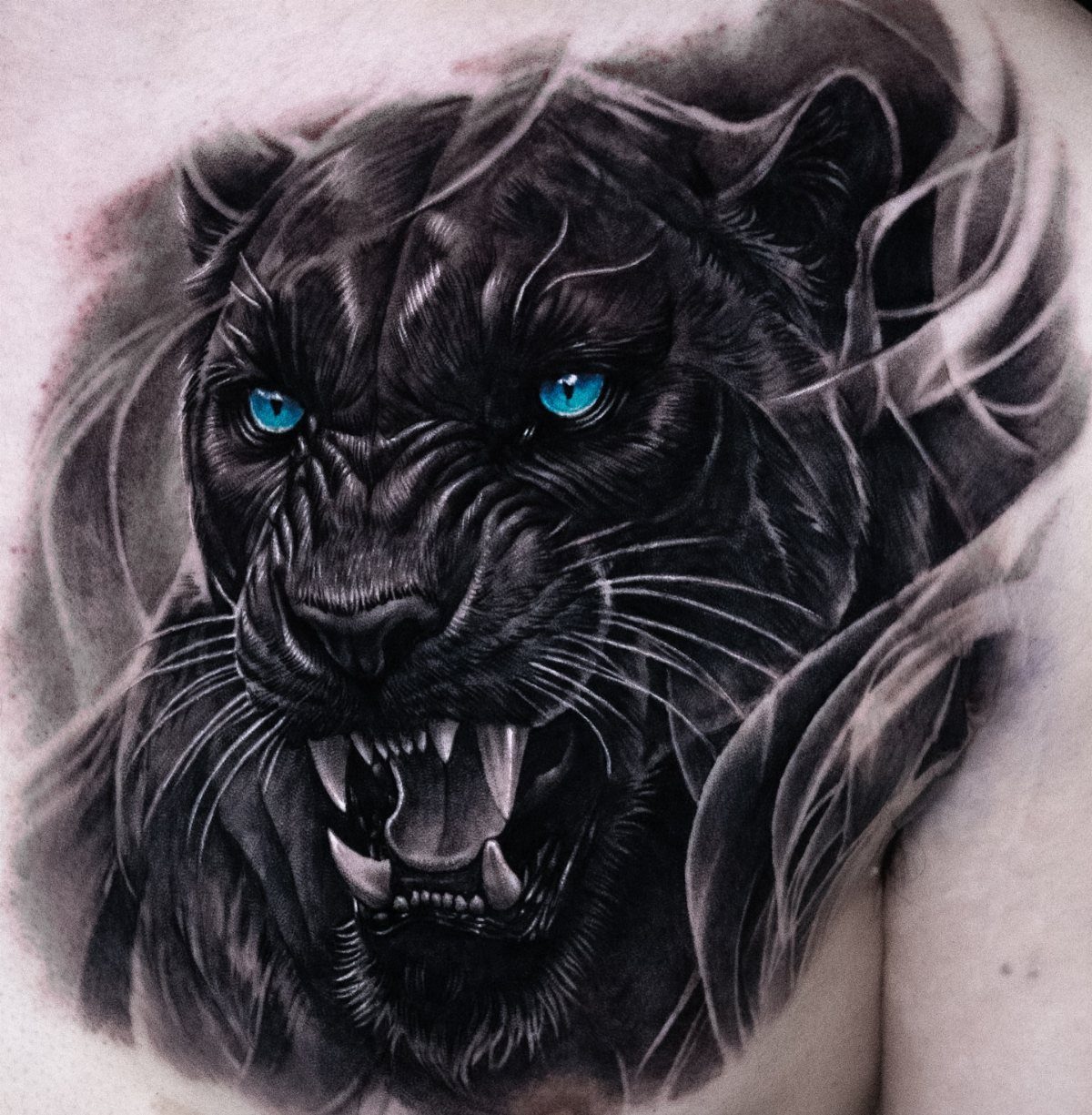
Animal tattoos in black and grey realism lean on texture and contrast to sell the fur, feathers, or scales.
A panther like this one depends on deep blacks and tight highlights to separate the form from the background. The blue eyes here add a single color accent, which some artists will do without switching to full color.
Muscles and curved surfaces work well for animals. The shoulder, chest, calf, or thigh all give you enough space to show the full head or body without cramping the composition.
Pick an animal that means something to you. This is permanent, and a random animal rarely holds up.
5. Skull and Dark Art
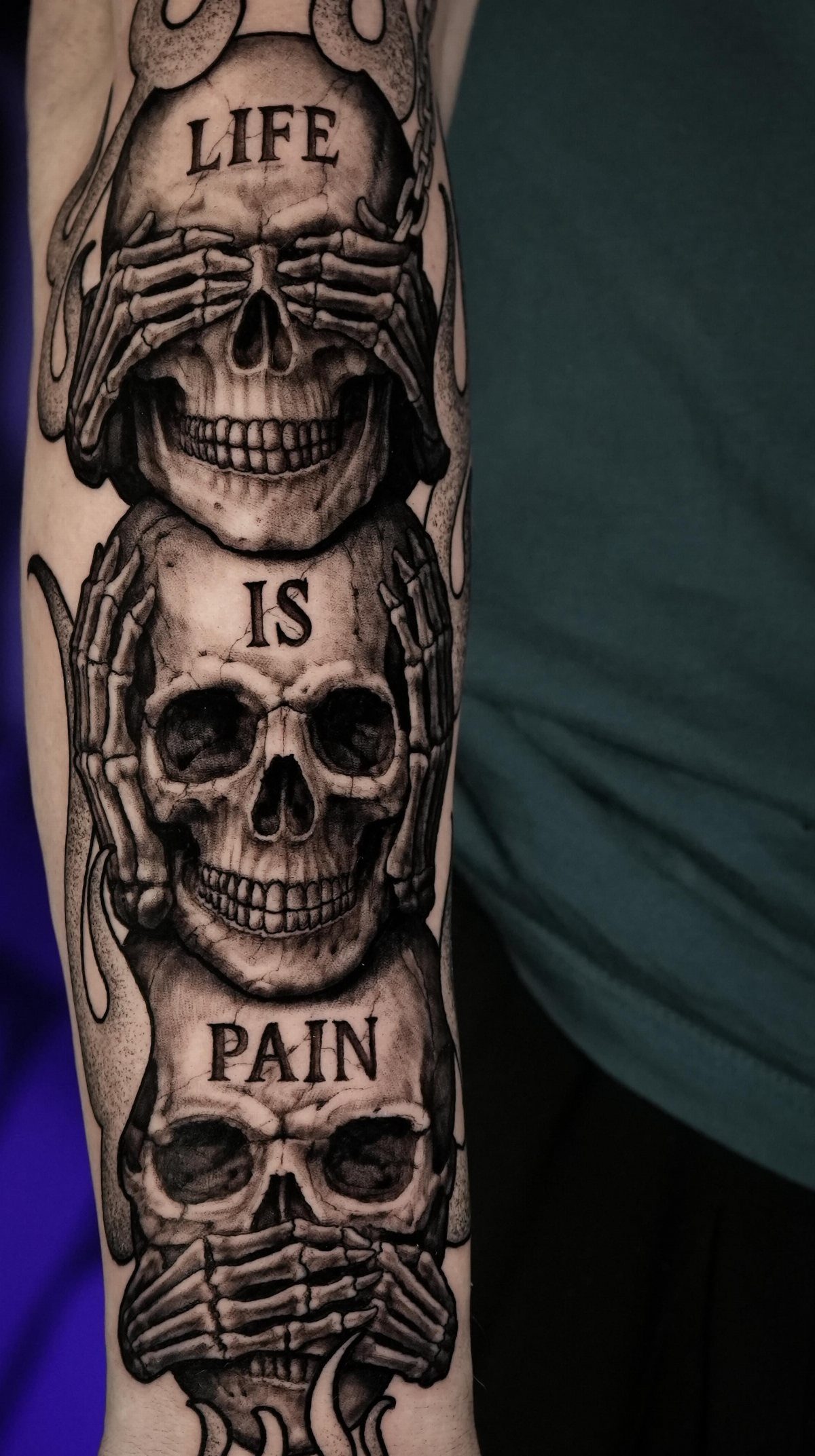
Skulls and dark imagery give you a straightforward way to commit to a macabre aesthetic. The hands framing the skulls here add composition and tie the piece together visually.
Text is optional, but if you include it, keep it short. Long passages crowd the design and often age poorly as the letters blur.
Placement on the arm lets you cover it when needed, which matters if your workplace has restrictions. Sleeves and forearms are the most common spots for this style, though I have seen strong versions on the ribs and chest.
6. Rose and Floral Tattoos
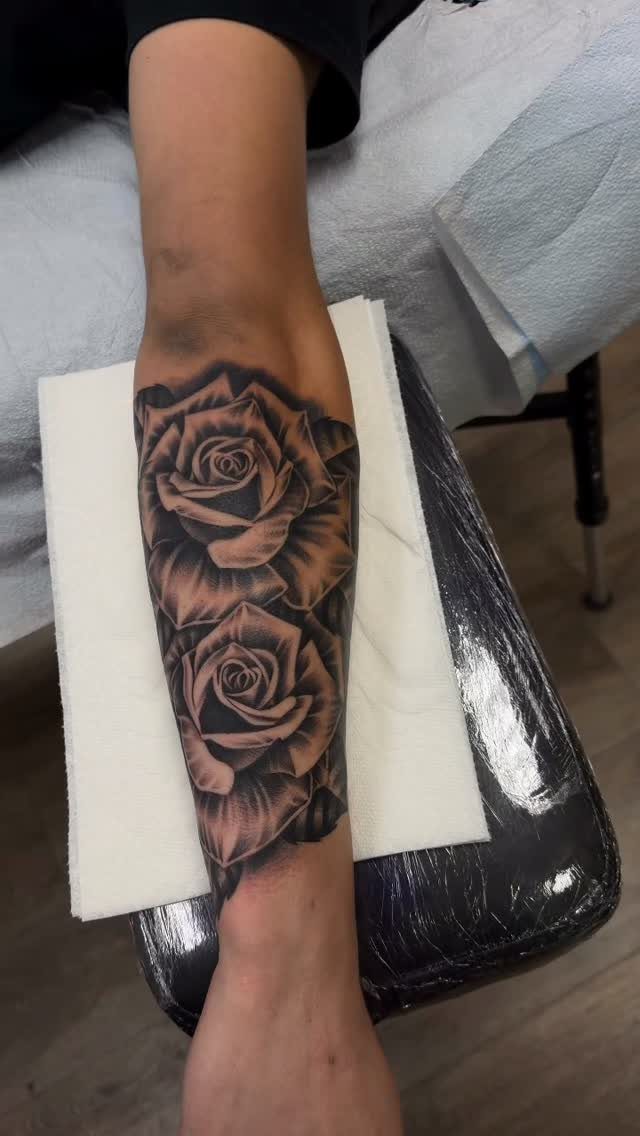
Roses in black and grey rely on tight shading to show the fold of each petal. Without color, the artist builds dimension through contrast alone, and a photorealistic rose takes longer than you might expect.
The lower leg here is a good fit because it gives the flowers room to sit at actual scale without shrinking them down.
Floral tattoos read well to most people and carry less baggage than skulls or religious imagery.
A rose works for something meaningful that doesn’t feel heavy. Just make sure your artist has a solid realism portfolio before you commit.
7. Virgin Mary and Crosses
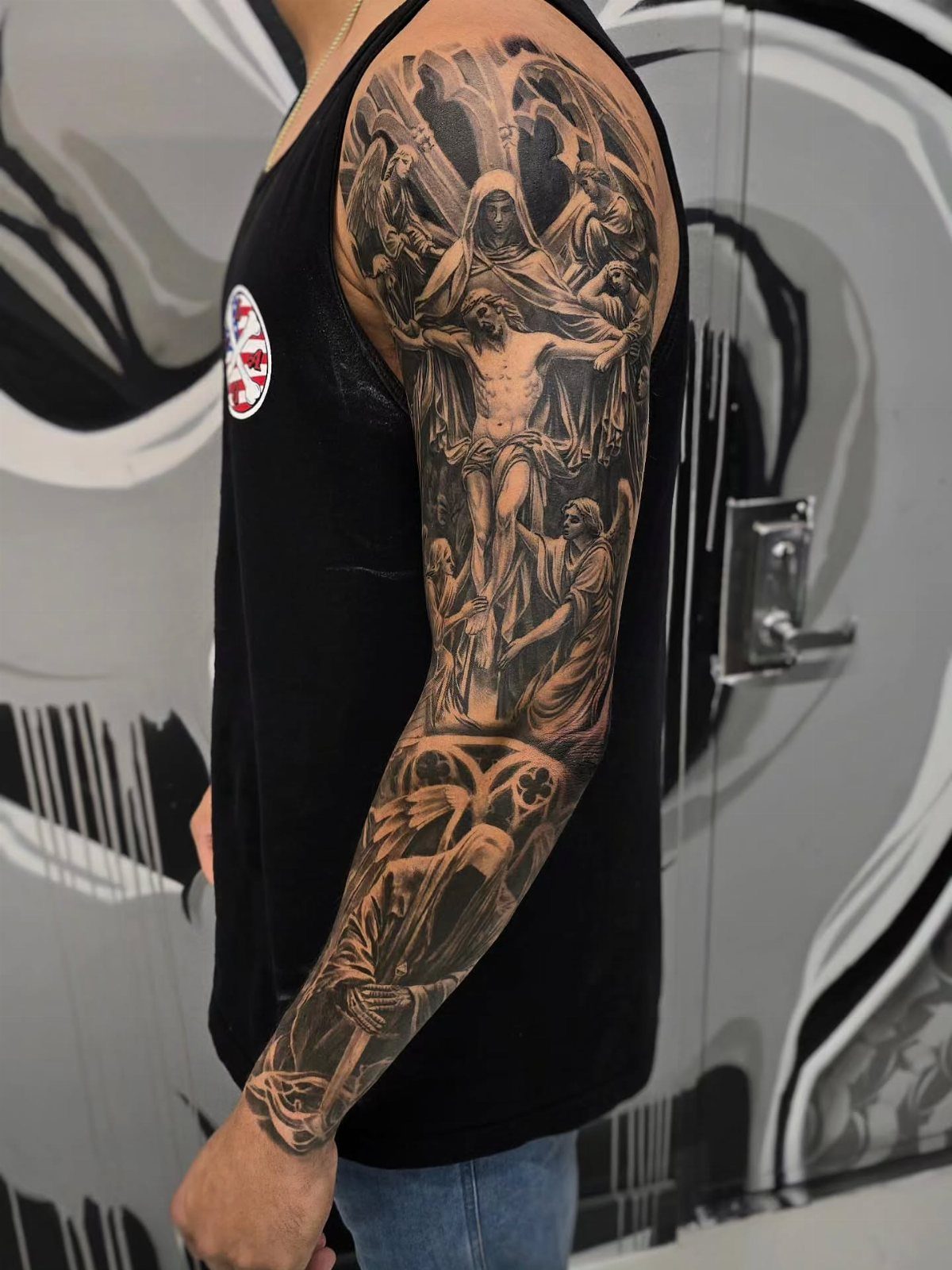
Religious tattoos in black and grey let you show devotion without needing to explain it.
This kind of design usually combines multiple figures: the Virgin Mary, Jesus, crosses, and sometimes other saints or angels. The shading has to be soft enough to keep faces reverent but strong enough to hold the composition together.
Sleeves take multiple sessions and cost more than a single piece. The project takes multiple sessions spread over weeks or months, and costs run into the thousands.
8. Cinematic or Surreal Compositions
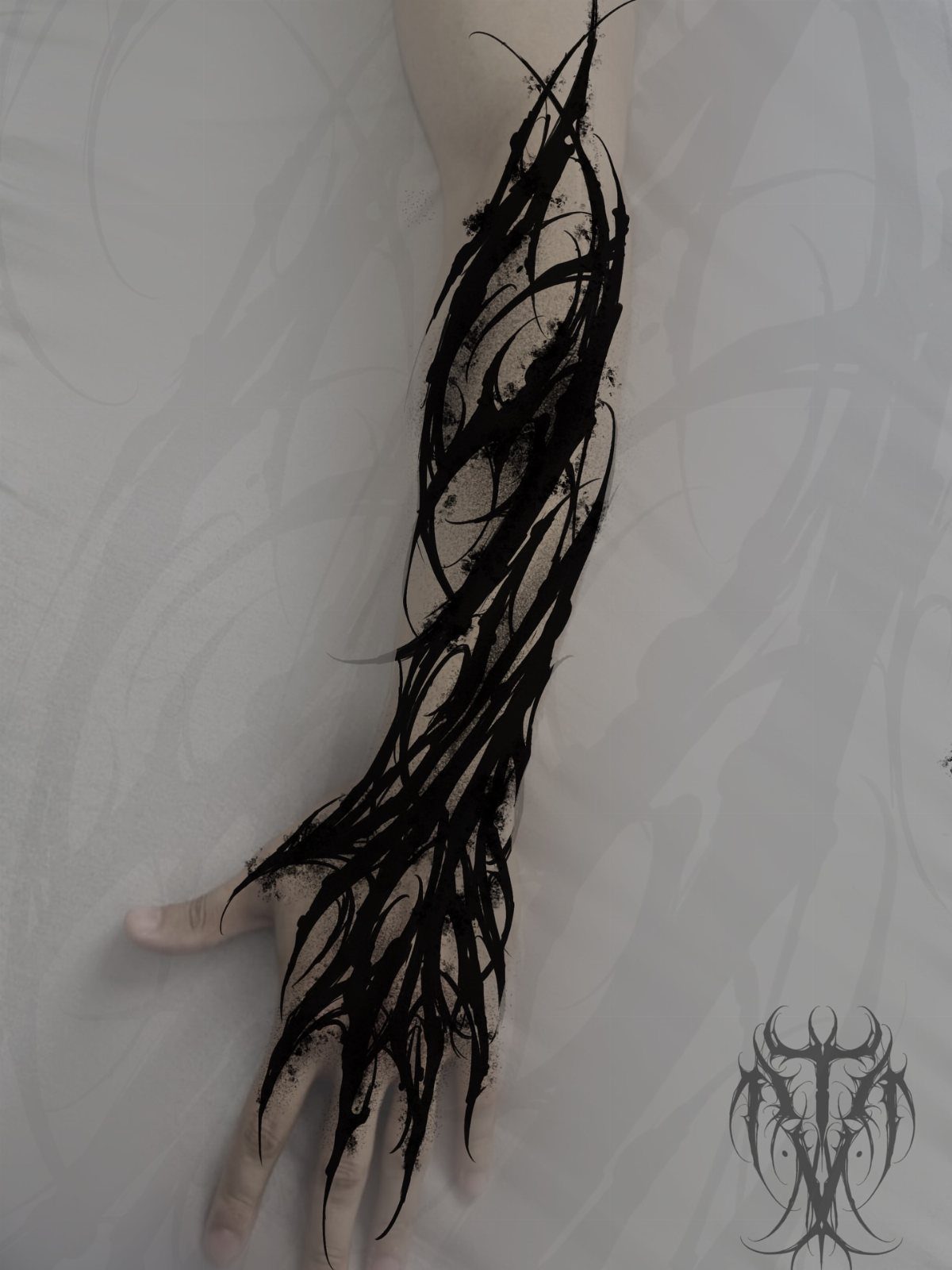
Surreal compositions blend photorealism with abstract shapes or impossible objects.
The piece here uses organic, vine-like forms that feel sculptural rather than literal. This approach gives you something striking without tying the tattoo to a specific story or symbol.
These designs usually come from collaboration.
Bring reference images and let your artist sketch the concept first. A good surreal tattoo looks intentional, not random, and that takes planning before the needle touches skin.
9. Hourglass and Timepiece Tattoo
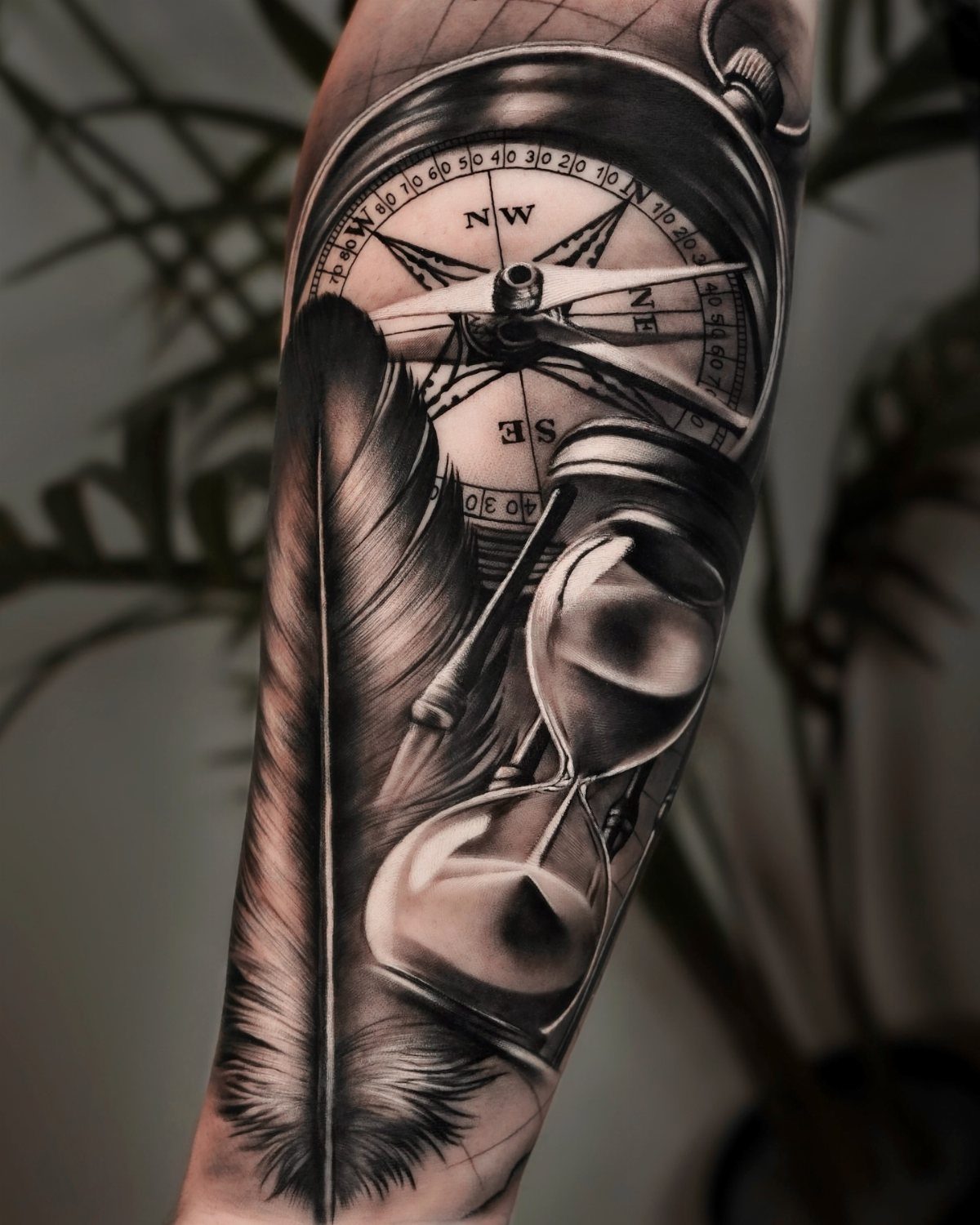
The feather here softens the composition and adds a second element while keeping the design readable. Smoke shading in the background gives depth without adding hard lines.
This style works well on the forearm, where the round shapes sit naturally on the muscle.
I would keep the design to 2 or 3 objects. More than that and you lose the impact.
10. Warrior and Medieval Armor Tattoo
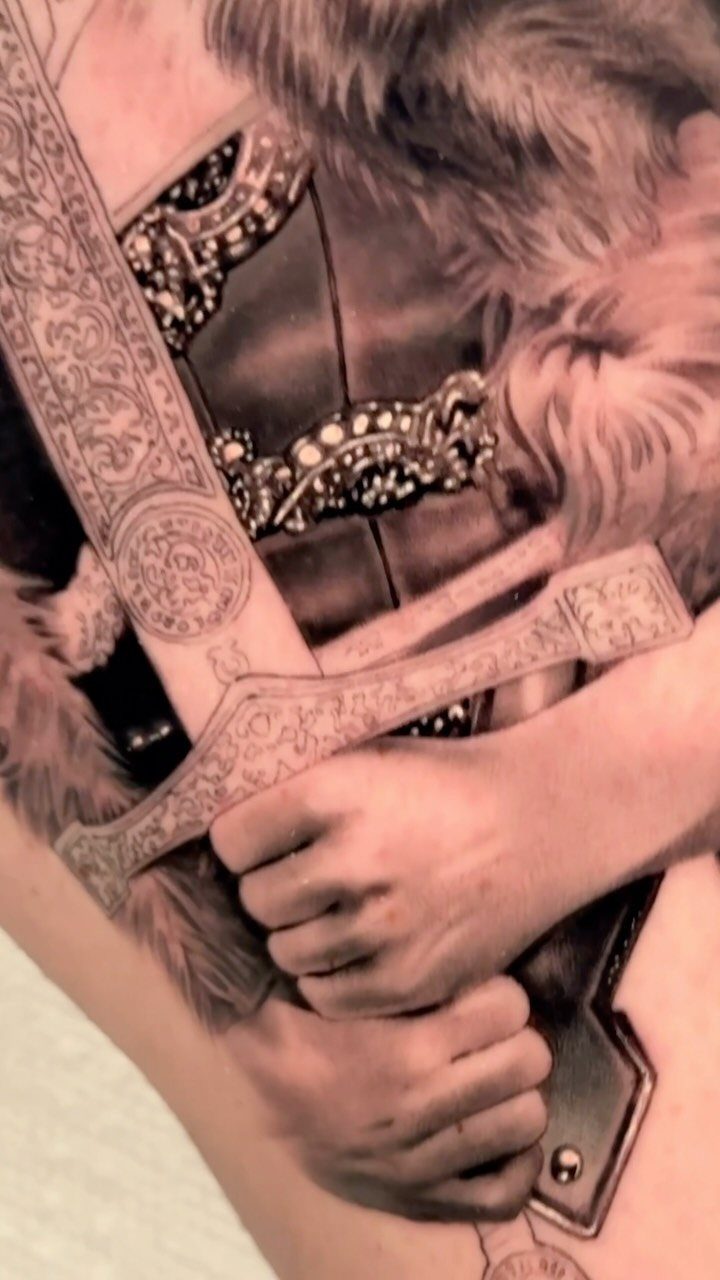
Hands gripping a sword hilt give you a warrior tattoo while keeping the focus tight.
The engraving on the hilt, the fur at the collar, and the armor detail all add texture that makes the piece read as realism rather than illustration.
This design fits a forearm or outer bicep. The vertical shape runs with the arm, and the hands create a focal point that holds your eye.
I would avoid shrinking this one down. The engraving needs space to stay legible.
11. Jesus Christ Religious Tattoo
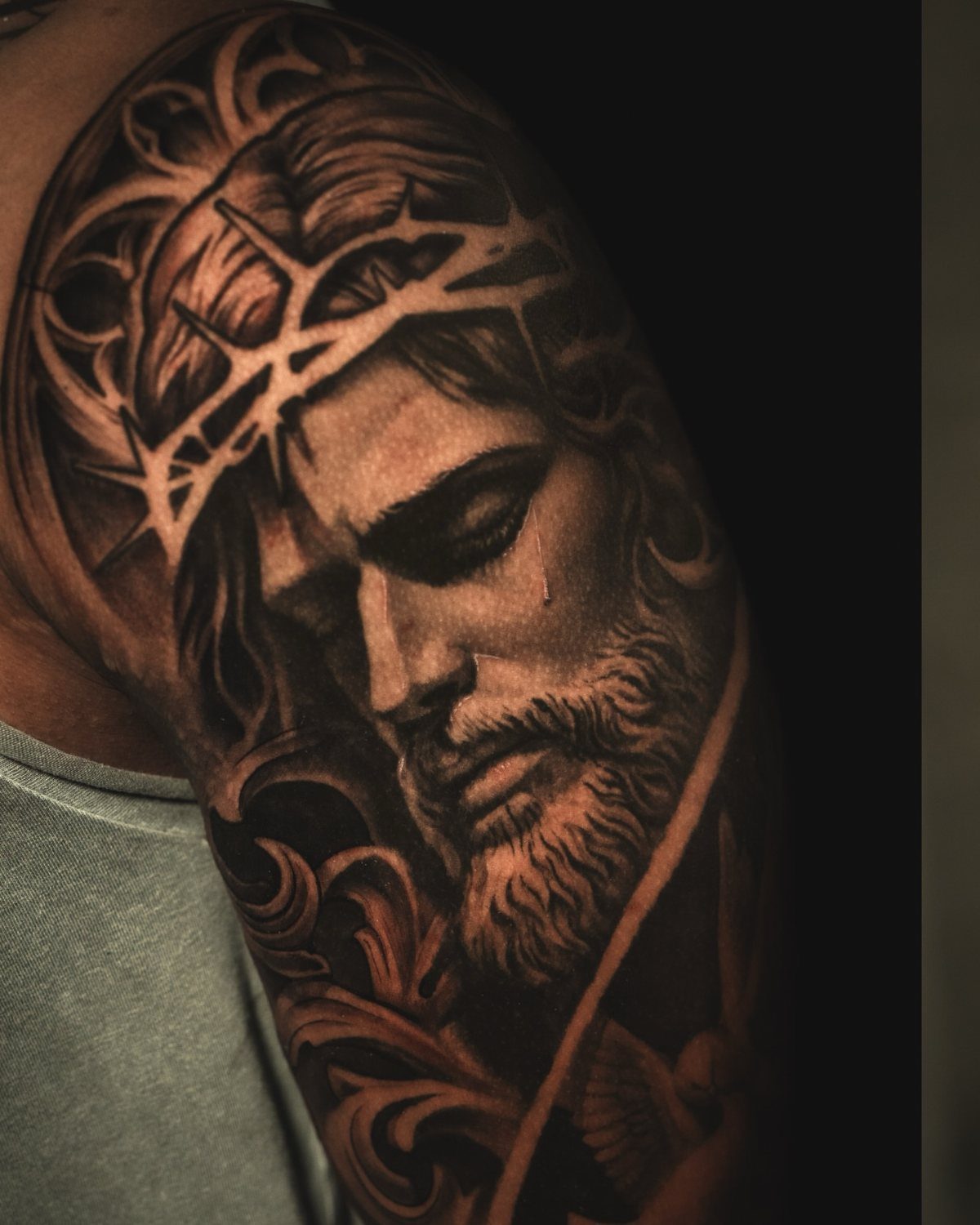
A portrait of Jesus with the crown of thorns is one of the most common religious tattoos, and the tear on the cheek adds emotion without text.
The face has to be perfect. If the proportions are off, the whole piece fails, so this is not the time to go with a cheaper artist.
Upper arm placement keeps the tattoo visible but easy to cover. Black and grey works better than color for religious portraits because it ages more gracefully and holds its reverence over time.
12. Japanese Samurai Sleeve Tattoo
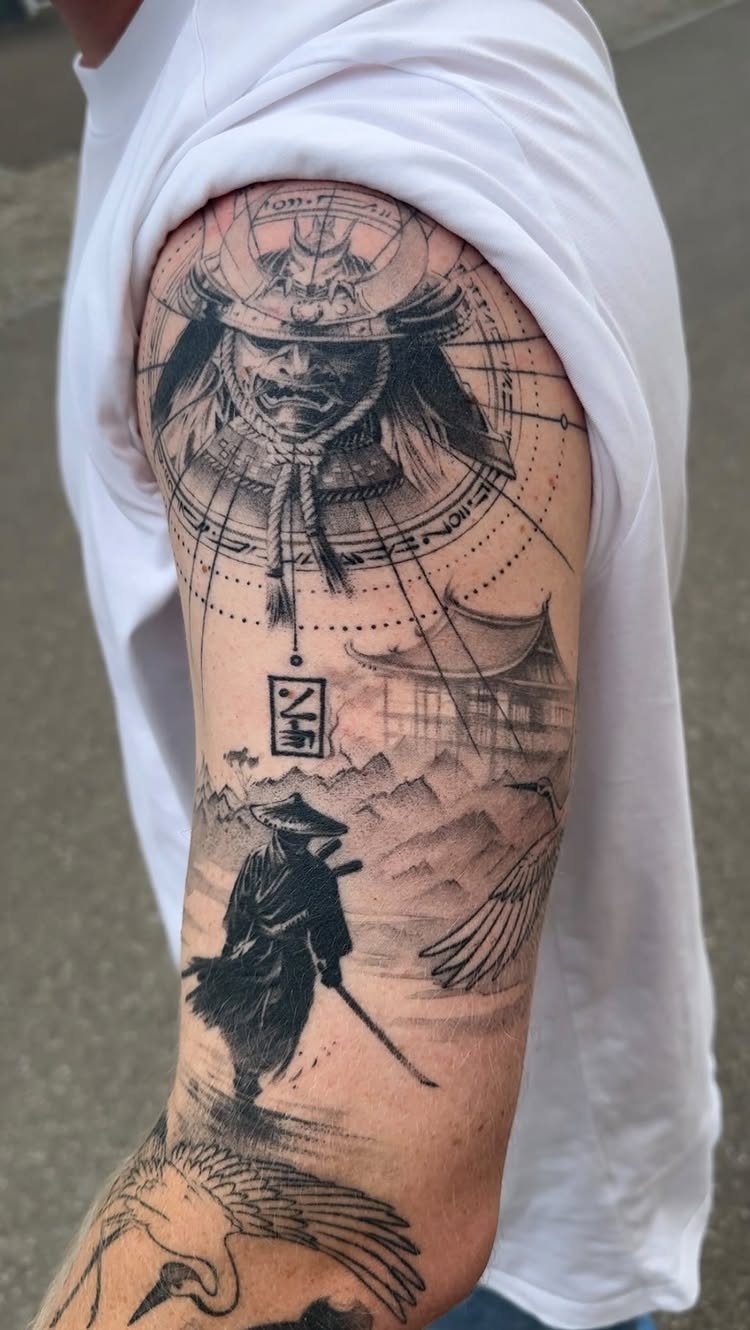
A samurai sleeve combines portraiture with traditional Japanese architecture and wildlife.
The piece here includes a samurai face, a pagoda, and cranes, all tied together with background shading. The black and grey treatment gives it a different feel than traditional Japanese color work, more subdued and closer to Western realism.
Full sleeves take months. You will sit for multiple long sessions, and the cost runs into the thousands.
I would commit to finishing it. A half-done sleeve rarely looks intentional.
13. Foo Dog Guardian Lion Tattoo
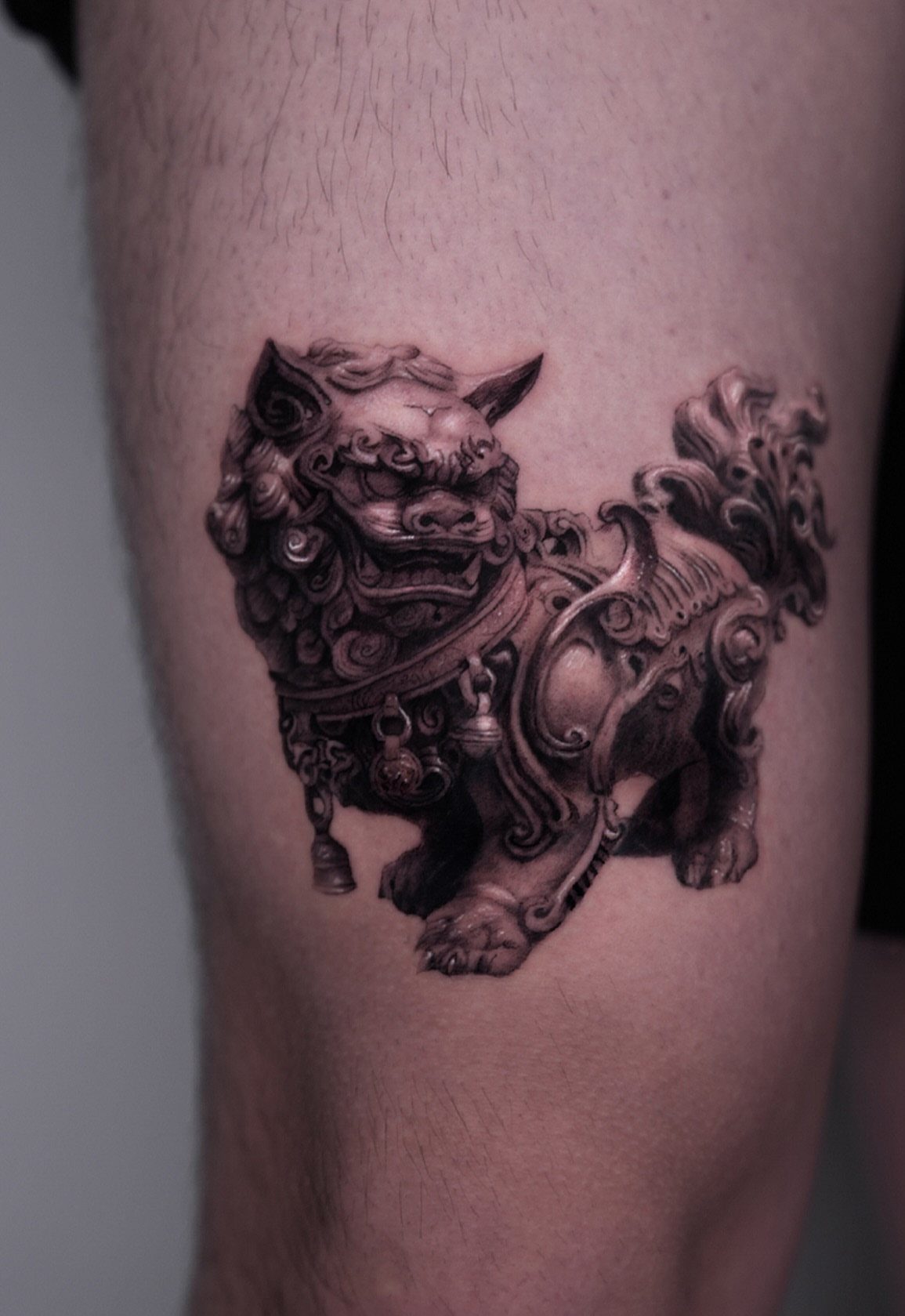
Guardian lions like this one bring sculptural detail into realism.
The ornate carving on the stone, the fur texture, and the decorative base all need careful shading to separate them visually. The leg gives you a natural vertical canvas, and the muscle underneath helps the lion sit three-dimensionally.
This design takes time.
The layering and texture mean longer sessions than a simpler portrait, and placement on the calf or shin means more sensitivity during the work. I would go in knowing it will cost more than a basic black and grey piece.
14. Cherub and Theatrical Masks Tattoo
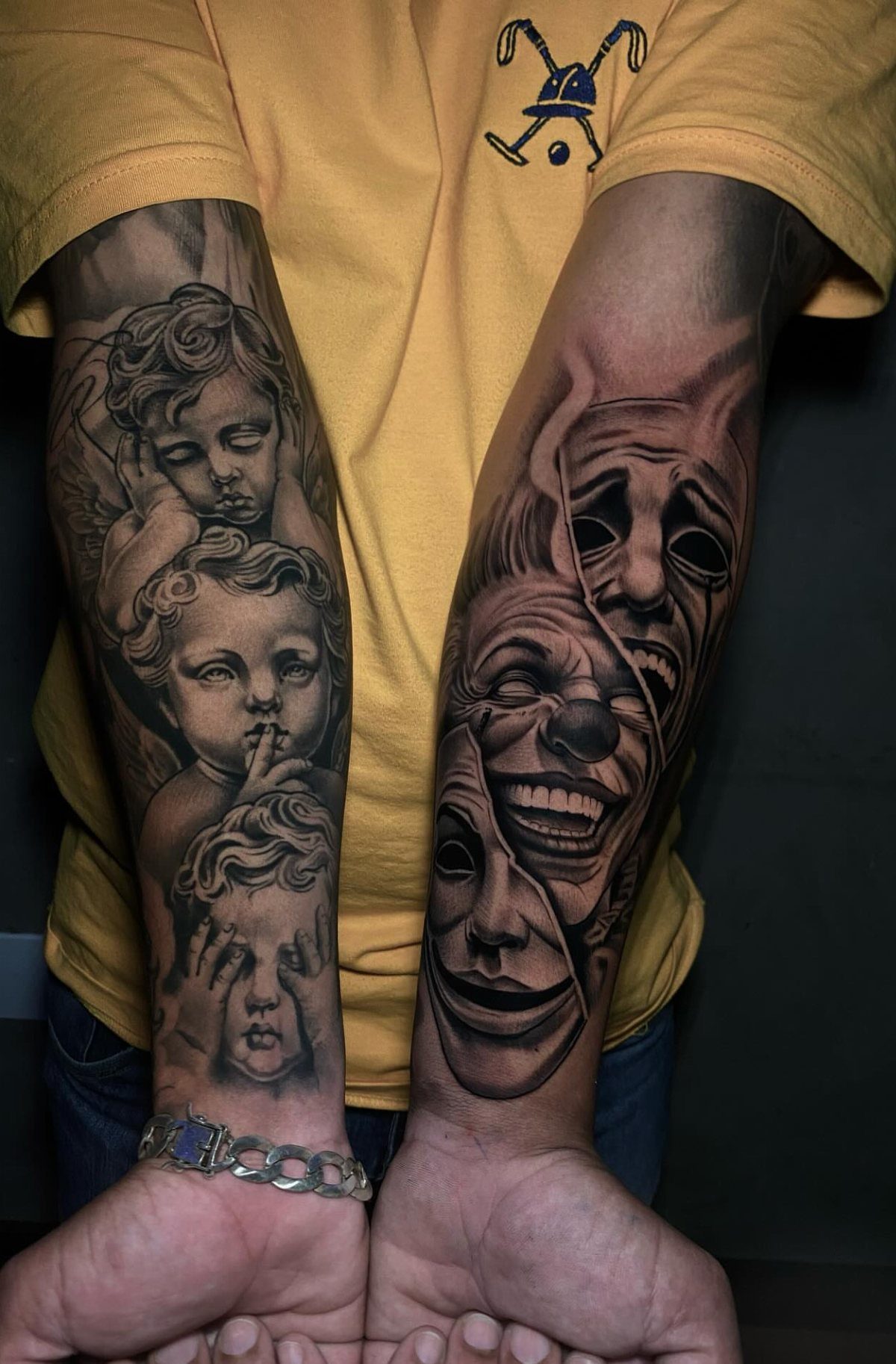
Symmetrical forearms give you a matched pair without forcing the same subject twice.
Cherubs on one side and theatrical masks on the other keep the balance while letting each arm carry its own meaning. The faces need accurate proportions, same as any portrait work.
Forearms show the tattoos clearly and let you cover them when needed. Both designs here have enough detail to fill the space without crowding it.
I would avoid adding more elements later. The symmetry is the point, and breaking it weakens the composition.
Frequently Asked Questions
What is a black and grey realism tattoo?
A black and grey realism tattoo is built entirely from black ink, shaded and diluted to match the tones of a photograph.
The artist builds all the dimension through shading, pushing from solid black down to nearly bare skin with no color pigment.
Does black and grey realism last?
Black and grey realism holds up longer than color because there are no pigments that fade unevenly or shift tone over time. The style is built to last.
How much do realism tattoos cost?
Realism tattoos cost more than simpler designs because they take longer and require an artist with proven skill.
A single portrait or detailed piece runs from hundreds into the low thousands, and a full sleeve can cost several thousand dollars spread over multiple sessions.
You’ll pay more for a larger piece, finer detail, or an artist whose portfolio proves they can pull it off.