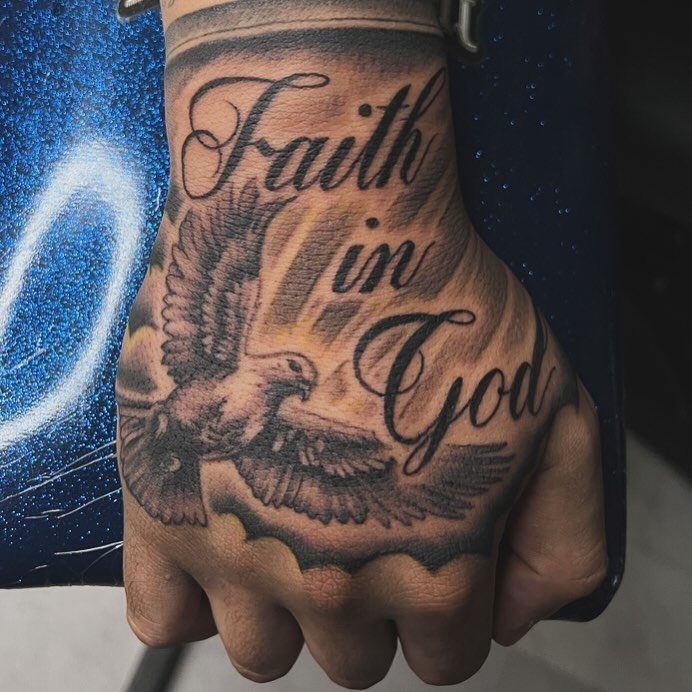
These designs range from Hindu deities like Shiva, Krishna, Hanuman, Kali and Ganesha to Greek gods, Christian crosses, doves and faith quotes, each tied to a specific belief system and the role it plays in the wearer’s life.
The choice comes down to which tradition you’re marking and whether the tattoo centers on a figure, a symbol, or words.
Lord Shiva’s trident and damaru drum signal destruction and renewal, while Krishna’s flute ties devotion to music and divine love, and Ganesha’s elephant head marks the remover of obstacles.
1. Lord Shiva Tattoos
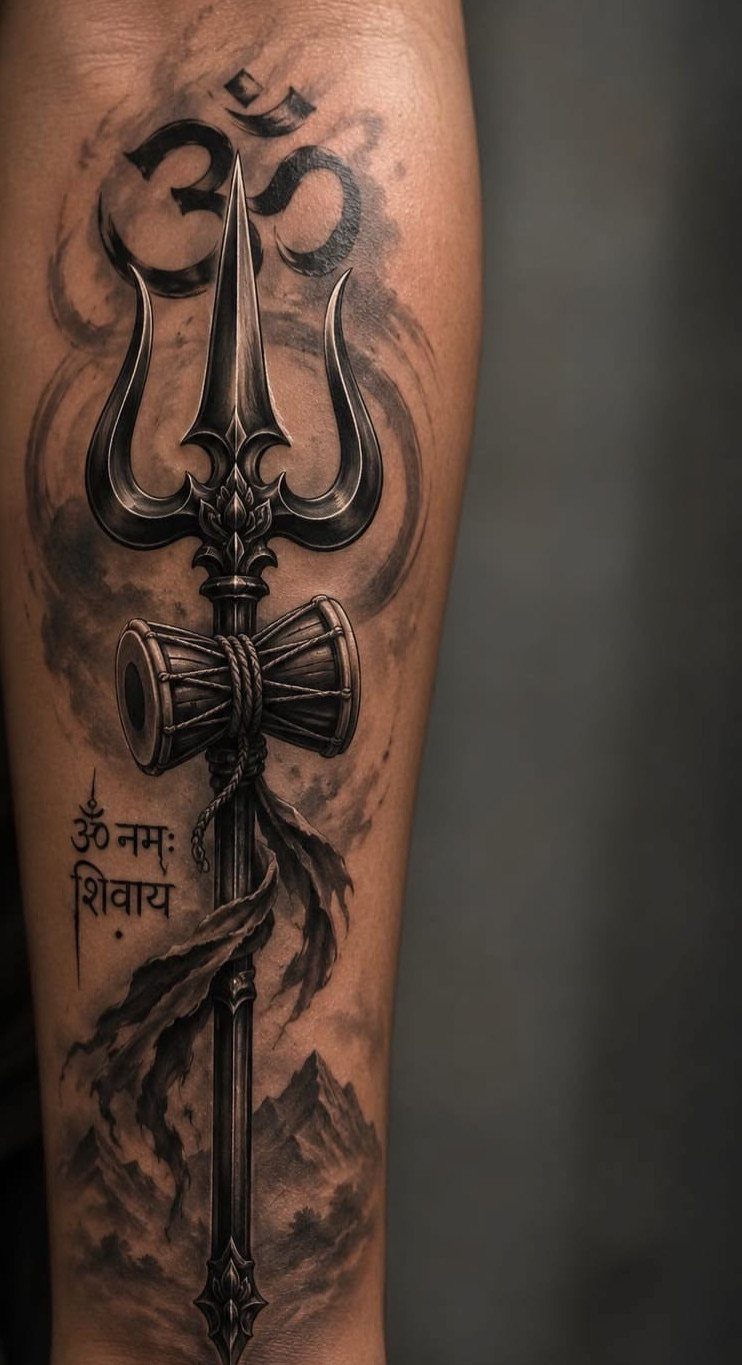
Lord Shiva tattoos combine symbols tied to destruction and renewal.
The trident represents his power over the 3 aspects of time, while the damaru drum marks the rhythm of creation. Many designs include the Om symbol or the mantra "Om Namah Shivaya" in Devanagari script, both directly invoking his name.
The trident reads clearly at most sizes, but script needs enough space to stay legible as the ink settles.
2. Krishna Playing the Flute Tattoos
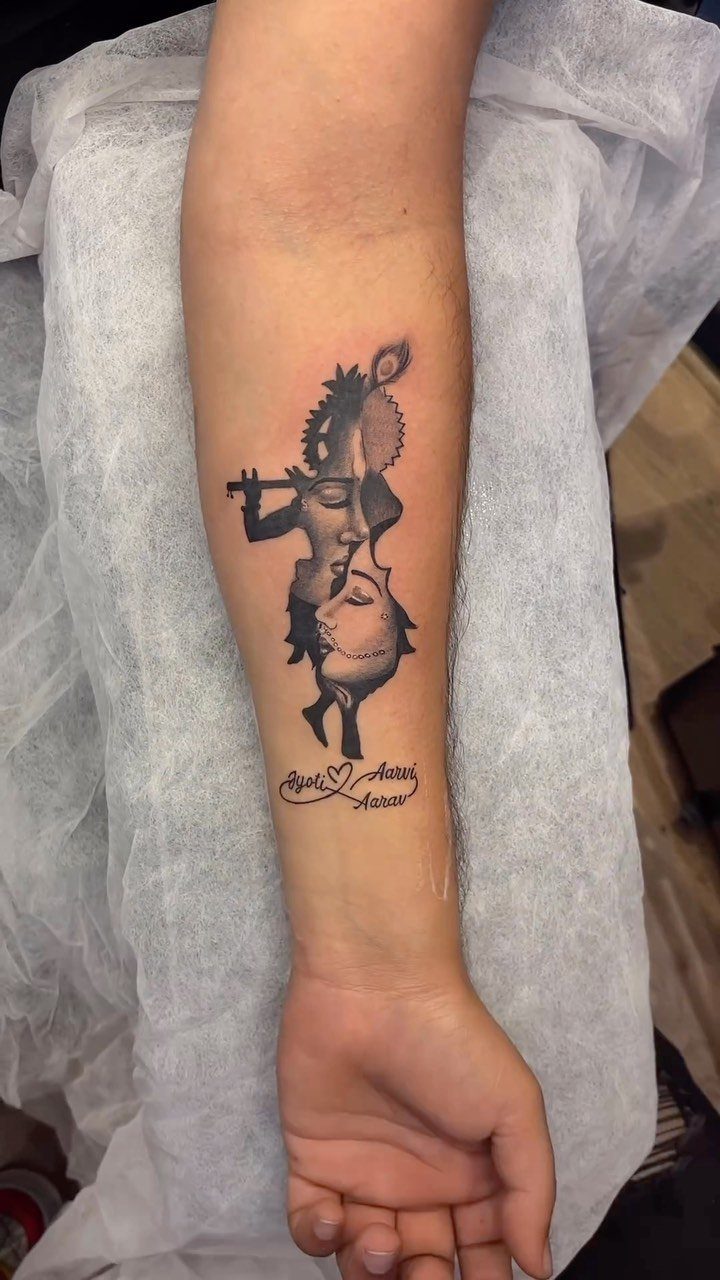
Krishna playing the flute appears in designs that focus on devotion and music.
The flute itself holds the story: Krishna’s music is said to call people back to their purpose, which makes this a choice for anyone marking a spiritual turning point.
Some designs pair the image with family names in script below, the way this one does. That combination turns a devotional symbol into a family piece, tying faith to the people you carry with you.
Black linework keeps the figure clear. Fine details in the flute benefit from a steady hand and enough size to hold the lines.
3. Hanuman Tattoos
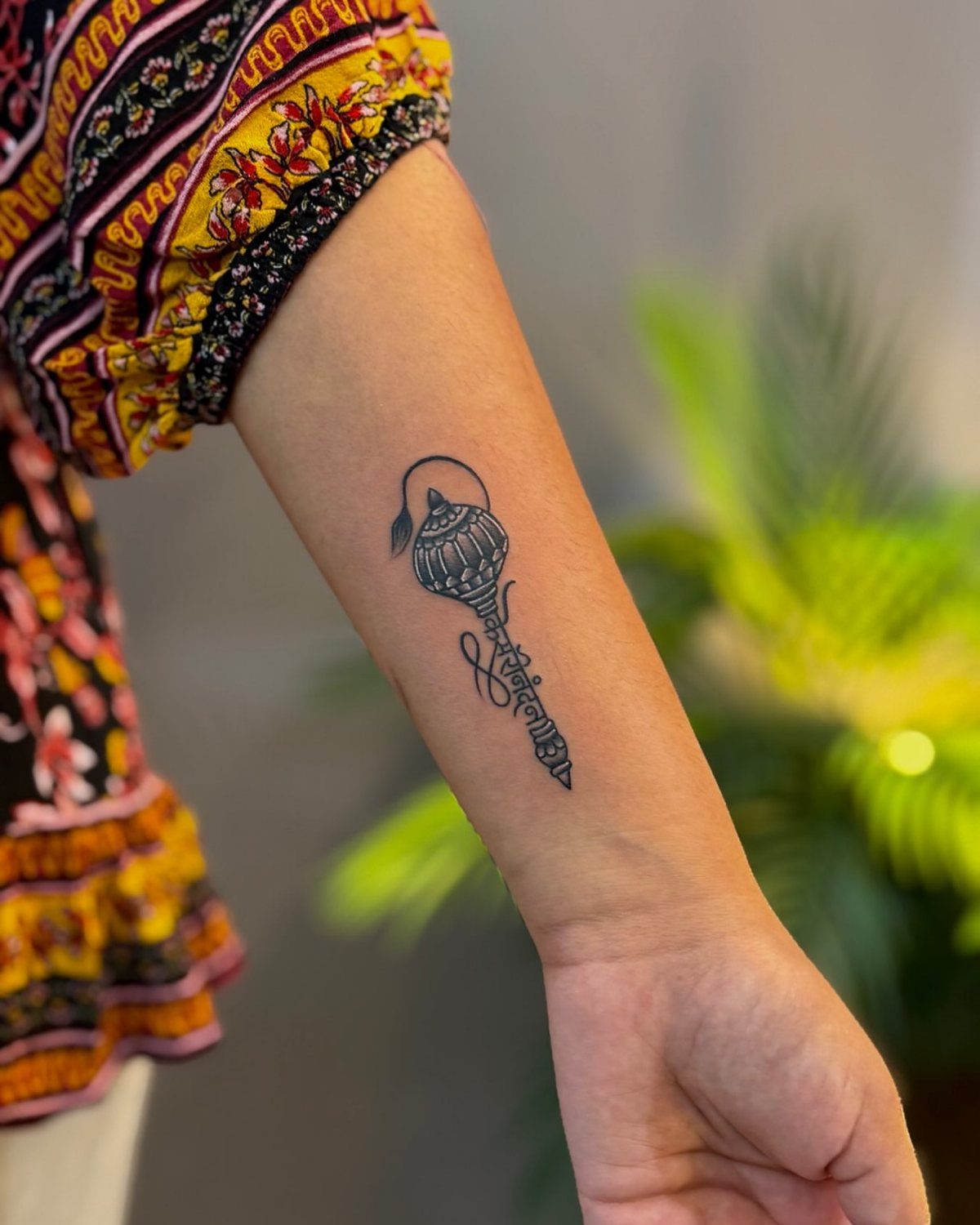
Hanuman tattoos center on his gada, the mace that represents unshakable strength. The weapon alone signals his role as protector, and many designs include Sanskrit text alongside it to name the devotion he stands for.
This style suits the forearm, where the vertical shape of the mace follows the muscle. Black ink gives the weapon weight, and shading can separate the text from the gada without losing readability.
Hanuman appeals to anyone looking for a tattoo about perseverance. His image carries less ornament than other Hindu deities, which keeps the focus on what the symbol means rather than decorative detail.
4. Maa Kali Tattoos
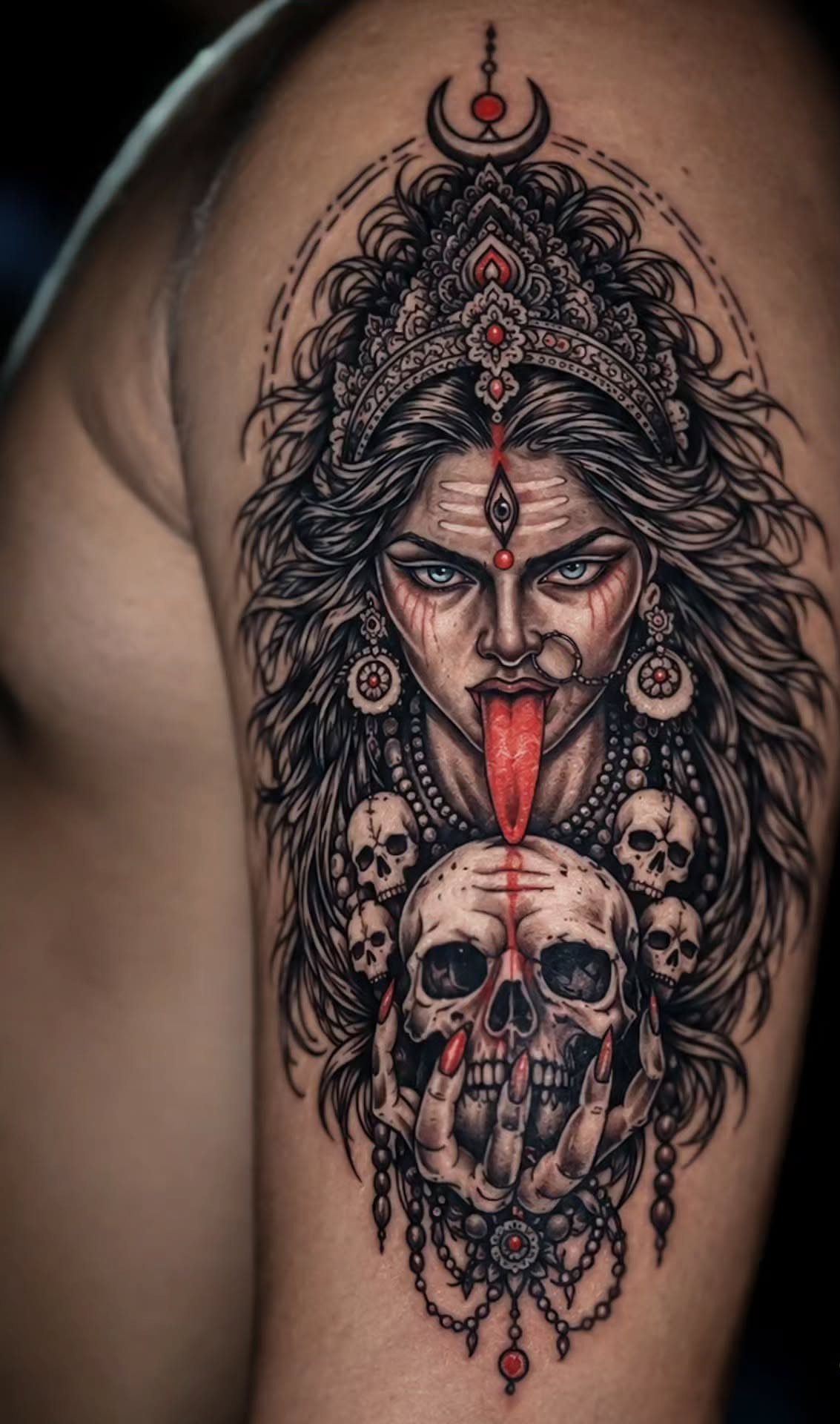
Maa Kali tattoos depict the goddess with her tongue out, a skull, and often a crown or garland.
She represents destruction of ego and the force that clears space for change, which makes this a design about letting go of what no longer serves you.
Black and grey shading works well for her fierce expression. The skull and tongue need enough contrast to read separately, so a skilled artist will build layers of grey to keep each element distinct.
Kali suits larger placements like the bicep or thigh, where her full figure and surrounding details have room to breathe.
5. Ganesha Tattoos
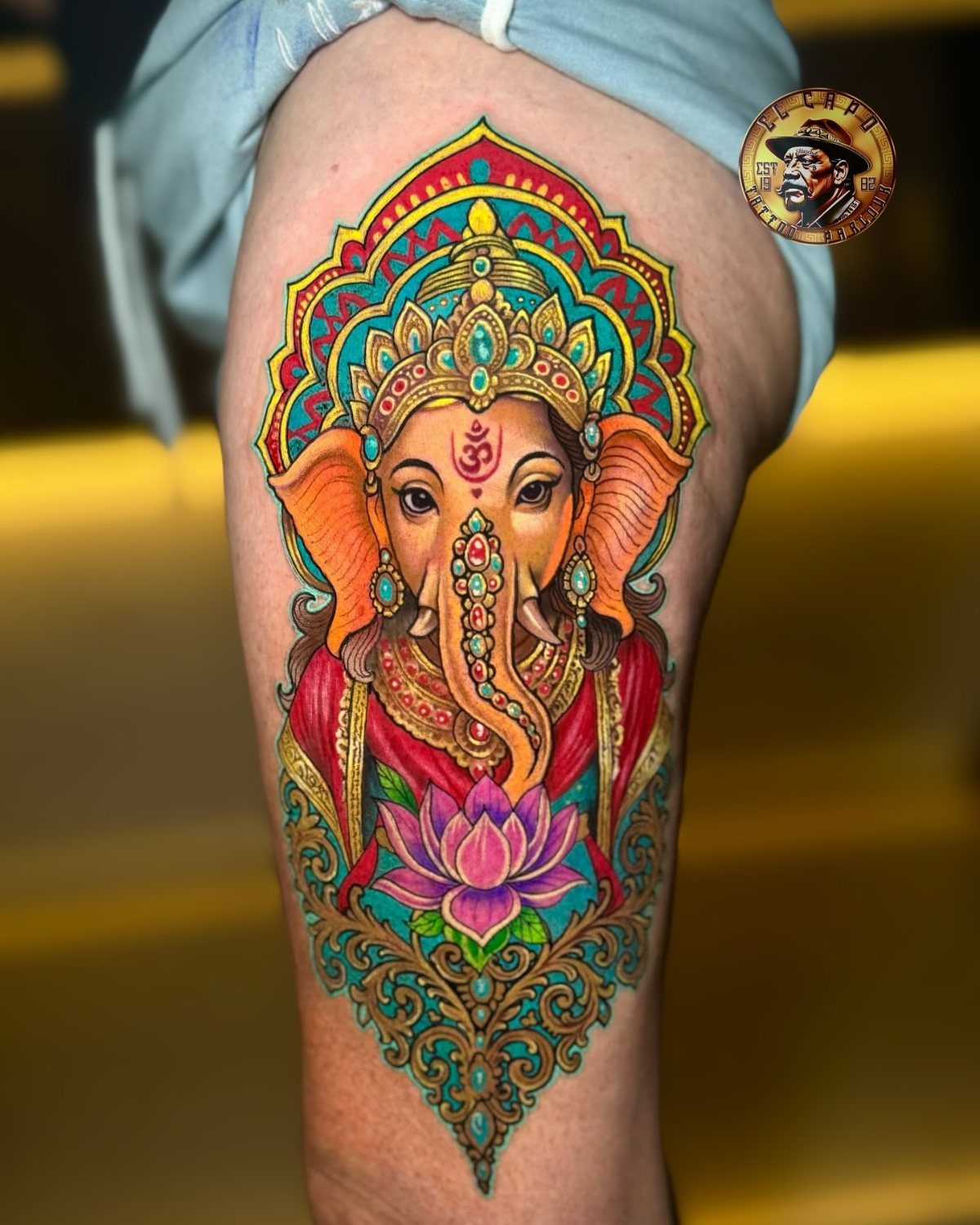
Ganesha tattoos mark fresh starts. He’s known as the remover of obstacles, which is why people choose this design before a major change: a move, a career shift, or recovery from something hard.
Color brings out the lotus and ornate patterns that surround him.
Pink, orange, and gold are common choices, and they hold up well when the shading is done right. The elephant head and crown need clean linework to stay recognizable as the tattoo ages.
This design scales up. The leg or upper arm gives enough room for detail in the trunk, the jewelry, and the petals.
6. Greek God Tattoos
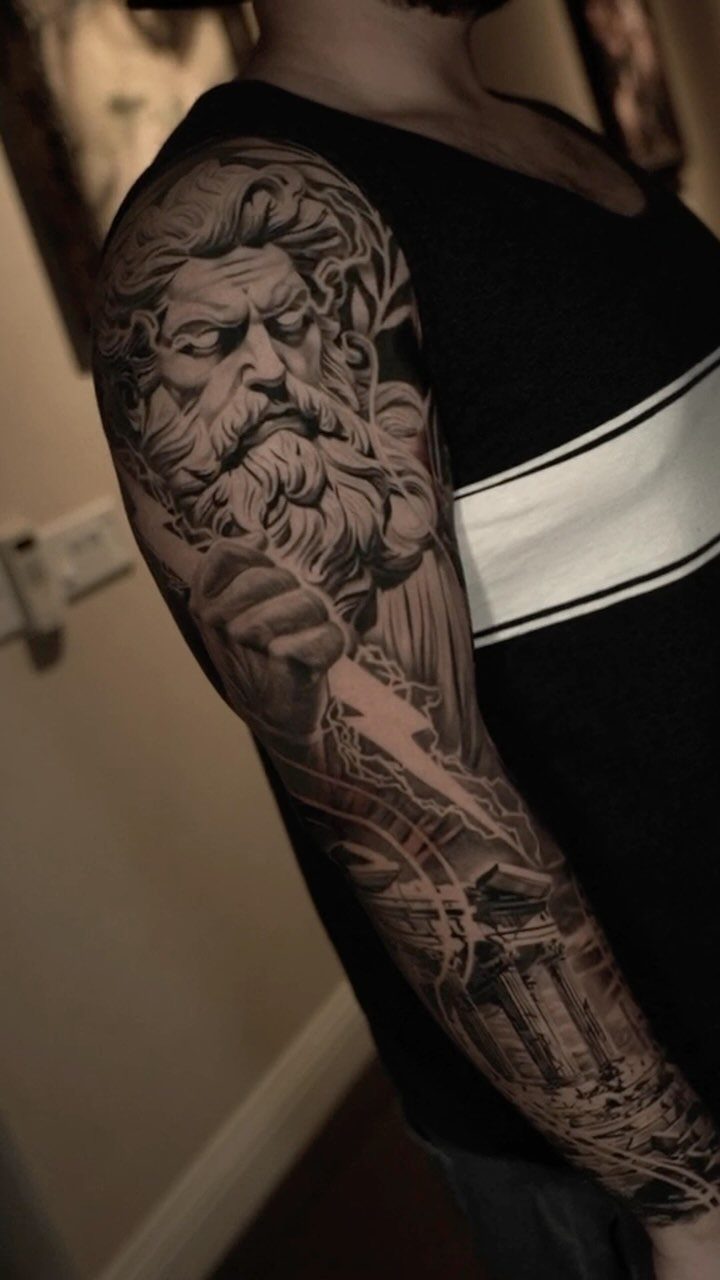
Greek god tattoos pull from mythology that centers on power and strategy. Zeus appears with a lightning bolt, Athena with her shield and spear, and both read as symbols of control over fate or conflict.
Black and grey realism suits these figures.
Shading builds the texture in a beard, the folds of a robe, or the columns of a temple behind the god. Fine detail in the face and hands separates a strong piece from one that looks generic.
These tattoos need size. A full upper arm or thigh gives the artist room to render expression and background without crowding the figure.
7. Jesus Cross Tattoos
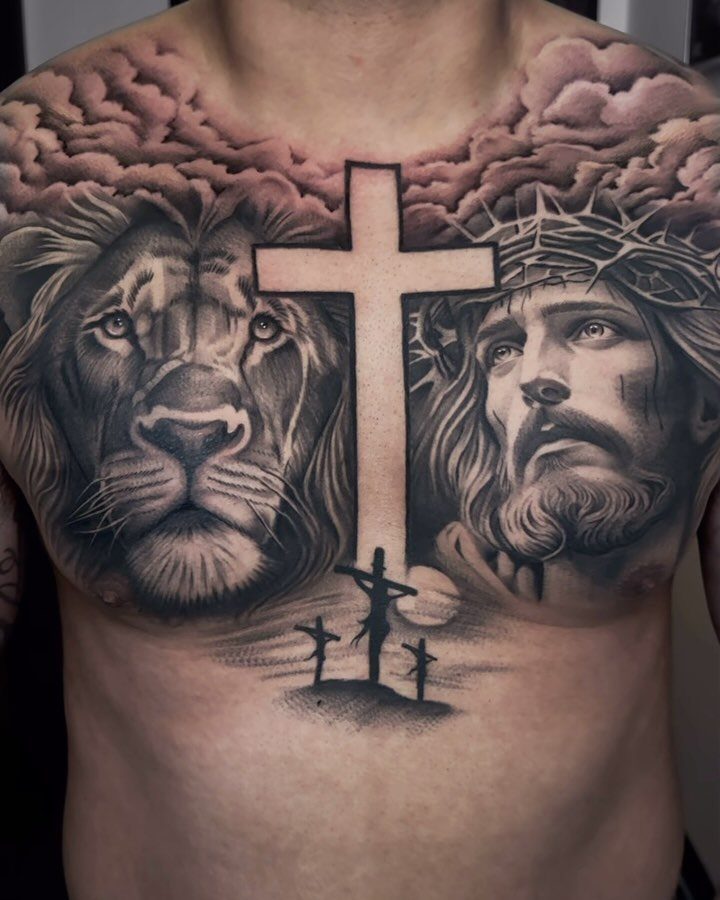
Jesus cross tattoos layer the crucifixion with surrounding symbols.
The cross anchors the piece, often flanked by smaller crosses on hills or paired with a lion to represent strength through faith. Jesus appears with the crown of thorns, which adds suffering and sacrifice to the image.
Black and grey shading builds depth in the chest placement, where the sternum gives a vertical center line. The lion and Christ’s face need separate contrast so neither element gets lost.
This design takes up serious real estate. The chest allows all 3 symbols to sit together without crowding.
8. Faith Quotes Tattoos
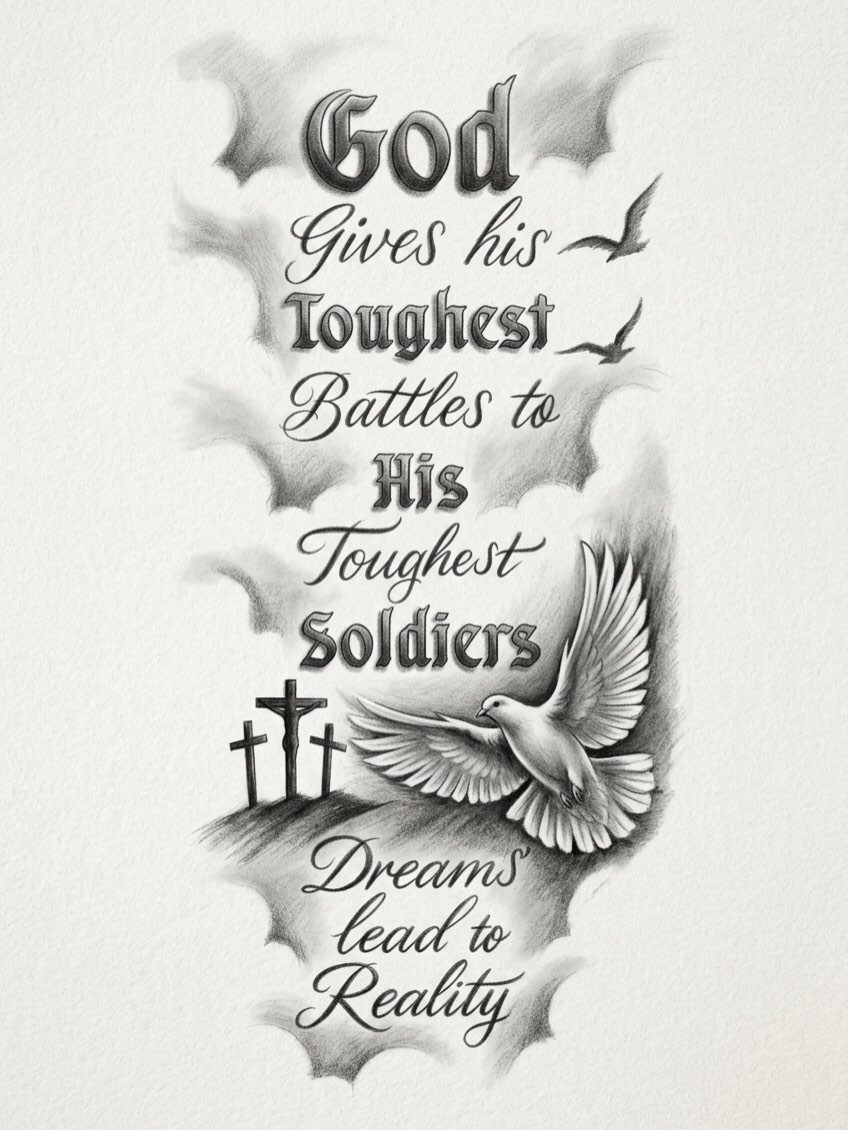
Faith quote tattoos put words front and center.
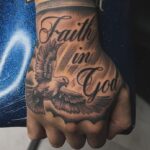
Phrases like "God Gives his Toughest Battles to His Toughest Soldiers" spell out belief in plain language, and many designs add crosses or doves around the script to tie the text to Christian imagery.
Script legibility depends on letter height and line spacing. A design this dense needs room, which is why the forearm or ribcage works better than a small wrist piece.
The dove softens the overall look without weakening the message. Quotes hold up when the font stays simple and the letters are spaced wide enough to heal cleanly.
9. Dove Tattoos
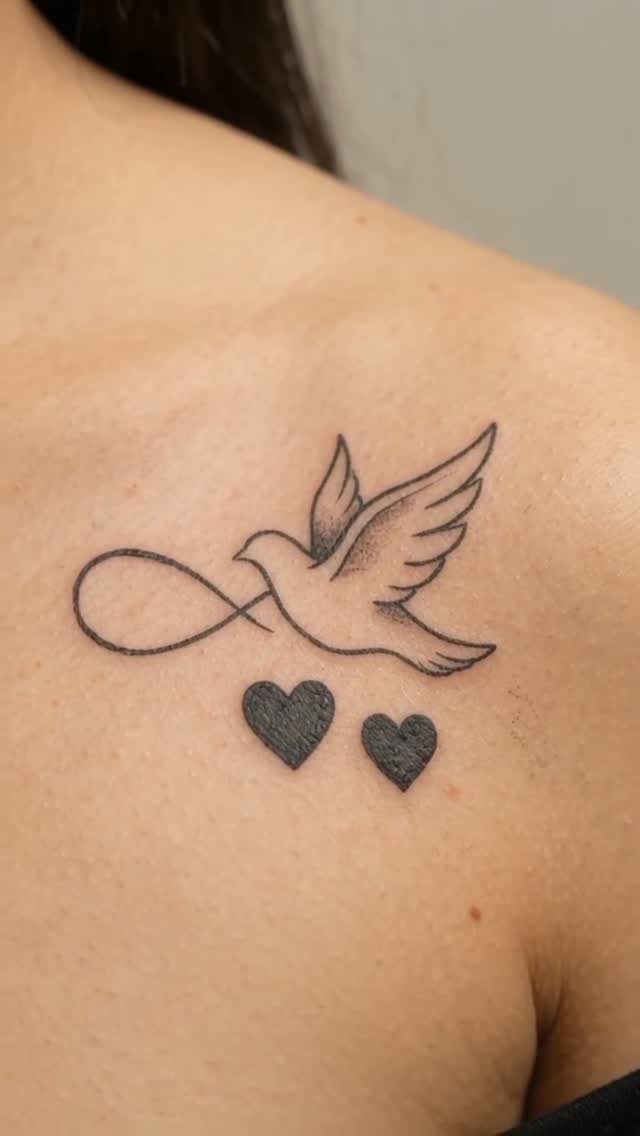
Dove tattoos signal peace and the Holy Spirit in Christian symbolism. This design ties the bird to an infinity loop and 2 small hearts, which shifts the focus from purely religious to a blend of faith and personal connection.
The shoulder gives a rounded surface that follows the dove’s flight path. Black ink keeps the bird and the infinity symbol distinct without adding color that might blur over time.
Small hearts work as a subtle addition when sized to match the line weight of the dove itself.
Frequently Asked Questions
Which god tattoo is best for me?
The best god tattoo ties to what you want the ink to represent. Ganesha works for fresh starts, Hanuman for perseverance, and Maa Kali for clearing space after a hard period.
Greek gods like Zeus or Athena suit people drawn to control and strategy, while Christ and the cross mark sacrifice and faith in Christian tradition.
What is a divine tattoo?
A divine tattoo uses imagery tied to a deity or belief system, whether that’s Lord Shiva’s trident, Krishna’s flute, or Christ on the cross. These designs work as permanent markers of what you carry forward.
Can I get a god tattoo on any body part?
Yes, but the design dictates where it reads best. Ganesha and Maa Kali need room for detail, so the leg or upper arm works better than smaller spots.
Hanuman’s vertical mace follows the forearm, and Jesus cross tattoos fill the chest without crowding. Match the placement to the size and shape the symbol requires.