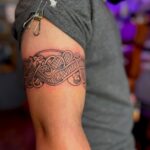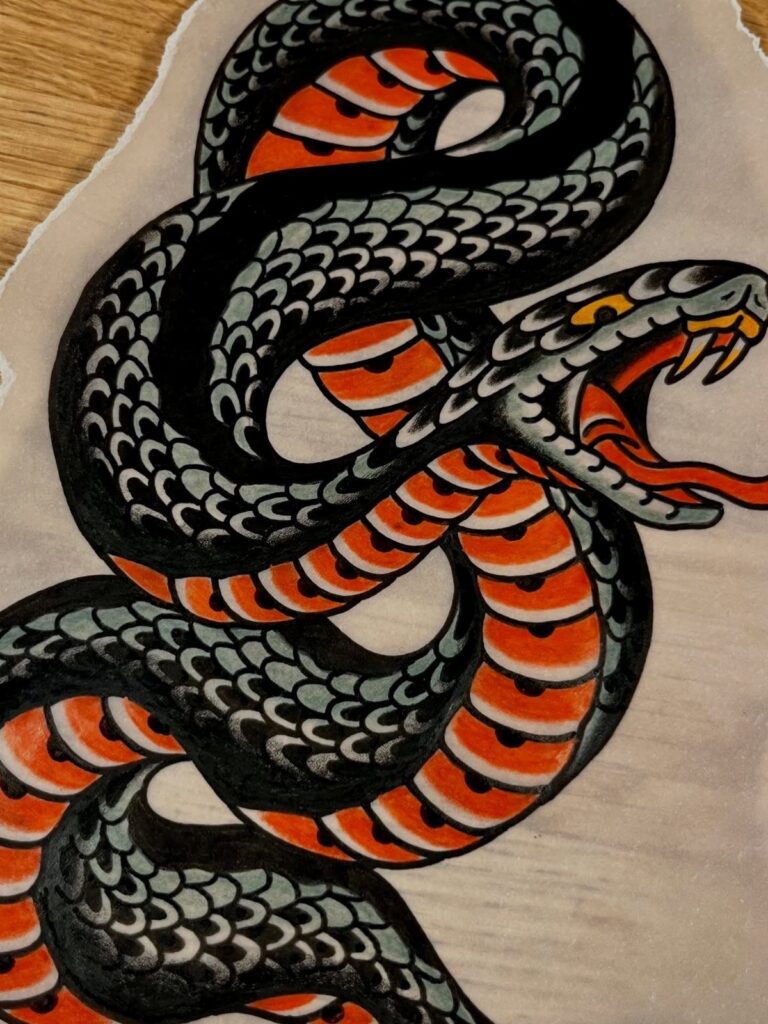
Traditional tattoos rely on thick black outlines and a limited palette of red, yellow, green and black to stay readable as the design ages.
Pick a motif based on what it means to you and where you plan to wear it: daggers, anchors and swallows fit narrow forearms and wrists, while ships, panthers and full sleeves need the real estate of an upper arm or thigh to show their detail.
1. Dagger Tattoo
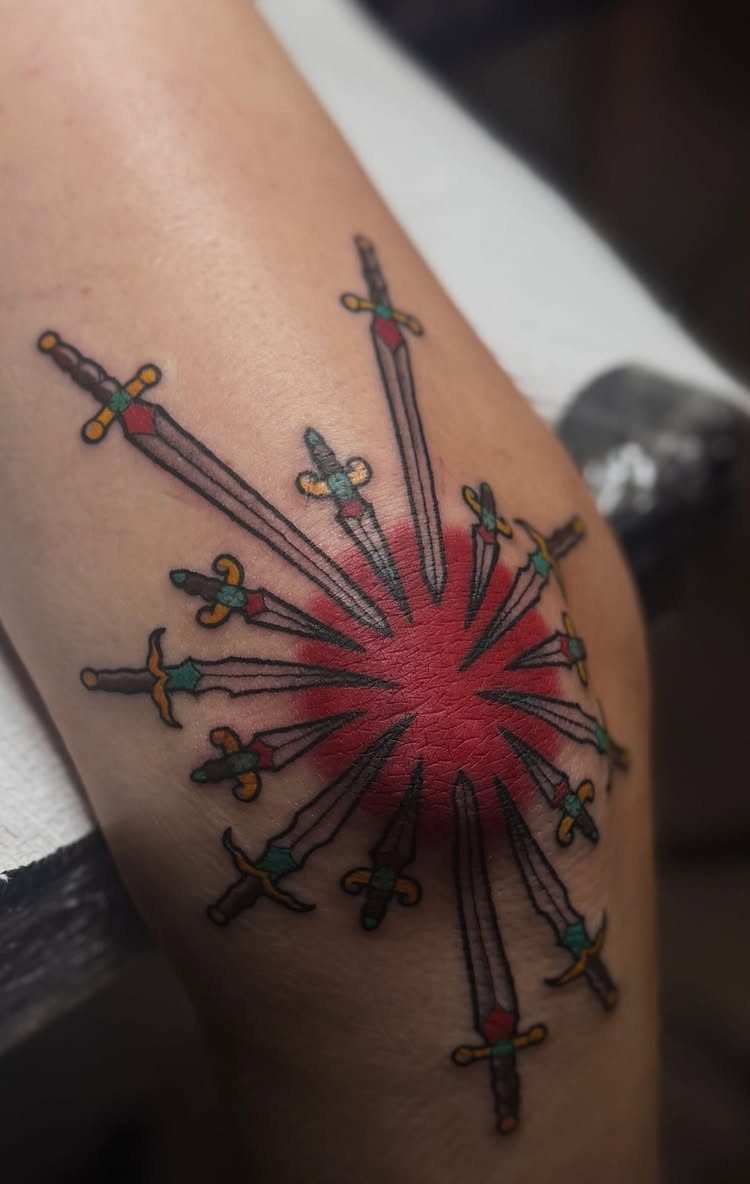
Daggers pointed toward a single spot read as protection or a willingness to fight for what matters.
The radiating layout spreads the design across a larger area, which suits the thigh or calf when you want the piece to anchor that part of the leg.
The bold outlines and limited palette keep the design readable even as it ages. A single dagger carries the same symbolism and fits narrower real estate like the forearm or ribs.
2. Rose Tattoo
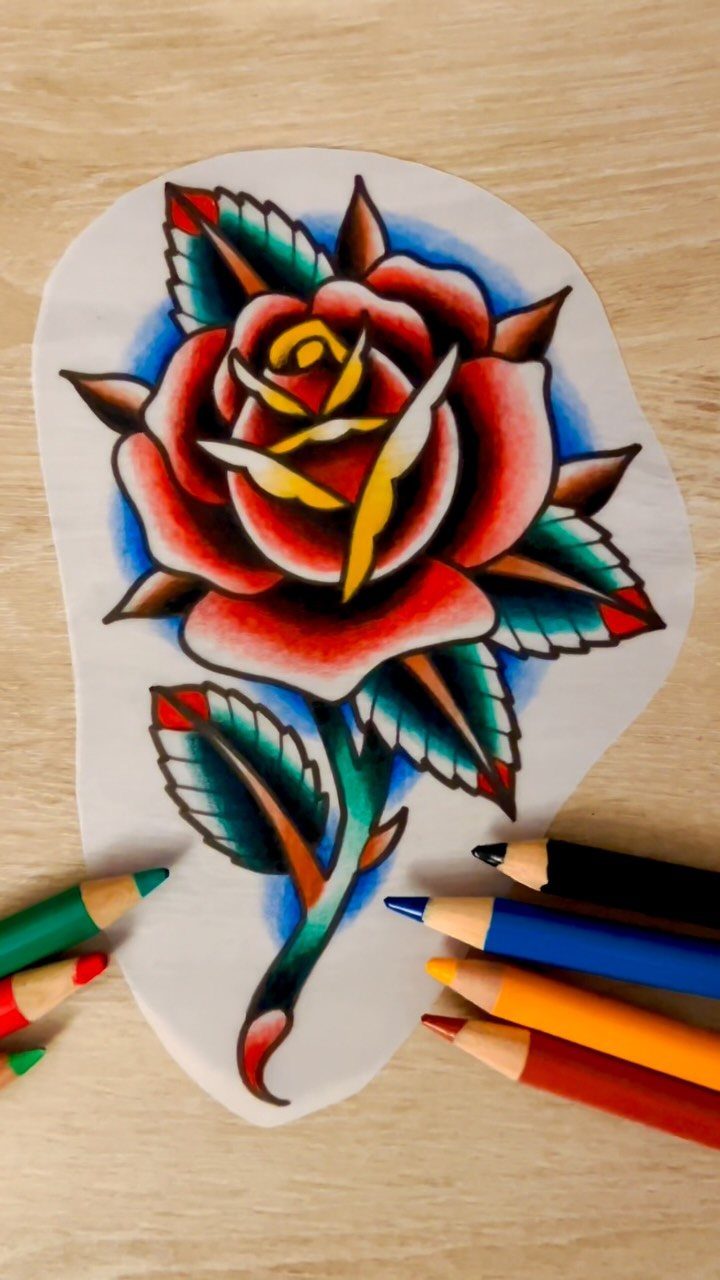
A rose drawn in traditional style holds its shape with thick black lines and solid color fills, usually red petals against green leaves.
The design reads as love or beauty, but it also works as a standalone piece when you just want something that looks good.
Roses scale up or down without losing detail, so they fit anywhere from a small wrist piece to a larger shoulder or thigh placement.
The bold outlines mean the color stays crisp longer than fine-line work, and touch-ups are straightforward if the red fades over time.
3. Anchor Tattoo
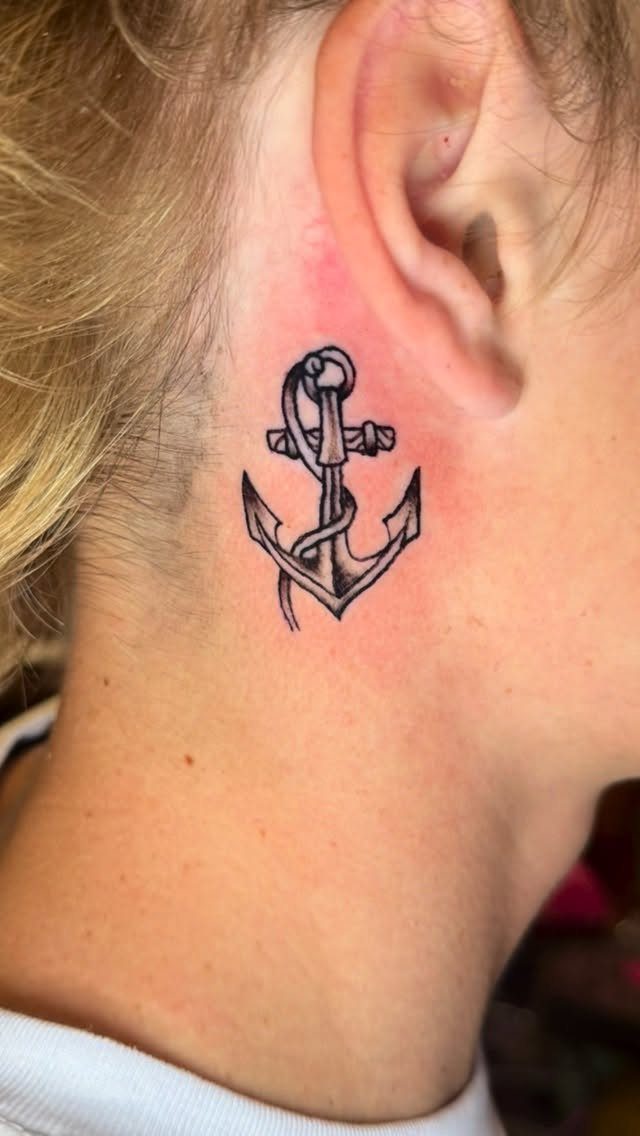
An anchor behind the ear or on the neck keeps the design small but visible, and the symbolism ties back to sailors who wore them as a sign of stability. The rope detail adds texture without cluttering the piece.
Neck tattoos sit in a high-visibility spot, so consider how that fits your work or personal life.
The skin behind the ear is thin and the area is sensitive, so expect sharper pain during the session. The placement heals quickly if you keep it clean and avoid rubbing from collars or hats.
4. Swallow Tattoo
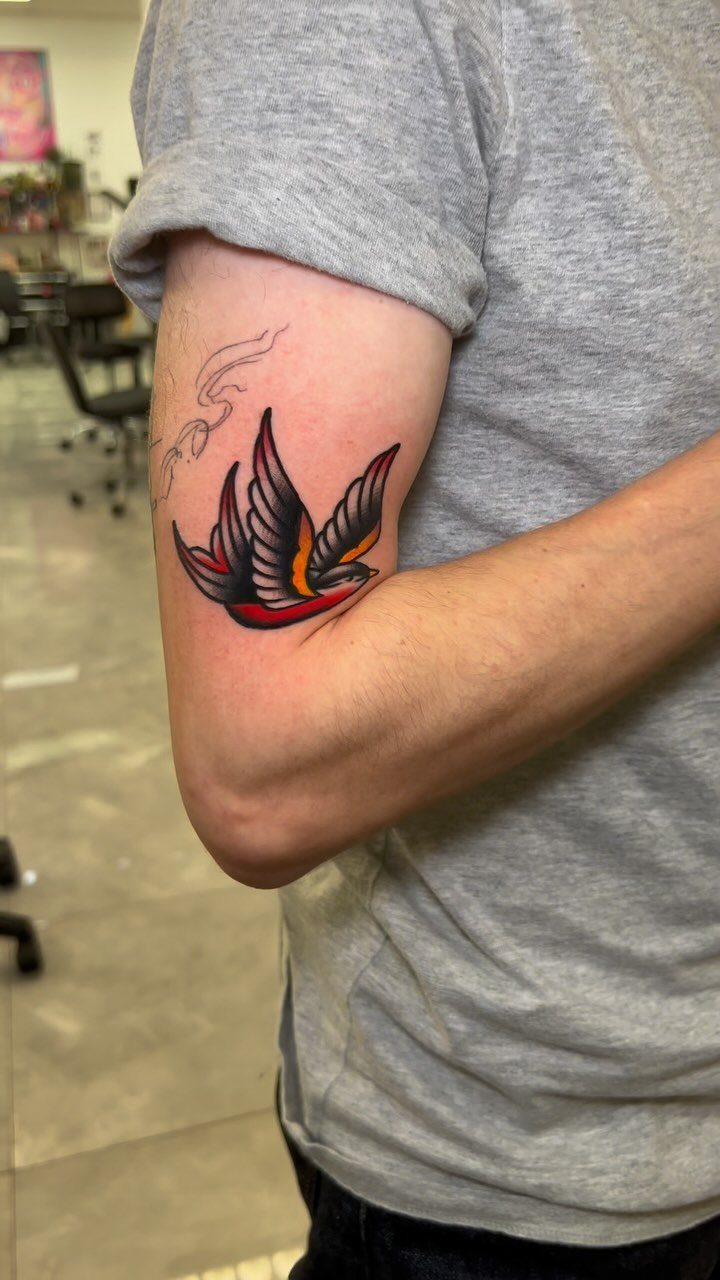
Swallows in traditional style carry the idea of returning home safely, a motif sailors chose after completing long voyages. The red chest and black wings give the bird enough contrast to read clearly from a distance.
Upper arm placement works because the design sits flat on a broad surface, and the bold outlines hold up as the tattoo ages.
Swallows also pair well with other traditional elements like anchors or banners, so you can expand the piece later when you’re ready for a larger composition.
5. Full Sleeve Traditional Tattoos
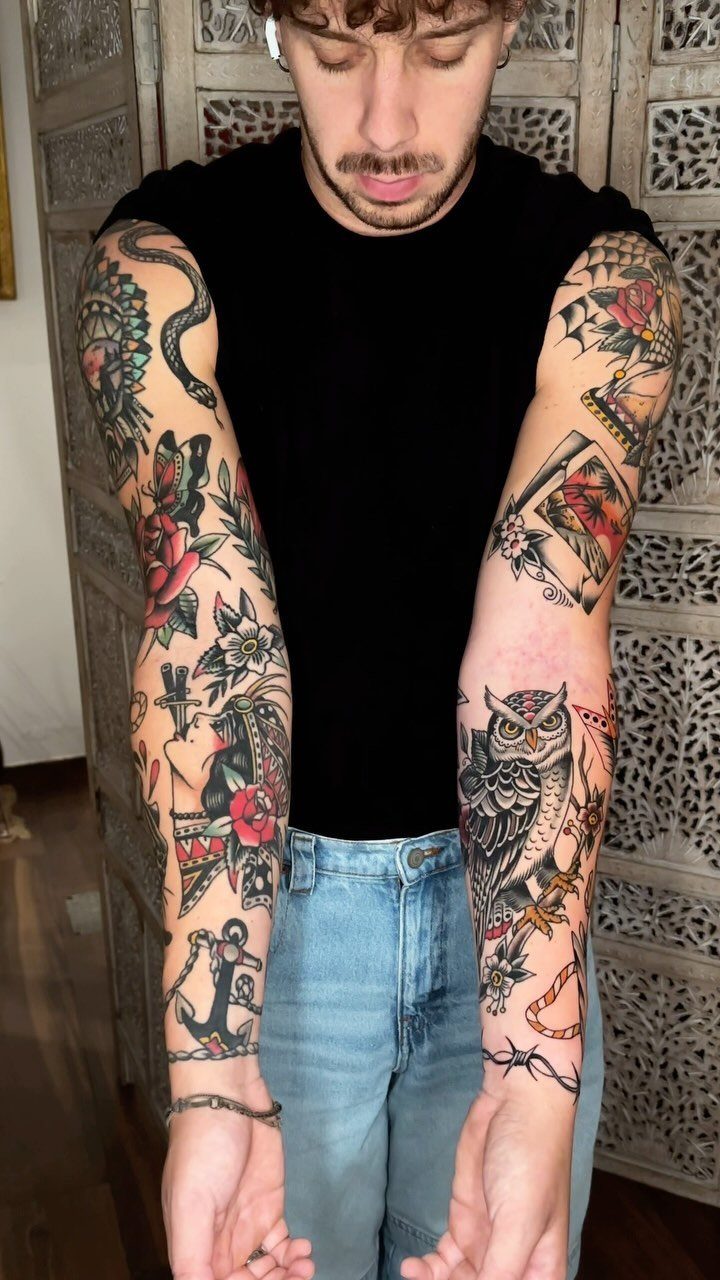
Traditional sleeves give you room to combine multiple motifs into one unified piece.
Sleeves take multiple sessions spread across weeks or months.
Cost varies widely by artist and location, and a full sleeve is a serious investment. Plan for the commitment: once you start, the arm reads best when finished, so stopping halfway leaves the design unresolved.
6. Ship Traditional Tattoo
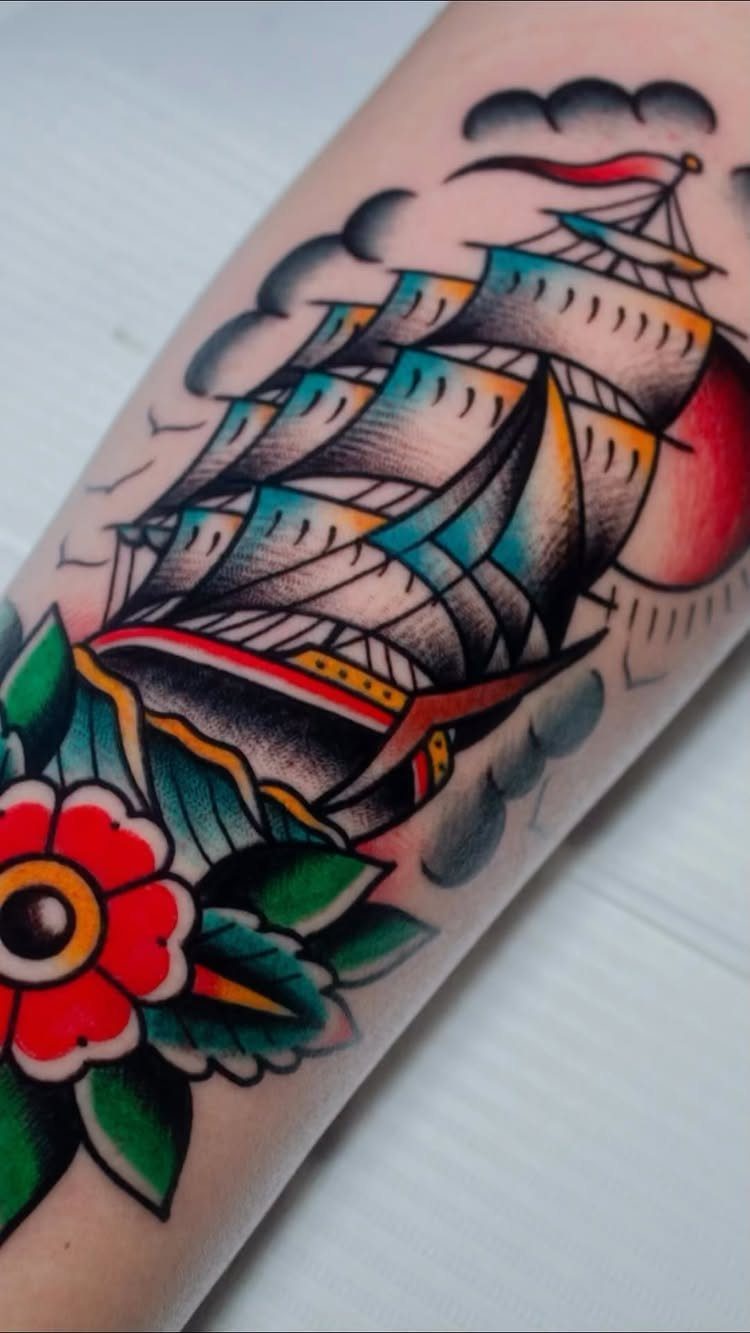
A ship with full sails was the only way home for a sailor, and traditional tattoos kept that image close as a reminder of survival and direction.
Ships fit well on the forearm, thigh, or calf because the vertical shape of the mast follows the length of the limb.
The design stays readable even at a smaller scale, so you can size it to fit narrower spots like the bicep or outer forearm.
The flower adds balance and ties the piece to other traditional elements if you’re building a larger composition.
7. American Traditional Tattoo
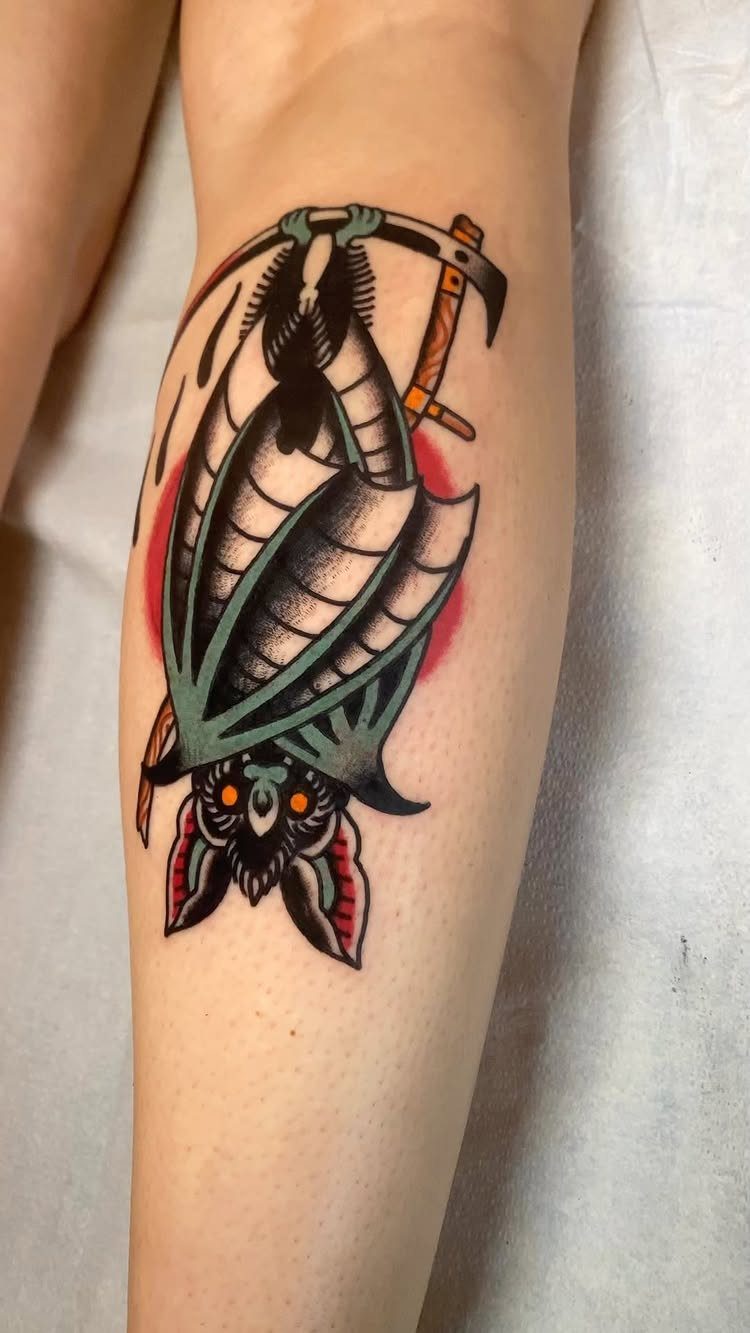
Bold black outlines paired with flat, saturated color define American traditional work. Thick black lines frame solid red shading, and the bat reads cleanly even from across a room.
Limited color palettes age better than gradients or fine detail.
Red, yellow, green and black stay vivid longer because the pigment sits in thicker sections of skin, and touch-ups are simpler when the design relies on solid fills rather than soft transitions.
The leg placement gives you a canvas large enough to show the motif without cramming it into a smaller spot.
Traditional American tattoos, also known as old-school tattoos, are a distinctive style of tattooing that originated in the United States in the late 19th century, gaining their full-on popularity in the early to mid-20th century and keeping it to this day, too.
8. Panther Tattoo
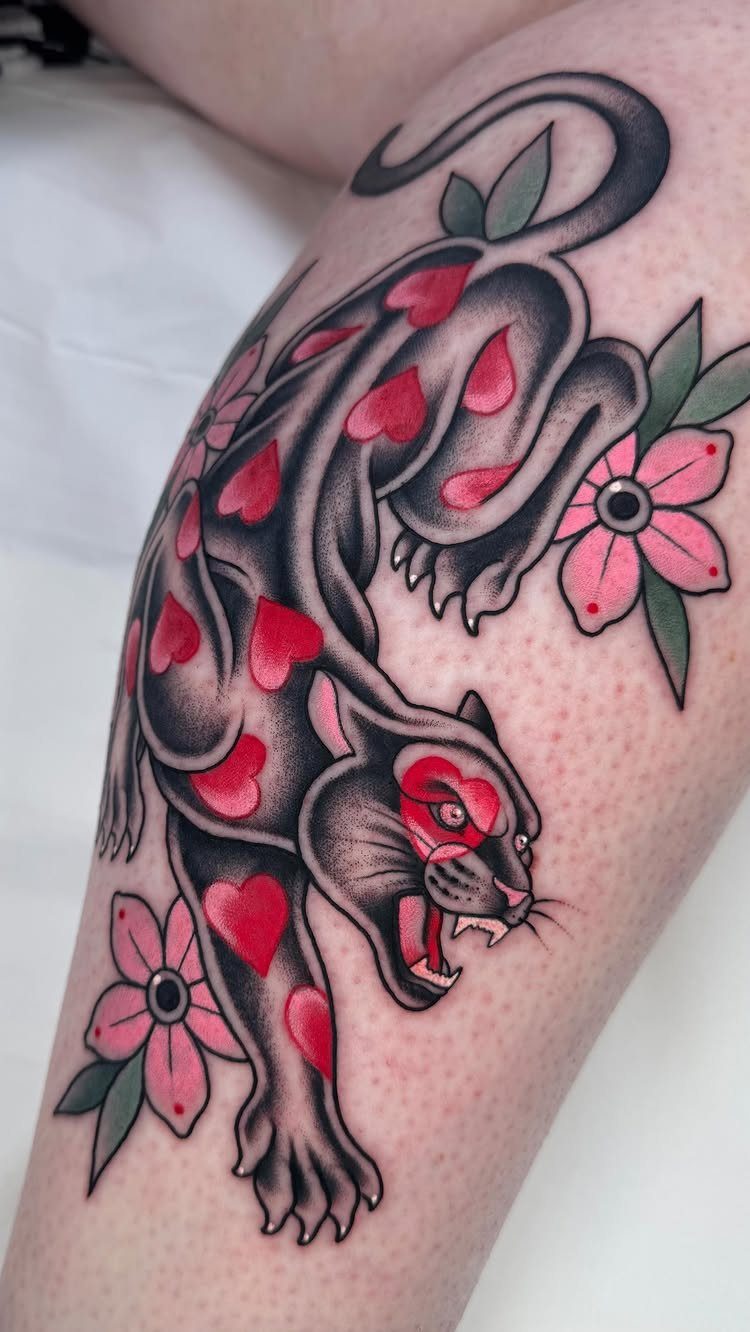
Panthers in traditional tattooing signal courage and a readiness to protect what matters. The imagery comes from sailors and soldiers who wore them as a statement of fearlessness.
Pairing the panther with hearts and flowers softens the aggression without losing the symbolism. The red and pink add contrast against the solid black body, and the composition fills the leg without spreading too thin.
This design suits someone who wants the strength the panther represents but also values the balance the florals provide. The bold outlines hold detail across years, so the piece stays sharp as it ages.
9. Snake Tattoo
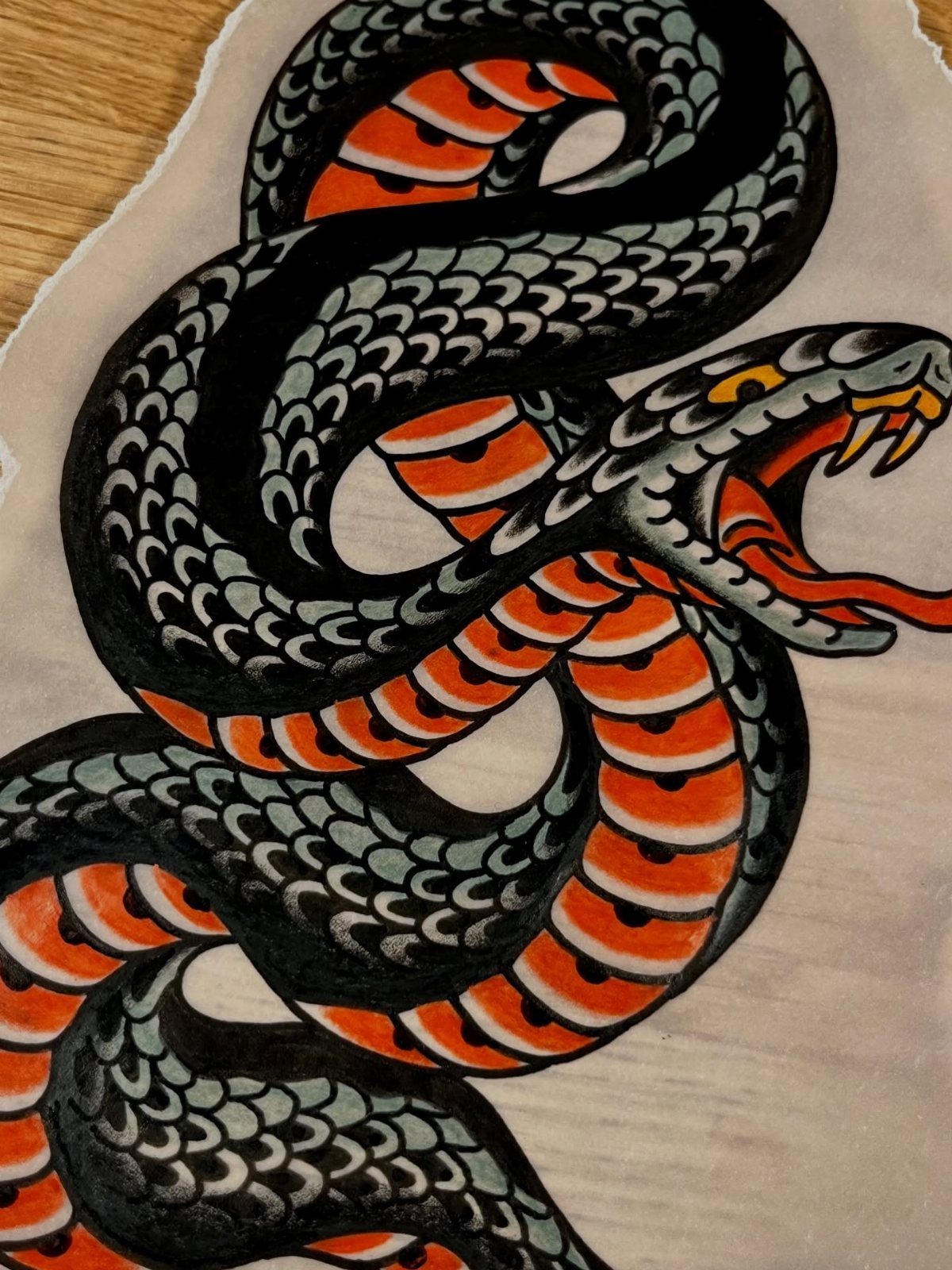
A coiled snake fits well on round or tapered areas like the shoulder, bicep or calf because the body wraps naturally.
A snake can stand alone or fold into a larger composition with roses, daggers or banners.
The coiled posture keeps the design compact, so you can size it to fit smaller real estate without losing the detail that makes it recognizable.
The symbolism ties to change and survival, but the design holds up on its own even without leaning on meaning.
10. Skull Tattoo
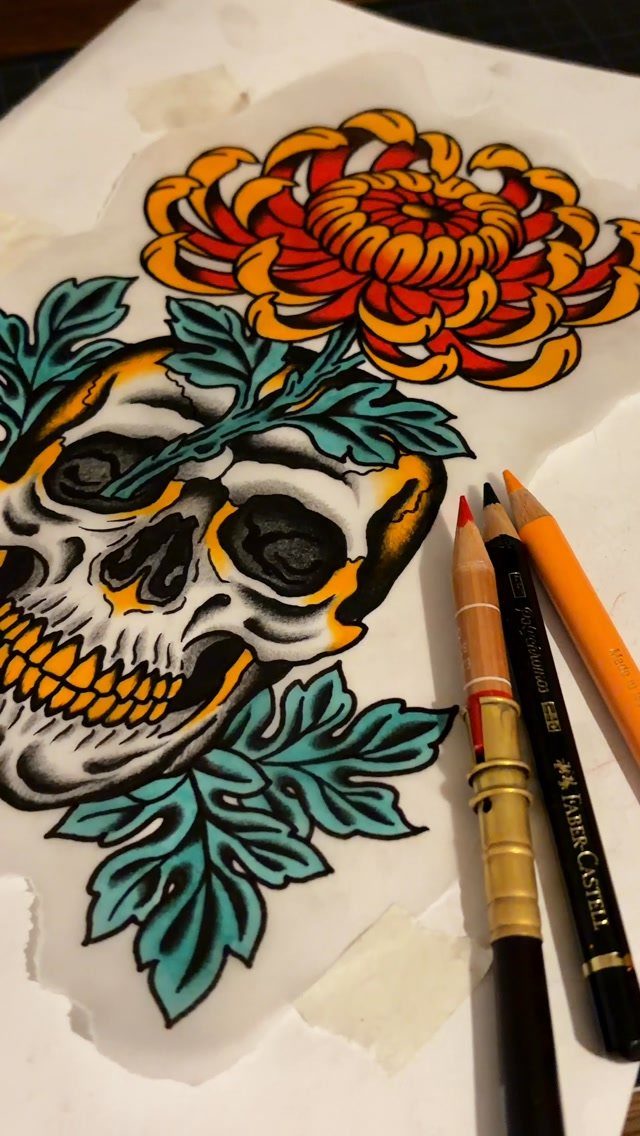
Skulls paired with flowers balance the mortality symbol with something living.
This combination scales well. A smaller version fits the forearm or shoulder, while a larger piece suits the thigh or upper arm where you have more room to show both elements clearly.
The orange petals against the white skull create enough contrast to keep the design from blending together. Bold outlines create that separation, so each part stays distinct as the tattoo ages.
11. Pin-up Girl
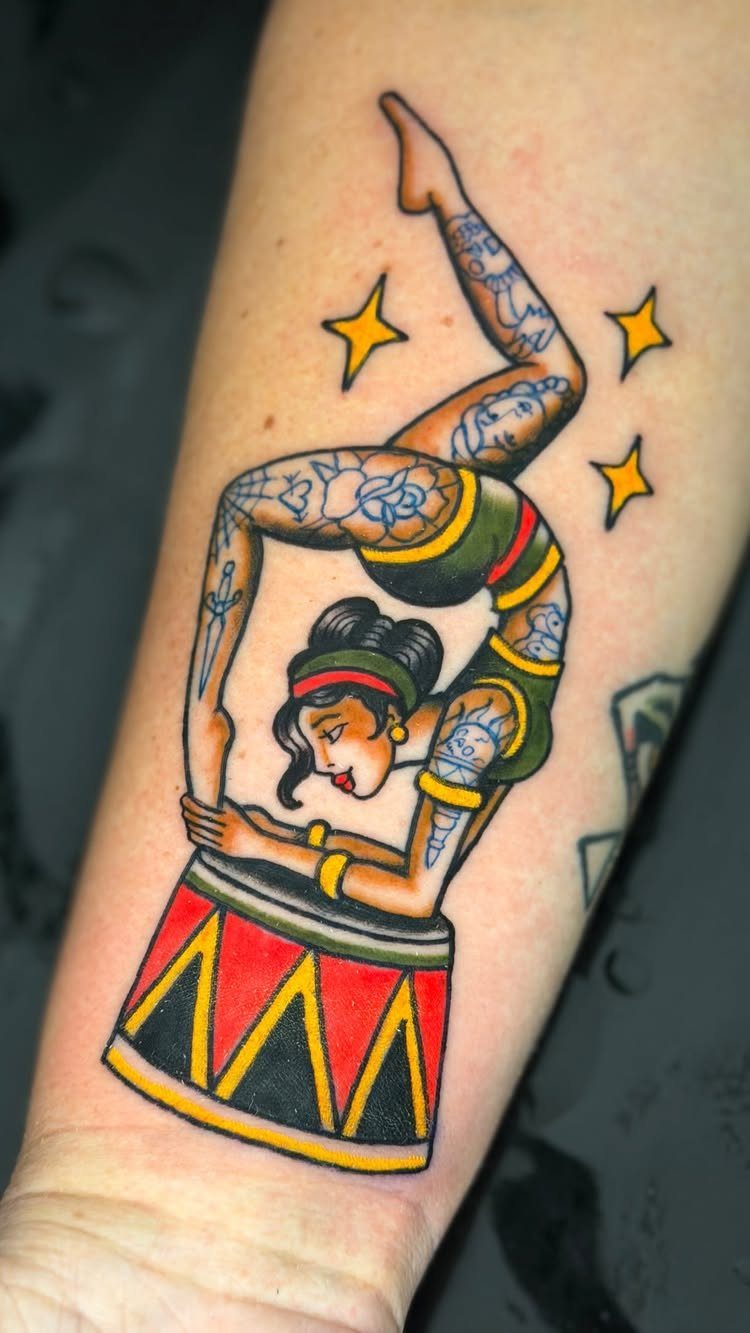
Pin-up figures in traditional tattoos carry 2 sides: a reminder of home and a symbol of confidence. The backbend pose adds movement, and the drum grounds the design with solid color and detail.
This motif fits the outer shoulder or outer thigh where the shape can stretch vertically. The curved posture follows the natural lines of the limb, so the piece reads well from multiple angles.
Color choice matters here. Red and yellow keep the design bright, and the skin tone of the figure stays neutral enough to avoid fading issues that happen with lighter pigments.
12. Bold Black Outlines
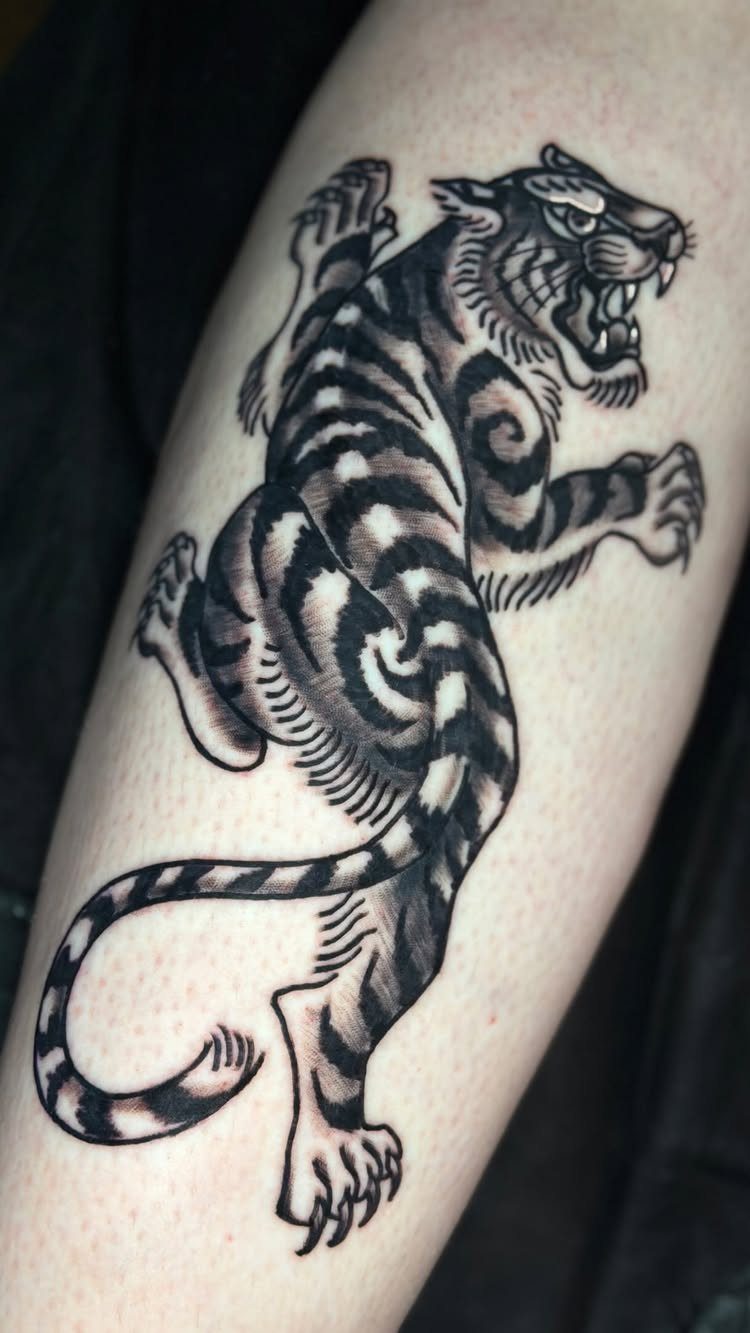
Thick outlines are the reason traditional tattoos hold up decades after the session. Black lines frame grey shading: even as the shading softens over time, the outlines keep the tiger legible.
Fine-line work loses clarity as skin changes, but bold outlines resist that. The technique works because the ink sits deeper and spreads less, so the border between design and skin stays crisp.
Grey wash adds dimension without the risk of color fading unevenly. The leaping posture suits the leg because the vertical space lets the body extend fully, and the spot stays visible without sitting in a high-friction area.
13. Traditional Flash Tattoos
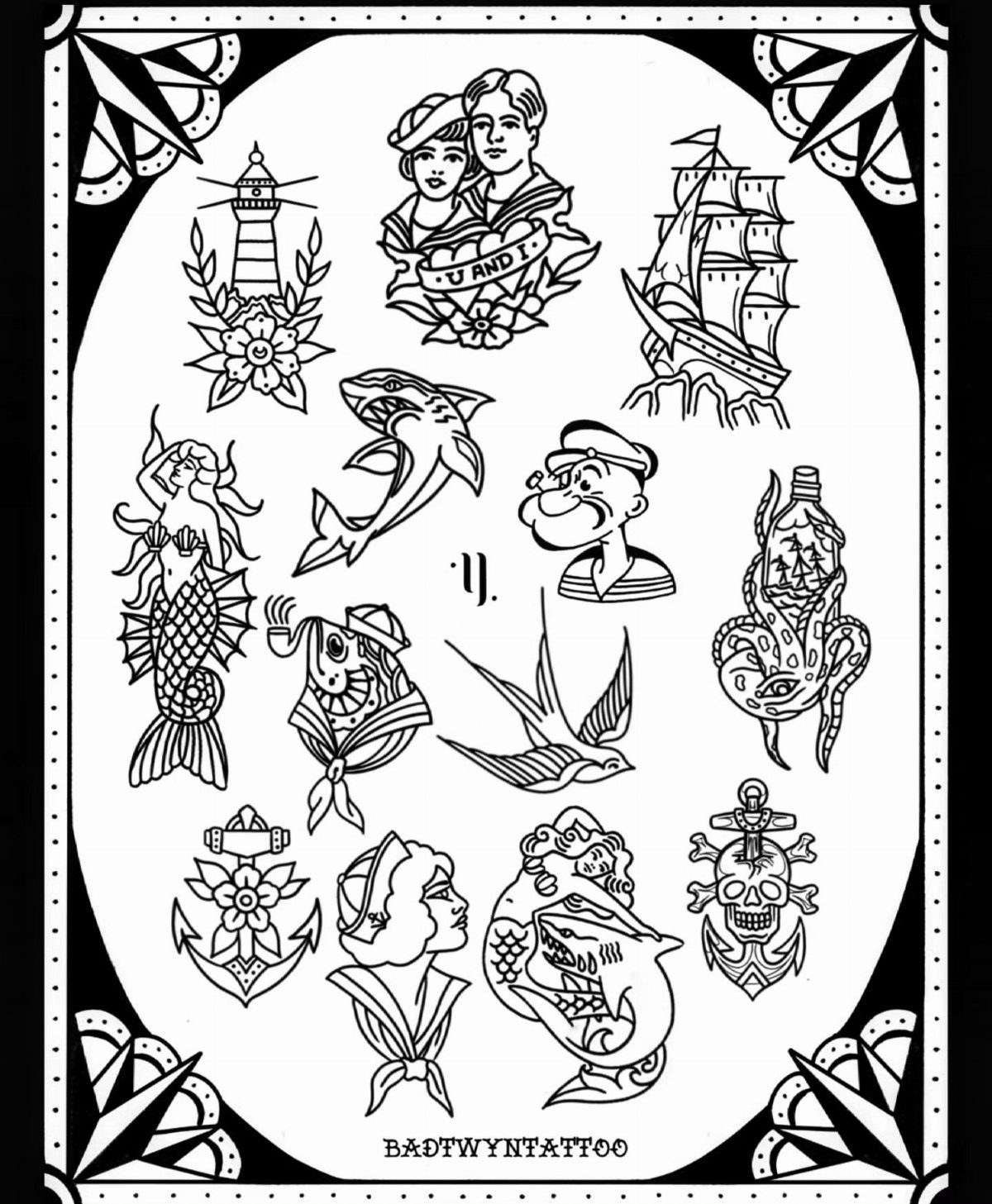
Flash sheets display dozens of designs on a single page, each one small enough to fit a palm or forearm.
Shops kept these sheets on the wall so a walk-in could point at something and leave with it an hour later.
The appeal is speed and readability. A skull, a dagger, a heart: each image carries meaning without explanation, and the designs age well because they were drawn to last.
Choosing from flash gives you a piece rooted in the craft’s history rather than a custom drawing that might not hold up as cleanly.
14. Traditional Eagle Tattoo
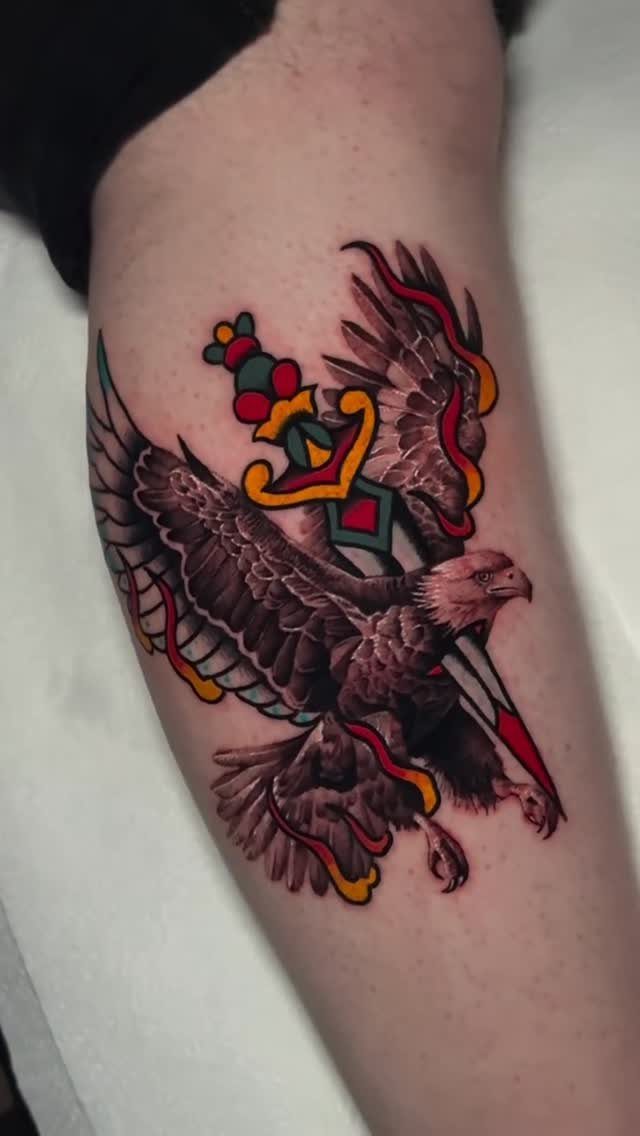
Eagles paired with swords or banners signify strength and protection. The forearm gives the design enough length to show the full wingspan, and the sword adds a vertical element that follows the shape of the arm.
The brown feathers against the red and yellow ribbons create contrast without piling on too many colors. The bold outlines keep the eagle’s body distinct from the sword, so the piece stays legible as it settles into the skin.
This design suits someone who wants the symbolism in a form that stands apart from the snake or panther.
15. Traditional Butterfly Tattoo
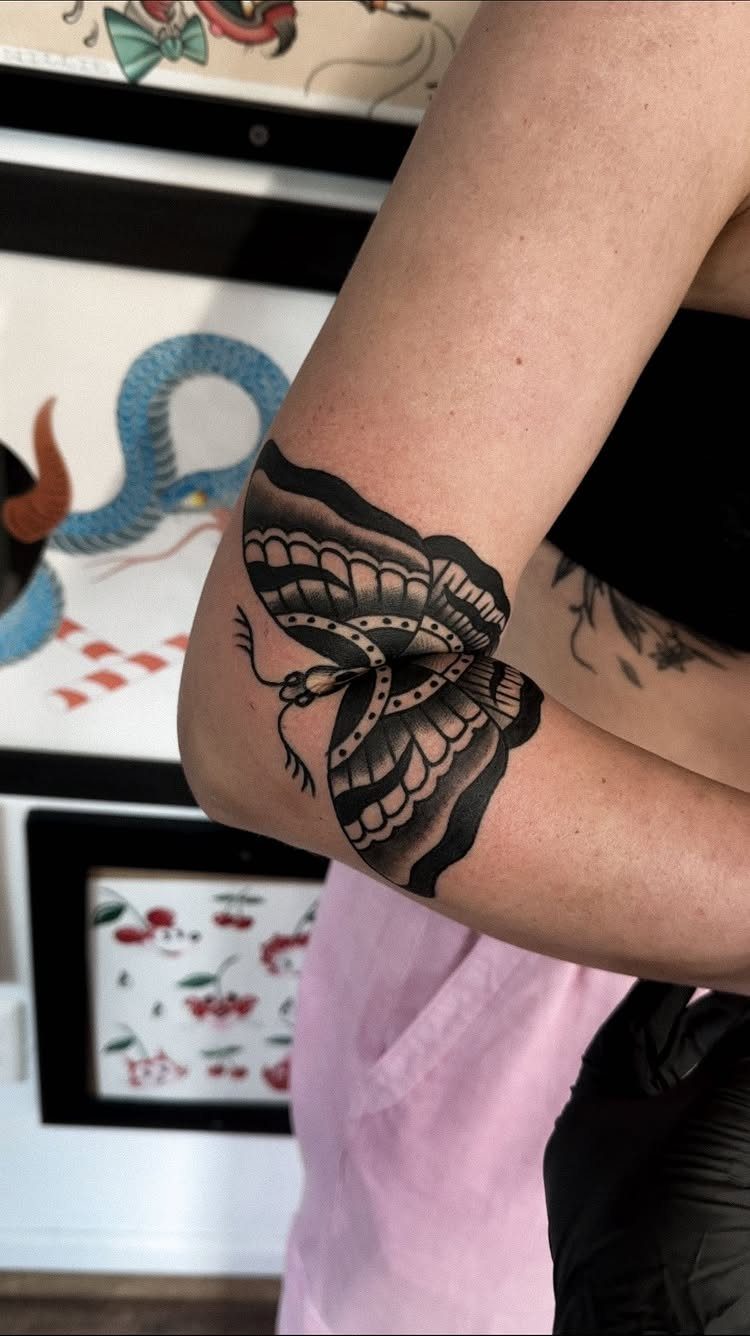
Placing a butterfly directly over the elbow lets the wings spread across the joint. The black and grey palette keeps the design sharp without the risk of color fading unevenly, and the bold shading holds detail across movement.
Elbow tattoos hurt because the skin sits close to bone with little padding beneath.
Healing takes longer since the joint bends constantly, so expect the scab to crack if you don’t keep the area moisturized and avoid heavy lifting during the first week.
16. Traditional Pet Portrait Tattoo
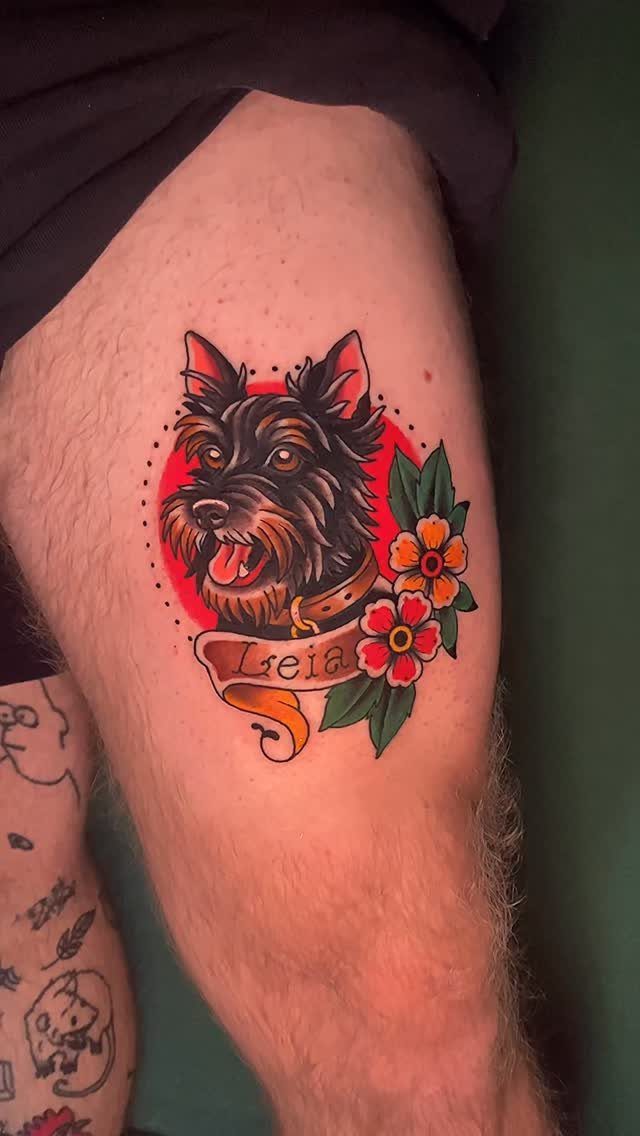
A portrait of a specific dog translates well into traditional style when you pair it with flowers and a banner.
The terrier’s face sits center, framed by petals and a name, which keeps the focus on the subject while adding decorative detail.
The red background creates separation between the dog and the flowers, so each part reads clearly. Traditional portraits work because the bold outlines compensate for the simplification that happens when you reduce a photo to solid shapes and limited color.
17. Traditional Dragon Tattoo
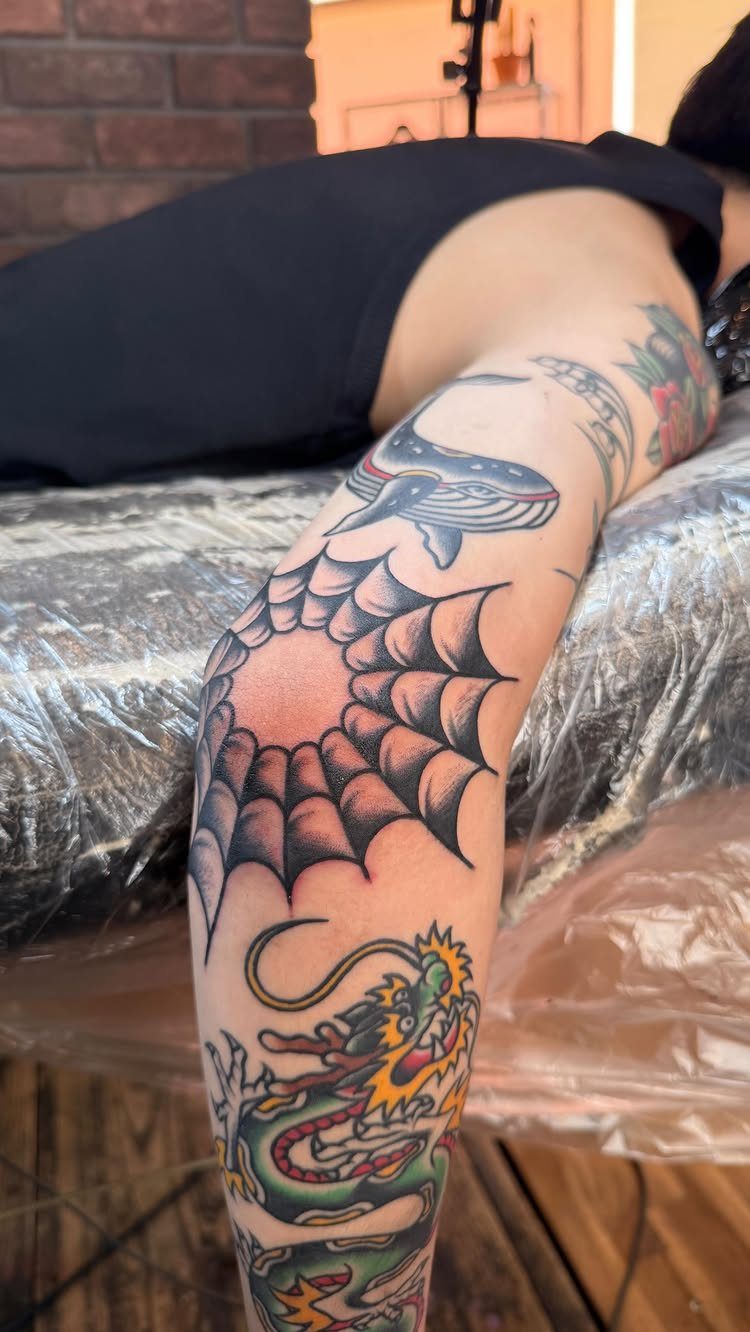
A dragon stretched along the forearm pairs naturally with smaller motifs like a spider web on the elbow or a whale near the wrist.
The combination fills the arm without covering it entirely, and each piece can stand alone or tie into a larger design later.
The dragon’s curved body follows the muscle, so the shape moves with the arm. Pairing multiple traditional images on one limb keeps the style consistent, and the bold outlines keep each piece readable even when they sit close together.
18. Traditional Leg Sleeve
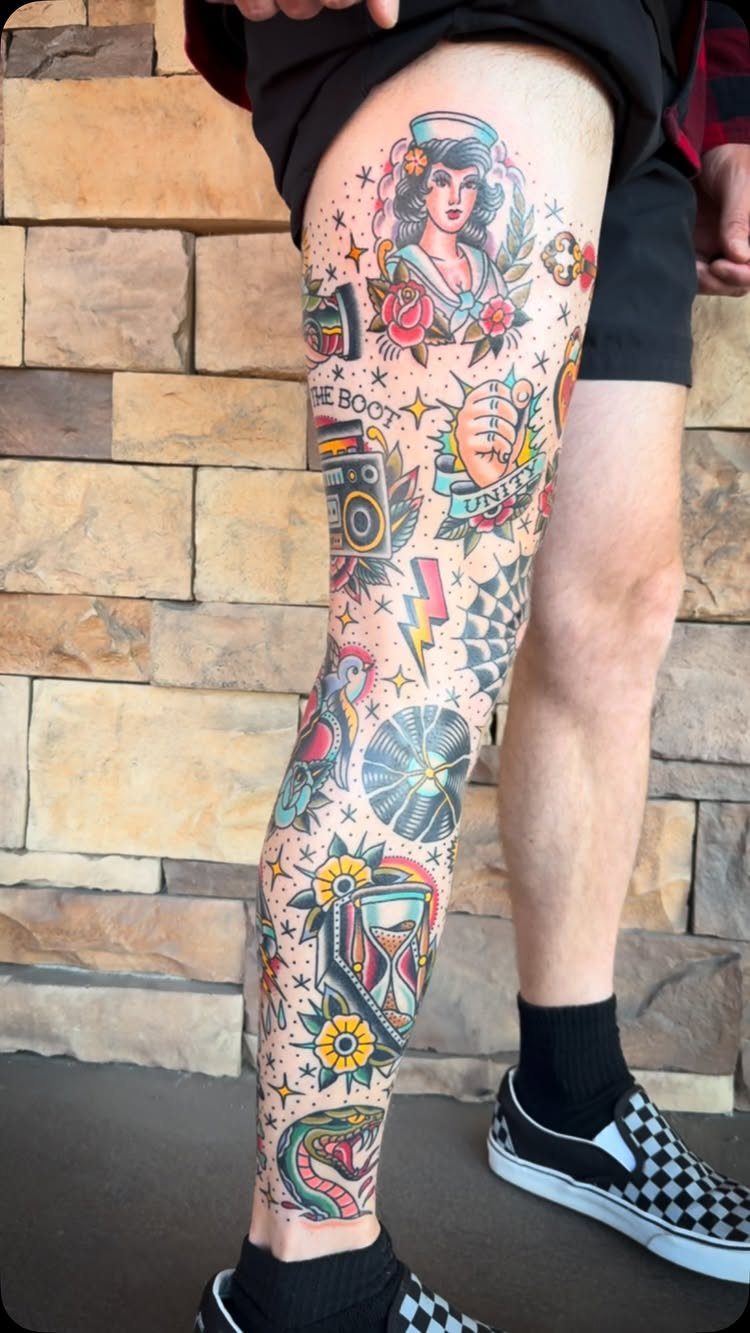
A leg sleeve in traditional style gives you room to layer multiple images without forcing them into one scene.
The hourglass, snake and sailor girl each carry their own symbolism, and the leg’s length lets you stack them vertically so nothing feels cramped.
Leg sleeves take time because the canvas is large, though the flatter muscle can make some sessions easier on both artist and client.
Cost varies by artist, but expect the same commitment: once you start, stopping halfway leaves gaps that interrupt the flow. Plan for the full piece before you sit for the first session.
Choosing a Tattoo Theme
Pick a motif that carries something real for you, even if that connection is just liking the way it looks. Personal meaning gives the piece weight, but aesthetics alone are enough reason to commit.
The theme narrows your options. If you want something tied to resilience or change, that pulls you toward animals or objects that carry those associations in traditional work.
Research artists who work in the style regularly.
Their portfolios show whether they handle bold outlines cleanly and whether their color saturation holds up in healed photos. A specialist knows how to scale traditional motifs to fit real placement without losing the clarity that makes the style last.
Designing Your Tattoo
Bring reference images to the consultation, but stay open to the artist’s input on how the design translates to skin.
A photo you saved might need thicker lines or fewer colors to hold up long term, and the artist knows which adjustments keep the piece readable as it ages.
Customization happens in the details: the angle of a dagger, the species of flower, the expression on a portrait. Those choices make the tattoo yours without abandoning the structure that defines traditional work.
Ask to see the stencil before the session starts. That’s your last chance to adjust placement or proportions, and once the needle touches skin, changes cost time and clarity.
Maintaining Tattoo Vibrancy
Aftercare keeps the ink bright and the skin intact while it heals.
Wash the tattoo gently with unscented soap twice a day, then apply a thin layer of lotion made for tattoo healing. Too much lotion suffocates the skin and slows the process.
Moisturizing the tattoo regularly delivers what the healing skin needs without adding fragrance or alcohol that can irritate the area.
Keep the piece out of direct sun during the first few weeks, and avoid soaking it in pools or baths until the scab lifts completely.
Long-term care is simpler: sunscreen over the tattoo when you’re outside prevents fading, and the bold outlines in traditional work make touch-ups straightforward if color dulls over time.
Frequently Asked Questions
What are the rules of American Traditional tattoos?
The style runs on thick black outlines, a tight palette that rarely strays beyond red, yellow, green and black, and a set of recurring images: eagles, ships, roses, daggers, skulls.
The designs use flat fills without gradients, which keeps the ink readable as it ages and makes touch-ups straightforward when needed.
What is the difference between trad and neo-trad tattoos?
Traditional tattoos stick to bold outlines, solid color fills and a restricted palette, while neo-traditional work adds more colors, detailed shading and complex compositions.
Both styles share the same graphic foundation, but neo-traditional loosens the constraints to allow greater range in imagery and line weight.