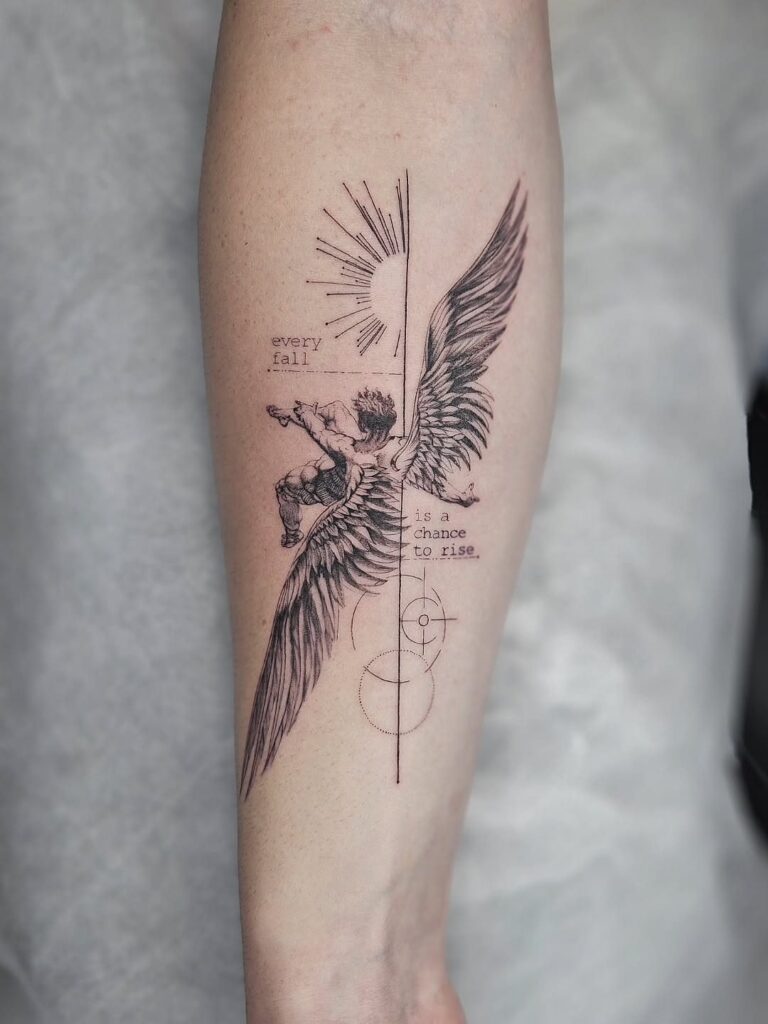
Angel tattoos split between memorial pieces that honor someone by name or date and symbolic designs that carry protection or faith without pointing to a single person.
Placement decides how much detail survives: a full figure with wings and shading needs the vertical length of a forearm, leg or back, while a minimal angel number fits behind the ear or on the wrist.
Realism in black and grey holds the top spot in 2026, though tribal outlines and fine line work offer paths when you prefer bold shapes or sharp detail over soft gradients.
1. Cherub Tattoo
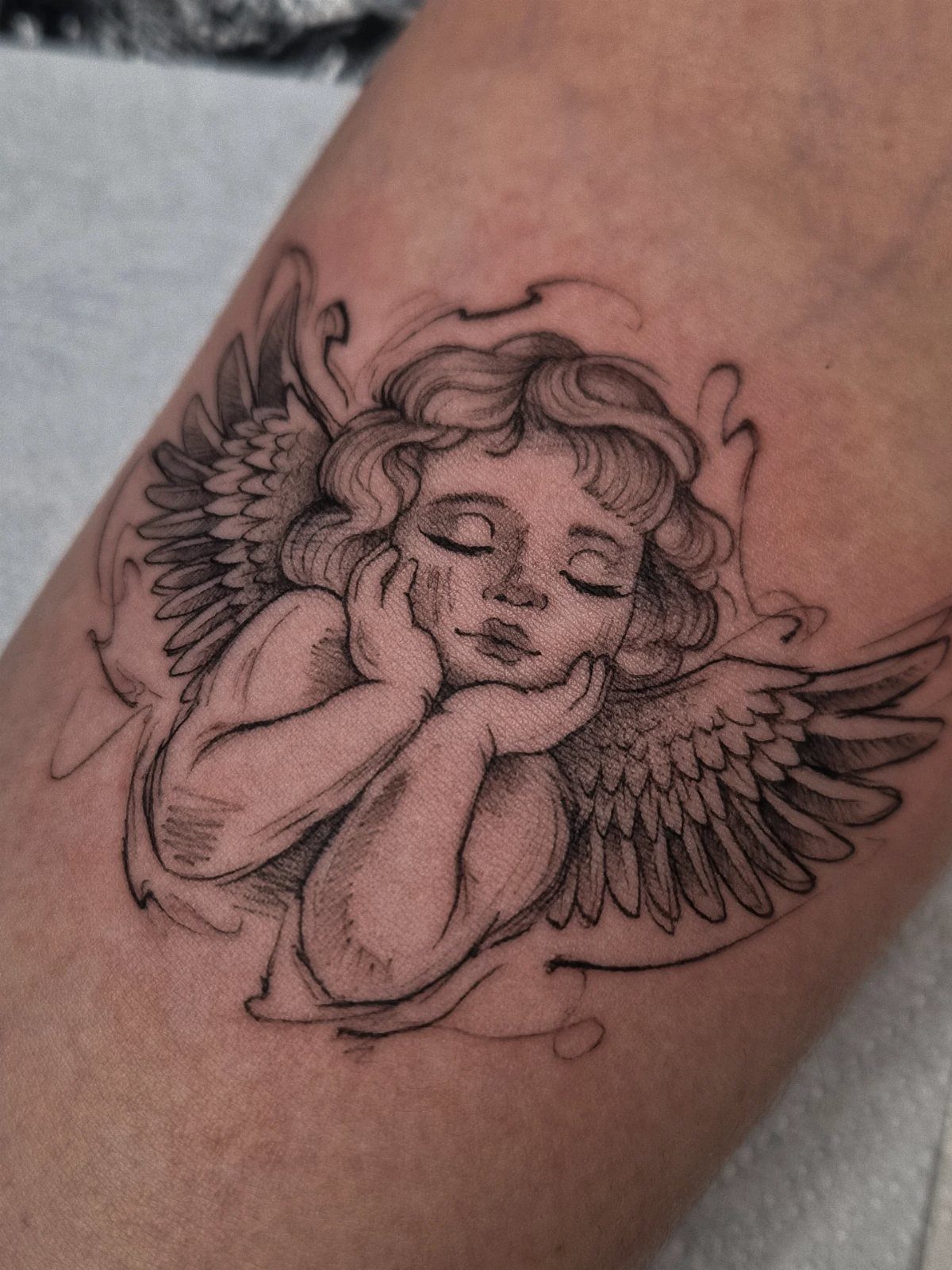
A cherub is that rounded, childlike angel you see sleeping in classical paintings, and in tattoo form it pulls from the same source. The soft curls, the folded wings, and that peaceful expression all signal innocence.
Black and grey keeps it gentle.
The design works well at small to medium scale, and the anatomy is forgiving since the proportions are deliberately soft. I see these most often on the upper arm, shoulder or ribs where you want something personal rather than bold.
2. Devil and Angel Tattoo
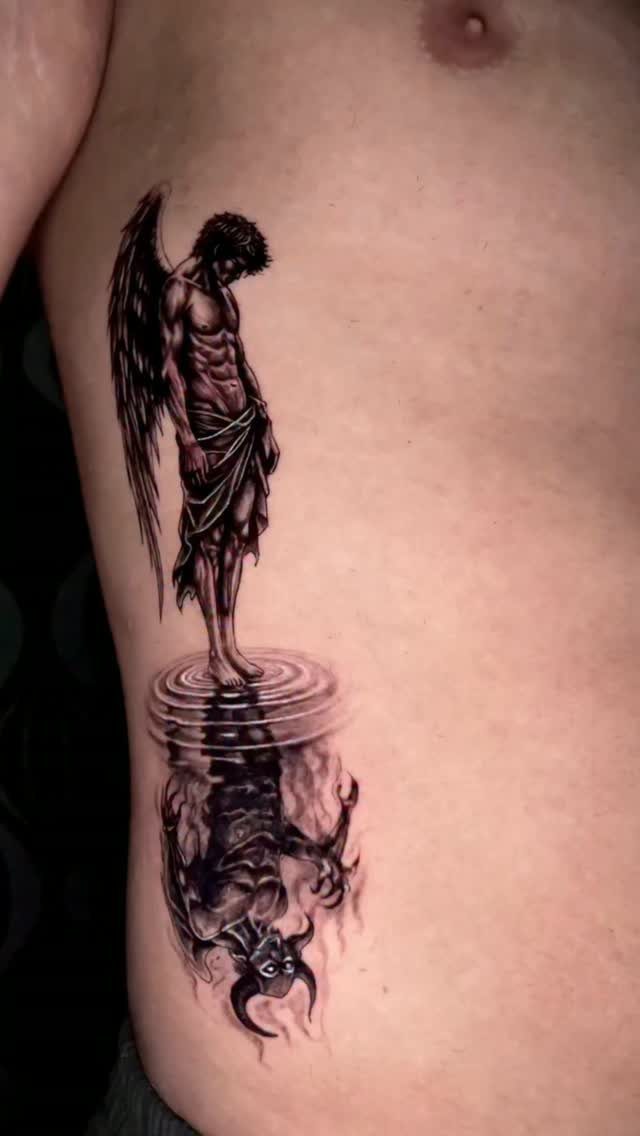
The composition flips between what you show the world and what you wrestle with privately.
The contrast needs real estate. A torso or back gives the artist room to separate the figures and keep both readable.
Black and grey shading defines the water line and the shift in tone from one figure to the other. It reads best when the angel and devil mirror each other in pose, so the reflection feels intentional rather than decorative.
3. Angel Wings Chest Tattoo
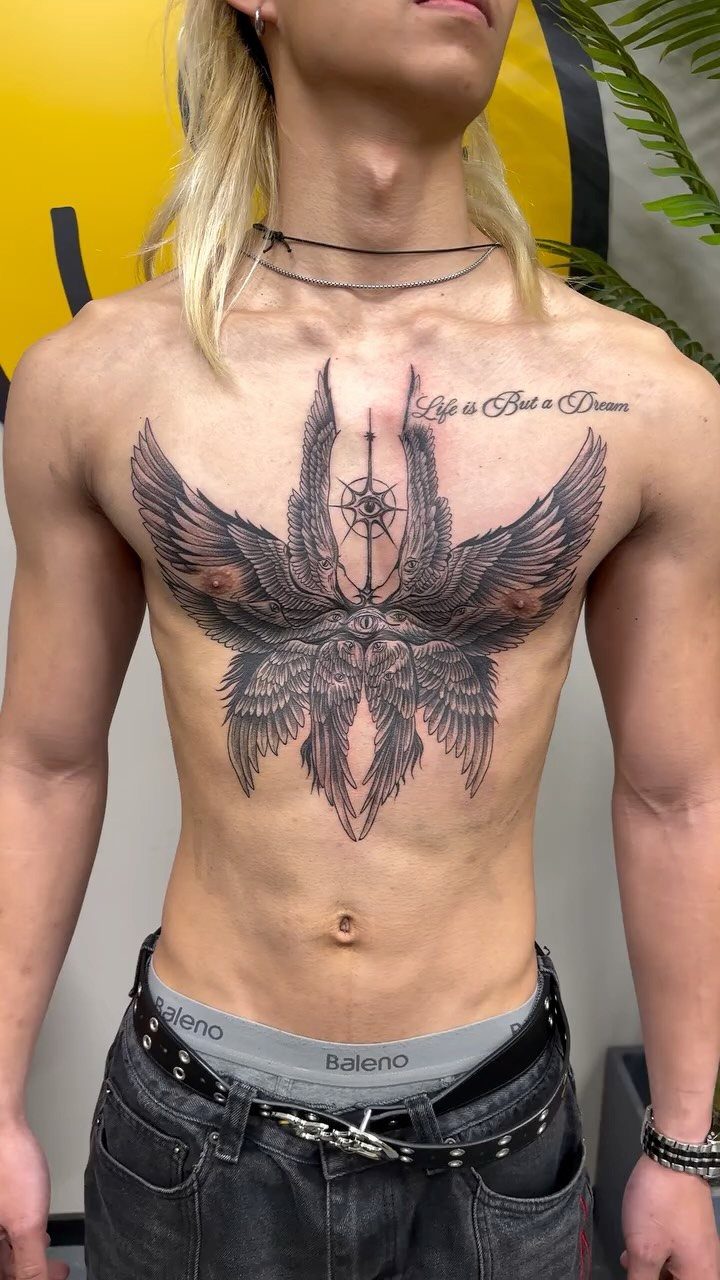
Wings stretched across the chest create one of the largest canvases for an angel tattoo. The sternum sits at the center, and the feathers follow the shape of the pectoral muscles outward, so the design moves with your body.
Plan for multiple sessions.
The sternum ranks high for pain since the needle works directly over bone. Shading determines whether the wings read as soft or graphic, and adding an eye or script between them personalizes the design without crowding it.
4. Guardian Angel Tattoo
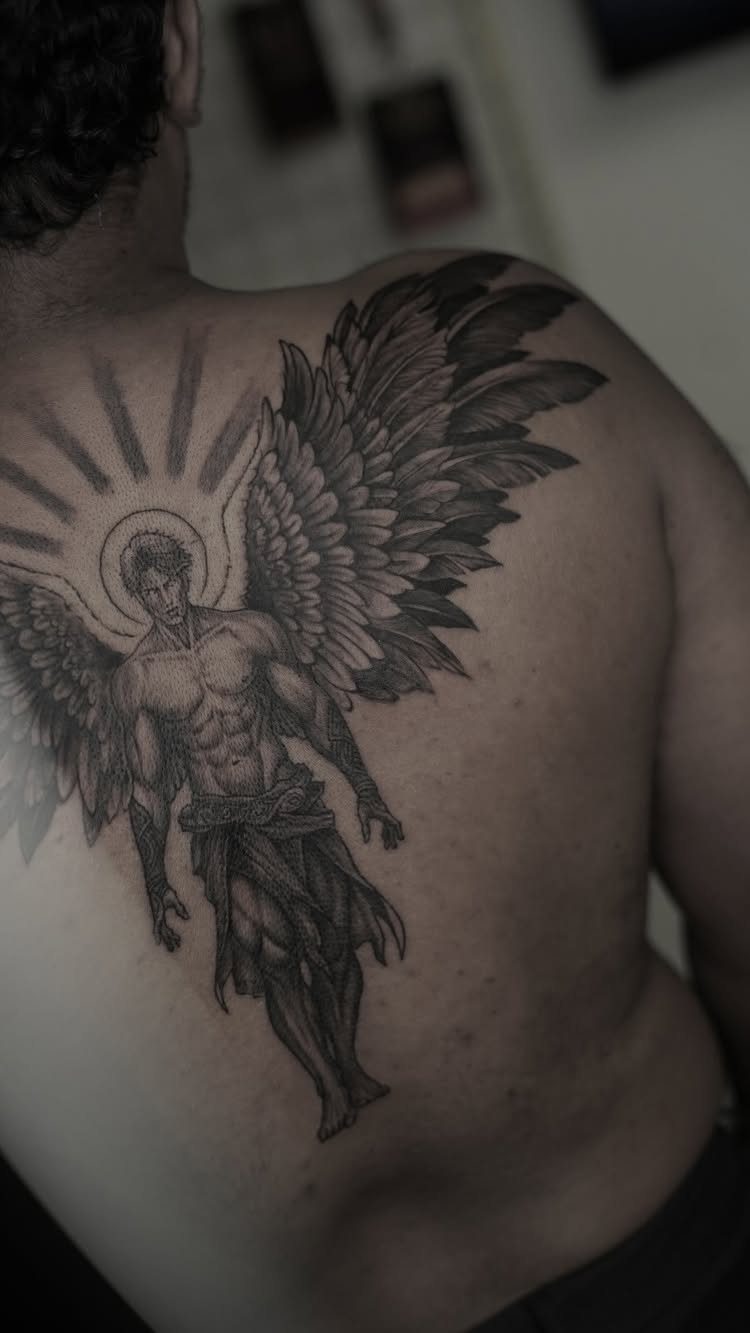
A guardian angel is the figure you picture watching over you, and that role shows in the posture. The halo, the open wings, and the calm expression all point to protection rather than conflict.
The back suits this design because you carry it where you cannot see it, which matches the idea of unseen guidance.
Medium to large scale gives the anatomy room to read clearly, and black and grey realism is the most common approach.
I would add a reference to someone specific if you are memorializing, or keep the features neutral if the meaning is broader.
Guardian angel tattoos are some of the most popular choices for men; their symbolism and endless design choices make them ideal for any person. The angel tattoo is no longer only for religious men; the tattoo now often stands for protection, devotion, hope, and trust.
5. Fallen Angel Tattoo
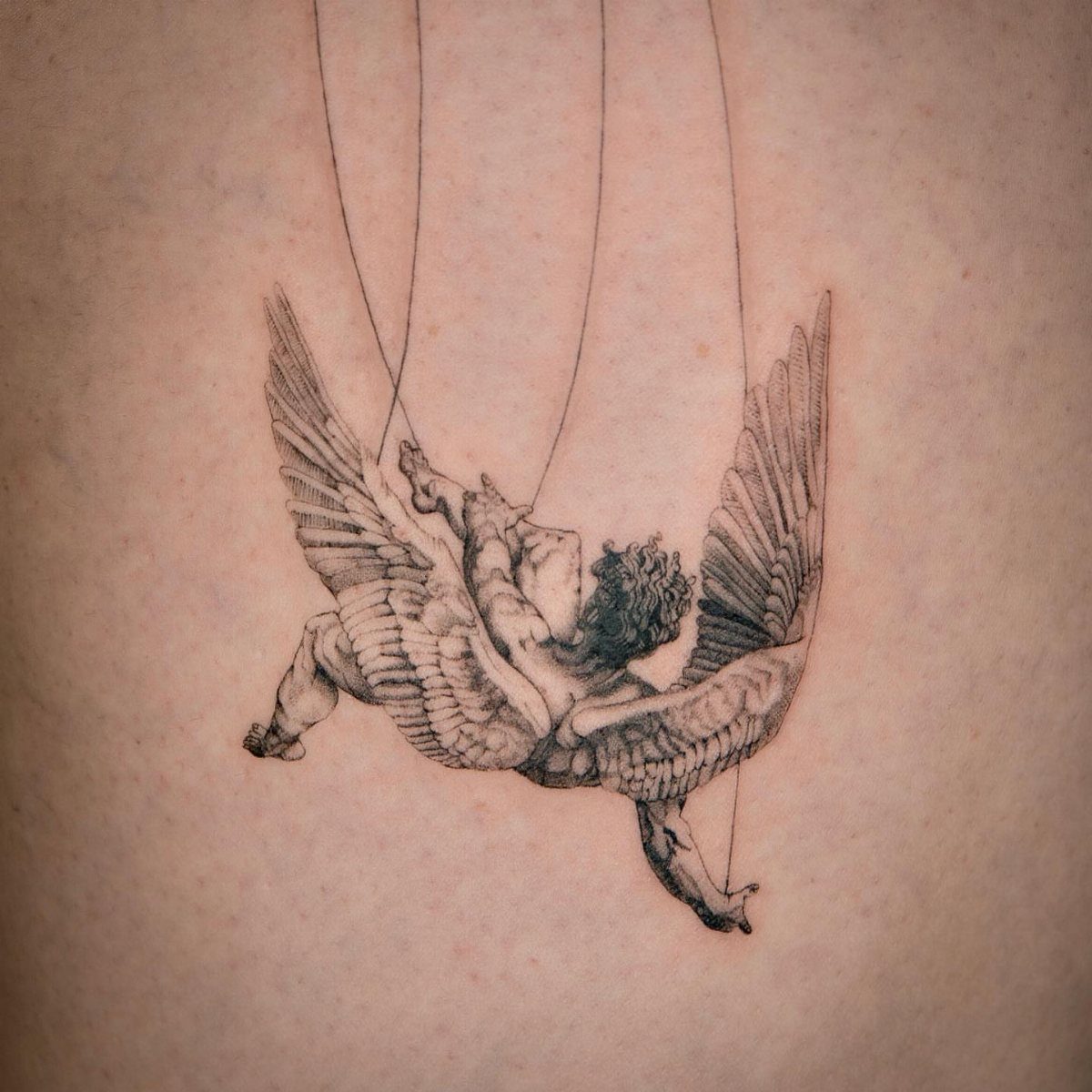
A fallen angel carries the weight of failure or loss, and the marionette strings make that literal. The puppet imagery says you feel controlled, or that you have fought to break free.
The strings need space to extend above the figure, so a vertical placement like the thigh, ribs or forearm works best.
Fine line suits the strings, and black and grey shading keeps the tone somber. This reads as a personal struggle tattoo, so I recommend adding detail that ties it to your own story rather than leaving it generic.
6. Angel of Death Tattoo
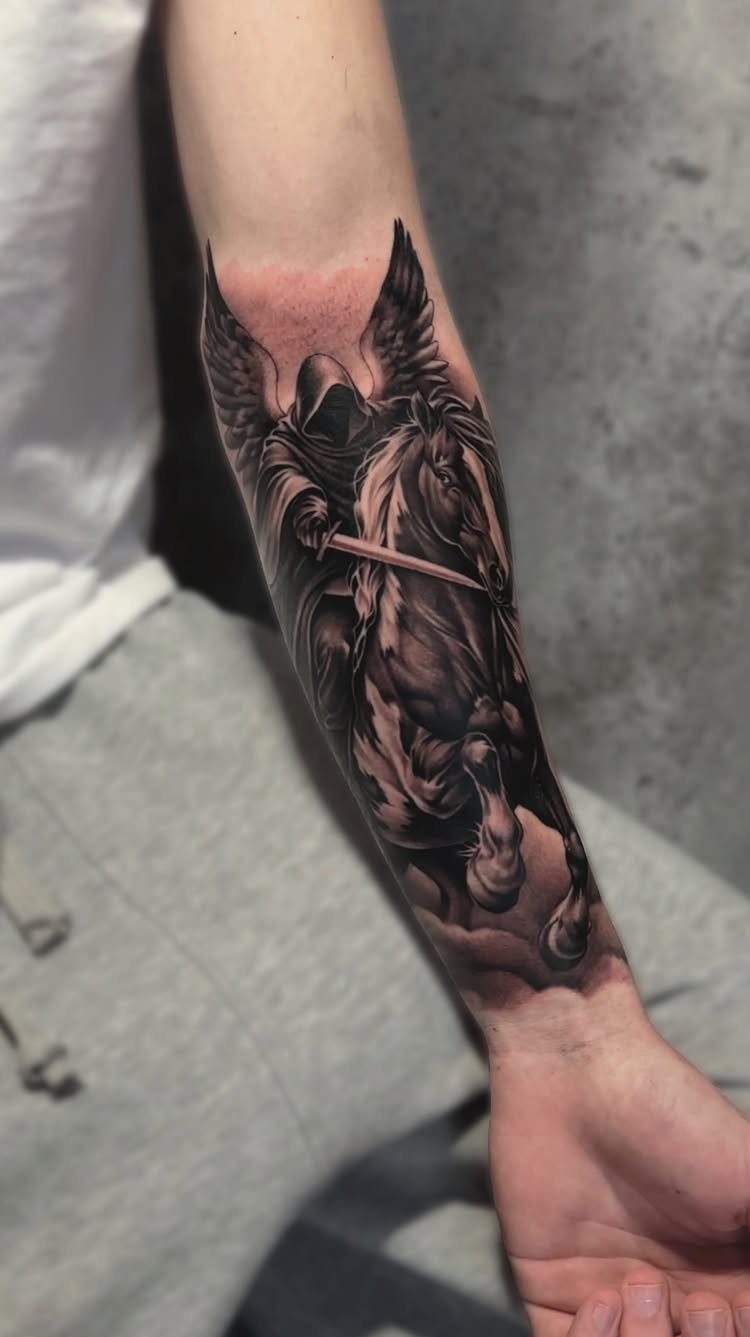
The angel of death shows up cloaked, armed, and usually mounted, and the image skips any softness. This is mortality as a fact rather than a fear, and the design leans dark and detailed.
A forearm gives enough length for the horse and rider to stack vertically without compressing. Black and grey realism handles the fabric folds, the wings, and the weapon with the contrast you need to keep each element distinct.
I like this one when you want an angel tattoo that rejects the usual comfort and leans into the heavier side of the symbol.
7. Archangel Michael with a Sword Tattoo
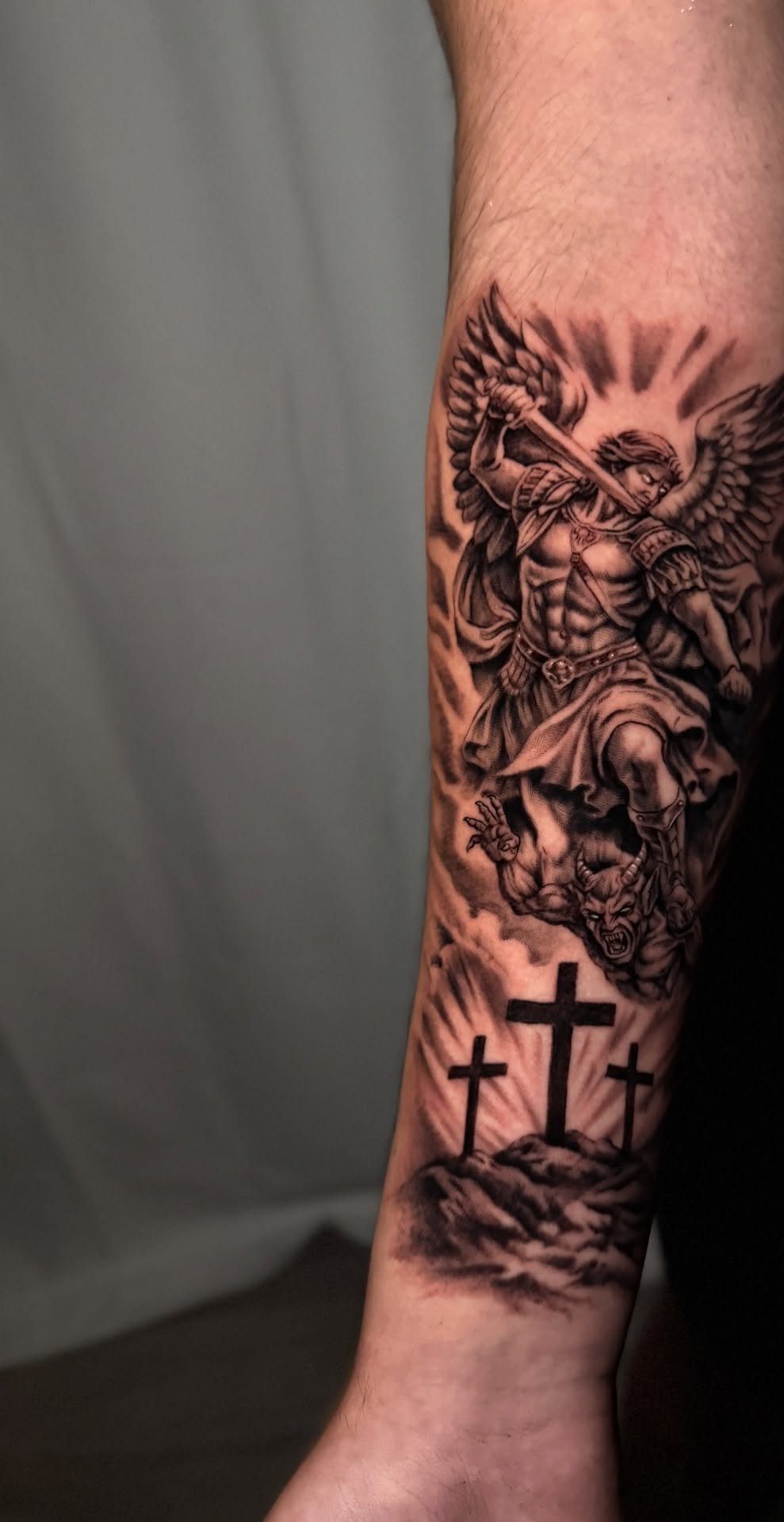
Archangel Michael shows up armed, usually mid-battle, and the sword is the centerpiece. The demon underfoot and the crosses below ground the image in triumph rather than conflict alone.
Black and grey realism handles the musculature, the feather detail, and the tonal shift between figures. I see this one chosen for faith-driven designs where the angel needs to look powerful rather than gentle.
8. Angel Number Tattoo
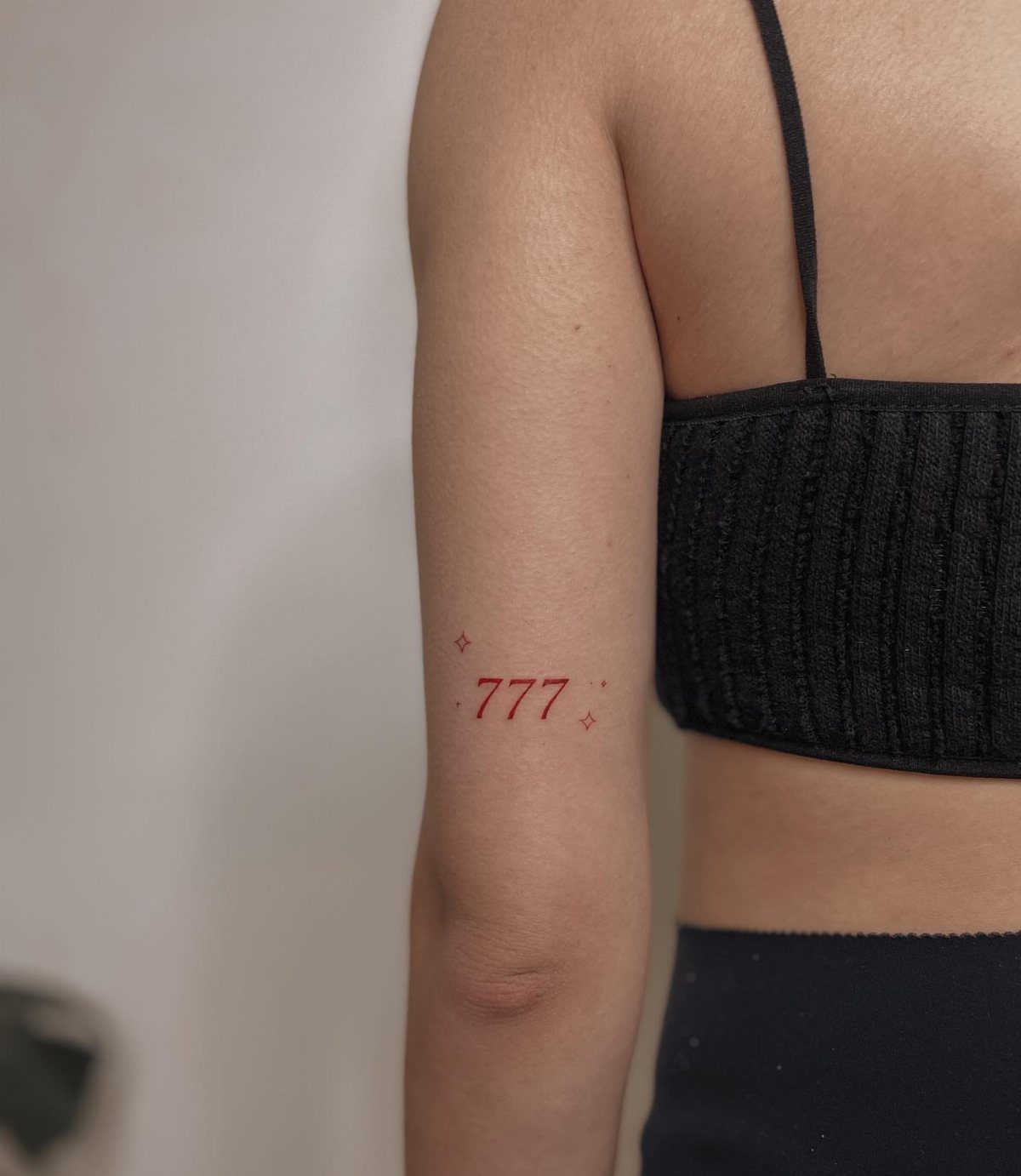
Angel numbers are the repeating sequences people interpret as messages, and 777 is one of the most recognized. The tattoo stays small, usually a cluster of digits with minimal decoration.
This works anywhere you can read it easily. The upper arm, wrist, or behind the ear are common spots.
Color is optional, red ink like this one adds contrast without needing shading. The stars or dots around the number are decorative, not required.
9. Angel Wings with a Heart Tattoo
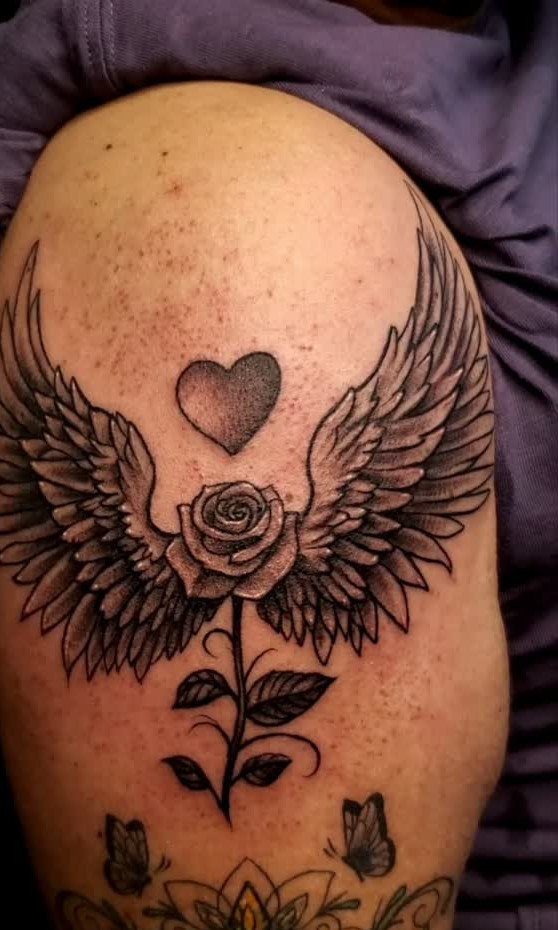
Wings lift the heart, and the pairing reads as love protected or carried. The rose and butterflies add layers, but the core idea is the winged heart itself.
This design clusters multiple symbols, so it needs space to keep each one legible. The upper arm works well for this reason.
Black and grey with selective color on the rose or butterflies gives the piece depth without overwhelming the central image. I would choose this when you want a memorial or romantic piece that still reads as hopeful.
10. Angel Forearm Tattoo
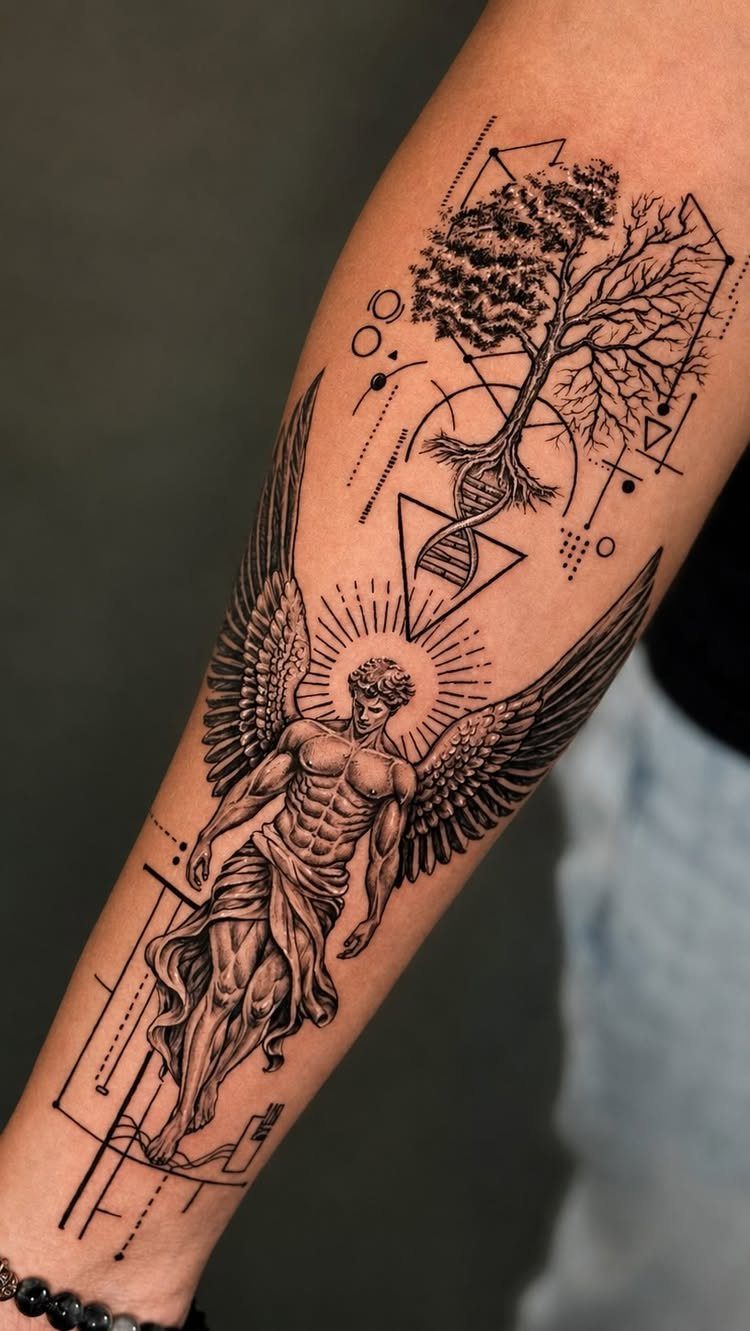
The forearm runs long enough to fit a full angel figure standing, kneeling, or in flight, and the visibility makes it a natural choice when you want the tattoo seen.
Vertical compositions work best here. Background elements like trees or geometric shapes can frame the angel without stealing focus from the figure itself.
Black and grey shading defines the wings and musculature, and the forearm hurts less than ribs or chest. Plan for one or two sessions depending on detail level.
11. Full Angel Sleeve
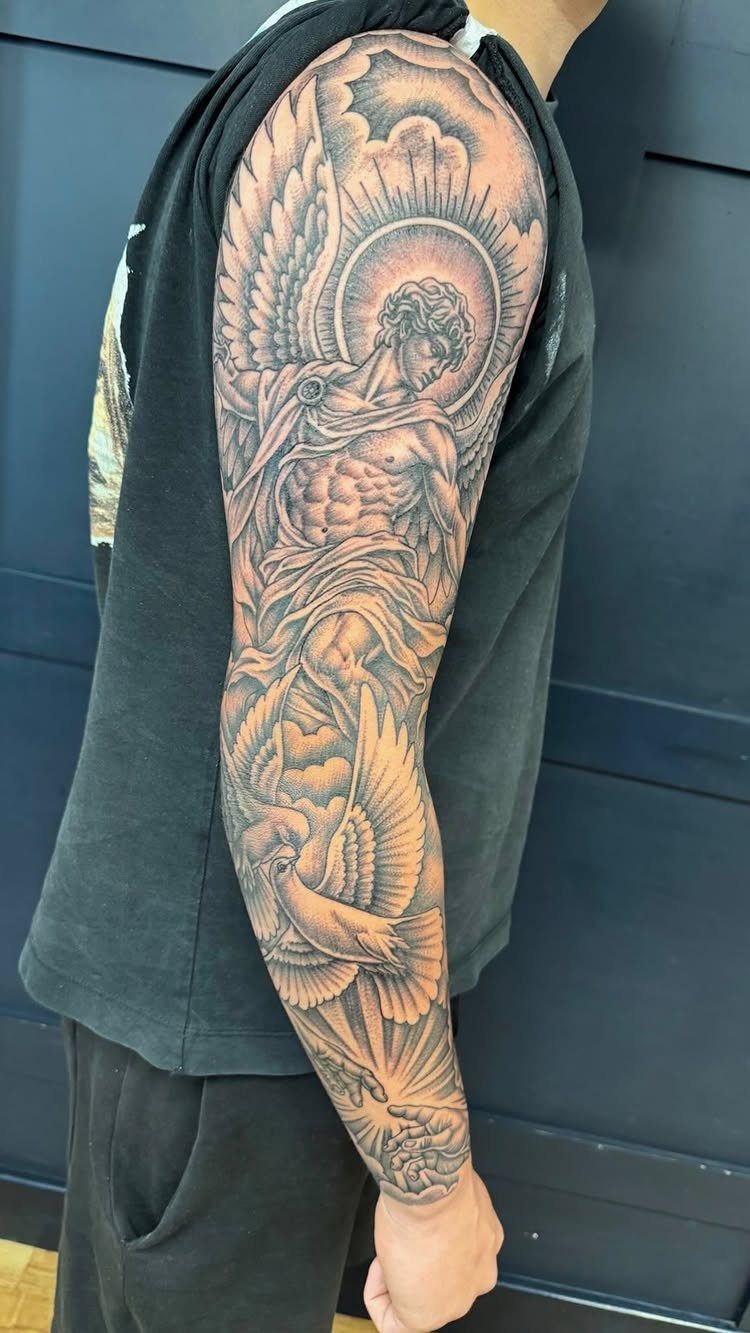
Covering the entire outer arm with one image gives an angel the vertical length it needs to show wings, robes and posture in full.
The wings, the drapery, and the surrounding elements like doves or clouds give the artist room to build a cohesive composition from shoulder to wrist.
This took 2 days back to back, which is typical for a sleeve done in longer sessions.
Black and grey realism is the standard approach, and the outer arm suits bold imagery since it reads clearly from a distance. Expect multiple hours of work and higher cost than smaller pieces.
12. Angel Wing Tattoo
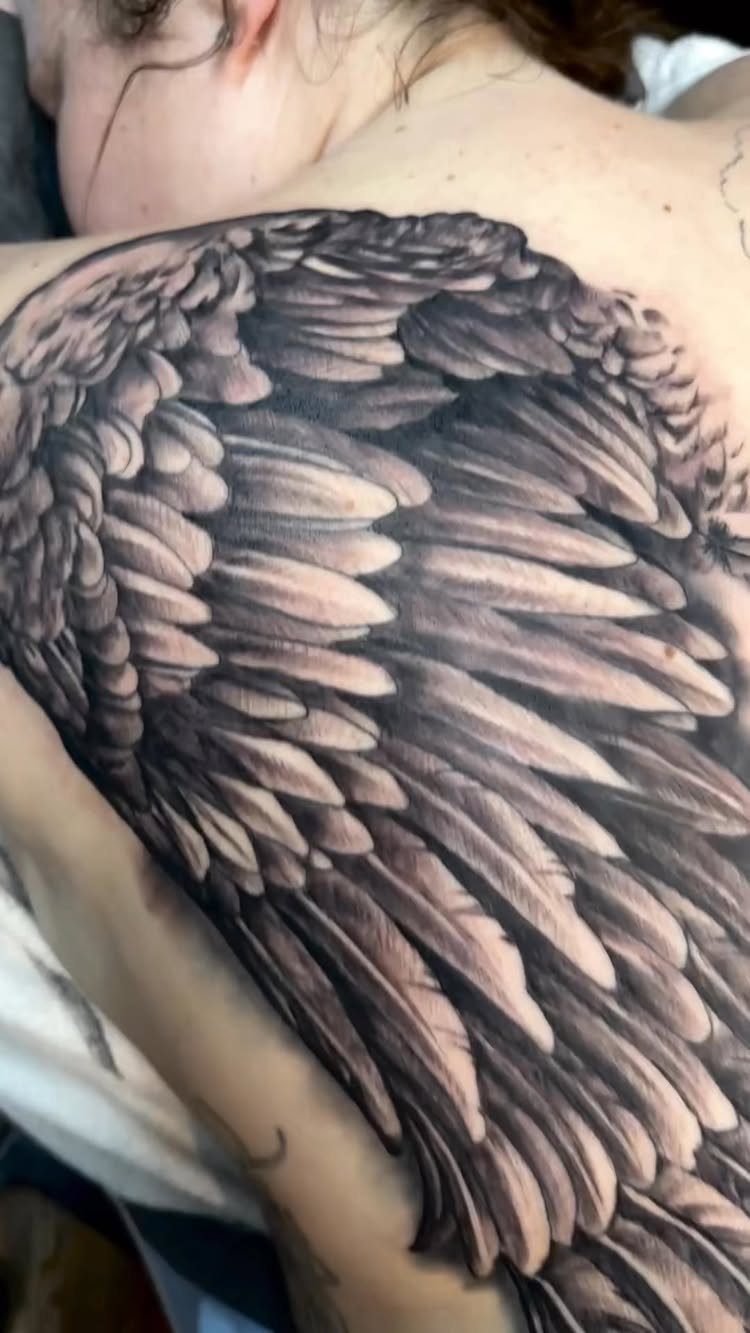
A single wing across the upper back follows the shoulder blade, and the design reads as asymmetrical rather than paired. The shading determines whether the feathers look soft or graphic.
Black and grey gives the most depth. The upper back and shoulder take ink well, and the curvature of the body adds dimension to the feathers.
I like this placement when you want the tattoo to feel like part of your own anatomy rather than a separate image laid over it.
13. Memorial Angel Tattoo
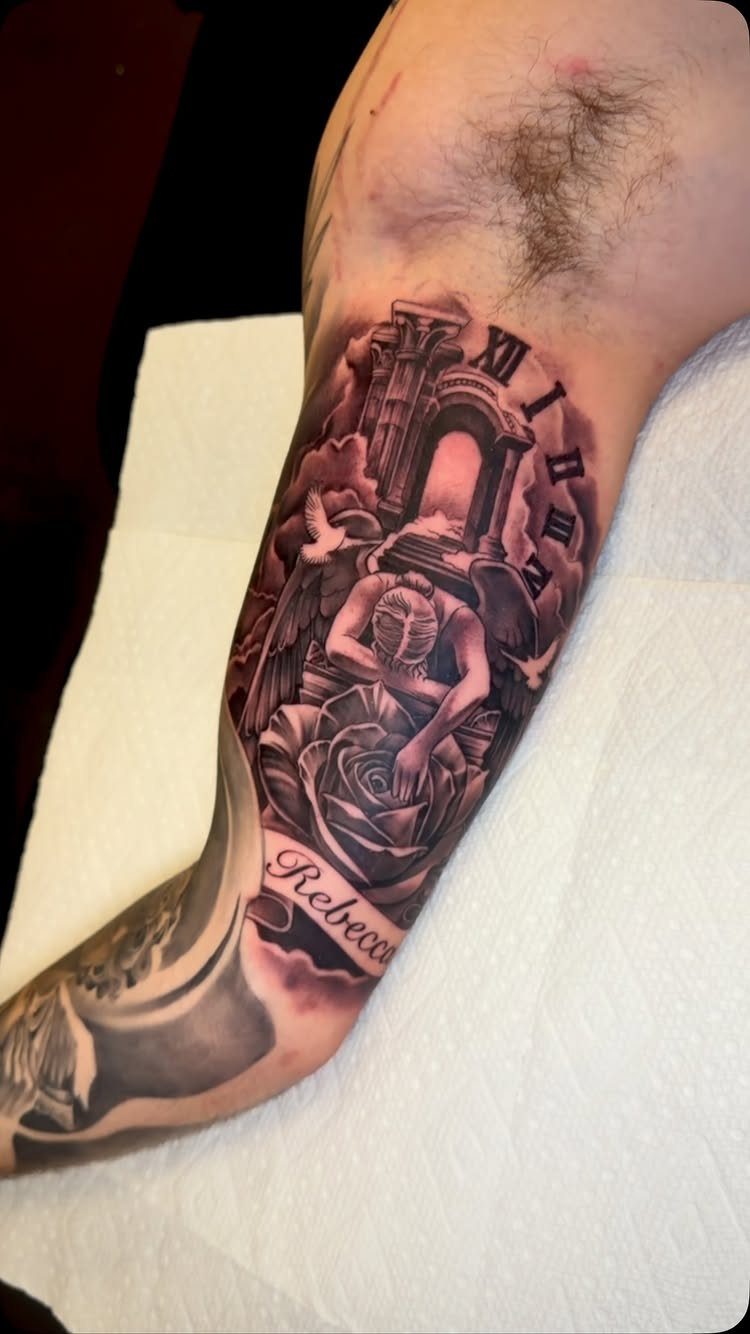
The angel in mourning, the name, and the date mark someone specific. The rose softens the grief without erasing it.
Placement matters here.
The leg gives vertical room for the full figure, the script, and any additional elements like flowers or Roman numerals. Black and grey keeps the tone respectful, and the weeping pose signals loss more clearly than a neutral angel would.
I add a date or a phrase that ties the piece to your person. Generic memorial tattoos fade into decoration; the specific detail is what makes it yours.
14. Angel Warrior Tattoo
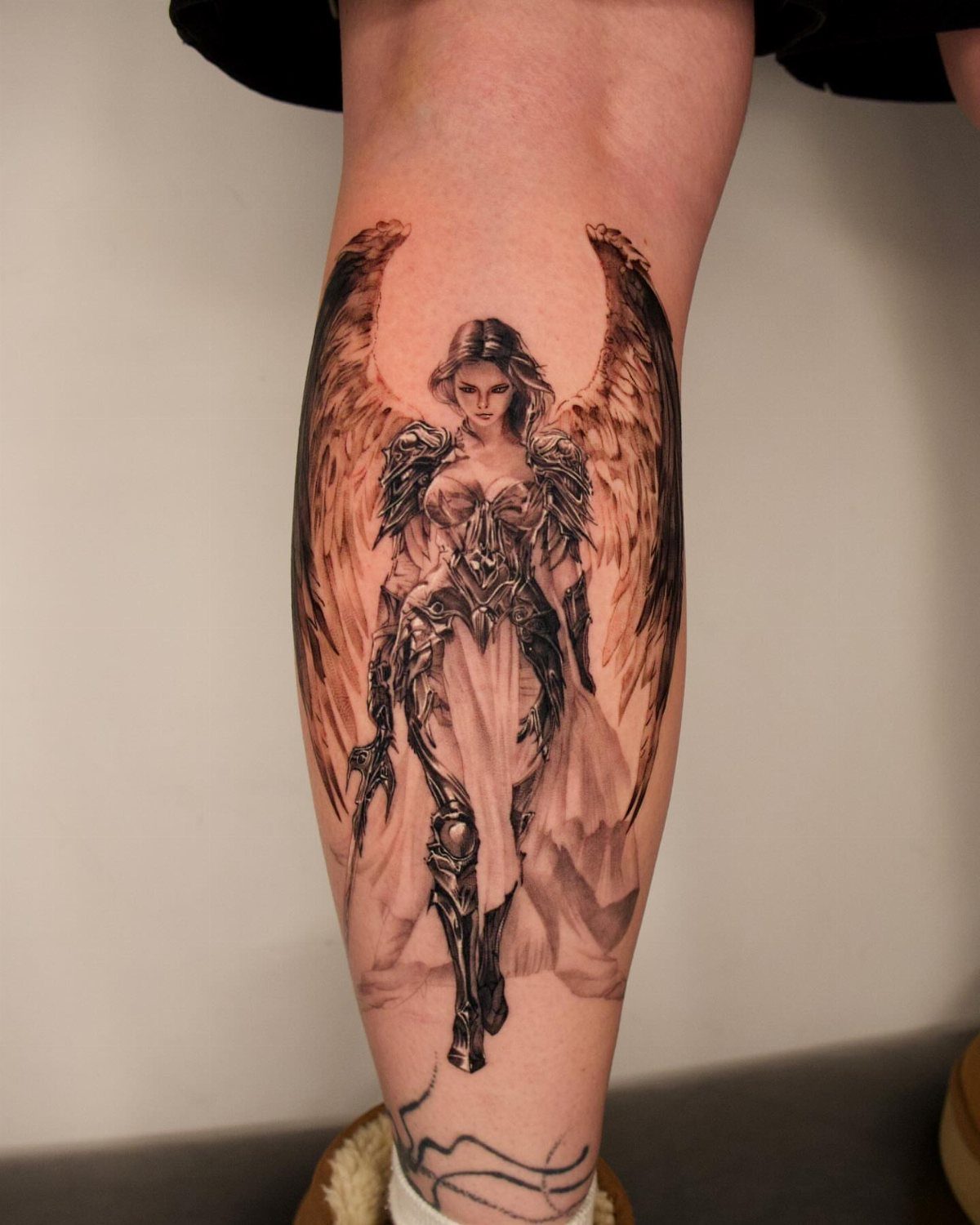
Armor replaces robes, and the angel shifts from gentle to ready. The wings stay, but the posture and the gear say protection through force rather than presence alone.
The lower leg runs long enough to fit the full figure standing without compressing the wings or the armor detail.
Black and grey handles the texture of metal, feathers, and fabric folds. I see this chosen when you want an angel that fights rather than watches, and the female figure keeps it distinct from the warrior archangels.
15. Angel and Cross Tattoo
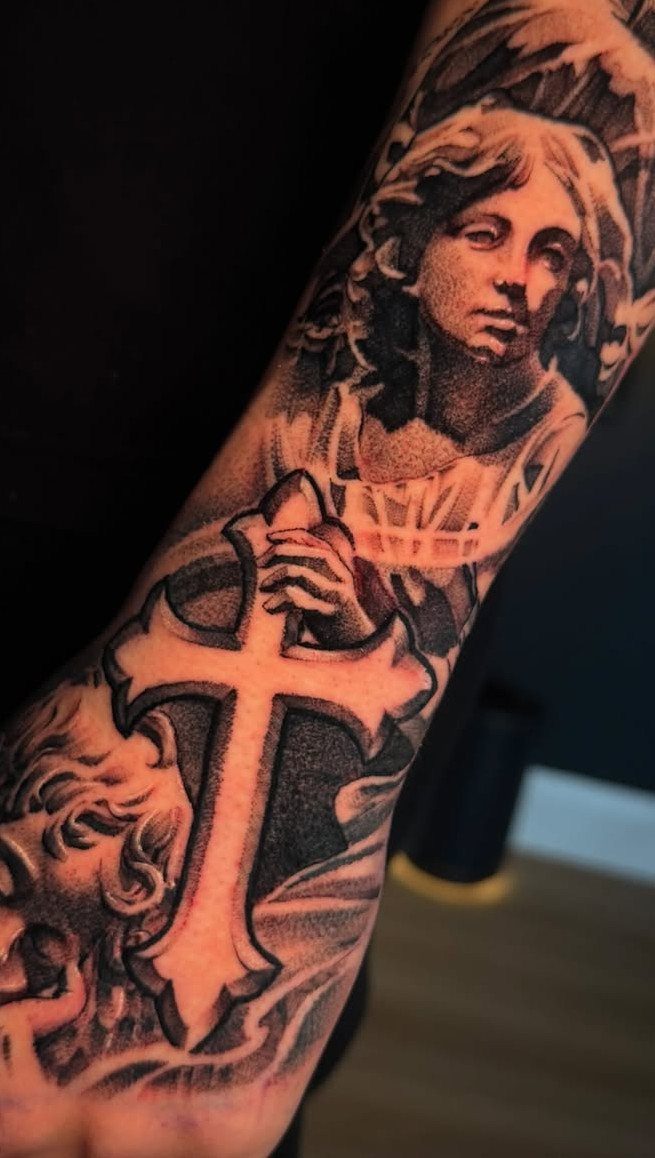
The face of the angel sits above the cross, and the pairing ties faith and protection into one vertical stack. The composition is straightforward, and that simplicity keeps both symbols legible.
The forearm is the natural spot for this. An angel and cross tattoo works when you want a religious piece that reads clearly from a distance and does not require a large canvas.
16. Tribal Angel Tattoo
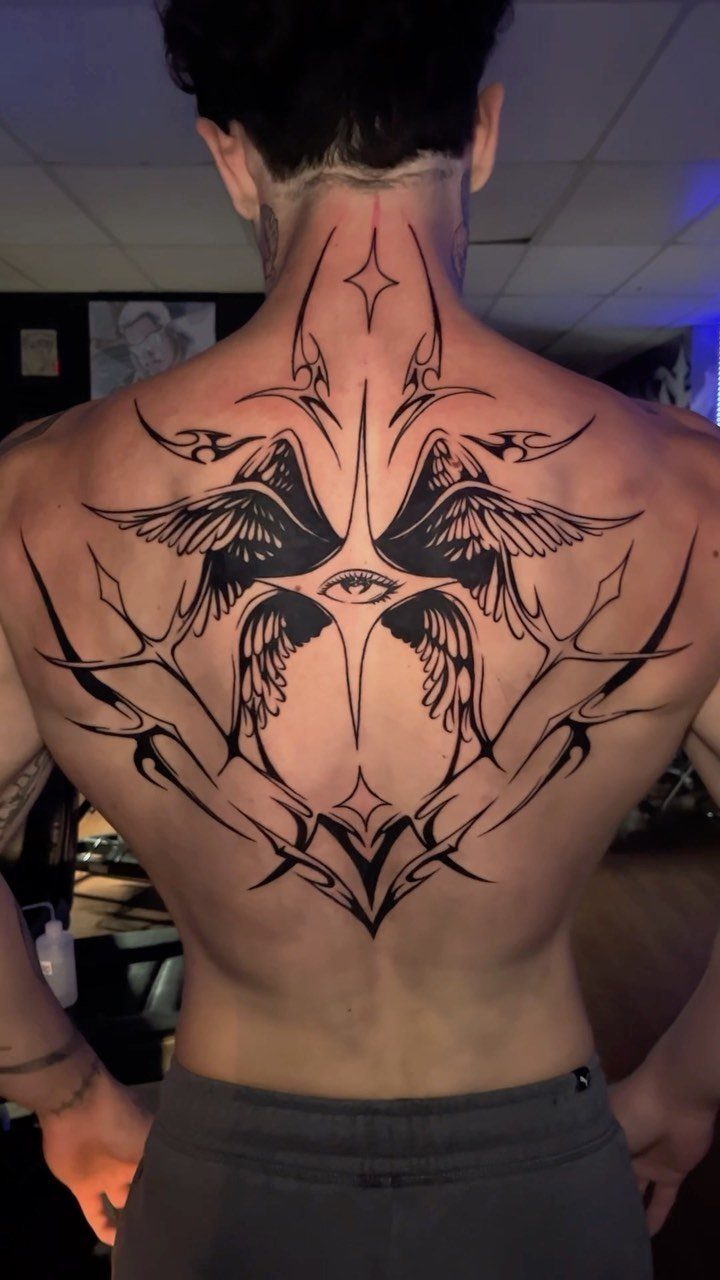
Tribal ink reduces the angel to bold black shapes and curves, and the central eye adds a focal point where the wings meet. The style skips realism entirely, so the design reads as graphic rather than figurative.
The back gives the symmetry room to spread. Solid black and negative space create the contrast, and the lack of shading keeps the style consistent.
This suits someone who wants an angel tattoo that prioritizes boldness and pattern over detail, and the tribal approach ties it to a different visual tradition than most angel work.
17. Angel Statue Tattoo
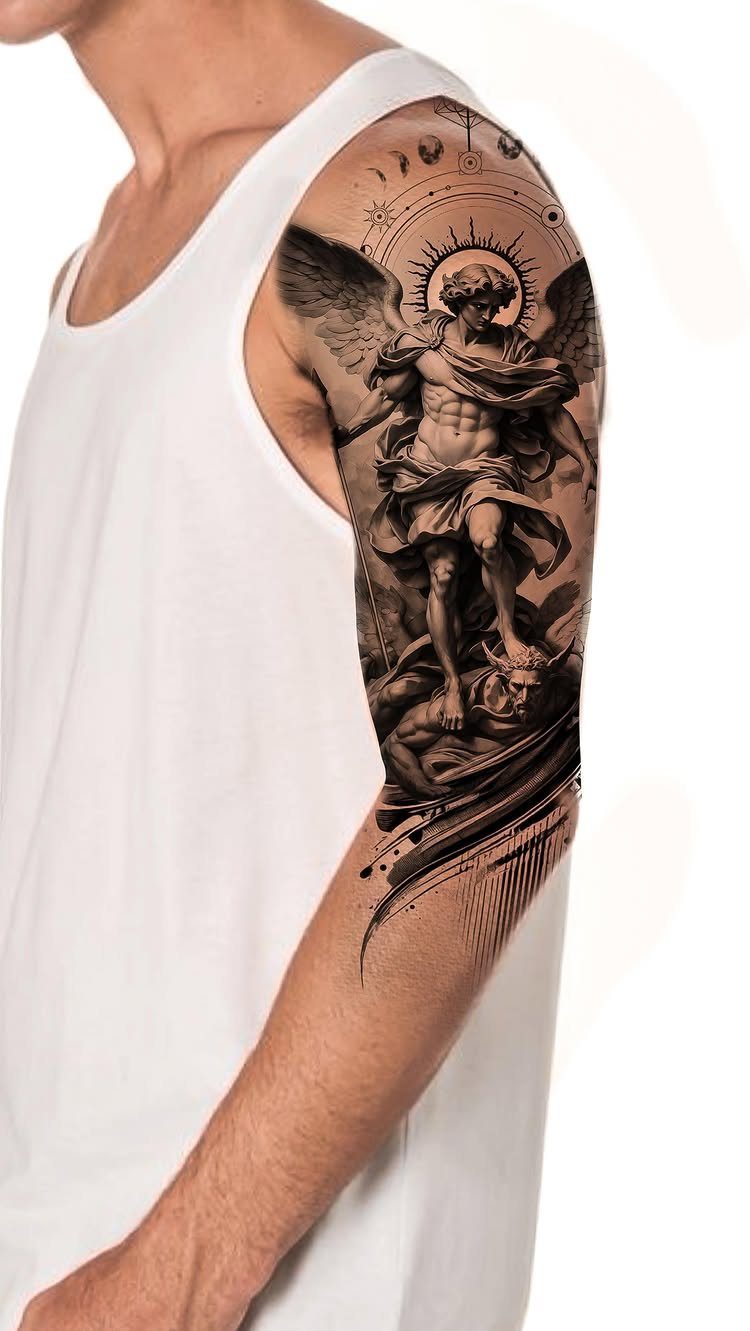
Stone texture replaces skin, and the angel reads as a statue brought into the tattoo rather than a living figure. The battle with the demon and the geometric halo behind give the composition weight and context.
The upper arm handles the full scene without crowding. Black and grey shading creates the illusion of carved stone, and the demon underfoot anchors the piece in conflict.
I like this when you want classical imagery that looks sculptural rather than soft, and the statue approach gives the design a timeless feel.
18. Angel Neck Tattoo
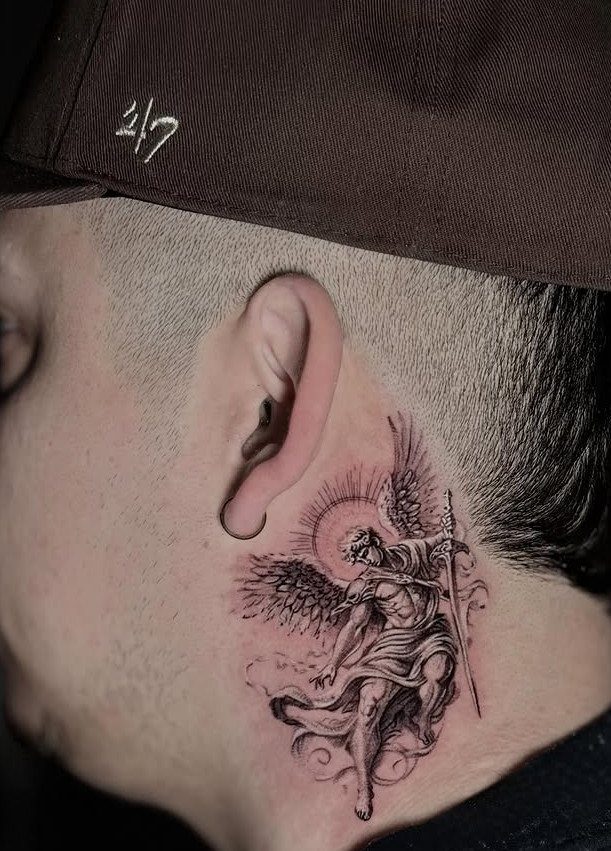
The neck behind the ear is small, visible, and painful. The angel with a sword fits because the detail stays tight and the design reads upward along the natural line of the neck.
Black and grey fine line keeps the piece legible at this scale. The neck ranks high for pain since the skin is thin and the bone is close, and professional settings may require you to cover it.
This placement suits someone who wants the angel visible but not dominant, and the sword keeps it from reading as purely decorative.
19. Praying Angel Leg Tattoo
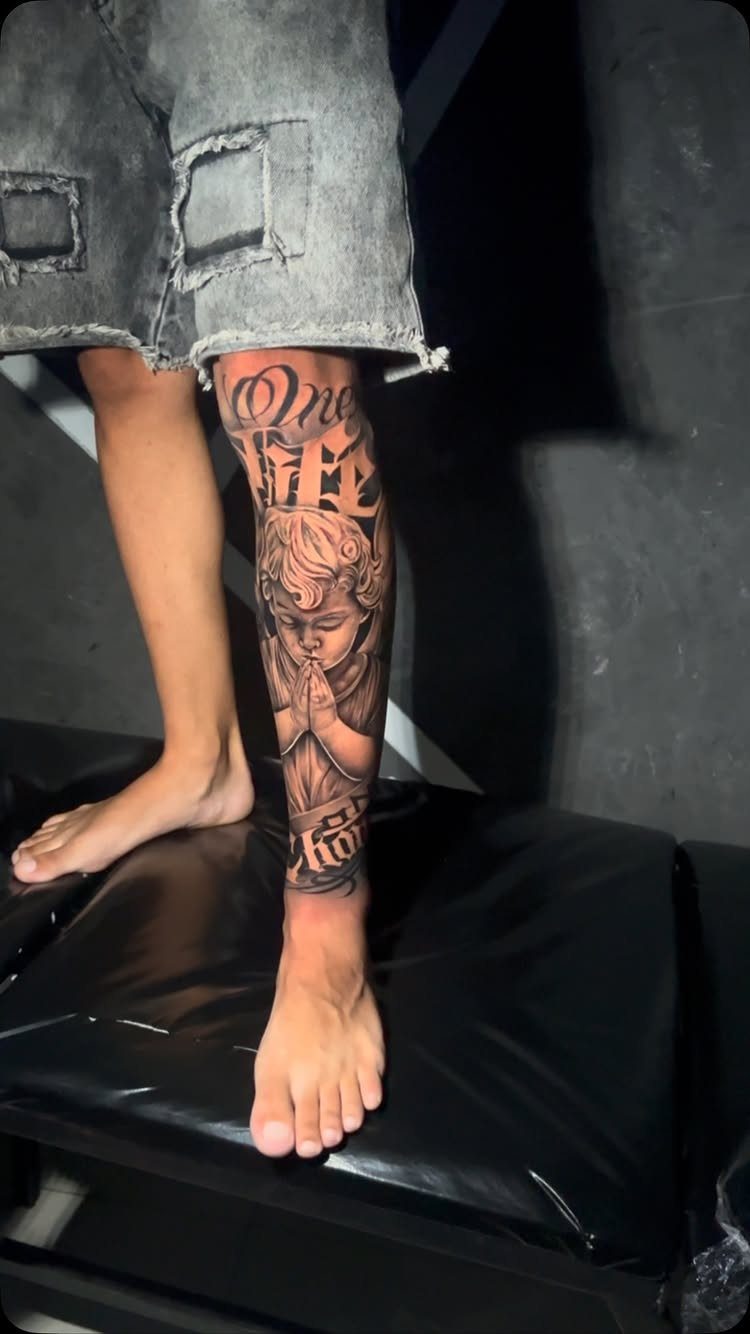
Hands folded in prayer ground the angel in devotion, and the vertical format of the leg lets the figure and the script stack without crowding. The script personalizes it, here "One Life" and "Honor" frame the composition top and bottom.
The lower leg handles this scale comfortably, and pain is moderate compared to ribs or sternum.
I would choose script that ties directly to your belief or your person rather than leaving it abstract, since the praying pose already carries the religious weight.
20. Angel Hand Tattoo
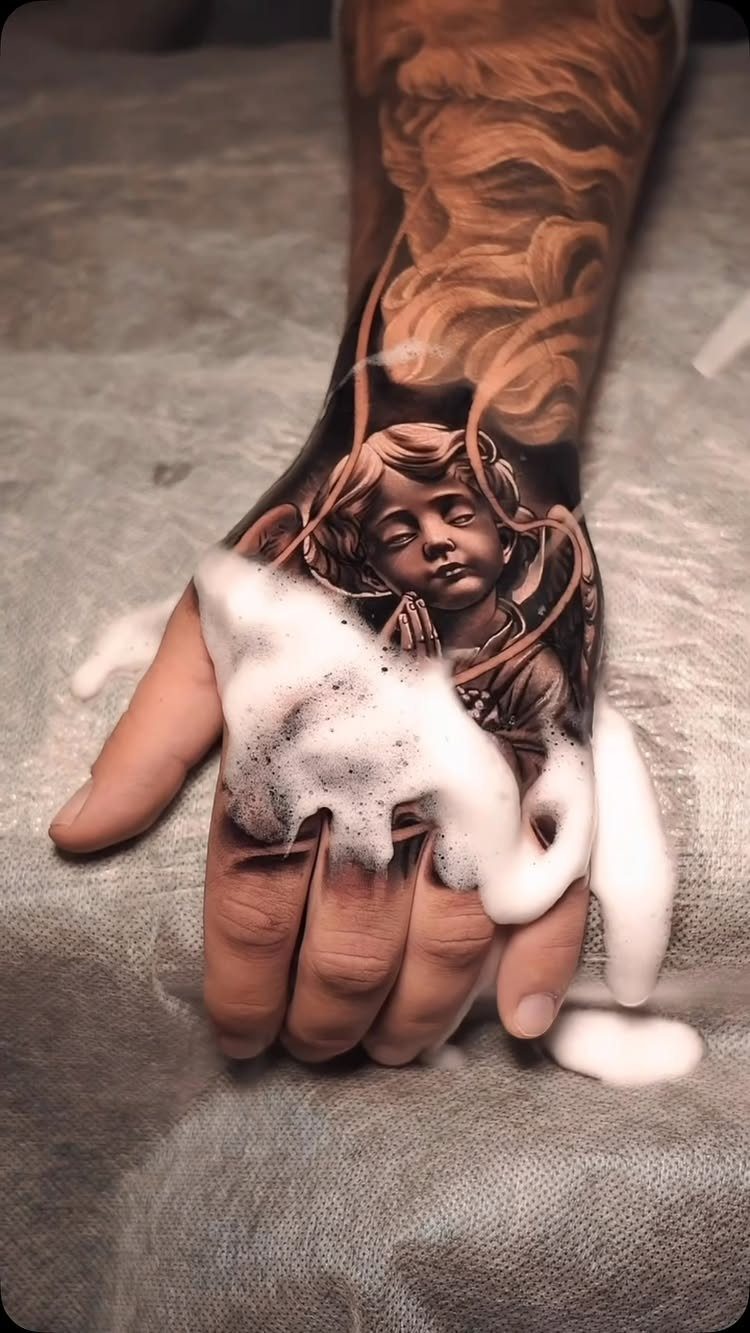
A sleeping angel child across the hand reads as memorial or protection, and the hand placement makes it one of the most visible spots you can choose.
The detail level here requires a skilled artist, since the hand curves and the skin stretches with movement.
Pain is high. The bones sit close to the surface, and hands swell during healing.
Professional visibility is another consideration, hands are nearly impossible to cover. This suits someone committed to visible ink who wants a softer angel image that still carries emotional weight.
Meaning of Angel Tattoos
Angel tattoos carry protection as the most recognized meaning. The idea of a guardian watching over you translates directly into ink, and people choose these designs to mark faith, loss, or a turning point they fought through.
The symbolism shifts depending on the figure.
A cherub signals innocence. A fallen angel marks struggle or the cost of a choice, and a weeping angel memorializes someone specific.
Religious context matters for some, not for others. Angels tie to Christianity, but the symbol works just as well when you strip the doctrine and keep the idea of guidance or hope.
A generic angel fades into decoration.
Best Placement for Angel Tattoos
The back gives you the most room for wings, full figures, or scenes with multiple elements.
Wings spread across the shoulder blades follow the natural shape of your body, and a vertical composition down the spine handles a standing or kneeling angel without compressing the design.
The forearm works well for medium-sized pieces where you want the tattoo visible. It runs long enough for a full figure or a stacked composition like an angel with a cross, and the pain level stays moderate.
The chest suits large-scale work, especially wings stretched across the sternum.
Legs handle vertical designs comfortably.
Small placements like the neck, wrist, or behind the ear suit minimal designs where detail stays tight.
Trendy Tattoo Styles for 2026
Realism dominates angel tattoos in 2026. Larger pieces need a skilled artist and several sessions to finish.
Chicano work often appears in memorial angel tattoos, usually combined with script, roses, or other religious imagery. The fine line and grey wash give the design a softer, more illustrative feel.