A small crucifix on the wrist or ankle takes one short session, while a full-back resurrection scene or a chest piece combining portrait and scripture demands multiple sittings and an artist who can hold fine detail across a large composition.
Placement depends on how visible you want the piece: chest and back offer the most room for a detailed scene, forearm and shoulder let you see it without a mirror, and ribcage or upper arm keep it covered in most work settings.
1. Jesus Crown of Thorns Tattoo
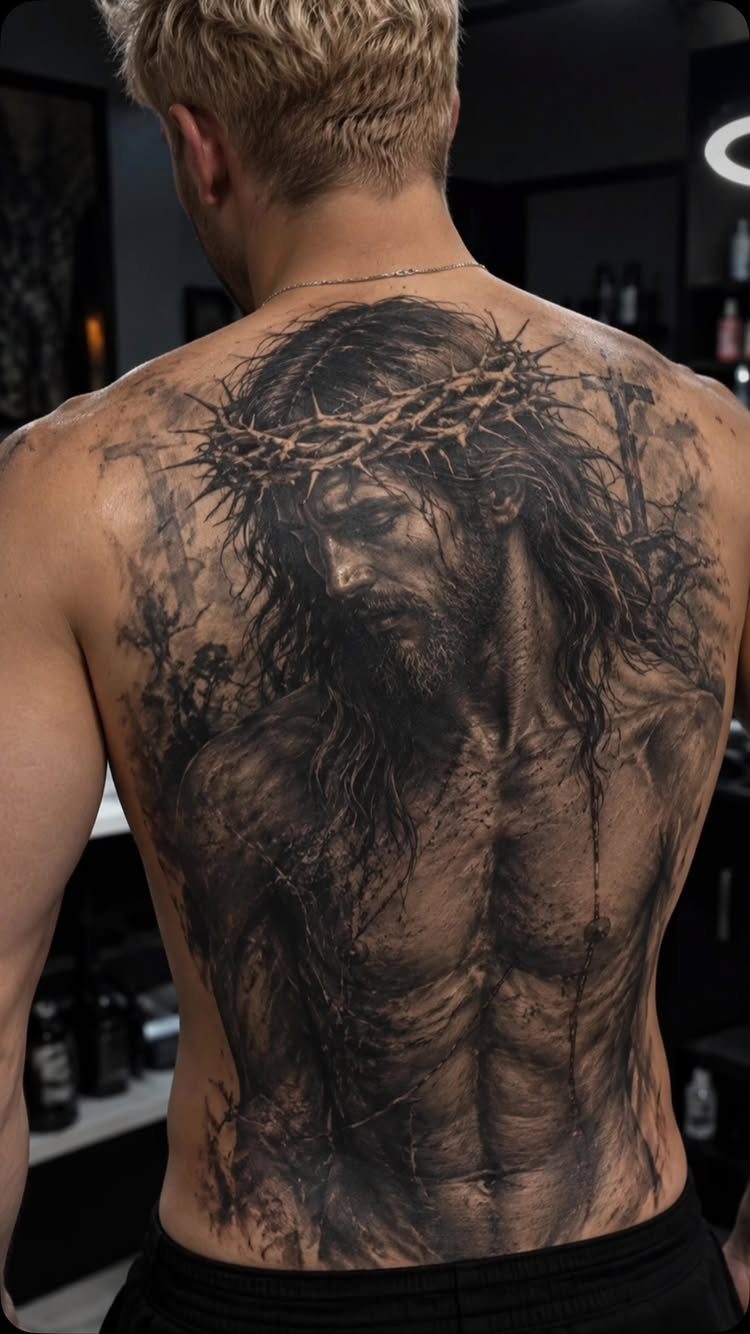
A close portrait of Jesus wearing the crown of thorns focuses on the most recognizable symbol of his suffering.
Black and grey realism captures the texture of the thorns, the weight in his expression, and the shadows that give the face dimension.
Placement on the back gives you room for a large, detailed portrait that reads clearly from across a room. The contour of the shoulder blade can follow the tilt of the head if the artist plans it that way.
2. Praying Jesus Portrait
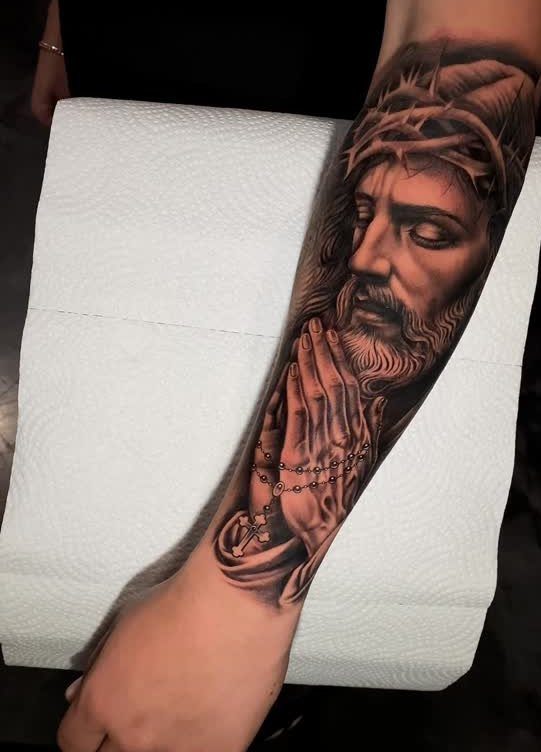
Hands pressed together in prayer anchor this design and shift the focus from suffering to devotion. The crown of thorns stays visible but the gesture becomes the center of the composition.
Forearm placement lets you see the tattoo yourself, which matters when the design is meant to remind you to pray or stay grounded. The vertical format fits the natural line of the arm from shoulder to wrist.
A rosary winding through the composition ties the portrait to Catholic tradition.
3. Jesus with Angel Wings
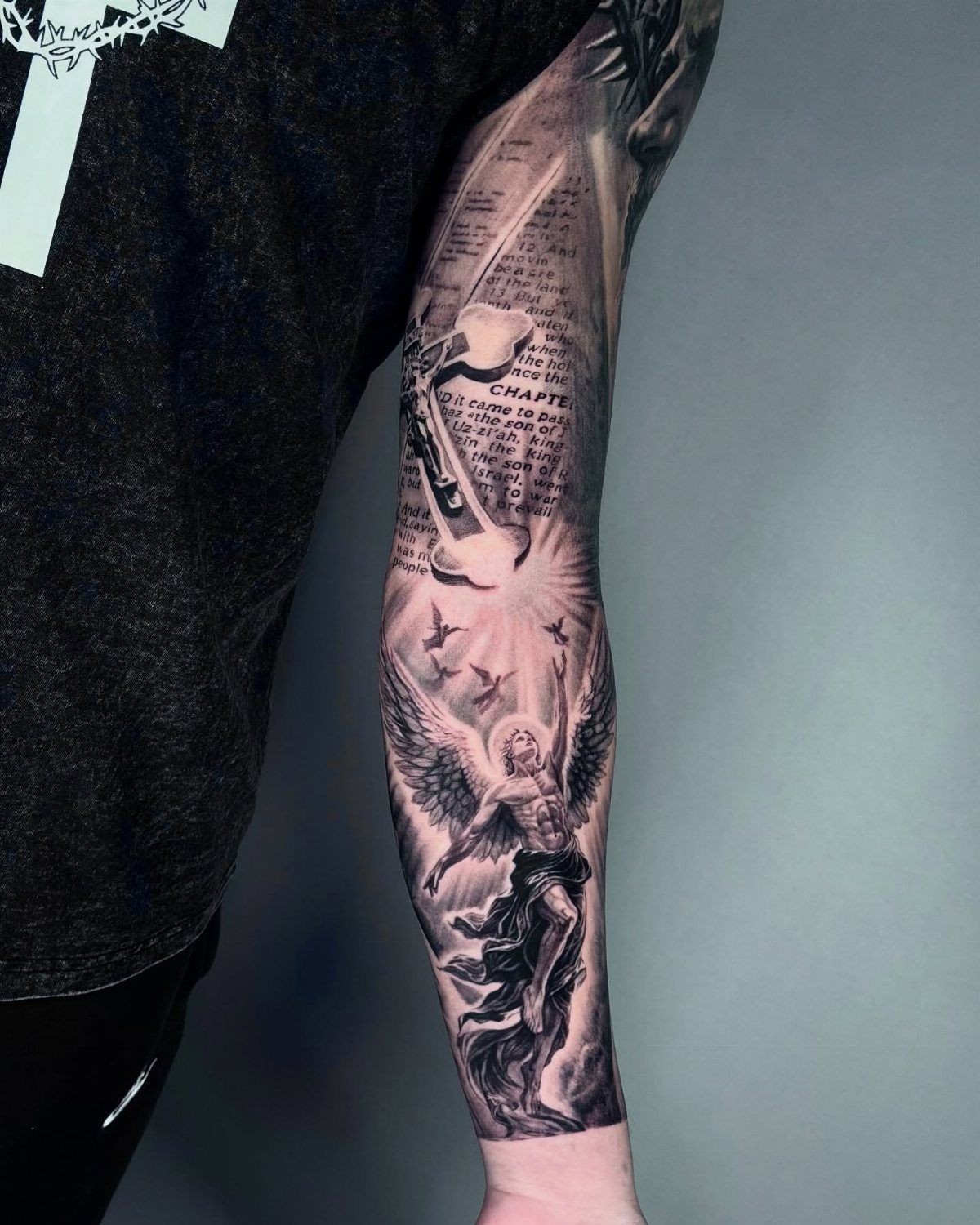
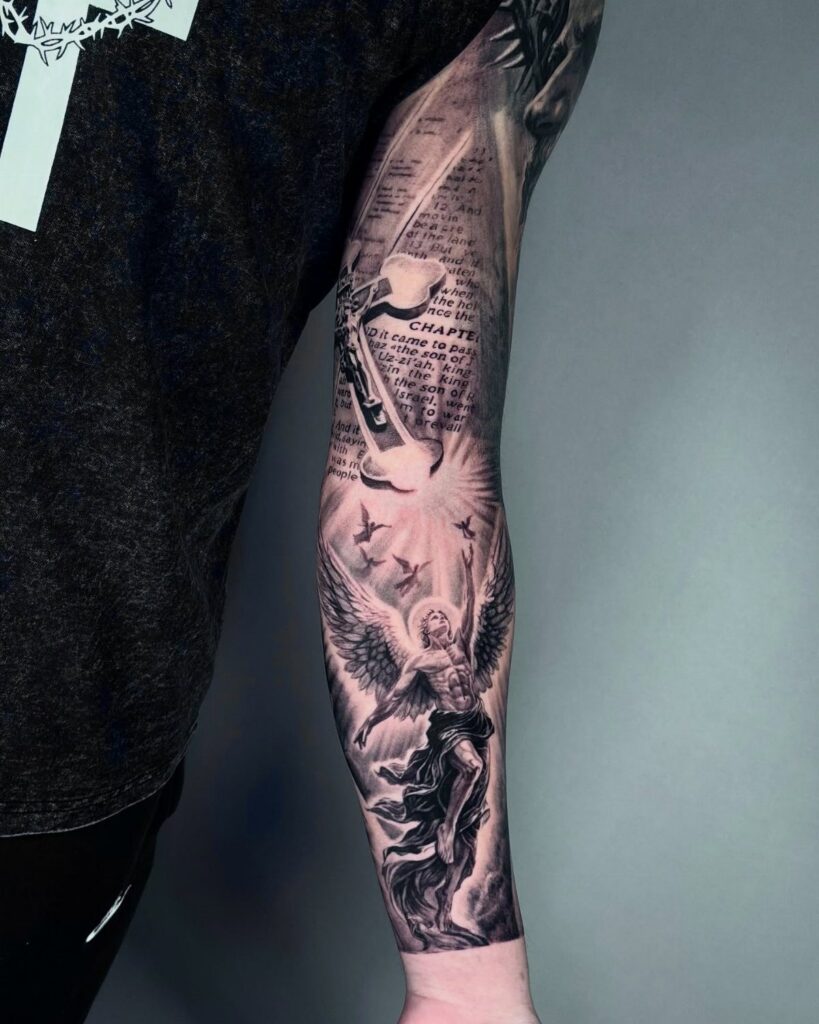
Adding wings to a Jesus portrait turns the image into something between ascension and protection. The wings frame the face and create symmetry, and the halo reinforces the divine side of the figure.
Biblical text in the background adds another layer without competing with the portrait. Fragments of scripture or chapter markers work better than full verses, which can blur into noise at tattoo scale.
Forearm gives you vertical space for the wings to spread without wrapping awkwardly around the arm.
4. Jesus Heart Tattoo
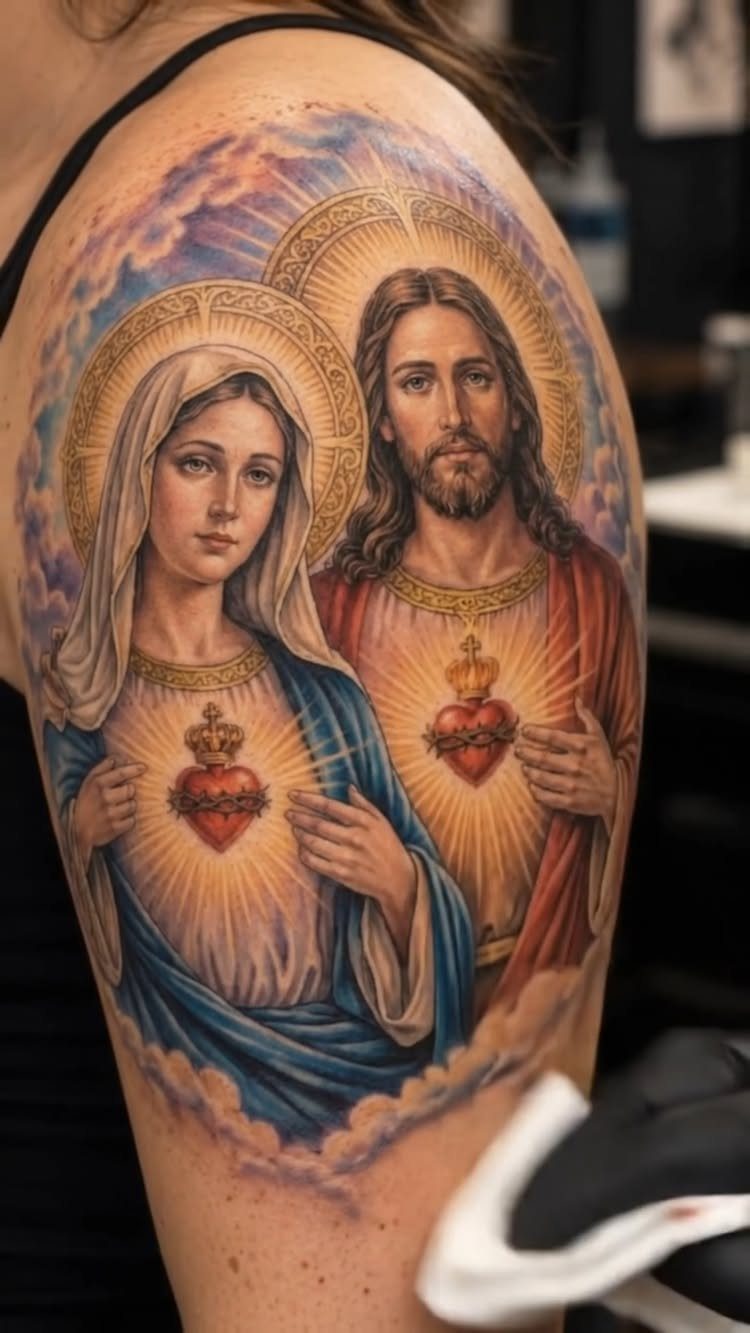
The Sacred Heart motif, where Jesus is shown with a glowing or flaming heart outside his chest, has roots in Catholic imagery going back centuries.
Paired with Mary in the same composition, both figures carry their own hearts and the design becomes a family devotion piece.
Clouds and halos soften the background and keep the focus on the faces and the hearts. The flame detail requires a steady hand; good black and grey shading makes it glow without adding color.
Upper arm placement holds the image in one clean spot that reads from any angle.
5. Rosary Tattoo
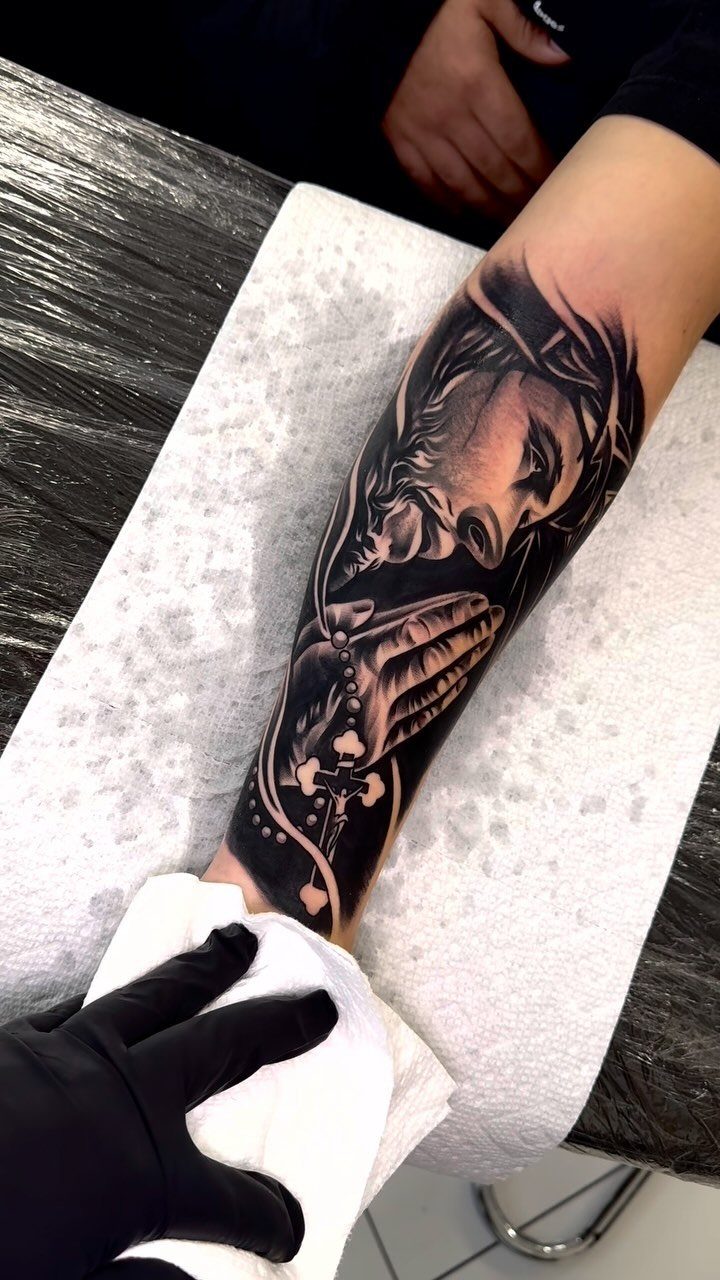
Looping rosary beads around a praying portrait ties the image to the act of devotion itself. The beads can drape across the frame or wind down the forearm, and the cross usually hangs at the bottom to anchor the composition.
Forearm is the most common placement for this design because it keeps the tattoo visible during prayer. The vertical format fits naturally and the wrist gives you a clear endpoint for the beads.
Black and grey realism works best here. The beads need enough contrast to stand out from the portrait, and a skilled artist will vary the shading so nothing flattens into a single grey mass.
6. Jesus on the Cross Tattoo
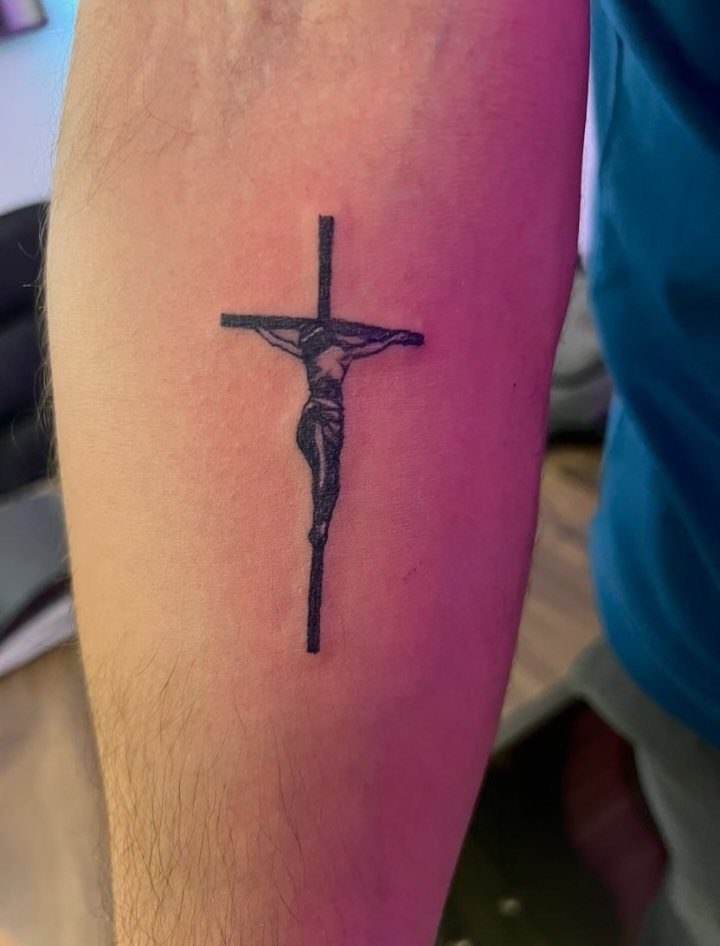
A small crucifix tattoo distills the entire story into a single, simple image. No background, no extra symbols, just the figure on the cross in black ink.
Forearm is a common spot because the design stays visible and the vertical shape fits the space without needing much width. Small scale keeps the session short, usually under an hour, and the pain manageable.
Line work has to be clean. At this size, any wobble in the cross or the figure shows, and there is no shading to hide it.
7. Jesus Carrying the Cross
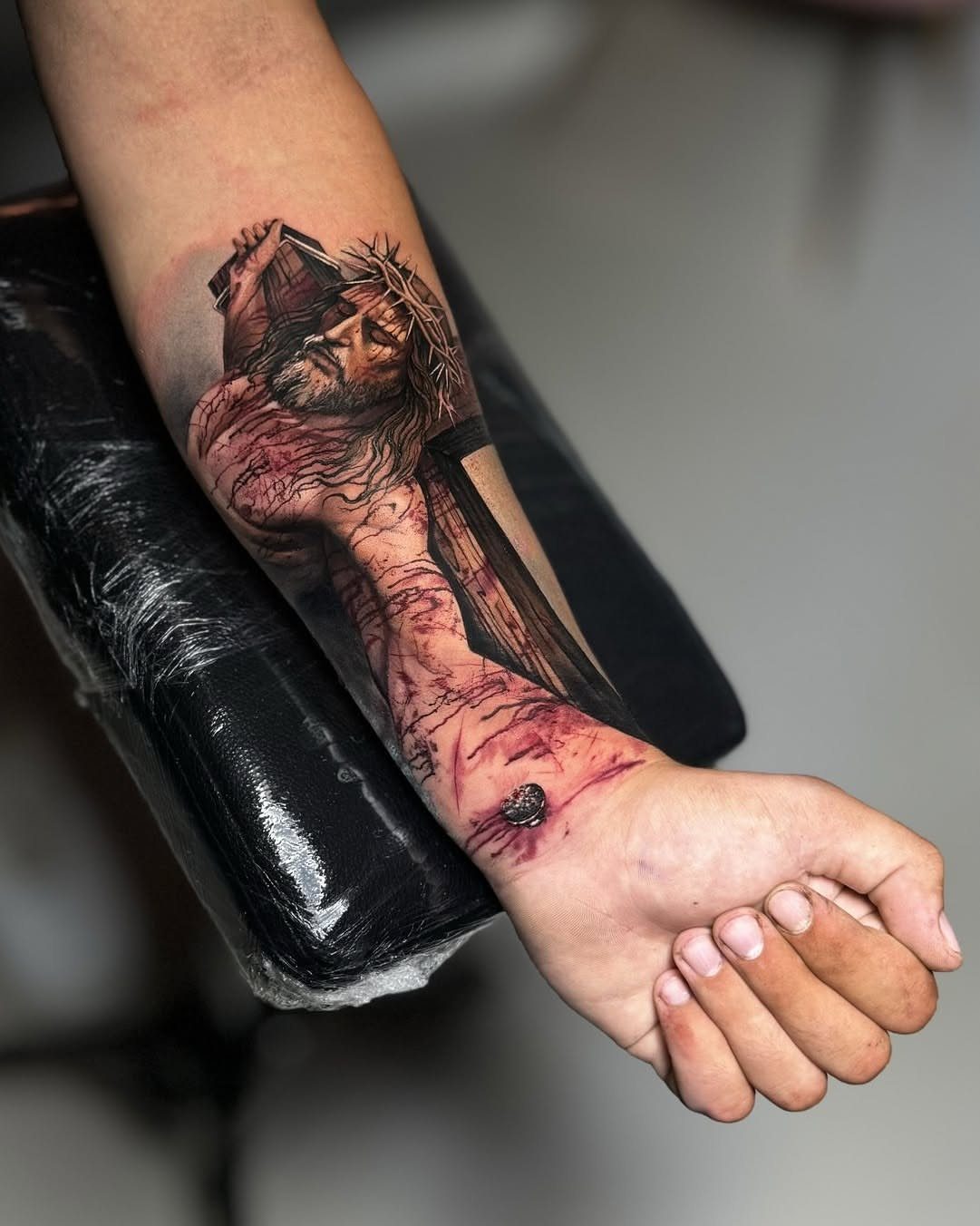
The weight of the cross on the shoulder and the forward lean of the body make this design about endurance rather than the moment of death.
Forearm placement works well because the vertical space lets the cross run from shoulder to wrist without cutting off awkwardly. The design reads clearly at medium scale, and black and grey shading gives the wood grain texture without needing color.
Session time scales with detail but a piece this size is not quick work.
8. Jesus with Lamb
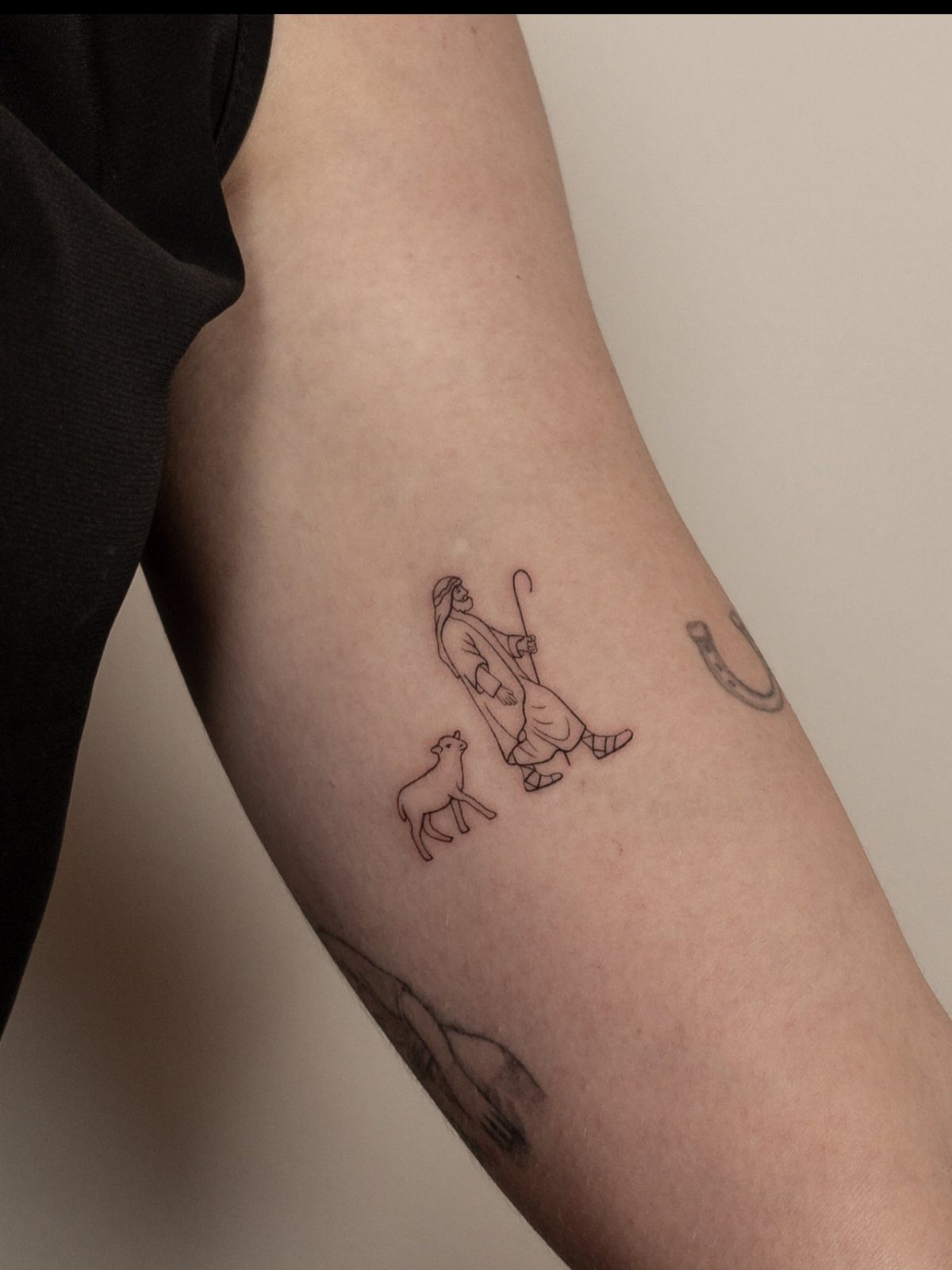
Jesus as the Good Shepherd, staff in hand and a lamb at his side, shifts the tone from sacrifice to care. The simple line work keeps the image clean and the small scale makes it quick to finish.
This design fits almost anywhere.
Upper arm, forearm, even the ankle if you keep it tight. The single-line style means less pain and a shorter session, usually under an hour.
Line work has to be confident. Any hesitation shows at this scale, and there is no shading to soften it.
9. Jesus with Dove of Peace
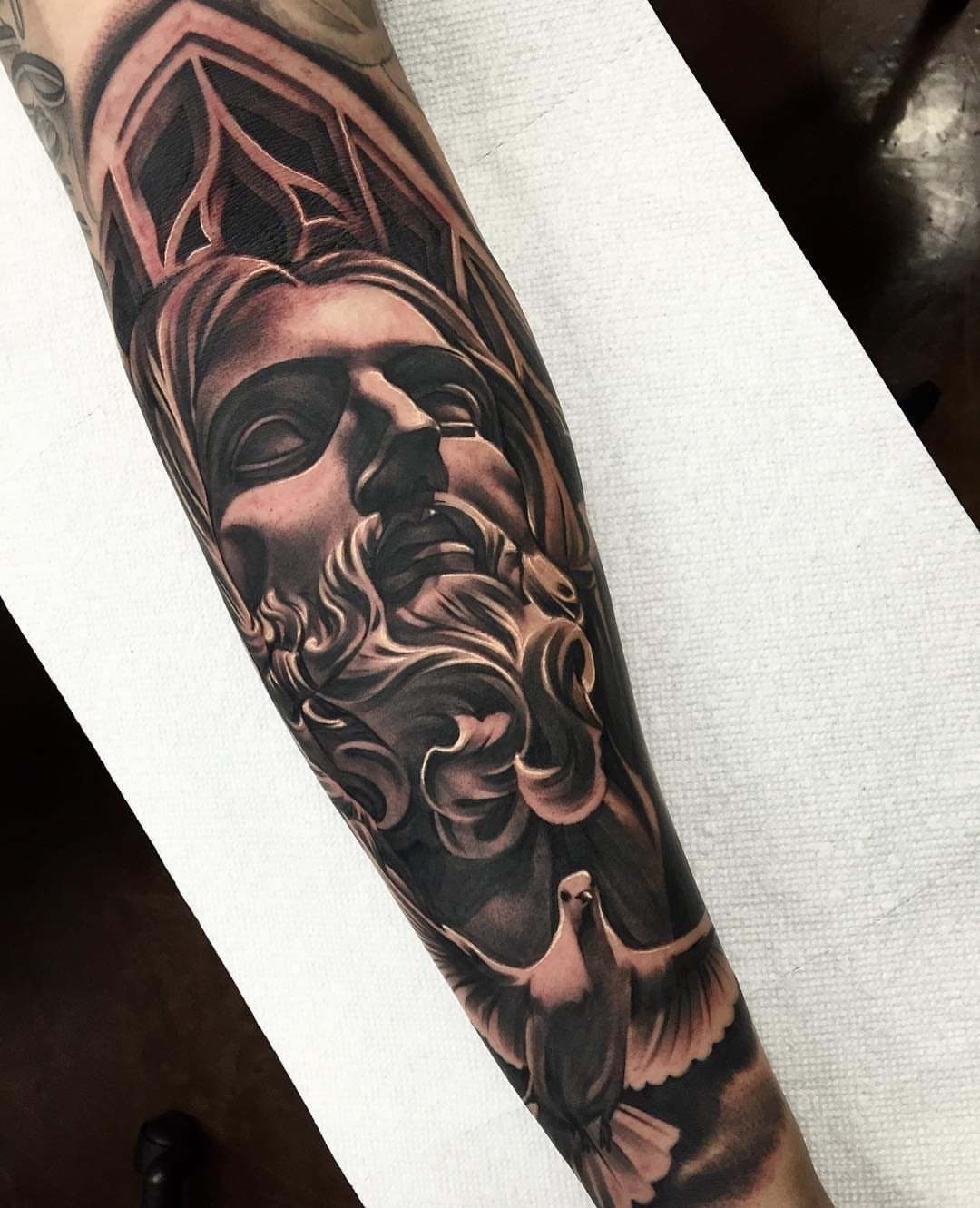
A dove flying toward or away from the portrait introduces the Holy Spirit into the composition and gives the design two focal points instead of one.
The gothic arch in the background frames the whole image and adds architecture without overwhelming the face.
Black and grey realism handles the feather detail and the soft light around the dove better than color would. The contrast between the textured wings and the smooth skin keeps the 2 elements separate.
Forearm gives you enough width for the dove to spread its wings and enough height for the arch to frame the portrait without feeling cramped.
10. Last Supper Scene Tattoo
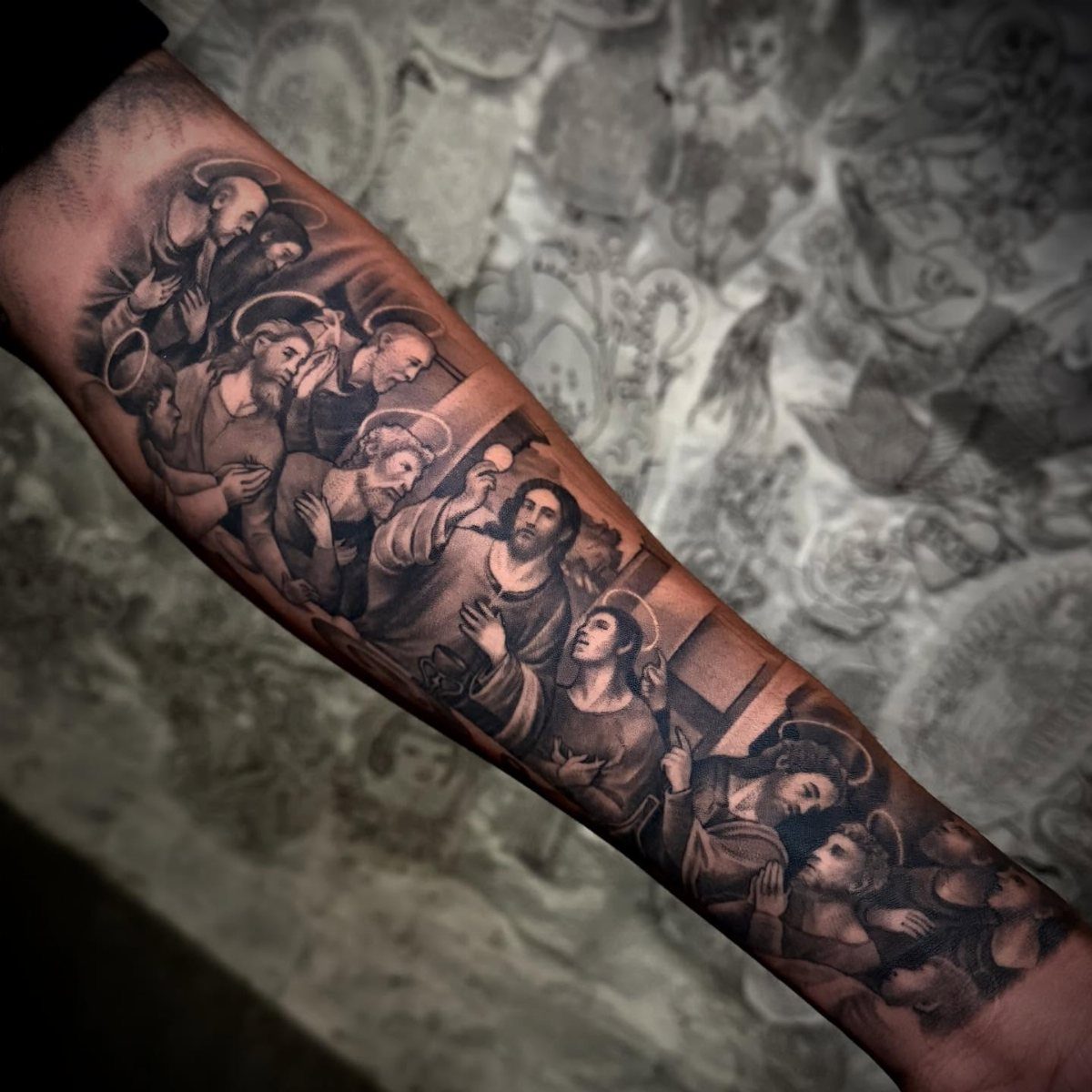
Fitting everyone into one piece asks for the full length of the forearm and fine detail work that only holds up if the artist can keep the faces clear at small scale.
Each disciple needs enough shading to stand apart from the one next to him or the whole thing flattens into a crowd.
Color would muddy the faces and kill the readability.
Expect multiple sessions. A piece this detailed asks for real chair time, and the forearm is sensitive enough that most people split it across sittings.
11. Jesus Walking on Water
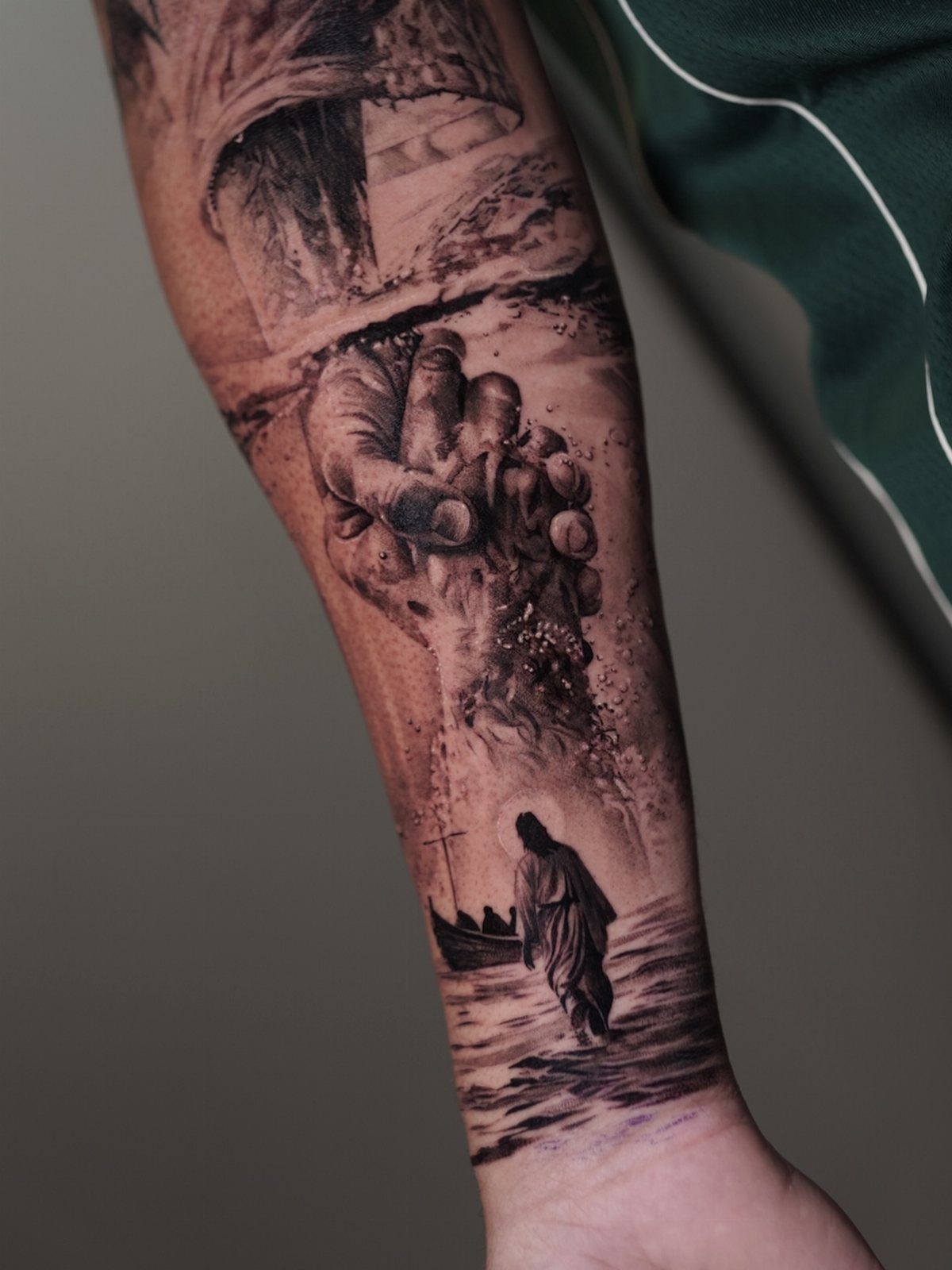
The stillness of the figure against churning water gives the design movement without making it feel chaotic. The boat in the background anchors the scene and adds a second layer of depth.
Forearm placement keeps the water at the bottom and the figure upright, which matters when the composition depends on gravity to make sense.
Black and grey shading separates the water from the sky and keeps the figure from blending into the background. Ripple detail in the water takes time but it is what makes the scene believable.
12. Resurrection Cave Scene Tattoo
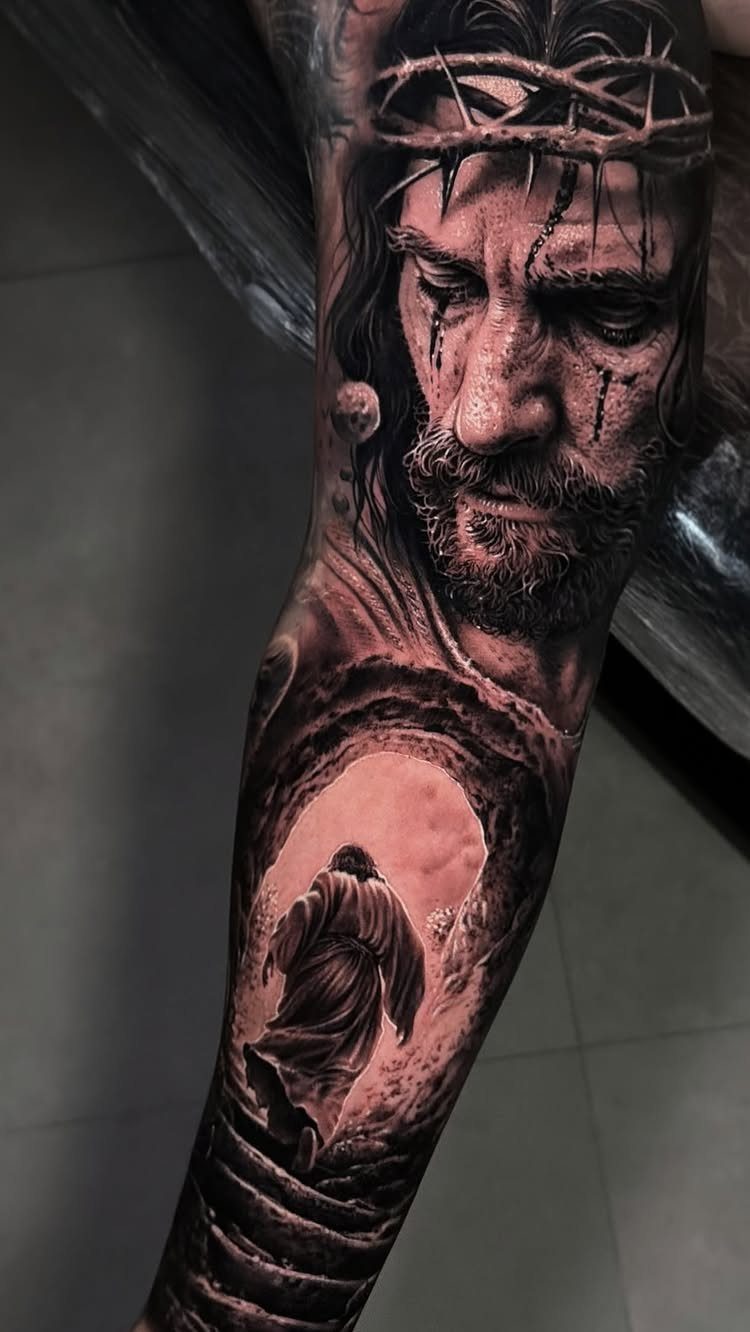
The light spilling out of the cave gives the lower half contrast and keeps it from reading flat.
This design needs vertical space. Upper arm or forearm both work, but the composition has to run top to bottom or the logic breaks.
The glow from the cave opening is what sells the resurrection half, and it only works if the artist can fade the light gradually into the surrounding darkness.
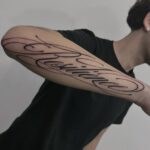
13. Cursive Jesus Script Tattoo
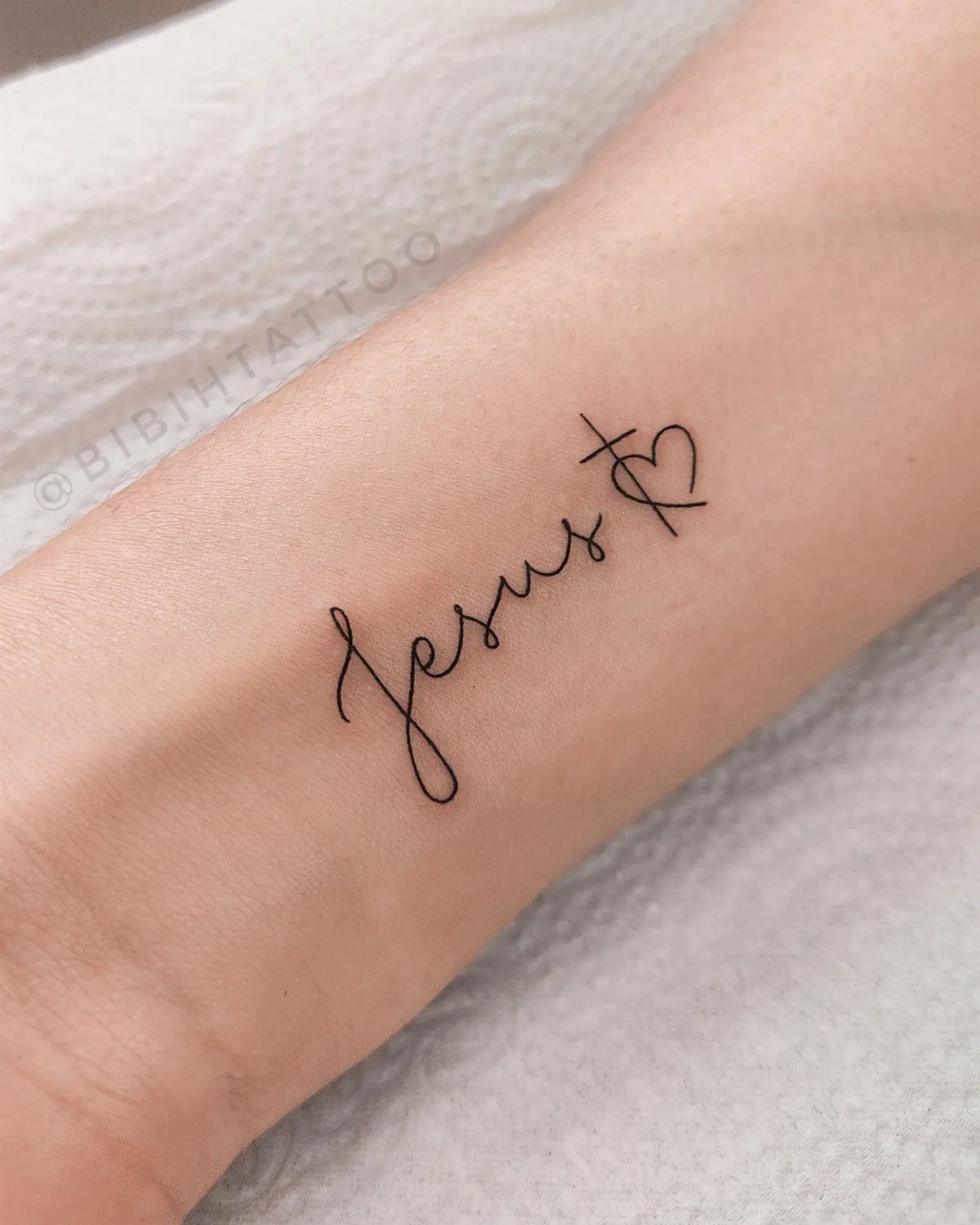
The name in cursive script, joined to a small cross and heart symbol, stays compact and fast to finish. Single-session work, and minimal pain on the forearm.
The script style matters.
A clean cursive with good spacing holds up better than an overly ornate font that can blur as the ink settles. The heart-cross combination at the end ties faith and devotion into one mark without adding size.
Forearm placement keeps it visible, which is the point of a design this personal.
14. Jesus and Mary Portrait Tattoo
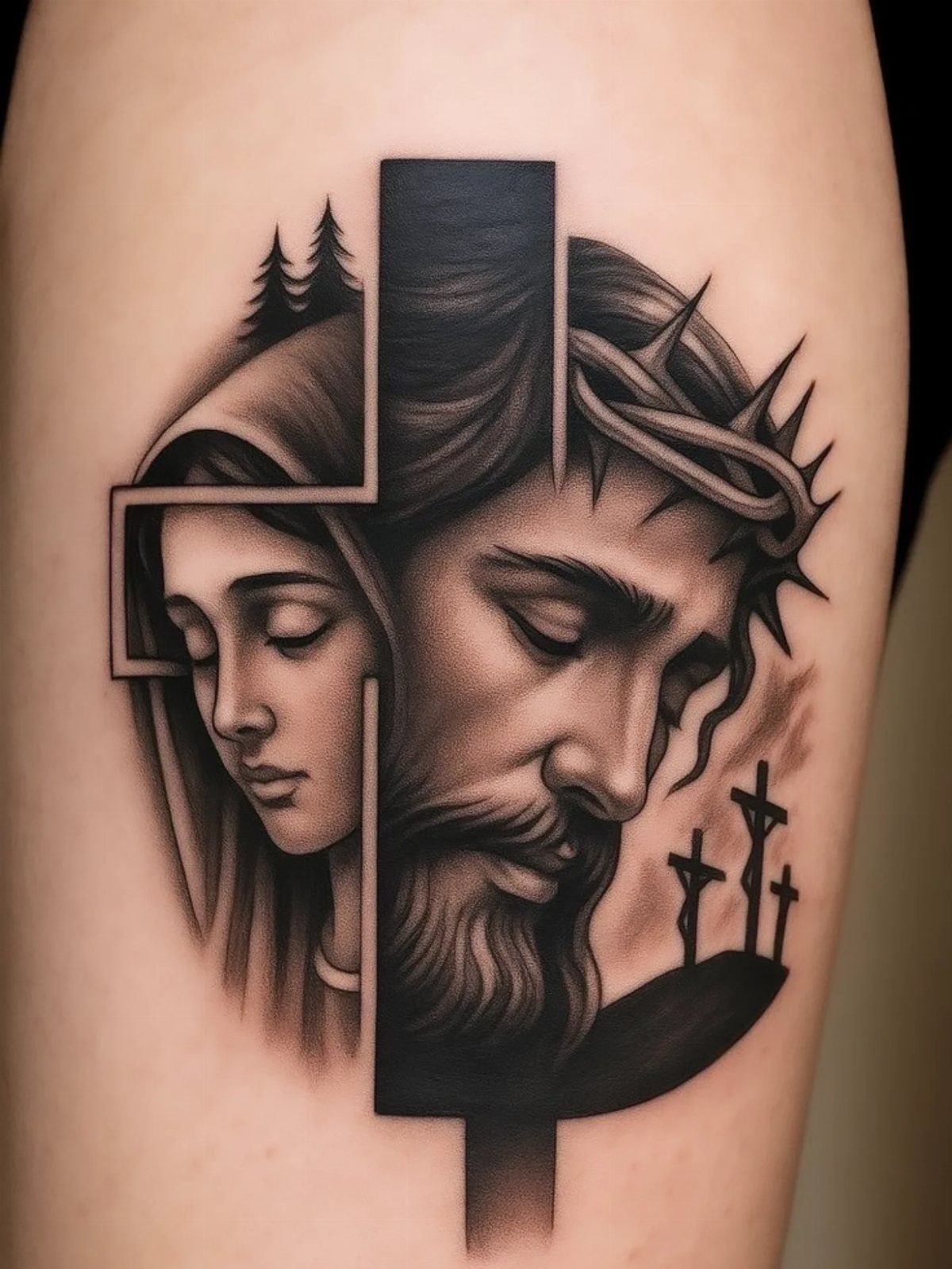
Placing the faces of Jesus and Mary on either side of a cross combines two portraits into one symmetrical composition. The crucifix becomes the center line and the faces balance the design.
Background crosses layered behind the main image add depth and stay clear of the foreground.
Black and grey realism keeps the faces from competing with the crosses, and good contrast between the skin tones and the darker cross prevents everything from blending together.
This design scales to fit most placements but needs enough space for both faces to read clearly.
15. Jesus with Kneeling Child Tattoo
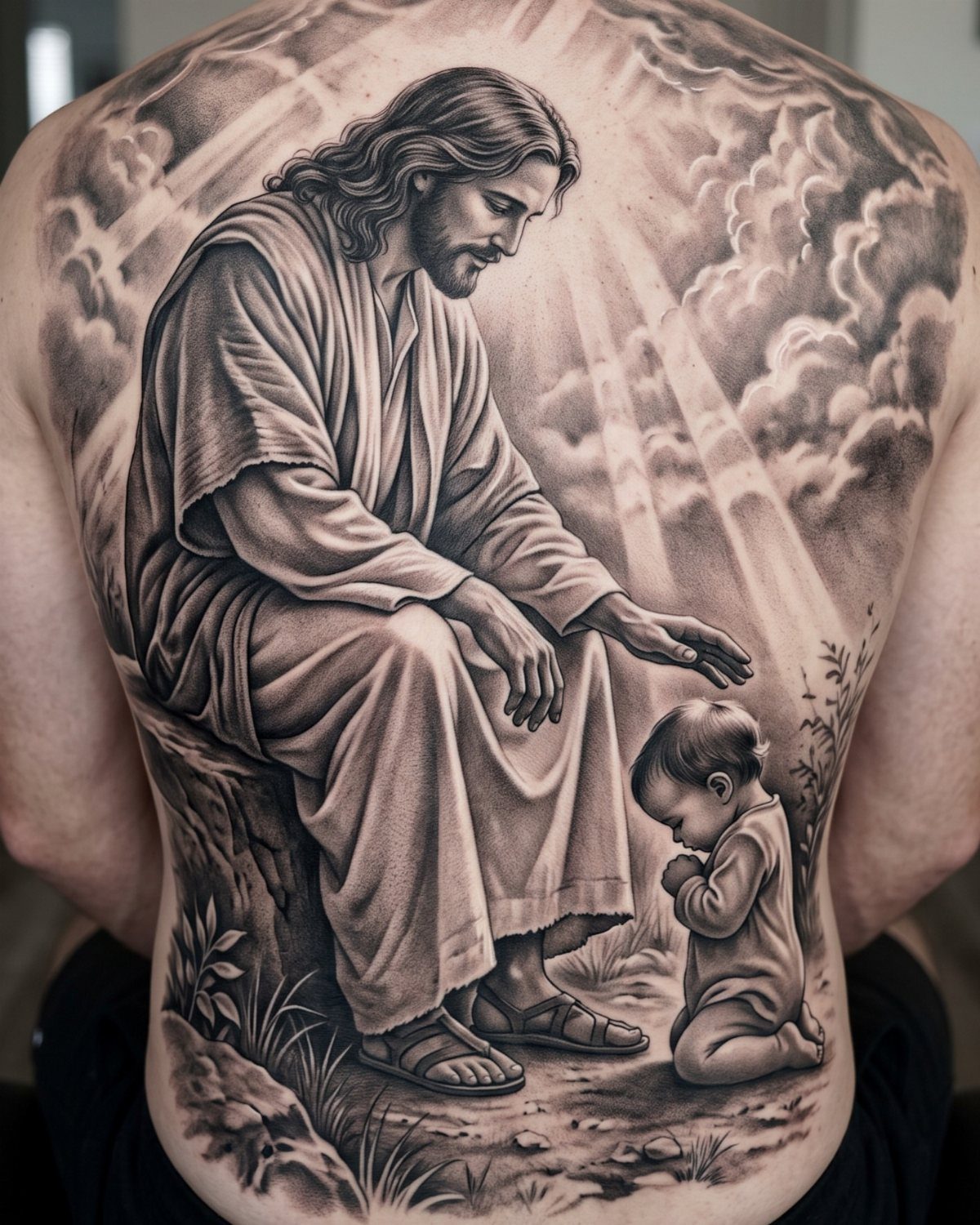
A seated figure in robes looking down at a kneeling child shifts the focus from suffering to compassion.
The back gives you room for a large vertical composition with space for the clouds, the light rays, and the rock formation without cutting anything off.
The posture of both figures matters. The downward gaze and the kneeling position create a clear relationship, and the scale difference between the 2 reinforces it.
Back work hurts more along the spine and near the shoulder blades, and most people split it across sittings.
16. Jesus Portrait with Scripture Tattoo
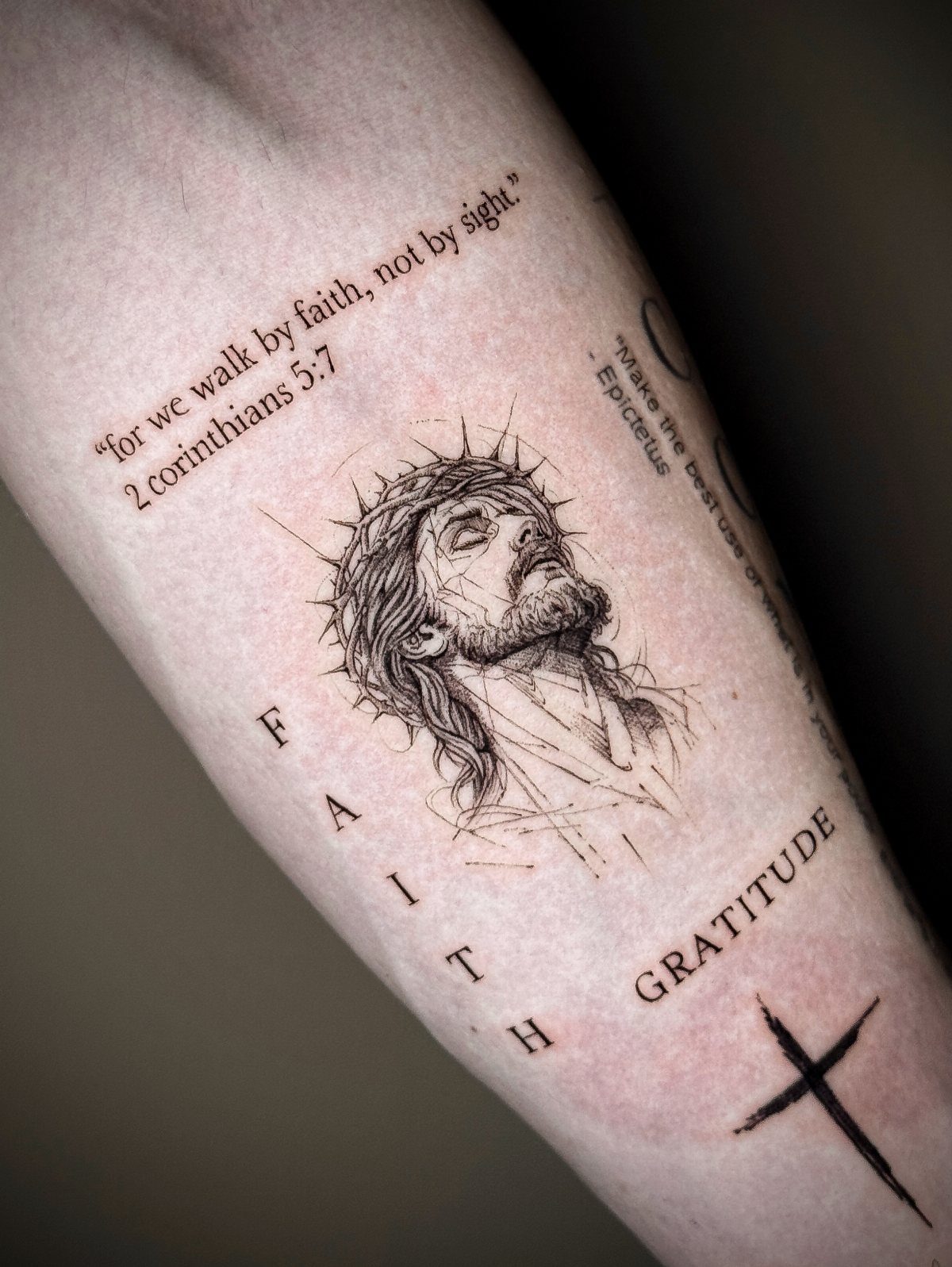
Combining a sketched Jesus portrait with scripture verses and single-word affirmations like "faith" and "gratitude" layers meaning into one vertical forearm piece. The loose sketch style contrasts with the precise lettering and stops the piece from feeling overworked.
Scripture placement usually runs above or below the portrait, with the verse reference in smaller text. The cross at the bottom anchors the composition and ties the elements together.
Forearm fits this format naturally because the vertical space matches the reading order from top to bottom.
Significance of Jesus Tattoos
Faith and sacrifice sit at the center of most Jesus tattoos.
The designs connect directly to the story of redemption, where belief in Christ offers forgiveness and a turning away from past mistakes. That shift, from old behavior to new life, becomes visible in the ink.
A Jesus tattoo can mark a personal transformation or honor a commitment to Christian teaching. For many people, it represents strength during hard times and a reminder of the values they want to live by.
The designs also build community. Wearing a visible symbol of faith connects you to others who share those beliefs, and the tattoo becomes both a private devotion and a public declaration.
Placement depends on how much you want the tattoo seen.
Detailed portraits need space, which makes the upper arm, chest, or back the right choice. Smaller designs fit the wrist, ankle, or behind the ear.
Common Placement for Tattoos
The forearm holds the most Jesus tattoos. The vertical real estate fits a portrait, a cross, or a full shoulder-to-wrist composition and lets you see the piece yourself without a mirror.
Sleeved clothing covers a forearm tattoo when you need it hidden, but rolled cuffs or short sleeves let you show it easily.
Light shading contrasts well against lighter skin, and the shape of the arm supports both narrow and wide compositions.
The canvas is flat and long, and the design can run from wrist to elbow without breaking up around curves.
Styles of Jesus Tattoos
Realism dominates Jesus tattoos. Grey shading picks up the texture of skin, fabric, and shadow better than color does, and strong contrast holds facial features at any size.
A realistic portrait depends on the artist’s ability to render dimension in the face and weight in the expression.
Cross, thorns, and sacred heart symbols layer meaning into the design without competing with the portrait.
A single-line sketch or a minimal crucifix relies on clean line work, and any hesitation in the hand shows. Without shading to soften a slip, the linework has to land right the first time.