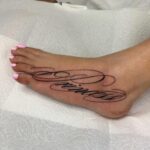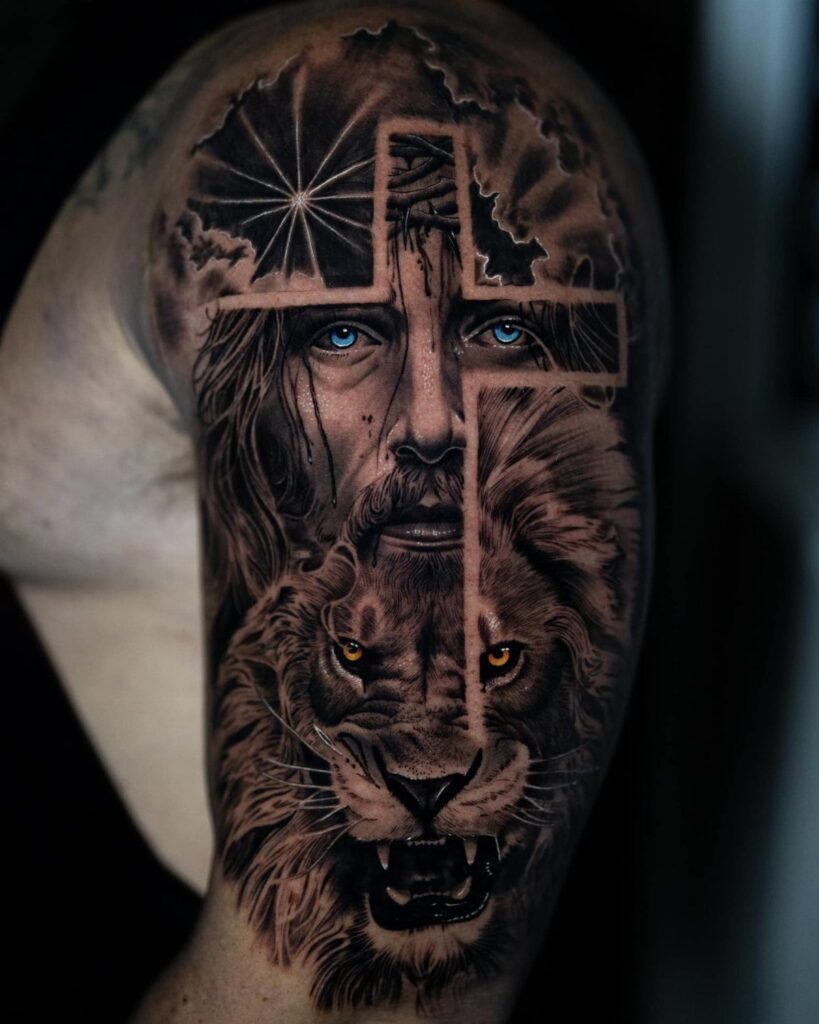
A fish or dove keeps the symbol small enough for a wrist, while a full sleeve combining the sacred heart, thorns and praying hands needs several sessions and a forearm’s worth of room to let each element breathe.
Pick based on how much scripture or imagery you want in one piece: single-symbol designs like the fish or cross read clearly at a small scale and stay easy to cover, but layering multiple elements into a sleeve requires more skin and a plan that spaces the symbols so one doesn’t dominate the arm.
1. Bible Verse Tattoo
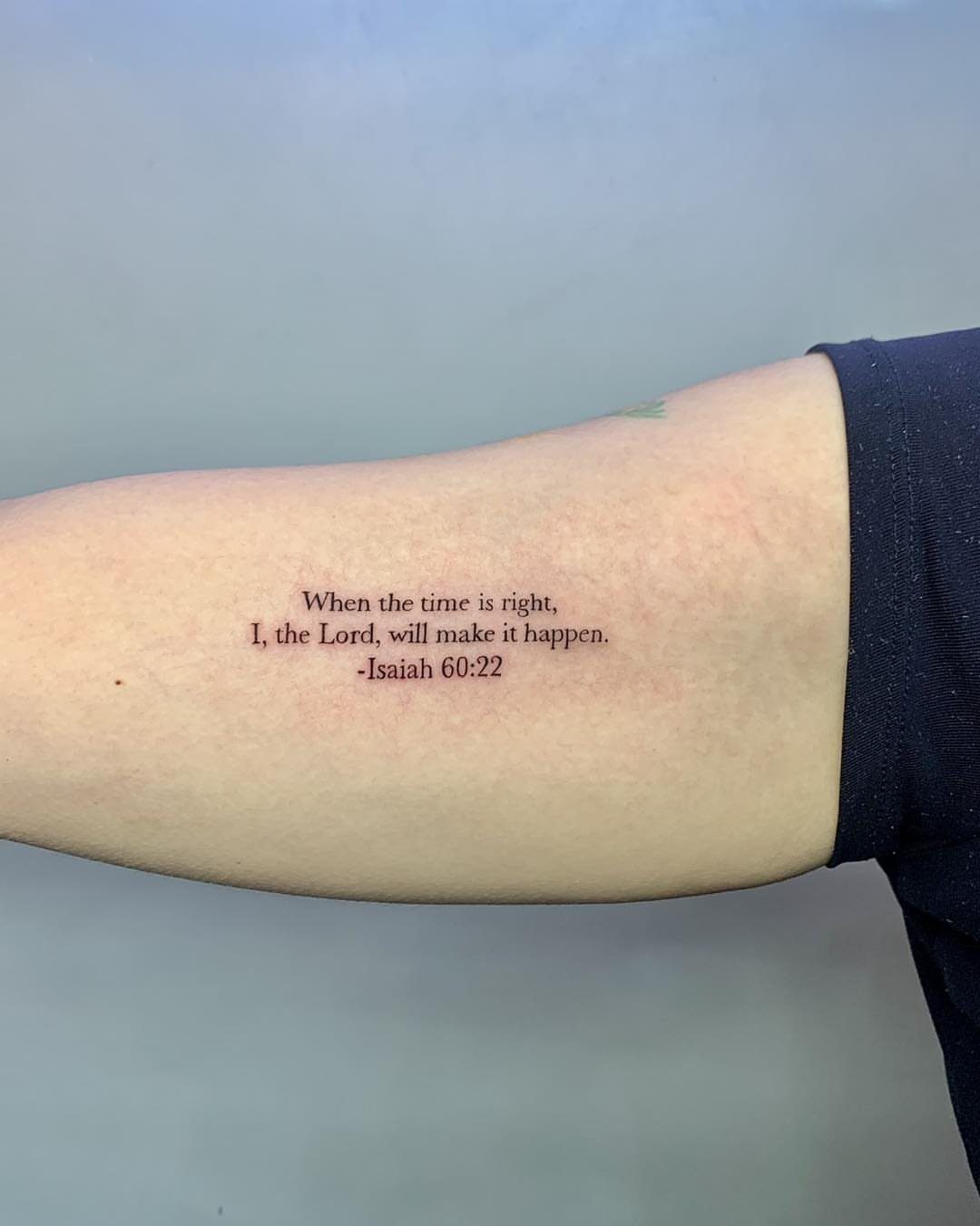
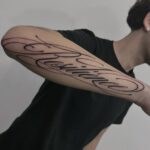
A scripture passage lettered straight down the forearm or along the inner bicep keeps the words close and readable. Isaiah 60:22 runs short enough to fit a forearm and still leave room for legible letters.
Script stays sharpest in black ink. Fine-line or medium-weight lettering both work; fine line reads elegantly but fades faster on high-friction areas like the wrist, so I’d move it up the arm if you go thin.
Pick a verse short enough to read at arm’s length. Long passages shrink into a block that’s hard to read.
2. Praying Hands
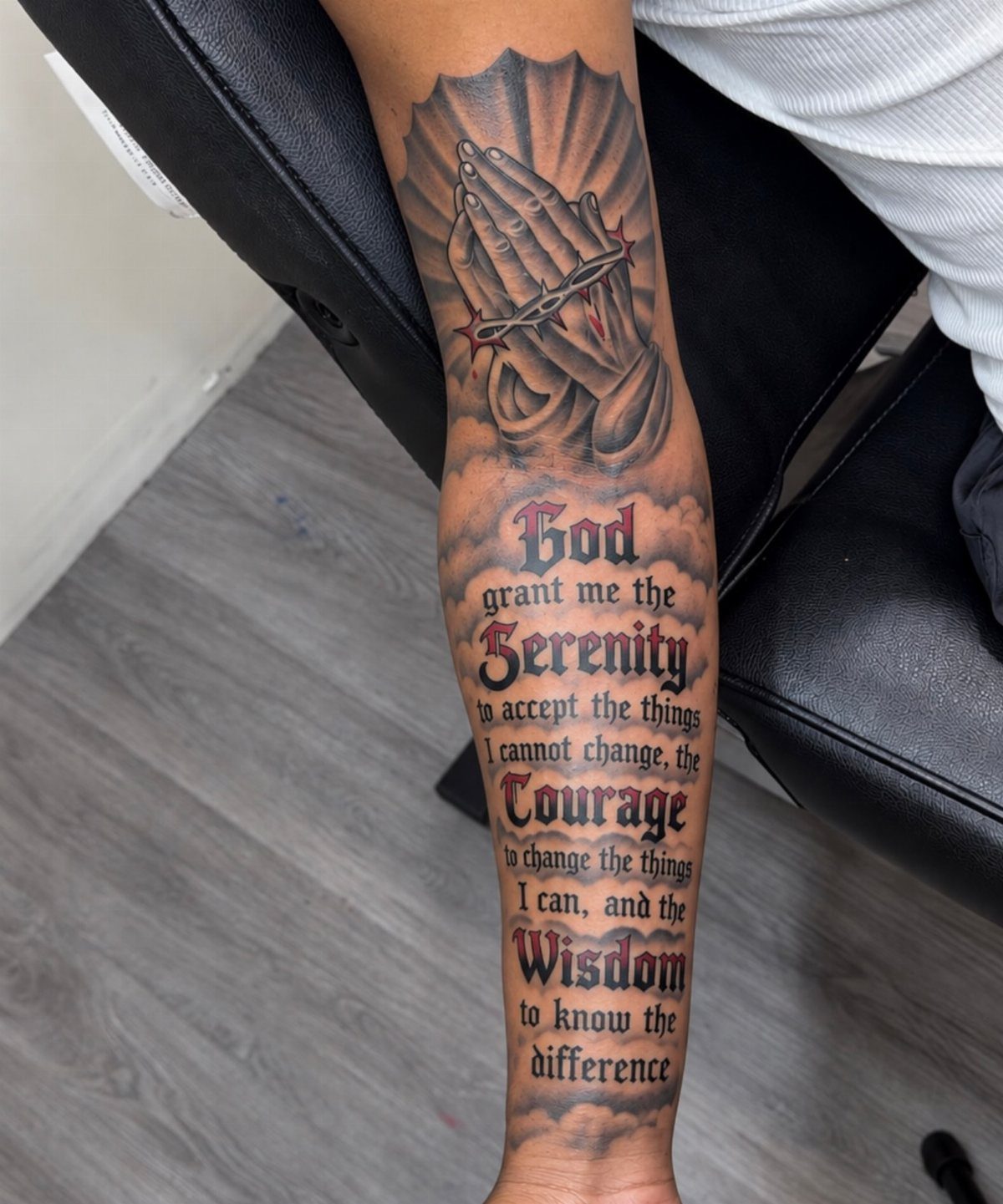
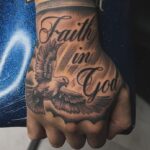
Praying hands anchor a forearm piece that can stand alone or layer with other symbols. Adding the Serenity Prayer and a crown of thorns turns the hands into a broader statement about faith and surrender.
Shading matters here. Soft gray gradients give the hands dimension; flat linework reads more like an outline.
Text sits best below the hands or woven into the clouds. Stacking too much above the wrists forces the layout to stretch, and a cramped design loses impact.
3. Lion of Judah Tattoo
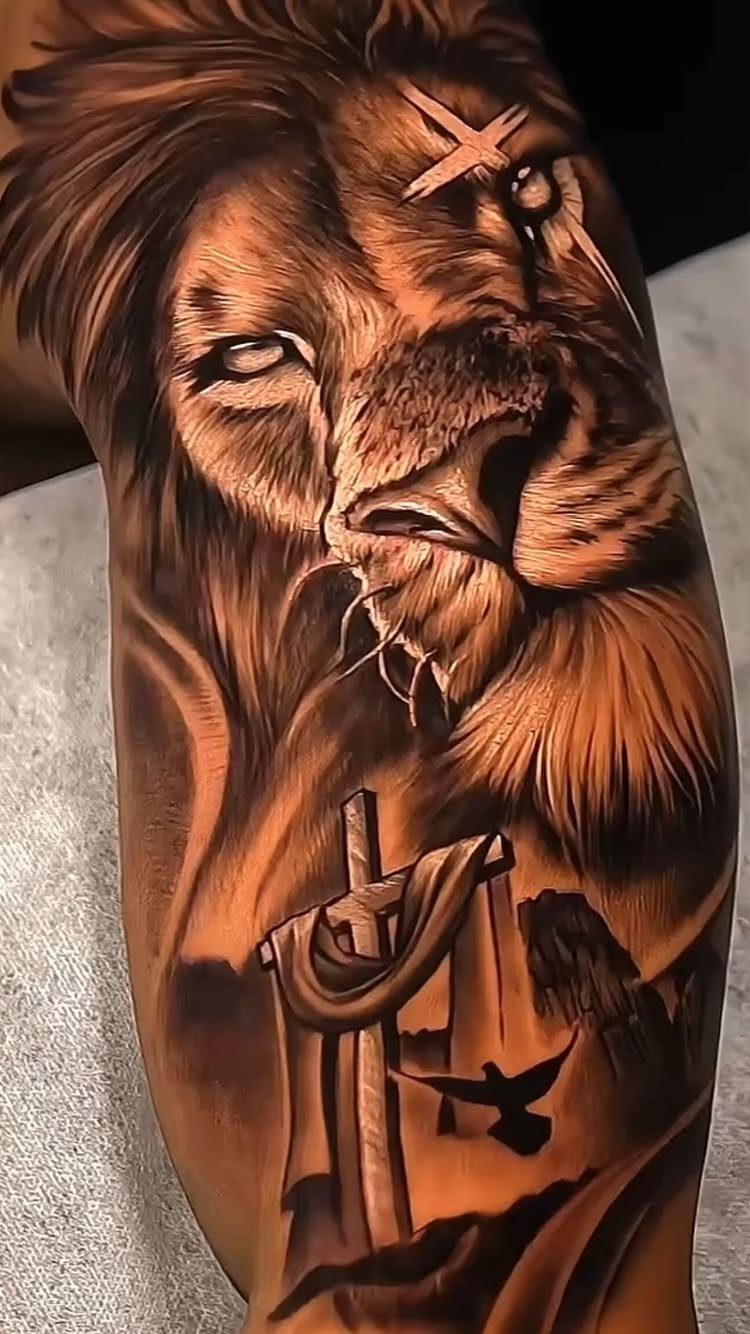
A lion’s face paired with a cross and dove brings three symbols into one piece: strength, sacrifice and the Holy Spirit.
The lion represents Christ as the Lion of Judah, a title from Revelation that ties back to the tribe of Judah in the Old Testament.
Realism suits this idea.
A photorealistic lion with fine shading and a detailed cross makes the design read clearly from a distance. Simpler styles blur the symbolism.
Plan for a half-sleeve or full forearm. A compressed version loses the lion’s features, and the cross needs room to stand out against the mane.
4. Crown of Thorns Tattoo
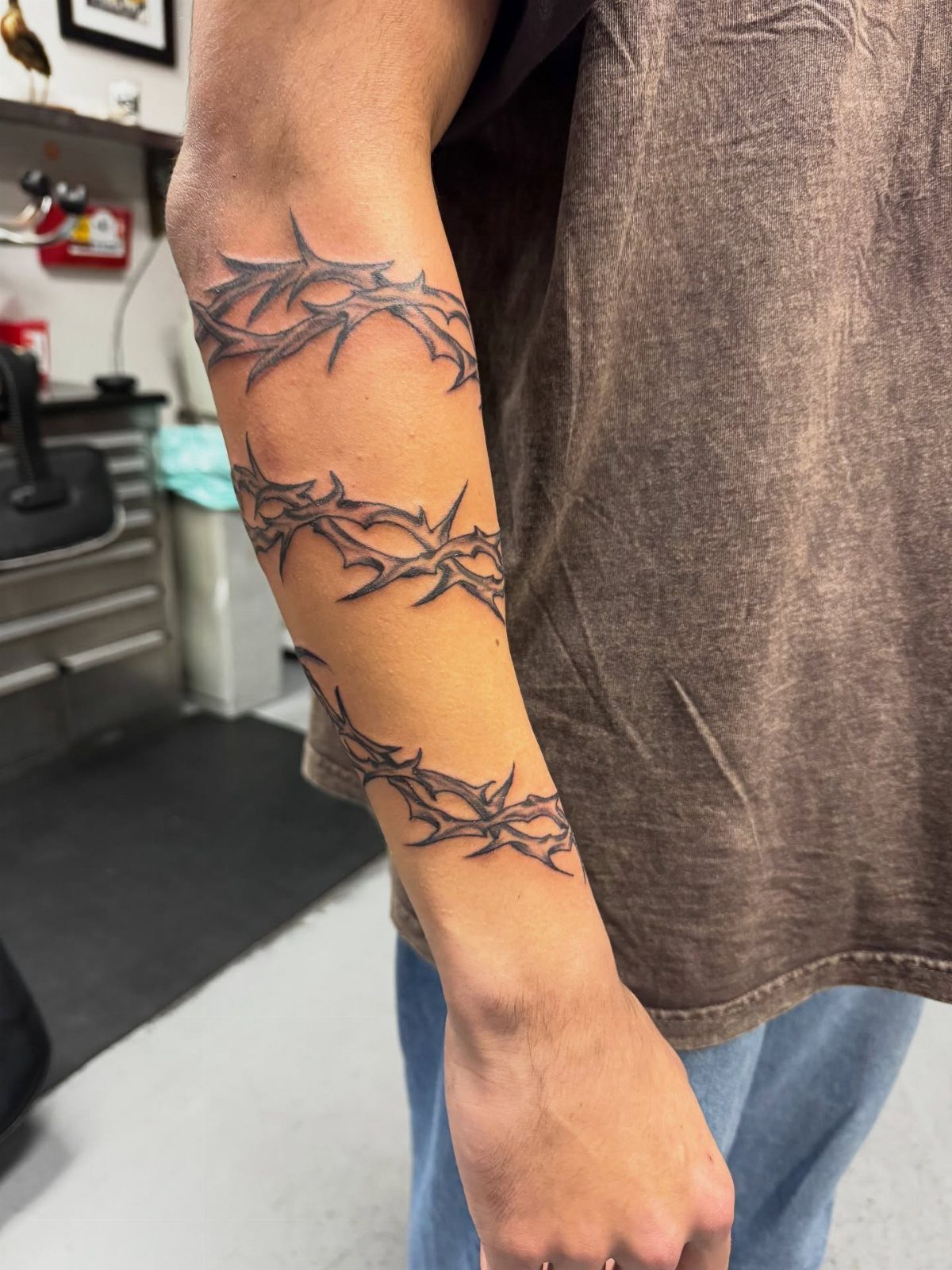
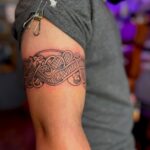
3 bands of thorns wrapping the forearm repeat the crown of thorns motif without centering a portrait. Each band can sit evenly spaced or cluster tighter at the wrist, depending on how much skin you want to leave open.
Blackwork keeps this design strong. Solid black thorns with sharp points hold their shape better than fine line, which can blur over time on areas that move and flex.
Placement matters. The forearm shows the bands well, though the calf or shoulder work when you need the piece hidden under sleeves or pants.
5. Jesus Christ Tattoo
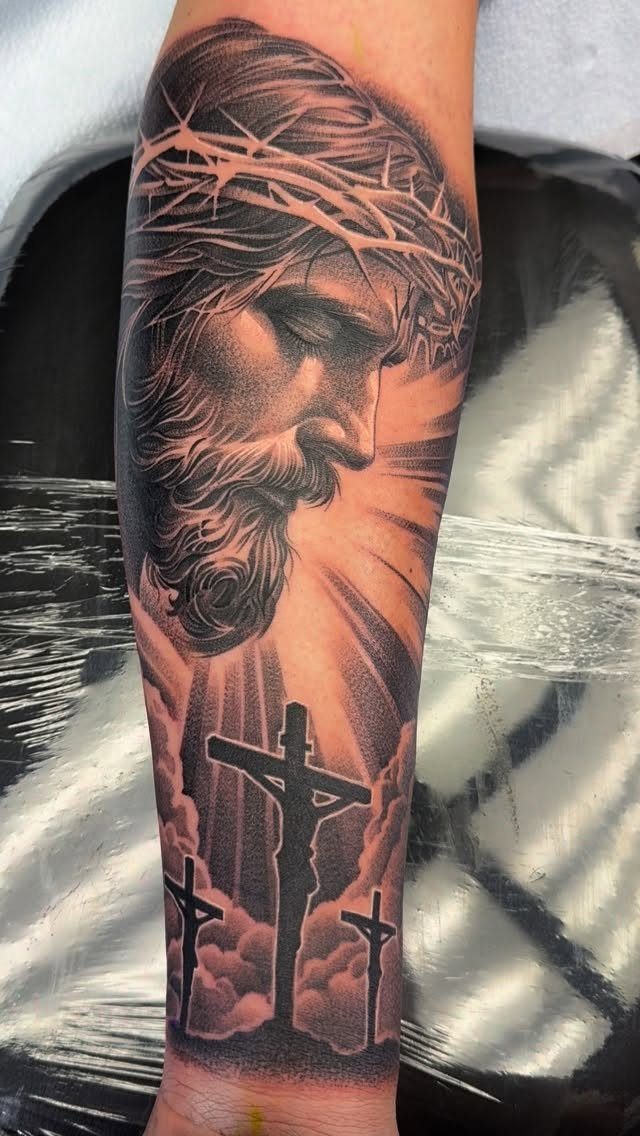
A portrait of Christ with the crown of thorns and 3 crosses behind him anchors a forearm or upper arm. The three crosses reference Calvary, where Jesus was crucified alongside two others, and they frame the portrait without crowding it.
Black and gray realism is the standard here.
Soft shading in the face and harder contrast in the thorns and crosses give the piece depth. Color can work, but most people stick with grayscale to keep the focus on the portrait itself.
Portraits take time, and rushing the shading shows.
6. Cross Tattoo
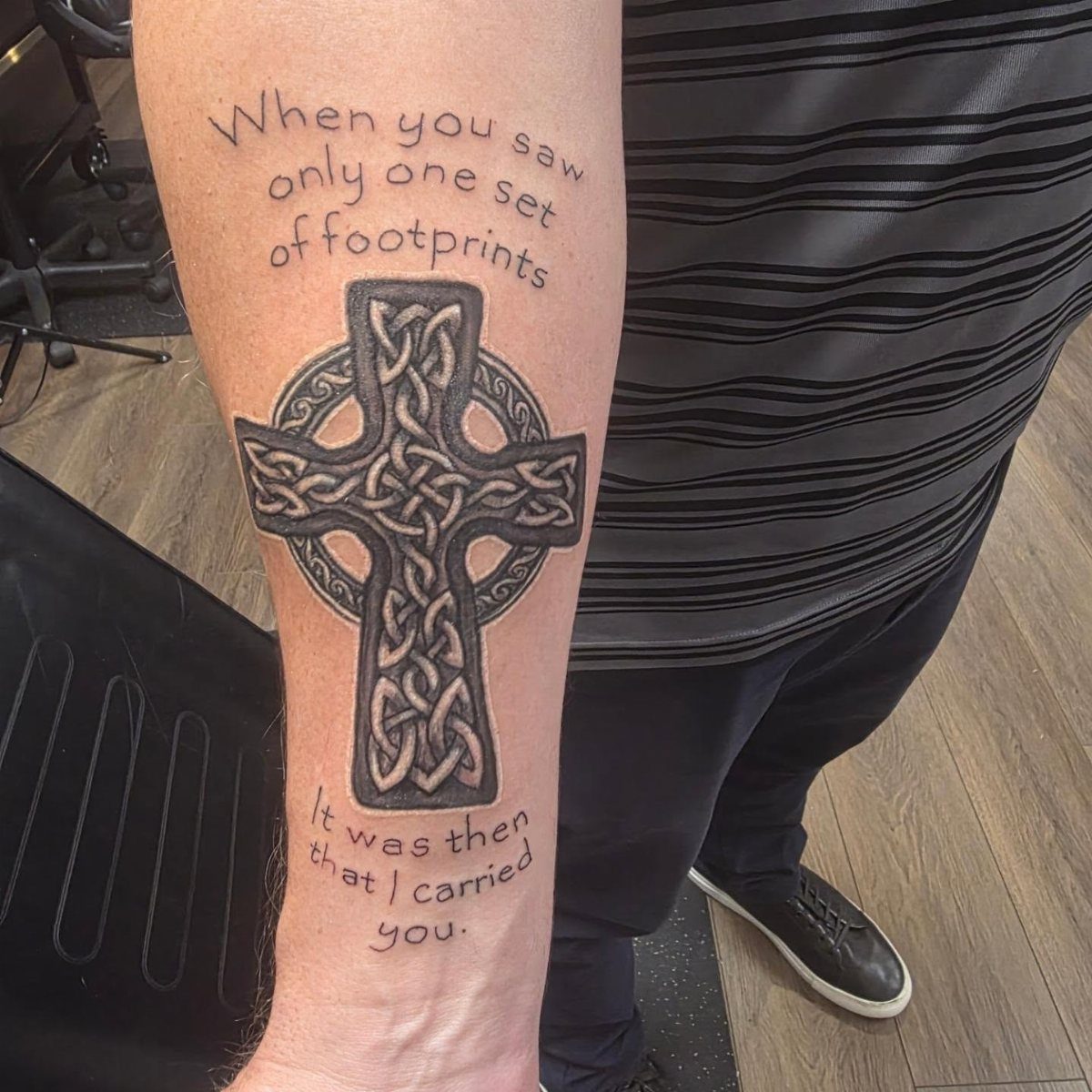
A Celtic cross pairs knotwork with the traditional Christian cross, blending Irish heritage with faith. Adding the Footprints poem ties the cross to a specific message about God carrying you through hard times.
Knotwork takes patience.
The interlaced lines need clean execution or the design looks muddy, so pick an artist who handles detail work well. Black ink is standard, though some designs add a single color to the center or the text.
If you skip the text, the cross alone reads clearly. Adding a quote means planning space below or beside it, and longer passages push the design toward a half-sleeve.
7. Dove Tattoo
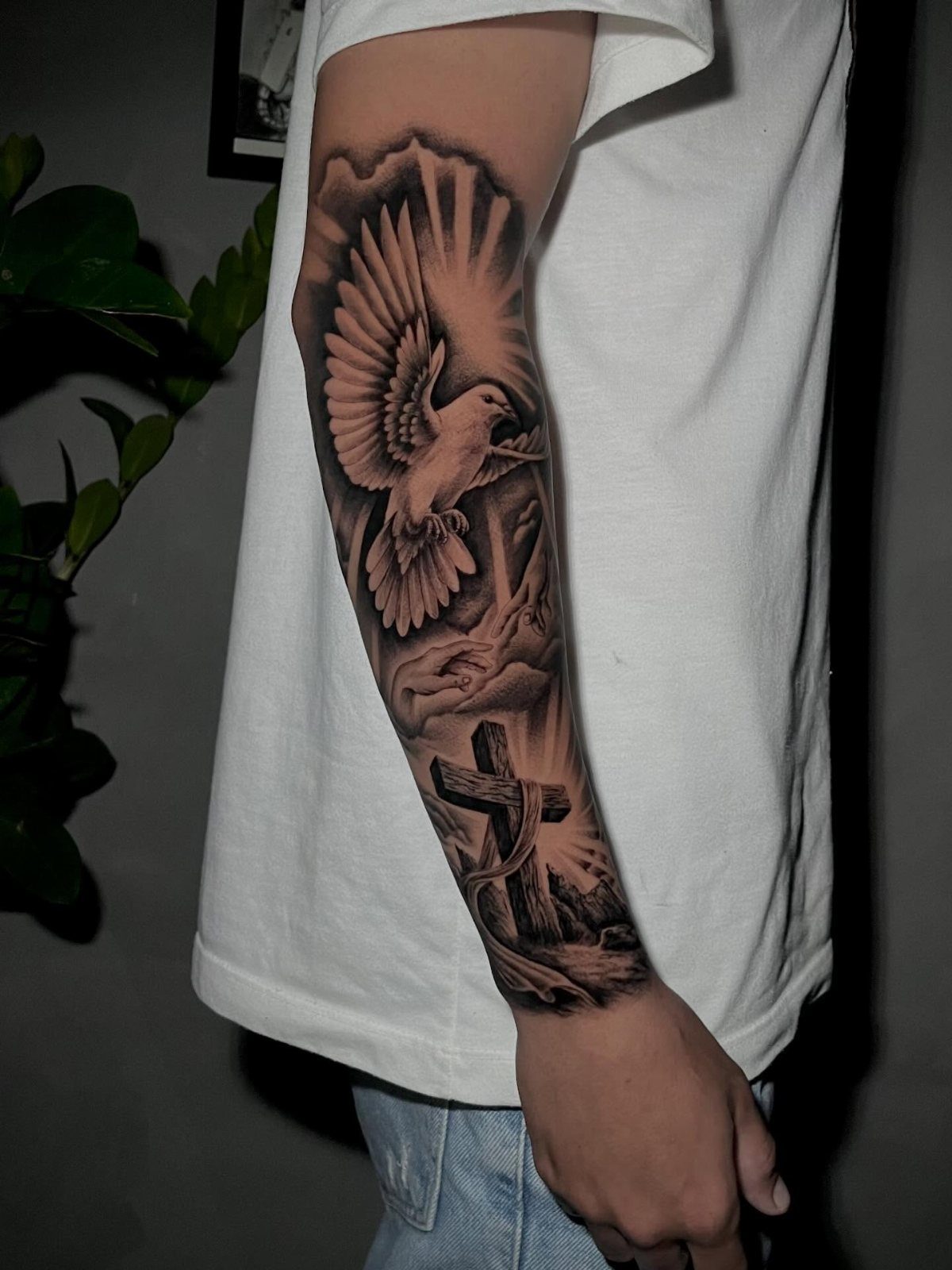
A dove above a cross with light rays spreading out places the Holy Spirit front and center. The dove represents peace and purity, and pairing it with a cross roots the design in the crucifixion and resurrection.
Black and gray suits this better than color. Fine line works for smaller doves, but medium-weight linework holds up better on the forearm.
Adding rays or clouds gives the design depth without crowding it.
8. Ichthys (Christian Fish) Tattoo
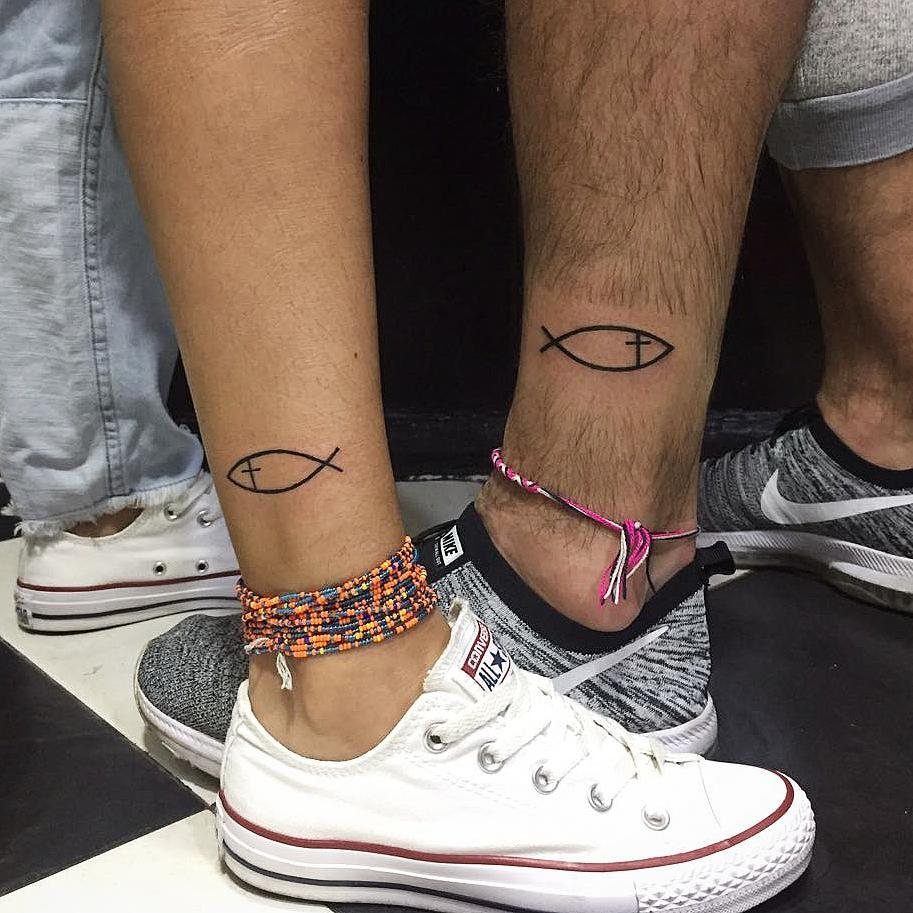
The fish outline runs small and simple, which is why it works on the ankle or wrist. Early Christians used the ichthys as a secret symbol to identify each other, and it still reads as quiet faith today.
Matching fish tattoos make sense for couples or friends who share the same beliefs. The design stays readable even at a small scale, and placement on the ankle keeps it easy to cover when needed.
Shading is optional, most people stick with a clean outline.
9. Angel Wings
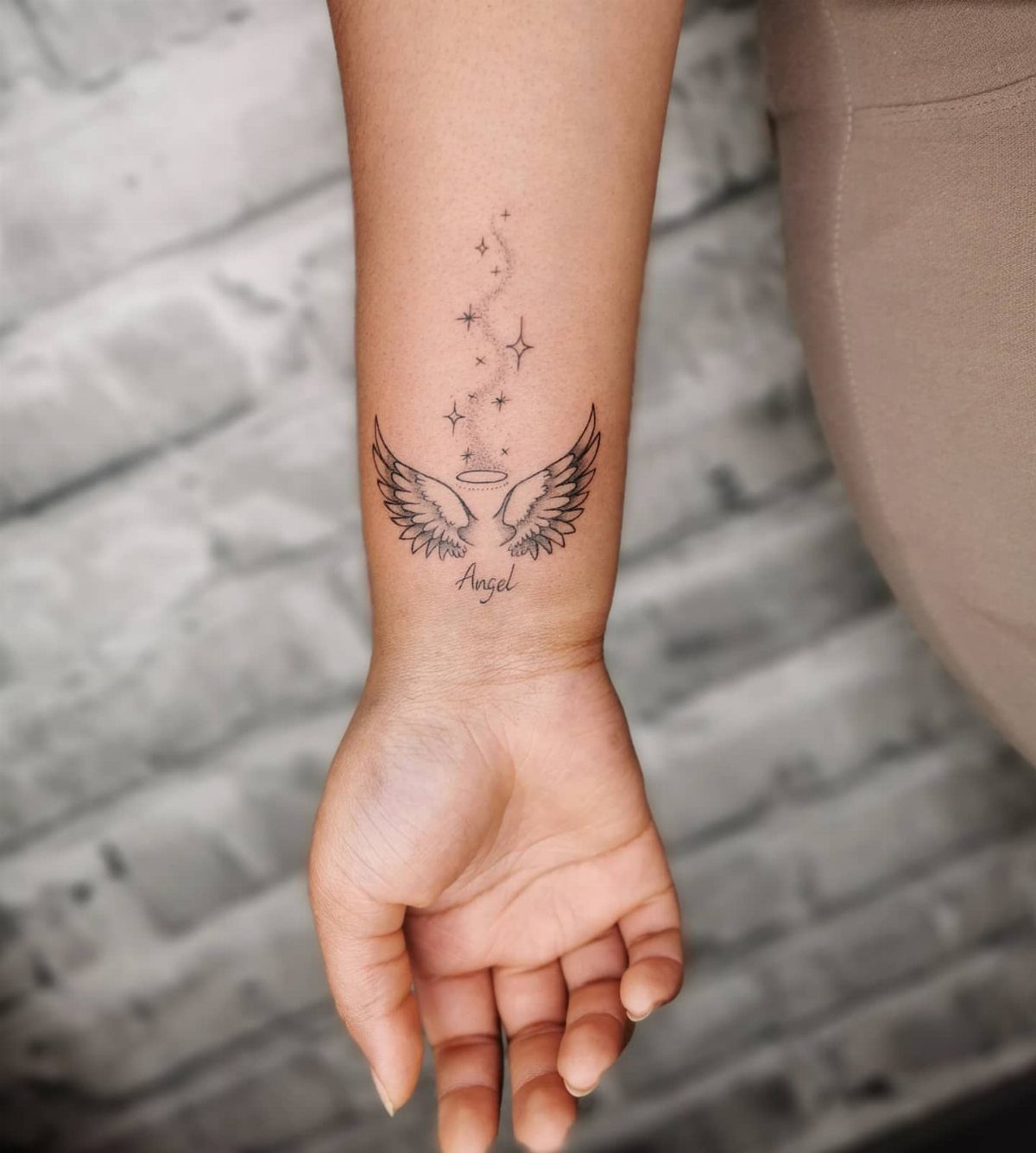
Wings paired with a halo and the word "Angel" turn the wrist into a memorial piece or a tribute to someone you’ve lost.
Wings alone can represent protection or your own faith, but adding a name or word makes the meaning specific.
The inner wrist shows the design well, though it’s also one of the more painful spots because the skin sits close to bone. Outer wrist or forearm hurt less and still keep the piece visible.
Fine line works here because the design stays small. Larger wings with feather detail need more space.
10. Sacred Heart Tattoo
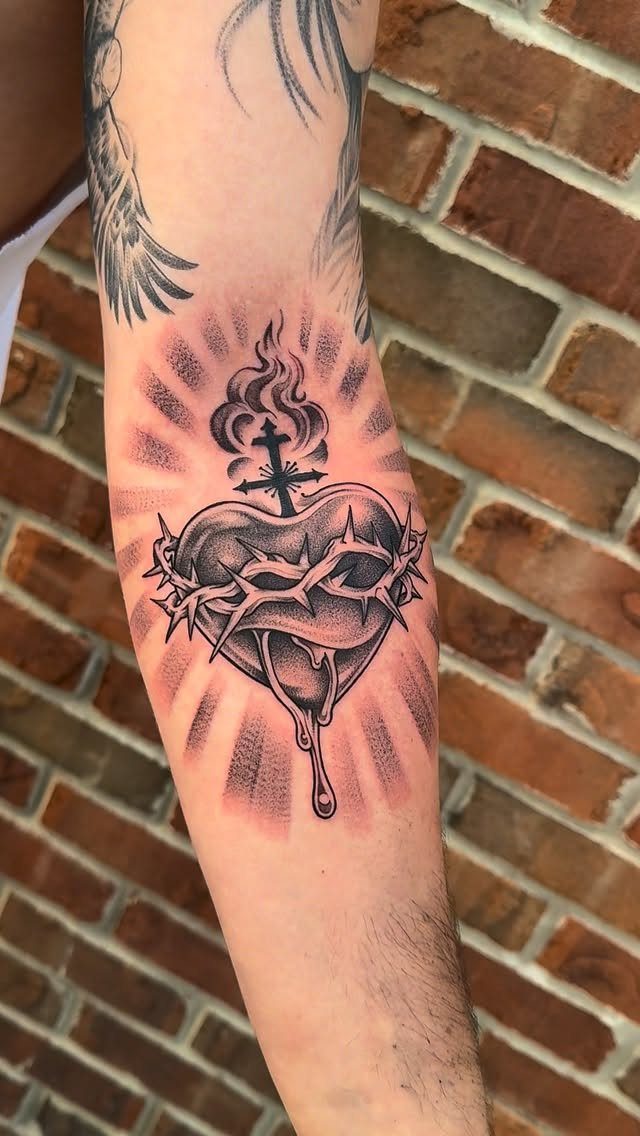
A flaming heart wrapped in thorns with a cross at the center brings together suffering and love. The Sacred Heart represents Christ’s compassion, and the thorns reference the crown of thorns from the crucifixion.
Shading gives this design weight.
Flames need gradients to look like fire, and the thorns need sharp contrast to stand out against the heart. Flat linework loses the depth.
Forearm placement keeps the heart upright and readable. Sizing down for the wrist compresses the flames and makes the thorns harder to read.
11. Rosary Tattoo
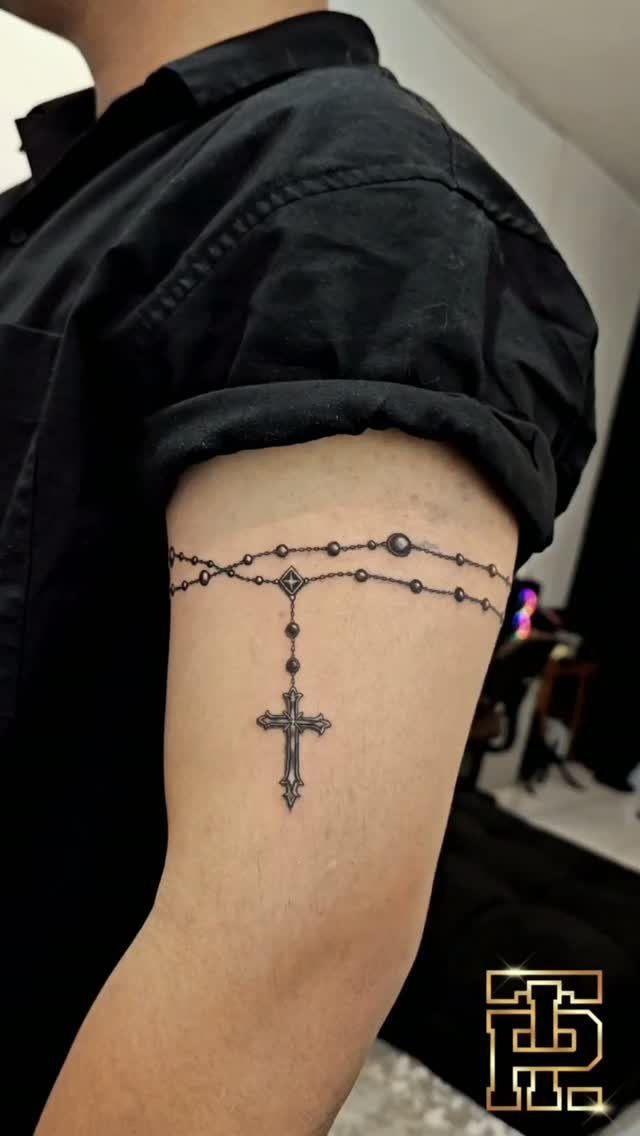
Rosary beads wrapping the bicep follow the natural curve of the muscle and place the cross where it hangs down naturally.
The rosary ties directly to Catholic prayer, and each bead represents a prayer in the decades of the Hail Mary.
Ink in black keeps the beads distinct. Adding shading to each bead gives dimension, but flat circles work if you want a simpler look.
Sizing matters. Beads too small blur together over time, so give each one enough space to read clearly.
12. Lightbulb Tattoo
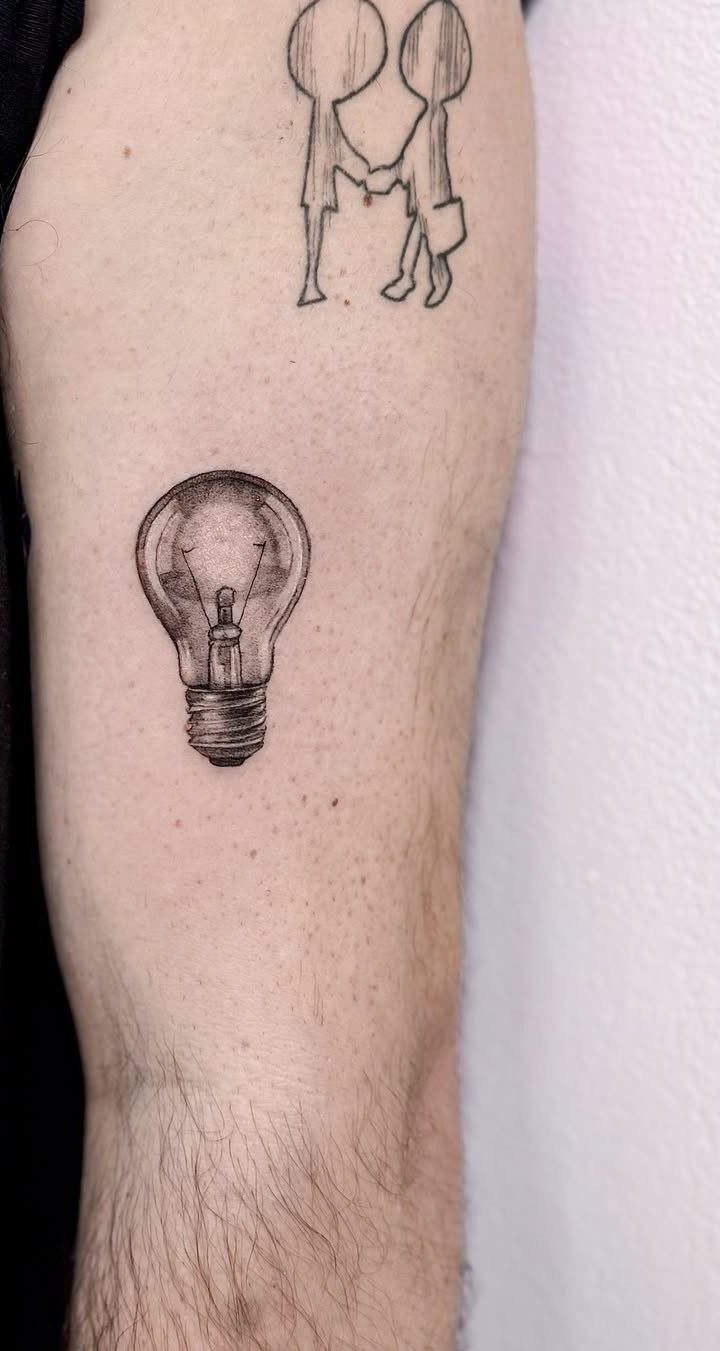
A lightbulb references the verse about being a light in the world, where Christ tells his followers to let their light shine. The bulb reads literally but still ties back to scripture without needing text.
Linework suits this idea. A realistic bulb with filament detail keeps the design recognizable, and adding a glow effect with soft shading around the glass gives it more presence.
Forearm or upper arm both work. The bulb itself is simple enough to stay readable at a smaller size if you want it on the wrist.
13. Olive Branch
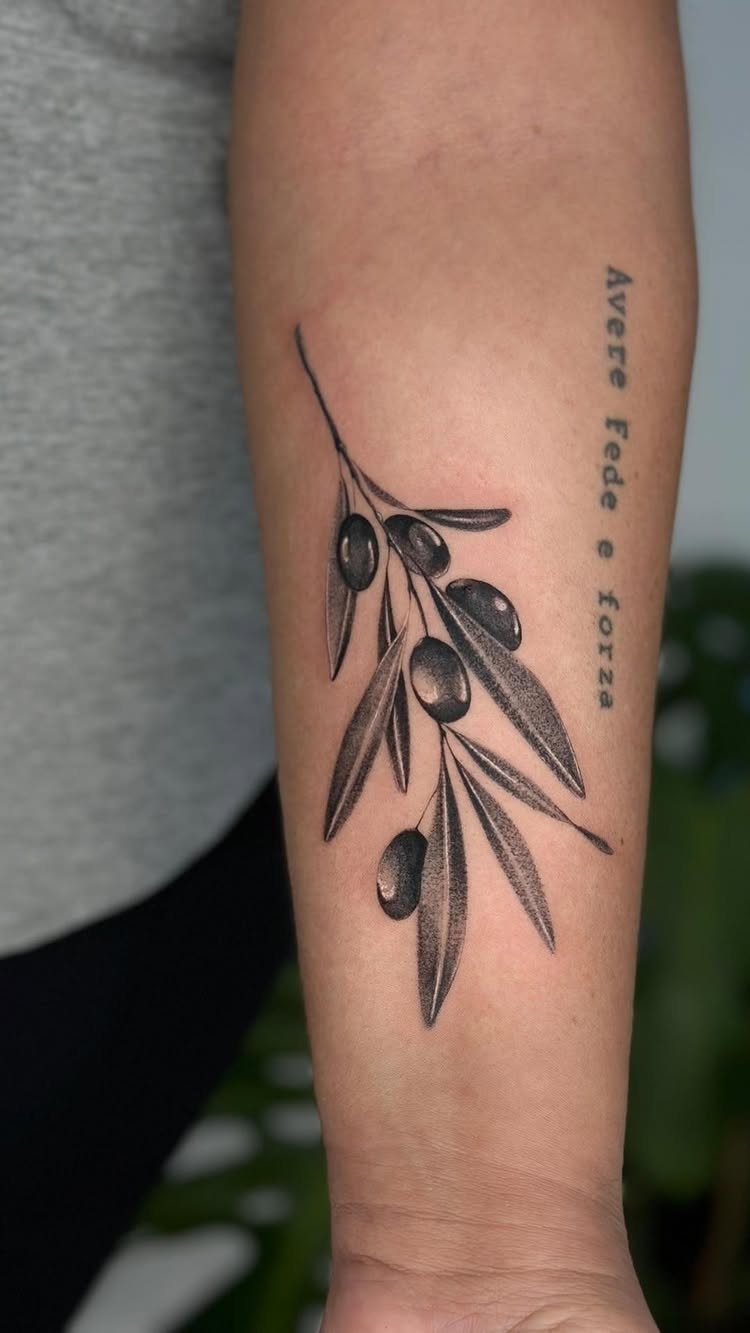
An olive branch running down the forearm or wrist offers a quieter faith symbol than a cross or portrait.
The branch represents peace and reconciliation, tied to the dove returning to Noah’s ark and to passages about peace in both testaments.
Simple linework keeps the leaves and olives readable. Adding text, like the Italian phrase visible here, ties the branch to a specific prayer or belief.
Sizing small enough for the wrist means fewer leaves, but the branch still reads clearly.
14. Lamb of God Tattoo
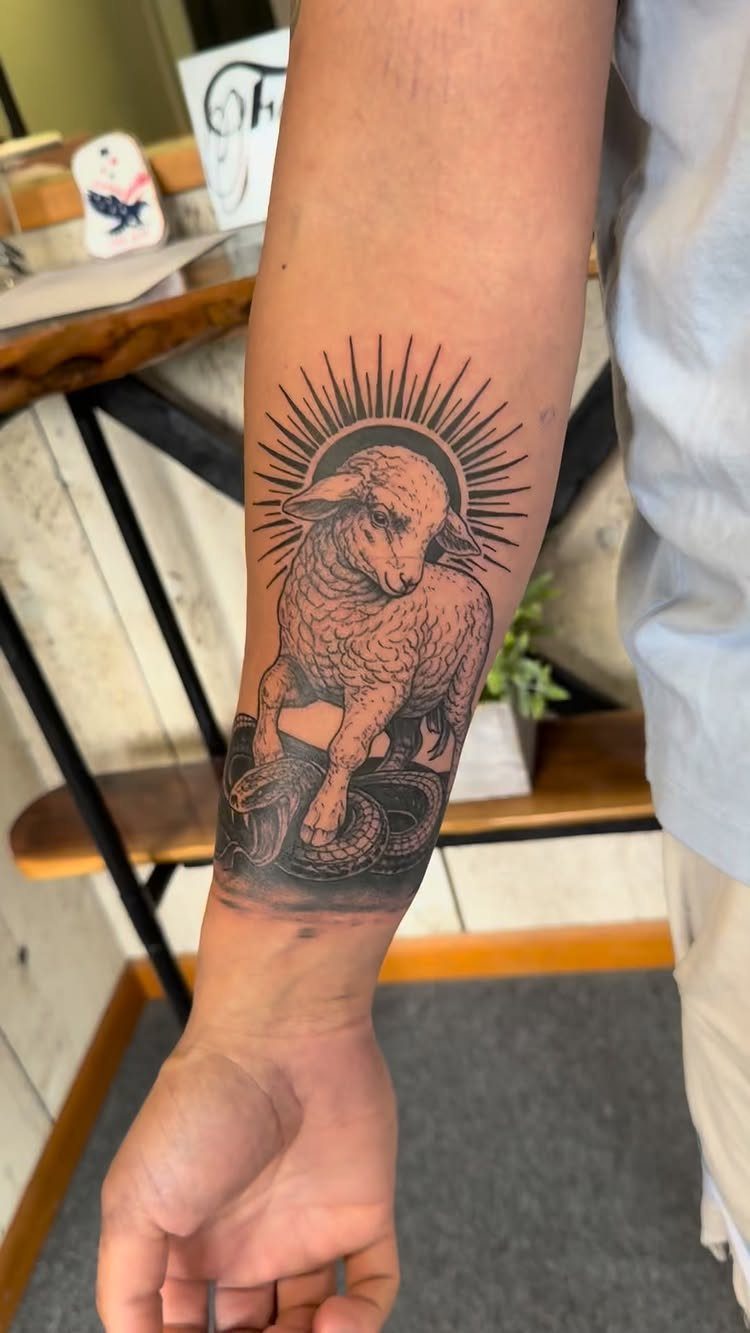
A lamb standing over a serpent brings 2 symbols together: Christ as the sacrificial Lamb of God and victory over sin or evil, represented by the snake.
The halo marks the lamb as holy, and the positioning makes the victory clear.
Black and gray shading gives the lamb dimension and keeps the serpent distinct from the ground. Fine detail in the wool and scales matters here, so plan for a forearm or larger to fit both animals without compressing them.
This piece needs an artist comfortable with animal anatomy. A flat or oversimplified lamb loses the symbolism.
15. Religious Sleeve Tattoo
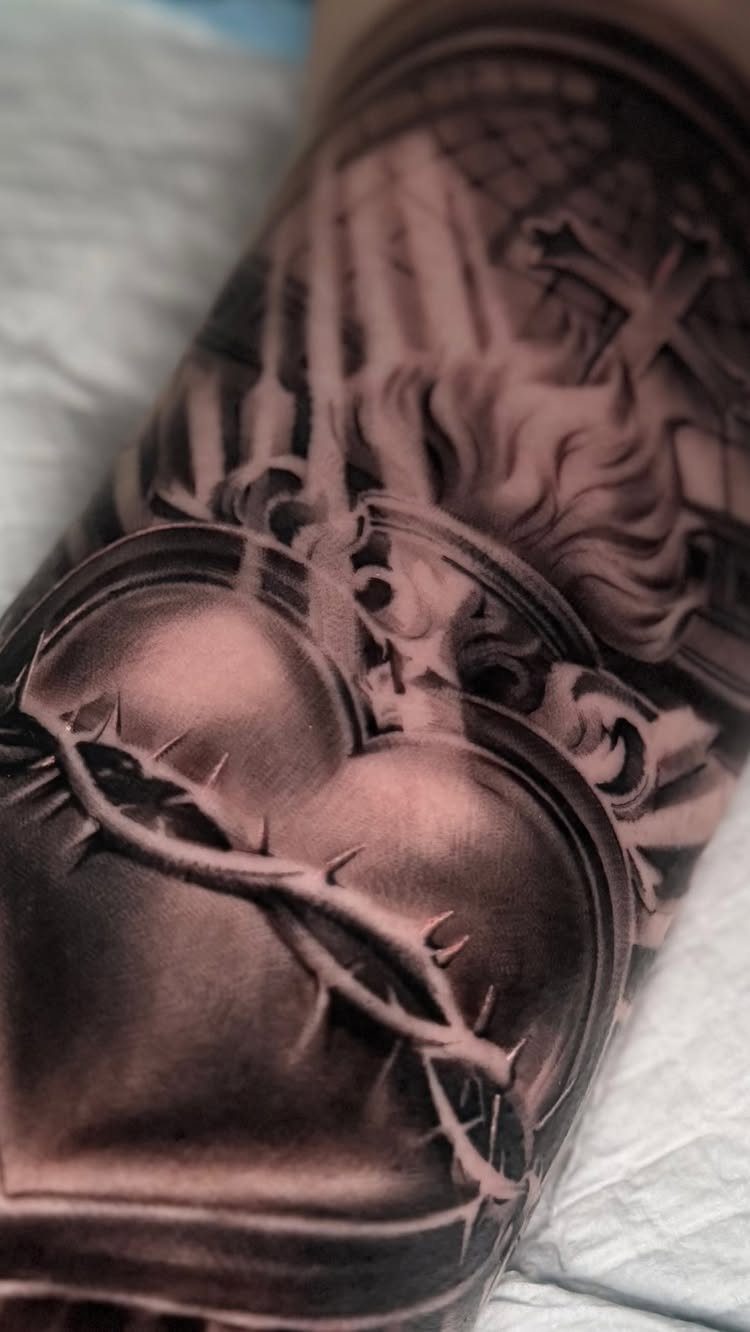
A full sleeve or half-sleeve lets you combine several symbols into one cohesive piece. The sacred heart, cross, and thorns visible here could expand to include praying hands, scripture, clouds, or other elements that tie your story together.
Spacing decides whether the sleeve reads as one unified design or a collection of separate tattoos. Planning the layout in advance keeps the symbols balanced and prevents one image from dominating the arm.
Budget several sessions. A sleeve takes longer than a single forearm piece, and rushing the shading or line work will show.
16. Footprints Tattoo
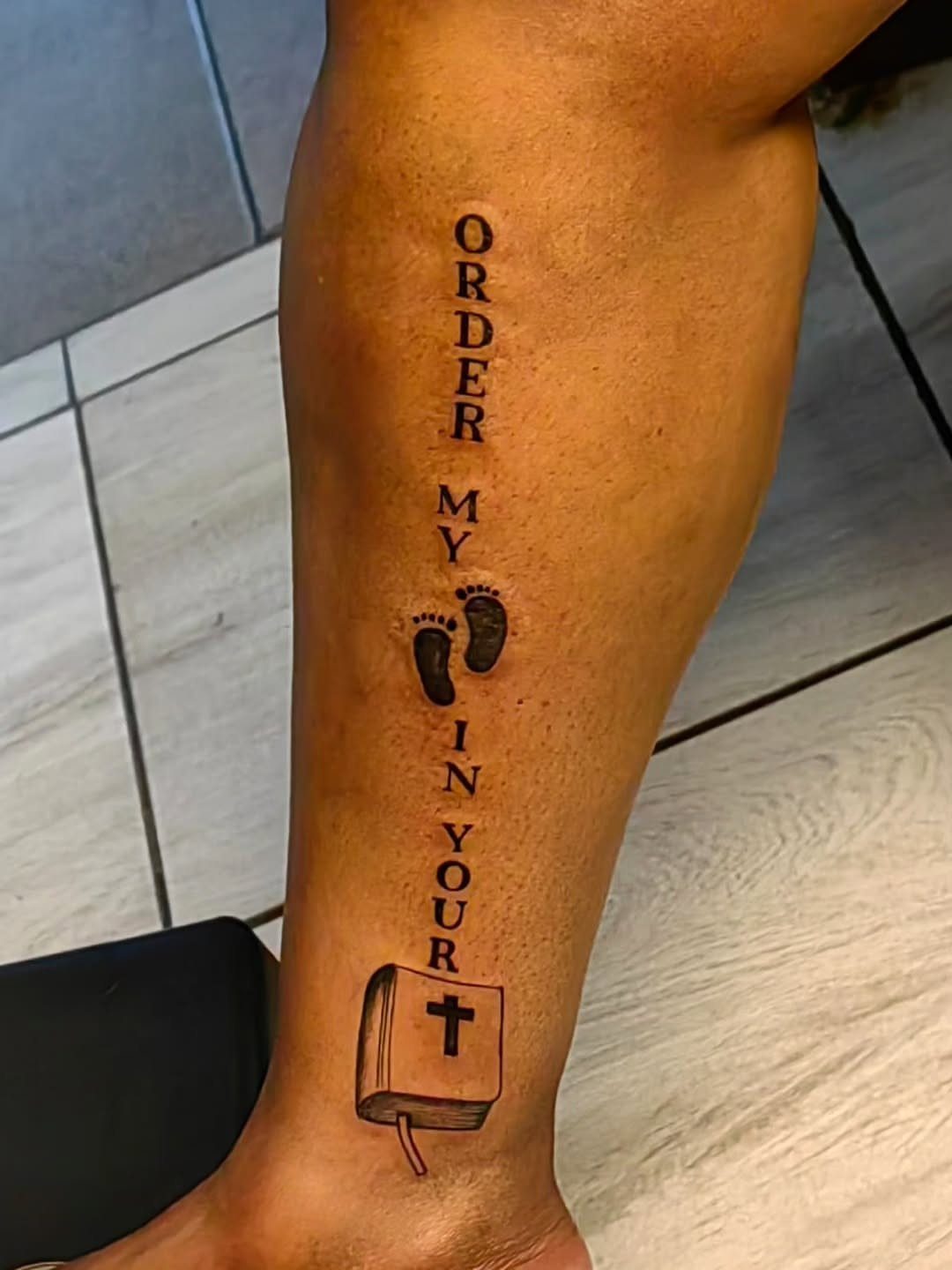
Footprints paired with scripture remind you that God guides each step you take.
Put the words where they will still read clearly after years of wear. Long passages push the design toward a larger area like the calf or thigh.
Black ink holds best for both the prints and the lettering. Fine line suits the prints, but the text should be medium-weight to stay readable as it ages.
Christian Tattoo Popularity
Faith-based ink has moved well past small crosses tucked on an ankle. Realism, fine-line detail, and geometric patterns now handle scripture and biblical imagery with the same precision artists bring to portraits or sleeve work.
Precision rotary machines and better stencil printers make intricate religious designs clearer and more durable than older equipment allowed.
Men often choose them to show faith, inner strength, or a break from the past. For women, they carry spiritual reminders and personal transformation, whether that’s a single word like "Blessed" or an olive branch tied to a turning point.
The perception of Christian tattoos has shifted. Visible faith through ink is now seen as testimony, and the taboo has given way to acceptance in modern culture.
When faith meets ink, the results can be profoundly beautiful or, unfortunately, profoundly misguided. Christian tattoos should be a permanent testament to faith, but far too often, they’ve become cringe-worthy examples of what happens when good intentions meet bad execution.
Placement Ideas for Tattoos
Wrists work for smaller pieces like a fish or dove, though the inner wrist sits close to bone and hurts more than the outer side.
Chest placement keeps a design over the heart, a choice that feels personal even when the tattoo stays hidden under a shirt.
Shoulders and upper arms handle larger layouts without forcing you to commit to a full sleeve, and the curve of the muscle follows circular or wrapping designs like rosary beads naturally.
Back pieces offer the most room but you will only see yours in a mirror.
Debate on Tattoos in Christianity
Leviticus 19:28 tells believers not to mark their skin for the dead, and that line still anchors most arguments against religious ink.
Some scholars read "for the dead" as specific to mourning rituals or demonic markings, not all tattoos. Others take it as a blanket rule.
Isaiah 44:5 points the other way: some will write the Lord’s name on their hand, and when Christian Crusaders tattooed crosses in 1095 they read that as permission.
If you’re unsure where you land, a small cross on the hand follows both historical precedent and a literal reading of scripture.