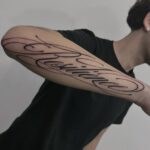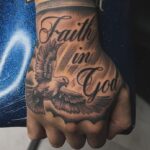
These 33 ideas range from a semicolon on the wrist that signals survival to a Japanese crane on the forearm or a full Greek mythology sleeve.
1. Dog Tattoo
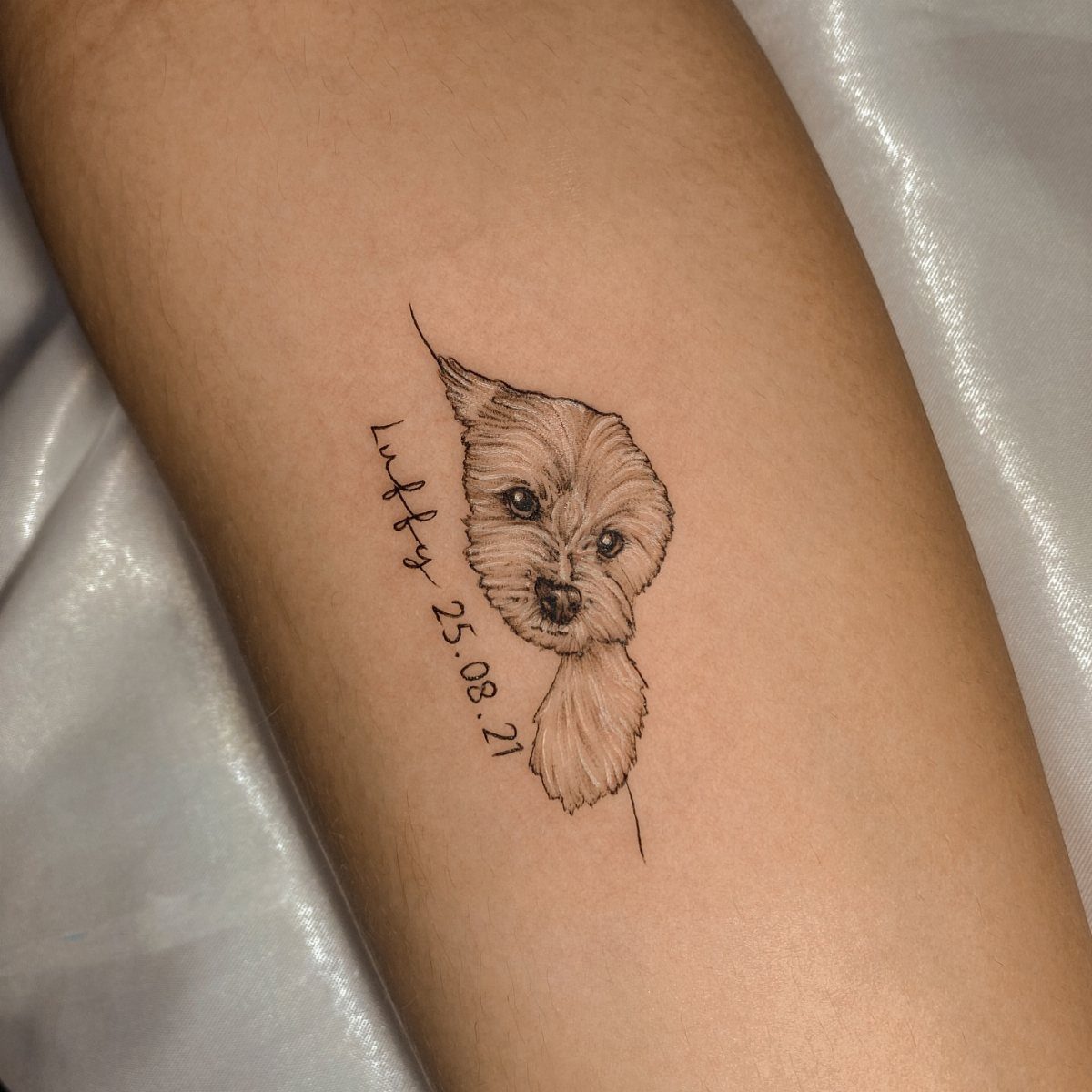
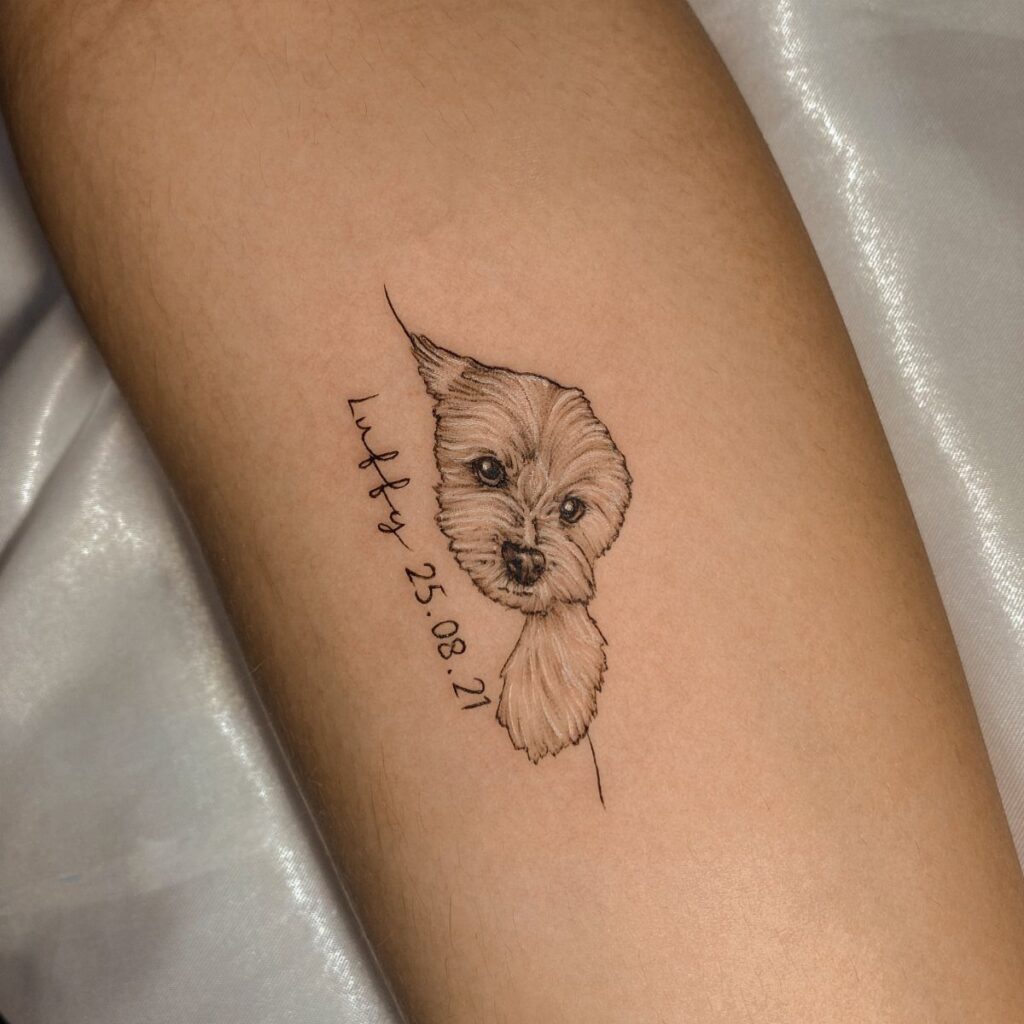
A portrait of your dog captures one specific face, not the idea of loyalty in general.
The realism here asks for an artist who can match a reference photo down to the eye color and the way the fur breaks around the muzzle.
Adding the name and a date turns it into a memorial piece. If your dog is still with you, skip the date or it reads like a headstone.
Forearm placement puts the design where you can see it without a mirror, which matters for a piece this personal.
2. Butterfly Tattoo
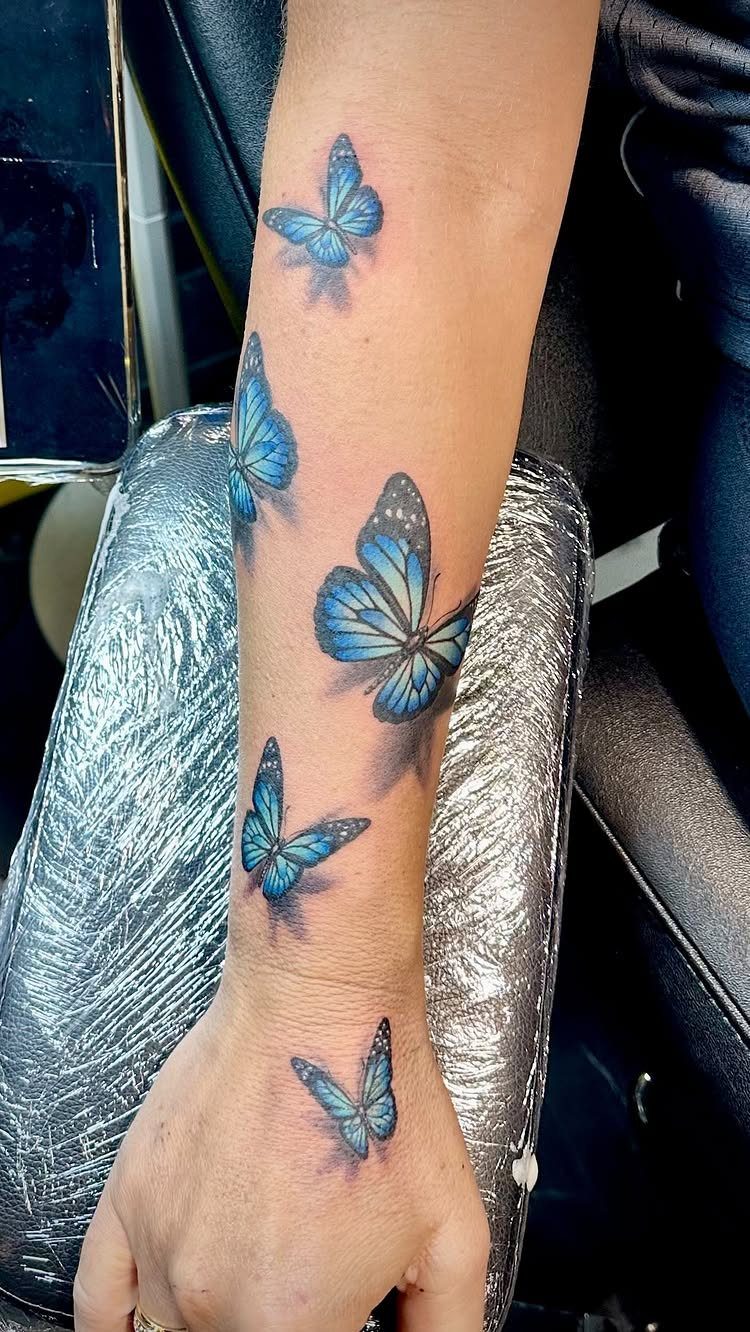
Butterflies read as transformation because they actually transform, which makes the symbol feel earned rather than assigned.
Multiple butterflies let you fill a longer space like the forearm without committing to one large image. You can add more later to extend the design up the arm.
Placement on the inner forearm keeps them visible to you. Outer forearm works too if you’d rather other people see them first.
3. Sunflower Tattoo
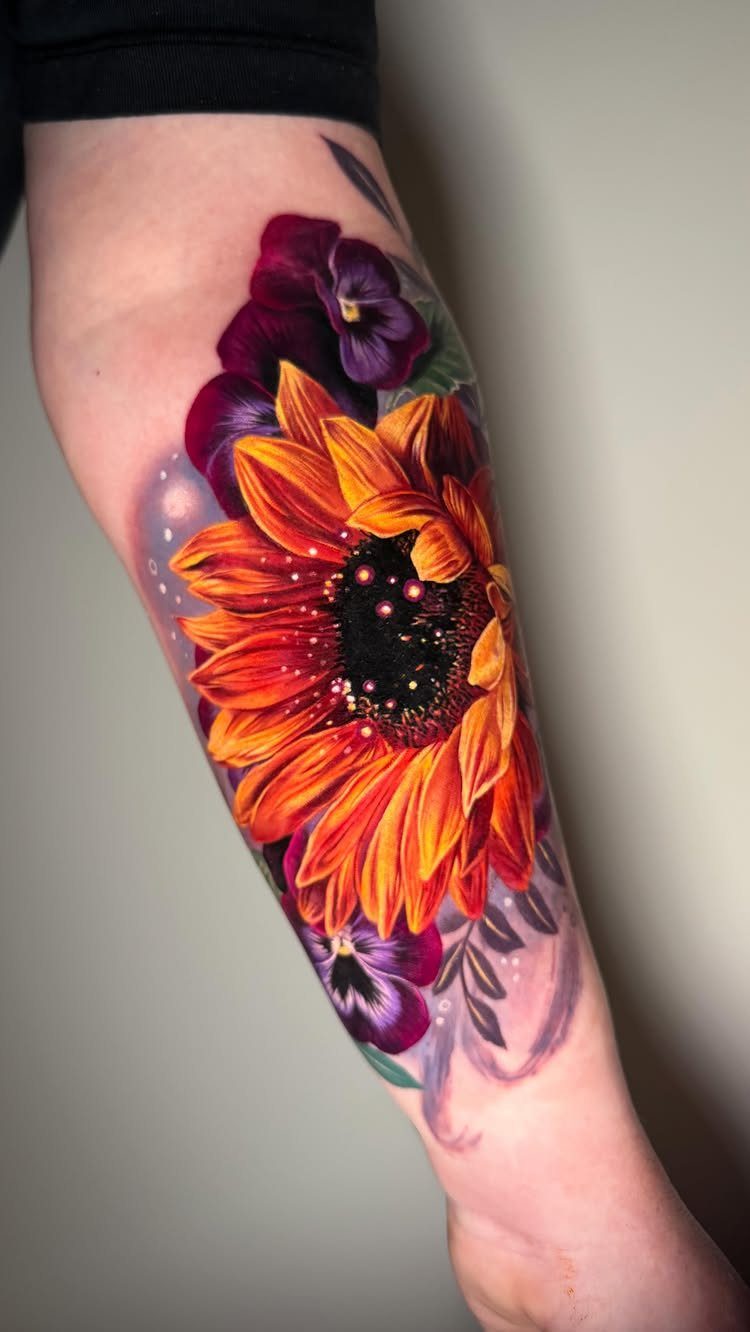
Sunflowers track the sun, which is where the optimism association comes from. The orange and yellow petals photograph well and hold their color longer than pastel ink.
Forearm or calf both give you enough flat space for the full head of the flower.
Color saturation this bright needs a touchup every few years to stay vivid. Black and grey sunflowers skip that maintenance but lose the warmth.
4. Semicolon Tattoo
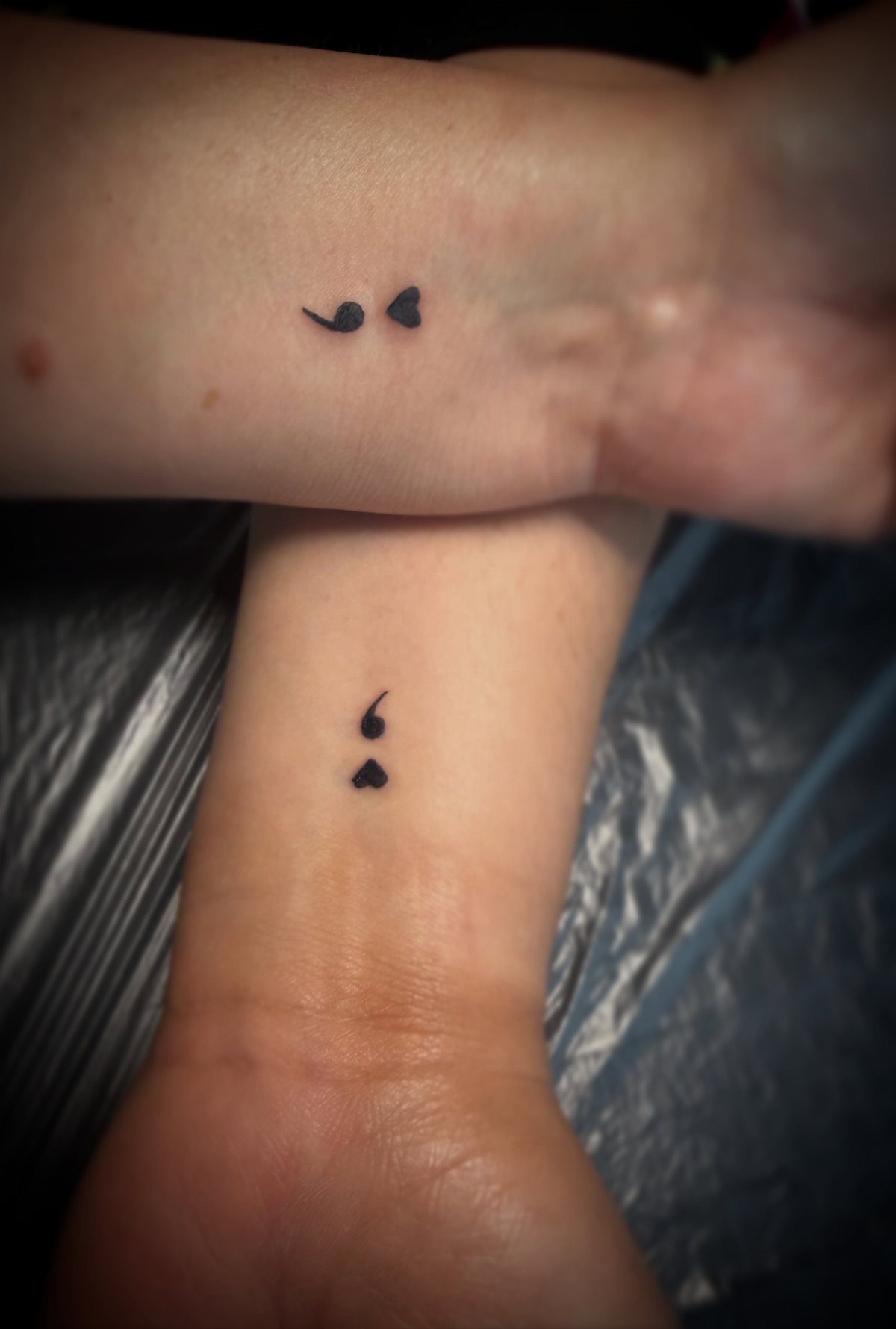
The semicolon tattoo carries a mental health read: you’re still here, still writing.
The heart replacing the dot softens the punctuation into something less stark. Matching semicolons, like the pair here, often work as a shared commitment to that idea.
Wrist placement puts it where you’ll see it daily. Small size keeps it subtle, which suits a piece this private.
5. Moon Tattoo
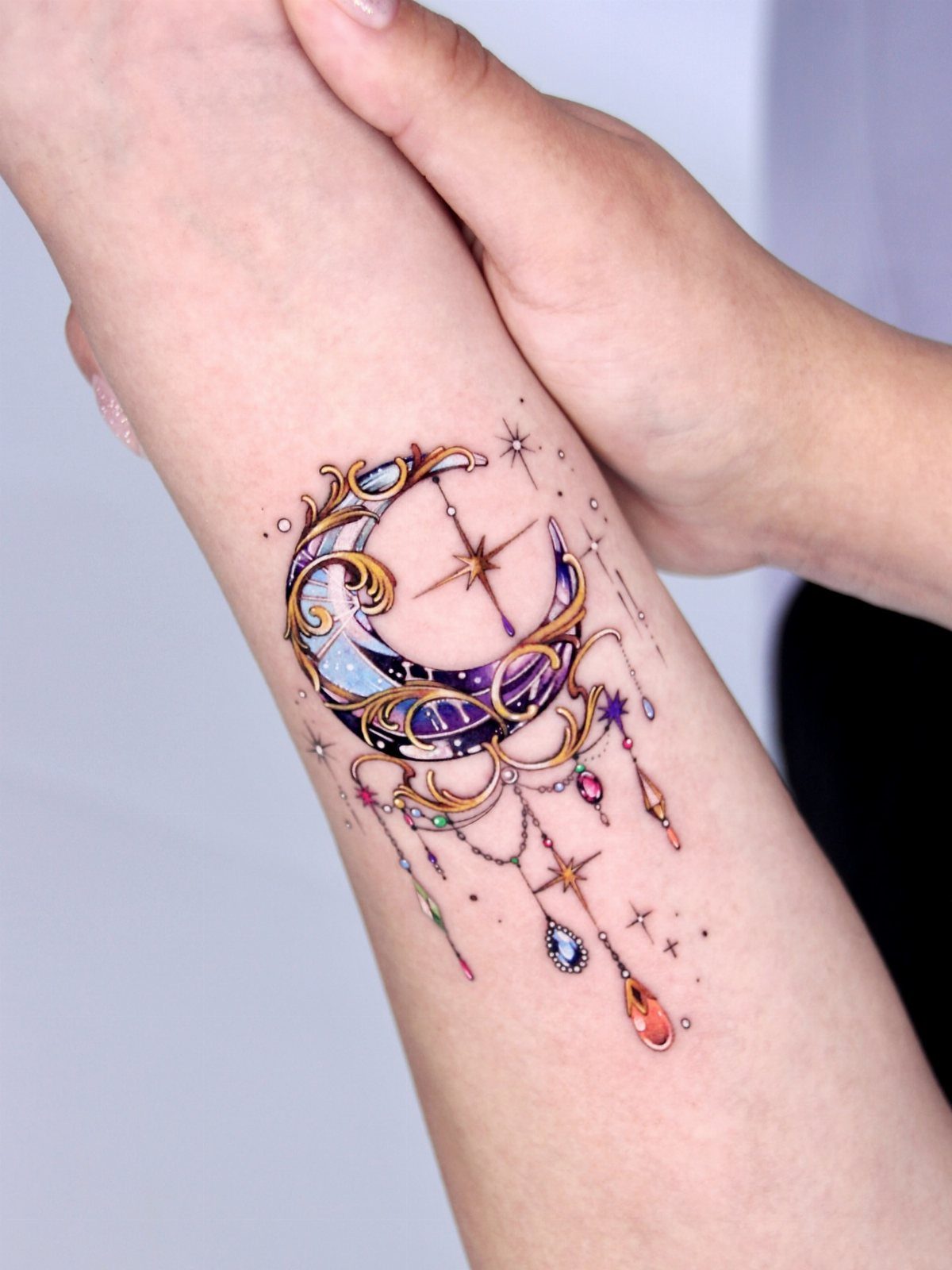
A crescent moon sits in the phase between dark and full, which gives it the growth meaning.
Inner forearm is a low-pain spot and lets you check the design as it heals. The curve of the crescent follows the line of the arm naturally.
Gold ink loses color sooner than black, so the metallic look will need a refresh. Stick with black line work and the moon will stay readable for decades.
6. Rose Tattoo
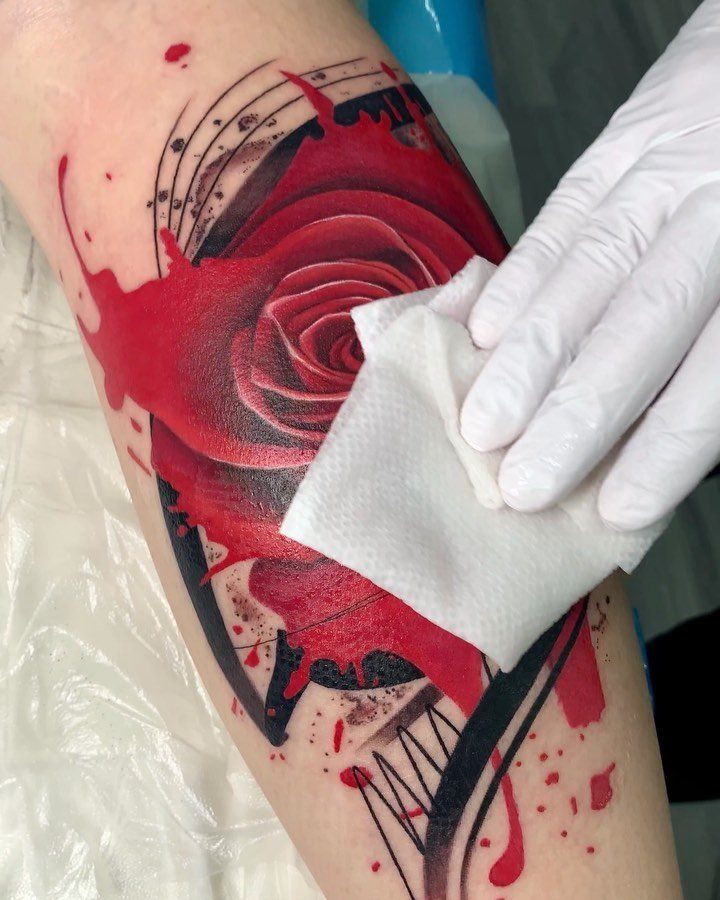
A red rose means romantic love. Change the color and the meaning shifts: yellow for friendship, black for loss, white for new beginnings.
The geometric accents around the base of this rose anchor it and give the design a frame. Pure floral tattoos can look unfinished without something to ground them.
Arm placement is standard for roses because the shape fits the curve. Let the fresh tattoo breathe for the first week and keep it out of direct sun while the red ink sets.
7. Infinity Tattoo
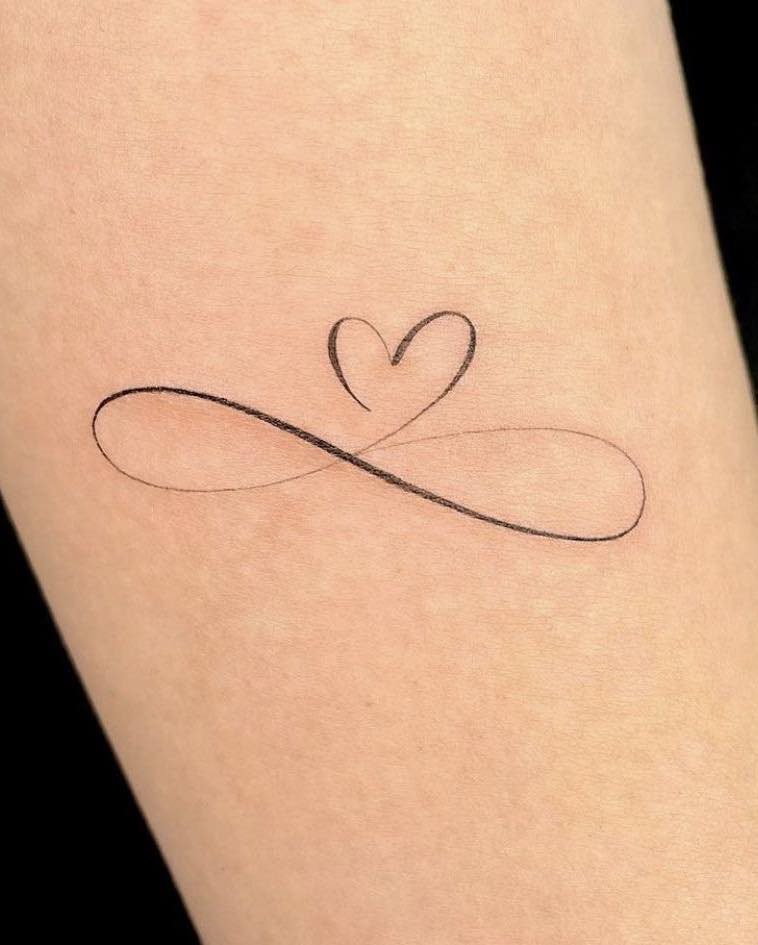
The infinity symbol means endless, and the heart keeps that meaning personal rather than abstract.
Small size and simple line work make this one of the lowest-pain options. Wrist, ankle or behind the ear all work because the design reads clearly at under an inch.
Black ink stays sharp longer than color, and a symbol this minimal won’t blur as it ages.
8. Star Tattoo
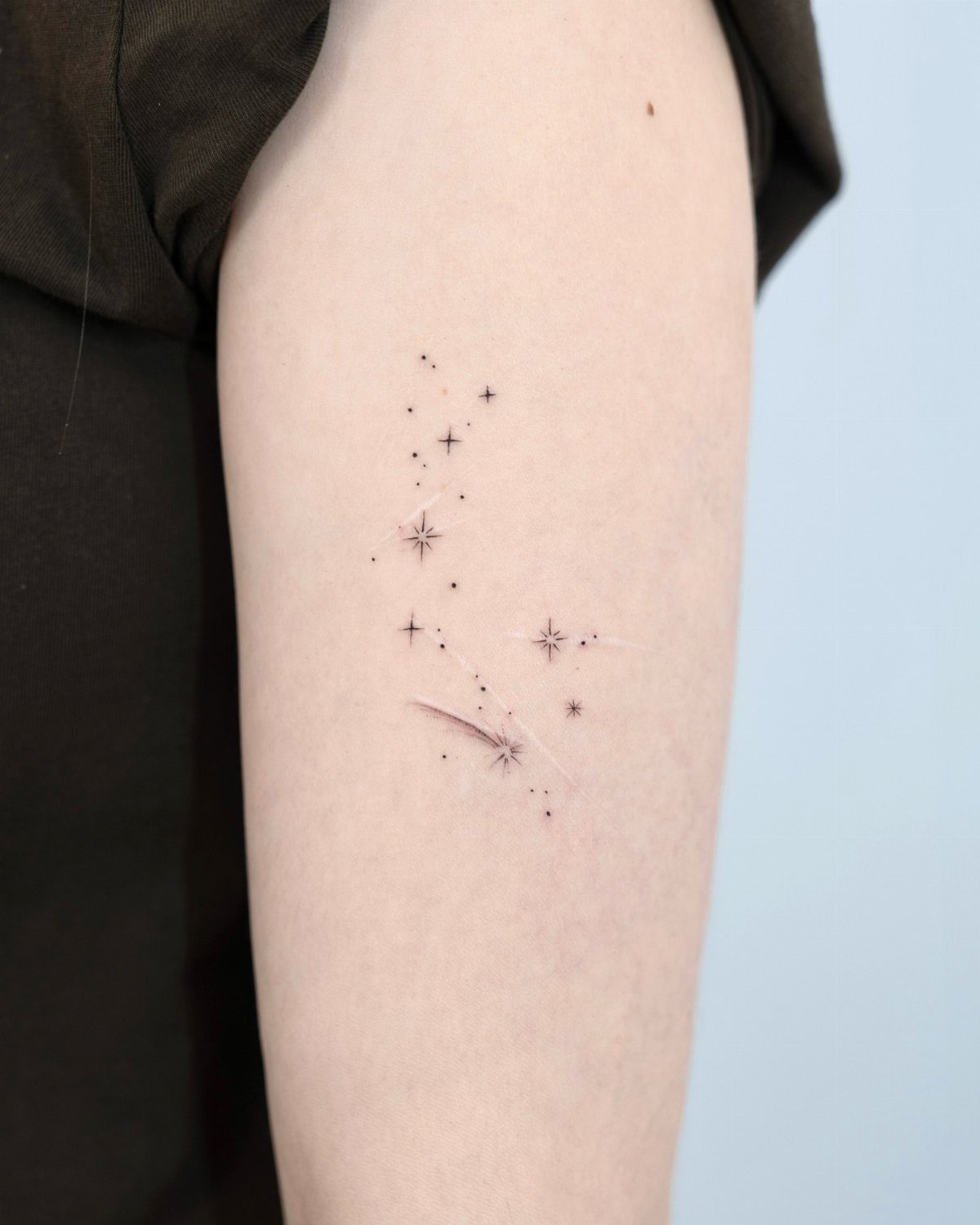
Stars map navigation, which is where the guidance meaning started. Scattering them across the arm instead of lining them up stops the piece from looking too literal.
Upper arm gives you room to add more stars later and still leave space around the original set. Varying the size makes the spacing feel natural.
Stars stay readable as they age because the shapes are simple and the contrast is high.
9. Geometric Tattoo Meanings
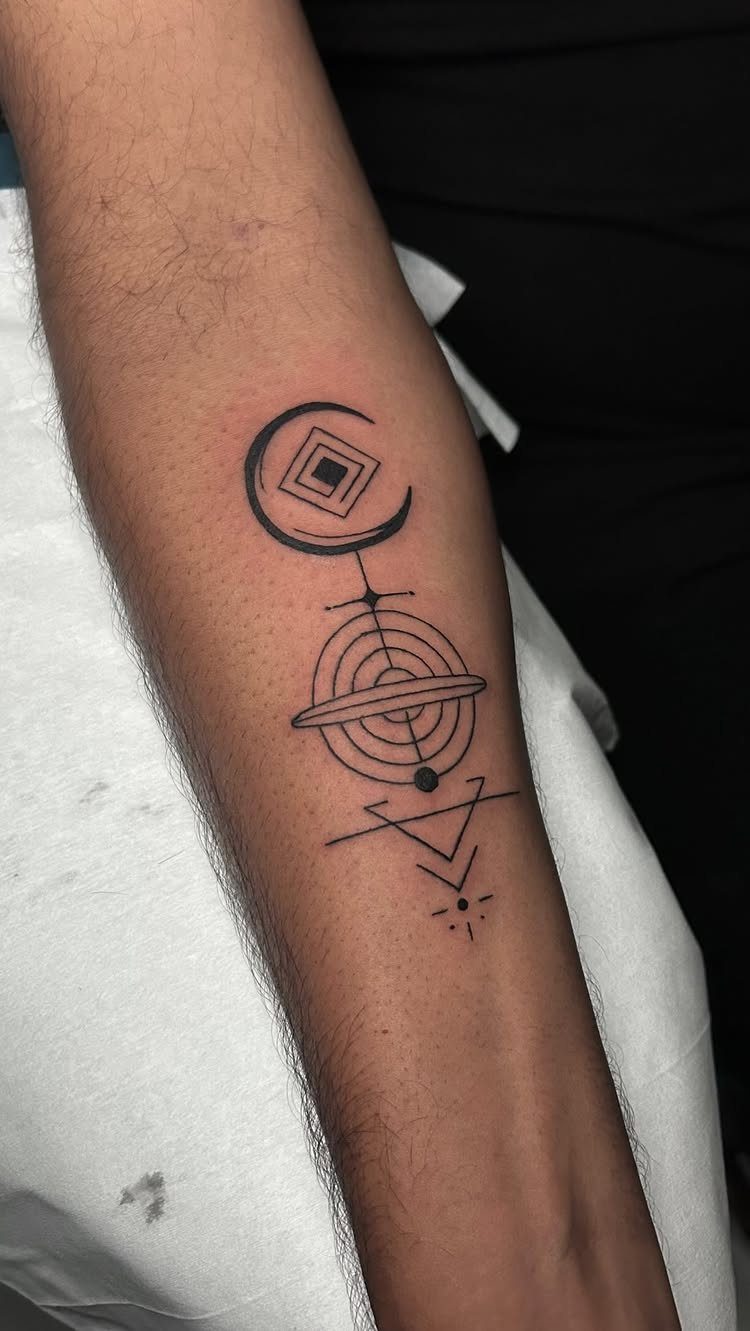
Circles, triangles and crescents carry meaning without language. The triangle here might read as balance, the circle as wholeness, the moon as cycles.
Geometric designs hold their lines longer than floral or portrait work because the shapes are intentional rather than organic. Blurring over time doesn’t ruin the design the way it can with fine detail.
Forearm placement suits geometric work because the flat surface keeps the lines straight. The precision here requires an artist who can pull a steady line.
10. Angel Tattoo
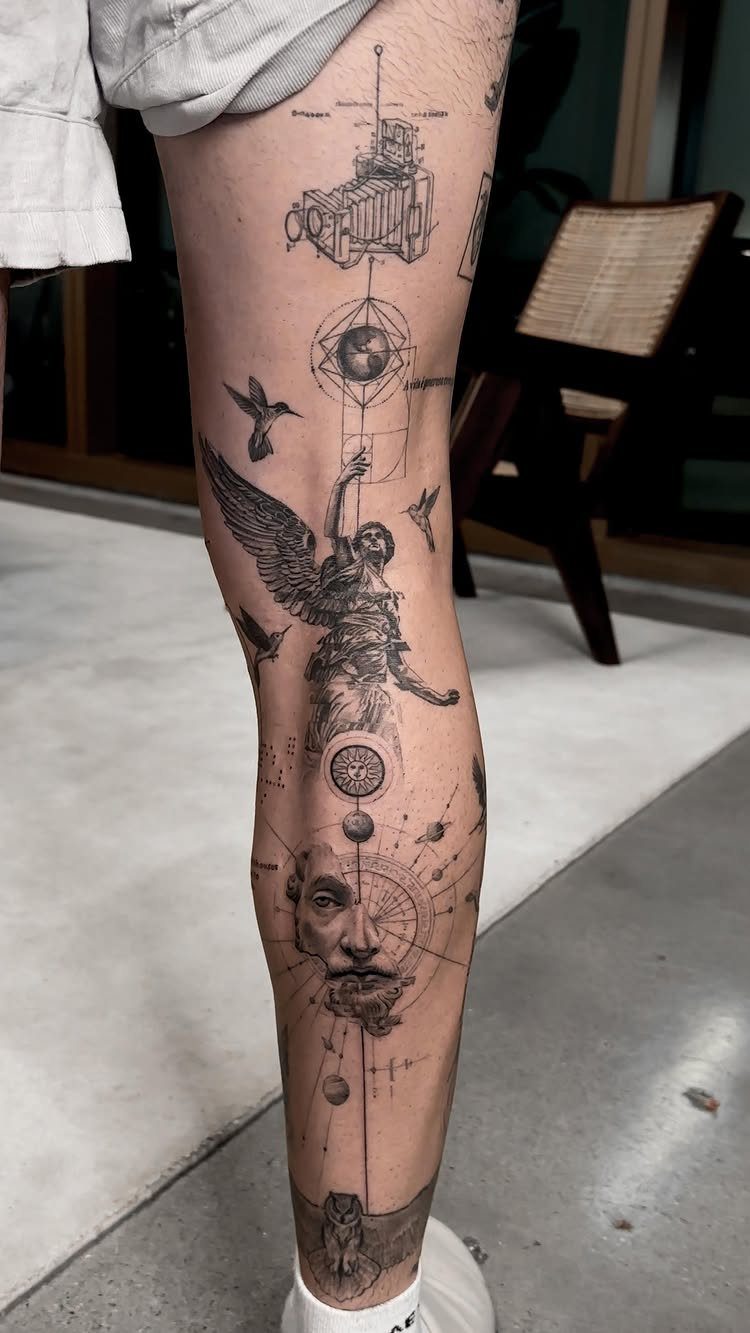
Angels signal protection or faith, and the memorial version honors someone specific. The face here suggests the piece is personal, not just symbolic.
Lower leg gives you room for a large composition without committing to the visibility of an arm or chest piece. Pants cover it when you want that.
Black and grey ages better than color on a design this detailed, and the shading won’t need frequent touchups.
11. Anchor Tattoo
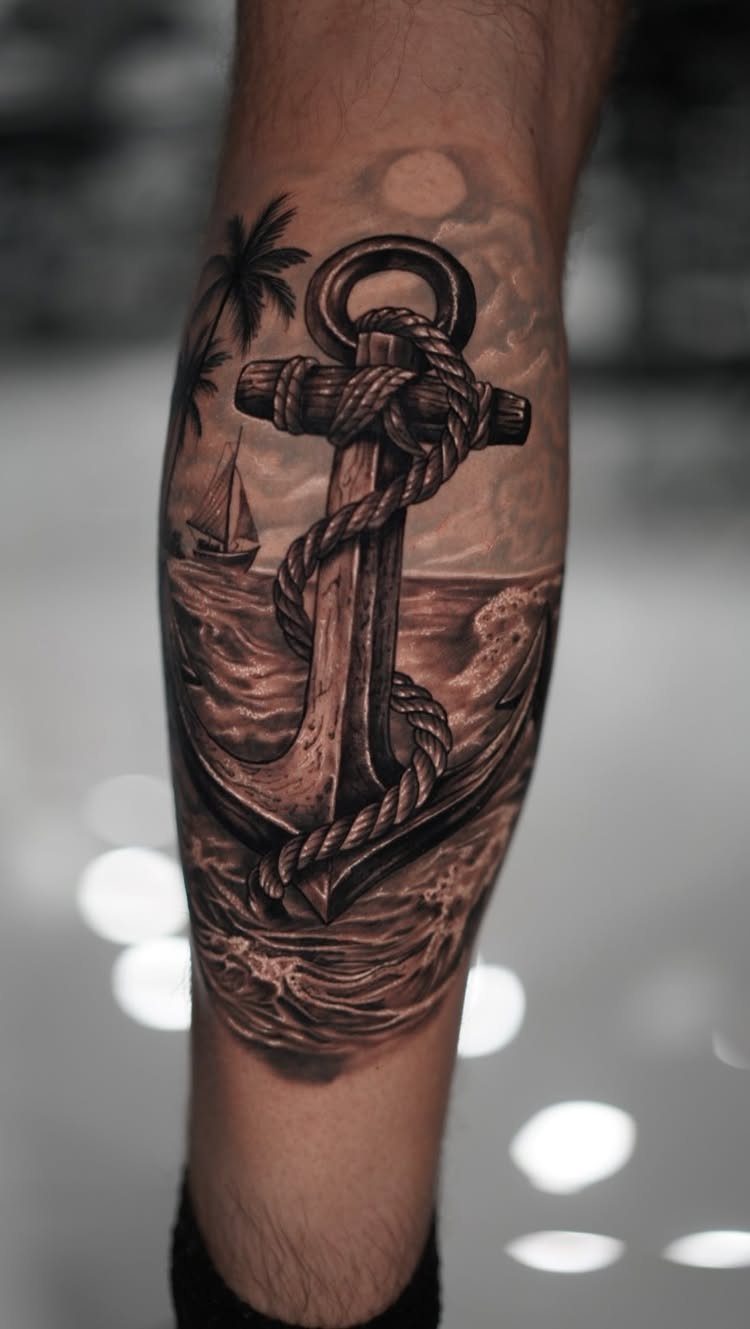
An anchor holds a ship in place, which is the stability meaning. The rope, boat and palms turn it into a scene rather than a single symbol.
Forearm fits the vertical shape of an anchor naturally. Adding the scenery fills the space without overcrowding.
The detail here needs an artist experienced in thin, precise linework. A heavy hand will turn the rope into a muddy line as the tattoo settles.
12. Lotus Tattoo
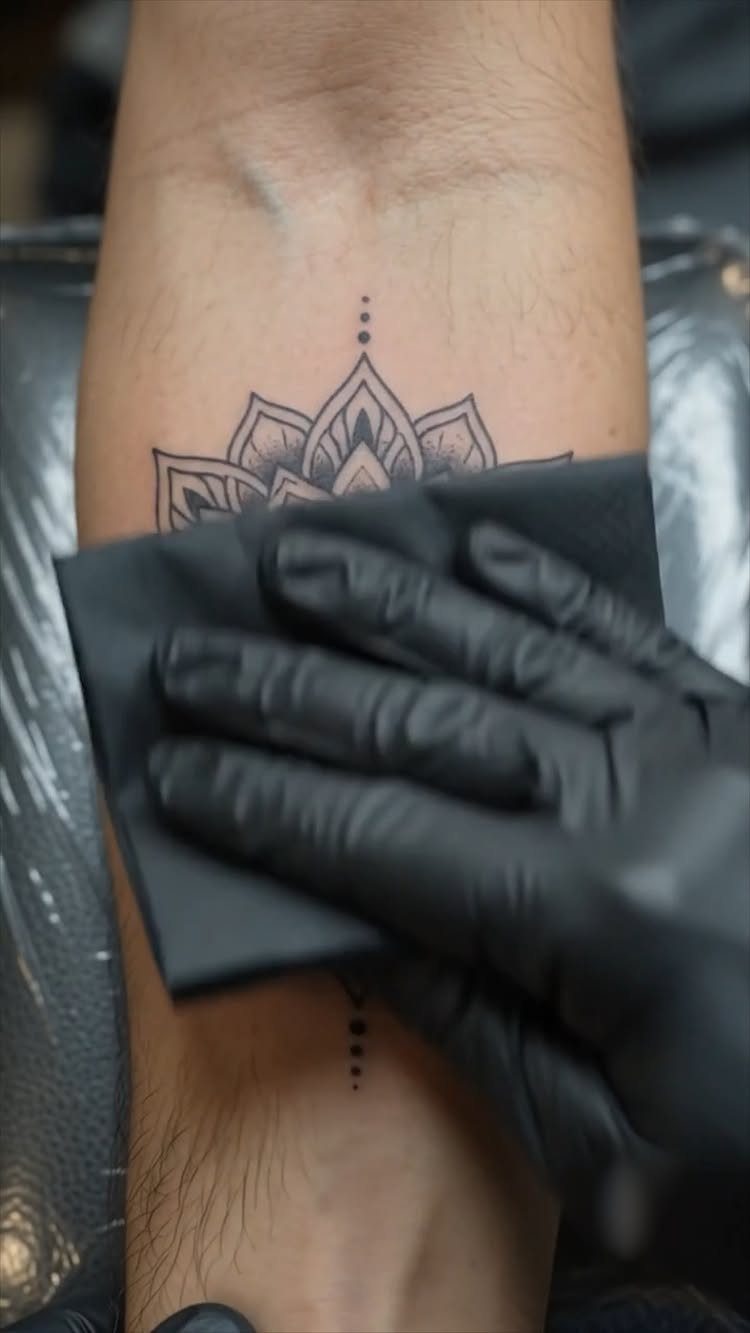
The lotus grows in mud and blooms clean, which is where the purity and rebirth meanings come from. The mandala pattern here adds symmetry and turns it into something closer to sacred geometry.
Forearm is low pain and heals cleanly because the skin doesn’t fold or stretch much. The flat space keeps the symmetry intact.
Line work this fine will soften over time, so go with an artist who can pull a consistent line weight. Thicker lines hold better but lose the delicate look.
13. Dragon Tattoo
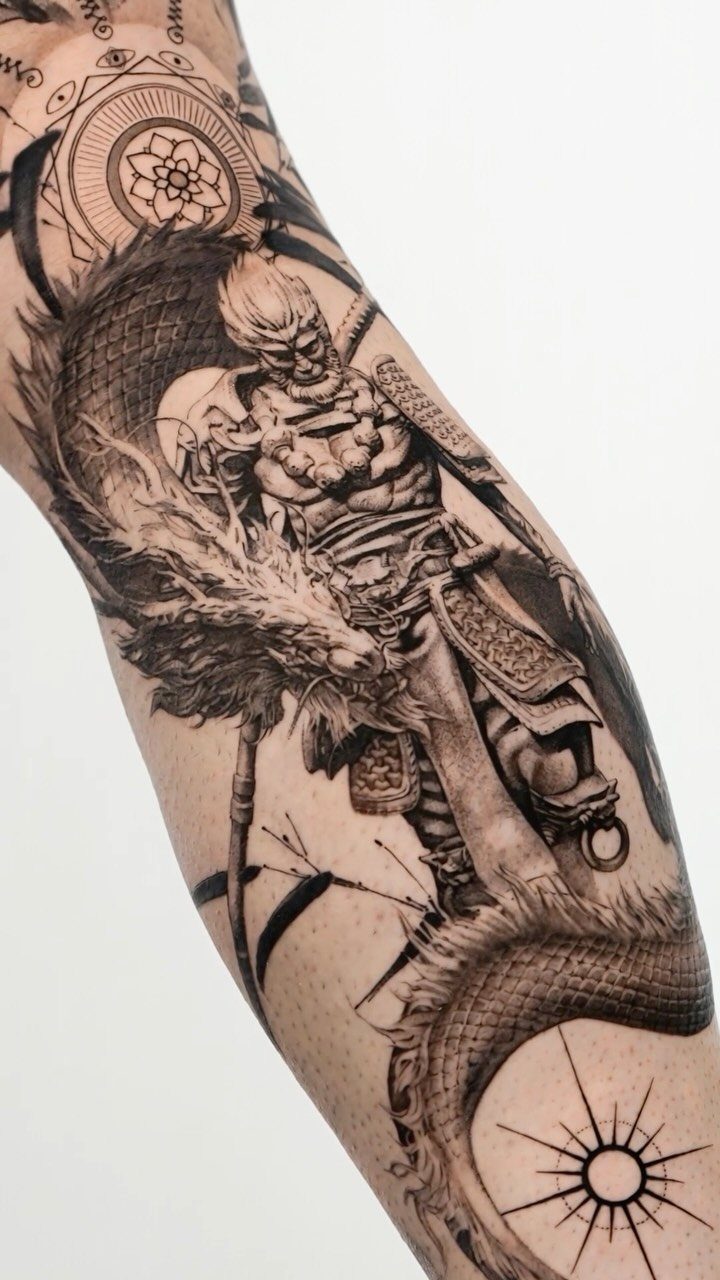
Dragons signal power in most traditions, and adding a warrior beside it turns the piece into a scene with a story behind it.
Black and grey shading like this ages better than color because there’s no bright ink to fade. The scales need an artist who can layer tone without losing the individual lines.
Wrapping the dragon around the arm uses the shape of the limb and gives you room for a large design without flat placement. Upper arm to forearm is a common path when the dragon needs space to coil.
14. Mountain Tattoo
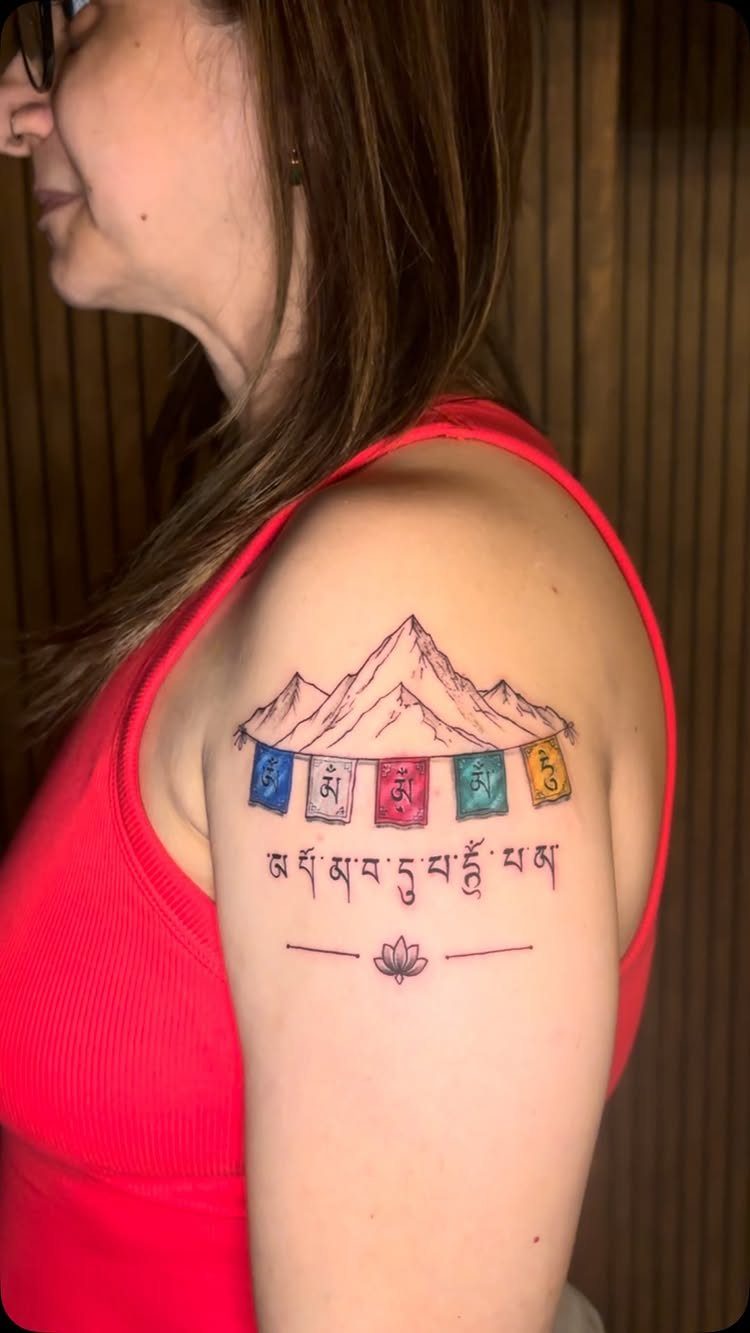
Mountains represent challenge and the view from the other side of it. Prayer flags add color and tie the piece to a specific tradition, which keeps it from reading as generic landscape work.
Upper arm placement works because the rounded surface mimics the shape of a ridgeline. Adding script personalizes it further if the words connect to the same idea.
Color this bright will need touchups to stay vivid, and the thin lines on the flags will soften faster than the solid mountain shape.
15. Quote Tattoo
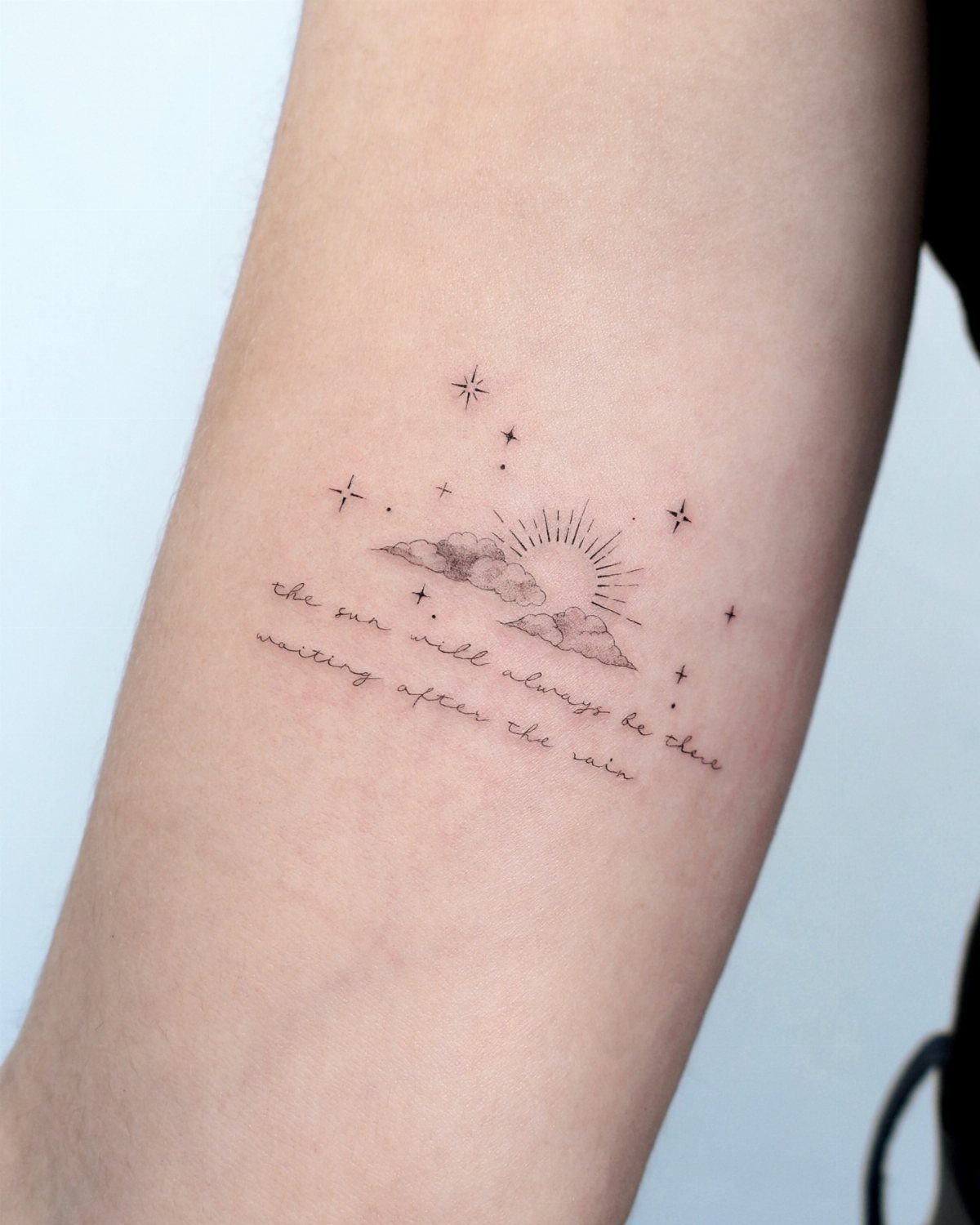
Words let you say the meaning directly instead of relying on a symbol someone else might read differently. The sun and clouds here illustrate the quote, which keeps the design from looking like pure text.
Cursive reads softer than block letters, but it also blurs sooner because the loops sit close together. Keep the font size large enough that the individual letters stay clear as the ink settles.
Forearm is the standard spot for quotes you want to read yourself. Inside or outside placement depends on whether you’d rather see it or show it.
16. Bird Tattoo
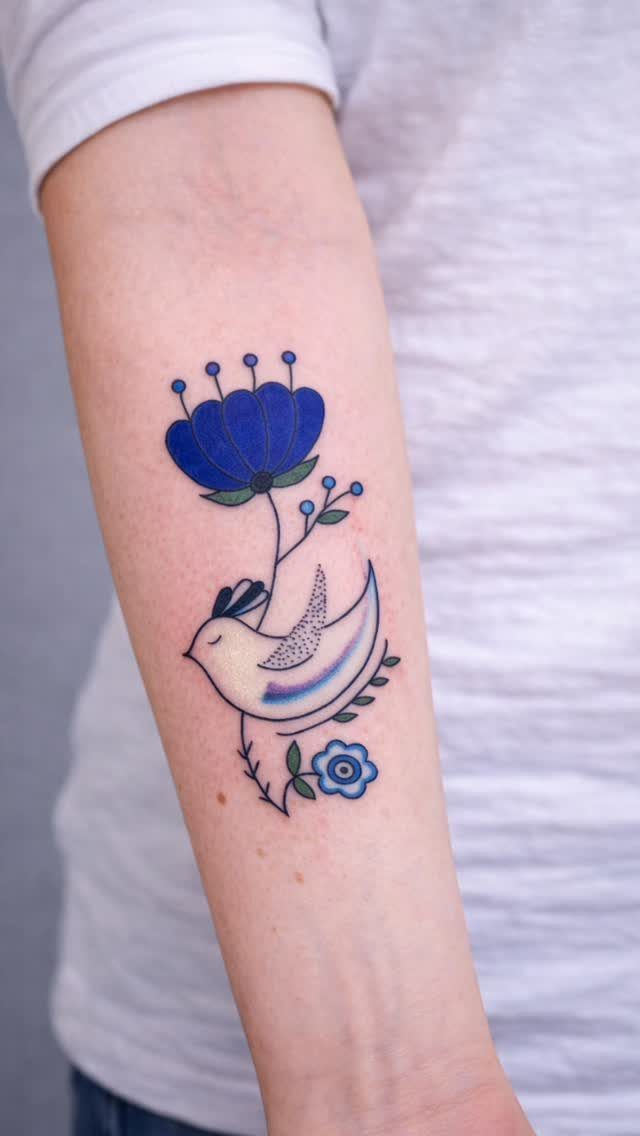
A bird in flight means freedom because it’s airborne, not caged. The white ink here makes the bird stand out against the skin, but white fades faster than any other color and will need frequent touchups to stay visible.
Blue flowers fill the space around the bird and turn it into a composition rather than a single image floating on the arm. Forearm gives you room for both without crowding.
Color work like this needs an artist who can blend tones cleanly, or the flowers will look muddy as they heal.
17. Dreamcatcher Tattoo
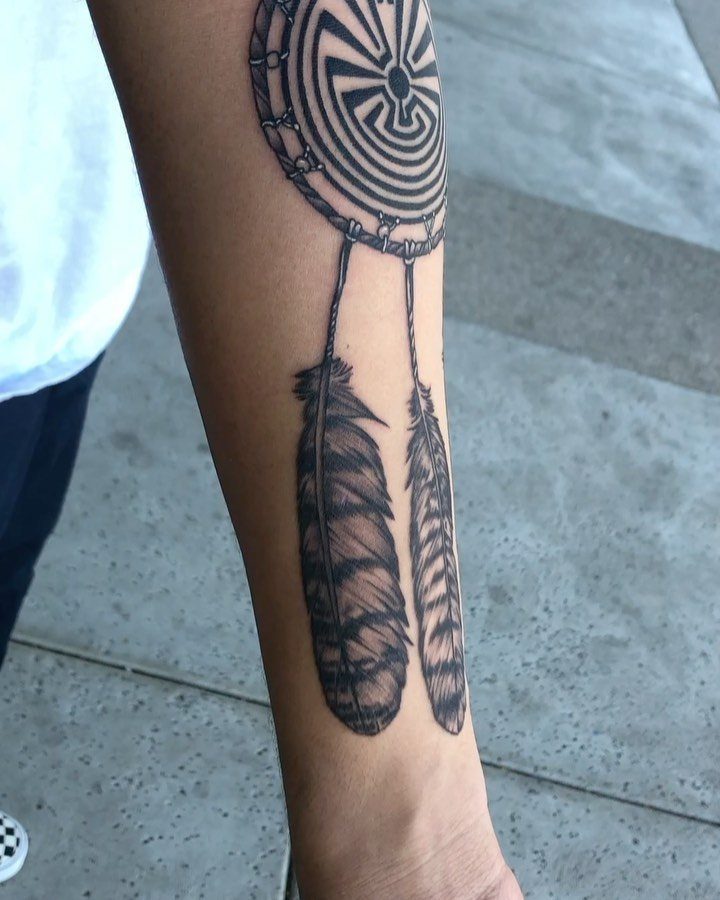
Dreamcatchers filter bad dreams in the original tradition, which is where the protection meaning comes from. The feathers hang naturally and follow the vertical line of the forearm.
Black and grey keeps the design readable as it ages, and the circular shape sits cleanly on the flat surface of the arm.
Adding beads or more feathers would extend the design down toward the wrist if you want more coverage later.
This piece requires steady linework because the web pattern inside the hoop will blur if the lines are too thin or too close together.
18. Hummingbird Tattoo
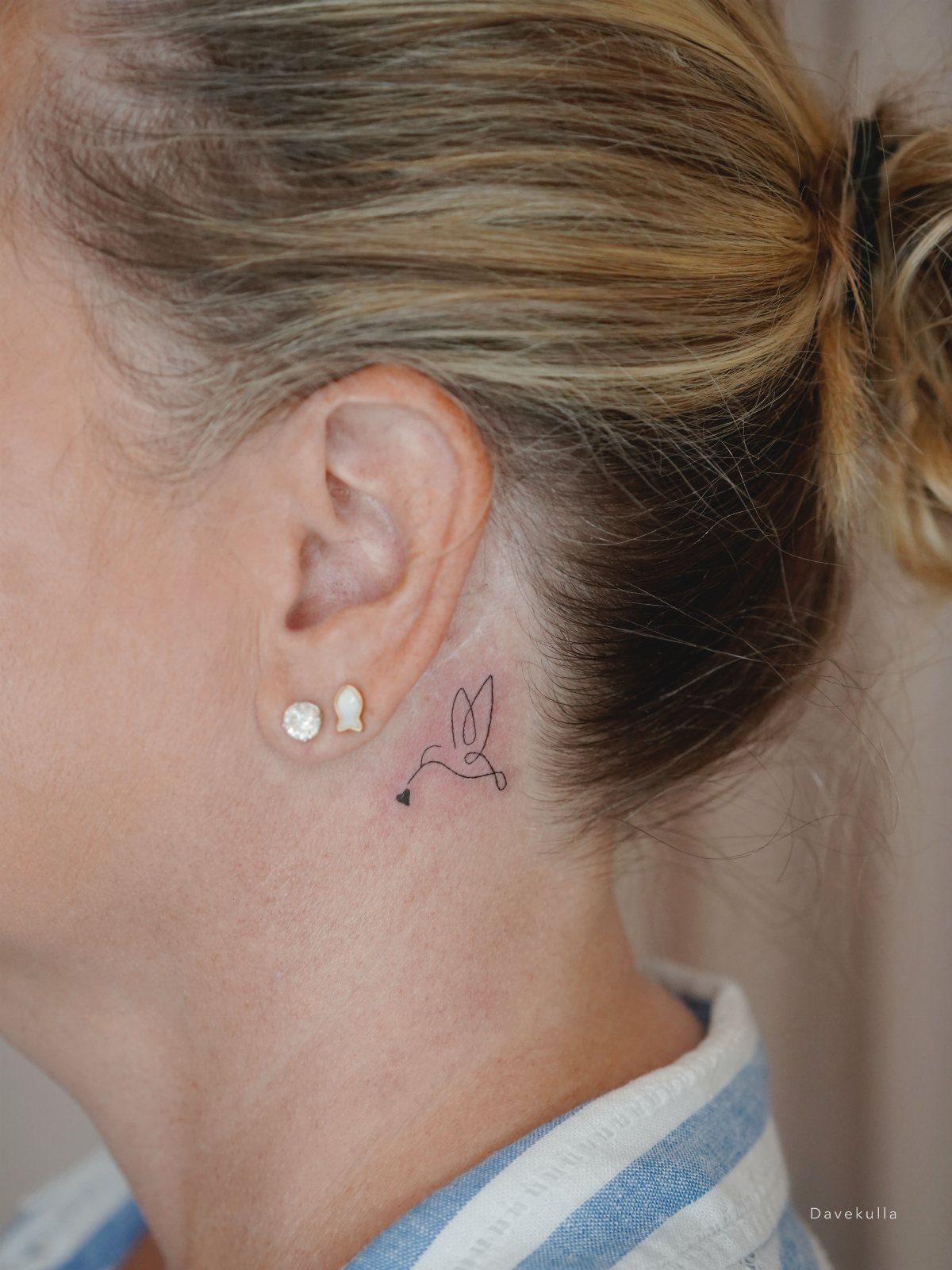
Hummingbirds move fast and hover in place, which gives them the joy and resilience meanings. The line-art version here stays minimal, which suits a small, visible spot like the neck.
Neck placement is higher pain than arm or leg, and the skin is thinner, so healing takes attention. Small size keeps the session short and the design subtle.
Fine lines will soften over time, and neck tattoos get more sun exposure than covered spots, so expect the edges to blur slightly after a few years.
19. Skull Tattoo
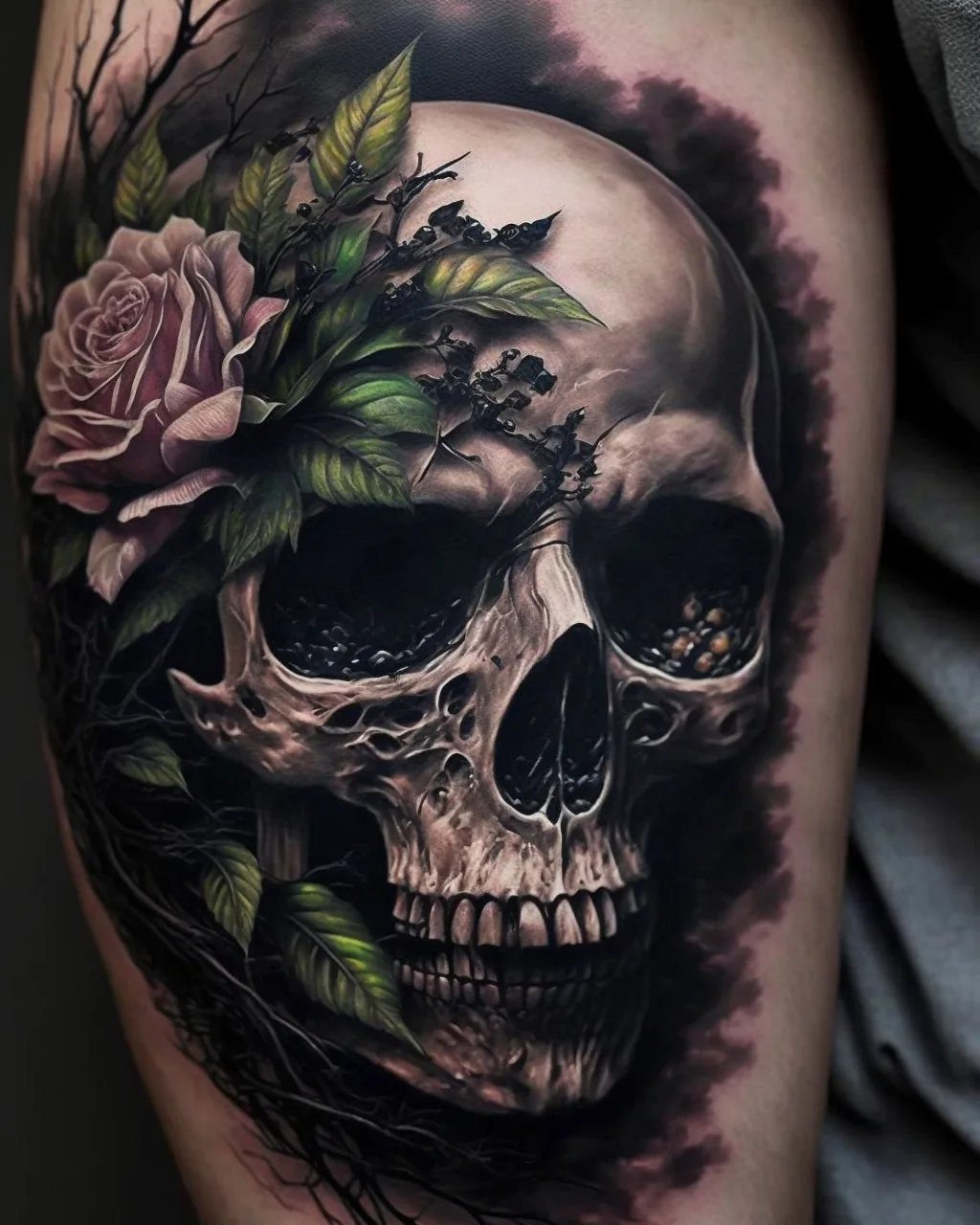
A skull paired with a rose softens the mortality read by adding beauty to the death symbol. The combination works because both are traditional tattoo images and sit together naturally.
Upper arm gives you room for a realistic skull with shading and detail. The round surface of the shoulder lets the skull curve slightly instead of sitting flat.
Realistic skull work depends on an artist who knows how to layer grey wash for dimension. The rose adds color, but the skull itself stays readable in black and grey even as the ink ages.
20. Celtic Tattoo
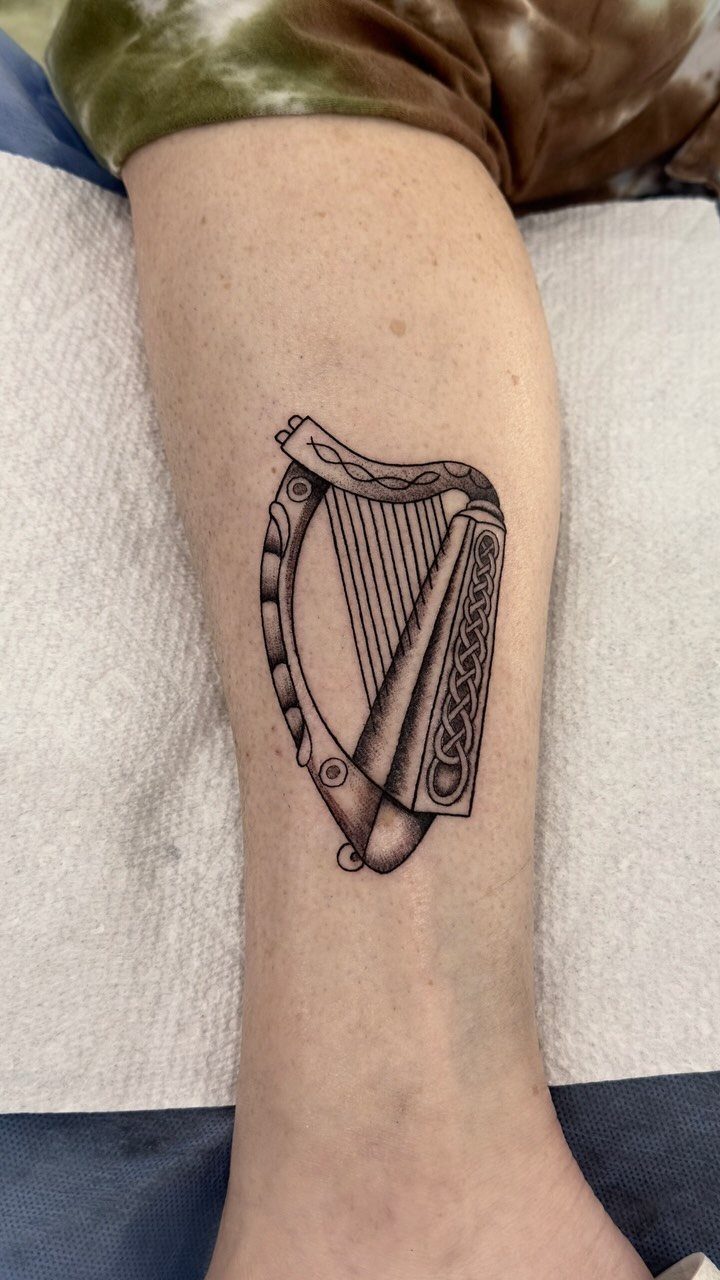
Celtic knotwork loops without a visible start or end, which is where the eternity meaning comes from. The harp here adds a specific cultural reference rather than leaving it as generic interlace.
Lower leg heals cleanly and gives you a vertical space that suits the harp shape.
Knotwork reads cleanest in solid black because the design depends on clear line separation. The interlace will stay readable as long as the lines don’t sit too close together.
21. Om Tattoo
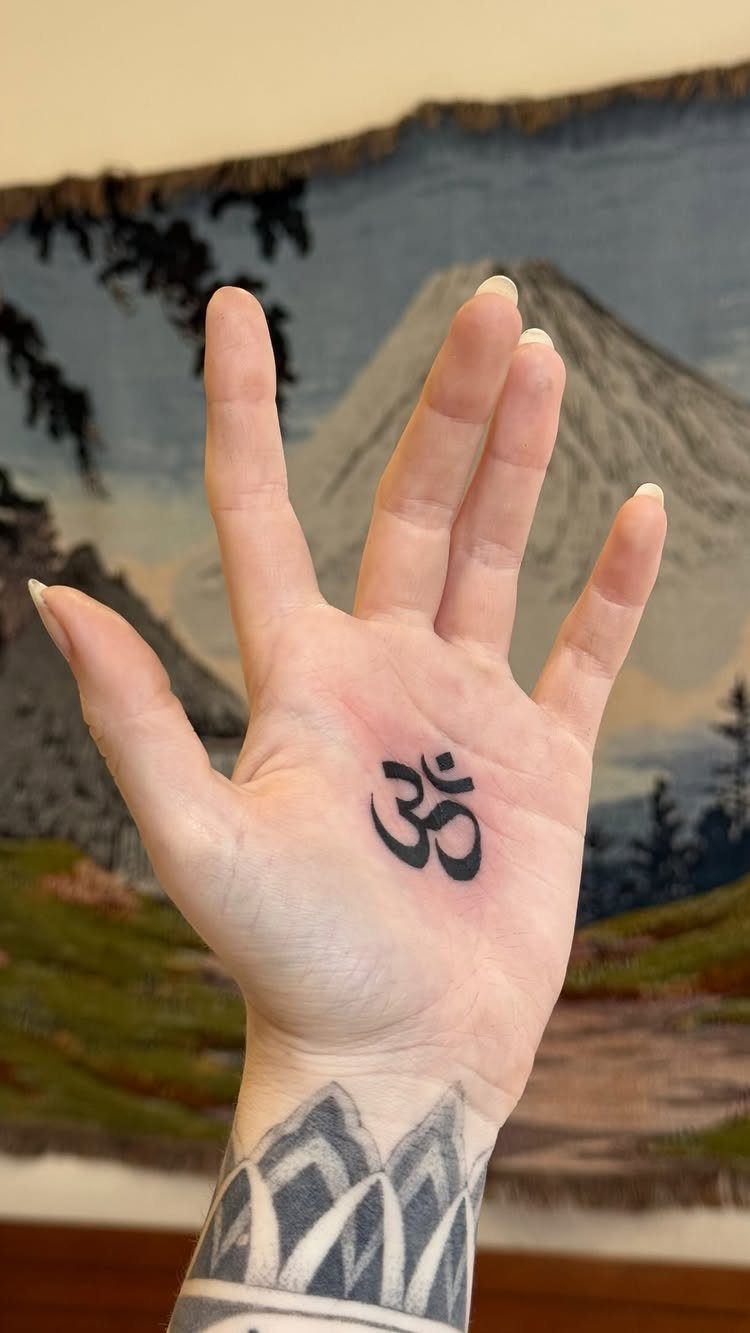
Om is the primordial sound in Hinduism and Buddhism, which connects the symbol to meditation and the structure of reality. Palm placement puts it where you’ll see it during prayer or meditation.
Pain is higher on the palm than the arm, and the tattoo will fade faster because hands shed skin constantly. Expect a touchup within a year.
The geometric wrist piece anchors the Om and keeps it from floating alone, which works if both designs connect to the same spiritual idea.
22. Dandelion Tattoo
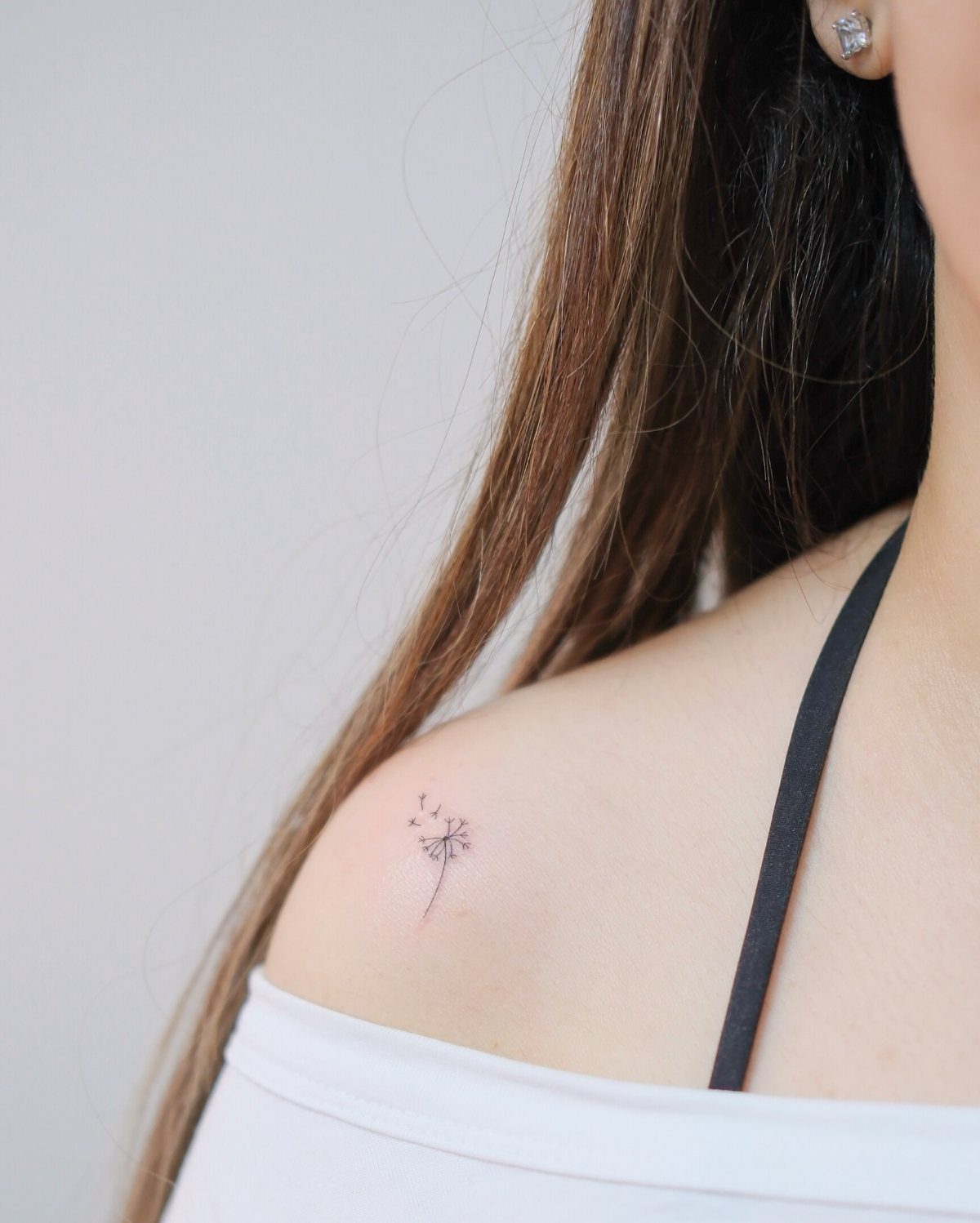
Dandelions scatter seeds on the wind, which is where the wish and letting-go meanings started. The seeds blowing away give the design motion without adding a second image.
Shoulder placement keeps it visible in summer and covered the rest of the year.
23. Compass Tattoo
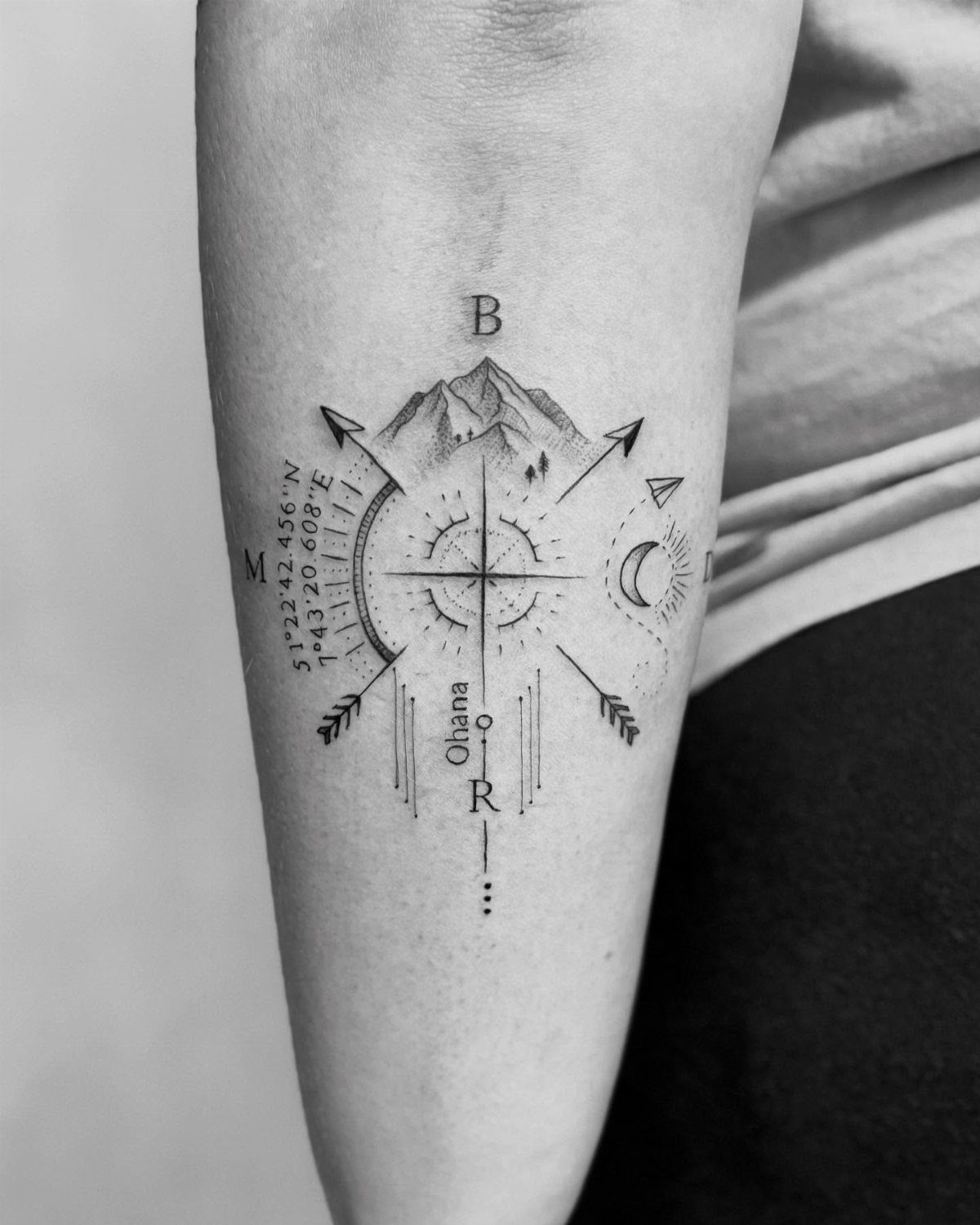
A compass signals direction, and adding coordinates personalizes it by marking a specific place. The word here and the initials turn it into a family piece, not just a navigation symbol.
Forearm is standard for compass tattoos because the round face of the compass fits the flat space. Adding mountains and the moon fills the area around the compass without crowding the design.
Details this small require an artist who can pull fine lines that won’t blur together as the tattoo settles.
24. Crown Tattoo
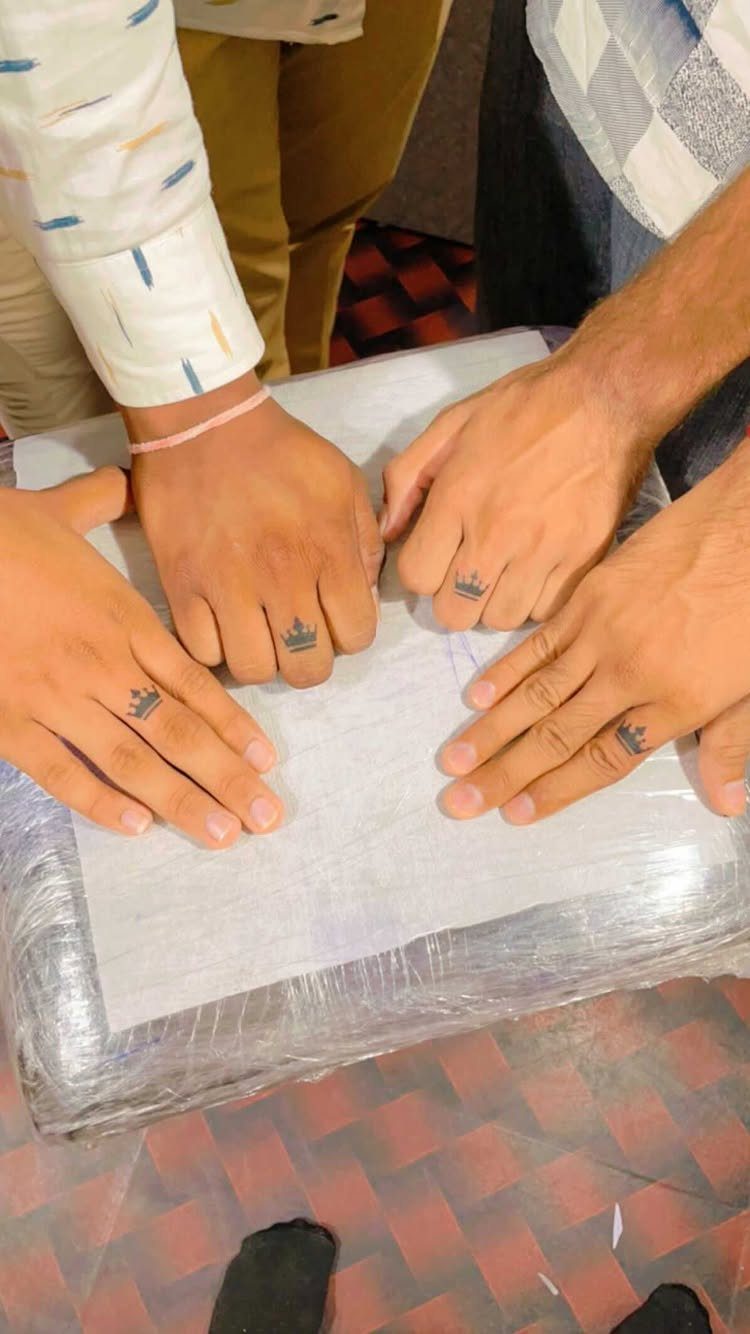
Matching crowns read as a shared commitment to the same idea, often self-worth or chosen family. Finger placement keeps the design small and visible.
Fingers fade faster than most other spots because the skin is constantly in motion and exposed to friction. Plan on a touchup every year or two to keep the crown readable.
Small size limits detail, so stick with a simple outline rather than adding jewels or shading that won’t hold.
25. Waves Tattoo
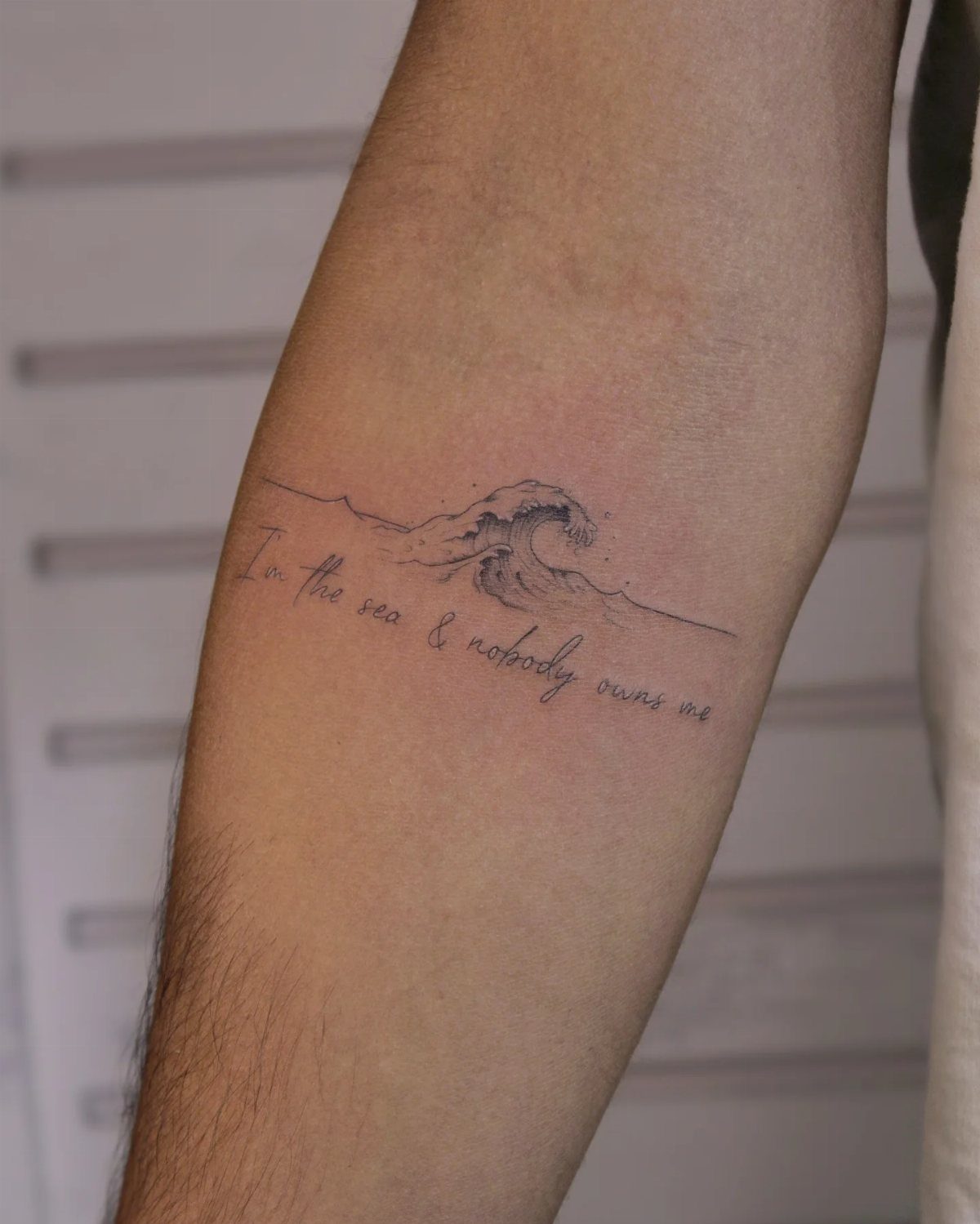
Paired text locks in one specific reading instead of letting the image carry multiple meanings.
Forearm placement keeps the piece visible and gives you room to extend the wave line if you want more coverage later. The flat surface holds fine linework cleanly.
26. Wolf Tattoo
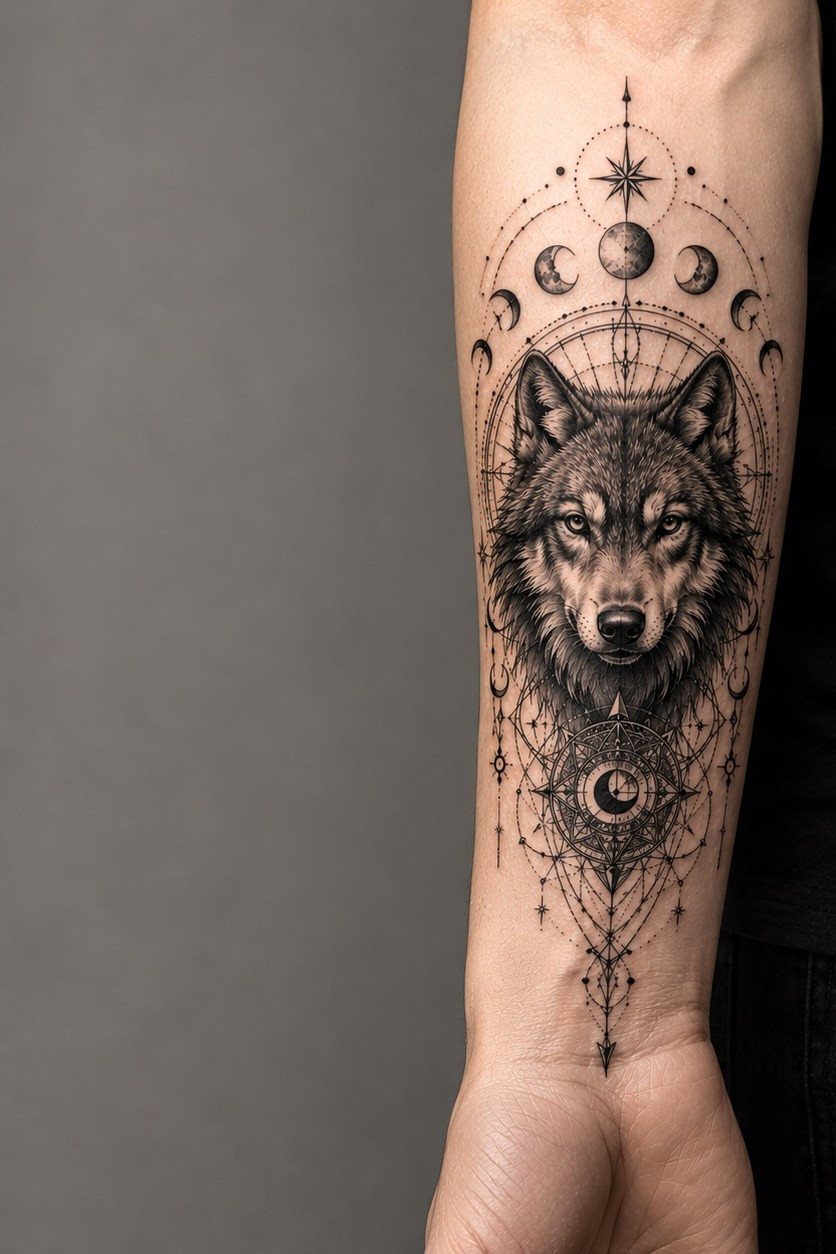
Wolves hunt in packs, which is where the loyalty meaning started. Adding geometric elements or moon phases around the portrait gives structure without filling the entire piece with background.
The geometric lines keep the design from reading as pure realism.
27. Tree of Life Tattoo
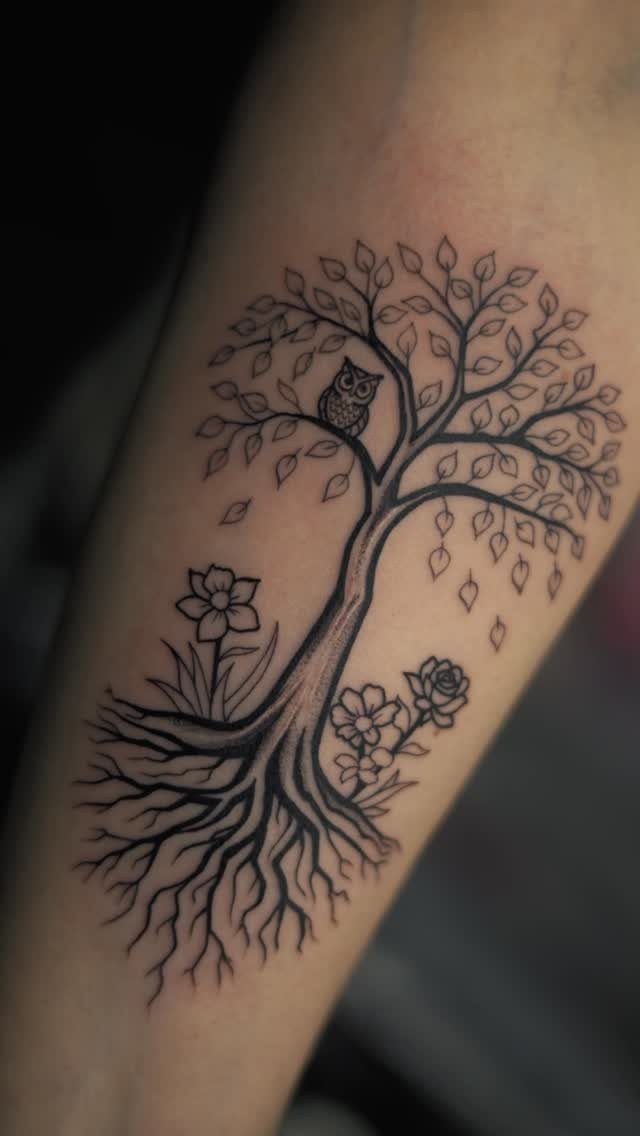
The tree roots mirror the branches, which is the connection between past and future. Adding the owl and flowers fills the space and personalizes the piece beyond the basic symbol.
28. Lightbulb Tattoo
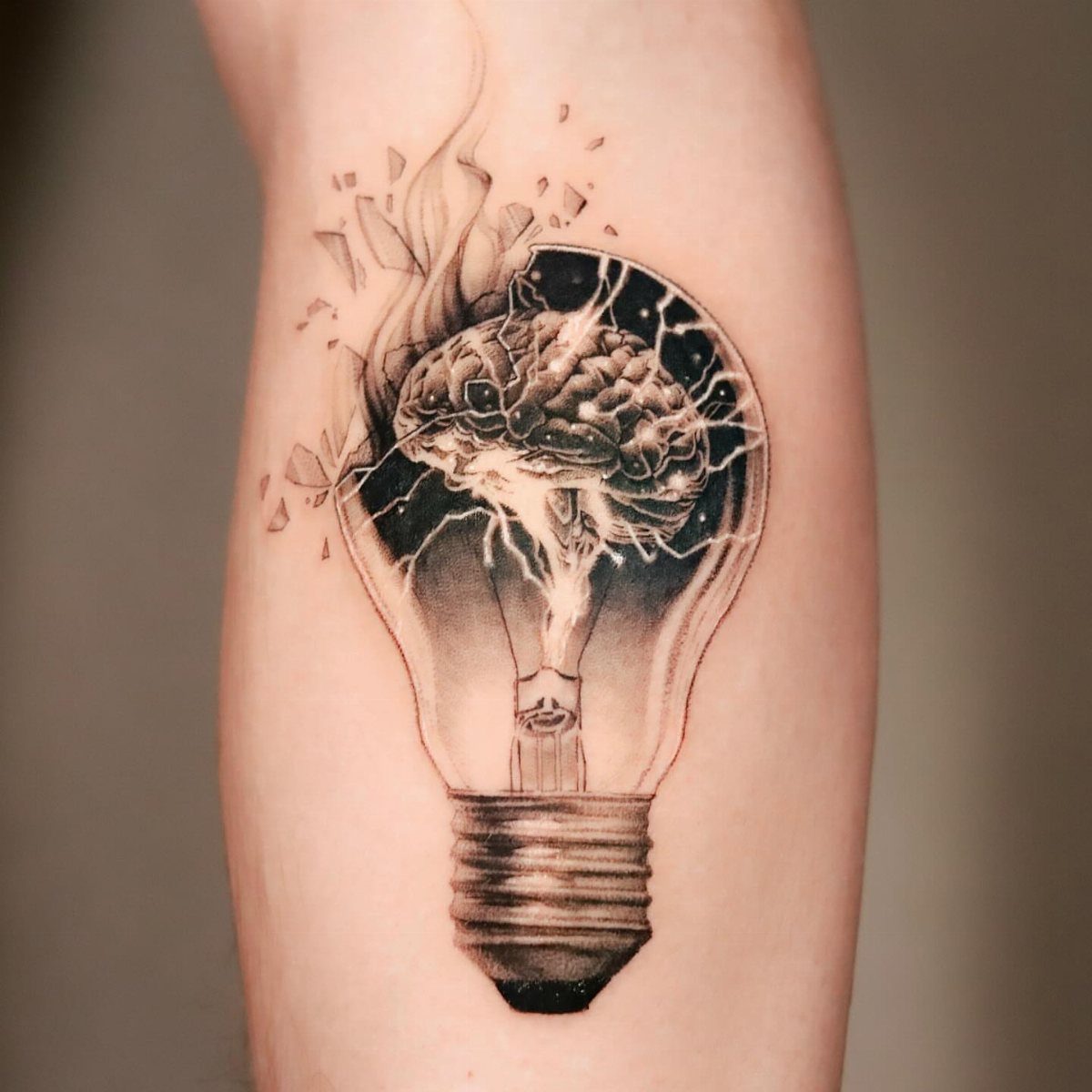
A lightbulb signals an idea, and putting a brain inside it connects thought to illumination. The shattered glass adds the fragility read, which turns it into something about creativity under pressure.
A lightbulb tattoo with brain texture and glass fragments requires an artist who can hold fine detail without the lines running together.
Compact size means a shorter session and the graphic still reads clearly when kept small.
29. Shooting Star Tattoo
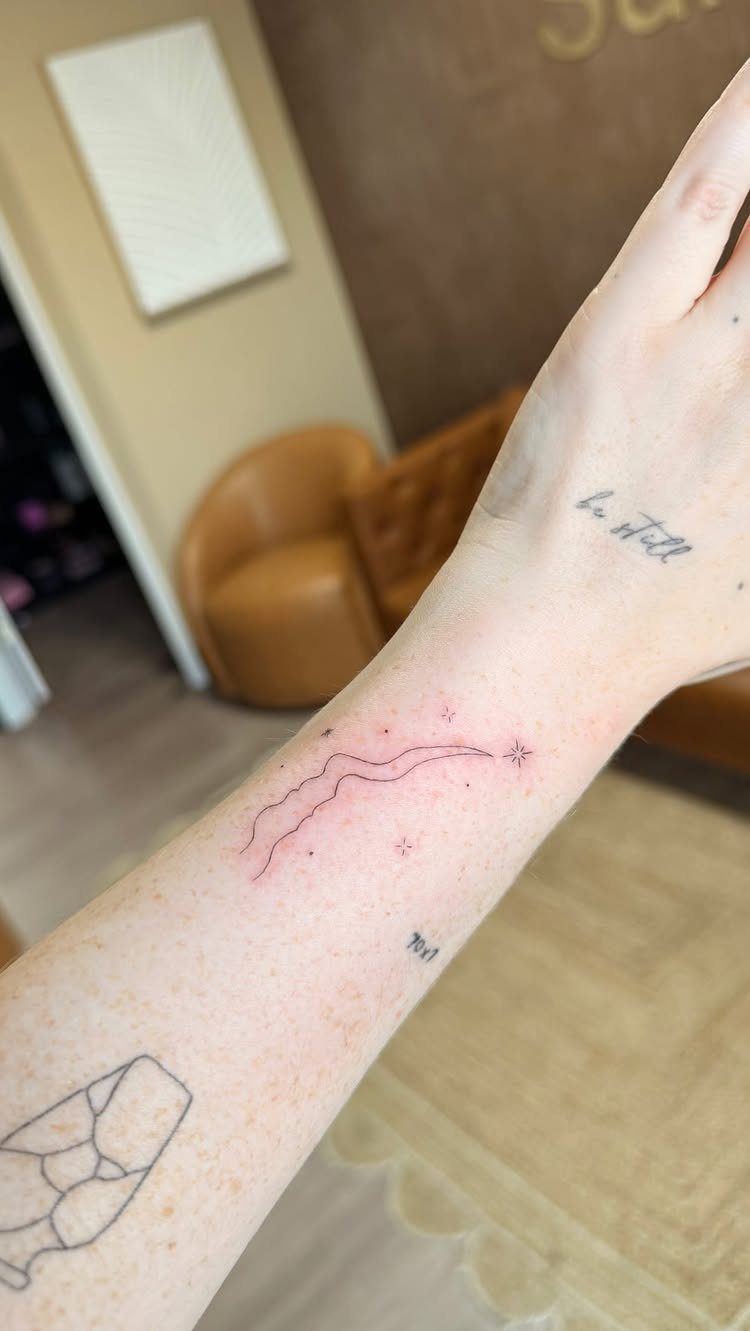
A shooting star crosses the sky once, which is where the fleeting wish meaning comes from.
Forearm placement keeps it visible, and the scale here leaves room to add more small pieces nearby without crowding. The straight line of the star trail reads cleanly and won’t blur as much as curved or looped shapes.
30. Greek Mythology Sleeve Tattoo
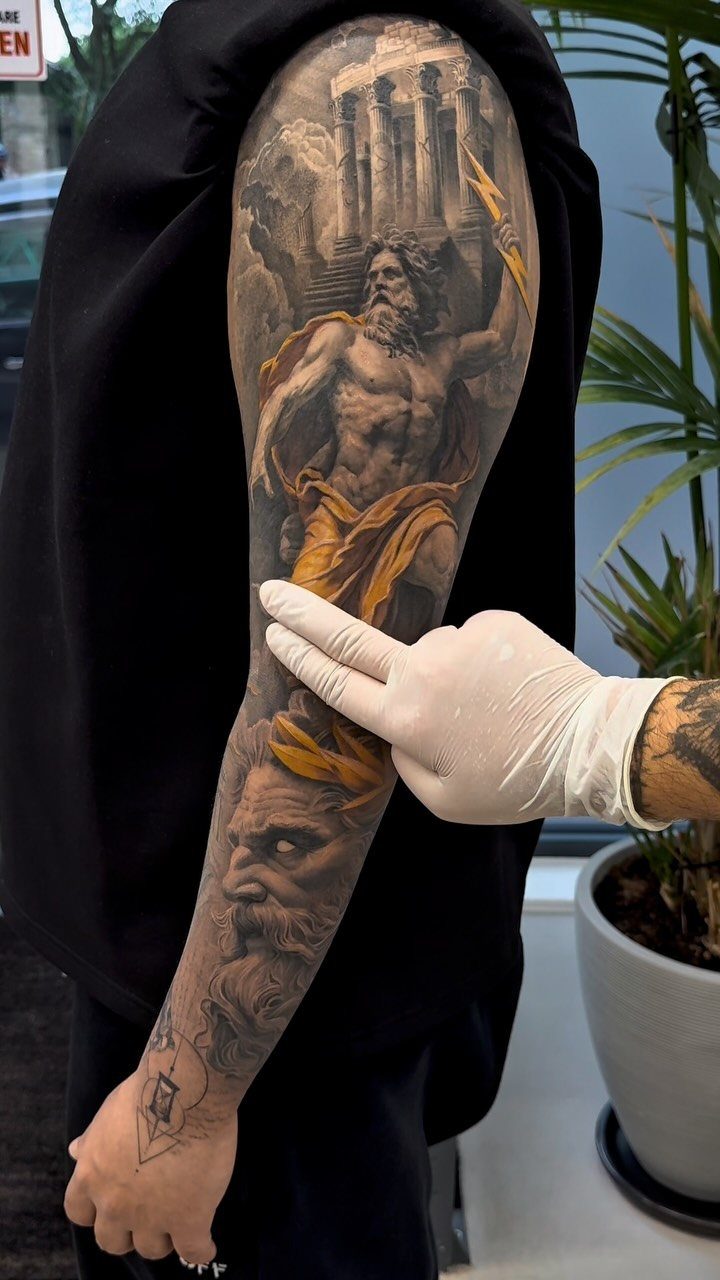
Greek mythology sleeves combine gods, architecture and symbolic imagery into one narrative piece. The muscular figure here and the columns root the design in classical iconography rather than abstract symbols.
A full sleeve takes multiple sessions because the detail and shading cover the entire arm from shoulder to wrist.
Black and grey holds better than color on a piece this large, and the realism here requires an artist who can render anatomy and architecture with consistent line weight.
Upper arm to forearm wraps the design around the limb and uses the natural shape of the arm to add dimension.
31. Hindu Deity Forearm Tattoo
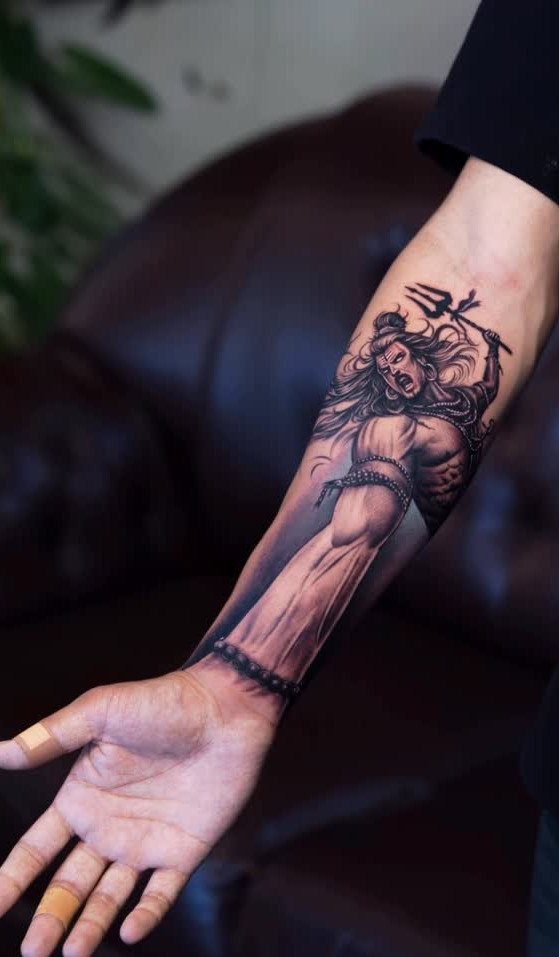
A deity with a trident roots the piece in Hindu iconography and reads as protection or devotion depending on which figure you choose. Black and grey shading gives the portrait dimension without relying on color that would fade unevenly.
Forearm placement keeps the design visible and gives you a flat canvas for the detail in the face and the trident. The vertical space suits a standing figure better than a seated one.
If the shading isn’t gradual and precise, the face can flatten out or blur within the first year.
32. Japanese Crane Tattoo
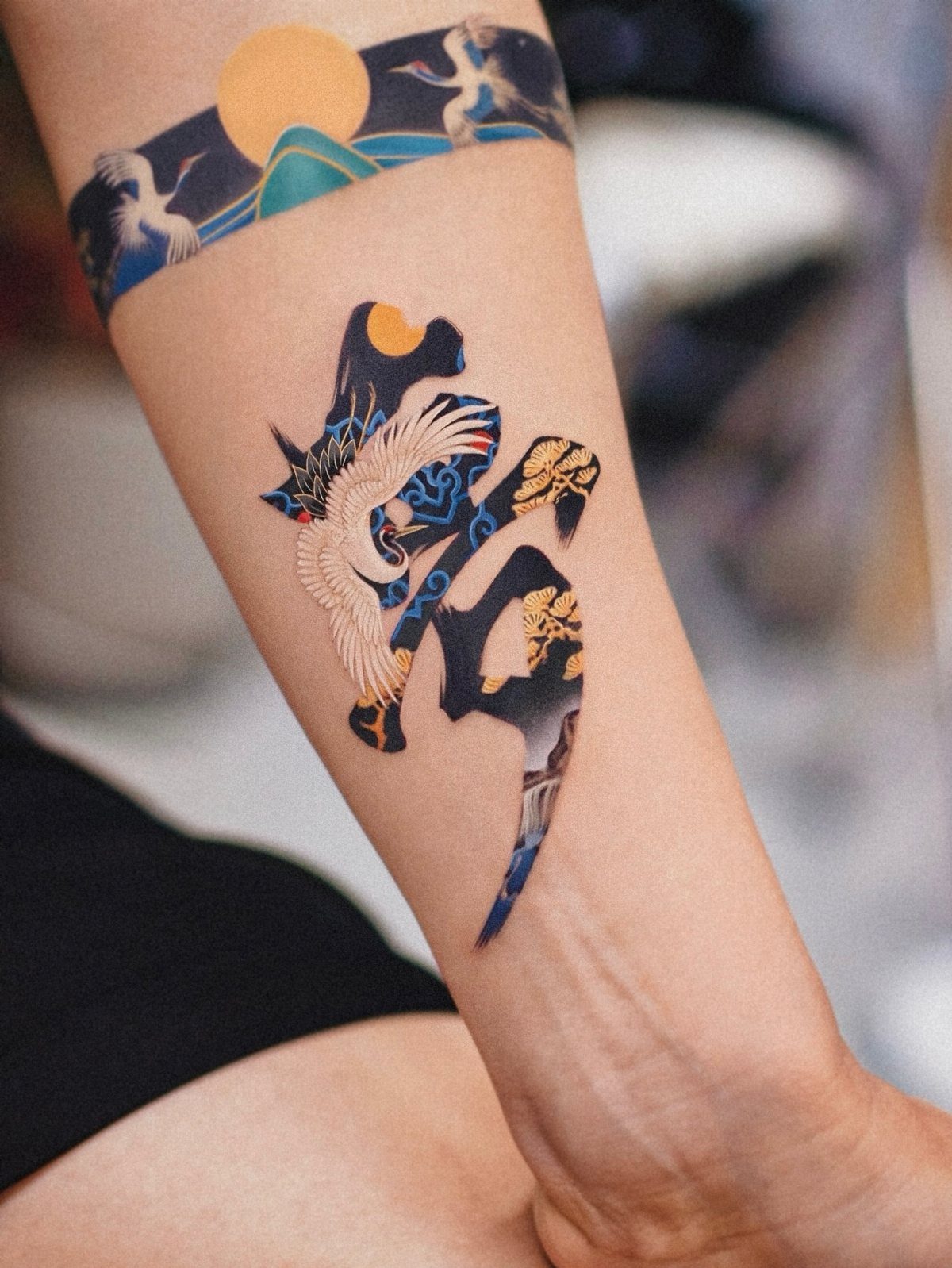
Cranes mean longevity in Japanese tradition, and pairing one with clouds and flowers turns it into a full composition rather than a single bird.
The color here keeps the piece bright, but expect touchups every few years to hold the saturation.
The band tattoo adds a second layer with more cranes and a sun, which extends the theme and fills the space around the original design. Forearm wraps like this use the shape of the limb and read from every angle.
Without proper saturation and steady pressure, the color transitions will bleed together as the ink settles.
33. Knotted Rope Tattoo
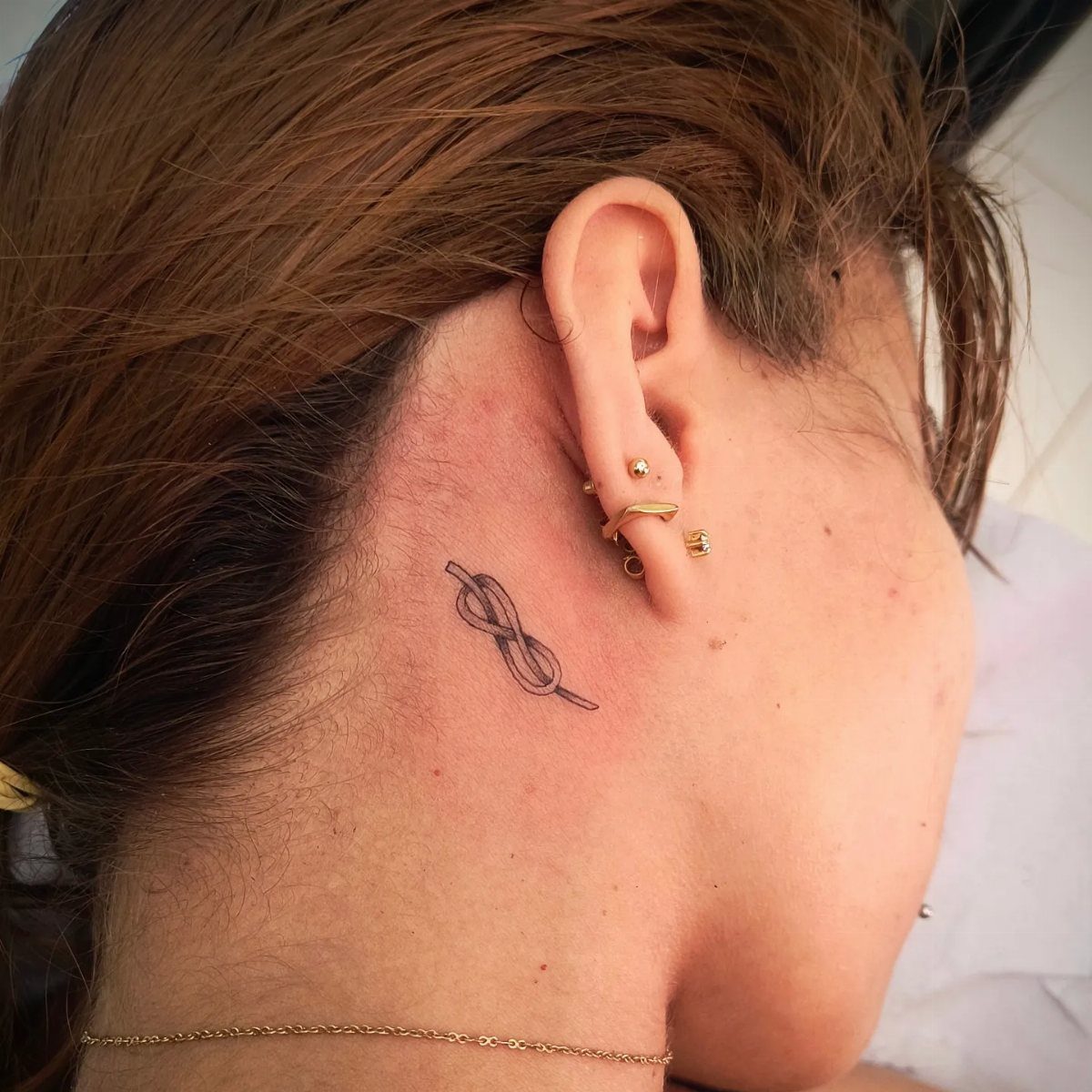
A knotted rope signals strength or a bond that holds, and the small size keeps it subtle. Neck placement behind the ear means higher pain because the skin is thin and close to bone.
The simple outline reads cleanly at this scale, but adding shading or texture would make the knot harder to see as the lines blur.
Sunlight hits the neck constantly, so expect the thinnest lines to soften and lighten faster than work on covered skin.
Small and visible suits someone who wants the meaning without a large piece.
Choosing Meaningful Tattoos
Start with what you want to be reminded of. A tattoo marking a specific moment, a relationship with yourself, or a value you hold will outlast a design you picked because it looked good on someone else’s feed.
If you need to explain the significance to yourself, the connection probably isn’t there yet.
Romantic relationships shift.
A tattoo tied to another person carries risk unless it represents your own growth during that time rather than the relationship itself. A tattoo tied to who you are holds up better than one tied to who you’re dating.
Some meanings are private. You don’t owe strangers an explanation, and a design can hold significance without announcing it.
Placement Considerations
Lower leg works the same way: room for detail, easy to conceal, and the surface heals without constant friction.
Plan on yearly touchups if you choose finger placement.
Small, simple designs work on high-movement or high-visibility spots. Large, detailed work needs flat space and low friction to heal without blurring.
Cultural Sensitivity
Taking a sacred image from a tradition you don’t belong to looks exactly like what it is.
Maori Ta Moko, Polynesian tribal patterns, and Indigenous medicine wheels hold specific cultural and spiritual significance that doesn’t transfer to someone outside those traditions.
Religious icons placed disrespectfully, like a Buddha on your foot or a deity on your backside, signal that you see the image as decoration rather than something worthy of respect. If you don’t practice the faith, reconsider the symbol.
Generic "tribal" designs flatten entire cultures into a visual trend.
The line between appreciation and appropriation sits at research and intent. If you can’t explain the symbol’s origin or why it matters to you beyond aesthetics, skip it.
Stick to your own background or go with symbols that belong to no single group.