Tribal patterns range from the tight geometric glyphs of Aztec work to the flowing spirals of Maori koru and the interlaced lines of Celtic knotwork, each one built on a different visual language.
If you want a design tied to a specific heritage or meaning, the sections below on cultural significance and choosing the right layout will walk you through what the symbols represent before you commit.
1. Aztec Tribal Tattoos
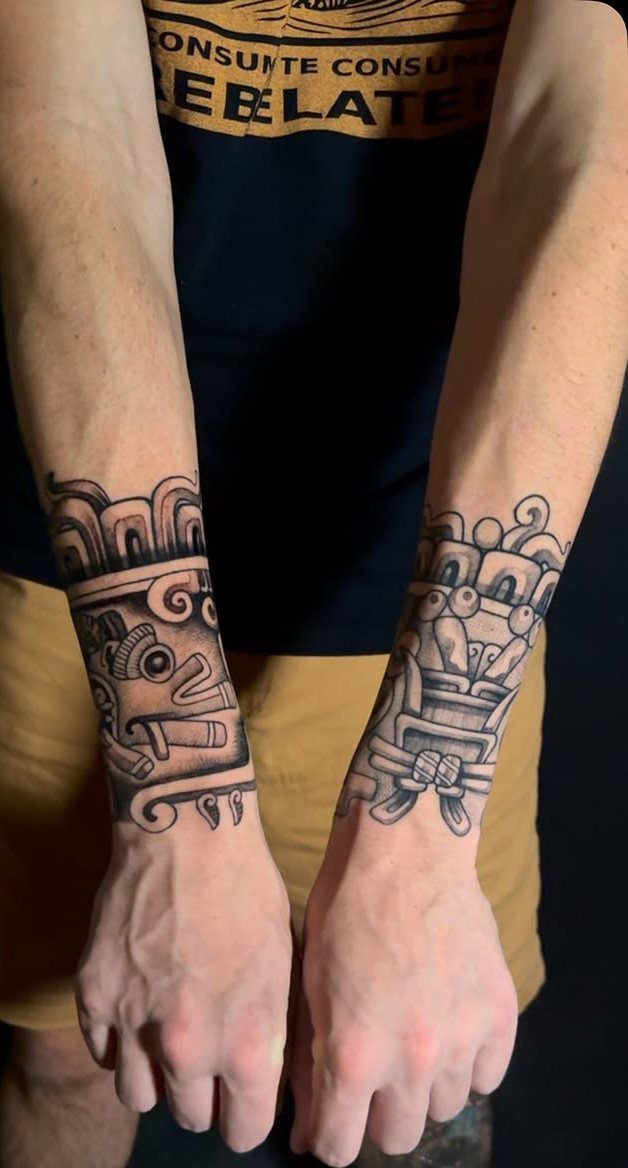
Aztec patterns draw from the geometric language of pre-Columbian central Mexico, built around stepped pyramids, animal glyphs and dense interlocking shapes. Serpent and eagle motifs locked inside angular borders size tight enough that the detail holds without blurring.
Placement on the wrist or forearm keeps the design readable at conversation distance. Black ink alone gives the sharpest lines, and the complexity means you need an artist comfortable with tight geometric work.
Dense tribal reads bold, and covering it later is harder than something with more negative space.
2. Polynesian Tribal Tattoos
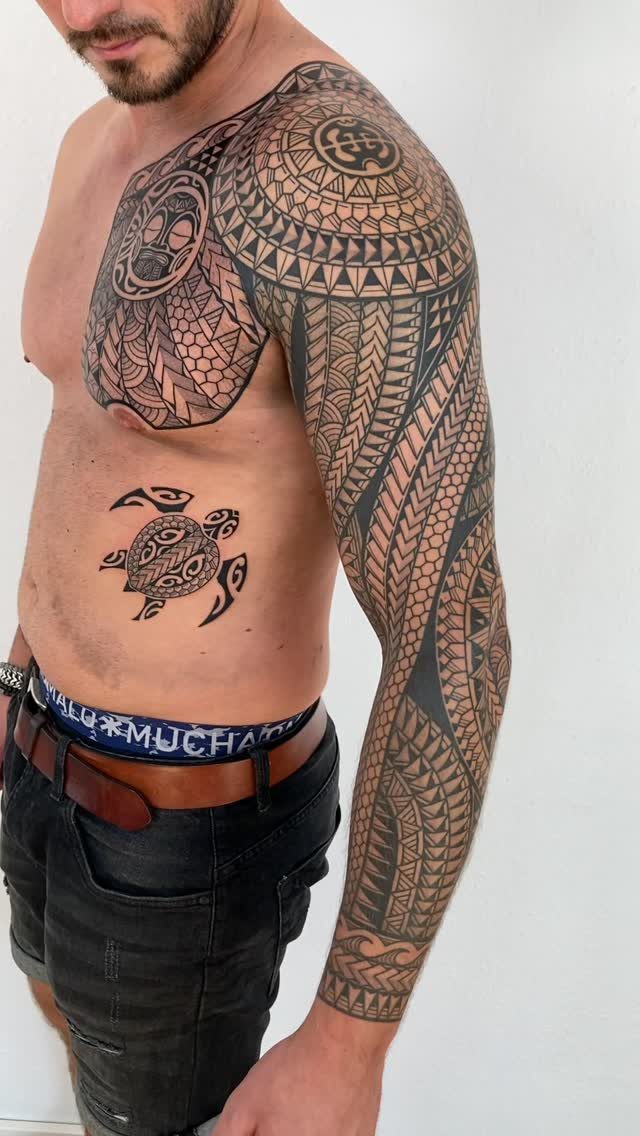
Polynesian tribal builds coverage through repeated geometric units, each one carrying meaning tied to family, rank or personal history. Triangles, spearheads and ocean waves stacked in bands that follow muscle lines.
Placement across the chest and shoulder extends naturally down the arm, a layout that lets the design grow over multiple sessions if you want to add later.
Black ink and high contrast give the pattern its structure, so an artist experienced in Polynesian work will know how to space the elements for long-term readability.
3. Celtic Knotwork Tattoos
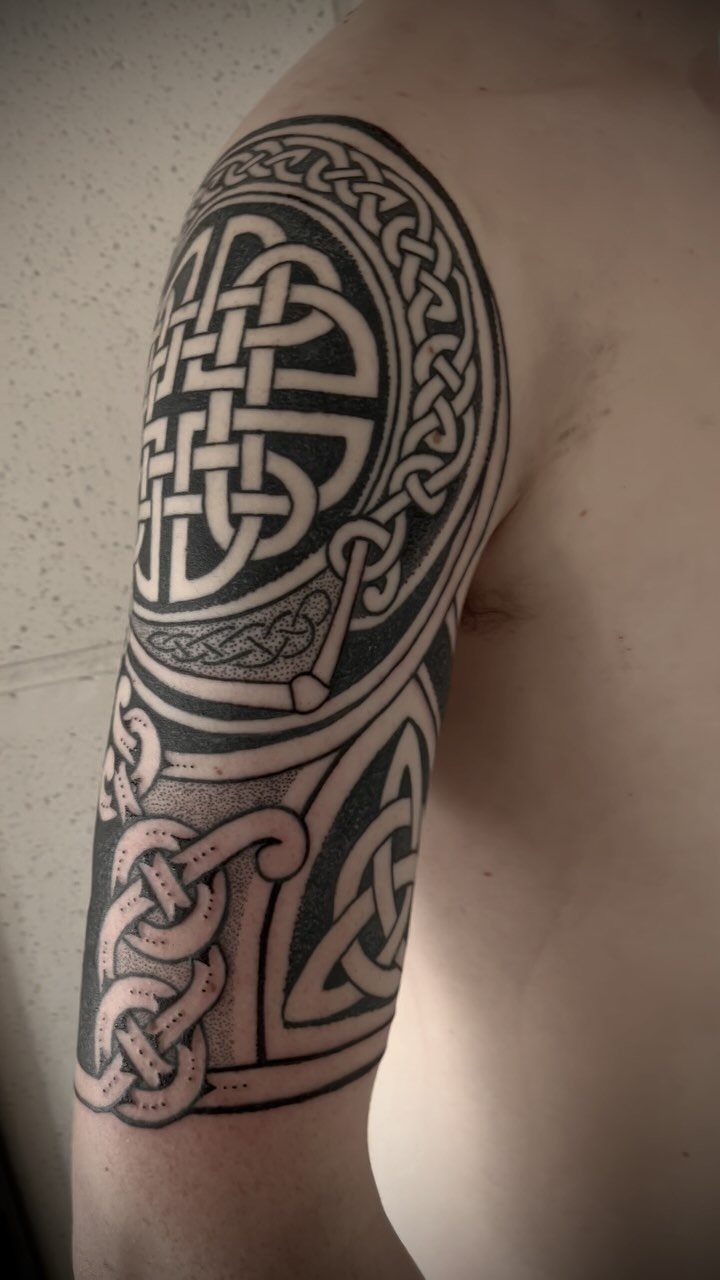
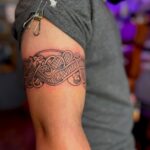
Celtic knotwork is drawn as an unbroken line weaving over and under itself, symbolizing continuity without a clear start or end. A single large knot with tight loops and symmetrical crossings, sized to wrap the muscle.
The upper arm gives enough flat surface for the knot to read clearly, and the black ink needs to stay crisp at every crossing or the pattern loses definition.
An artist skilled in linework will keep the width consistent so the weave stays legible as it ages.
I prefer a single knot over multiple smaller ones; the simpler composition holds better over time.
4. Native American Geometric Patterns Tattoo
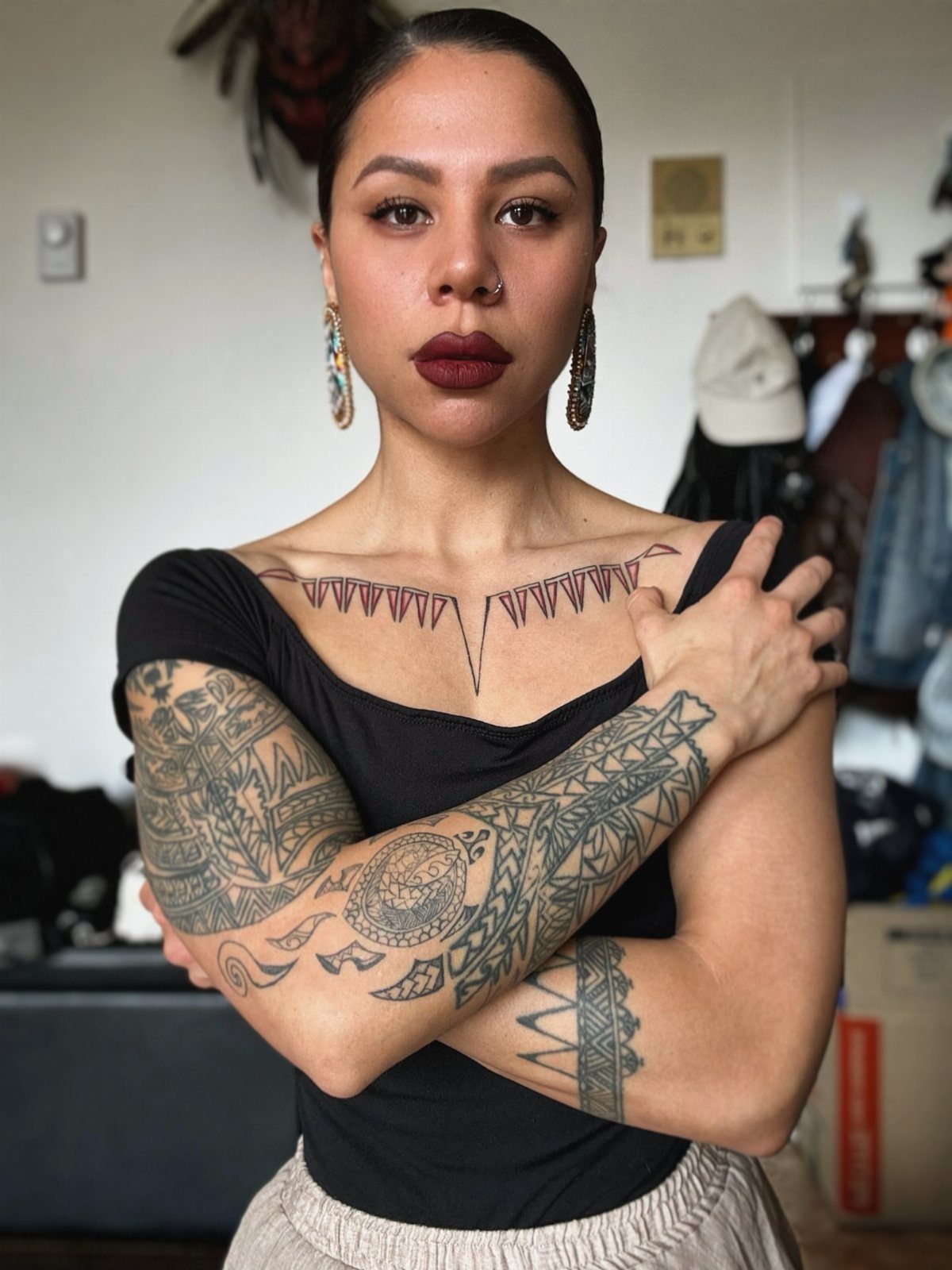
Native American geometric patterns pull from weaving, beadwork and pottery traditions, built on repeated triangles, diamonds and stepped lines. The chest and arm coverage here uses bold black shapes with open spacing, giving the design room to breathe.
An artist familiar with geometric work will keep the line weight even so the pattern reads cleanly at a distance.
5. African Tribal Tattoos
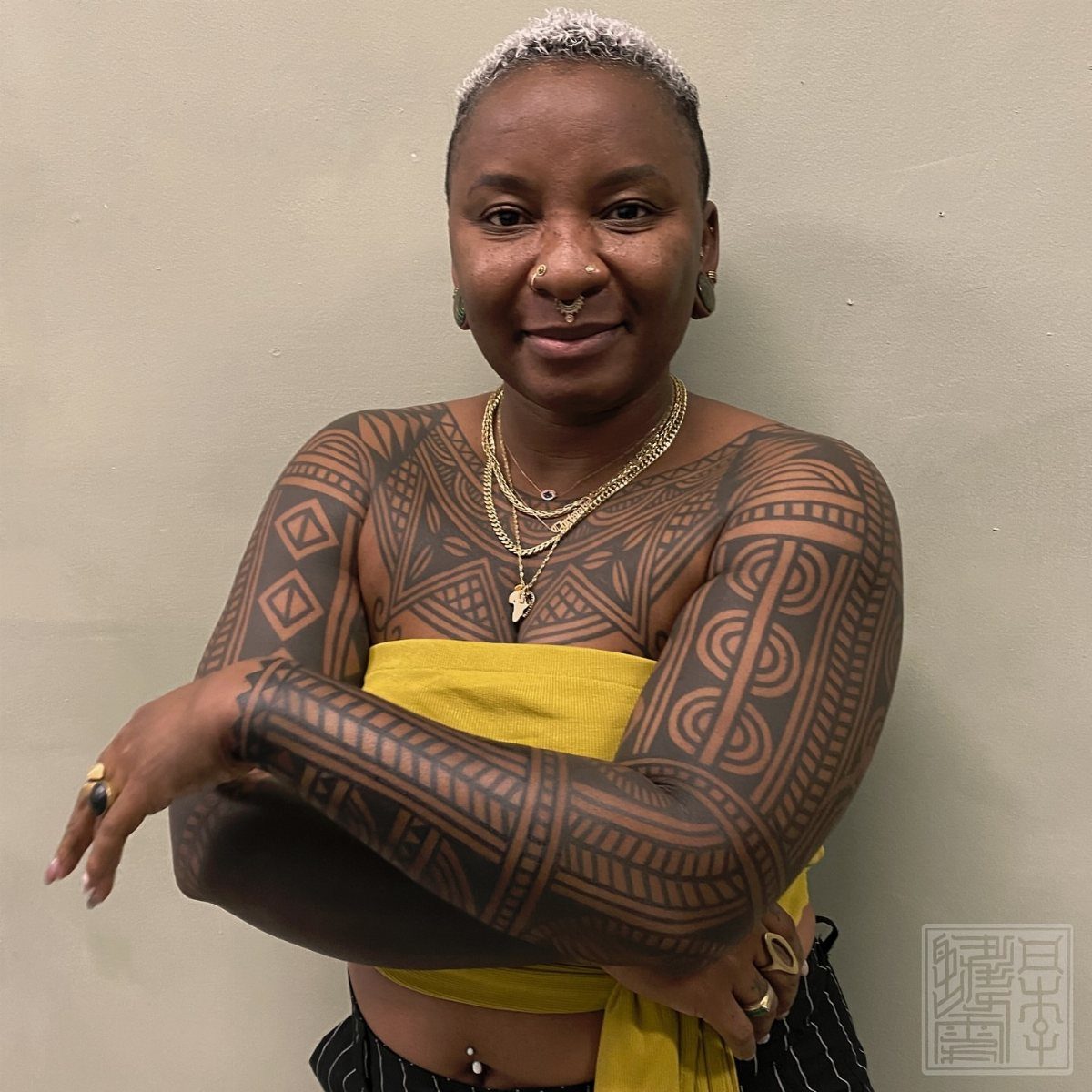
African tribal tattoos draw from scarification and body painting traditions across the continent, often marking status, lineage or specific achievements. The shoulders and arms here carry dense geometric bands and crosshatched fills, with solid black coverage that wraps the body.
Bold black and high contrast make the design readable from a distance, and the geometric structure scales well across large areas.
An artist experienced in tribal work will place the bands to follow your shoulder and arm contours, so the pattern sits naturally as you move.
Solid black heals darker and more uniform than shading, giving the design that bold, unbroken look that reads well from a distance.
6. Traditional Japanese Irezumi Tattoos
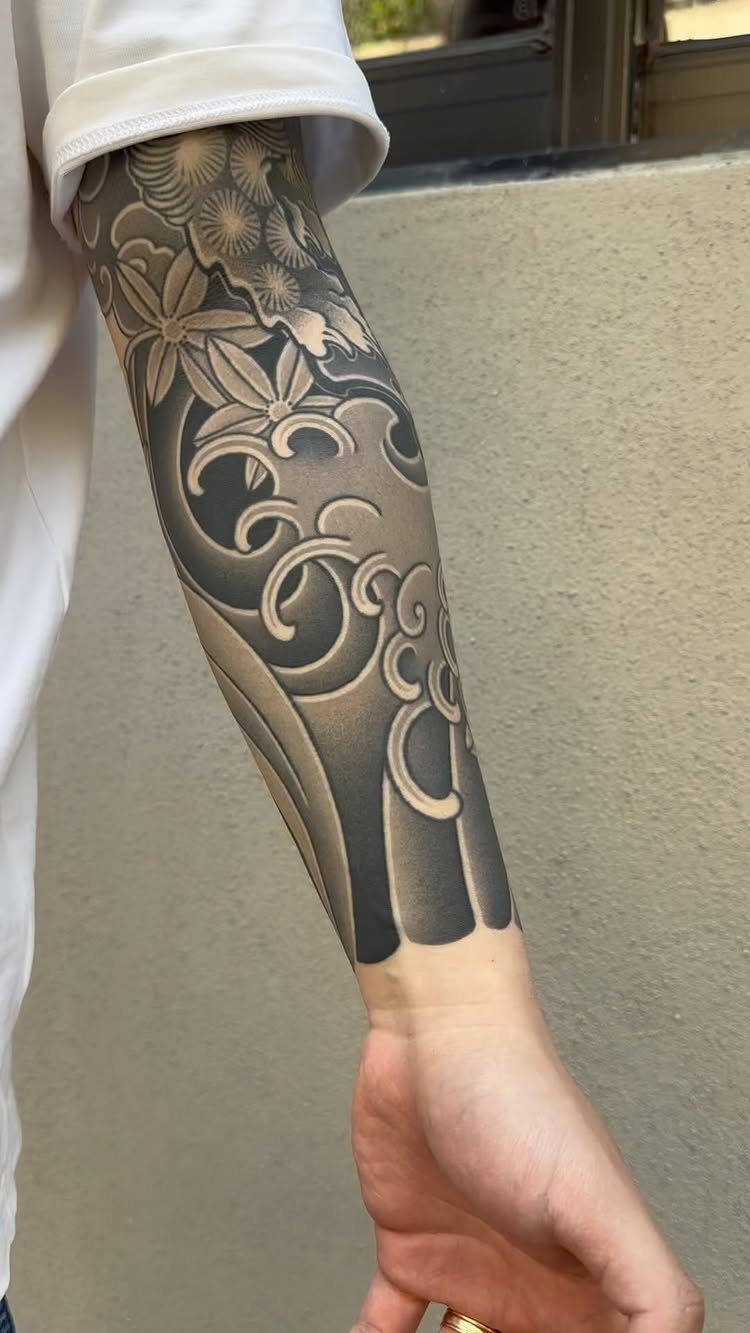
Irezumi is the traditional Japanese method of large-scale tattooing, built around natural motifs like waves, flowers, animals and mythological figures arranged in flowing compositions. Water and botanical elements in black and grey, with shading that follows the muscle.
Placement on the forearm or as part of a sleeve lets the design wrap and flow, a hallmark of Irezumi layout.
Black and grey gives contrast without the color commitment of full traditional work, and an artist trained in Japanese tattooing will know how to balance negative space with dense packing so the composition reads clearly.
Full sleeves or body suits in this style take years and dozens of sessions, but starting with a forearm tests your comfort with the look before committing to larger coverage.
7. Maori Koru
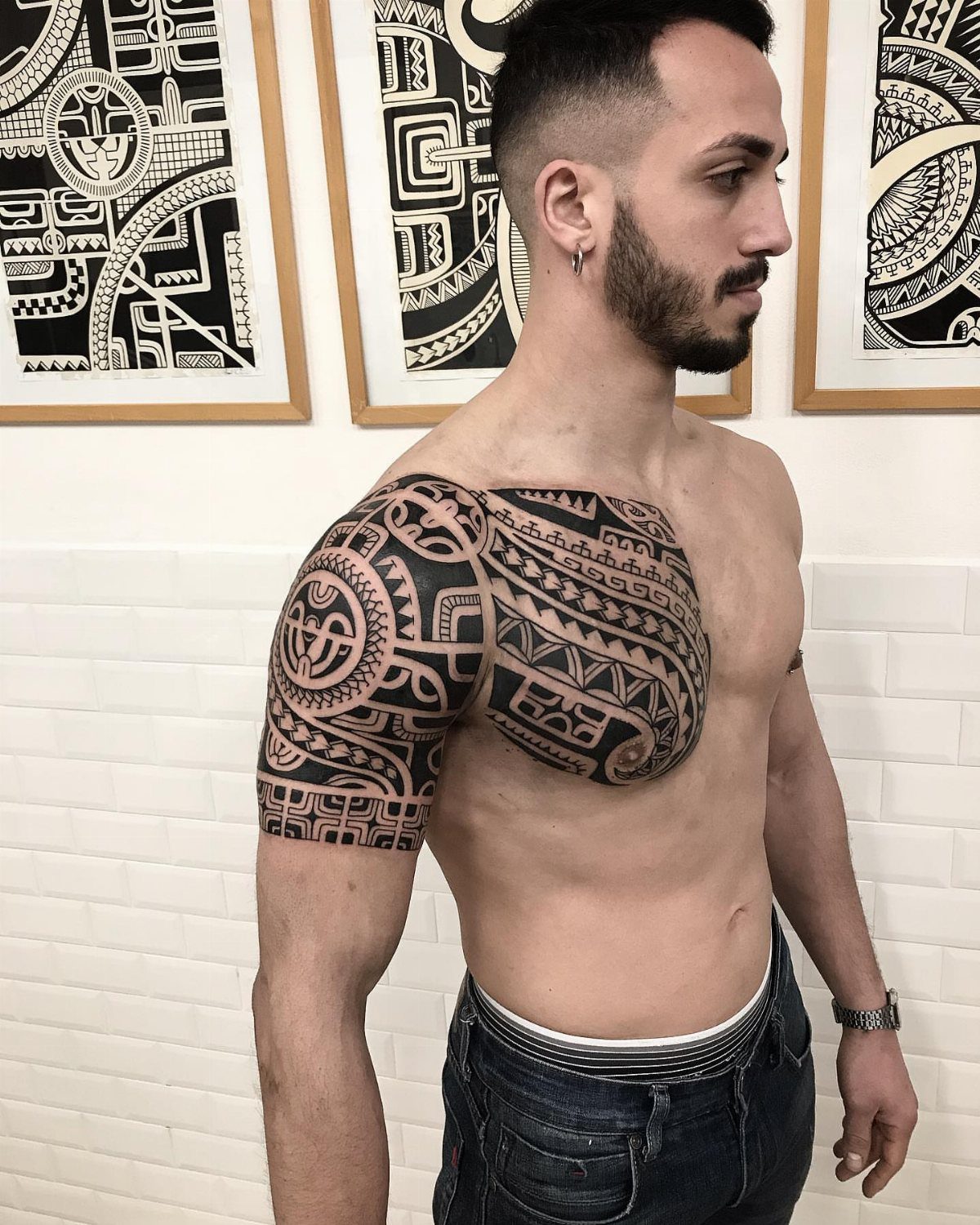
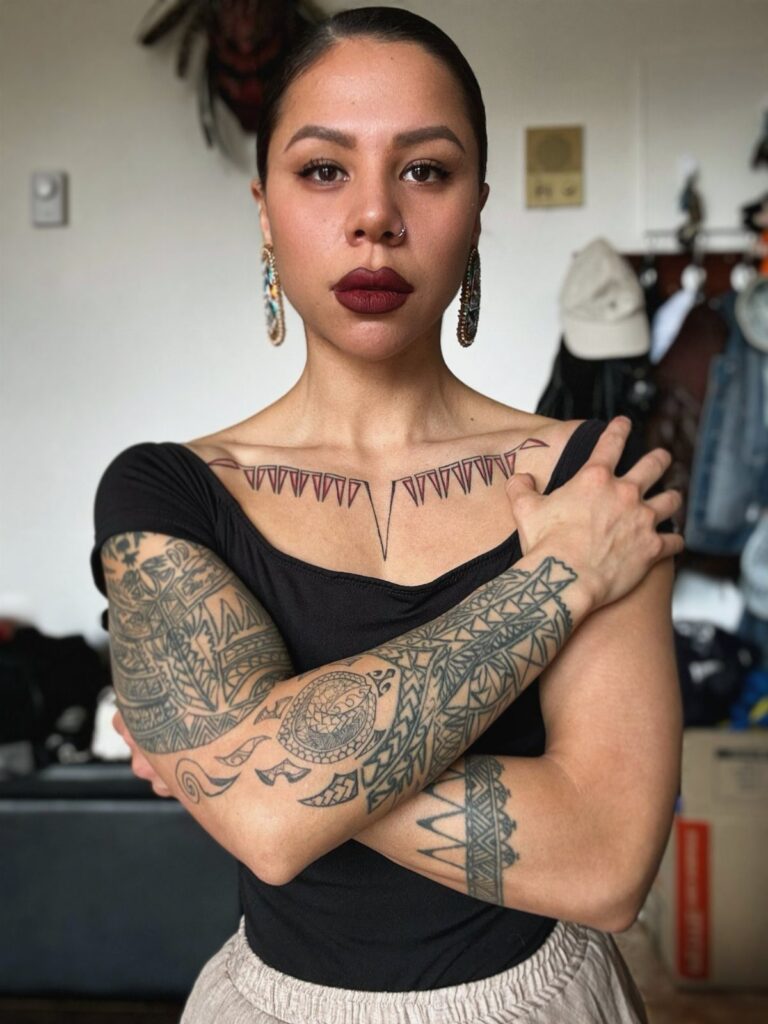
The koru is a spiral drawn from the unfurling fern frond, central to Maori design and tied to growth and new beginnings.
The large shoulder and chest placement here wraps the muscle in a single flowing form, sized for maximum impact.
Black ink and bold lines give the spiral its structure, and an artist familiar with Maori work will shape the curve to follow your shoulder naturally.
The dense coverage reads clearly from a distance but limits your options for adding other designs nearby later.
8. Norse Tribal Tattoos
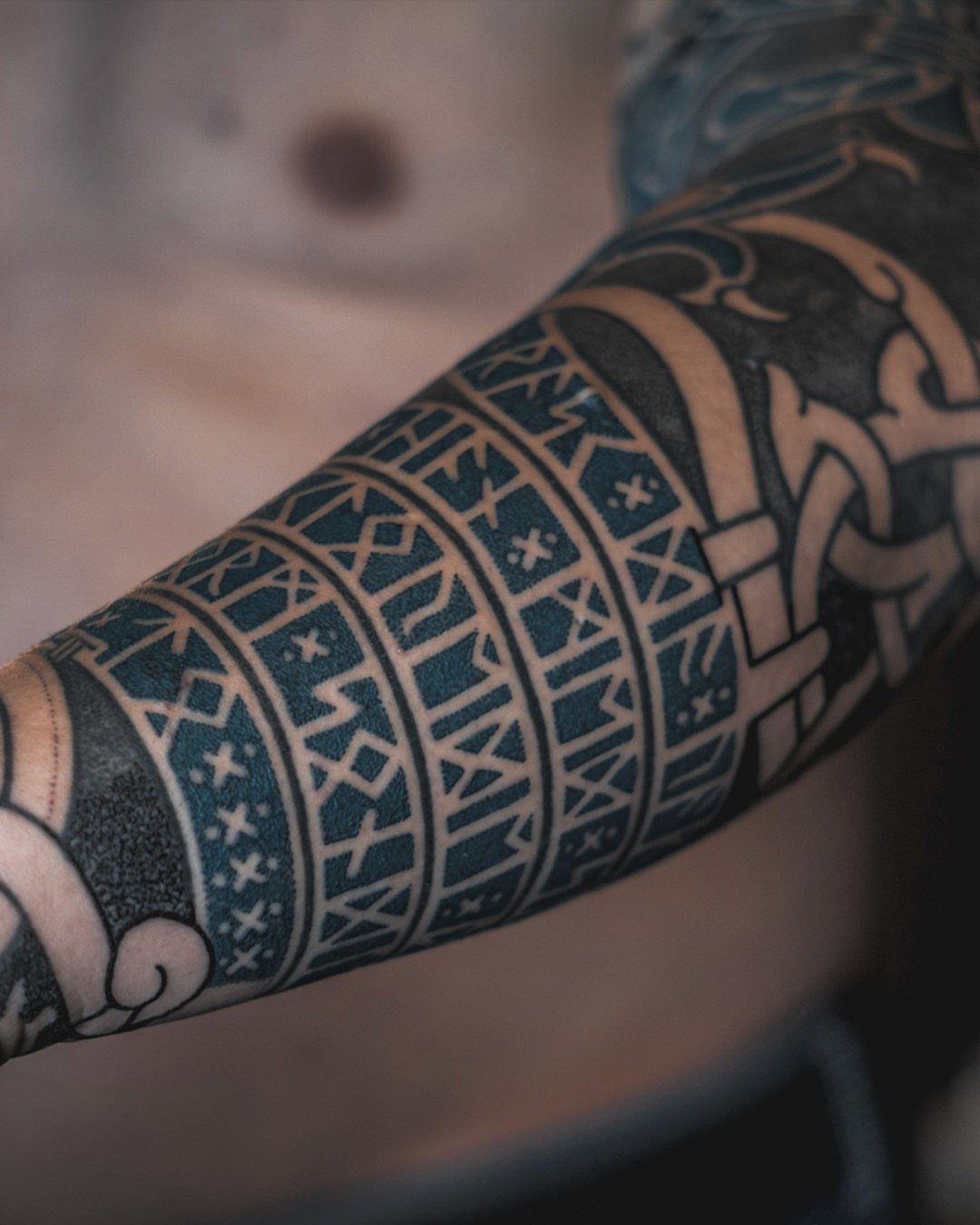
Norse tribal pulls from Viking-age runes and angular symbols, combining script with geometric borders and bands.
Runes carry specific meanings, so choosing them with intent matters if the tattoo is personal rather than purely decorative.
Blackwork ages well, but script tattoos need precise execution or the letters blur together over time.
9. Filipino Tribal Tattoos
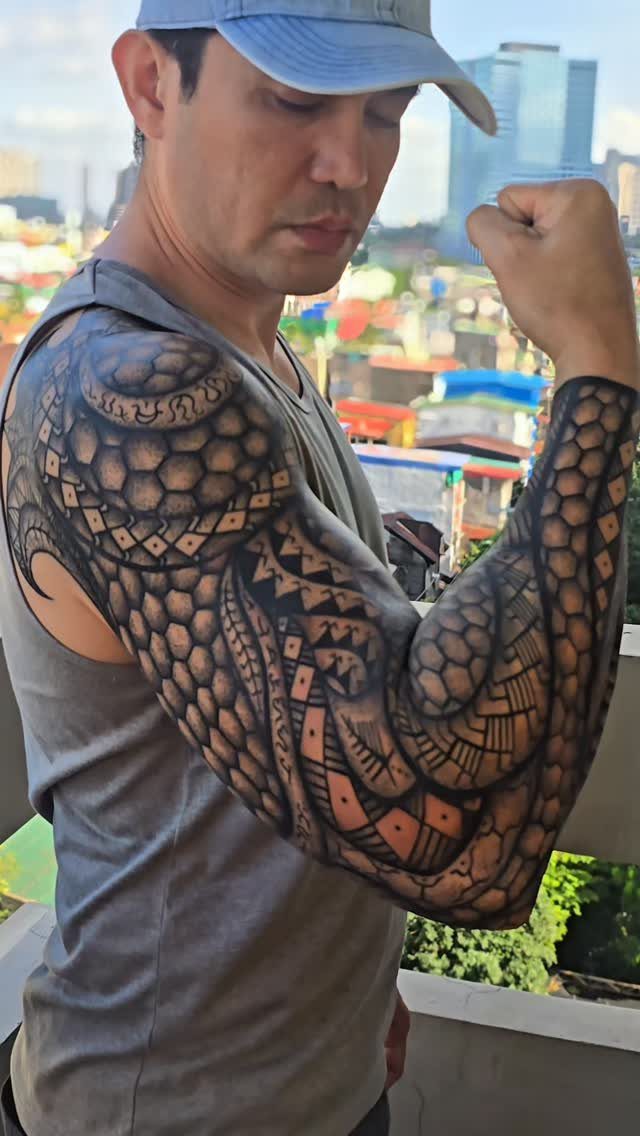
Batok is the traditional hand-tapped method used in the Philippines, with patterns marking achievements, protection or social standing.
Placement from shoulder to wrist follows the traditional layout for warriors and leaders, though most modern versions are done with a machine rather than hand-tapping.
Full sleeves take multiple sessions and need consistent aftercare across large fresh sections to prevent infection while the skin heals.
Cultural Significance of Tribal Tattoos
Tribal tattoos carry meaning that reaches beyond the pattern itself. Many designs mark membership in a specific group, achievements, or protection, with symbols chosen for what they represent rather than how they look alone.
Many tribal traditions tie their designs to spirituality and heritage.
Personal journeys show up in how people adapt these forms.
A Celtic knot might symbolize continuity in your own life rather than ancient religion, and a Norse rune chosen for its specific meaning sits differently than one picked for the look.
If you are getting a design tied to a culture that is not your own, research what the symbols mean and whether the tradition welcomes that use.
Choosing the Right Tribal Tattoo Layout
Body shape affects how a tribal pattern reads. Curved forms like the Maori koru wrap the shoulder or chest better than flat areas.
Size and pain level go together. Larger designs on the chest, back or full sleeve take multiple sessions and cover areas where skin thickness varies, so expect higher discomfort near ribs or inner arm.
Smaller patterns on the forearm or wrist finish faster and hurt less, but intricate work like Aztec glyphs or Celtic knots needs enough space for the detail to stay legible.
Meaning should guide the choice when the design ties to heritage or a specific story.
Consult an artist experienced in the style you want; they will adjust the layout to fit your body and confirm the design works at the size you have in mind.
Placement for Tribal Tattoos
Arms are the most common placement for tribal work. The forearm gives a flat canvas for patterns like Aztec glyphs or Japanese waves, and the upper arm wraps naturally for Celtic knots or Polynesian bands.
Back placement offers the largest uninterrupted area, ideal for traditional Japanese compositions or dense Filipino batok patterns, though you will not see it yourself without a mirror.
Legs are less common but gaining ground.
Thigh and calf offer good surface area for tribal layouts, and pain is moderate compared to ribs or inner arm. Visibility depends on what you wear, so consider whether you want the tattoo seen daily or only on your terms.
Frequently Asked Questions
What is the modern tribal tattoo called?
Modern tribal tattoos mix traditional geometric patterns with contemporary execution and sometimes add color to styles that were historically solid black.
Modern tribal work takes the bold lines and flowing forms but lets you place them where you want and adapt the imagery to your own story.
Artists trained in specific tribal styles adapt these patterns to fit modern body placements while maintaining the structure that makes the design readable long-term.
Can anybody get a tribal tattoo?
Anyone can get a tribal tattoo, but if the design ties to a culture that is not your own, research what the symbols mean and whether the tradition welcomes that use.
Some patterns mark specific achievements or group membership in their original context, so wearing them without that connection can carry weight you did not intend.
Personal or decorative adaptations of geometric tribal forms are more open than sacred or ceremonial designs tied to specific lineages.