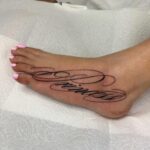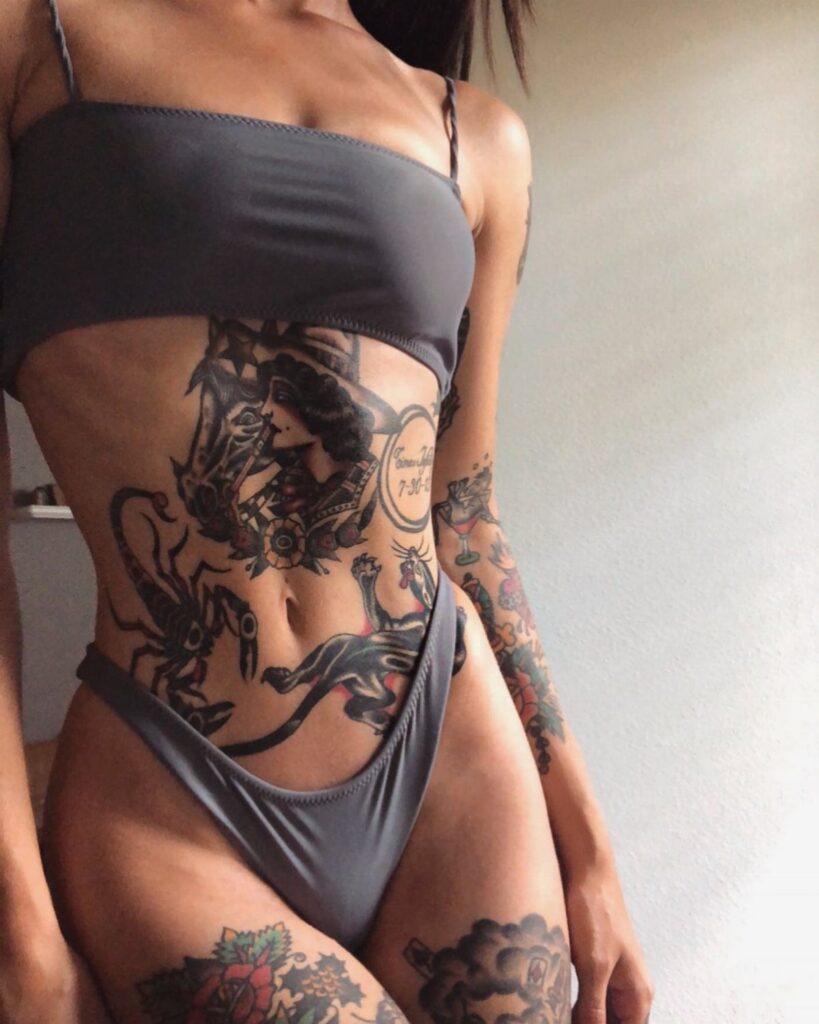
The thick outlines and narrow palette covered later in this guide keep these tattoos readable for decades while other styles fade or blur.
The single design that fits your wrist or collarbone comes from one end of this list, the sleeve or back piece from the other, so size sorts what belongs where before style does.
Swallows still carry that sailor’s promise of safe return, one bird for each 5,000 miles at sea.
1. Skull Tattoo
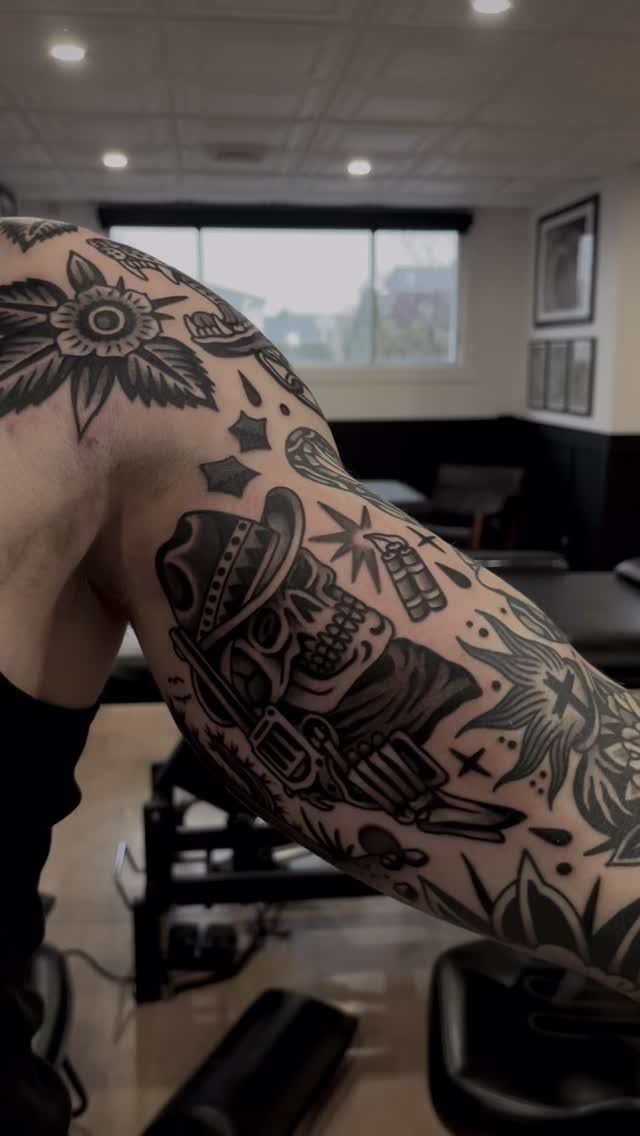
Skulls in American traditional work sit front and center, bold black outlines filled with limited shading and maybe a splash of red or yellow.
The design keeps mortality visible but strips away the morbid weight: this reads as defiance, not dread.
The thick line holds up over decades. Placement on the upper arm or forearm gives you a design that fills the space without crowding smaller work nearby.
Pair it with accessories like hats, flames or banners to soften the edge or tie it to a specific memory.
2. Anchors
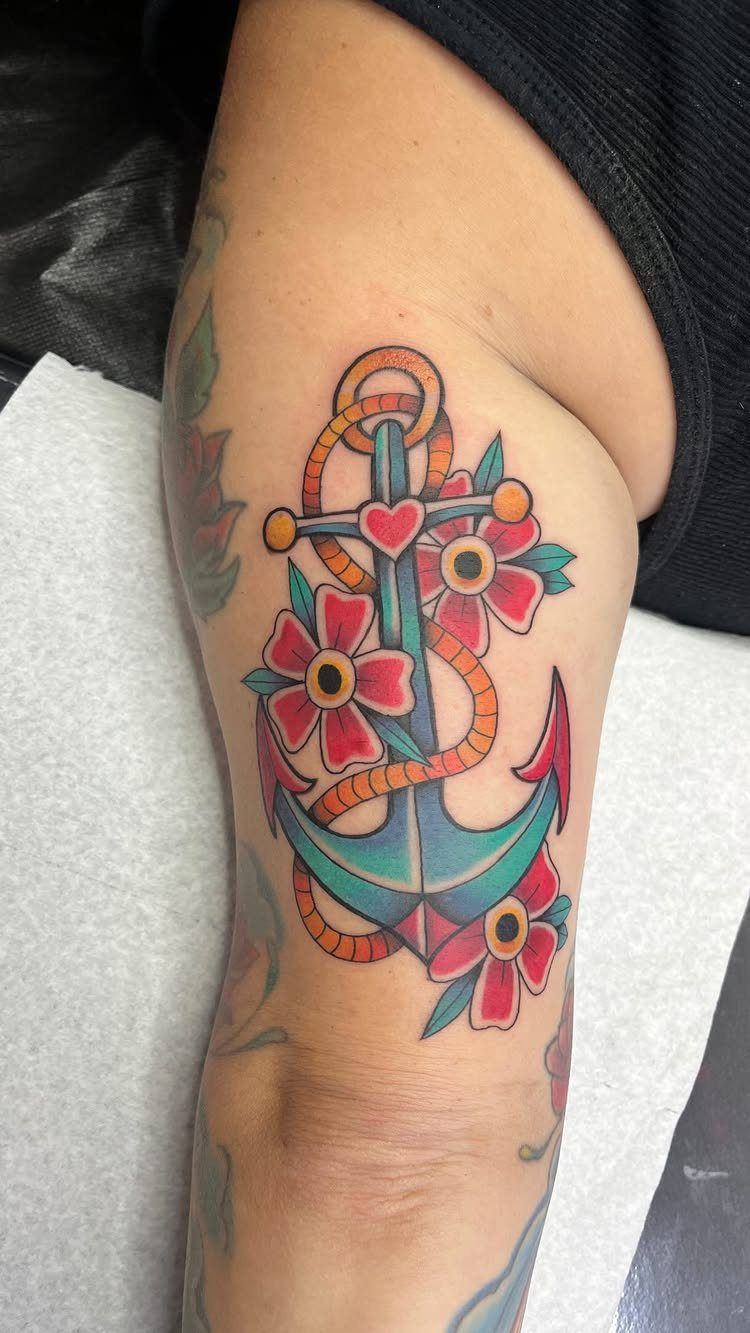
Anchors ground the whole tradition. Sailors wore them as proof they had crossed the Atlantic, and the symbol stuck: stability, hope, a tether to something that mattered when everything else moved.
The design works small on the wrist or scaled up on the forearm or calf. Rope coiled around the shank and flowers tucked into the stock add detail while keeping the anchor recognizable.
Color stays simple. The palette keeps it readable and the bold outline makes sure it ages clean.
3. Eagles
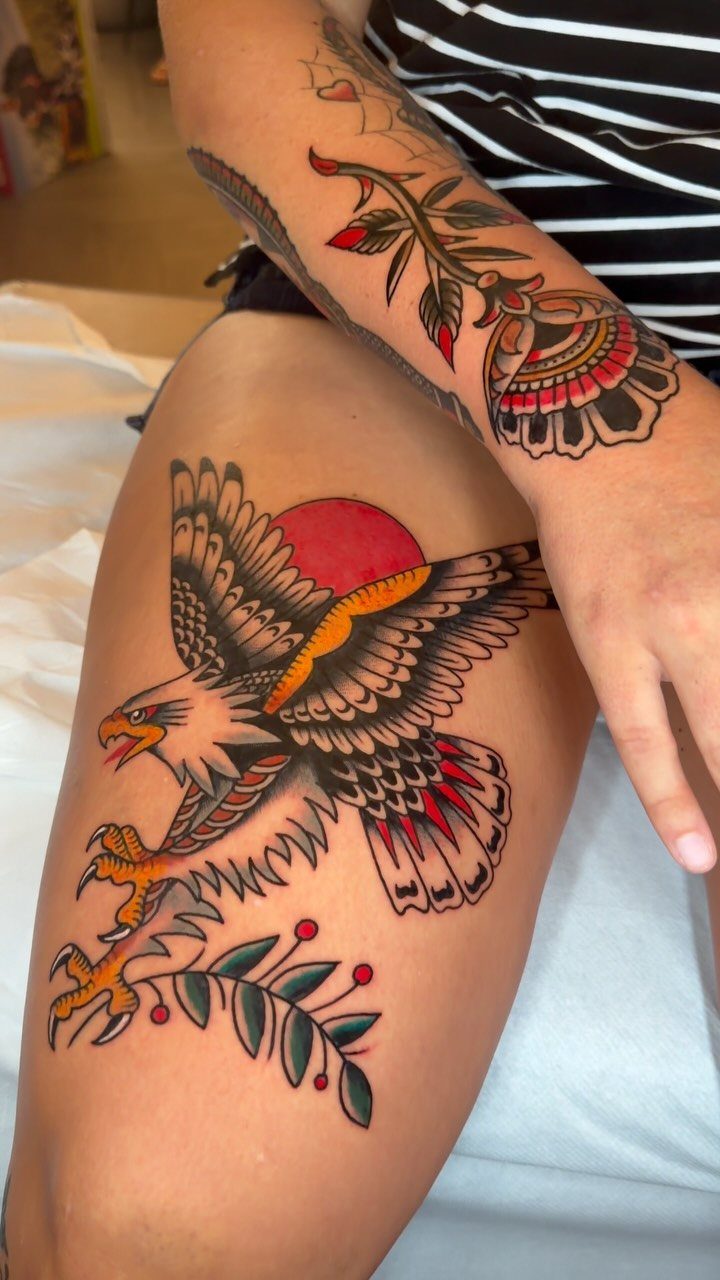
Eagles carry the weight of American patriotism without saying a word. Wings spread wide, talons gripping a branch or banner, the bird fills space and commands it.
Scale matters here. A thigh or back piece gives the wingspan room to read, and the design benefits from that real estate.
Red, white and blue appear often, but earth tones and black shading work just as well if you want the form without the flag.
Expect several hours in the chair for a large piece. The detail in the feathers and the shading around the body take time, and rushing it shows.
4. Swallows
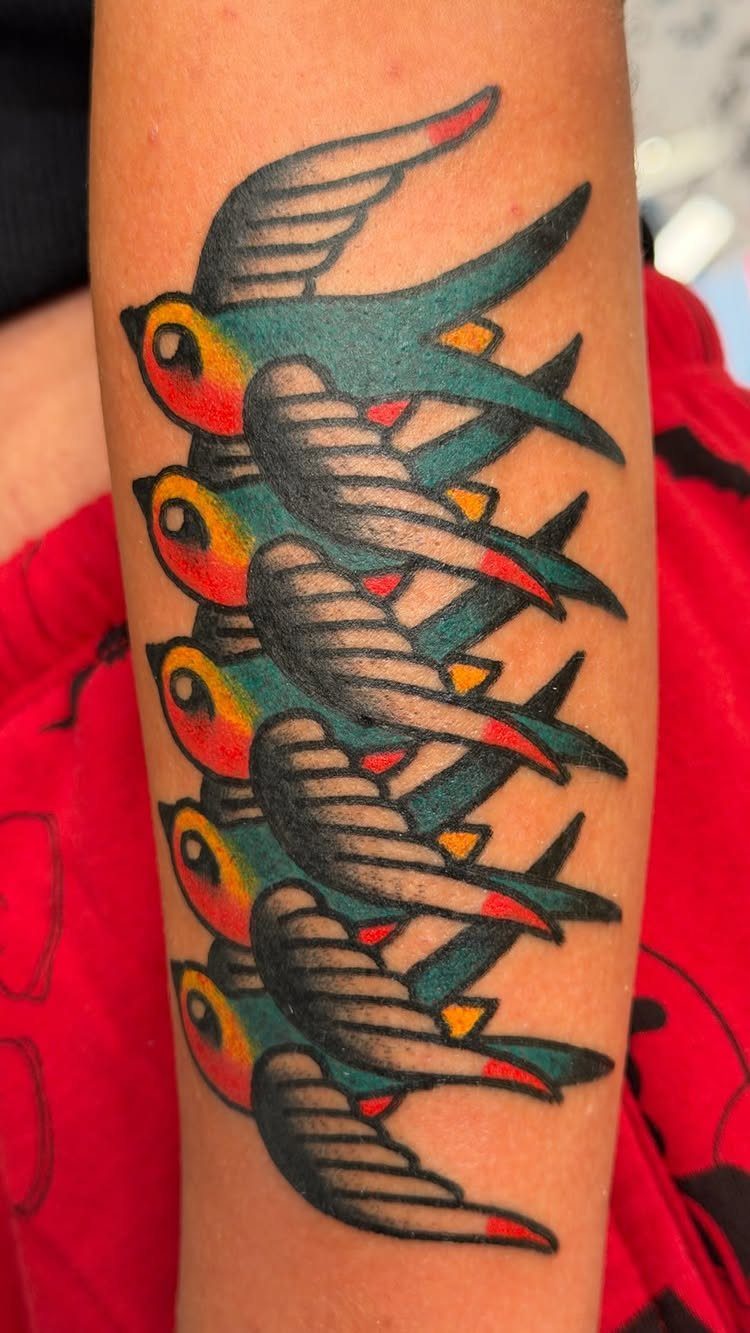
Swallows marked distance and safe return. Sailors earned one for every 5,000 nautical miles, and the bird became shorthand for coming home.
Multiple swallows in flight across the forearm or chest read as movement. The design scales down easily, so a single bird on the collarbone or behind the ear works too.
The shape is clean enough that even a small version stays crisp, and the thin profile means you can layer them without clutter.
5. Bold Outlines and Limited Color Palette Tattoo
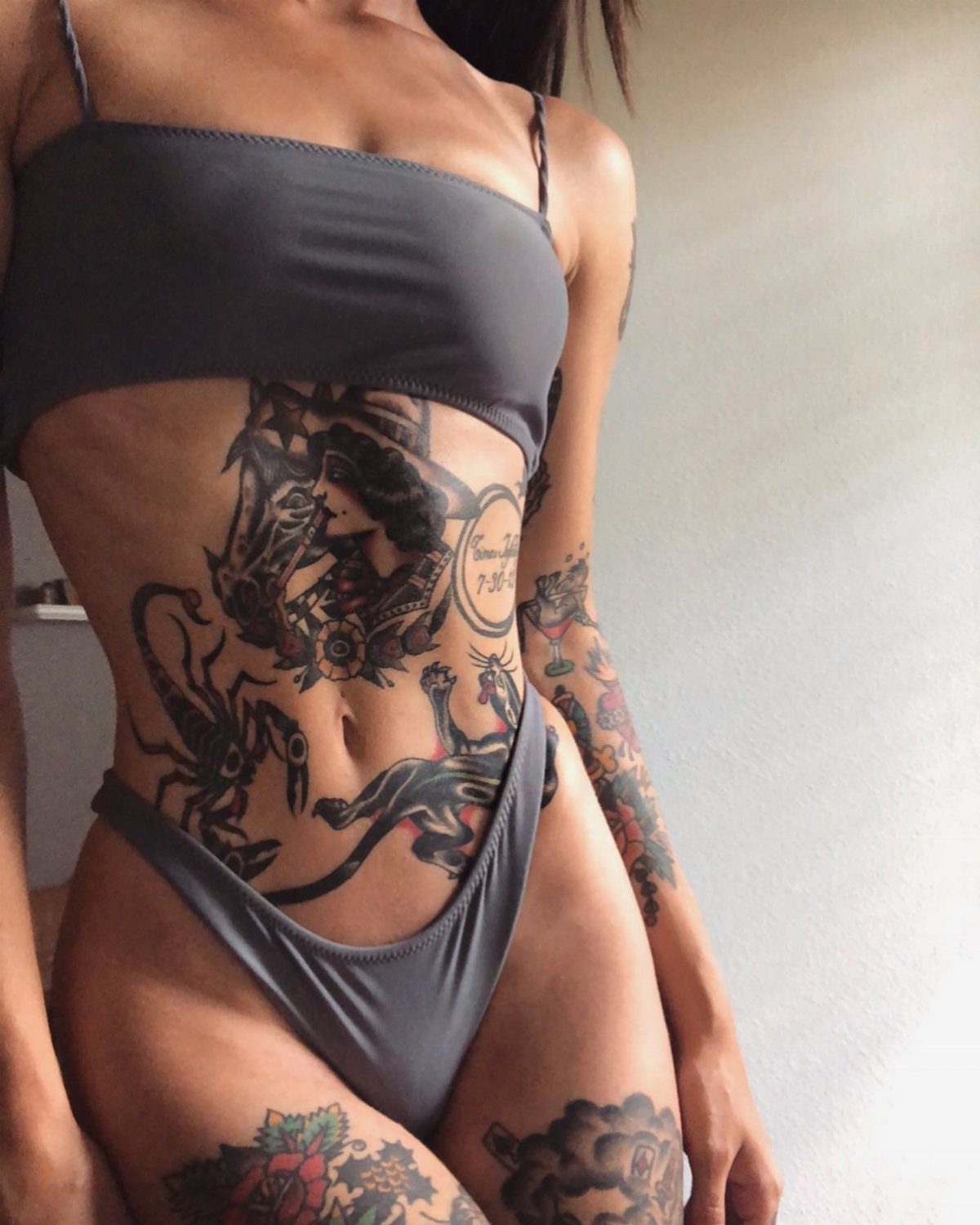
Bold black outlines and a limited color palette define the whole style, not just one design. Thick lines contain flat blocks of red, yellow, green or blue, with black shading used sparingly for depth.
The technique keeps ink from blurring over time. Colors bleed less when they sit inside a strong border, and the high contrast between black and bright primaries holds up as skin ages.
Designs built this way pack more information into less space. A scorpion, a portrait, a dagger: each one reads clearly from across the room because the outline does the work.
6. Roses
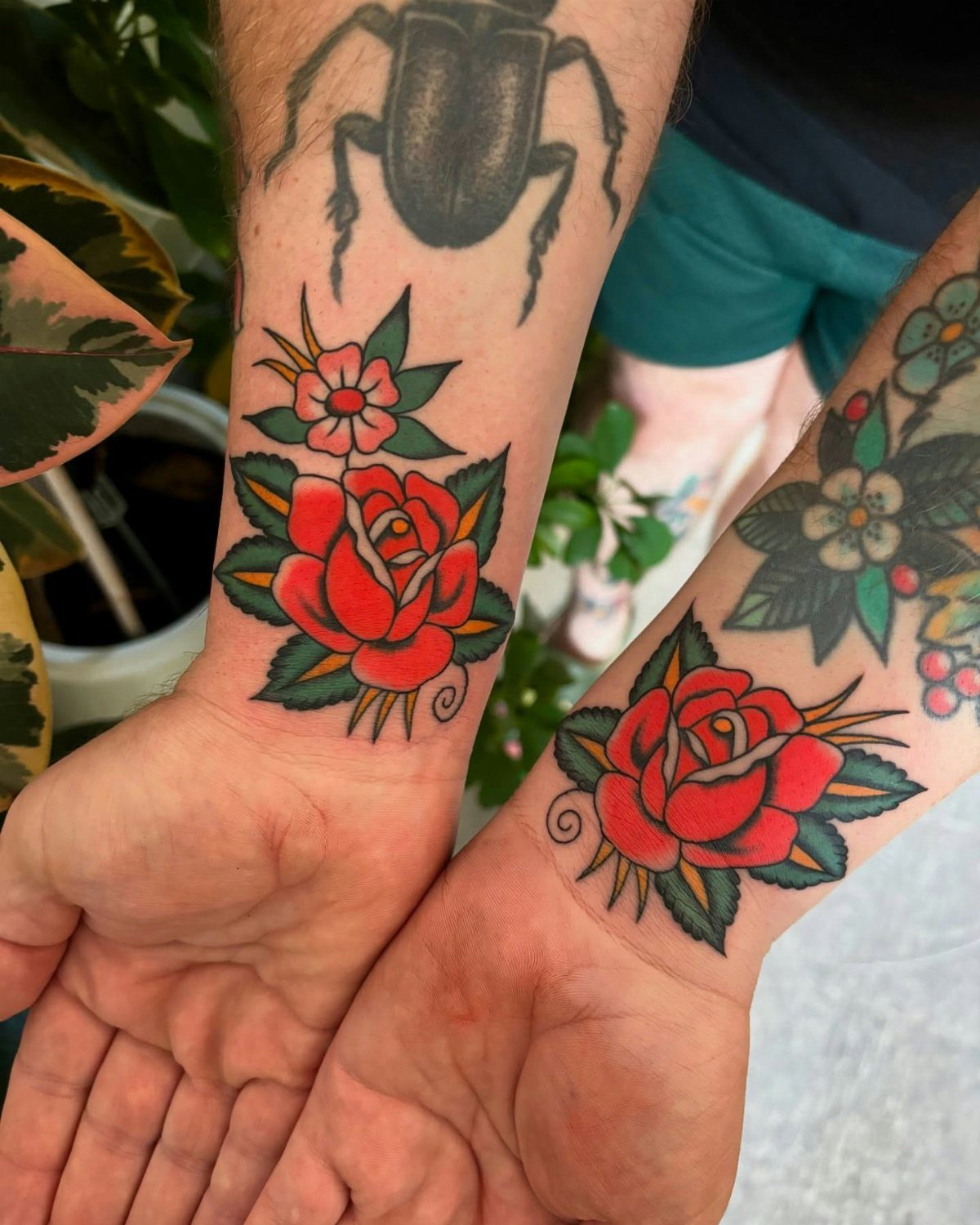
Roses in this style carry weight without softness. The petals stay geometric, outlined in thick black, filled with solid red or pink, and the green leaves anchor the design to something real.
A single rose fits the wrist, forearm or ankle. Pair them for symmetry or layer them with daggers, skulls or banners when you want a larger composition.
The flower itself reads as beauty and love, but thorns add the other half: pain, protection, the cost of caring about something. That duality is why the image keeps working.
7. Daggers
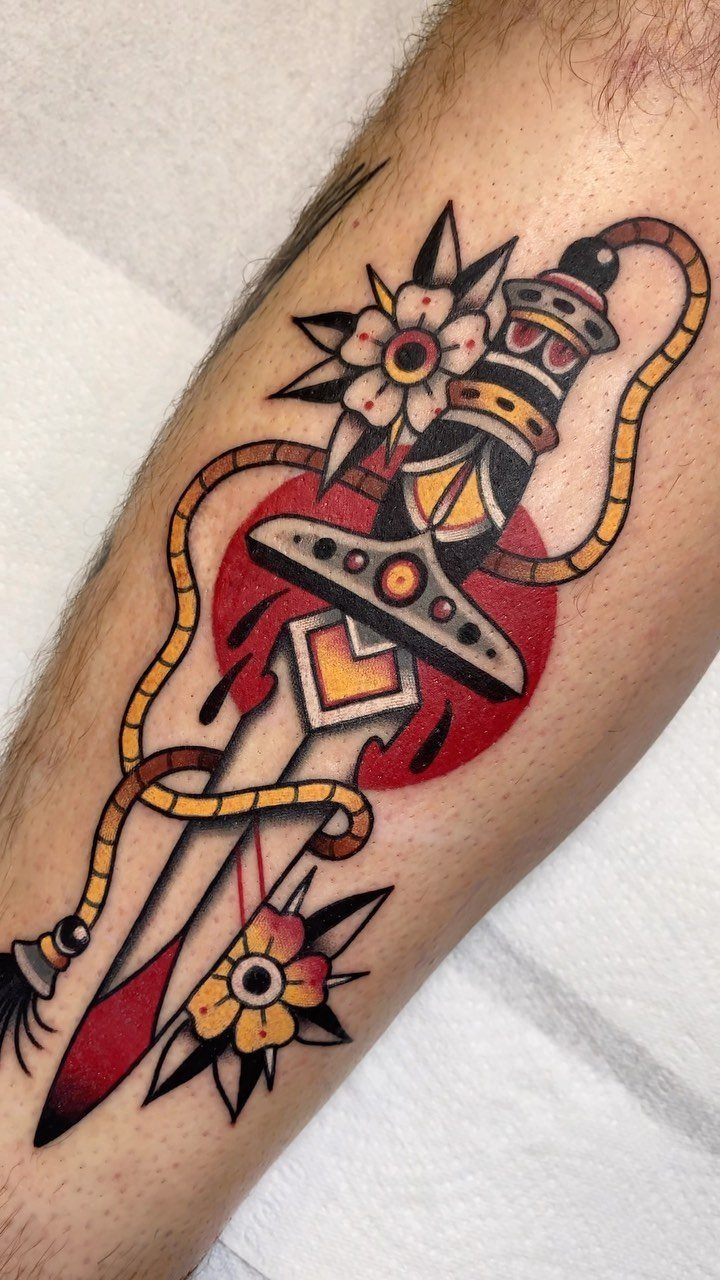
A dagger pointed up reads as ready, not resting. The blade stays sharp in thick black outline, wrapped in rope or paired with flowers to soften the threat without losing it.
The design scales well. A forearm piece gives you room for detail in the guard and pommel, while a smaller version on the wrist or ankle keeps the silhouette clear.
Strength gets worn openly here, and courage shows without explanation. The straight lines age cleanly, and the symbol carries no ambiguity.
8. Panthers
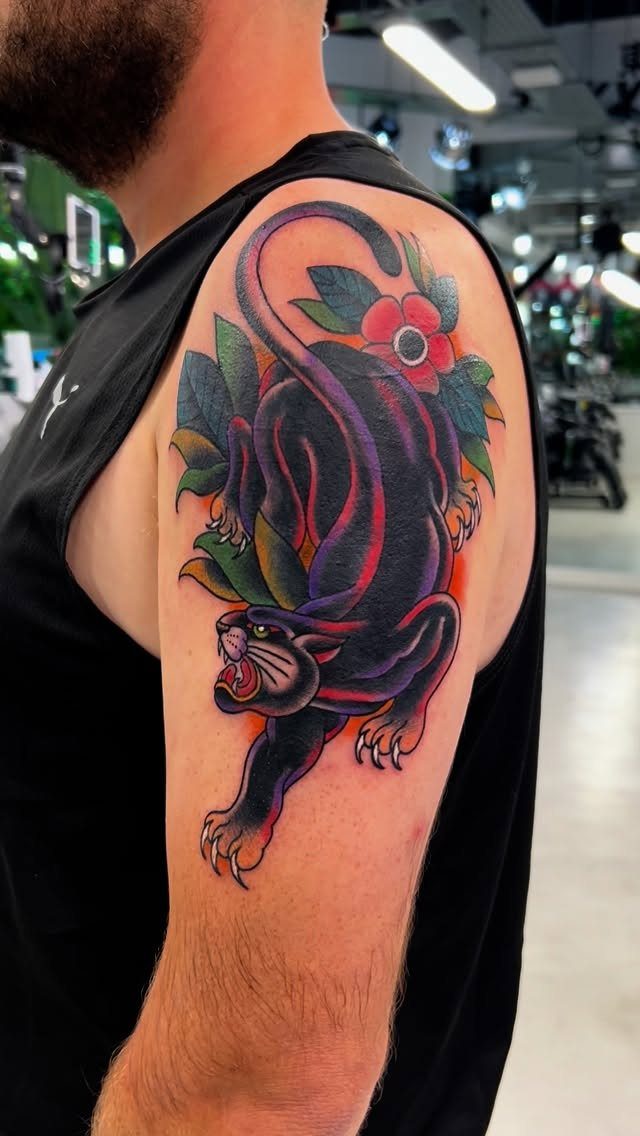
Panthers in this style crouch, leap or snarl, muscle coiled tight under solid black ink. Red accents on the mouth or claws add bite, and a flower tucked behind the animal balances the aggression with something softer.
The form fills a bicep or thigh naturally. The black panther holds contrast against skin better than most animals, and the shape stays readable even when the shading fades.
The panther does not need context to land.
9. Heart Tattoos
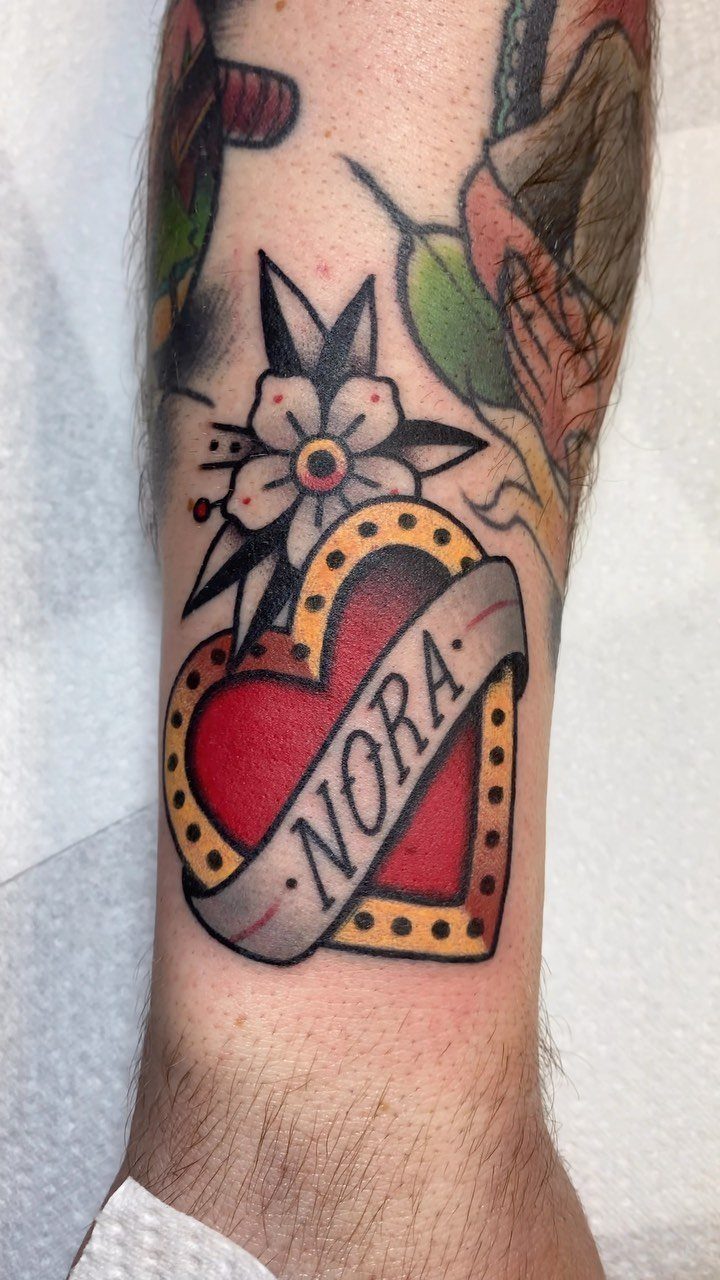
A heart in this tradition comes with a banner, often holding a name, and the flat red fill inside the black outline keeps it legible for decades.
Add a flower, a dagger through the center or dripping blood to shift the tone from devotion to heartbreak.
The shape fits anywhere but reads best where you can see it whole. Forearm, chest or calf give you space for a clean composition.
Love and risk share the same symbol. The heart works because it admits both.
10. Pinup Girls
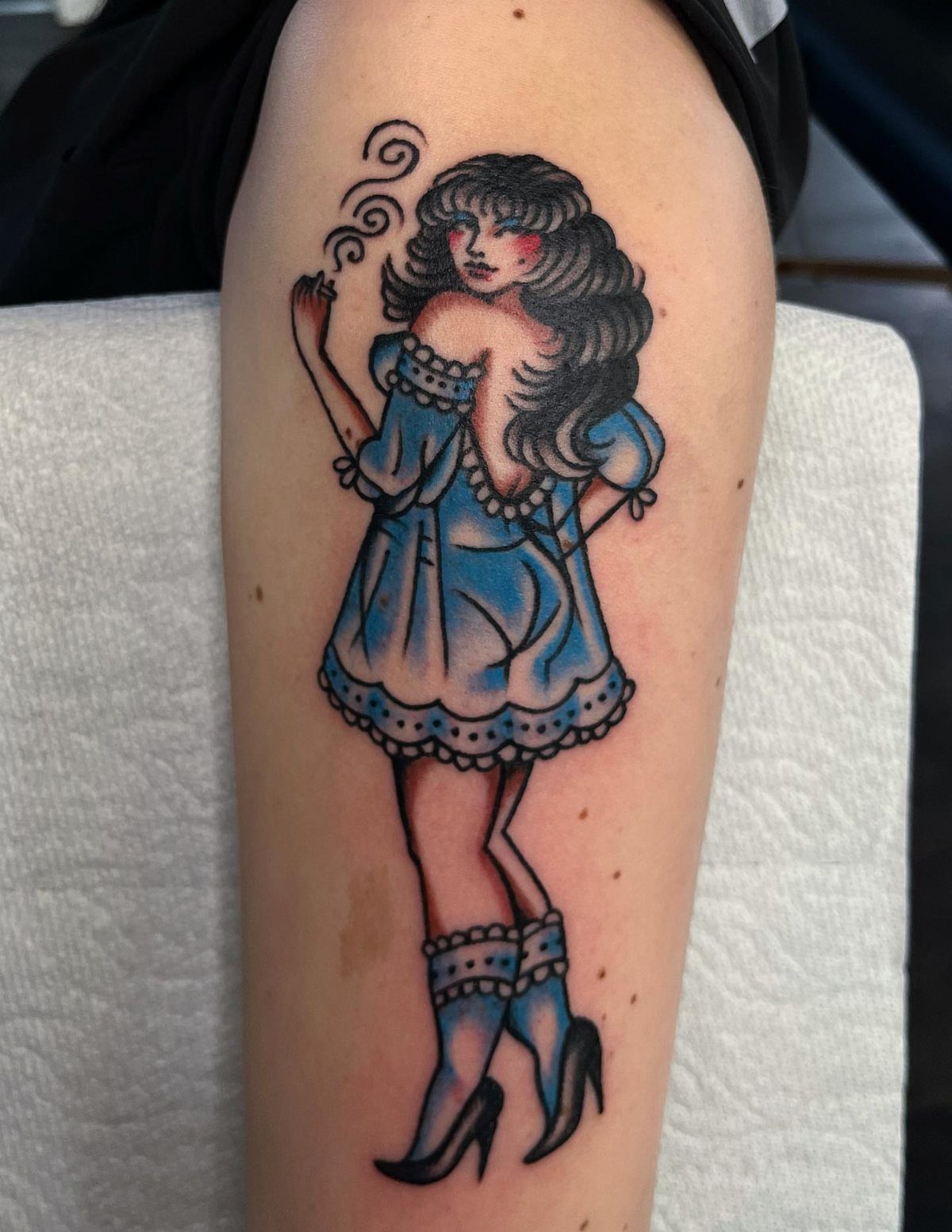
Pinup girls carry the glamour of mid-century America, posed in dresses, stockings and heels with an expression that holds confidence without hardness.
The figure fills a thigh or calf easily, and the curves of the body suit the contour of the leg.
Colors stay bright but limited: red lips, blue fabric, skin tone rendered in light shading. The thick outline keeps every edge crisp.
Femininity here is direct, not demure. The nostalgia sits in the styling, not the subject.
11. American Traditional Wolf Tattoo
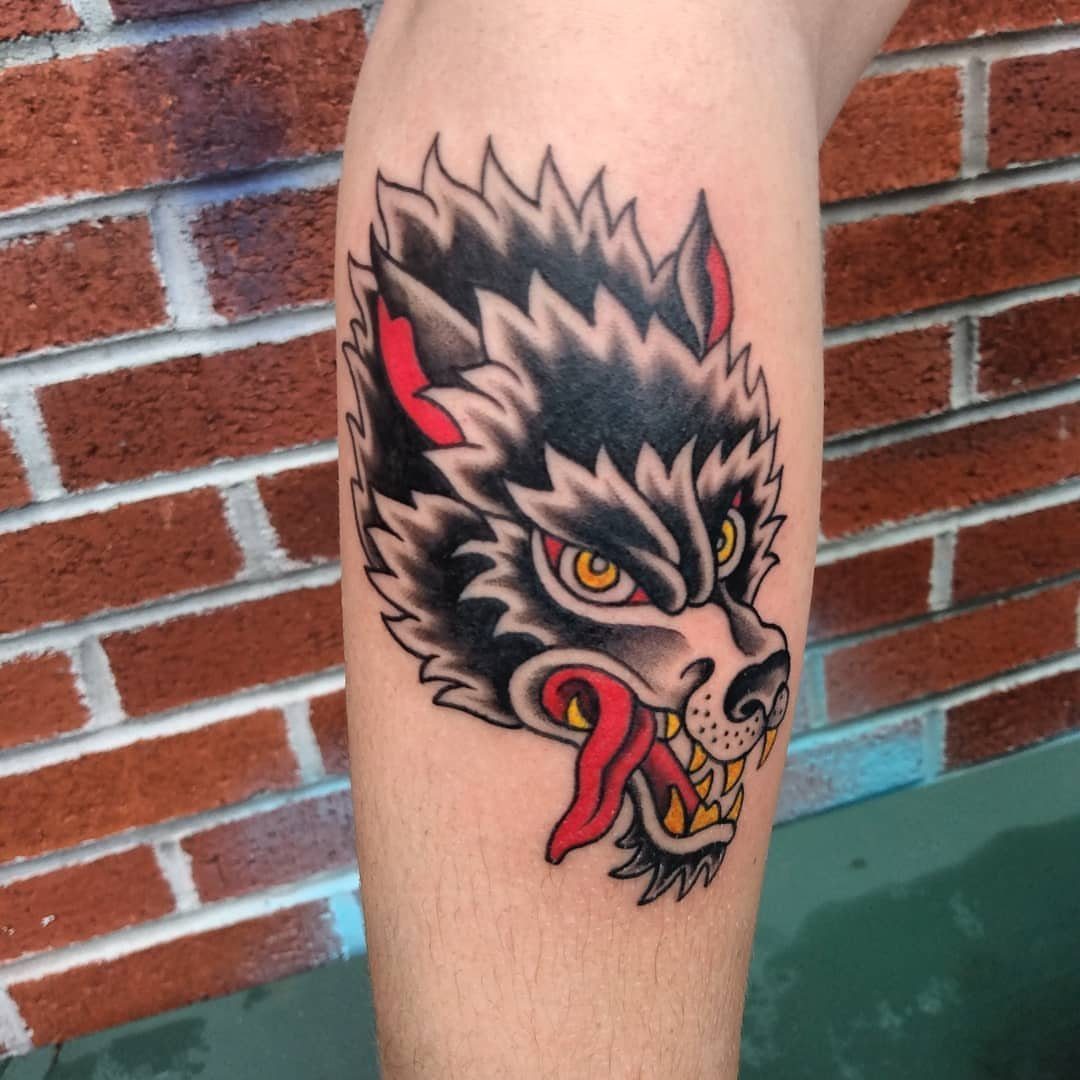
A wolf head in profile or front-facing packs loyalty, instinct and territoriality into one recognizable form.
Red details in the eyes or mouth add intensity, and the fur gets rendered in bold black with minimal shading to keep the shape tight.
The design reads clearly on a forearm or shoulder. Size matters less than proportion: a smaller wolf still carries presence if the lines stay strong.
Meaning runs deep here. The animal connects to family, survival and the pack.
12. American Traditional Sleeve Tattoos
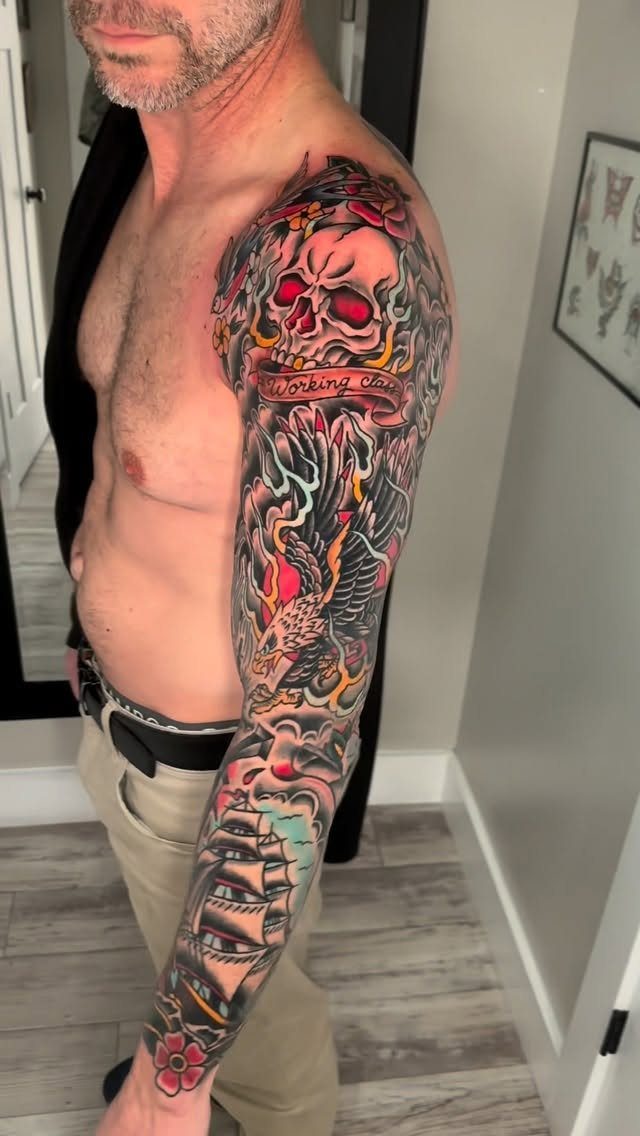
A sleeve built in this style layers multiple images into one cohesive piece: skulls, ships, eagles, banners and roses all share the same bold outline and limited palette, so they sit together without clashing.
Expect multiple sessions. A full sleeve needs mapping before the artist starts so each piece flows into the next.
Placement runs shoulder to wrist, and the design works as a half sleeve if you want to stop at the elbow. The impact comes from the whole, not one single image.
13. Snake Tattoos
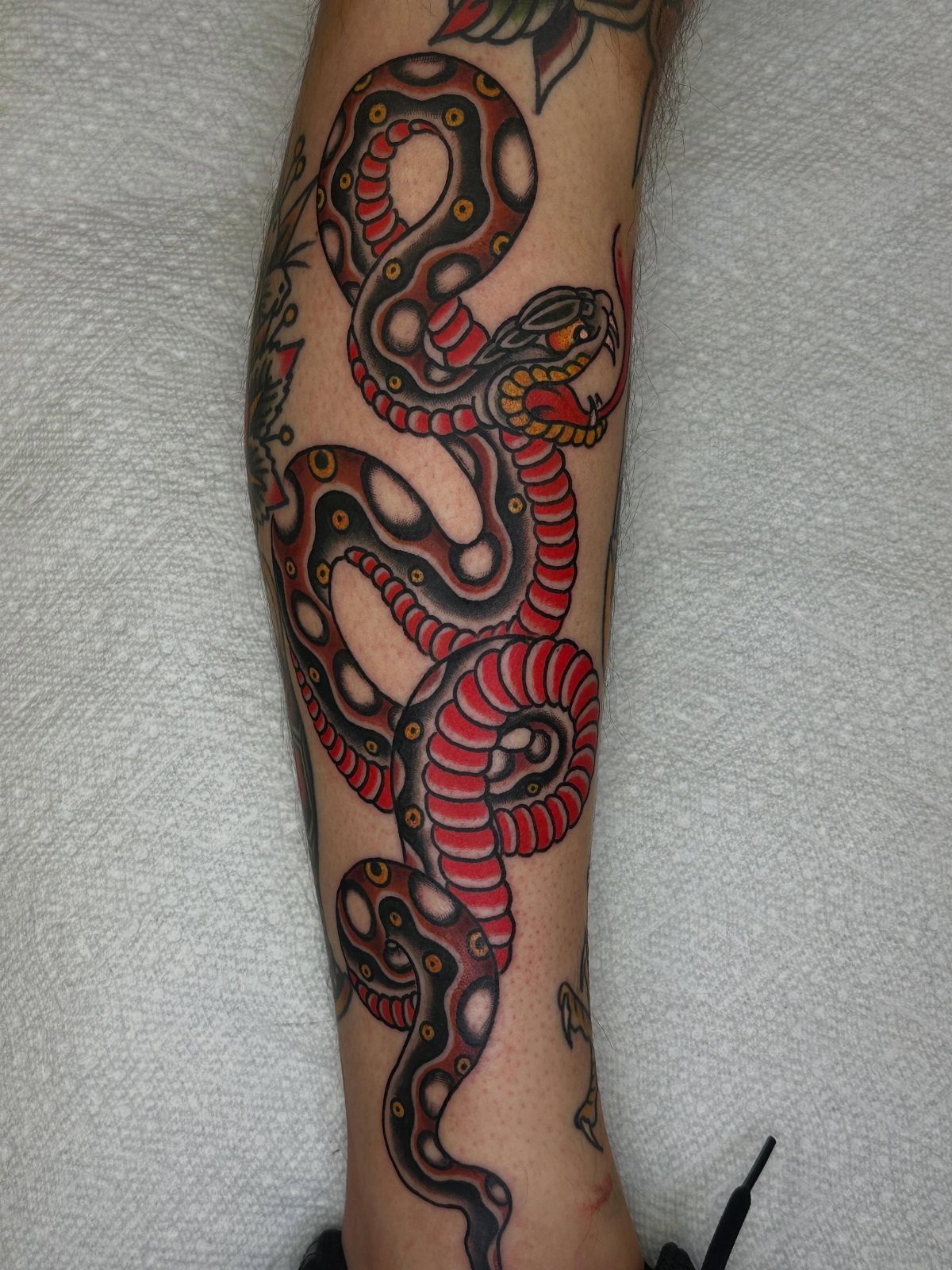
The coiled snake fits the curve of a calf or bicep naturally, and the scales get rendered in thick black with red or yellow shading for depth.
The form reads as transformation and shedding the past, potency held in check until it moves.
A rattle, forked tongue or open jaw adds aggression. Leave the mouth closed and the body relaxed if you want the power without the threat.
The image ages well because the outline stays strong and the coil gives you flexibility in placement.
14. American Traditional Tattoo Flash Sheets
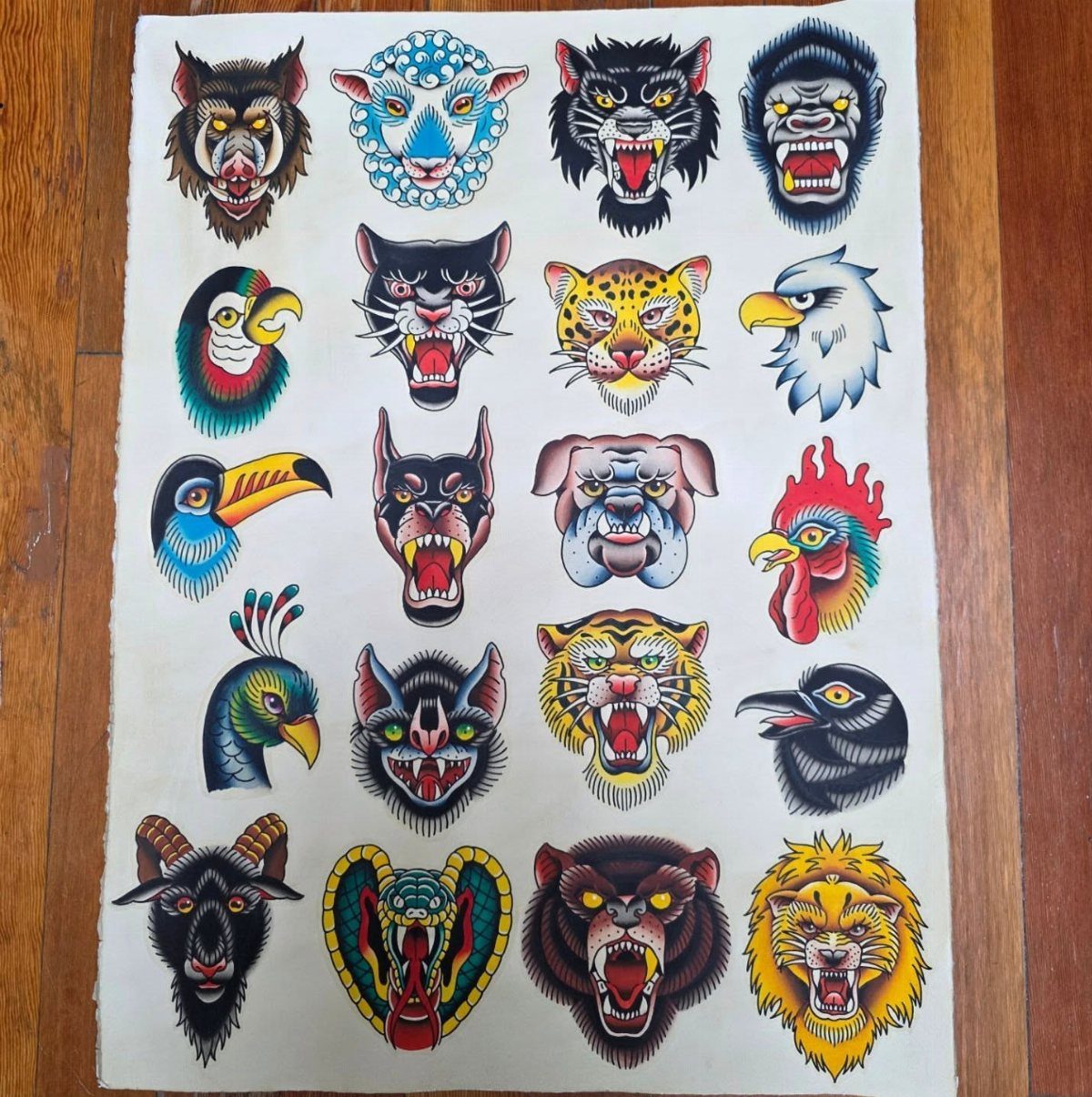
Flash sheets let you choose from a wall of pre-drawn designs instead of commissioning custom work. The sheets hang in the shop, filled with classic images: panthers, daggers, hearts, anchors, all drawn in the same bold style.
Walk in, point to one, get it that day. The design is already sized and priced, and the artist has tattooed it before, so the work goes faster.
You lose the custom angle, but you gain speed and cost savings. Flash still reads as intentional, not off the rack, because the tradition built itself this way.
Tattoo Longevity
Thick outlines and solid primary colors keep American traditional tattoos readable decades after the needle lifts.
Contrast matters.
High contrast between black outlines and bright fills ages better than gradients or closely matched tones. Simple designs stay clear longer because there are fewer fine details to soften.
Skin tone, sun exposure and how you care for your skin all affect how well a tattoo holds.
A design executed cleanly by an artist who understands the technique will outlast one where the line weight varies or the color packing is uneven.
Quality in execution decides more than the design itself. The style gives you an advantage, but the artist’s hand determines whether that advantage shows up.
Pain Levels
Pain tolerance varies, but American traditional tattoos may register higher on the scale because of the ink volume. Bold lines require wider needle groupings, and color packing to fill large areas with solid pigment takes time and pressure.
Design, size and placement all shift the experience. A small piece on the forearm will feel different from a full back panel, and bony areas hurt more than muscle regardless of style.
Most spots feel like a steady scratch or a sunburn while the needle runs.
That baseline holds, but the density of this style adds to the sensation. Sessions run longer for larger pieces, and fatigue makes the last hour harder than the first.
Plan for breaks during long sessions and expect the work to take multiple sittings if you are covering significant real estate.
Choosing Placement
The upper arm, chest, back and thigh offer the space intricate American traditional designs need to read clearly.
Larger compositions like sleeves, eagles or pinup girls benefit from that real estate because the bold lines and color blocks need room to breathe.
Smaller, high-impact pieces fit the hands, elbows, wrists or collarbone. A single swallow, dagger or anchor works in tight quarters because the silhouette stays simple and the outline does the work.
Visibility matters if you want the design seen. Forearms and calves stay visible in most clothing, while the chest and back stay covered unless you choose otherwise.
Skin texture and movement affect longevity. Areas that stretch frequently or rub against fabric may soften detail faster, so placement on stable, low-friction zones helps the tattoo age cleanly.