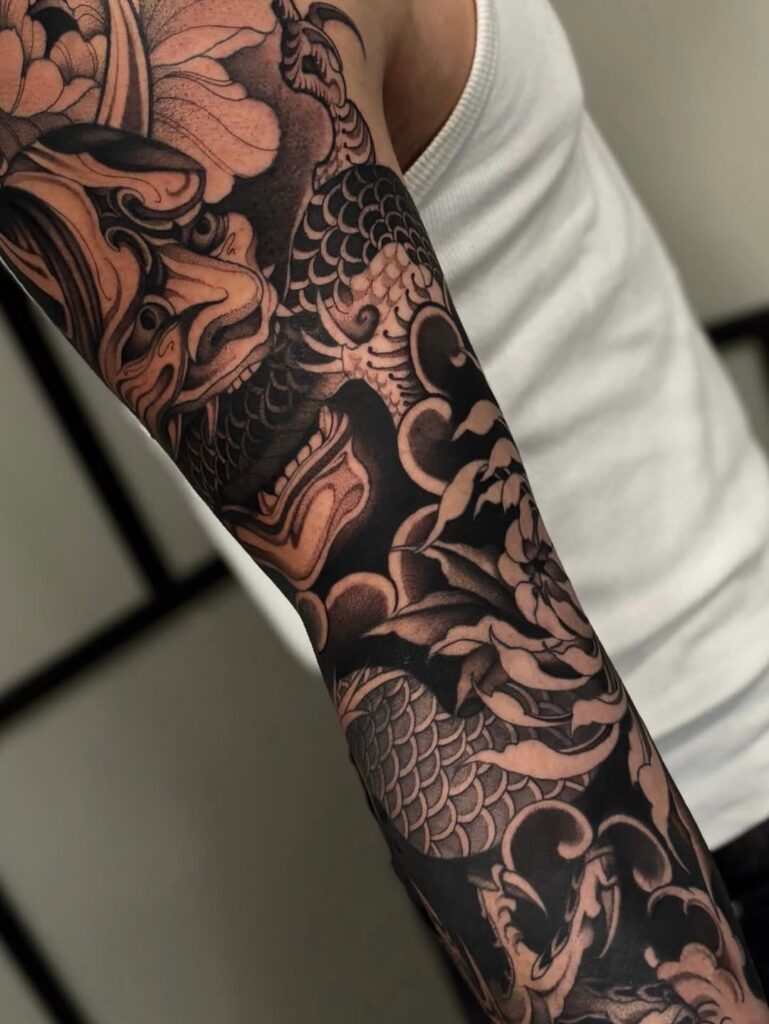
Japanese arm tattoos range from a single dragon curled on the shoulder to a full sleeve that wraps koi, waves, and oni across multiple sessions, and the right choice depends on how much story you want to tell in one piece.
A koi swimming upstream or a Hannya mask fits the forearm or bicep and reads as a complete image on its own, while a sleeve ties dragons, waves, foo dogs, and flower patterns into one continuous design from shoulder to wrist.
1. Japanese Dragon Tattoo
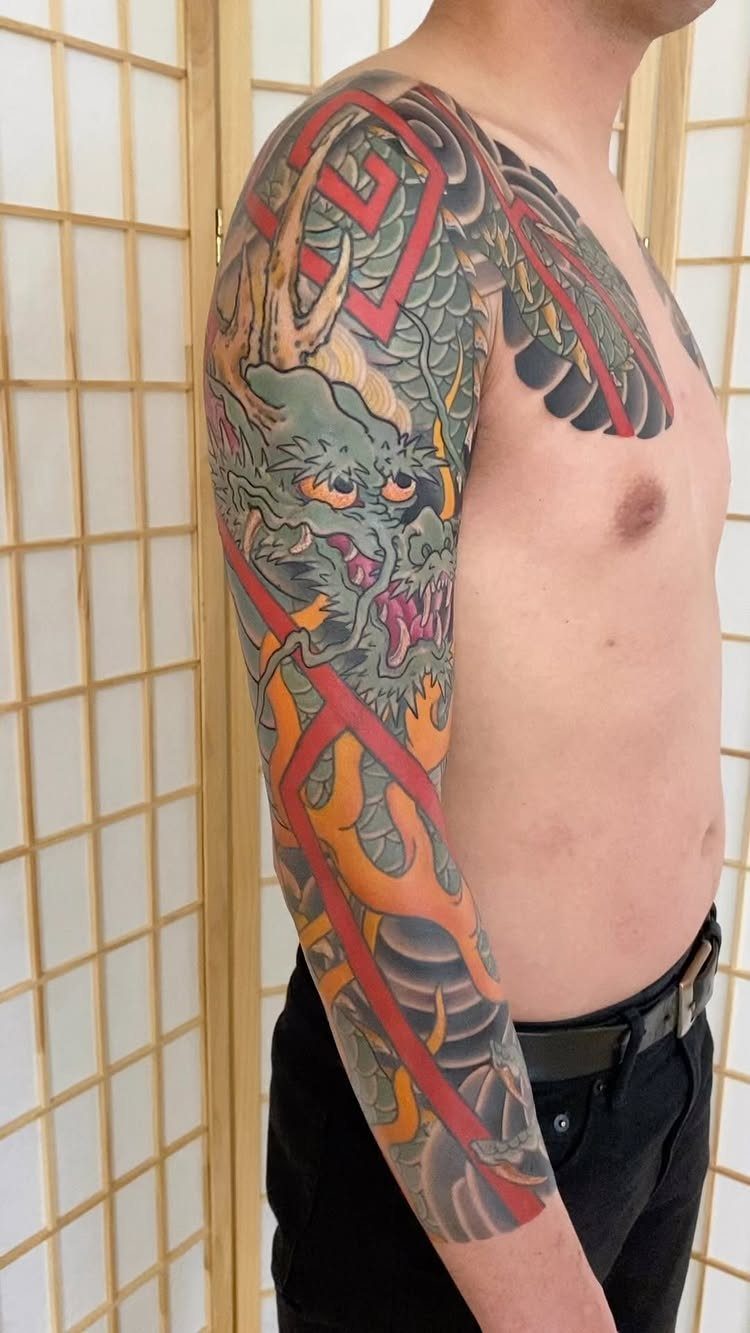
The dragon wraps around the muscle, its body curving to match the natural shape of the arm and shoulder.
In Japanese tradition, the dragon brings strength, wisdom, and good fortune, and the best pieces use that flowing form to move with you.
Color sets the mood. Red scales and geometric patterns like these give the design energy and structure, while black shading behind the figure makes it stand out.
The arm offers space to show the full body, from head to tail, so the dragon reads as one continuous piece rather than a fragment.
2. Koi Fish
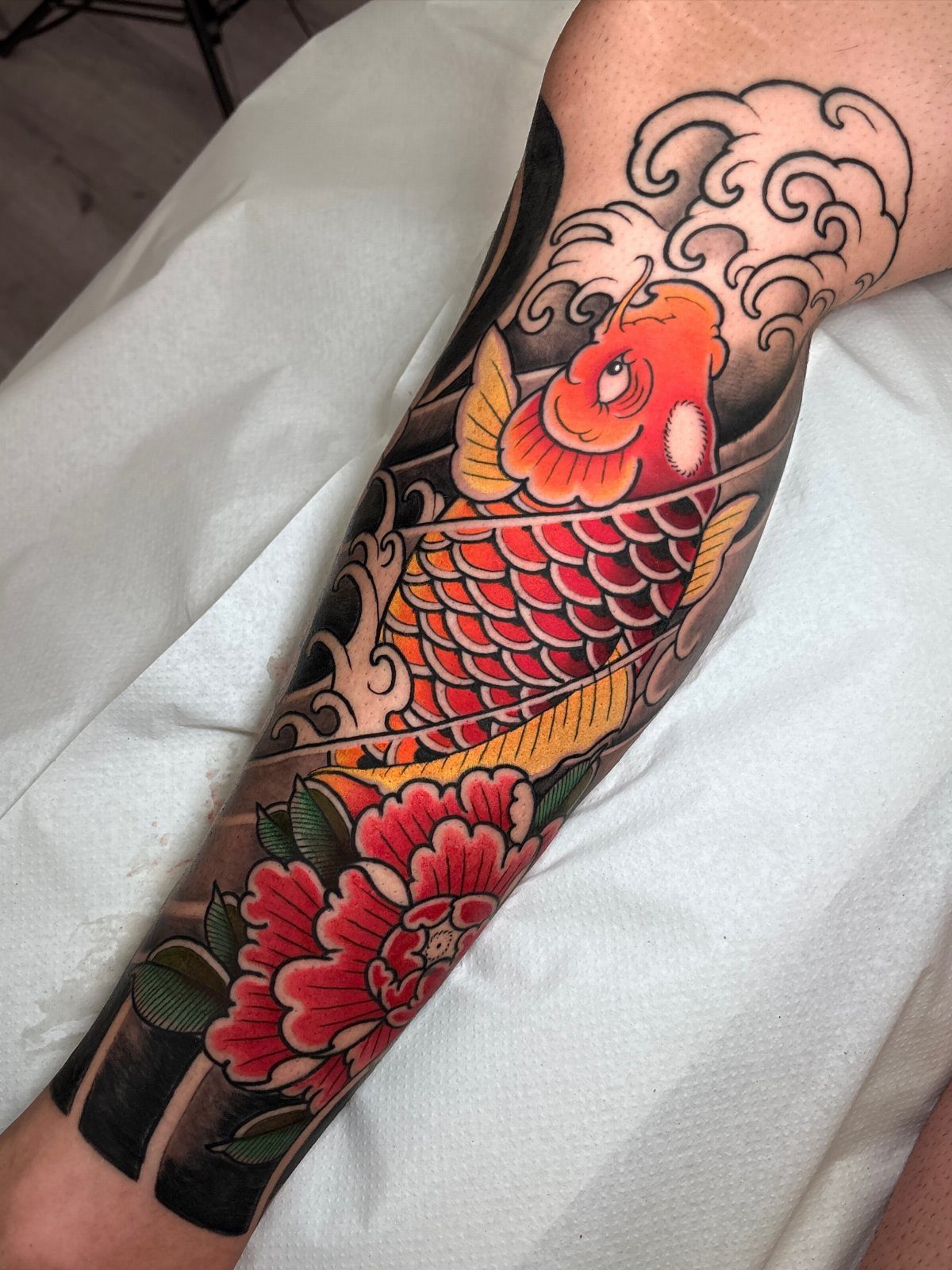
A koi swimming upstream, red scales bright against dark water, tells a story about perseverance and courage.
The design suits the arm because the fish can swim along the muscle, head angled up toward the shoulder or down toward the wrist, and the movement feels natural.
Peonies and waves fill the space around the koi and tie the composition together. Red and orange tones keep the piece warm, and the contrast between the fish and the water makes both elements stand out.
Placement along the forearm or shoulder offers a canvas wide enough to show the full body and the surrounding details without crowding.
3. Hannya Mask Tattoo
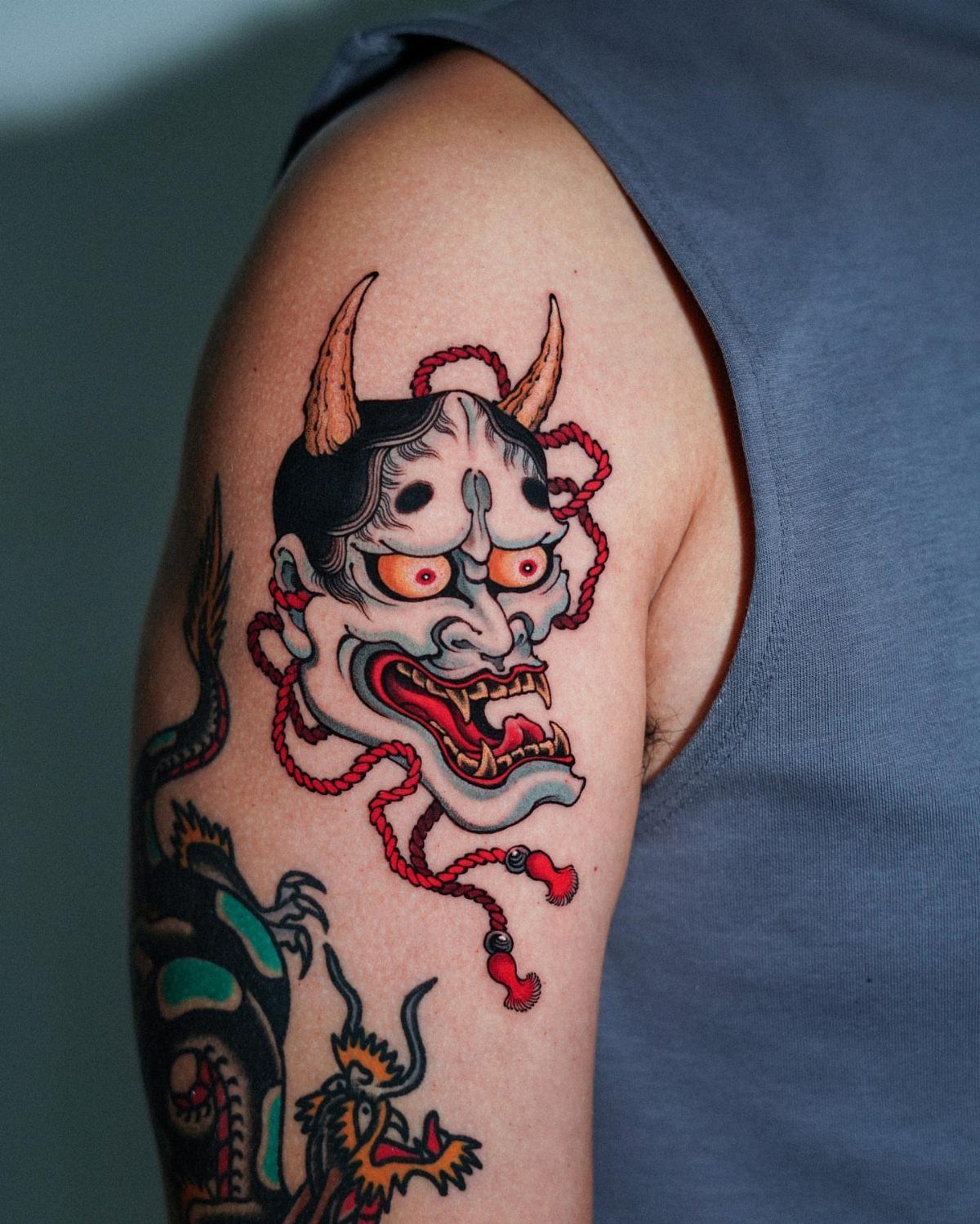
The Hannya mask sits high on the shoulder, horns pointing up, and the expression shifts depending on the angle.
In Japanese theater, the mask represents a woman transformed by jealousy into a demon, and the design carries that tension between beauty and rage.
Red cords and detailing around the face add structure and frame the features. The mask works well on the upper arm because the rounded surface matches the shape of the face, and the design reads clearly even from a distance.
4. Japanese Tiger Tattoo
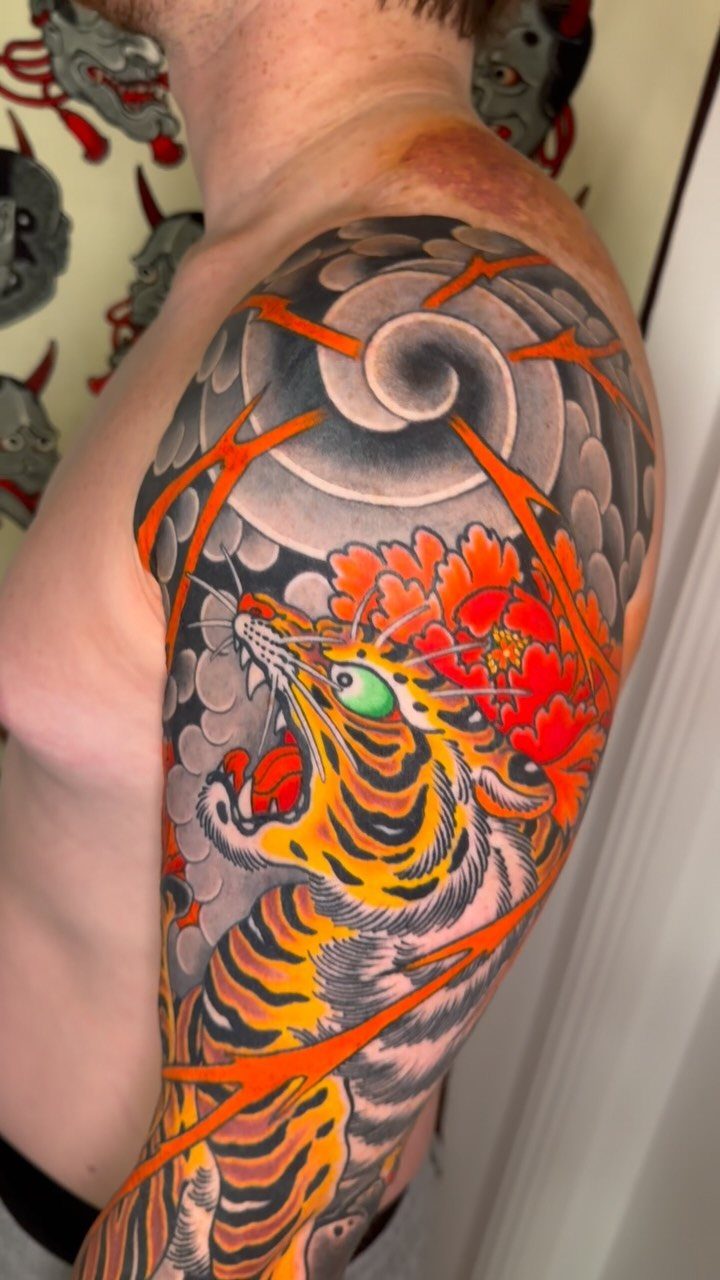
A tiger crouched among peonies and storm clouds, teeth bared, carries the weight of strength, courage, and protection.
The shoulder offers the design room to show the full body in motion, and the curve of the muscle makes the tiger look like it’s moving.
Red flowers and grey clouds balance the orange and black stripes of the tiger, and the contrast keeps each part of the design readable.
Placement on the shoulder or bicep lets the piece wrap around the muscle, so it shifts as you move.
5. Japanese Samurai Tattoo
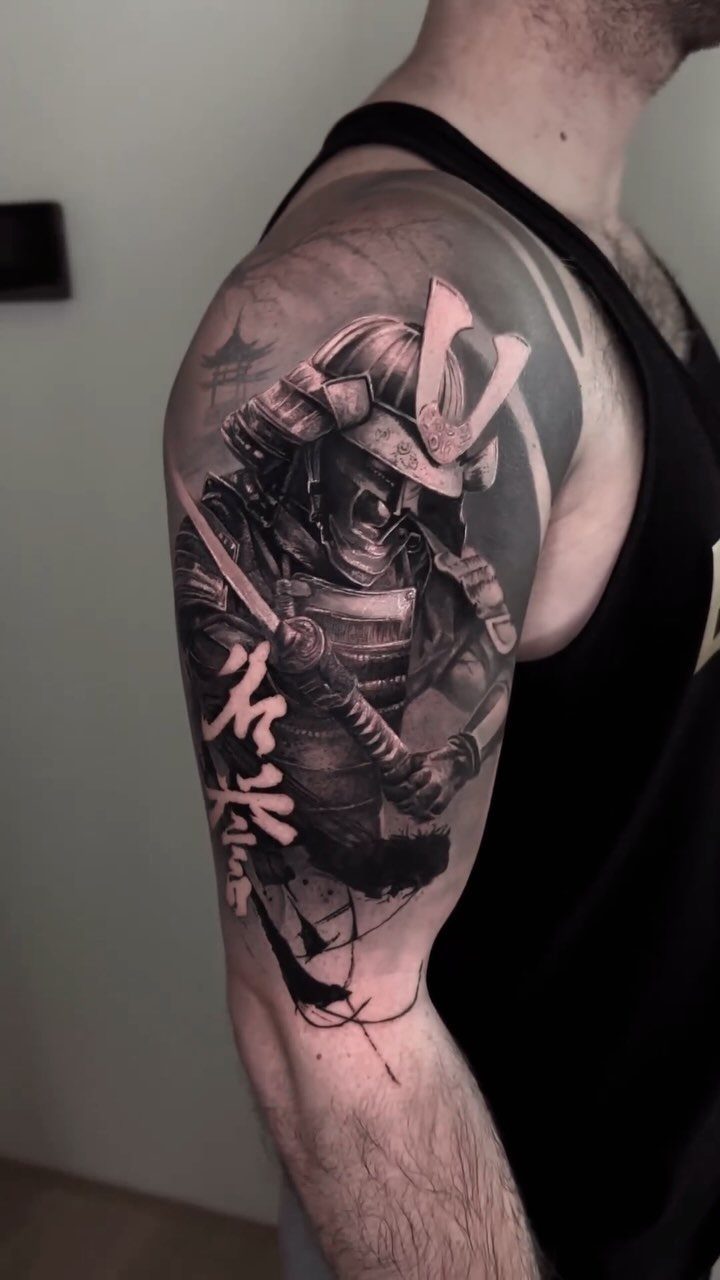
A samurai in full armor, sword drawn or helmet in view, speaks to discipline, honor, and loyalty.
The figure suits the shoulder because the vertical space fits the standing pose, and the black and gray shading gives the armor weight and texture.
Japanese calligraphy and background details like a temple or mountain add context and tie the piece to the warrior tradition.
Black and grey keeps the focus on the armor and the expression, and shading behind the figure separates it from the skin without adding color.
6. Japanese Sleeve Tattoo Arm
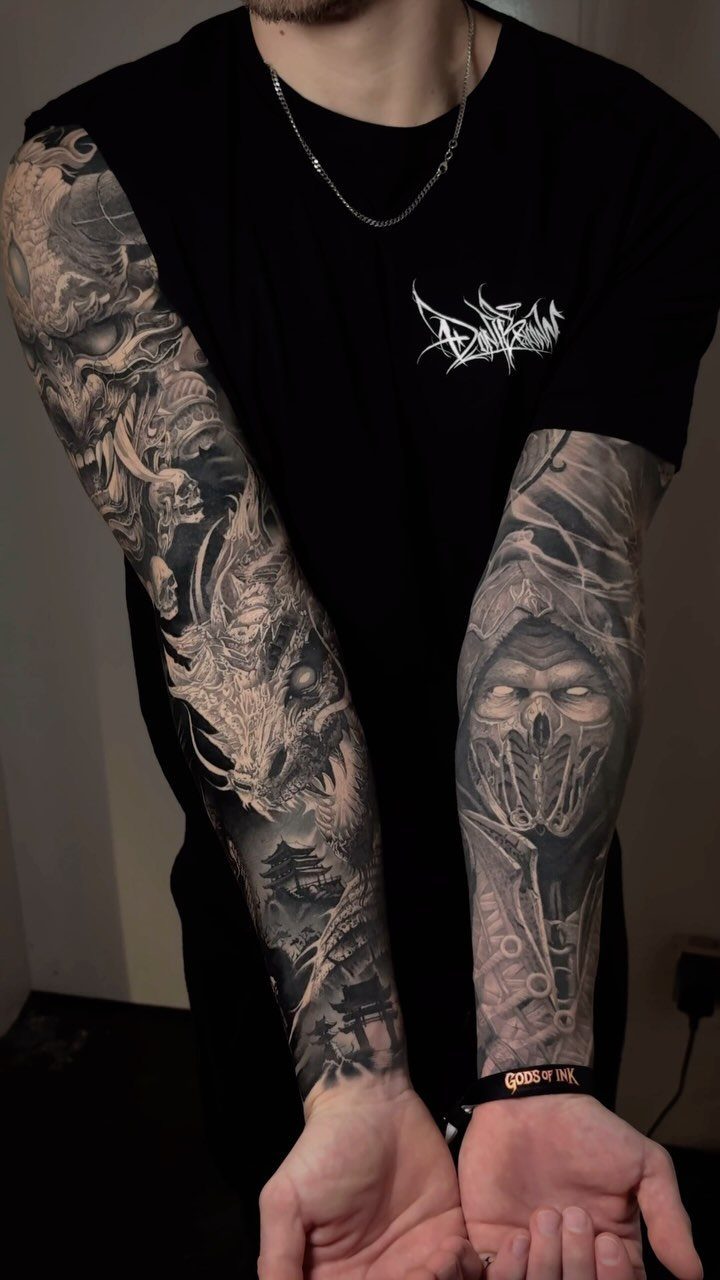
A full sleeve covers the arm from shoulder to wrist, and the continuous design ties multiple elements into one piece.
Building a sleeve takes multiple sessions and careful planning so each part flows into the next.
Start with the largest element, usually placed on the upper arm or shoulder, and fill the space around it with background details like clouds, waves, or wind bars.
A half sleeve stops at the elbow and gives you a smaller commitment, but a full sleeve uses the entire arm as one canvas and lets the design move with you.
7. Japanese Wave Tattoo
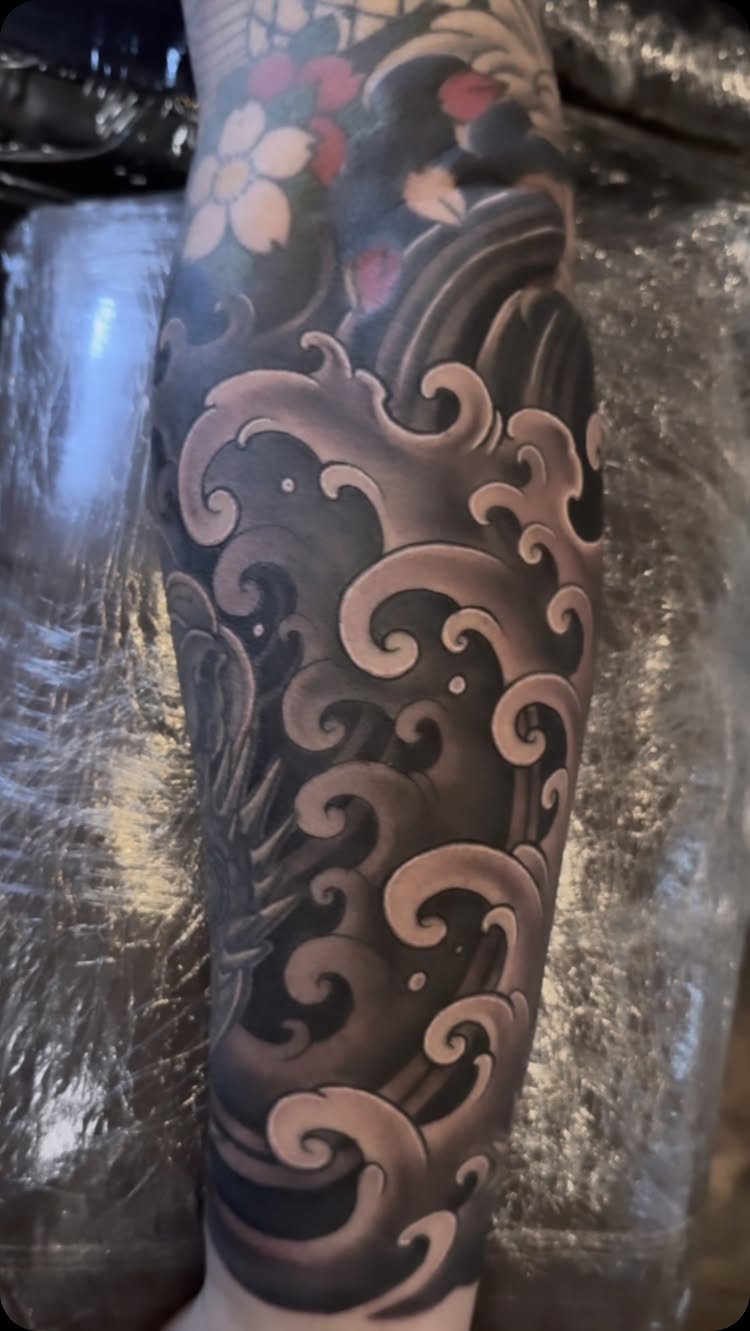
Waves roll across the forearm, peaks curling into foam, and the motion follows the natural line of the muscle. The design represents constant change and adaptability, and the black and grey shading keeps the focus on the water’s movement.
Cherry blossoms soften the top edge and tie the piece to the season.
The wave works well along the forearm because the shape matches the long, narrow canvas, and the placement lets you see the full curve without breaking the design.
8. Japanese Octopus Tattoo
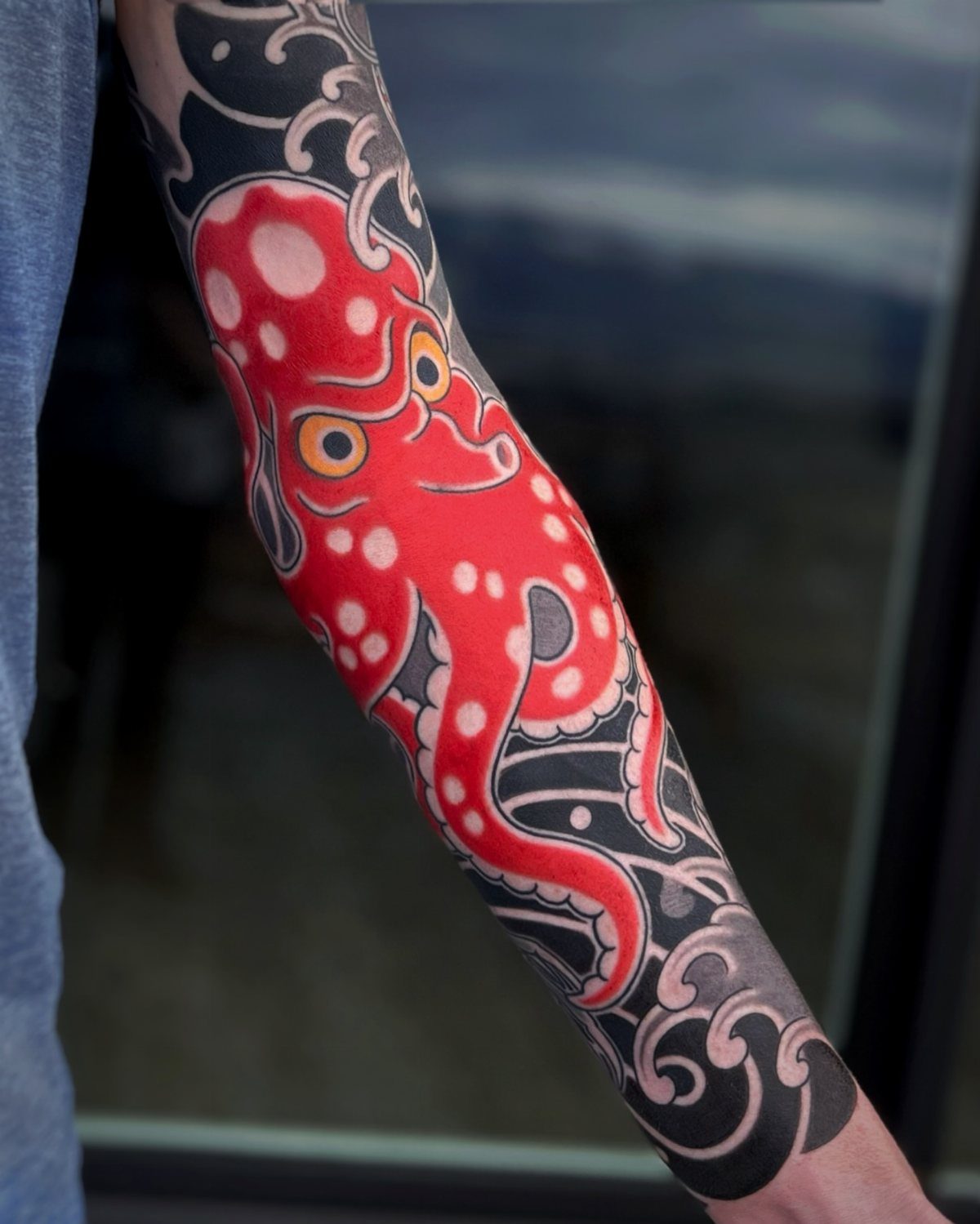
An octopus spreads its tentacles across the arm, red body set against black waves, and the creature moves with the muscle.
The design symbolizes intelligence and adaptability, and the white spots on the tentacles add detail without breaking up the form.
9. Japanese Flower Tattoo
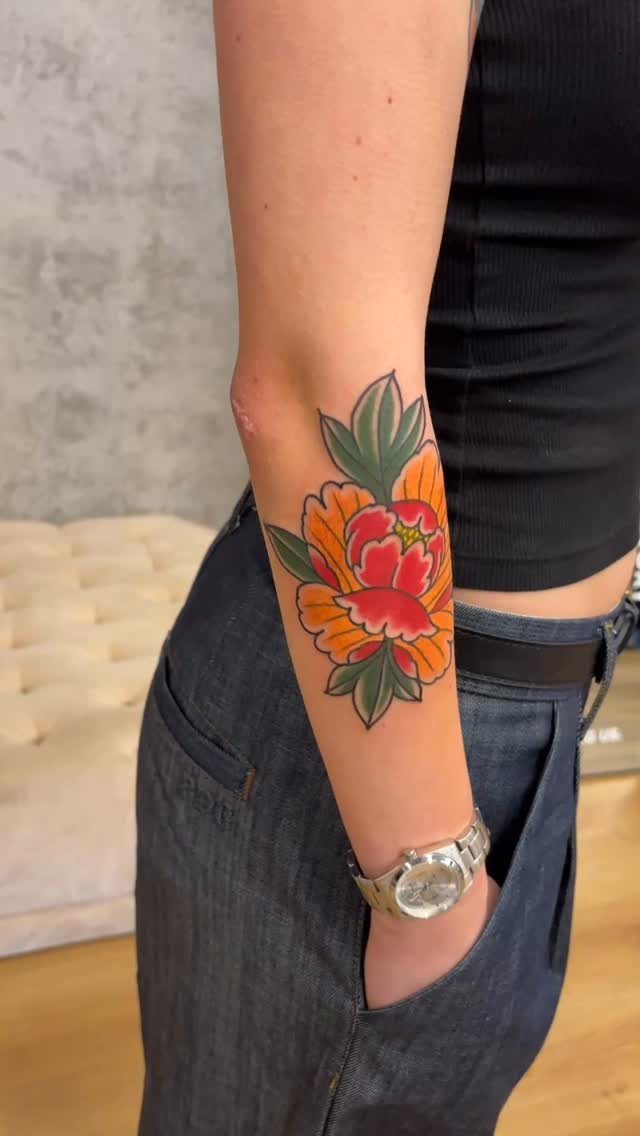
A peony in full bloom, orange petals opening outward, fills the forearm with color and detail. Japanese flower tattoos include chrysanthemums, cherry blossoms, and lotuses, each carrying its own meaning, but the peony represents bravery and prosperity.
Green leaves frame the flower and balance the warm tones. The forearm offers a vertical canvas that fits the stem and petals without cropping the design, and the placement keeps the piece visible.
10. Japanese Cat Tattoo
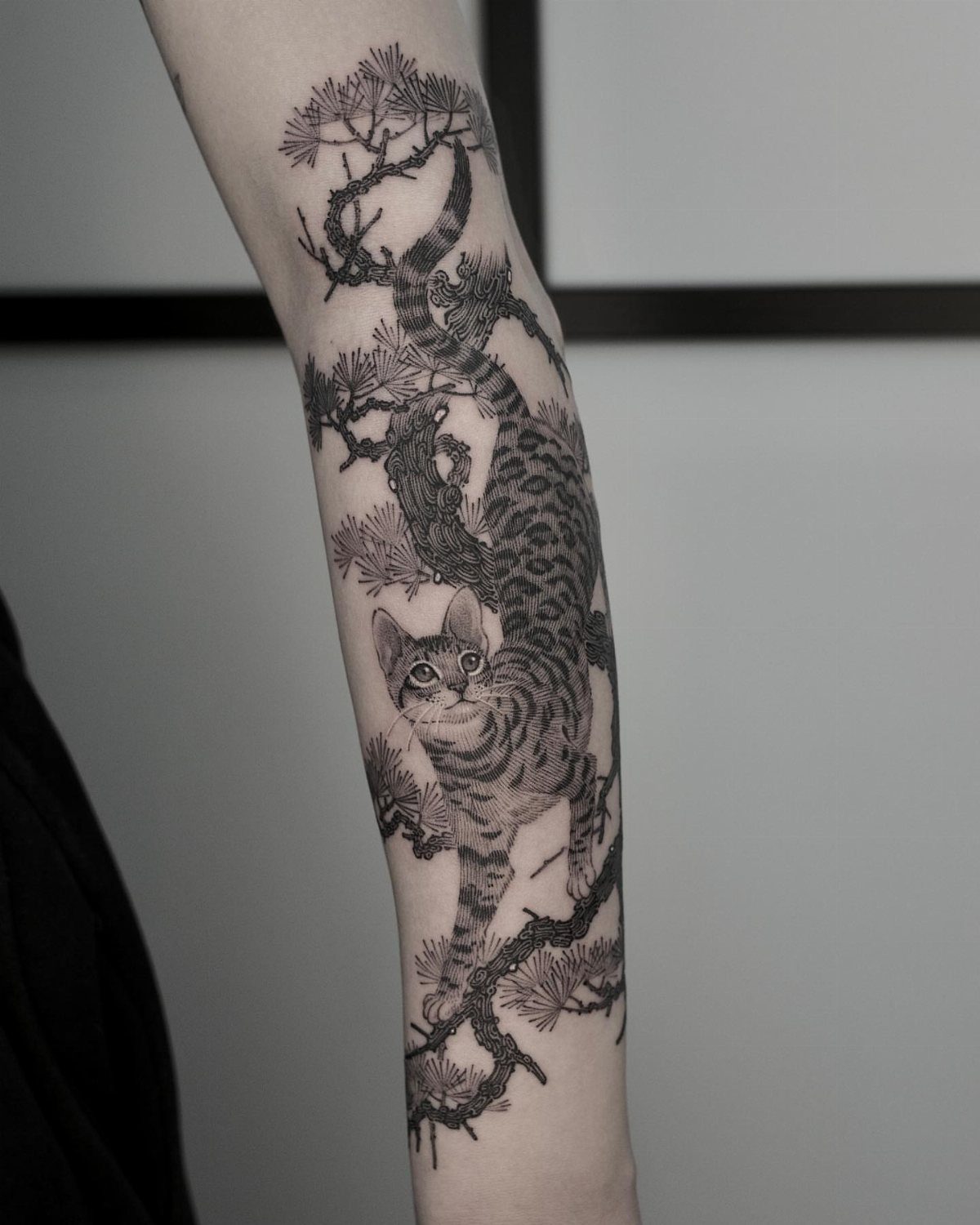
A tabby cat climbs a pine tree, claws gripping the bark, and the black and grey shading gives the fur texture and depth.
Cats pull luck and fortune in Japanese work, and a vertical layout follows the natural line of your forearm.
The pine tree adds height and ties the piece to nature. Placement along the inner or outer forearm lets the cat climb up the muscle, and the design reads clearly from a distance.
11. Japanese Oni Tattoo
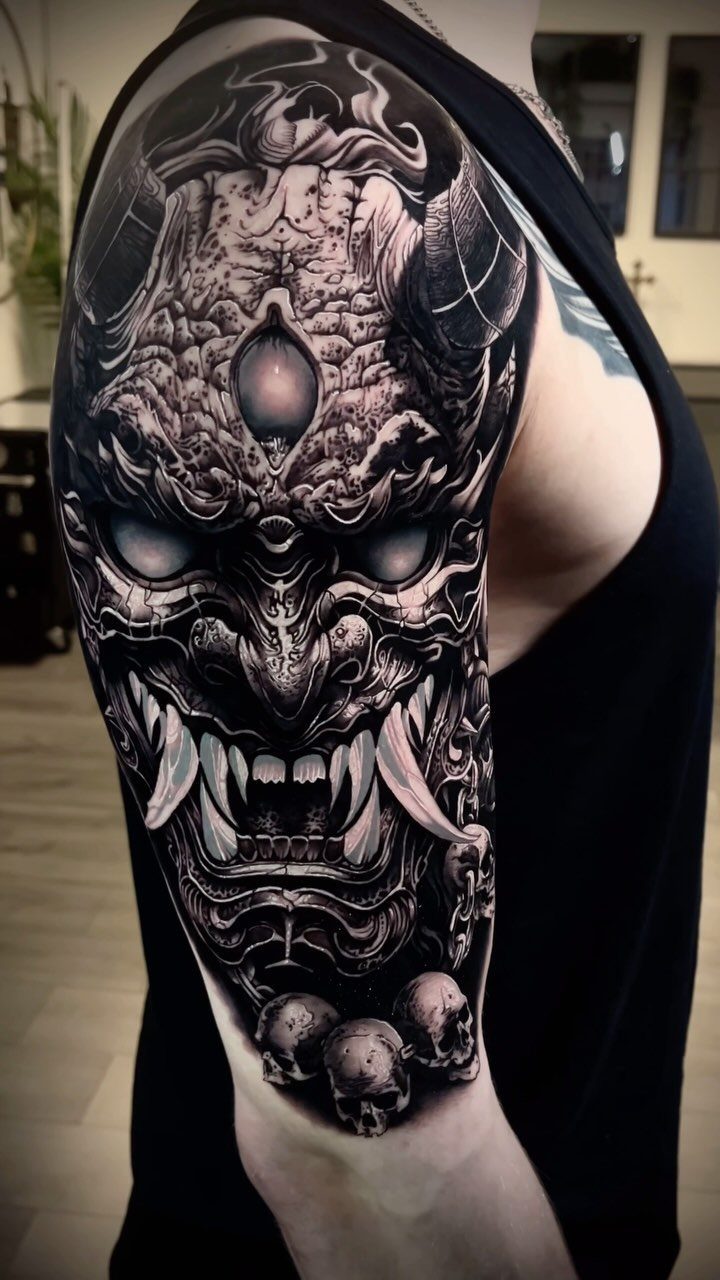
The Oni mask stares out from the upper arm, horns rising above the forehead, and skulls below the face add weight to the image.
Placement on the upper arm or shoulder fits the vertical shape of the mask and lets the design wrap around the muscle. The Oni works as a standalone piece or as part of a larger sleeve.
12. Daruma Tattoo
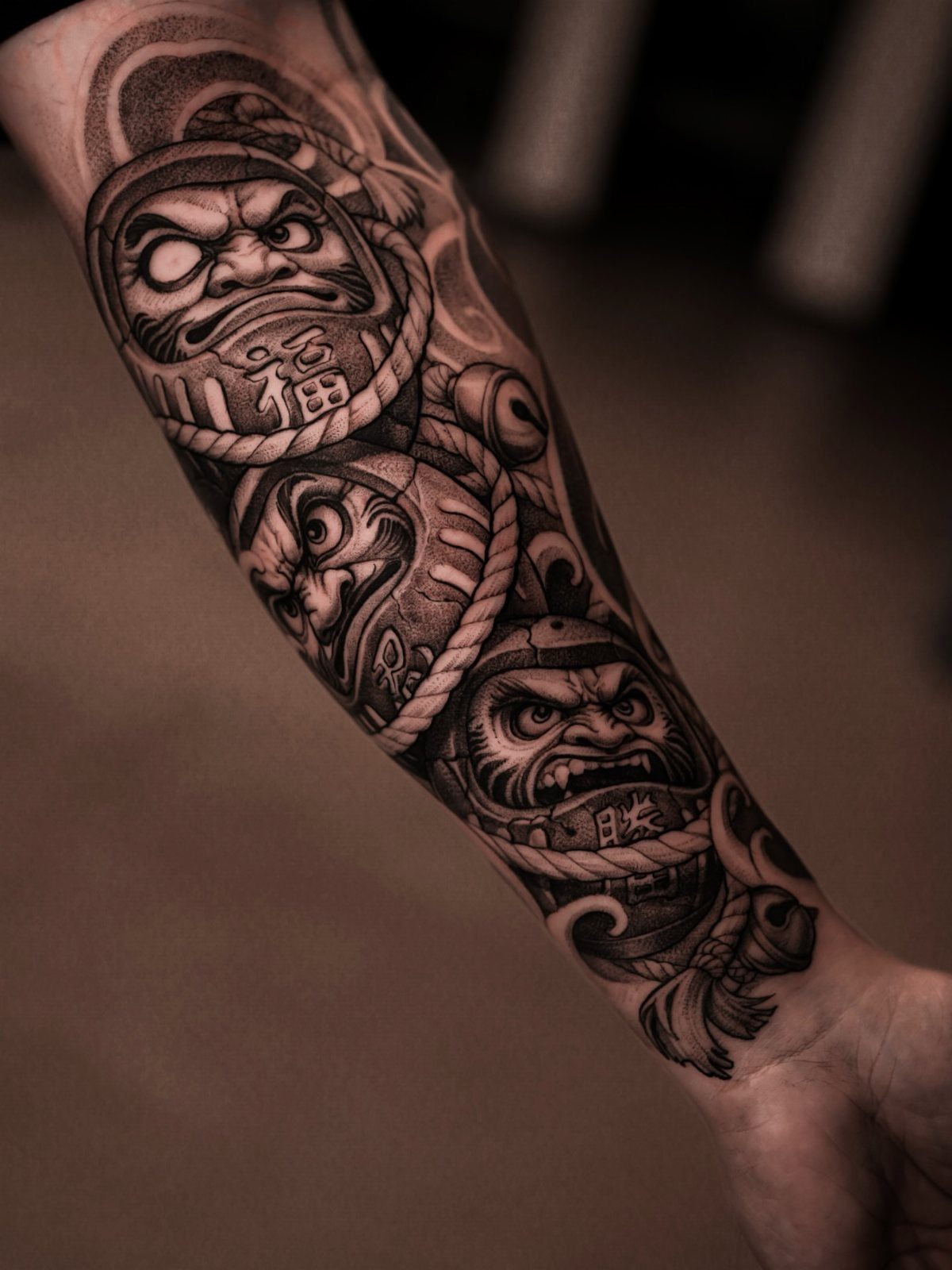
3 Daruma dolls sit in a row, round bodies stacked on the forearm, and the design symbolizes resilience and good fortune.
The dolls are traditionally weighted so they right themselves after being knocked over, and the image carries that same persistence.
Japanese cloud patterns fill the background and give the piece structure.
13. Japanese Crane Tattoo
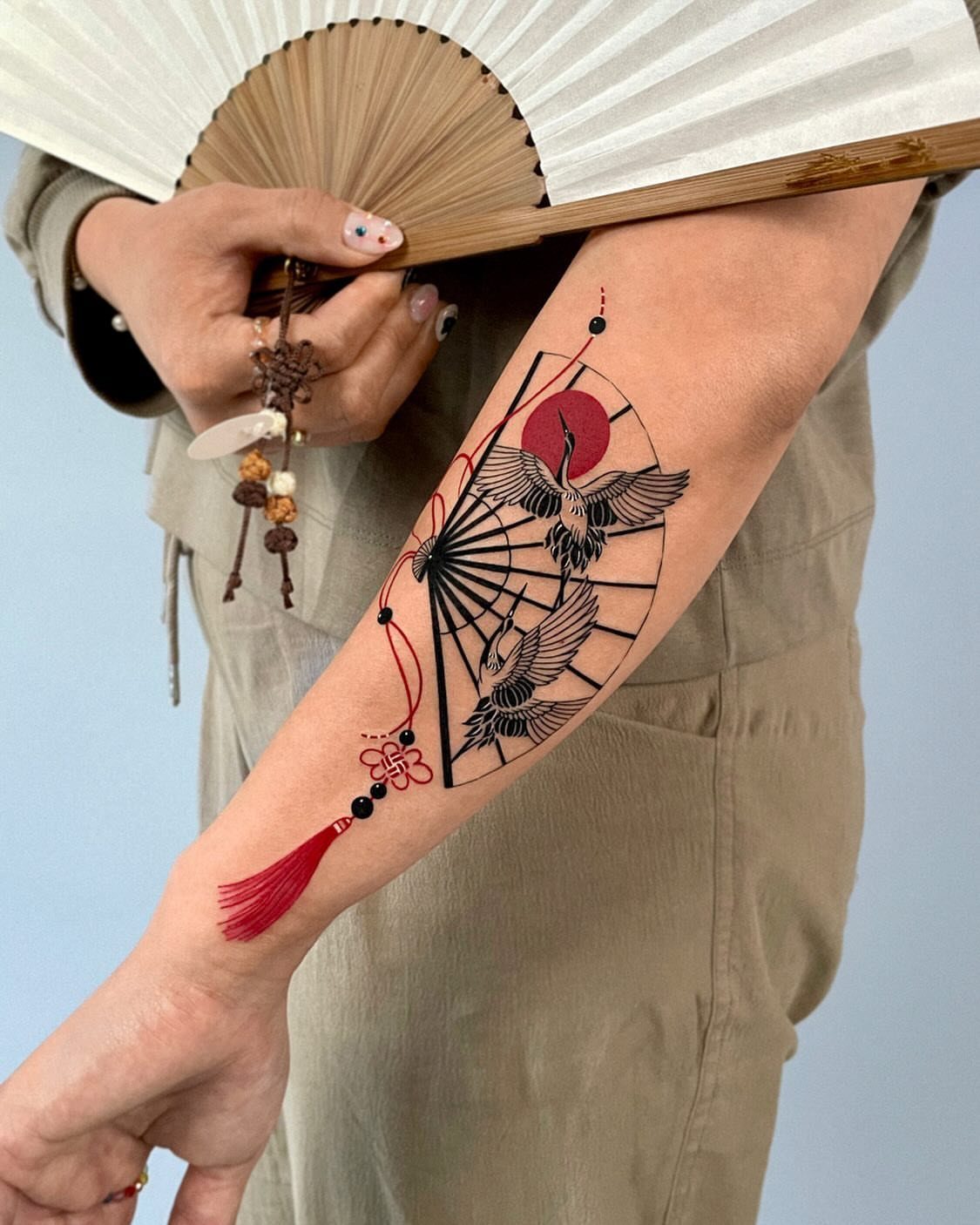
2 cranes face a red sun inside a fan shape, the tassel trailing below, and the design brings longevity and good fortune.
The crane is a symbol of peace and grace in Japanese tradition, and the fan adds structure to the composition.
The red sun contrasts with the black and grey birds, and the placement on the forearm keeps the piece visible without wrapping around the muscle.
The vertical layout fits the length of the forearm, and the design reads clearly as one image.
14. Japanese Foo Dog Tattoo
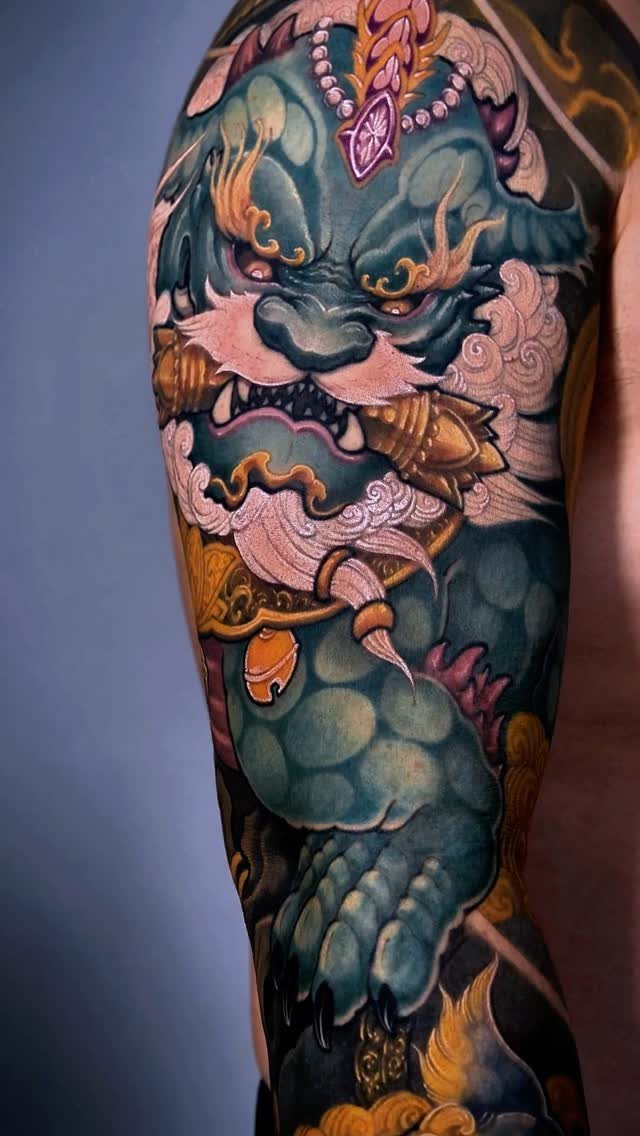
The Foo Dog sits on the upper arm, mouth open, blue mane curling around gold scales, and the creature guards against evil spirits.
Also called a lion dog, the design comes in pairs at temple entrances, but a single figure works well on the arm.
Color gives the piece its personality. Blue and gold tones separate the mane from the body, and the detail in the scales and fur adds texture.
The curve of the bicep follows the shape of the figure, and you get enough width to include detail without stretching the design thin.
15. Japanese Lotus Tattoo
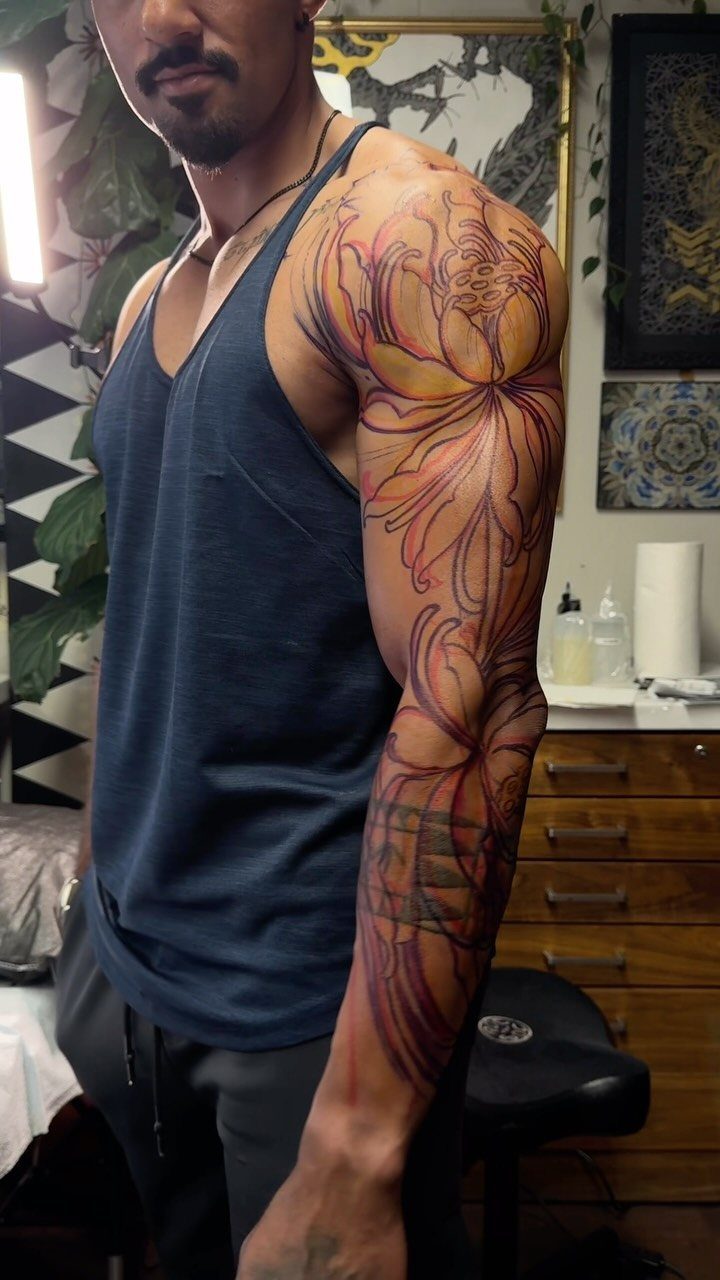
A lotus opens across the shoulder and upper arm, pink petals layered outward, and the flower represents purity and spiritual growth.
The lotus rises from mud to bloom above the water, and that journey makes it a common choice for someone marking change or resilience.
Placement on the shoulder gives the flower room to spread, and the curve of the muscle follows the rounded shape of the petals.
Shading behind the flower separates it from the skin and makes the design stand out. You can stop here or build outward later if you want more coverage.
Cultural Significance of Tattoos
Irezumi dates back around 5,000 B.C., starting with tattoo-like marks on clay figurines, and written records from 300 A.D. describe designs that carried spiritual meaning and marked status.
In the Yayoi period, Chinese visitors noted tattoos in Kyushu that served both purposes.
Around 300–600 A.D., during the Kofun period, tattooing began to take on a different role.
Tattoos moved from ritual to punishment, marking criminals rather than honoring position. The Edo period (1603–1867) turned things around again.
Woodblock printing advanced, and the 1757 Japanese release of Suikoden, a Chinese novel about rebel courage, gave artists new imagery to work with. Chinese influence and local craft merged, and what developed was the tattooing tradition still practiced now.
Traditional Tattooing Methods
Tebori, the hand-poked method, uses a tool called a sashibo: bamboo sticks fitted with needles attached by cord or string. The artist dips the tool in ink and punctures the skin one mark at a time.
A machine needle cycles through about 100 strikes a second. Tebori is slower.
The facts disagree on pain. Tebori takes longer, and some say that extra time makes it hurt more.
Another says it hurts less and heals faster than machine work. Either way, tebori takes longer and requires more sessions to finish.
The first tattoo machine arrived in 1891, so everything before that relied on hand tools. A few artists still offer tebori, and some clients prefer the traditional method.
Design Elements and Storytelling
Japanese tattoos pull from mythology and use each image to carry a specific meaning.
A client who wants to represent bravery might choose a samurai or lion, while someone marking struggle or recovery might go with a phoenix or koi. The design tells a story, and the symbols inside it shape that story.
Most designs start with a gakubori background, clouds or waves, then add the figure or scene over it.
That structure ties the elements together and gives the piece depth. The background moves through the space, and the main figure sits in front of it.
Large designs need room to show the full story.
An arm gives you enough canvas to include background, main subject, and supporting details without cropping the composition. The design reads as one piece rather than fragments scattered across the skin.
Frequently Asked Questions
What are those Yakuza tattoos called?
Irezumi refers to traditional Japanese tattooing, a style that became linked to organized crime after Japan banned the practice in 1870.
The elaborate full-body designs depicting mythology and folklore are still called irezumi, though tattoos are legal in Japan now. Horimono describes the large-scale body tattoos many Yakuza wear, covering the torso, arms and legs to signal commitment and resilience.
What is an arm sleeve tattoo?
A full sleeve covers the arm from shoulder to wrist with a continuous design that ties multiple elements into one piece.
The design flows as one image rather than separate parts, and building one takes multiple sessions to plan how each part connects. A half sleeve runs shoulder to elbow, a full sleeve shoulder to wrist.
What do Japanese arm tattoos mean?
Japanese arm tattoos pull from mythology, and each image carries a specific meaning that shapes the story.
Dragons signal wisdom and protection, koi climbing a waterfall stand for ambition through hardship, and tigers mean power held in check. Samurai designs speak to discipline and honor, and the lotus marks purity and spiritual growth.