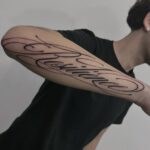
Placement decides how visible the commitment is, and whether you’re looking at a quick forearm piece or a high-pain spot like the eyelids or forehead that most shops will ask you about twice before starting.
Hand and neck tattoos fade faster than chest or thigh placements due to sun exposure and constant movement, so factor in touch-ups within a year or two if you choose those areas.
Splitting the phrase across both thighs turns it into something you see only when sitting, while a forehead or neck tattoo sits front and center in every interaction.
1. Fear God Tattoo on Chest
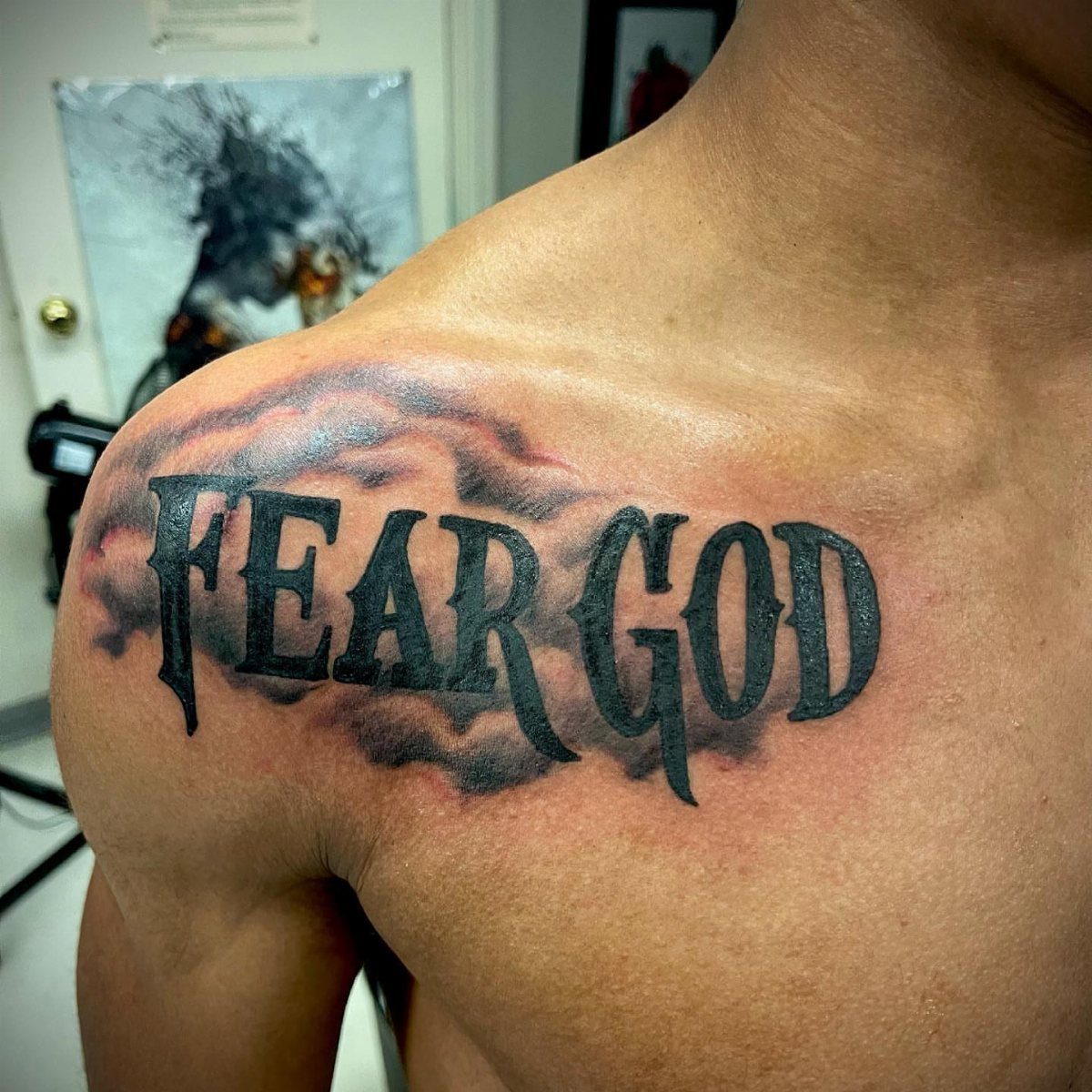
Placing "Fear God" across the chest puts the words close to your heart, giving the phrase a visible connection to faith.
The chest offers enough room for large letters and decorative elements like clouds or rays, though most pieces stay simple to keep the message direct. Expect moderate pain along the sternum and collarbones, less over the pectoral muscle.
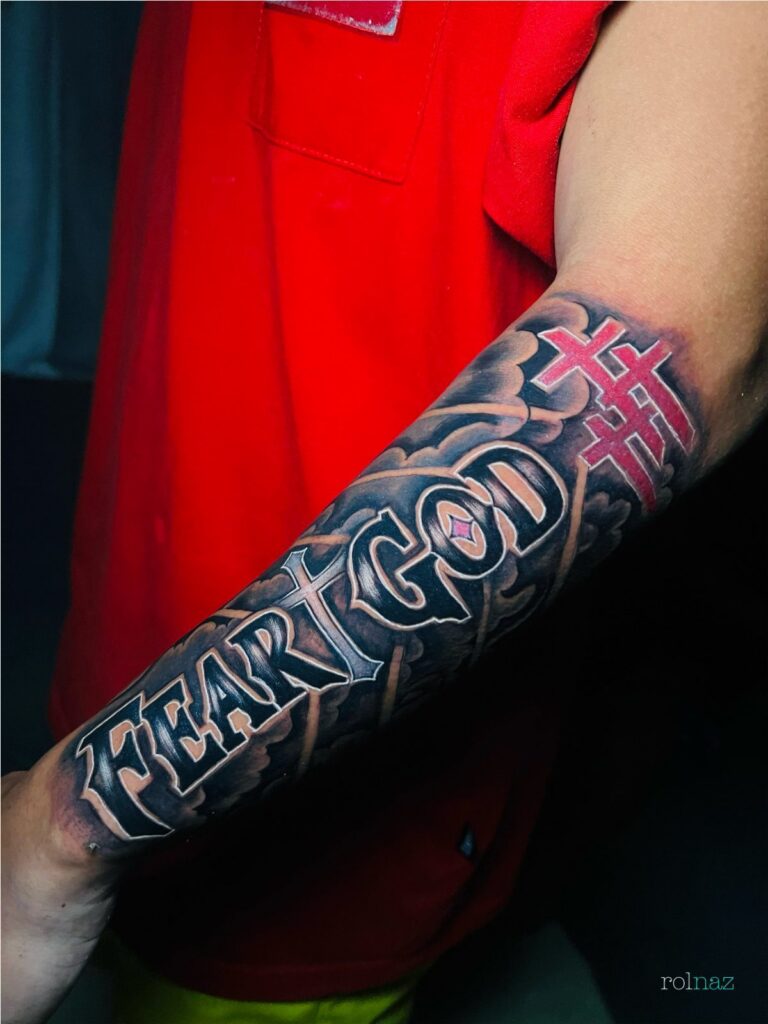
2. Fear God Tattoo on Forearm
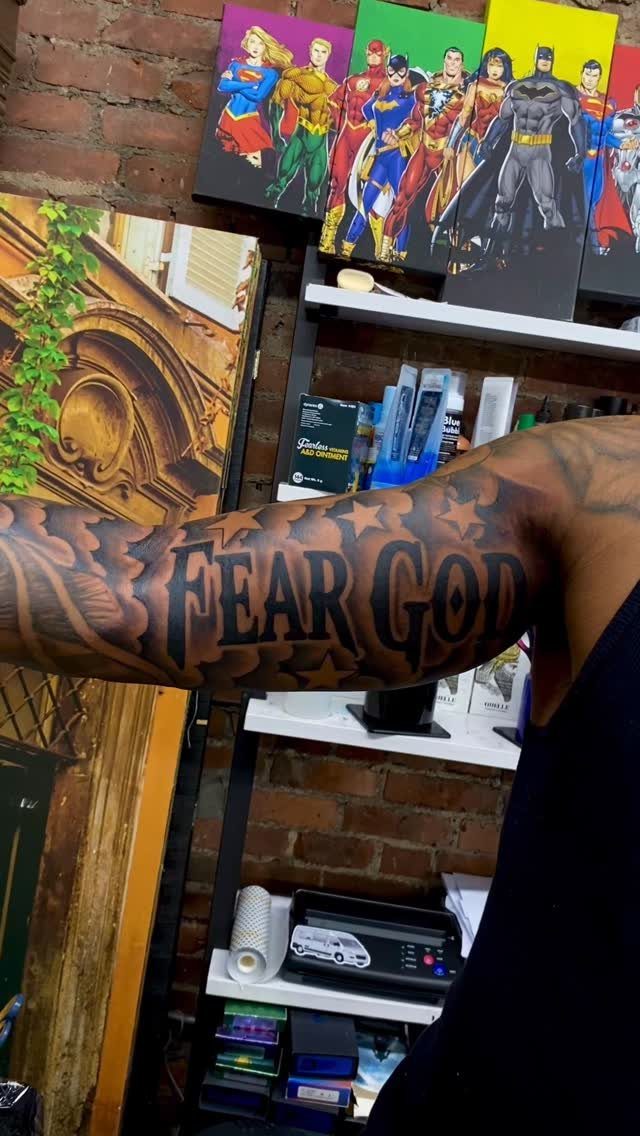
A forearm tattoo keeps "Fear God" in view, making it easy to see throughout the day.
Bold black letters in a sans-serif or block style read cleanly without extra shading or embellishments, and the flat surface of the forearm holds straight lines well.
Pain on the forearm is manageable for most people since there is muscle padding between skin and bone.
The outer forearm hurts less than the inner side near the wrist. Healing goes smoothly if you keep the area clean and avoid tight sleeves that rub the ink during the first few days.
3. Fear God Tattoo on Neck
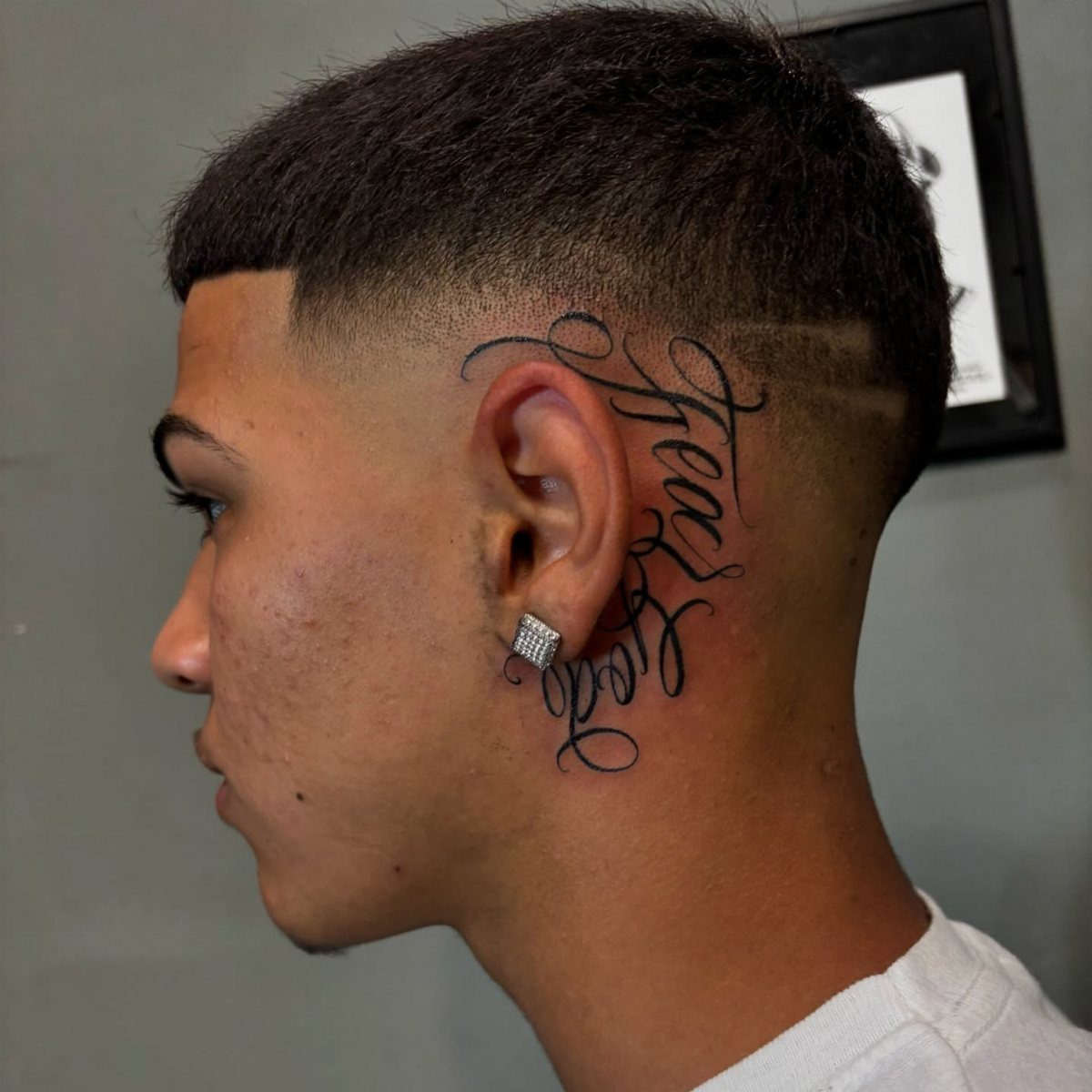
Cursive script along the side of the neck reads as intimate and personal, a placement often chosen for reminders meant more for yourself than for display.
The thin skin and proximity to bone make this one of the more painful spots, but the small scale means sessions rarely exceed an hour.
Lettering here needs to be sized carefully so each letter stays legible once healed.
Script that is too tight or too ornate can blur together over time. Neck tattoos are also harder to conceal, so factor that in if your workplace has visibility rules.
4. Fear God Tattoo with Crosses
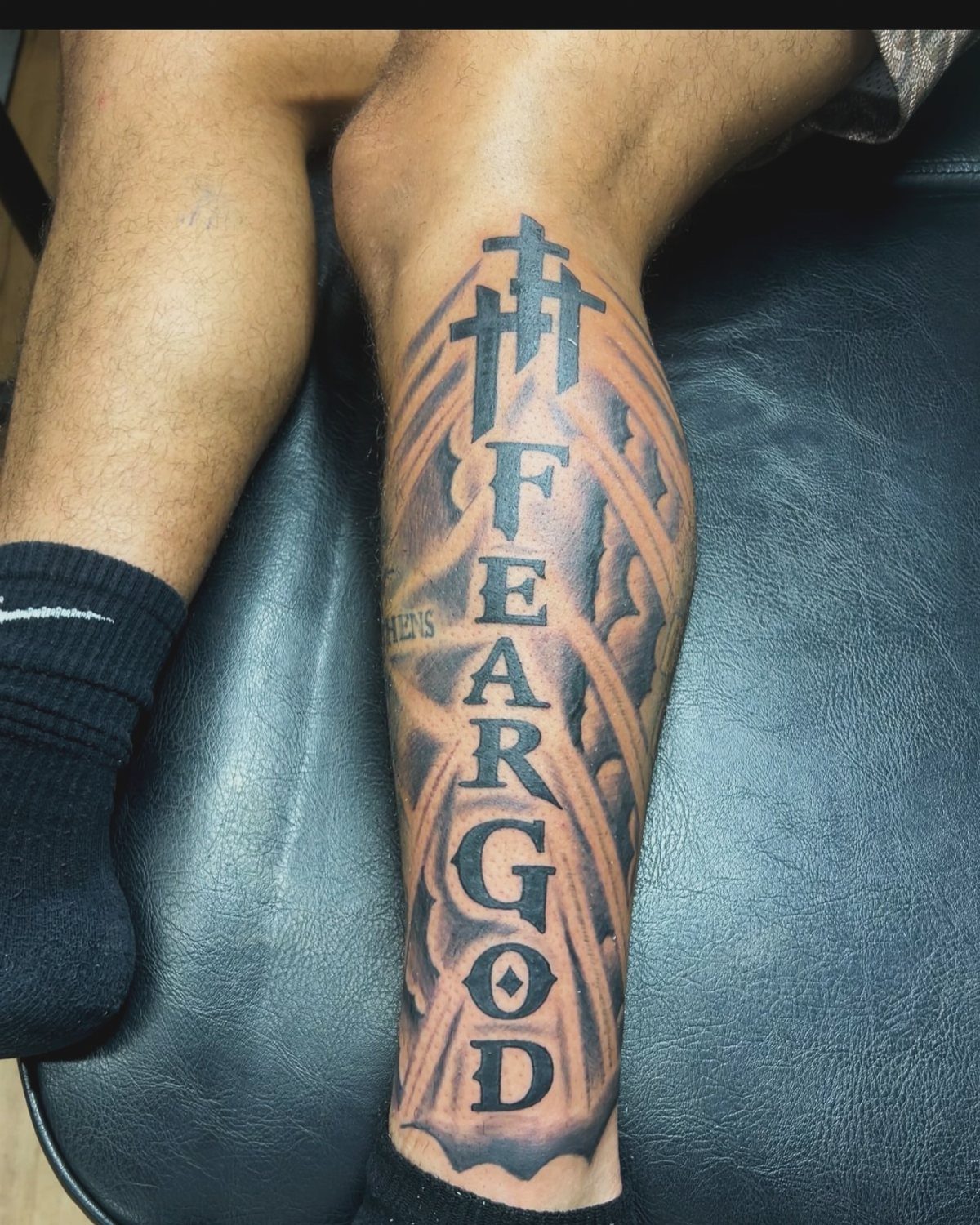
Adding crosses above or below "Fear God" reinforces the religious message without requiring extra text.
Vertical placement down the leg or forearm works well when you want to stack the words and symbols into a unified composition, and the shading around the crosses gives the piece depth.
Crosses can be simple outlines or filled in solid black depending on how much contrast you want. Some designs include angels, rosary beads or scripture references, though each addition extends session time and cost.
5. Fear Nothing but God Tattoo
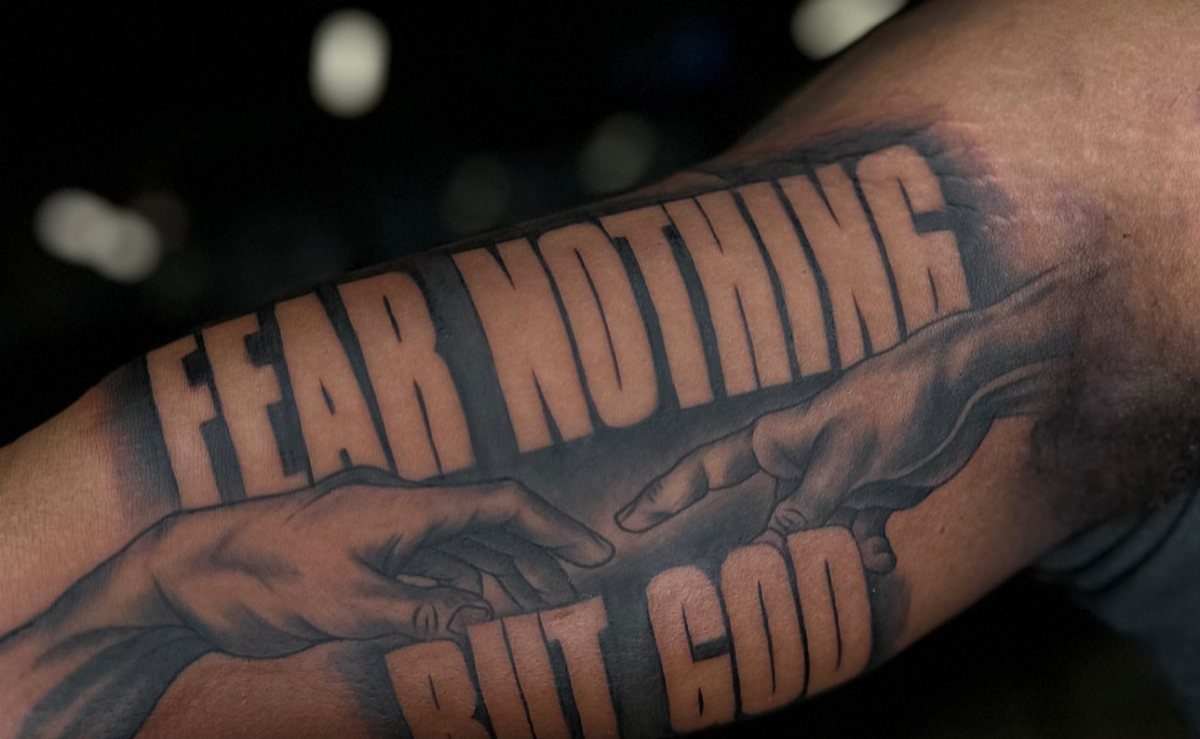
"Fear Nothing But God" stretches the phrase into a fuller statement, often wrapped around a central image like Michelangelo’s hands.
The black and grey style here gives the text and imagery a cohesive look, and the circular arrangement draws the eye inward toward the focal point.
This design requires enough real estate to fit both text and artwork, so the upper arm or thigh works better than smaller spots like the wrist.
Lettering that curves around an image needs careful spacing so the words still hold their shape. Cost varies by artist but expect to pay more for custom compositions than for standalone text.
6. Fear God Tattoo on Hand
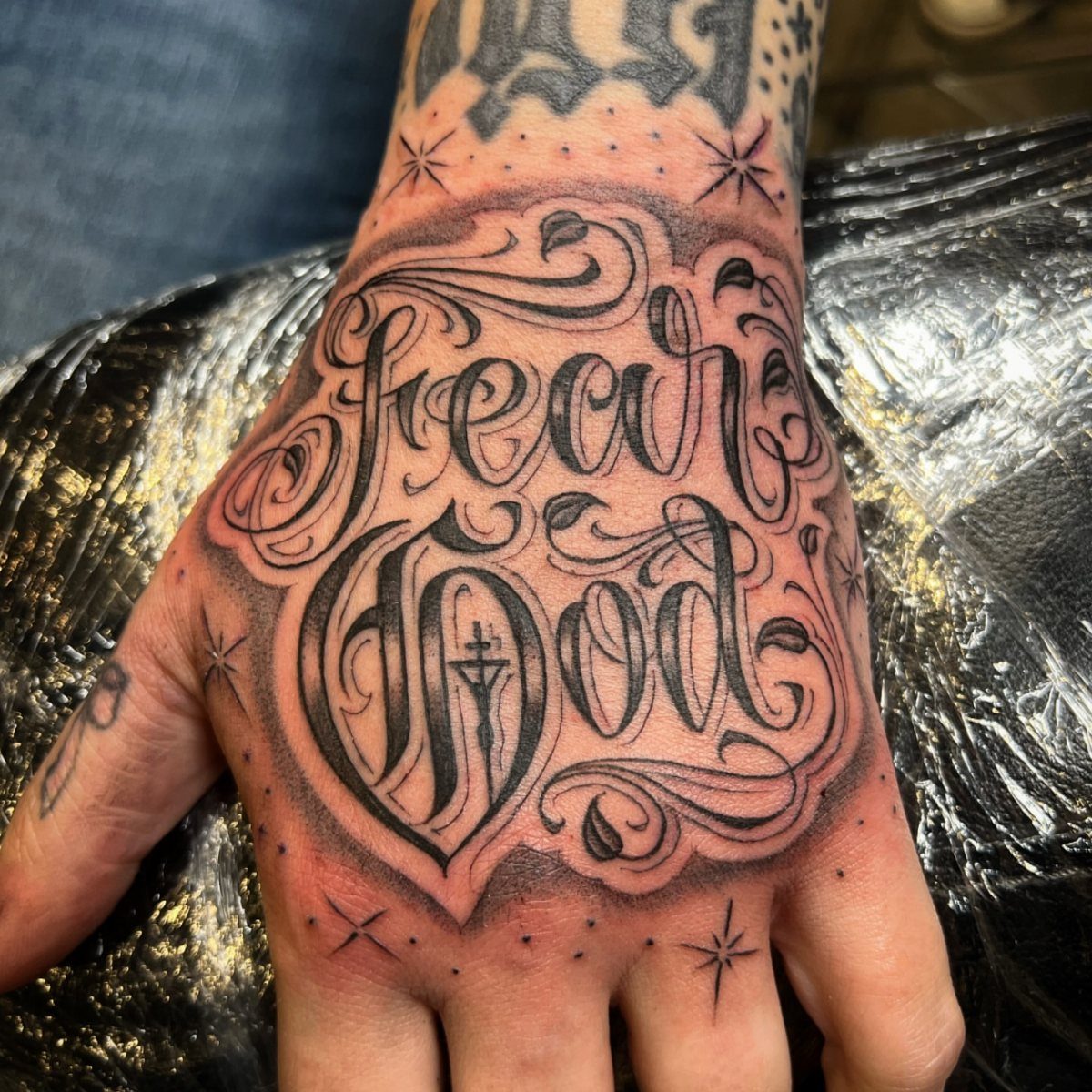
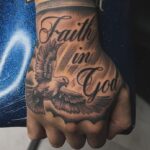
A hand tattoo puts "Fear God" in one of the most visible spots available, a placement that signals commitment both to the message and to wearing ink that cannot be easily covered.
Cursive script with decorative flourishes softens the look compared to block letters, though any style on the hand fades faster than on other areas due to frequent washing and sun exposure.
Hands rank high for pain since skin sits directly over bone and tendons, and the back of the hand has little padding. Touch-ups are common after a year or two to restore crisp lines and solid black fill.
7. Fear God Tattoo on Thighs
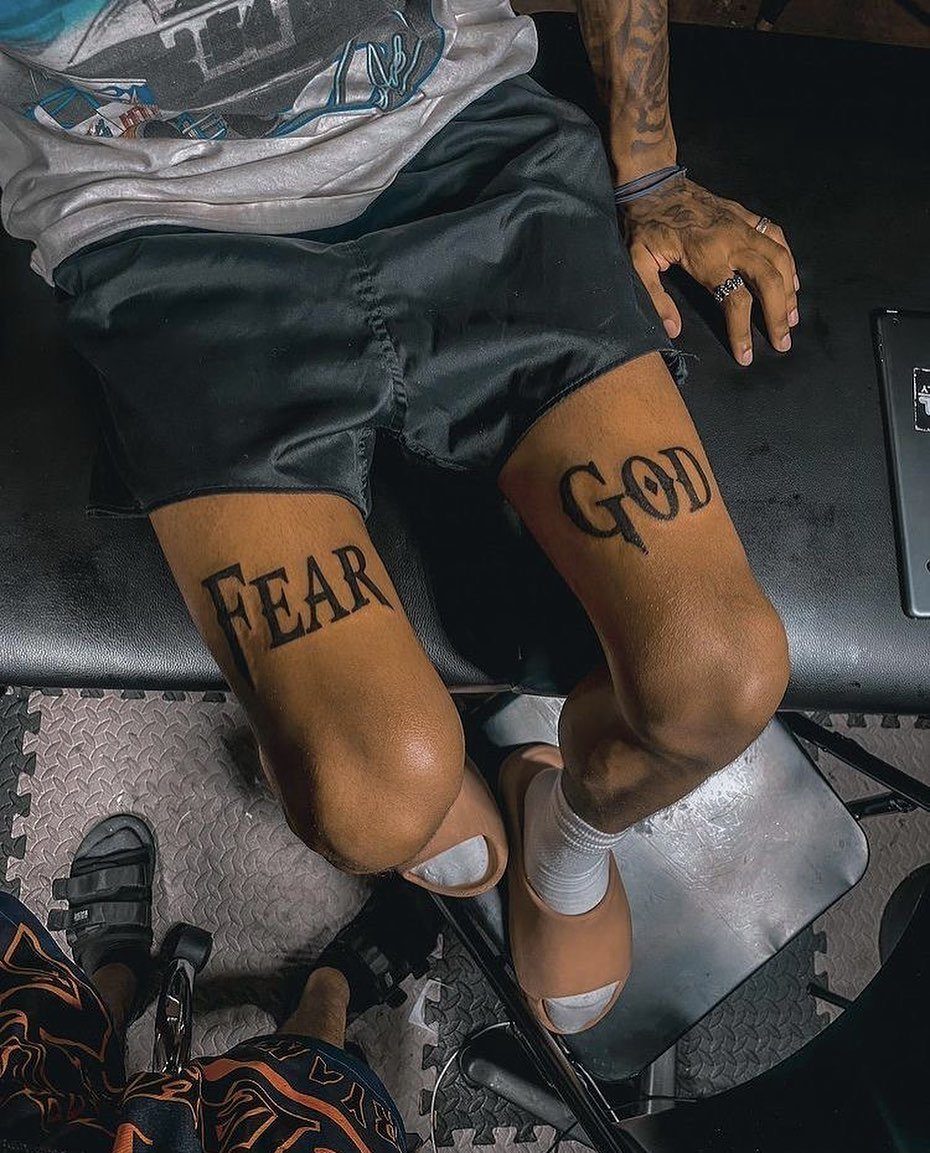
Splitting "Fear" and "God" across both thighs turns the phrase into something visible only when you sit, a placement that feels less like public display and more like personal code.
The thighs handle bold block letters well since there is enough surface area to size each word large without cramping the shapes, and the muscle padding keeps pain moderate compared to bony areas.
Outer thigh hurts less than inner, where skin is thinner.
Healing is straightforward as long as you avoid tight pants that rub fresh ink.
The downside is that thigh tattoos fade slightly faster in areas where fabric sits all day, so expect a touch-up session after a few years to keep the black saturated.
8. Fear God Tattoo on Eyelids
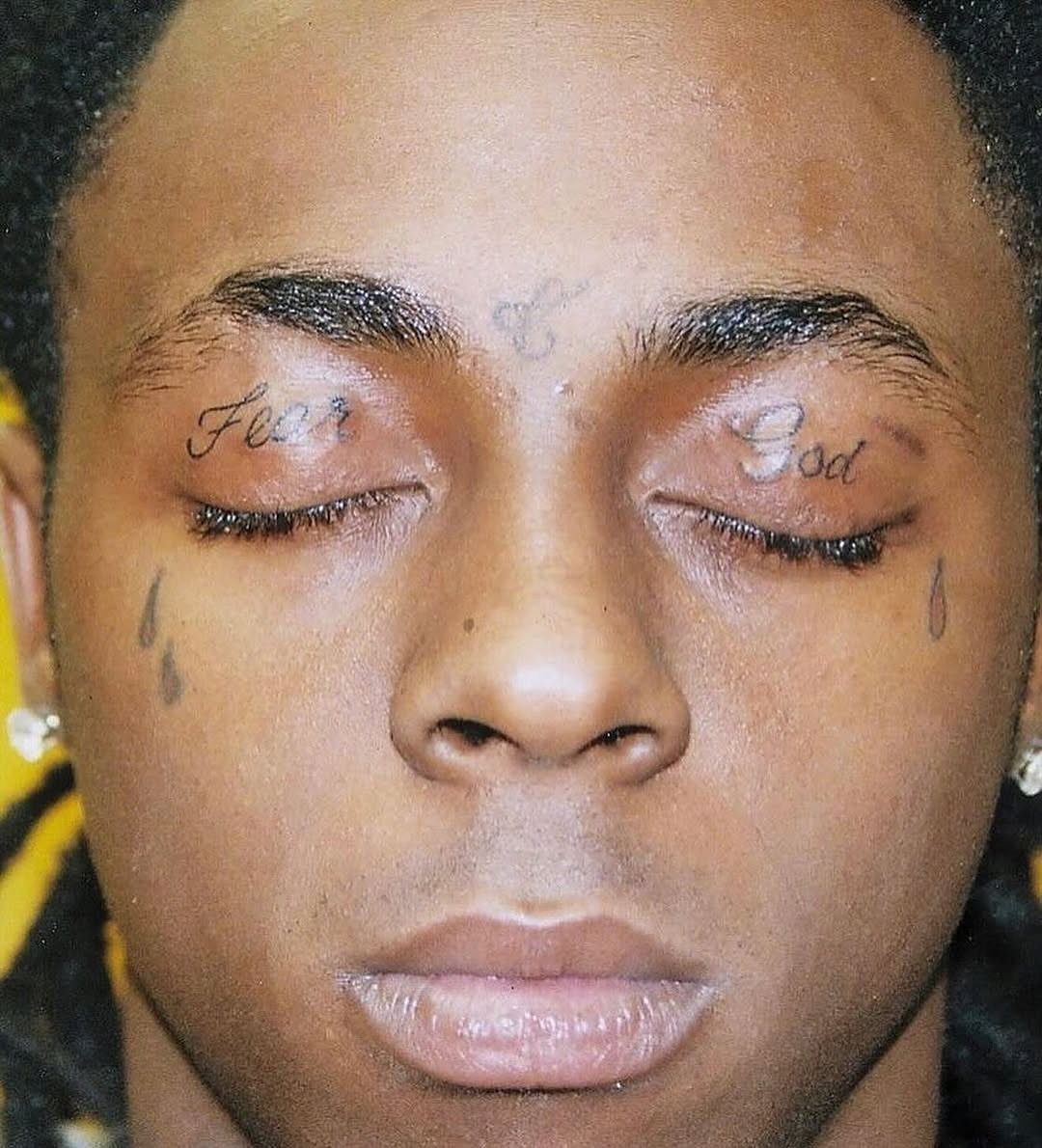
Tattooing the eyelids ranks among the most painful placements available, and the level of commitment it signals matches that intensity.
The skin here is the thinnest on the body, and most artists will not tattoo closed eyelids due to risk of infection and the difficulty of keeping the area still during application.
Swelling after the session is severe enough that many people cannot open their eyes fully for several days, and healing requires vigilant care to avoid introducing bacteria.
Fading happens faster than on other areas since eyelids stretch and fold constantly, so the letters will soften and blur within months.
9. Only Fear God Tattoo on Leg
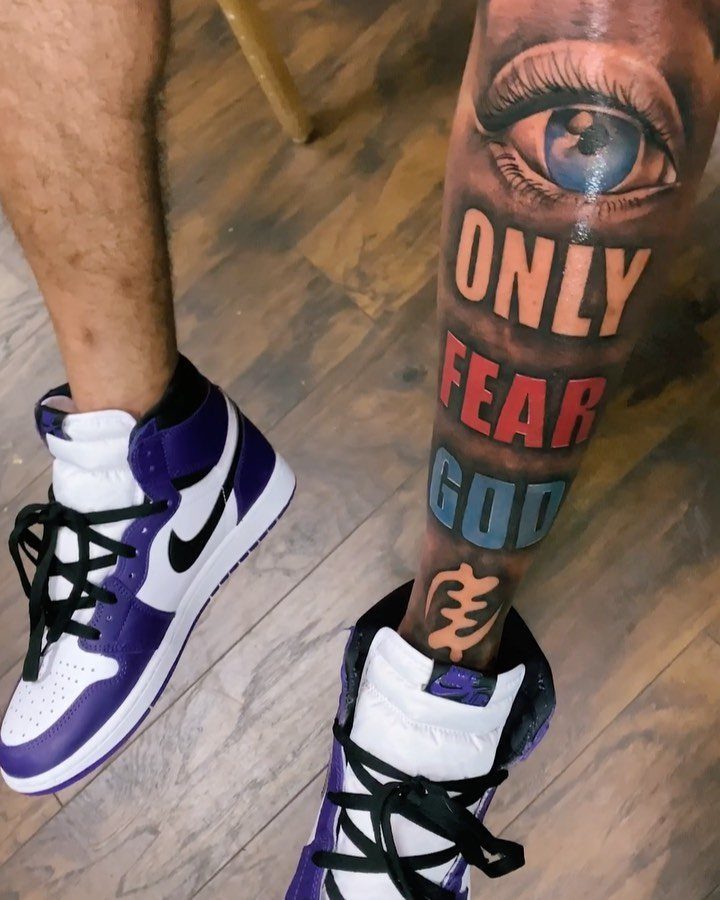
Adding color to a "Fear God" piece changes the tone entirely. The eye here brings in blue, red and fine detail work that makes the design feel more like a full leg composition than a standalone phrase.
Color tattoos require longer sessions since each shade goes in separately, and cost increases with the number of colors and the amount of shading involved.
The lower leg heals well since there is less friction from clothing, though the shin bone can make the session uncomfortable if the design wraps around the front.
Bright colors hold best when you limit sun exposure and apply sunscreen once the tattoo is fully healed.
10. Fear God Tattoo on Forehead
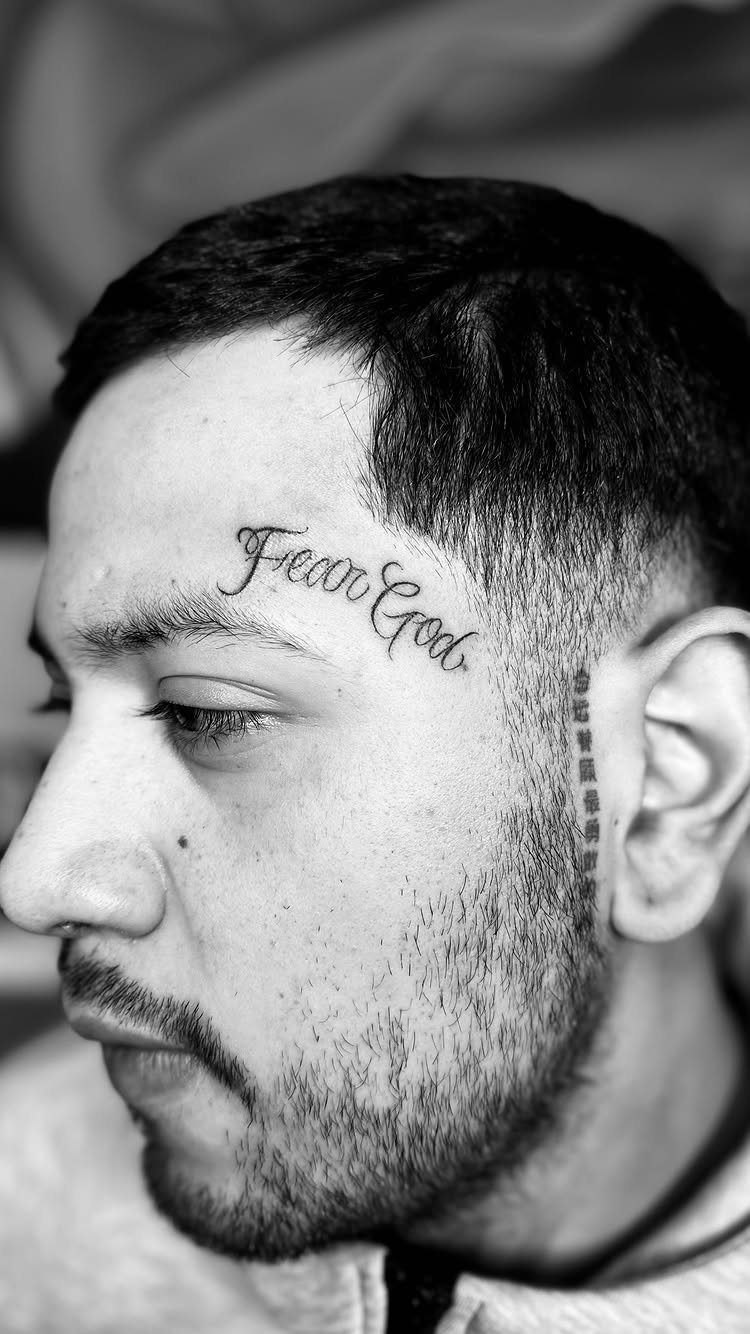
A forehead tattoo carries the same visibility challenges as the eyelids but with less physical risk.
Cursive script softens the look slightly compared to block capitals, though placement above the eyebrow still puts the text front and center in every interaction.
Forehead skin is moderately painful to tattoo because there’s little cushion between needle and skull, and sessions are quick given the small area.
Most professional tattoo shops will ask multiple times if you are certain before proceeding, since this is one of the few placements that cannot be hidden with clothing or covered easily with makeup.
Interpretation of Fear God
The word here points to reverence, not fear in the way you’d feel walking into something dangerous.
The phrase acknowledges a power greater than yourself, which some find grounds genuine confidence in daily life. When you hold respect for something ultimate, smaller anxieties lose their grip.
The logic runs as a paradox: fearing God produces fearlessness toward everything else. That interpretation shows up in designs paired with eyes or light rays, symbols meant to represent constant divine awareness.
The tattoo becomes a commitment to truth and humility, a reminder that ego and posturing matter less than aligning with something larger.
The meaning shifts depending on who wears it, but the core stays consistent: respect for the divine translates into courage in the world.
Cultural Perspectives on Tattoos
Tattoos and religious faith have clashed for centuries, often over Leviticus 19:28, which forbids marking the body. Some interpret that verse as a ban on ancient mourning practices rather than modern tattoos, but the debate continues.
Religious imagery inked on skin sits in an interesting position: it can be read as devotion or as rebellion against the idea that faith and tattoos cannot coexist.
Early Christian groups, including the Knights of St. John of Malta between the 16th and 19th centuries, tattooed members to mark allegiance, proof that the practice has roots in organized religion.
Romans recorded soldiers receiving tattoos after finishing training, and scars or marks historically identified occupation or social status. Romans called it stigma, borrowed from Greek and meaning to puncture, and the mark meant something long before coil machines arrived.
Frequently Asked Questions
What do Fear God tattoos mean?
Fear God tattoos represent reverence for divine power rather than literal terror, a concept that produces confidence when facing daily challenges.
Respect for something ultimate makes smaller anxieties lose their grip, and the design signals a commitment to humility and living aligned with something larger than yourself.
Is the fear of God good or bad?
Fear in this context means reverence, not dread, and it functions as the foundation for courage rather than anxiety.
The paradox runs that respecting something greater than yourself removes the power from smaller worries, grounding confidence in something ultimate instead of temporary circumstances.
What tattoo means courage?
Fear God tattoos signal courage by declaring that reverence for the divine eliminates fear of worldly obstacles.
The chest placement reinforces that message by putting the words close to the heart, and the bold lettering indicates a public declaration of living without submission to smaller anxieties.