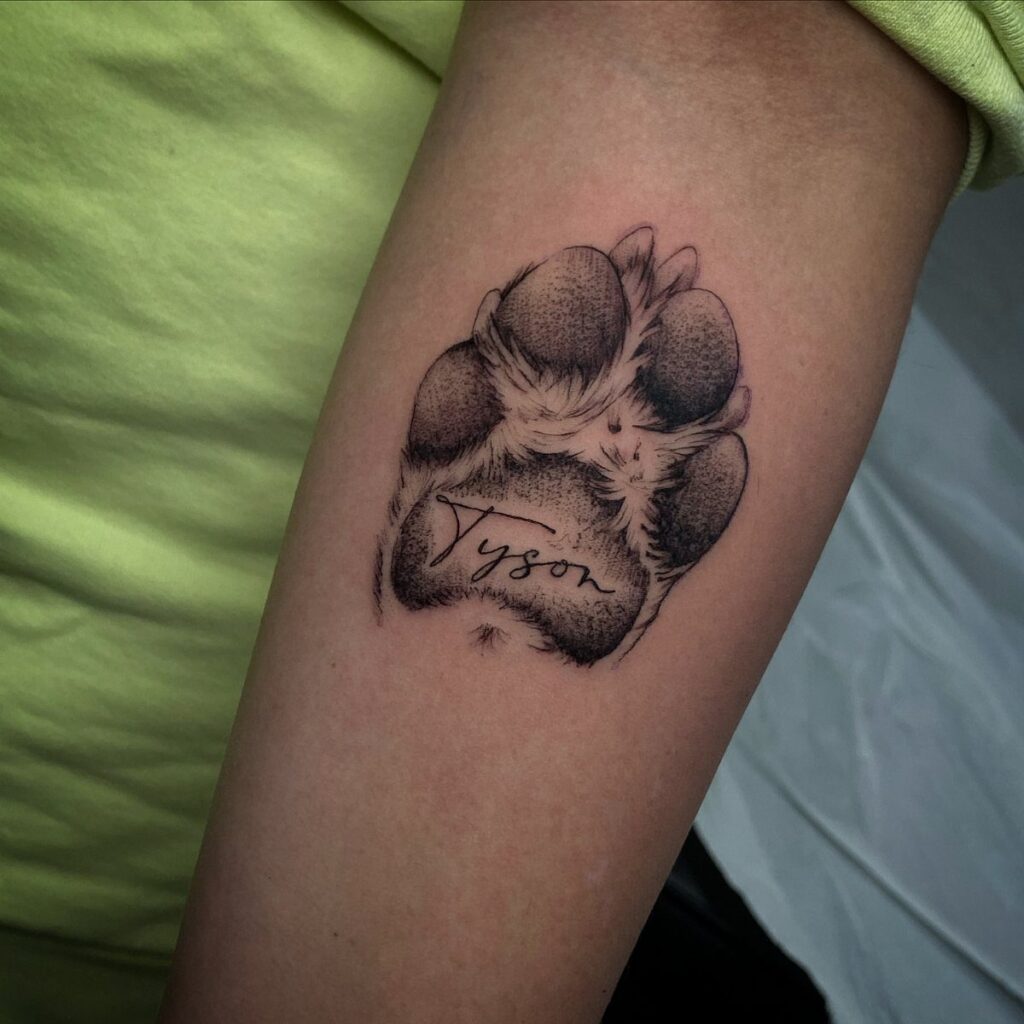
Portrait work captures exact features but demands a skilled realism artist and a flat surface like the forearm or thigh, while paw prints and symbolic designs stay simpler and fit smaller spots like the wrist or ankle.
The best memories with your dog decide the style: if they loved outdoors, a landscape silhouette framing a trail or beach works, and if the bond mattered more than one specific image, angel wings or an infinity sign around a paw print says it without realism.
1. Portrait Tattoos
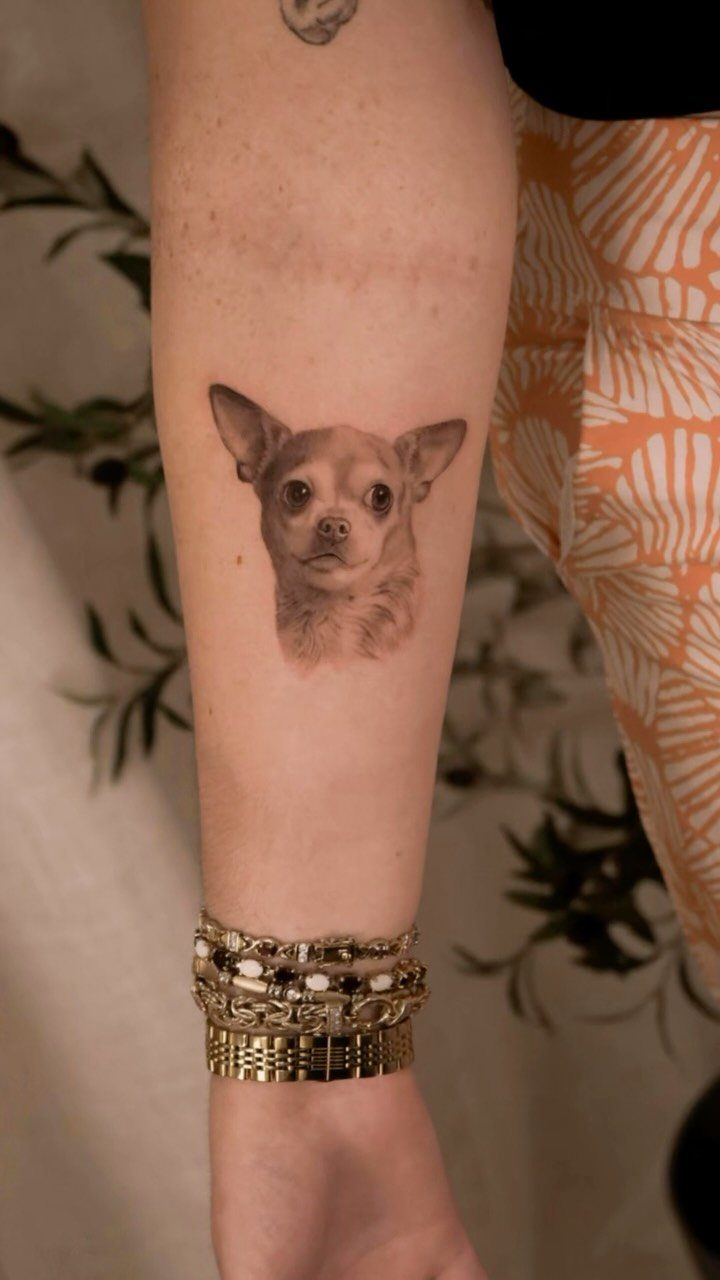
A portrait tattoo puts your dog’s face front and center, capturing the details that made them recognizable: the shape of their ears, the color around their eyes, the way their expression sat.
Realism work demands a skilled artist who can translate a photo into skin and hold those features years later.
Placement matters here.
Forearms, upper arms and thighs give enough flat surface for the face to read clearly. Smaller spots compress the detail and risk losing what made the portrait worth doing.
2. Paw Print Tattoos
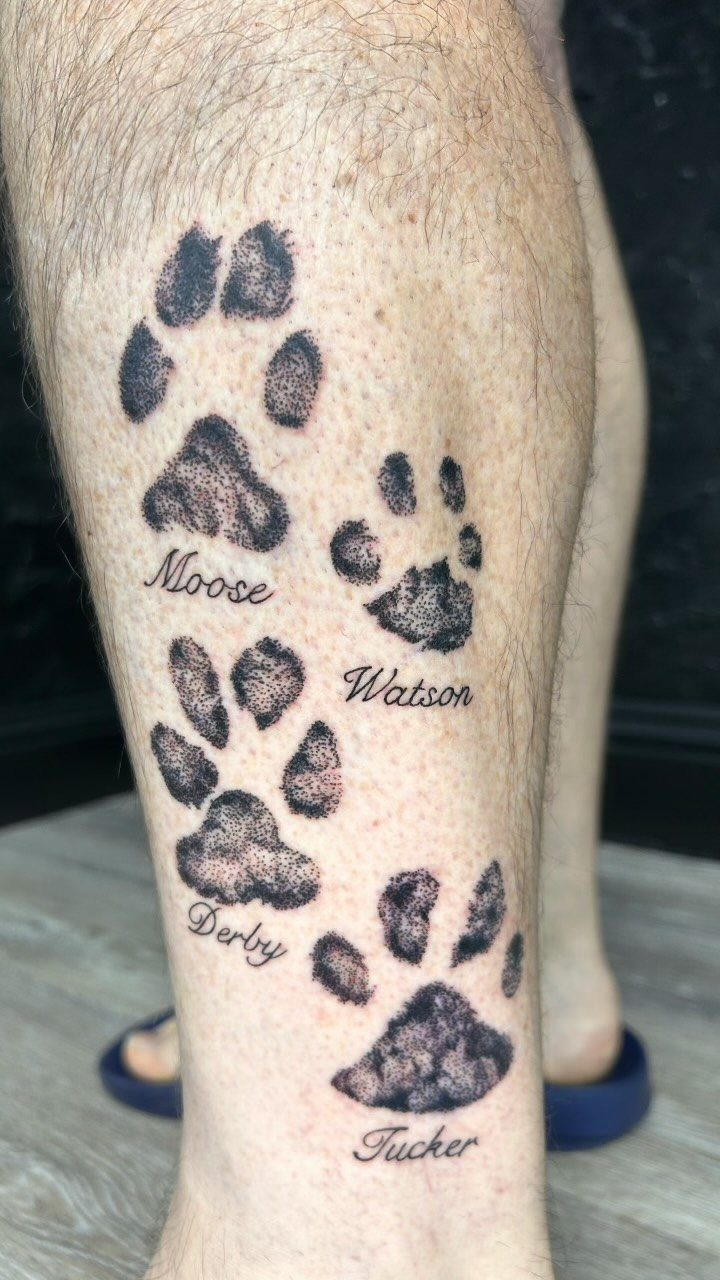
Paw prints mark where your dog walked without trying to recreate their entire likeness. Each print can carry a name underneath, which works well if you’re memorializing more than one dog over time.
Black ink holds the cleanest edges.
The prints sit in a row or stack vertically, and the size scales to the body part. A calf or forearm gives room for 3 to 4 prints with names; an ankle or wrist fits one.
3. Landscape Designs
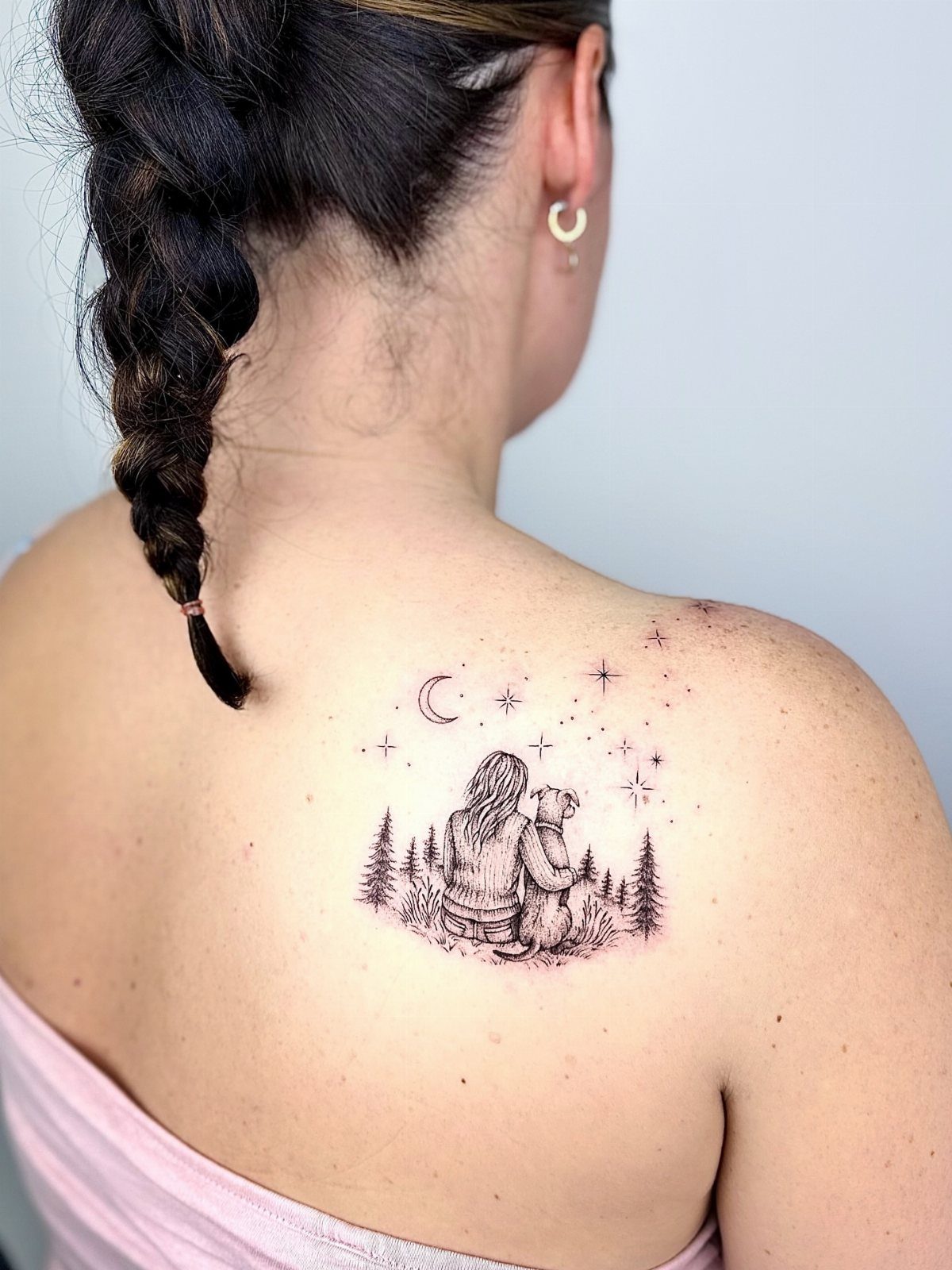
Landscape designs frame the memory in a place you shared: a trail, a campsite, a stretch of beach where your dog ran off-leash.
The silhouette of a person and dog against trees, mountains or water captures the relationship without requiring fine portrait detail.
I like this option when the best memories came outdoors. The composition spreads wide, so shoulders, upper backs and ribs suit it better than narrow spots like wrists or ankles.
4. Name and Date Tattoos
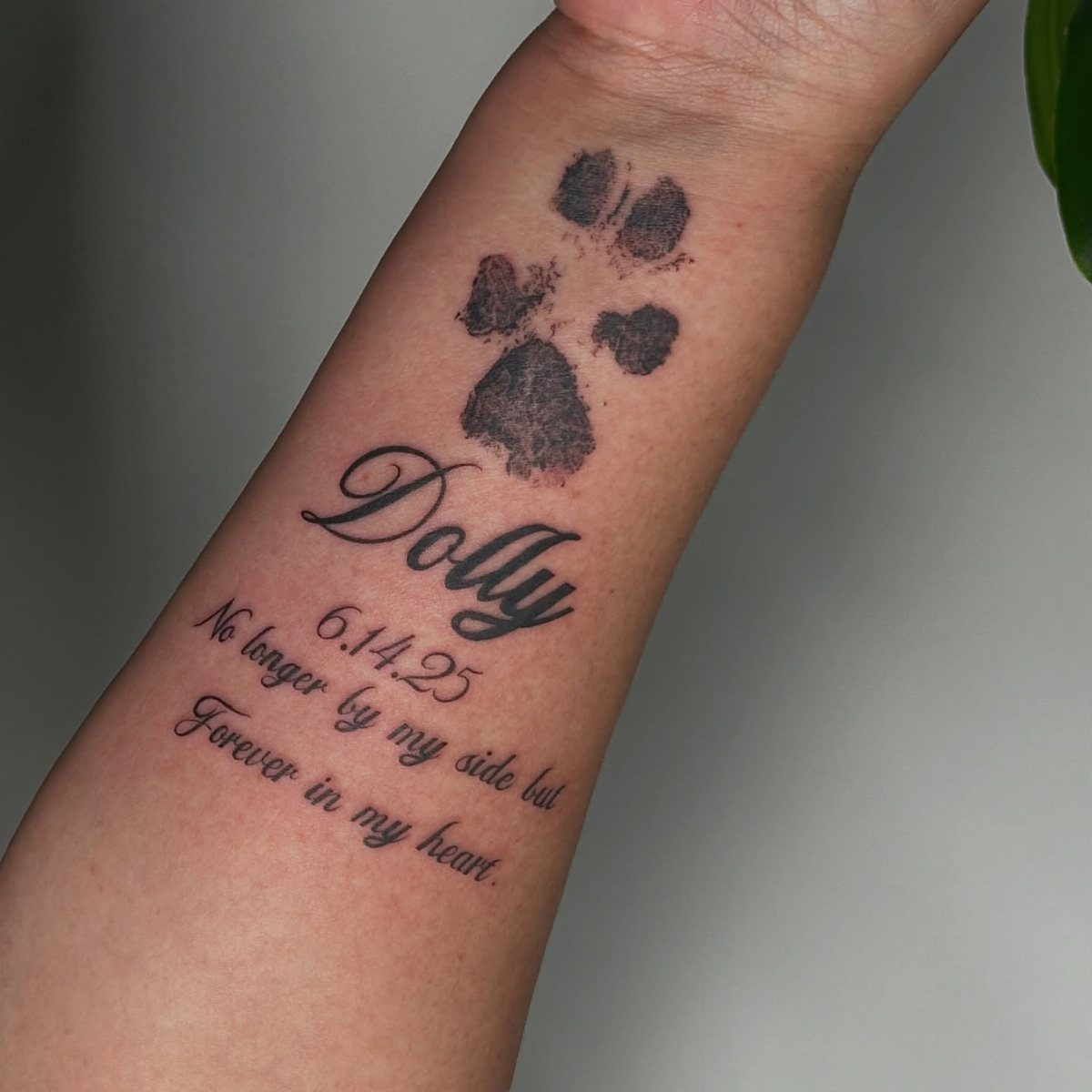
Adding your dog’s name and the dates that mattered turns the tattoo into a marker. Birth and death dates are common, but the date you adopted them or a day that defined your time together works just as well.
The paw print anchors the text, and a short phrase in script rounds it out if you want one. Forearms and inner biceps give enough length for the layout to breathe without crowding the letters.
5. Symbolic Tattoos
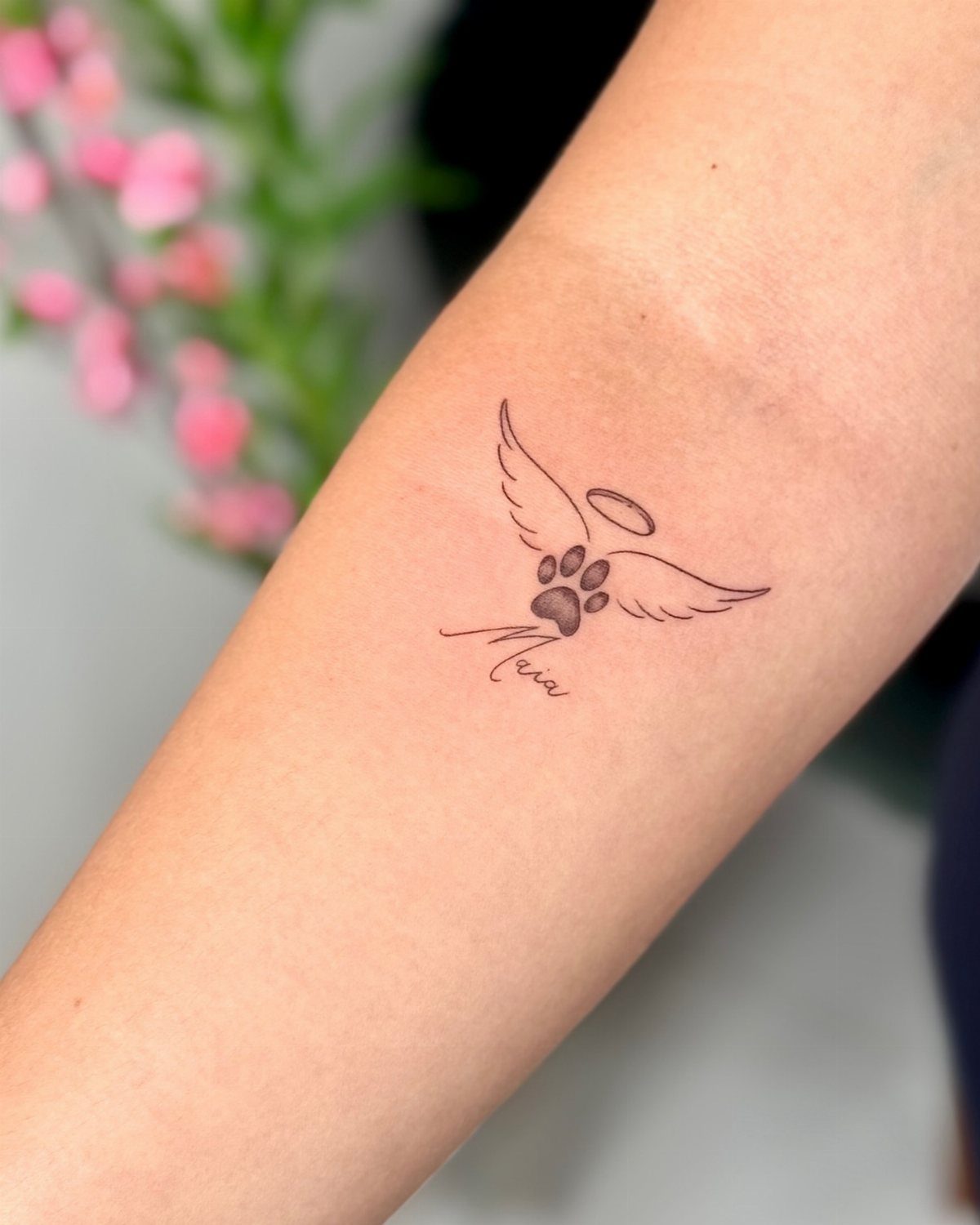
Symbolic tattoos layer meaning into the design: angel wings to suggest your dog’s spirit, a halo for innocence, an infinity sign for a bond that outlasts their life.
The paw print often sits at the center, with the symbols built around it.
This approach suits people who want the memorial clear but prefer suggestion over realism. The style reads faster than a portrait and holds up well at smaller sizes.
6. Small Dog Tattoo
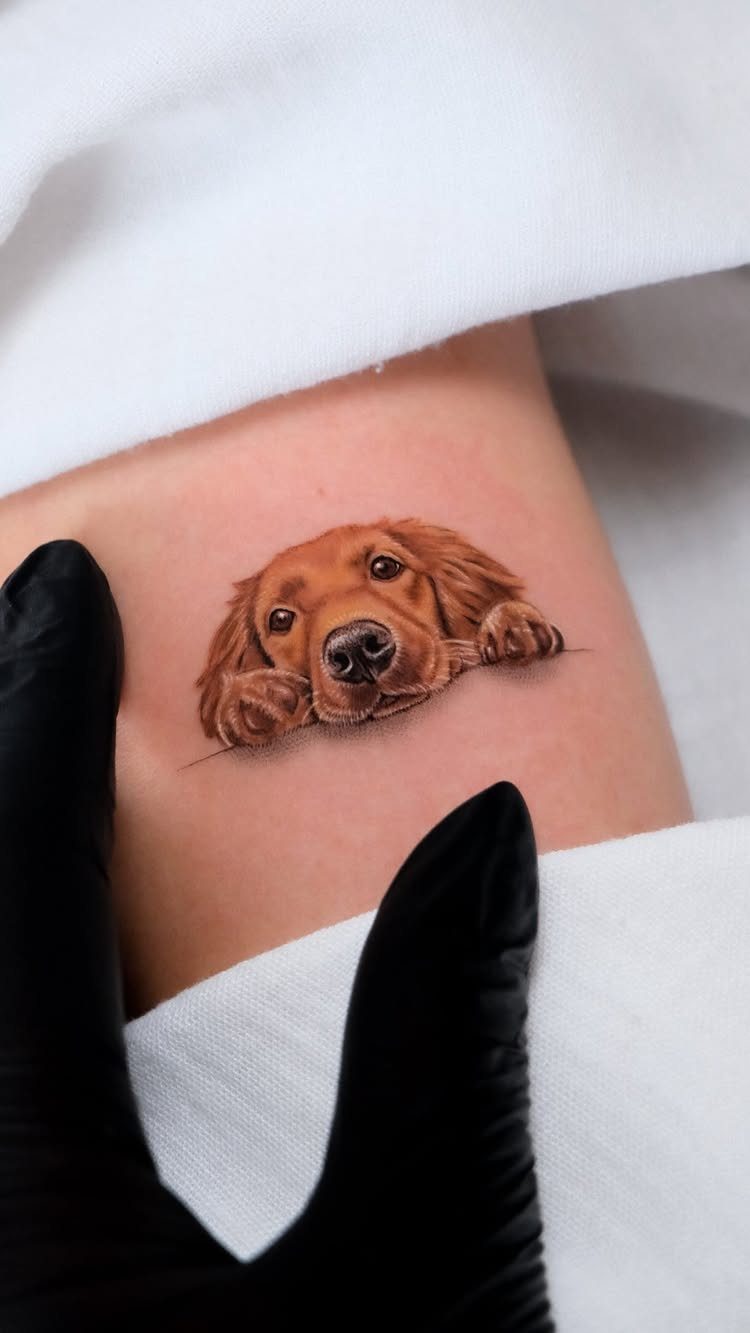
A small realistic tattoo condenses your dog’s face into a few square inches, usually just the head or the head and paws. Fine-line realism or micro-realism techniques keep the detail legible even at this scale.
Placement on the inner wrist, behind the ear or on the ankle keeps the tattoo discreet while still recognizable. Small portraits fade faster than larger ones, so touch-ups every few years help the image stay sharp.
Choosing the Right Design
Pick the style that fits what you want to say. A clean realism portrait, a line-drawn silhouette, or abstract symbols all memorialize the same bond, but one will match how you picture carrying that memory forward.
Personal elements make the tattoo yours. Bring in details tied to your dog’s personality: the trail they always pulled you toward, the toy they never put down, the phrase you said to them.
Those pieces separate a memorial from a template and give the design weight it wouldn’t otherwise hold.
Your bond with your dog decides what belongs in the design, not a standard layout. The memories you shared and the traits that defined them should show up somewhere in the ink, even if the style itself stays simple.
Dog memorial tattoos allow you to honor your dog’s memory in a unique and personal way. These tattoos not only serve as a constant reminder of your beloved pet but also offer a source of comfort during the grieving process.
The Process of Getting a Tattoo
Bring photos to your consultation.
Multiple angles help the artist see your dog’s features clearly, especially for portrait work. A favorite toy or collar can give the artist a color or texture to work from.
Starting small makes sense if this is your first tattoo.
A small memorial piece lets you learn how your skin holds ink and how you handle the process before committing to a larger design. You can add to it later if you want more coverage.
Location and size should feel comfortable before the appointment.
A design crammed into too small a spot loses detail, and placement on a part of your body you’d rather keep private defeats the point of memorializing someone you want to remember openly.
Caring for Your Tattoo
Before you walk out, your artist will cover what the tattoo needs over the next few weeks.
The process centers on keeping the tattoo clean, applying a thin layer of moisturizer as it heals, and avoiding direct sun exposure while the skin repairs itself.
Healing correctly preserves the detail.
A memorial portrait or fine-line work that scabs unevenly or dries out can lose sharpness, and once the skin sets, that loss is permanent. Following the aftercare routine the artist gives you protects the tribute long-term.
Sun exposure fades ink faster than anything else. After the tattoo heals, sunscreen on the area slows that process and keeps the lines and shading readable for years.
Frequently Asked Questions
What are popular dog memorial tattoo ideas?
Portraits, paw prints and name tattoos with dates are the most common choices.
Portraits capture your dog’s face and expression, paw prints mark where they walked without recreating their full likeness, and name tattoos turn the ink into a permanent marker of the time you had together.
How do I choose a design for my tattoo?
The style you pick sets the tone: a photorealistic portrait feels different from a minimal line sketch or a cluster of symbols.
Details like the beach where you walked them every morning or the bandana they wore make the piece yours, not clip art.
What should I know about the tattooing process?
Bring multiple photos to your consultation so the artist can see your dog’s features from different angles, and consider including a favorite toy or collar for color and texture reference.
A small first tattoo shows you how your body heals and whether you want more ink later.