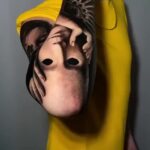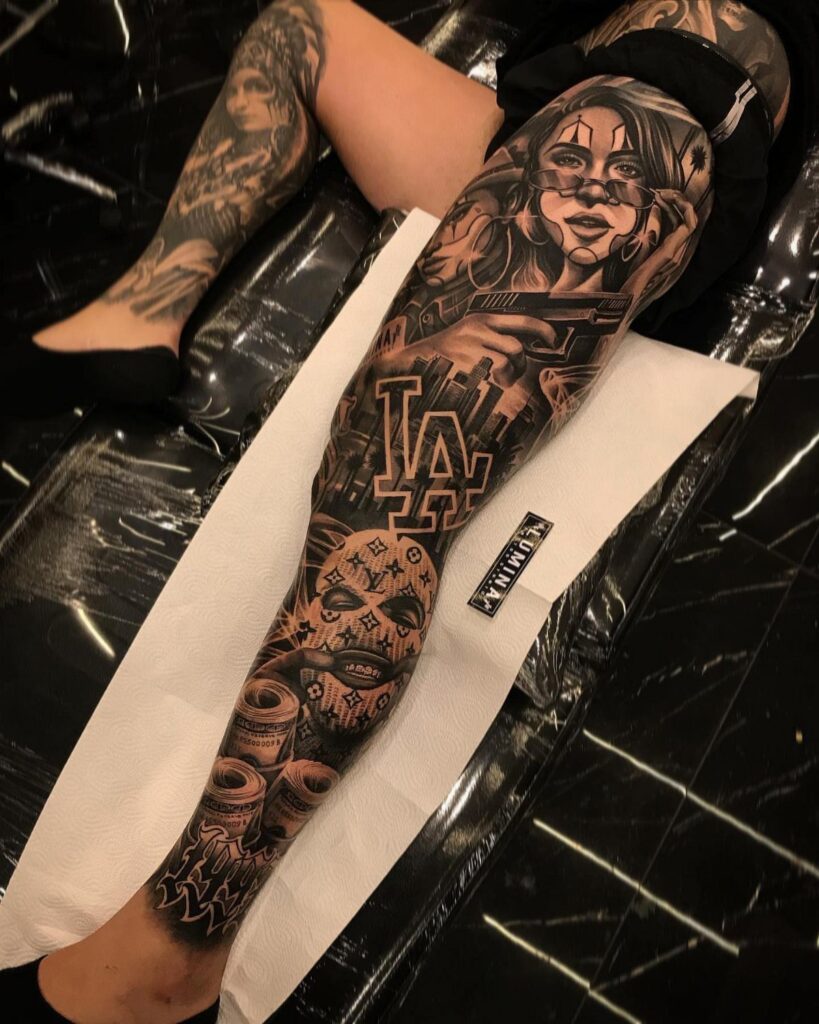
Chicano tattoo style depends on black-and-gray shading that layers soft gradients across portraits, script and symbols like roses, praying hands and Day of the Dead skulls, all rooted in heritage and storytelling from the American Southwest.
A half-sleeve or larger lets you layer portraits, script and cultural symbols into one composition, while a single rose or script piece on the forearm stays easy to cover for work.
1. Chicano Tattoos
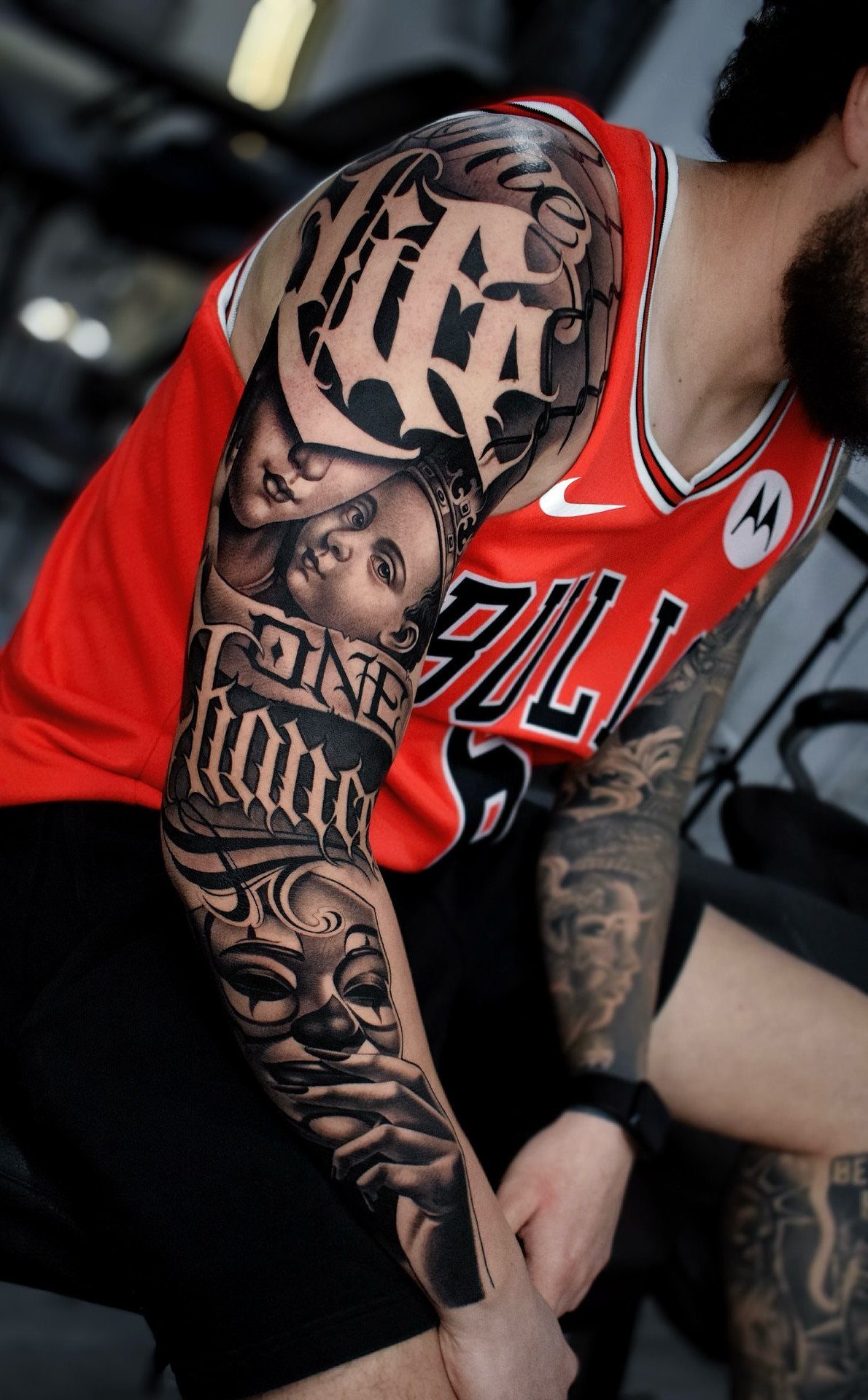
Chicano tattoo style grew from Chicano culture in the American Southwest, mixing fine black-and-gray shading with portraits, script and symbols like roses, clowns and religious imagery.
The work leans on realism, with soft gradients that make faces and fabric read with dimension long after the ink settles.
Most pieces sit on the arm or chest where there is room to layer several elements into one composition. An experienced artist who specializes in portrait work and fine-line script typically charges around this rate per hour.
2. Roses
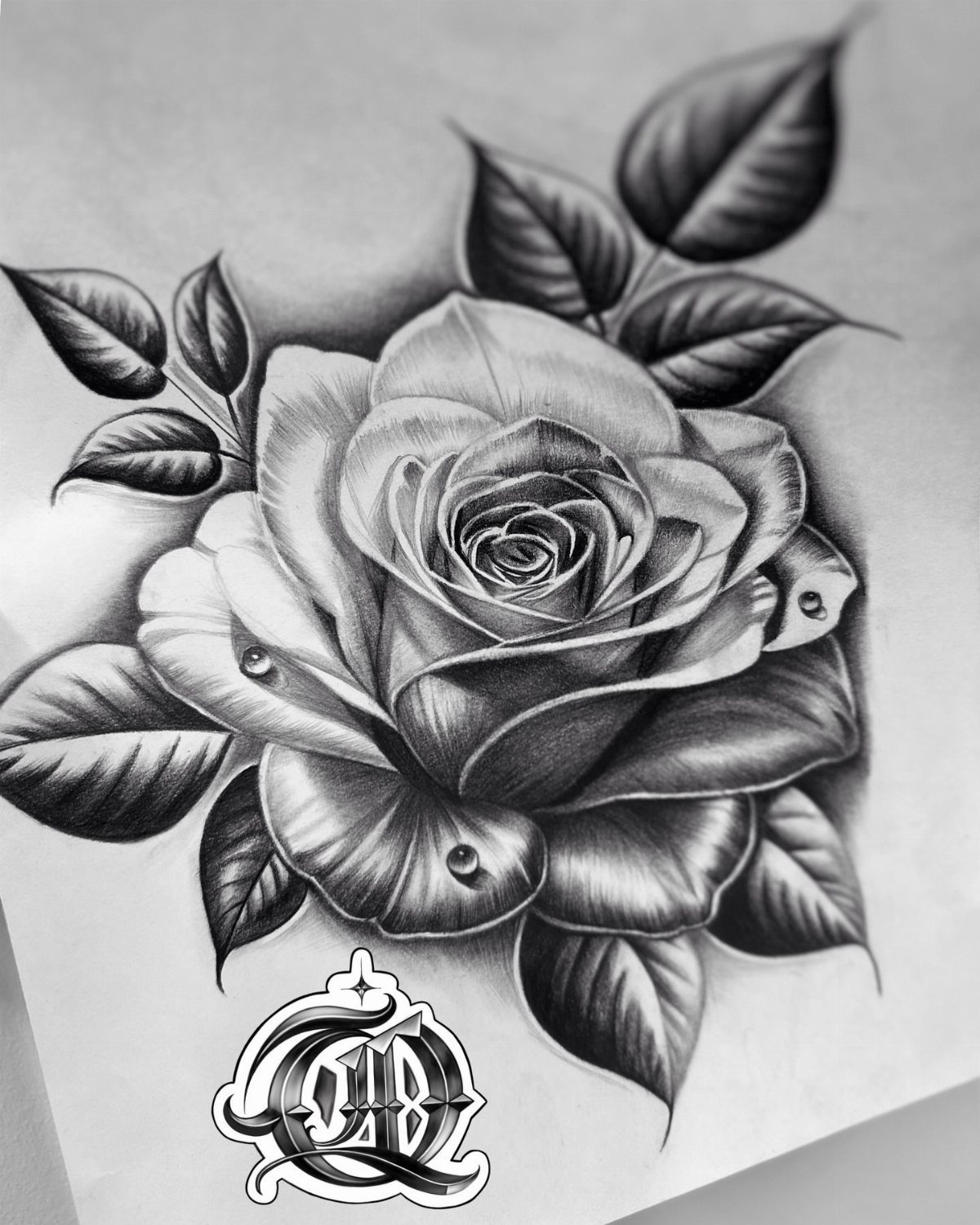
Roses show up constantly in Chicano tattoos, usually rendered in black and gray with soft petal shading and water droplets that catch light.
They stand for beauty, love and remembrance, and the gray scale keeps them readable as the ink ages.
A single rose with leaves fits the forearm or shoulder. Pair it with script or a portrait when you want a memorial piece that stays legible from across a room.
3. Cultural Storytelling
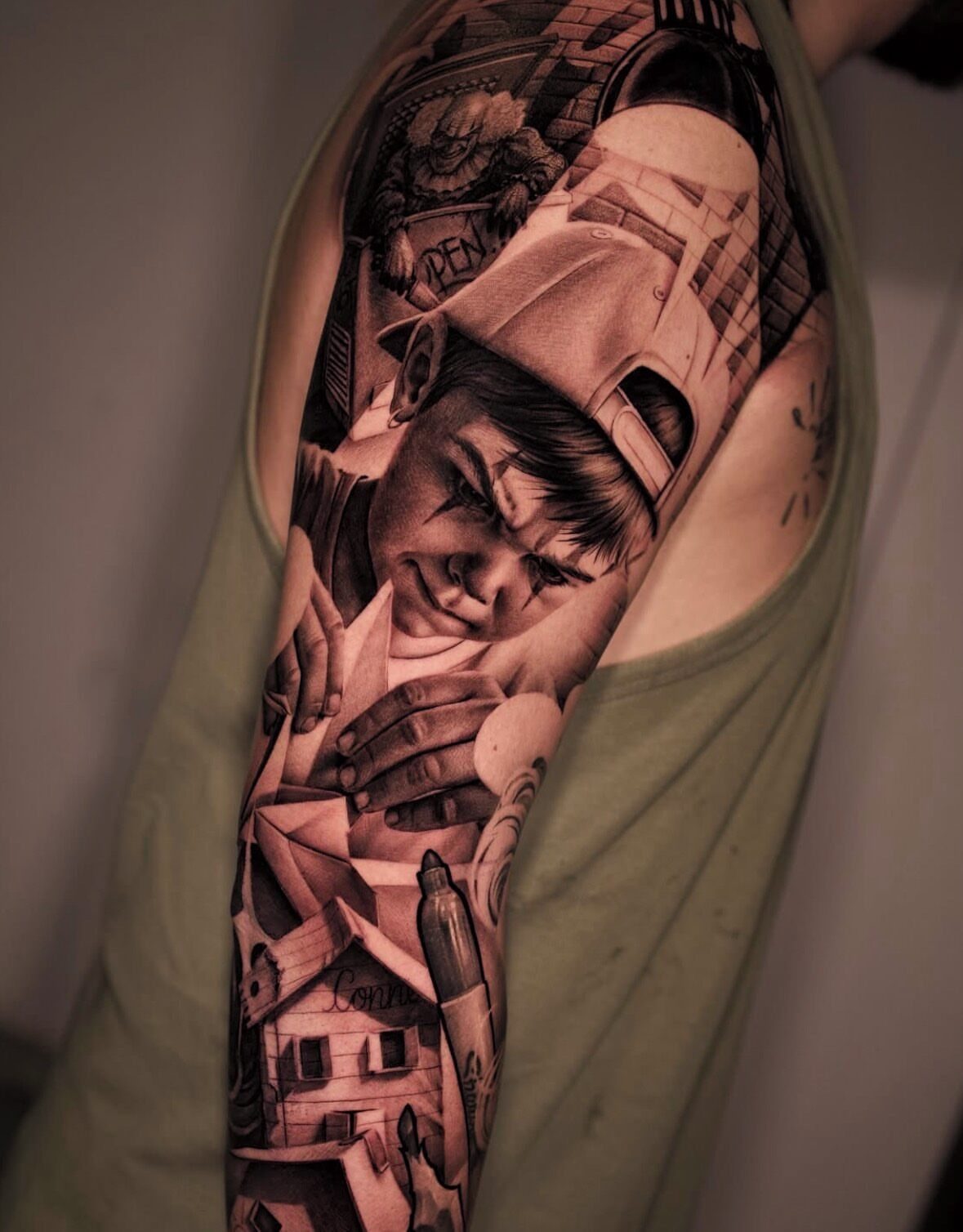
Some Chicano tattoos tell a story across the skin, layering scenes from childhood, family or neighborhood life into one composition.
A portrait of a younger self beside a house or a set of figures gives you a way to carry a narrative that matters without needing words.
The challenge is fitting multiple subjects into one piece without crowding the design. Plan for a half-sleeve or larger, and bring reference photos so your artist can build a layout that keeps each face and scene distinct.
4. Emotional Themes
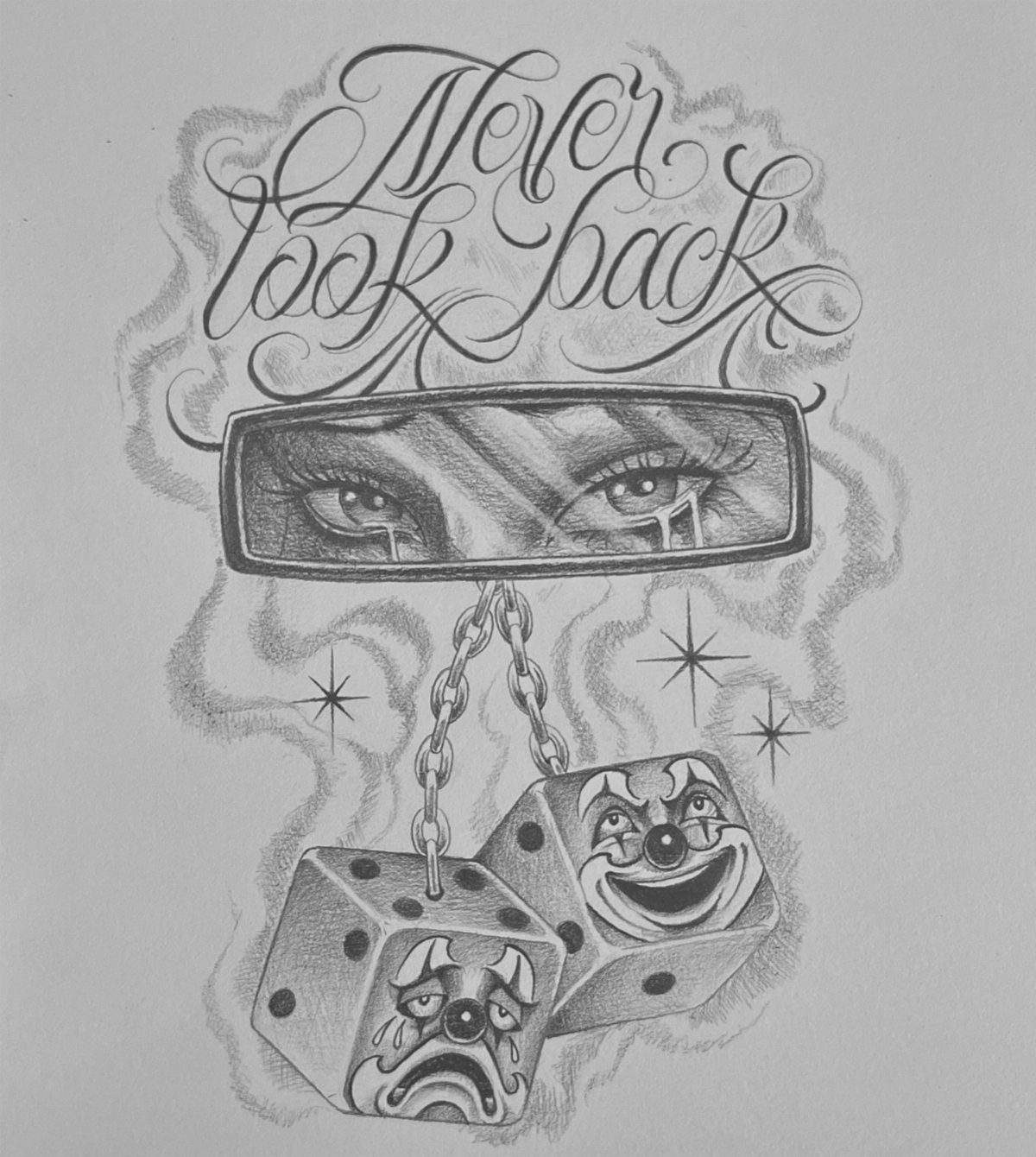
Tattoos that center on grief, resilience or survival often use crying eyes, broken hearts or phrases like "Never look back" in script.
Comedy and tragedy masks add a second layer, and the gray shading keeps the mood somber without turning graphic.
These pieces work small or large. When choosing placement for something you want to read daily, pick a spot you will see, not just where others will.
5. Cultural Icons
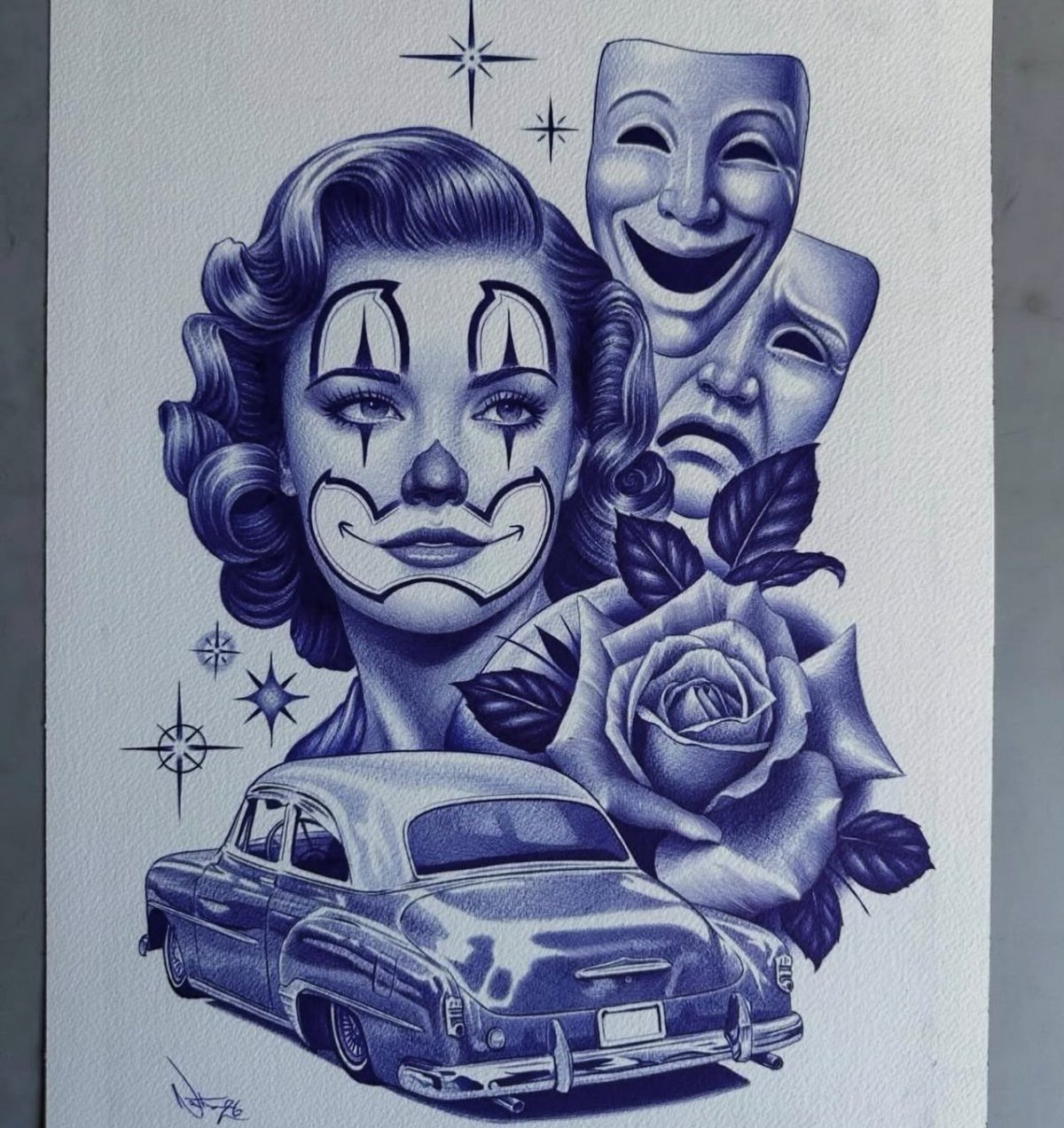
Lowriders, Aztec glyphs, payasas and religious icons all point back to Chicano heritage and appear often in larger compositions.
A lowrider fits nicely along the forearm or calf, and the chrome detail requires an artist comfortable with reflective surfaces and tight line work.
Mixing several icons into one piece works best on the shoulder or chest where you have the canvas for a full scene.
6. Half-Sleeve Chicano Tattoo
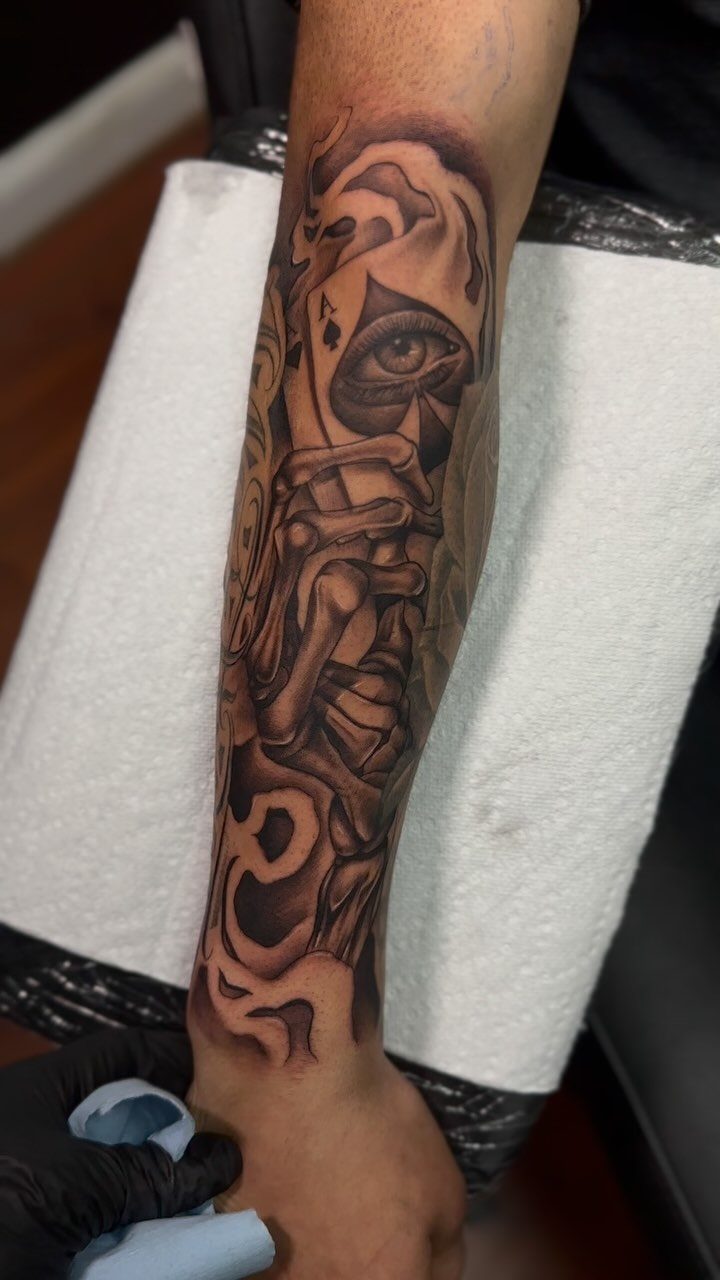
A half-sleeve covers the area from shoulder to elbow or elbow to wrist, giving you space for a skull, playing cards, roses or a portrait without committing to a full arm.
It suits anyone who wants visible ink they can still cover with a long sleeve for work.
Chicano half-sleeves usually span multiple sessions, and pain stays moderate on the outer arm. The inner bicep and elbow ditch hurt more, so plan your longest session for the easier sections first.
7. Fine Line Chicano Tattoos
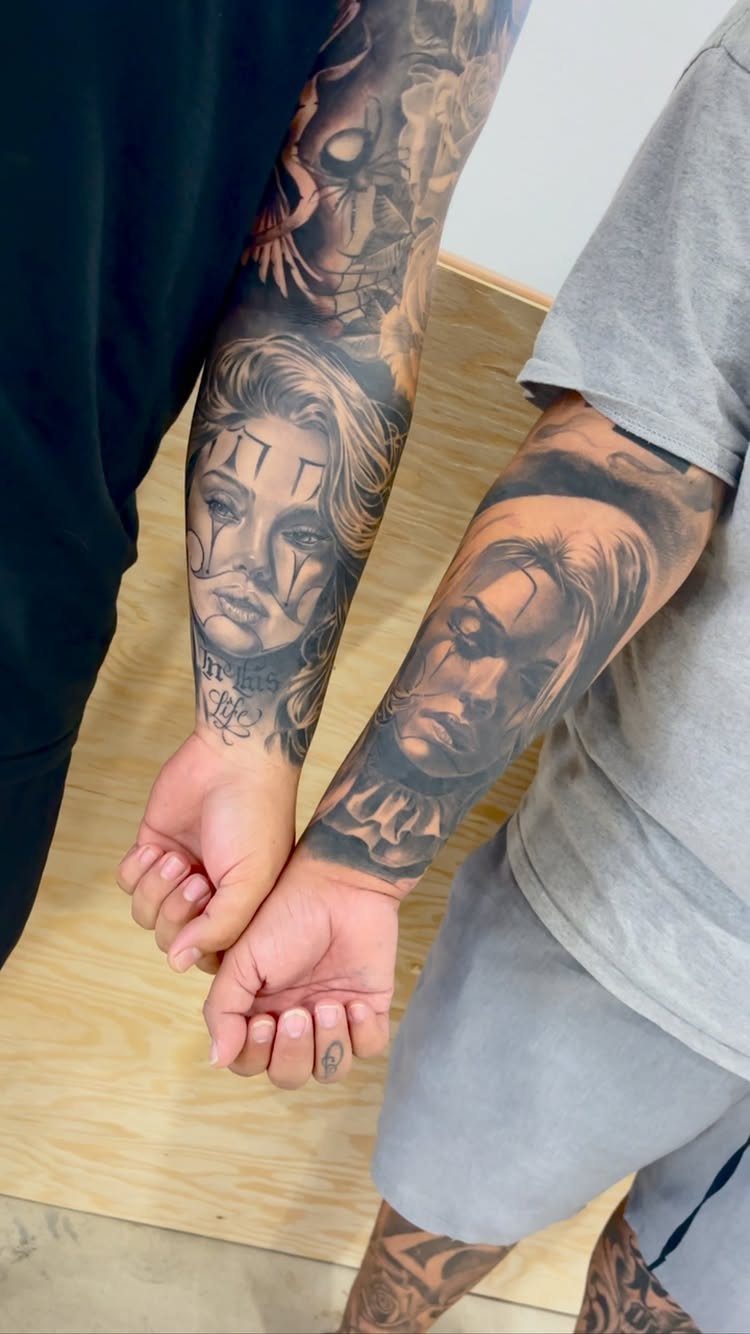
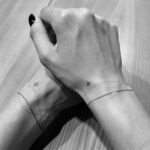
This approach trades the soft shading of most Chicano tattoos for thinner, crisper lines, so portraits and script read sharper but age differently.
The detail stays cleaner in the first few years, but fine lines can blur faster than heavier shading as your skin changes.
This approach suits smaller pieces on the forearm or wrist where you want clear lettering or a face that holds detail without taking up the whole arm.
Pick an artist who works in fine line regularly, since the technique requires steadier hand pressure than traditional Chicano gray wash.
8. Black-And-Gray Chicano Tattoo
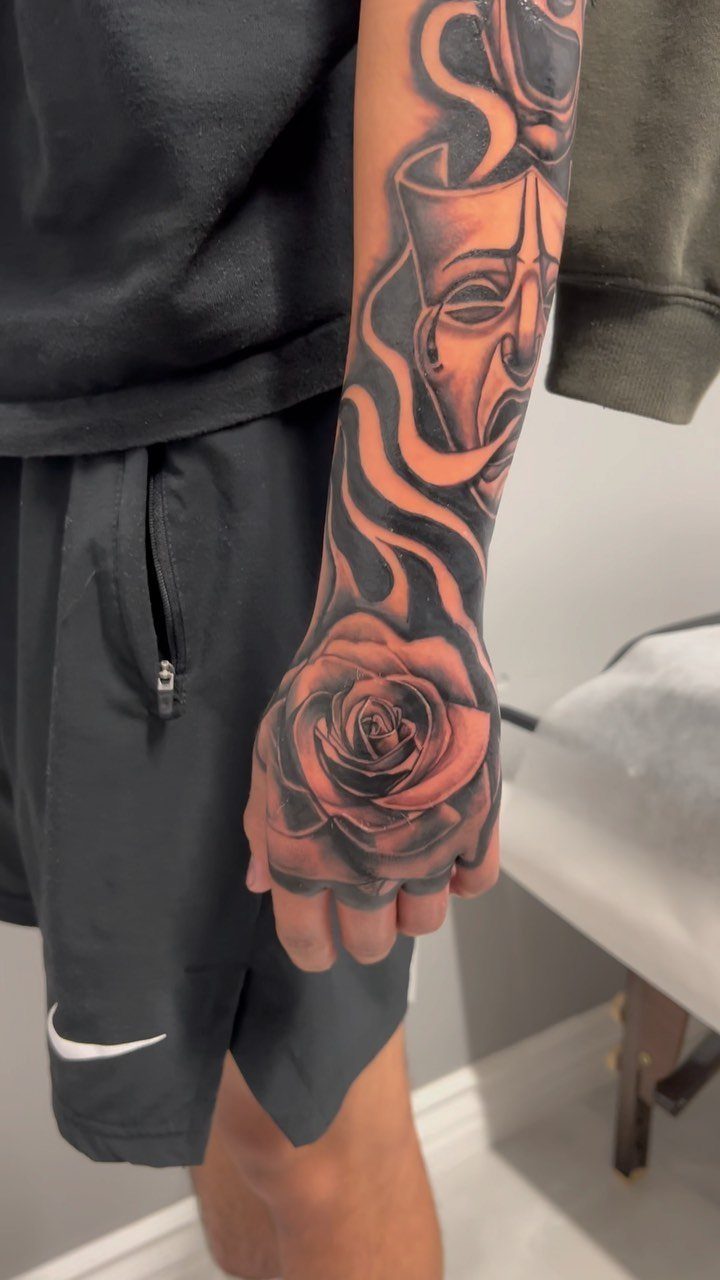
Black-and-gray shading is the foundation of Chicano tattooing, built on smooth gradients that give faces, fabric and petals dimension without color.
The technique uses diluted black ink in layers, so highlights and shadows read clearly even as the tattoo settles over time.
A mask paired with a rose, as seen here, fits the hand and forearm and stays readable from a distance.
The gray scale holds up better than color on spots that get more sun, so this palette suits visible placement that still looks sharp years later.
9. Day of the Dead Skulls
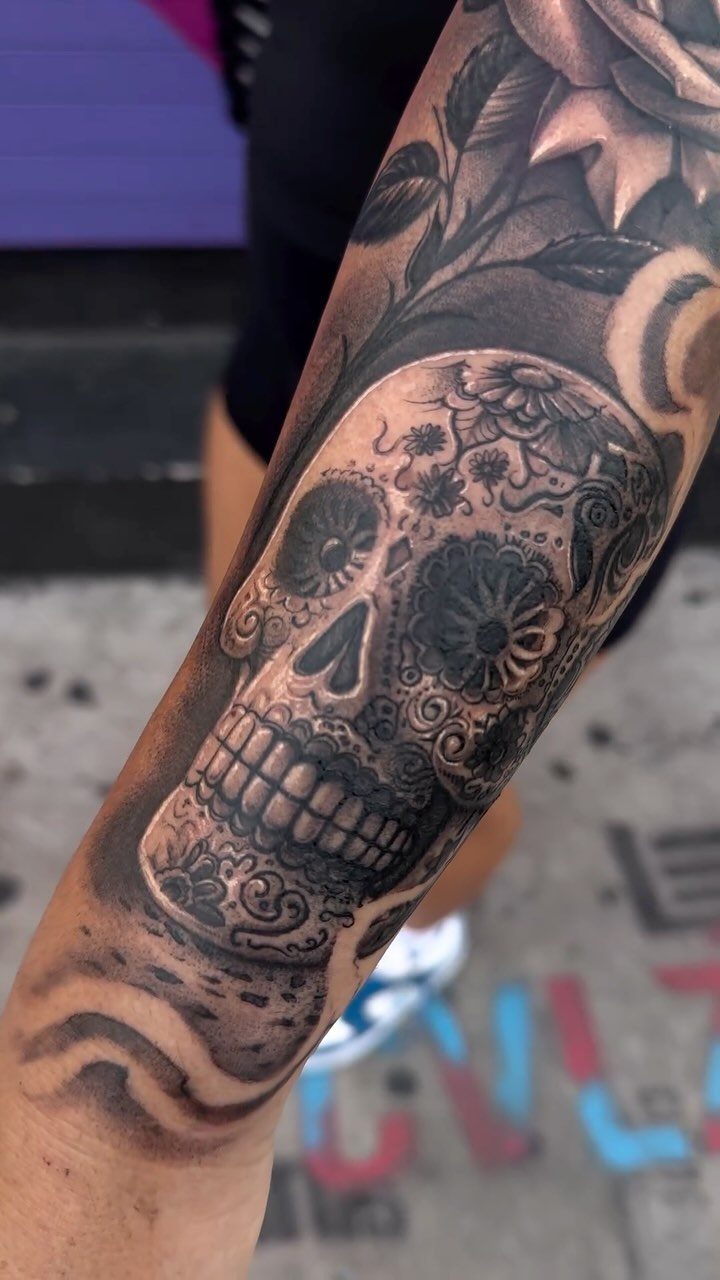
Sugar skulls from Día de los Muertos carry bright floral patterns and ornamental detail that translate well into black-and-gray ink.
The decorative elements around the eyes and forehead give the tattoo visual weight, and roses or marigolds alongside the skull tie back to the holiday’s symbolism of remembering the dead.
This style works on the forearm, shoulder or calf. The detail inside the skull requires a larger canvas than a wrist or ankle, so plan for at least 4 inches across to keep the ornamentation legible.
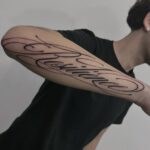
10. Chicano Lettering
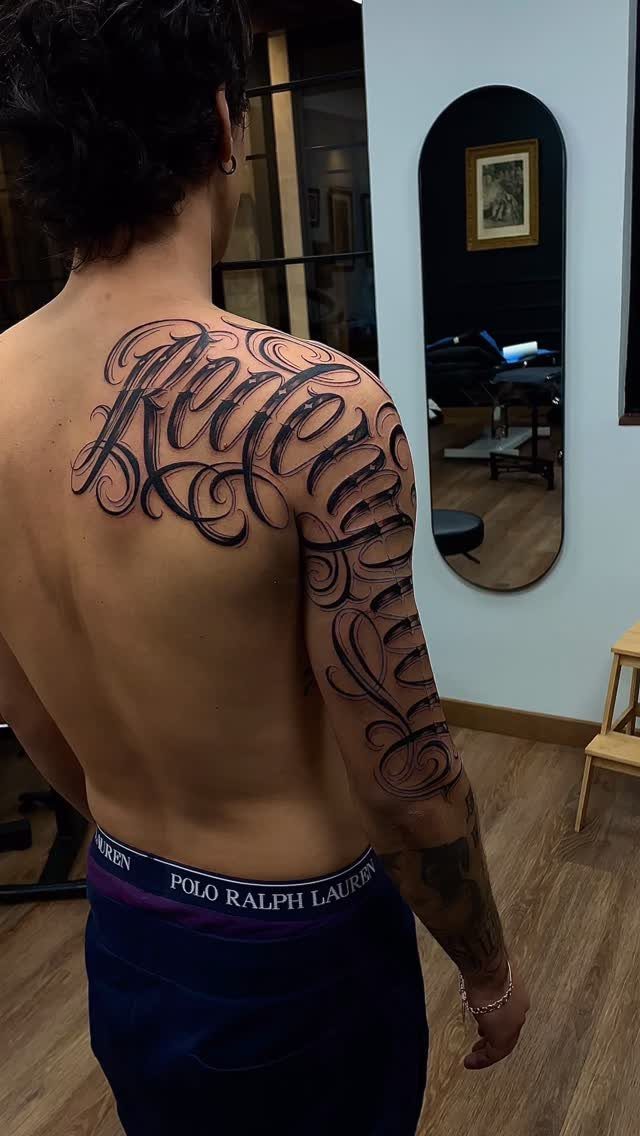
Script in Chicano tattoos usually follows ornate Old English or gothic letterforms with thick verticals and flourishes that curl at the ends.
The style came from hand-painted signs and murals, and it reads best when the letters sit large enough that the swashes stay distinct.
Placement across the upper back, chest or shoulder blade gives you the horizontal space script needs to breathe.
Smaller lettering on the forearm works if you keep the phrase short, but cramming too many words into a narrow spot turns the curves into a muddy block.
11. Traditional Chicano Tattoo
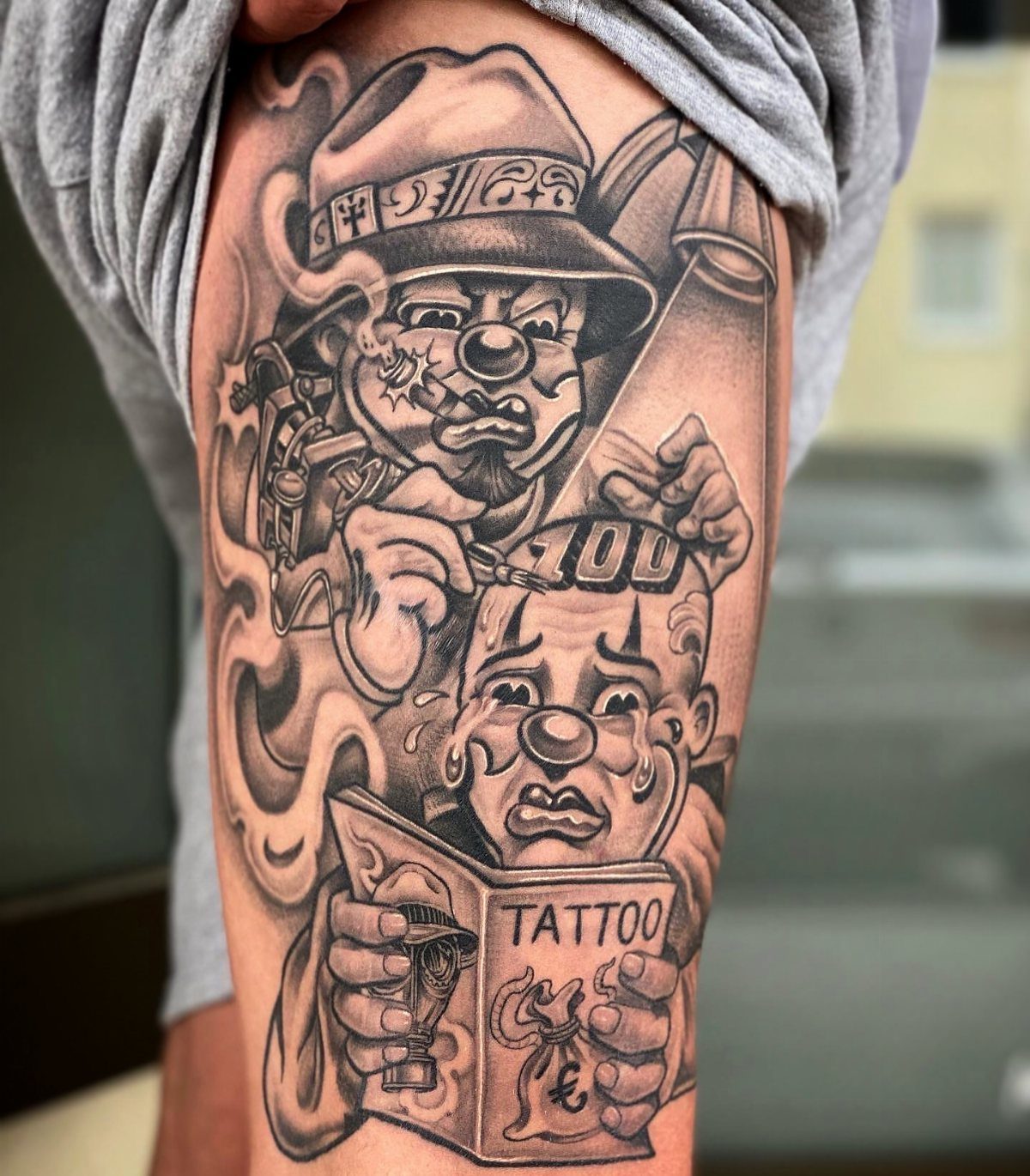
A clown tattooing another clown captures the layered meaning behind the payaso figure in Chicano art: performance, humor masking pain, and the craft itself. The imagery nods to both street culture and the tattooing tradition that grew alongside it.
Placement on the thigh or outer arm gives you room for 2 figures without crowding the scene. This style leans on storytelling, so bring reference photos and your artist can layer in personal details that connect to your own experience.
12. Some More Chicano Tattoo Designs
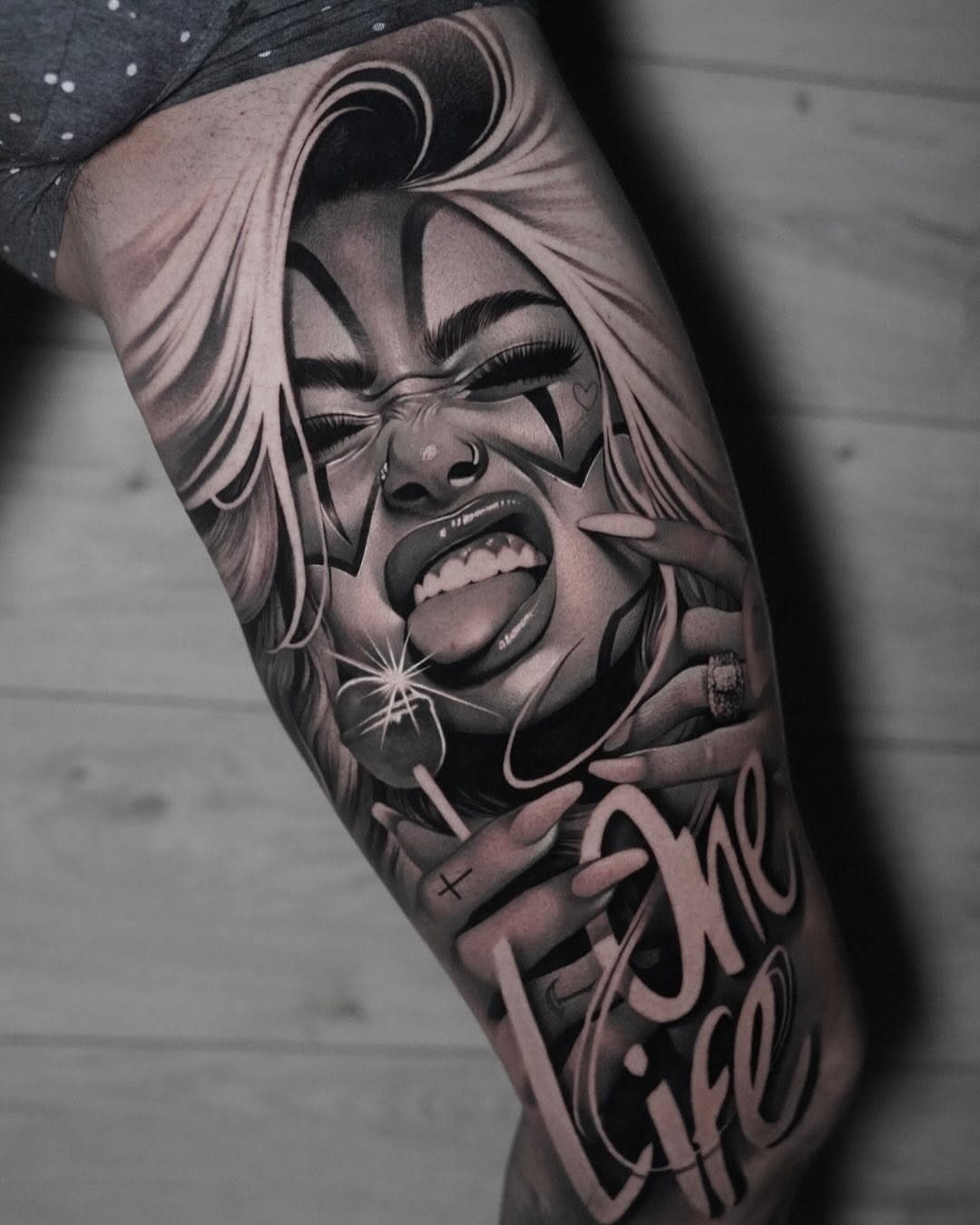
Layering a woman with clown makeup, a lollipop and script lettering into one composition gives you a piece that touches on several Chicano themes at once: beauty, performance and street life.
The contrast between soft shading on the face and sharp lettering keeps each element readable.
The script will need to sit where your artist can letter it cleanly, so talk through placement before committing to the full design.
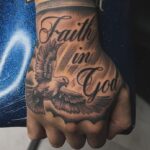
13. Chicano Hand Tattoo
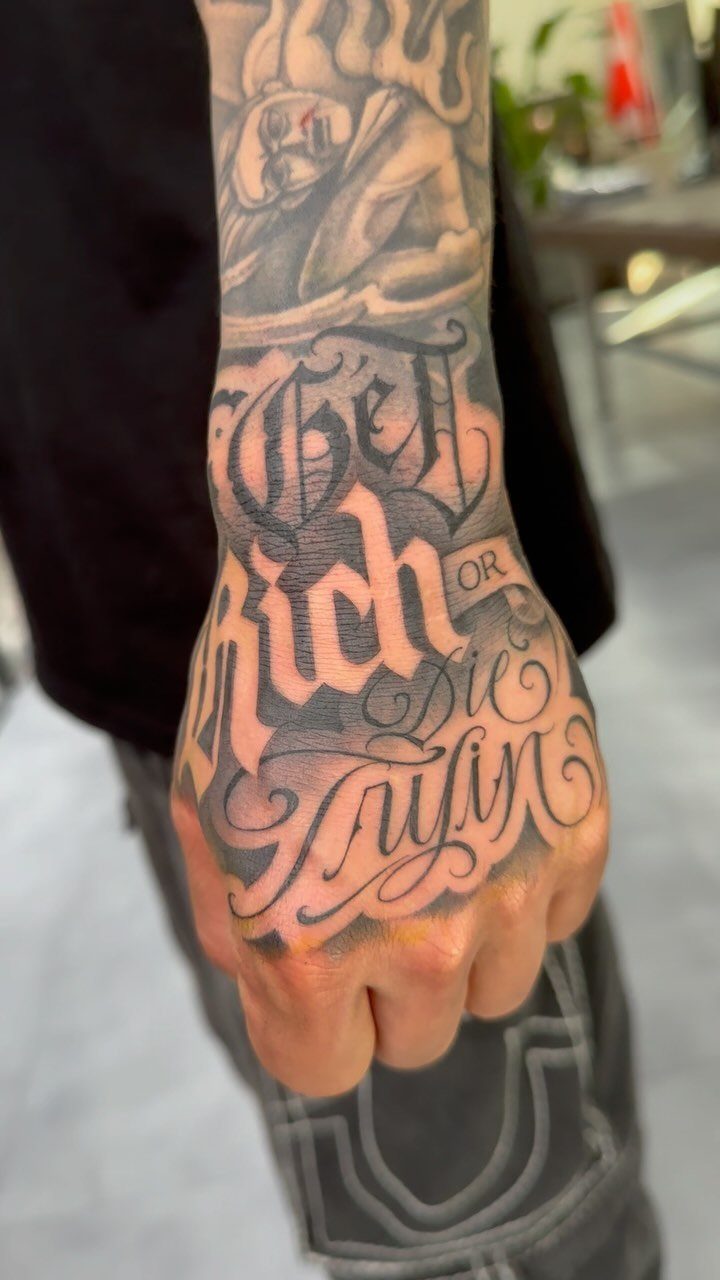
Script across the hand and fingers reads boldly but commits you to visible ink that most jobs will notice.
The hand offers almost no padding over bone, so sessions here rate high on the pain scale, and healing takes longer since your hands move constantly through the day.
Lettering needs to wrap around the natural curve of your hand, and an experienced artist will adjust letter height so the words stay legible when your hand is open or closed.
Expect touch-ups after a year, since hands lose ink more quickly than covered skin.
14. Payasas
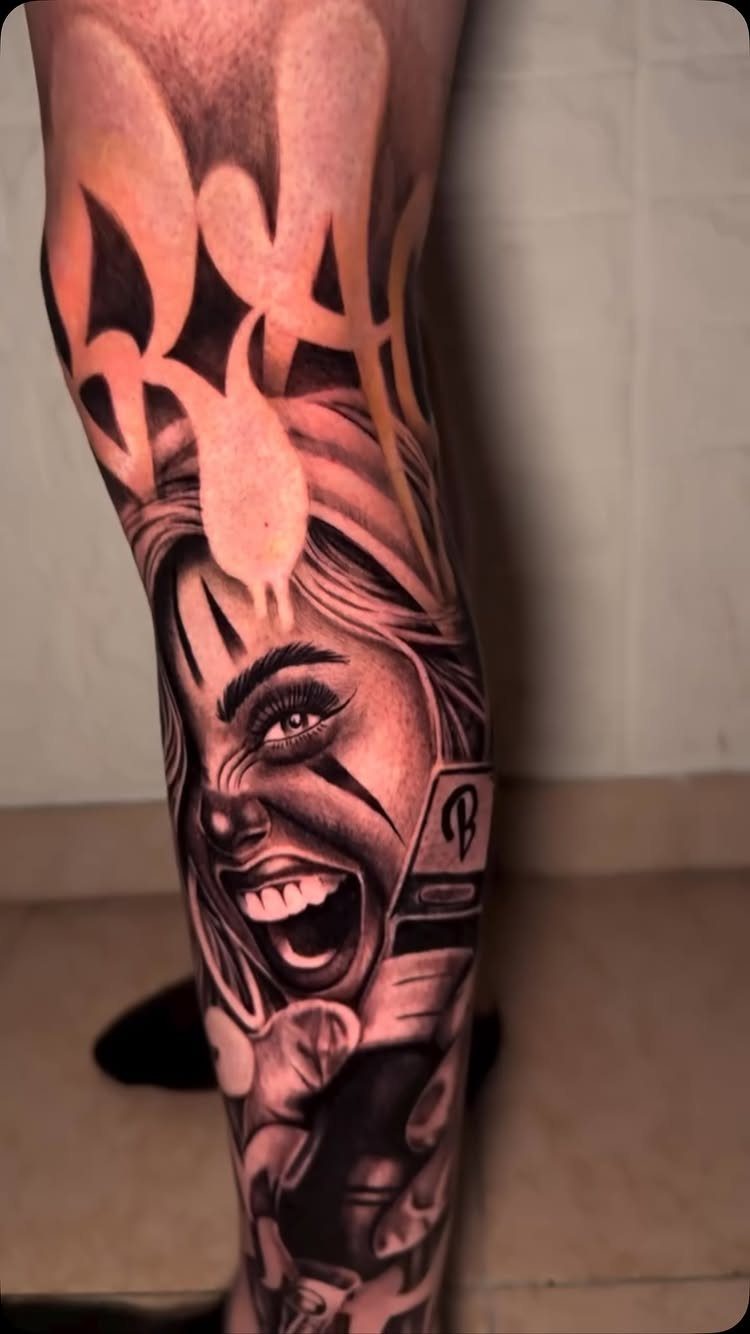
Payasas, or female clowns, show up in Chicano tattooing as figures caught between laughter and sorrow. The makeup hides as much as it reveals, and the image speaks to performance, resilience and the masks people wear through hard circumstances.
A payasa portrait fits the forearm, thigh or calf where there is room for the face and any script you want to add.
The shading on the makeup requires an artist comfortable with smooth gradients that keep the expression readable as the tattoo settles.
15. Religious Symbols
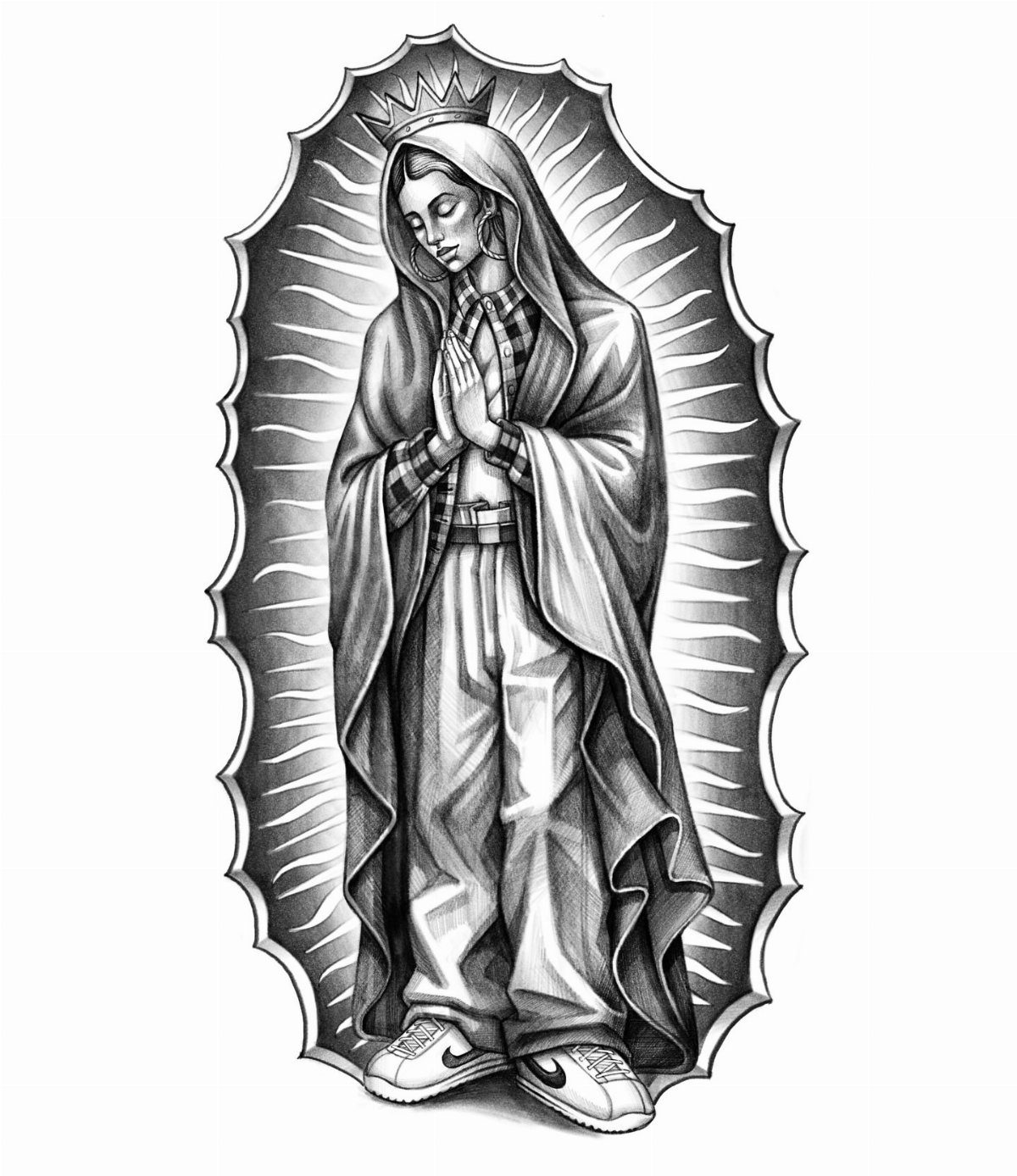
Praying hands, the Virgin of Guadalupe and rosary beads anchor many Chicano tattoos, offering protection or honoring faith and family.
A full figure of the Virgin requires a larger canvas like the back, chest or thigh. Praying hands alone fit the forearm or inner bicep and pair well with a name or date in script below.
16. Gangster Imagery
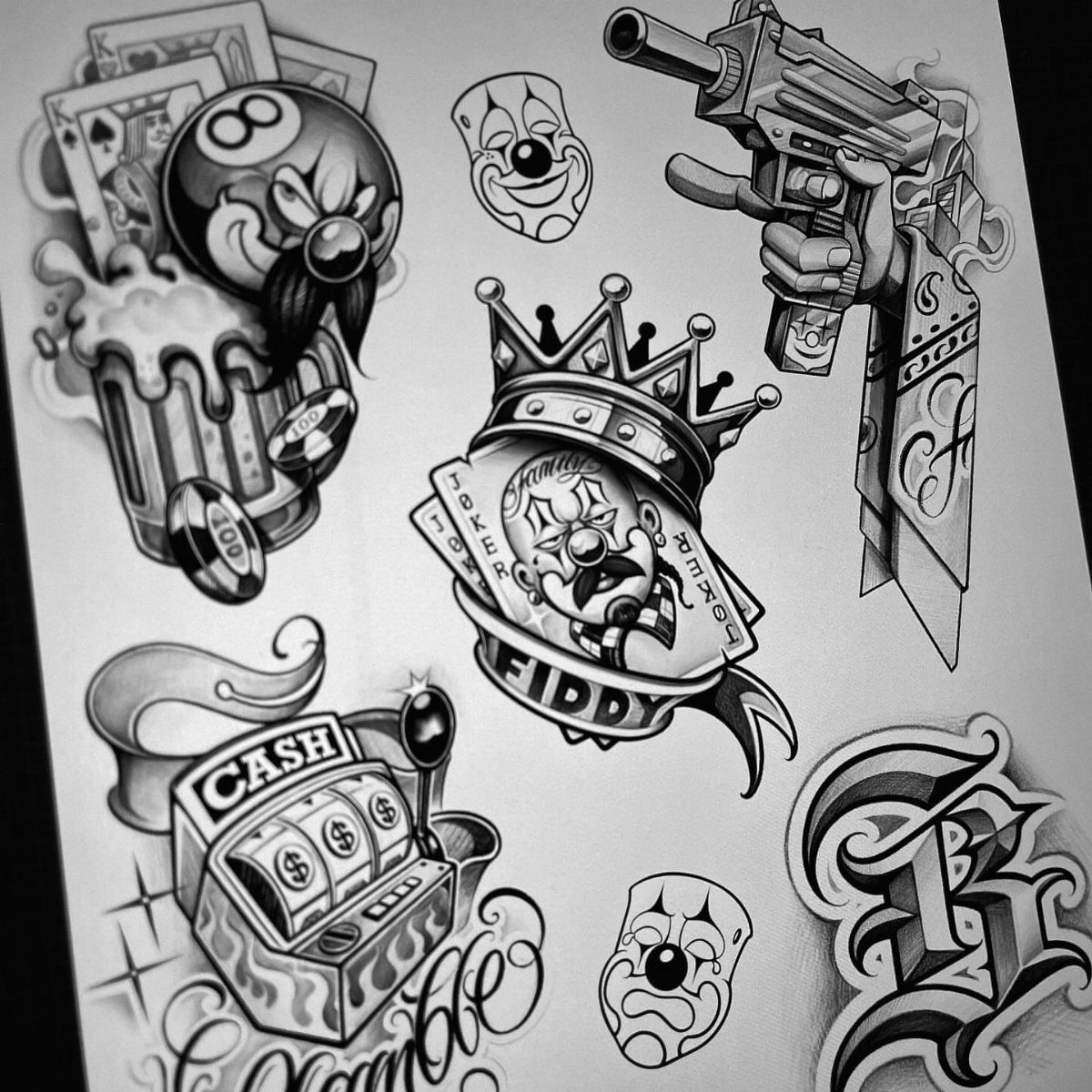
Guns, dice, playing cards and slot machines point to risk, luck and street culture, and they layer easily into larger Chicano compositions.
A crowned clown beside a handgun or an 8-ball gives you a piece that speaks to survival and chance without leaning on realism.
These symbols work as flash-style standalone pieces or as filler around a portrait. Combining several elements works best when you have room to let each one read clearly.
17. Full Chest Composition
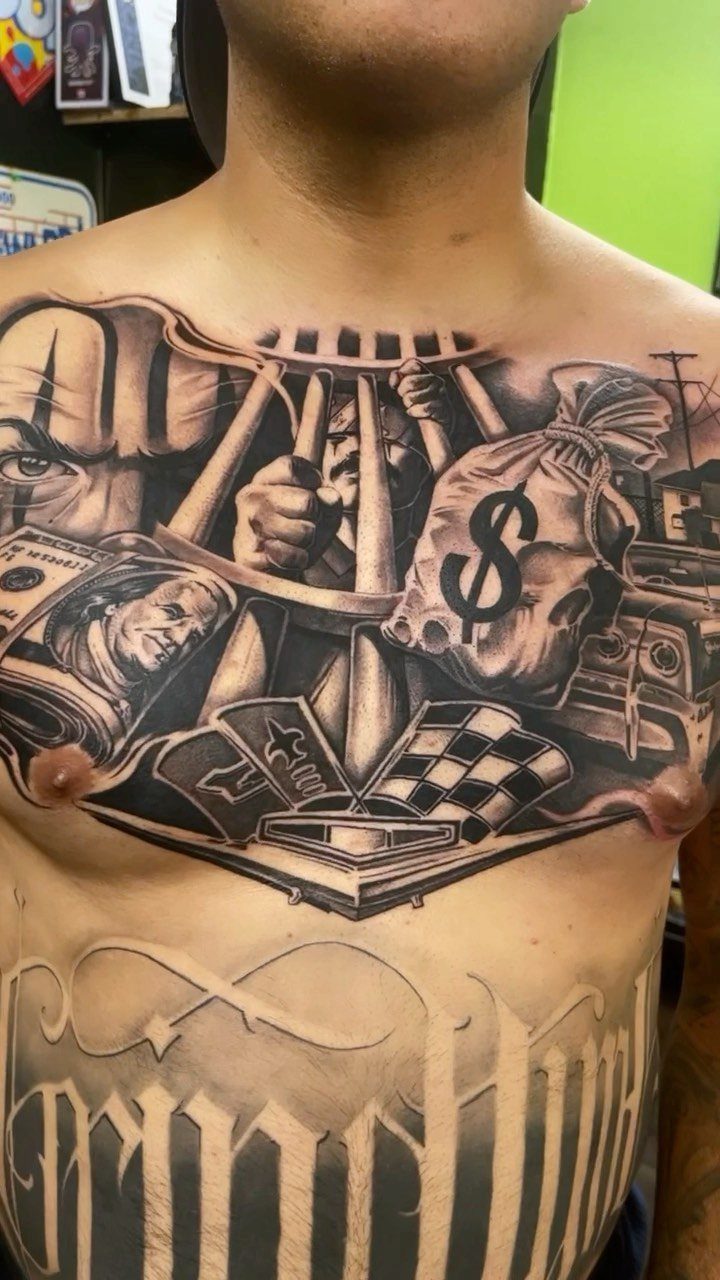
A full chest composition lets you layer symbols like prison bars, money and playing cards into one narrative piece that spans both pectorals and the sternum.
The canvas suits bold script across the ribs or stomach, and the symmetry of the chest helps balance multiple elements.
Pain on the sternum and ribs runs higher than the outer chest, so plan for multiple sessions if you need breaks. Healing here takes patience, since clothing will rub the area while the skin repairs.
18. Realistic Chicana Portrait
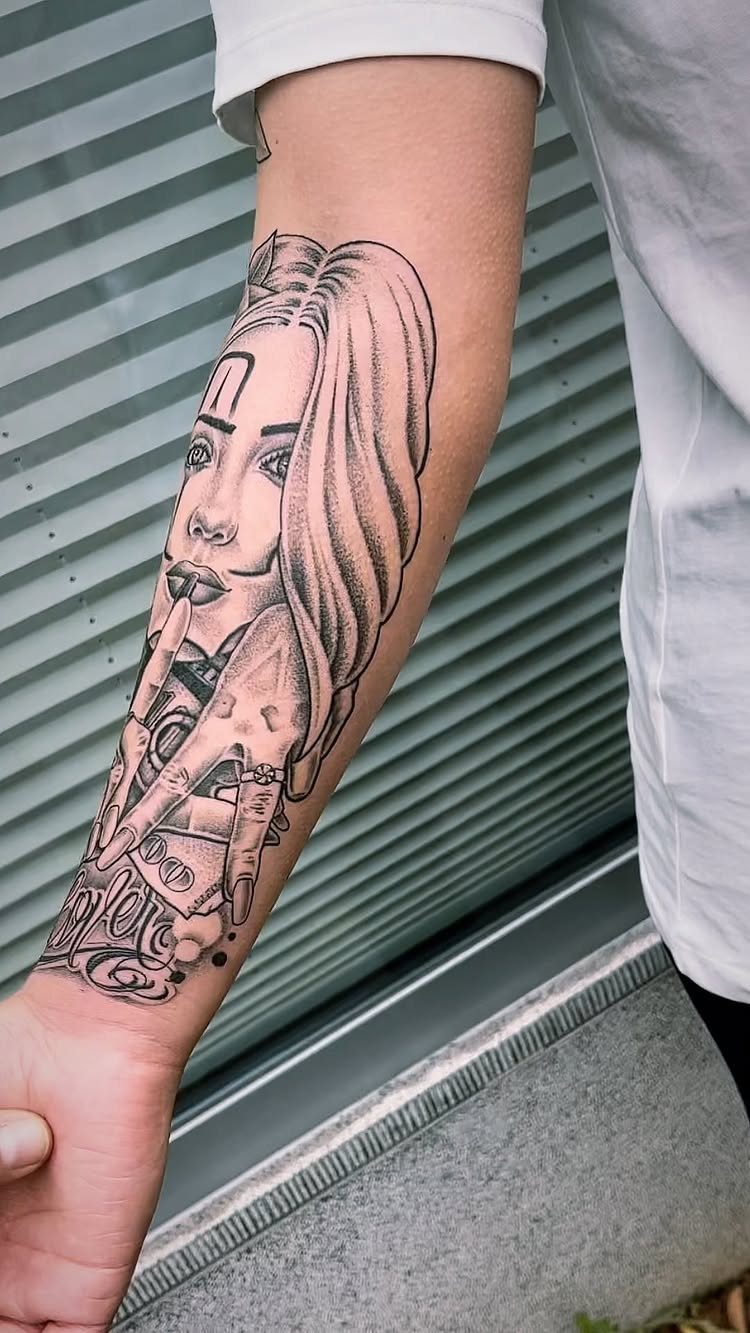
A realistic portrait of a woman on the forearm leans on fine shading and careful attention to facial structure, jewelry and hair.
The detail holds best when the tattoo sits large enough that small features like earrings and eyeliner stay distinct as the ink ages.
Portraits require an artist who specializes in faces, since proportion mistakes are obvious and hard to fix. Bring a high-resolution reference photo and expect a session of at least 4 hours for a forearm-sized piece.
19. Torso Lowrider Collage Design
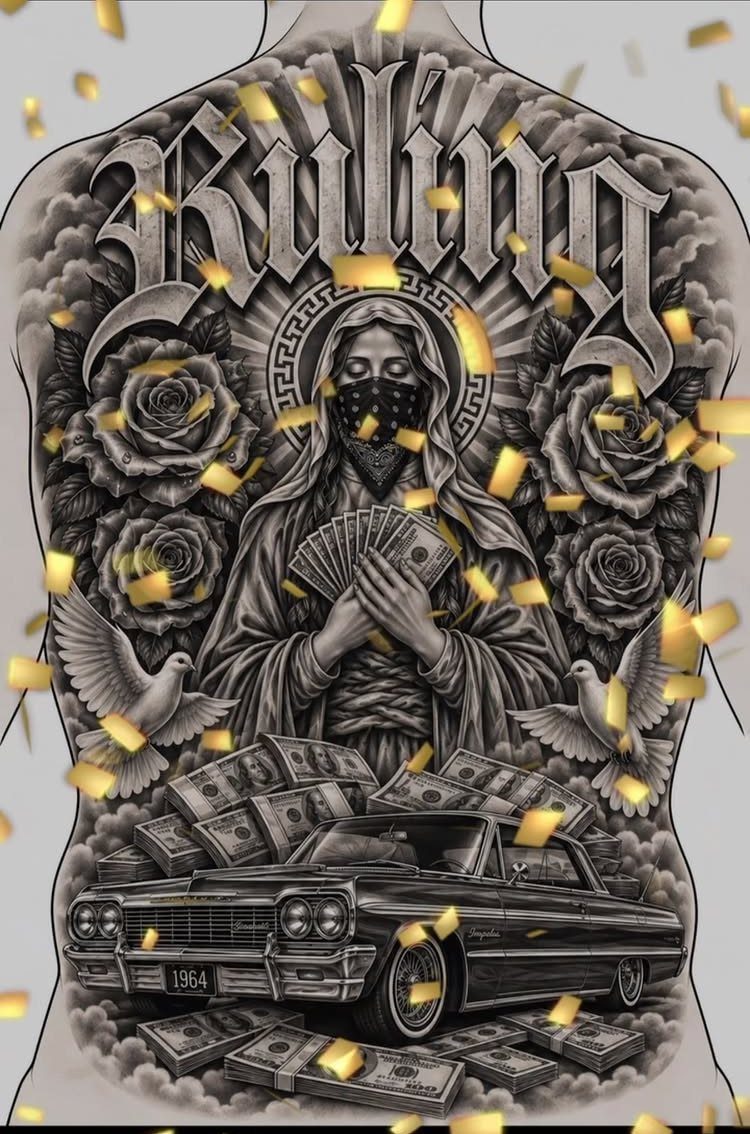
A full torso design that layers a lowrider, masked figure, roses, money and script into one unified composition gives you space to tell a story that touches on heritage, risk and street culture all at once.
The 1964 Impala reads as a cultural anchor, and the confetti adds celebration without softening the narrative.
This placement commits you to multiple sessions and higher pain on the sternum and ribs.
The outer chest stays more tolerable, so start there if you plan breaks. Bring references for each element so your artist can balance the layout before outlining.
Chicano Tattoo History
The Zoot Suit Riots in 1943 became a flashpoint, and the visual language that followed grew directly from it.
Inside prisons, artists worked with limited tools and diluted black ink, developing the fine-line shading and soft gray wash that define the style. Custom script, portraits, praying hands and roses all carried meaning tied to family, faith and survival.
Artists like Freddy Negrete and Mister Cartoon brought the style from the barrio into professional tattoo studios through the 1950s and beyond.
Instagram brought it to a worldwide stage after 2010, and it now ranks among the most recognized black-and-gray styles anywhere.
Cultural Significance
The imagery came to stand for freedom, rebellion and refusing to fall in line.
Today the style carries themes of family, faith, memory, loyalty, grief and pride. A piece can reflect aspiration or power, and it often shows someone willing to claim both their goodness and their flaws without apology.
Adding personal details or layering symbols lets you shape the narrative around your own experience.
Tattoo Aging
Fine detail can blur as ink settles, and a small tattoo or one on friction-heavy skin may read heavier years later than it did when healed.
If you live somewhere with strong UV, plan for sunscreen on visible ink.
Without structure underneath, the design can flatten and lose its definition as years pass.