A family tree tattoo can hold as few as 4 names on a forearm or stretch across your entire back with branches for every generation, and memorial headstones mark those who have passed.
The choice comes down to how many people you need to name, where on your body you want it, and how much detail you want to preserve as the ink ages.
1. Family Tree with Names
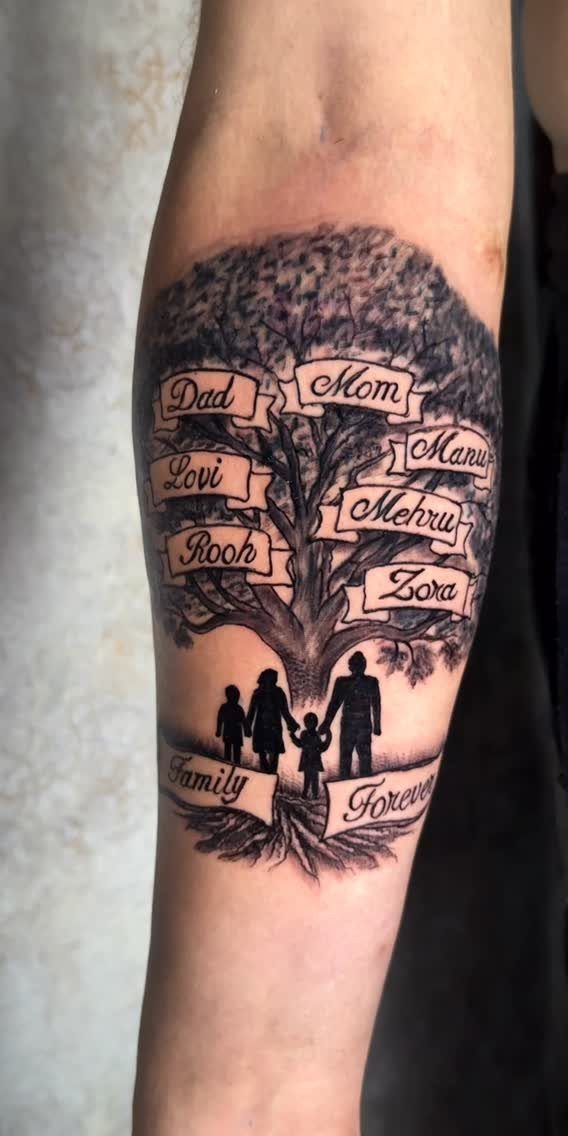
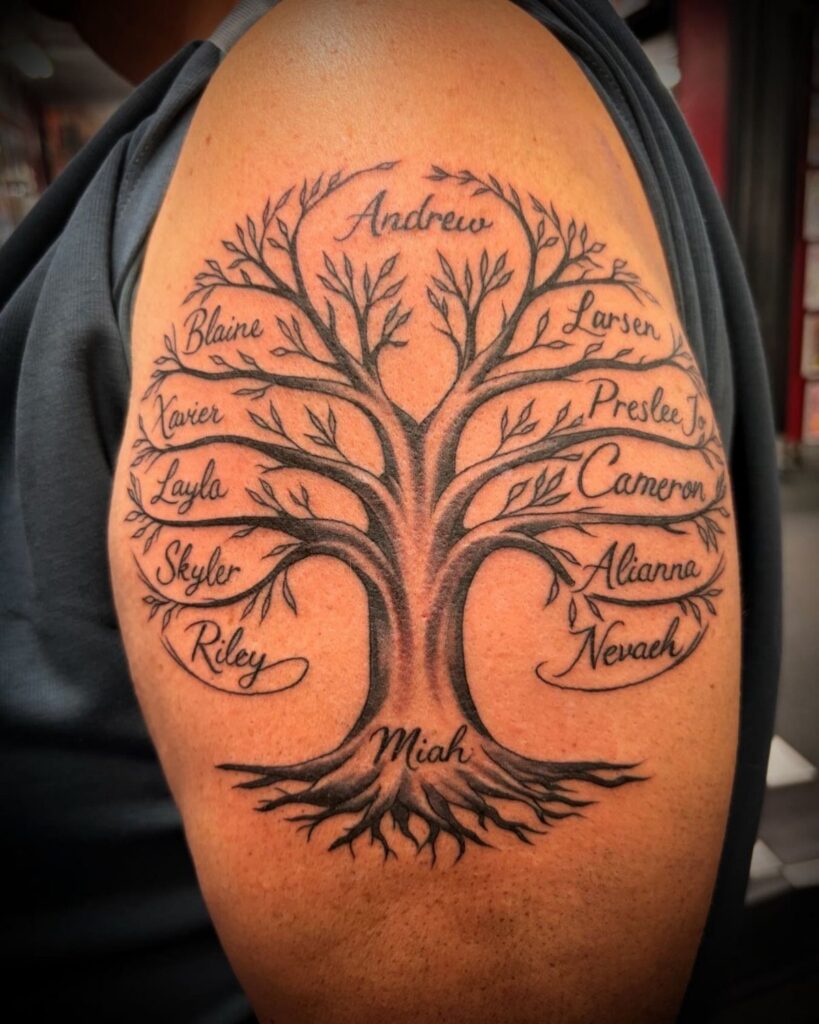
A family tree with names woven into the branches or written across the trunk gives you a piece that names exactly who you carry. Most people place the names on banners, leaves, or scrolling script that follows the limbs.
Placement matters here. A forearm gives you room for 4 to 6 names at a readable size; if you have a larger family, the upper arm or shoulder blade opens more canvas.
Fine line works well for legibility, but script thins out over time, so I’d stick with a font weight that stays crisp.
You can add or extend branches later if your family grows, though matching ink fade takes skill.
2. Family Tree Tattoo with Dates
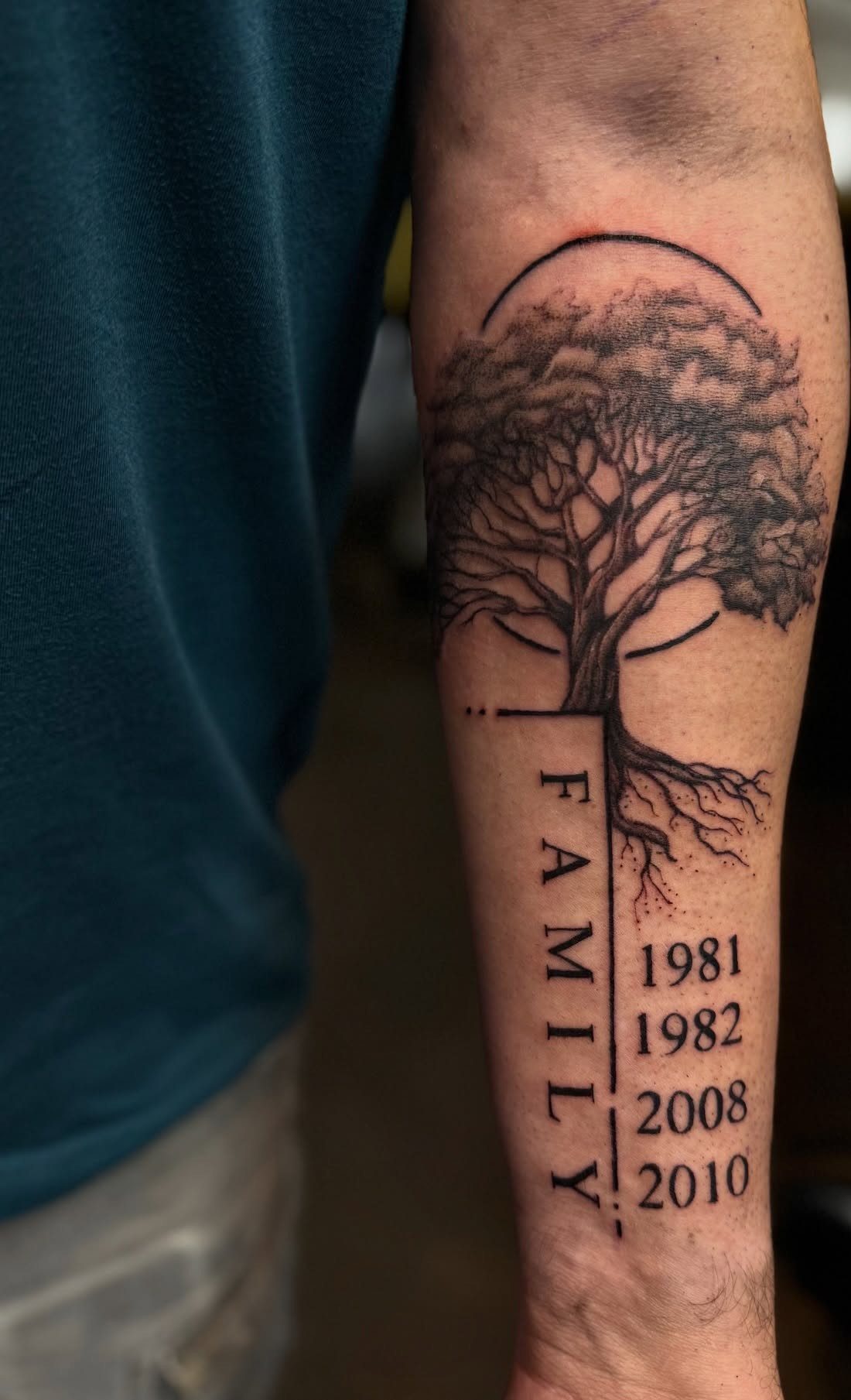
Adding birth years or anniversary dates to a family tree turns it into a timeline. The dates usually sit at the roots, along the trunk, or beside each branch, and they mark the moments that built your family.
A vertical layout like this one keeps the design compact, which suits a forearm or calf.
If you have more than 4 dates to include, consider spacing them along the roots or working them into the branches so the piece stays balanced.
The dates read clearly in bold numerals. Script looks elegant but can blur, especially at smaller sizes, so I’d choose a clean sans-serif or blocky Roman font if you want the numbers to last.
3. Family Tree Arm Tattoo
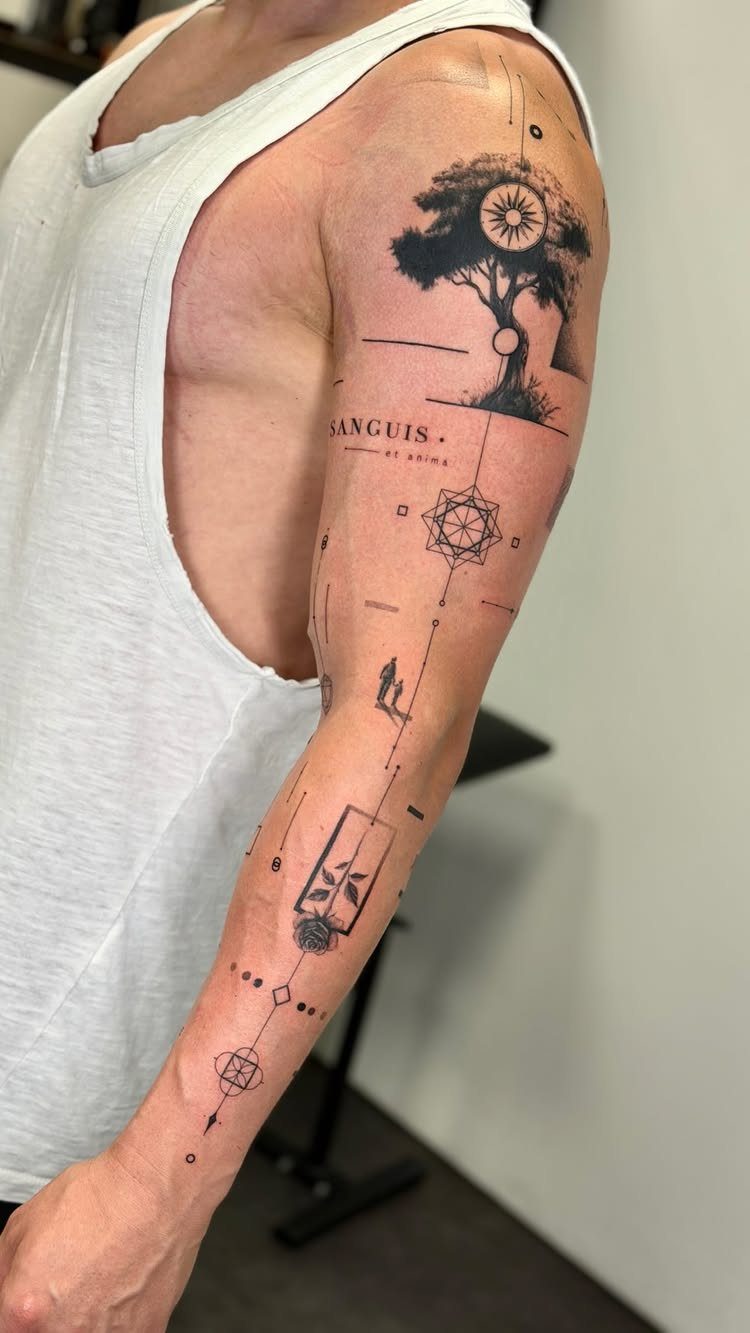
Placing a family tree on the arm gives you a vertical canvas that follows the natural line of your limb.
The design can wrap slightly or stay flat, and the length from shoulder to wrist lets you build detail without cramping the composition.
This piece uses blackwork and geometric elements, which keeps the design strong and readable from a distance. If you want to add names or dates, the inner forearm or bicep offers flat space that won’t distort when you move.
Outer arm placement shows the tattoo more often, inner arm keeps it more private. Pain is moderate on the outer arm, sharper closer to the elbow and inner wrist.
4. Family Tree Back Tattoo
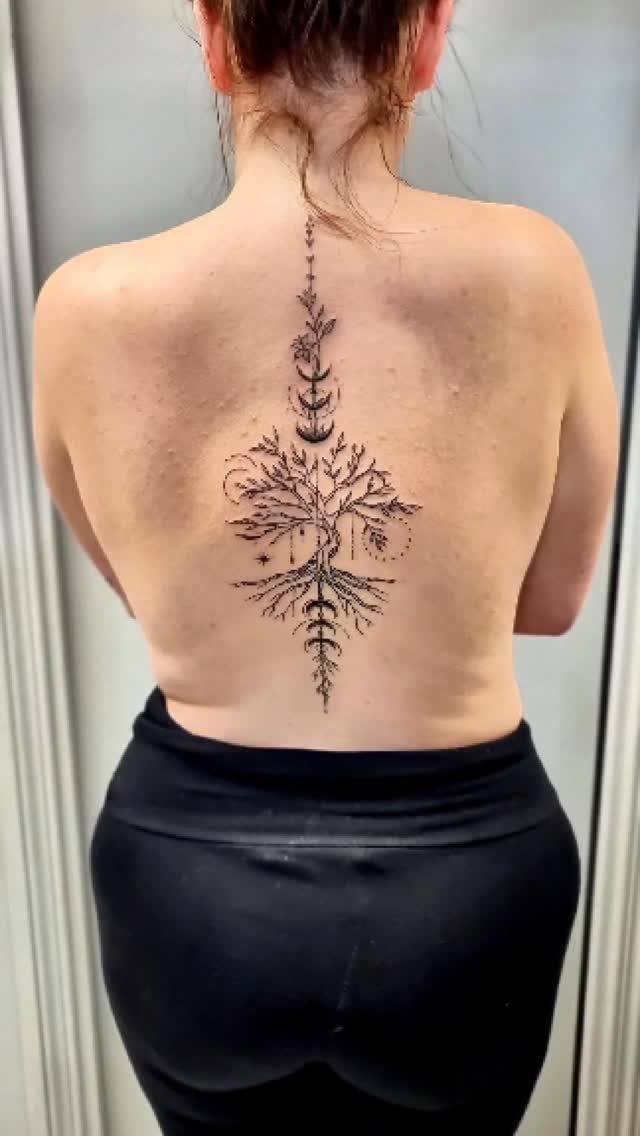
A family tree centered on the spine gives you a tall, symmetrical canvas that can stretch from the lower back to the shoulder blades.
The vertical orientation suits the natural flow of a tree, and the spine itself can become the trunk.
This placement works best for a single, detailed tree rather than a cluttered design. You have room for branches, roots, and added symbols like moon phases or small text, but the pain here is high, especially over the vertebrae.
Sessions run longer because you can’t shift position easily. If you want a large tree but less pain, consider the upper back or shoulder blade instead, where the muscle cushions the needle.
5. Family Tree with Heart at Roots
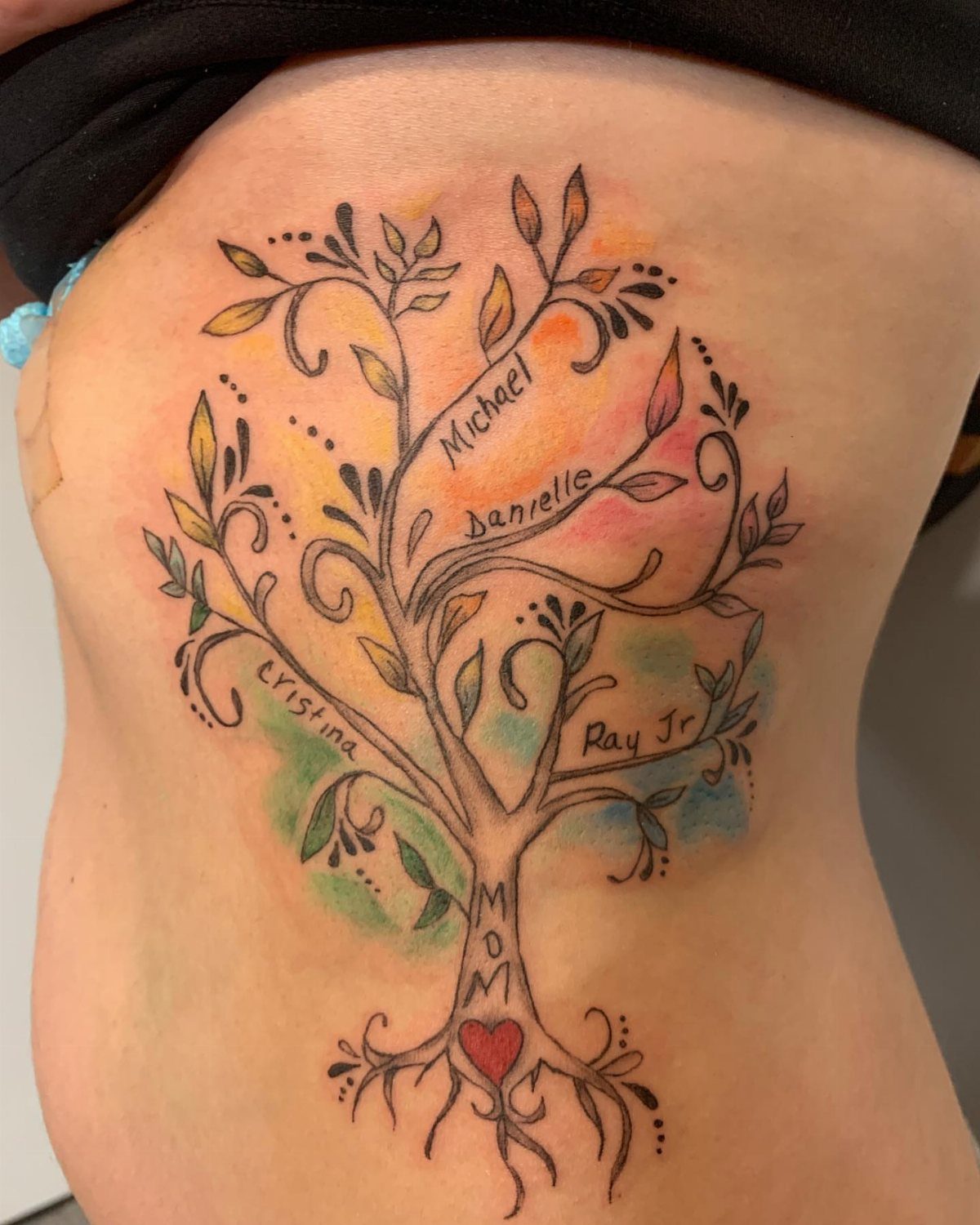
A heart placed at the roots anchors the tree in emotion rather than just lineage.
The heart can hold initials, a date, or stay solid as a visual anchor, and it reads clearly as the source from which the family grows.
The ribs, side torso, or upper chest give you the vertical span this design needs. Adding watercolor accents around the branches or heart softens the look, though watercolor fades faster than solid ink and needs touch-ups every few years.
If you want the piece to stay sharp longer, use solid black for the linework and lettering, though a single accent color can work if kept simple.
6. DNA Helix Tree Tattoo
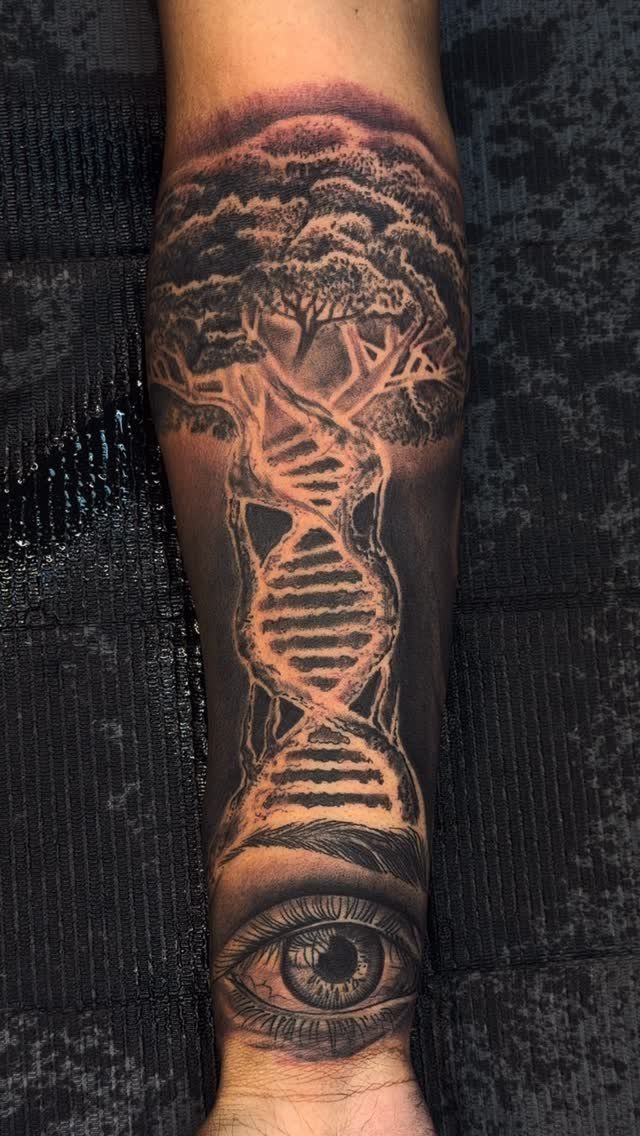
A DNA helix worked into the trunk or roots makes the family tree literal: your bloodline rendered in the structure that carries it.
The helix can spiral up the trunk or form the roots, and the double strand reads clearly in black and grey.
An eye at the base adds a second meaning, whether that’s watchfulness, memory, or connection to the past. The forearm suits this design because the helix needs length to spiral convincingly, and the vertical space keeps the proportions clean.
Run names or dates along the branches to keep the helix as your centerpiece. The detail here requires a steady hand, so choose an artist experienced in fine line or realism.
7. Tree Tattoo with Human Silhouettes
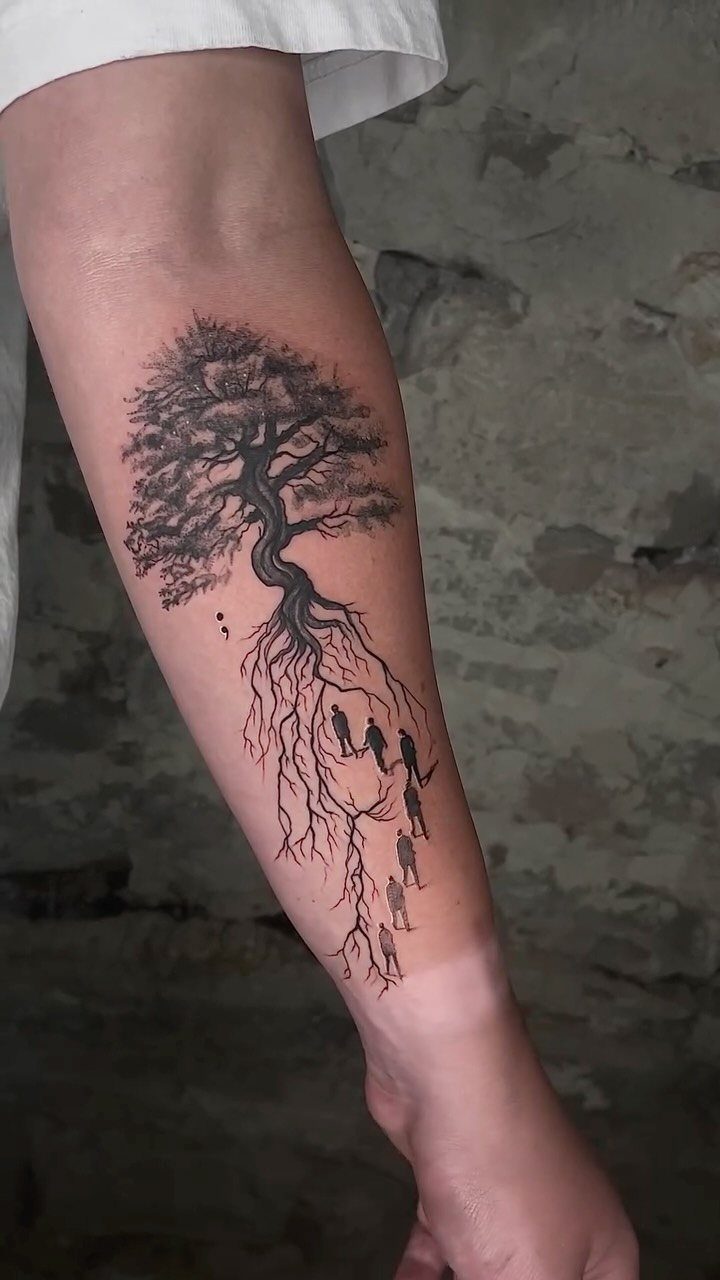
Silhouettes placed in the roots or along the trunk turn each branch of the family into a figure.
The number of silhouettes matches the number of people you want to represent, and the design scales well on a forearm or calf.
Black fills work best here.
Shading the figures grey can lose definition as the tattoo settles, and fine outlines blur faster than solid shapes. The forearm gives you a flat surface that keeps the figures upright and readable.
If you want to add names, place them above or beside each silhouette rather than inside it.
8. Watercolor Family Tree Tattoo
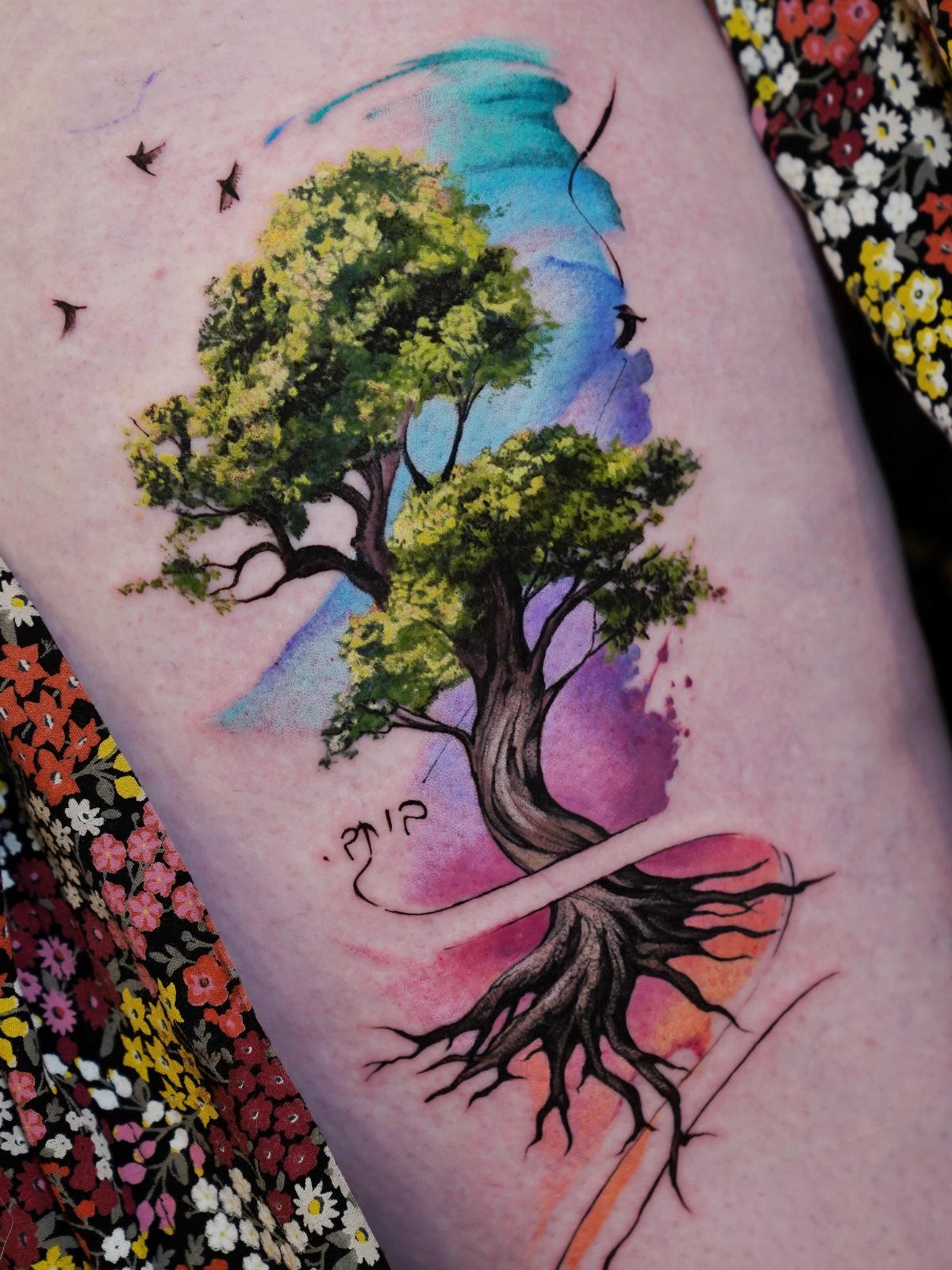
Watercolor splashes behind the branches soften the outline and add movement without overwhelming the tree itself. Blue, purple, and orange are the most common choices, and they fade faster than black linework depending on sun exposure.
The contrast between solid black roots and loose color reads well on the arm, where the shape stays visible even as the watercolor lightens.
If you want the color to last, keep it bold at the start and plan for a touch-up.
Some artists layer the watercolor under the linework, others float it behind. Ask to see healed examples of both.
9. Family Tree with Memorial Headstones
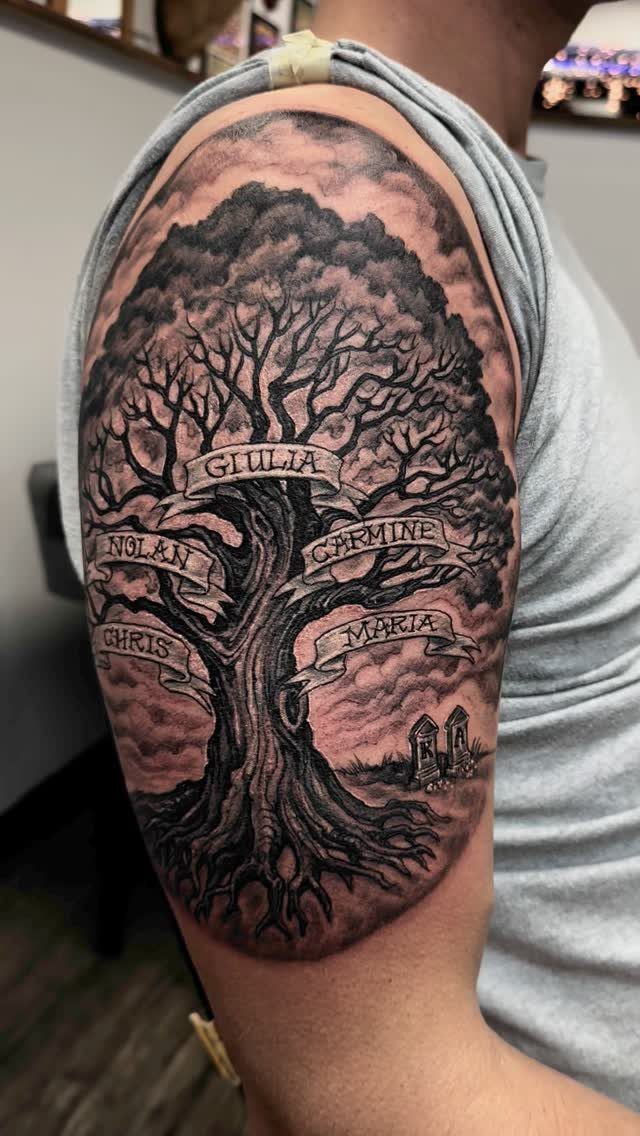
Headstones at the base mark family members who have passed, and they sit below the living names on banners or branches above. The upper arm gives you vertical space to separate the 2 groups without cramping the composition.
Black and grey keeps the tone somber and the detail sharp. The headstones can hold initials, dates, or stay plain as markers, and most people place 1 to 3 at the roots.
This design reads as a memorial first. If that intent matches what you want, the layout here handles it with clarity and respect.
10. Storybook Family Tree Tattoo
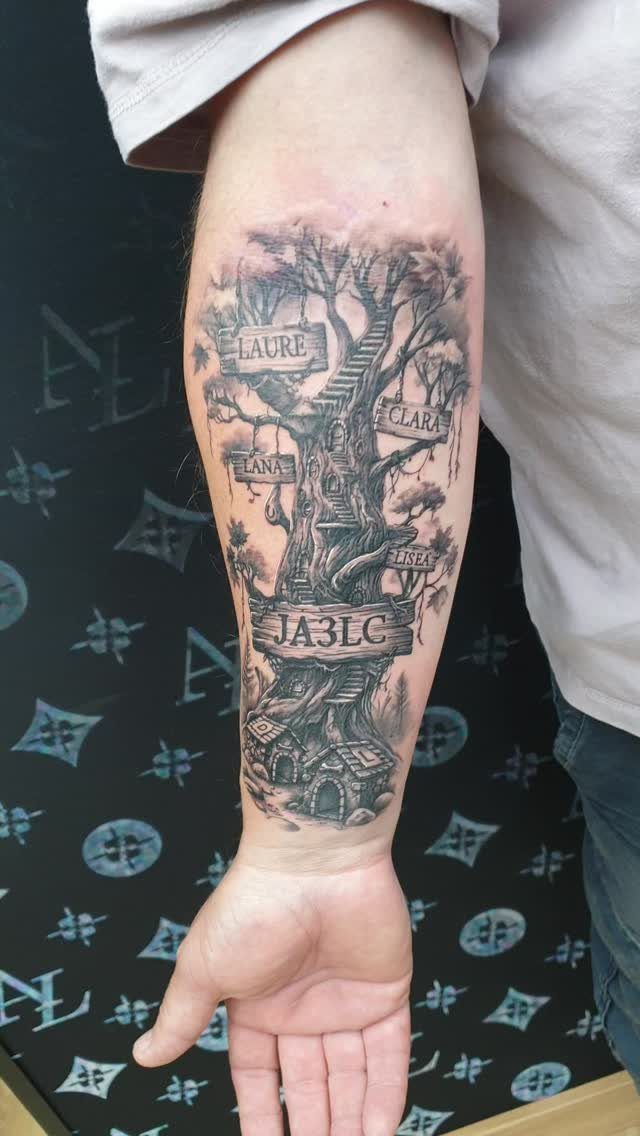
Houses placed at the base root the family in a literal home, and a staircase winding up the trunk adds narrative movement. The forearm suits this layout because the vertical span lets the staircase climb without looking cramped.
Named banners wrap the branches, and the houses can represent childhood homes, current residences, or simply the idea of family grounding.
Black and grey keeps the detail clean, and fine line holds best when the staircase steps are spaced wide enough to stay distinct.
If you want more houses, the roots offer room for additional small structures before the design feels crowded.
Meaning of Family Tree Tattoos
Branches represent the people living now and those still to come, while roots hold the generations that came before.
Most designs personalize with names, dates, or initials, which turns the general symbol into a specific record. Detail holds longer in black and grey than in color, and solid lines age better than fine script when the design is small.
The tree itself carries weight: across most cultures it stands for growth, continuity, and the fact that life keeps going.
An oak reads as strength, a willow as resilience, and the choice of species can add a second layer if that matters to you.
The tattoo itself is gender-neutral. Style and placement shift to fit what you want, from realistic detail on the back to minimalist line on the forearm.
Cultural Significance
Family tree tattoos appear across cultures because the value they represent is nearly universal: lineage, connection, and the people who came before. The design translates without needing explanation, which is part of why it holds up as a choice.
Some people choose a specific tree species for its cultural weight. An oak signals strength, a willow flexibility or mourning, and the species you pick can carry meaning beyond the family structure itself.
The tattoo suits any gender and scales from a small inner-wrist piece to a full back layout.
Placement on the back, arm, or chest gives you room for intricate branches and multiple names, while smaller versions condense the idea into a simpler shape that still reads clearly.
Historical Origins
Genealogical trees have been drawn for centuries, often in manuscripts that traced noble lineage and claims to land or title. Medieval Europe used them to document ancestry and prove heritage, and the visual format has stayed recognizable since.
The tattoo version is a modern take on that same impulse: a way to carry your lineage visibly rather than on paper.
Tattoos have always been about marking what matters, and a family tree does exactly that by taking a lineage and making it something you carry.
The structure itself, branches and roots splitting to show generations, has remained consistent. What has changed is the medium and the audience: a family tree tattoo is personal documentation, not a claim to power.