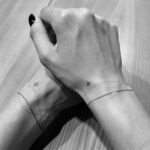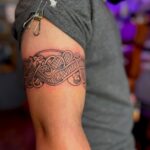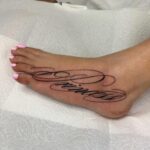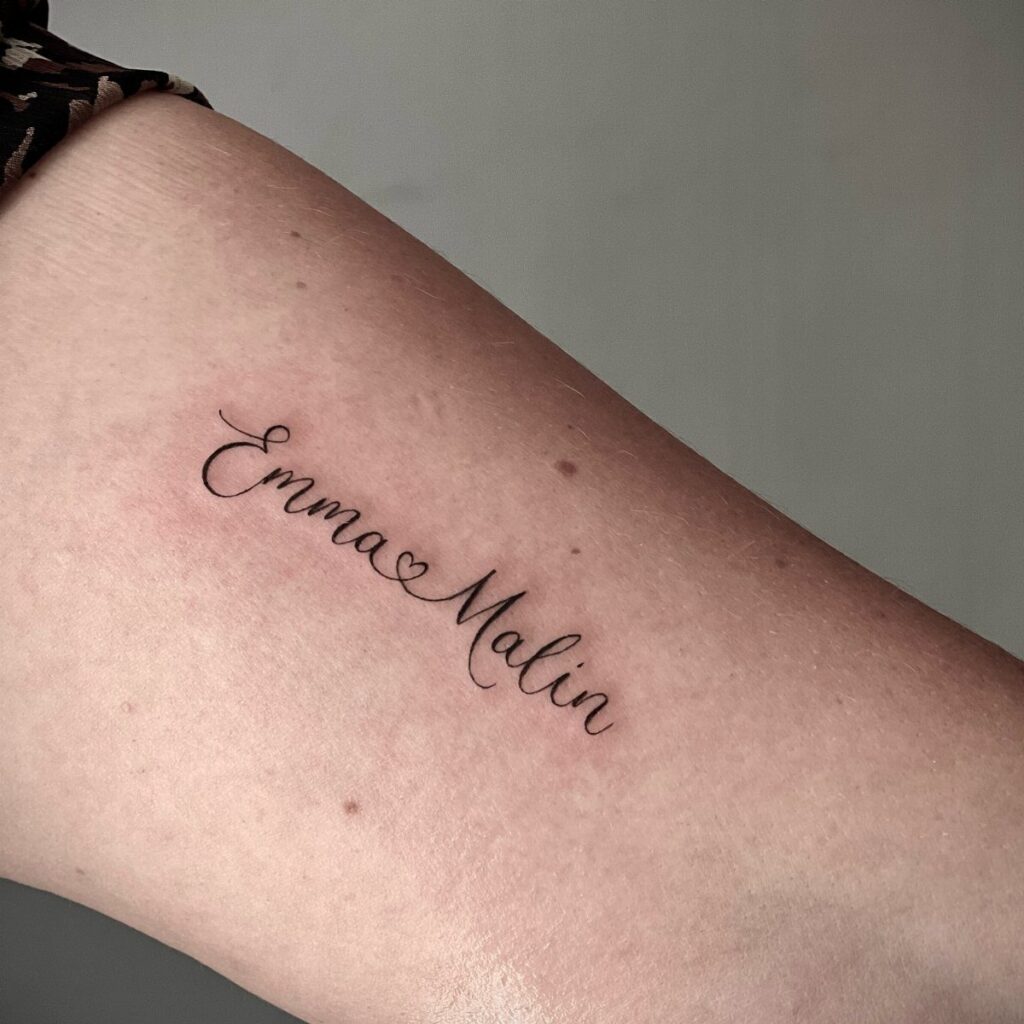
A name tattoo can run from a single word in cursive on your wrist to a vertical stack of names and dates down your forearm, or even a footprint paired with a birth announcement.
Around 78% of people with tattoos regret at least one, and removal costs more than the original work.
Handwritten script taken from a card or letter keeps the design one-off, while Morse code, alphabet blocks or ornate calligraphy offer alternatives to plain cursive.
1. Children’s Names Tattoo with Hearts
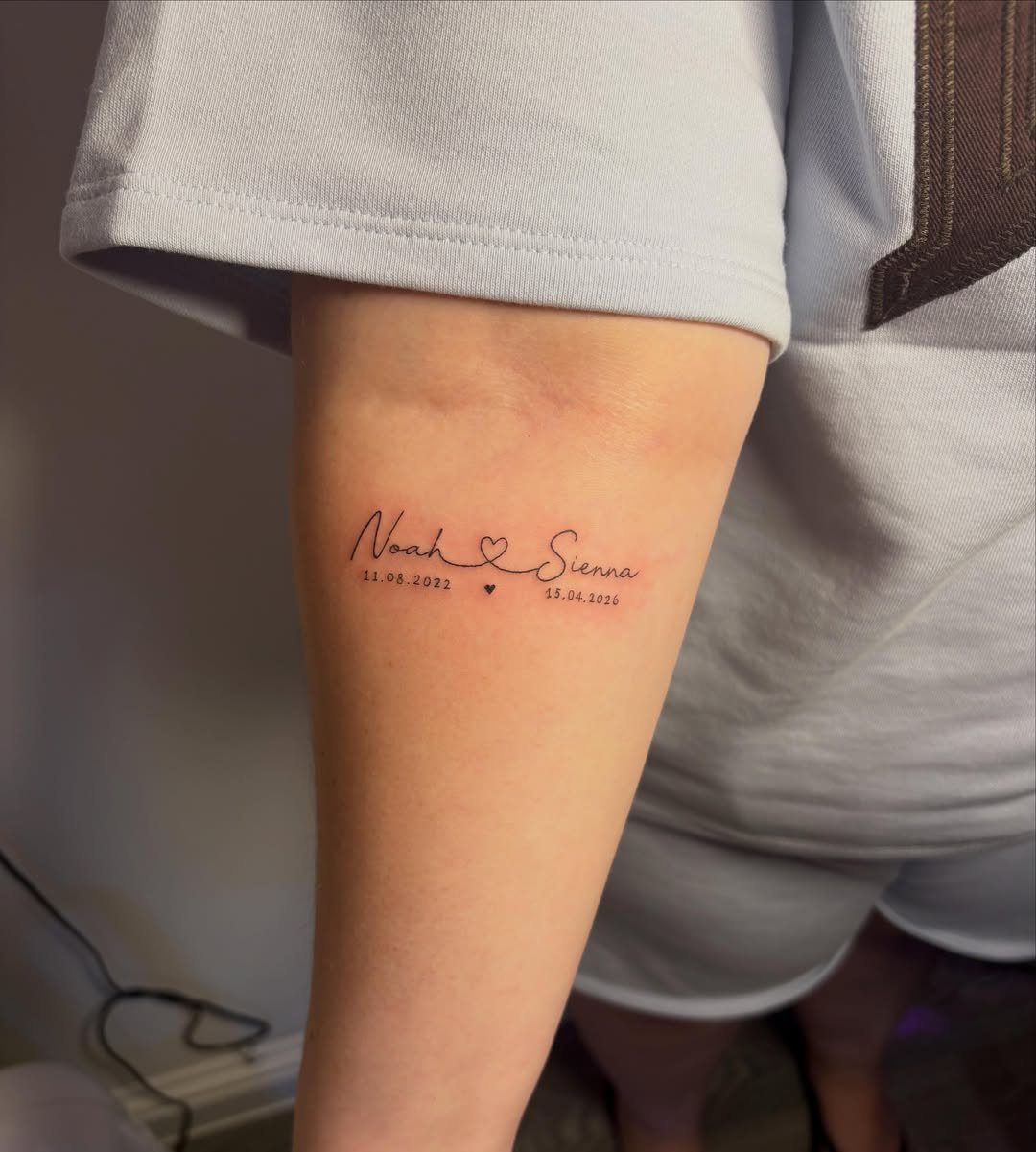
A name for each child, set out in script with a small heart between them and the dates underneath.
The vertical arrangement fits a narrow spot like the upper arm or the inside of the forearm, and adding birth dates makes the whole piece a record you carry.
Cursive with enough space between letters reads cleanly, which keeps the tattoo compact without risking blur. If you have more than 2 names to fit, stack them in a column or arc them gently to follow the shape of your arm.
2. Handwritten Name Tattoos
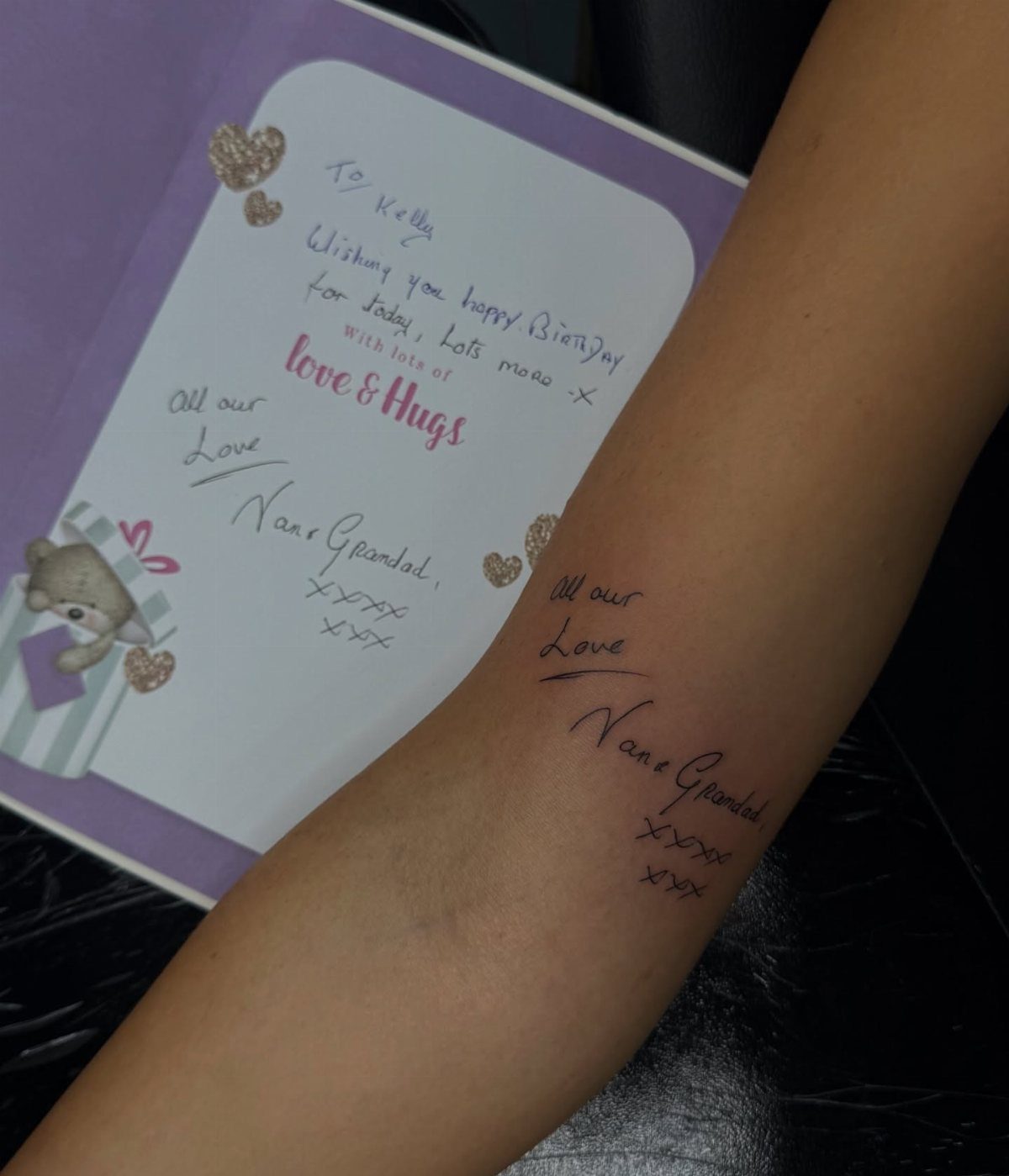
Taking the name from a card, a letter or something written in their hand turns a generic script into a one-off.
The line weight, the slant, the way certain letters connect: those details belong to one person and no stencil font will get them right.
Scan or photograph the original writing in good light so your artist has a clean reference. The tattoo stays legible longer if the handwriting itself is clear and the letters are not too small or tightly spaced.
3. Husband’s Name Tattoo with a Heart
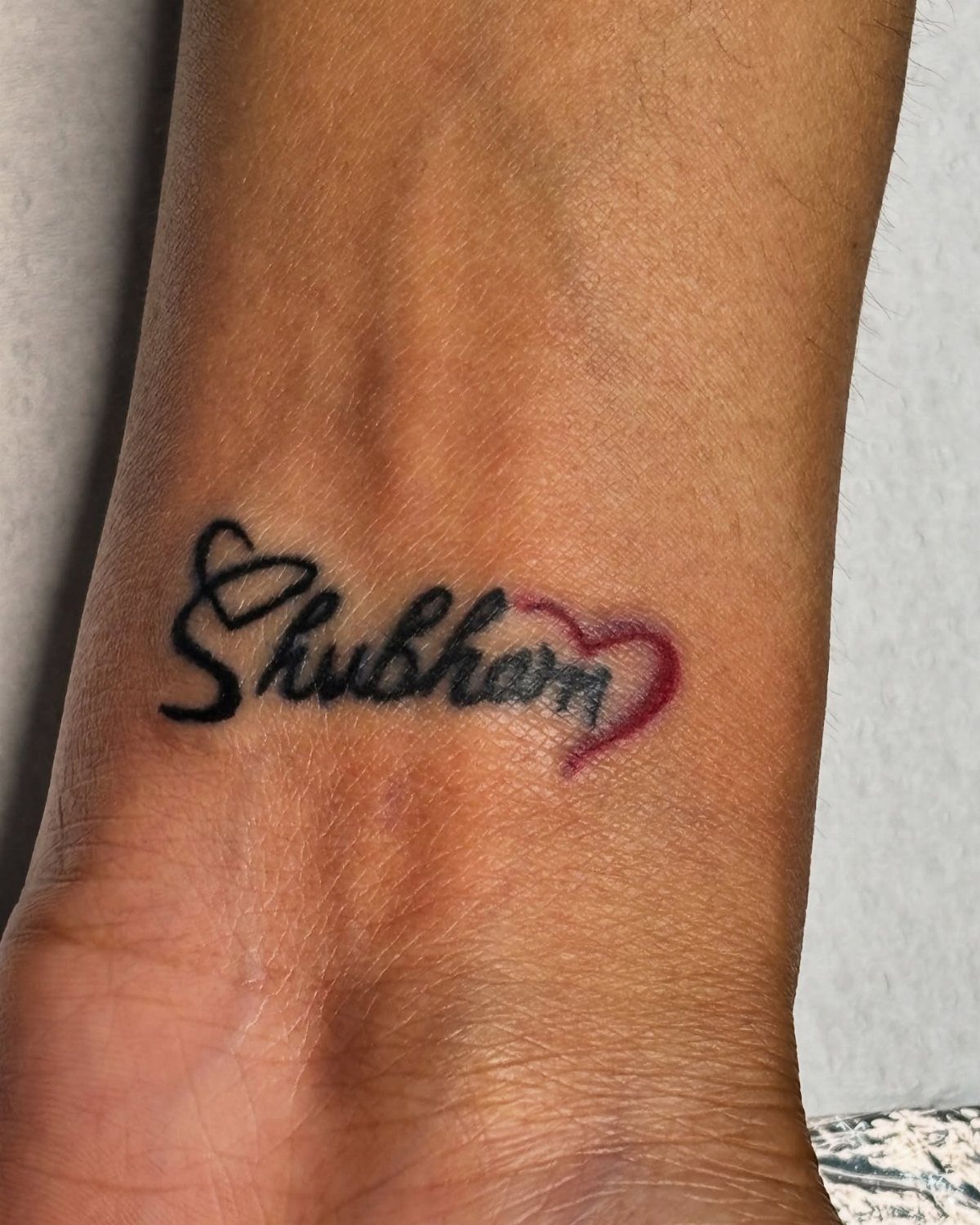
A simple script name with a small red heart at the end, usually placed on the wrist, ankle or collarbone. The color on the heart makes it stand out without needing much space, and the single-line layout reads quickly.
Names in relationships are a personal call.
Some people love them, others hesitate. If you go this route, pick a spot that feels right to you rather than following a trend, and make sure the script size will still read cleanly as the tattoo ages.
4. Flower Name Tattoo
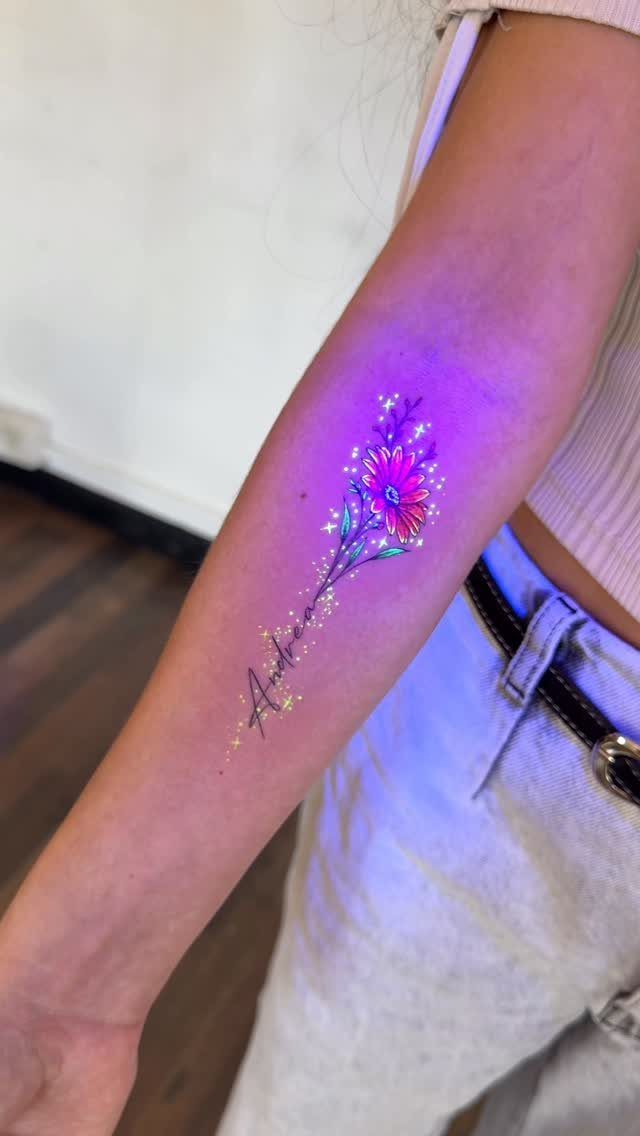
A bloom anchors the design and the name wraps around the stem or sits beneath the petals.
The flower adds color and softness to what would otherwise be plain text, and you can pick a flower that has meaning: a birth flower, a favorite or something tied to a memory.
The combination works best when the name is short.
Longer names can crowd the flower or force the layout wide. If you want color in the petals, plan for a touch-up session a few years out to keep it bright.
5. Cursive Name Tattoo
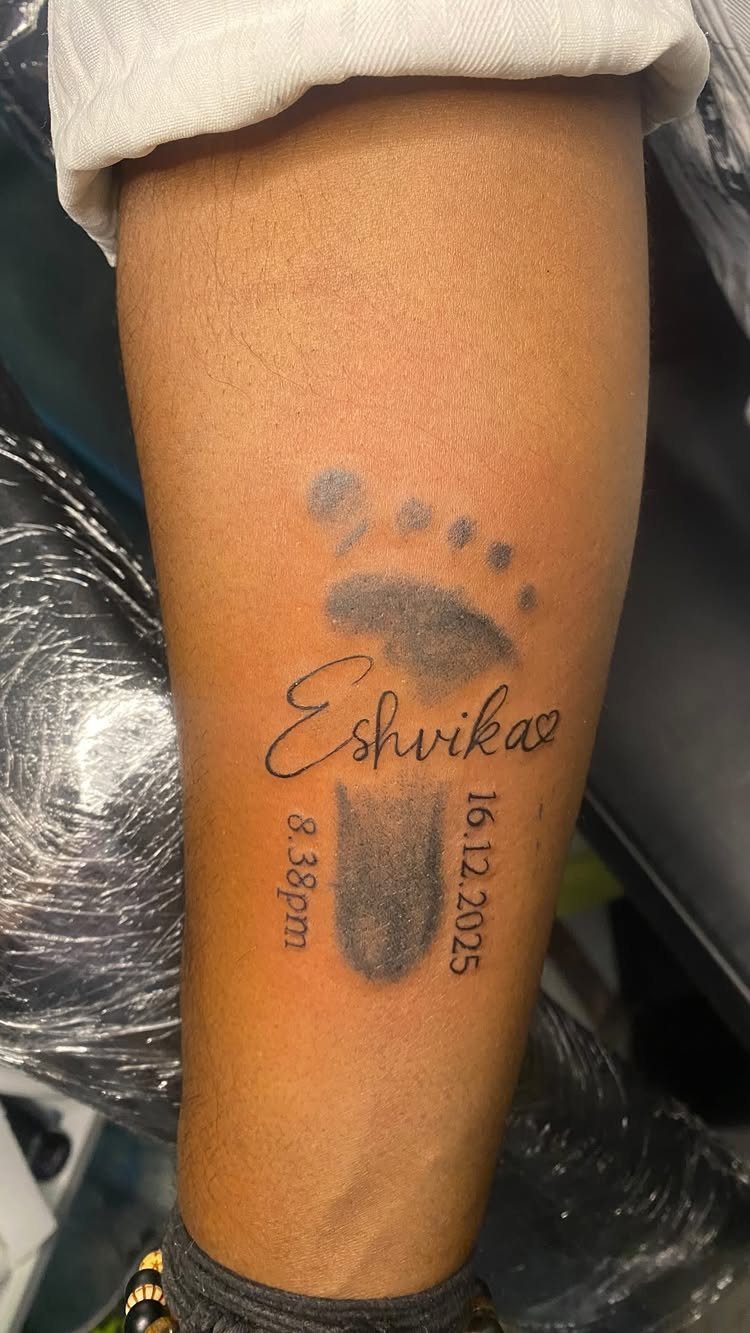
Cursive gives a name a flowing, personal look and scales down cleanly for placements like the wrist, forearm or ribcage. The letters connect, so the whole name reads as one continuous line instead of separate blocks.
Work with your artist to adjust the slant and spacing before the stencil goes on.
Cursive that is too tight or too ornate can blur over time, especially at small sizes. A medium weight with open loops reads more clearly after a decade than ultra-thin script.
6. Morse Code Name Tattoo
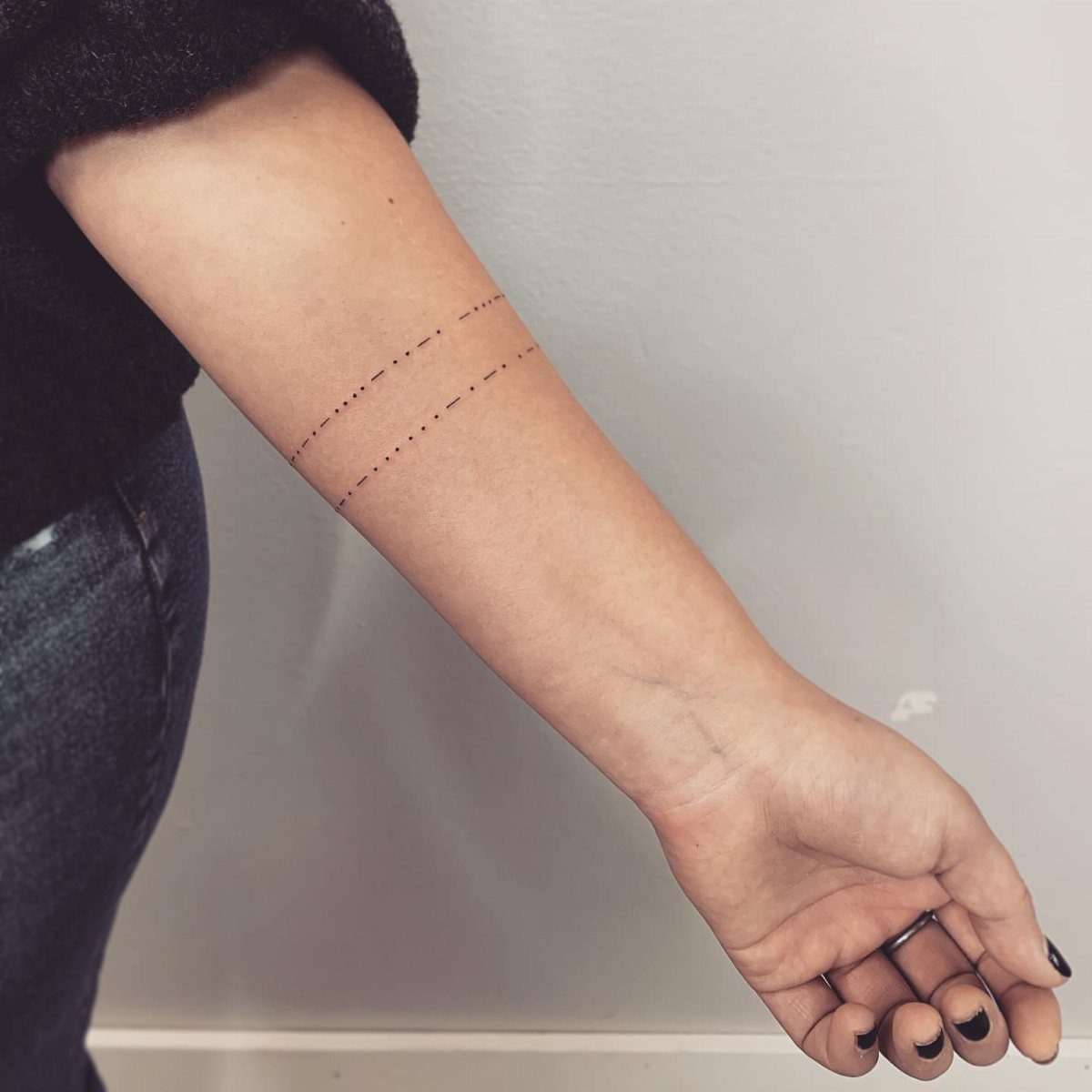
Dots and dashes in place of letters: subtle, minimal and only readable if you know the code.
The tattoo stays small and runs in a straight line, which suits the wrist, side of the finger or the spot just below the hairline at the neck.
Check the translation before you commit.
Morse code is straightforward but easy to misread if a dot gets lost or the spacing is off. Binary is another option with the same appeal, though it takes more characters to spell out a name.
7. Baby Footprint and Name Tattoo
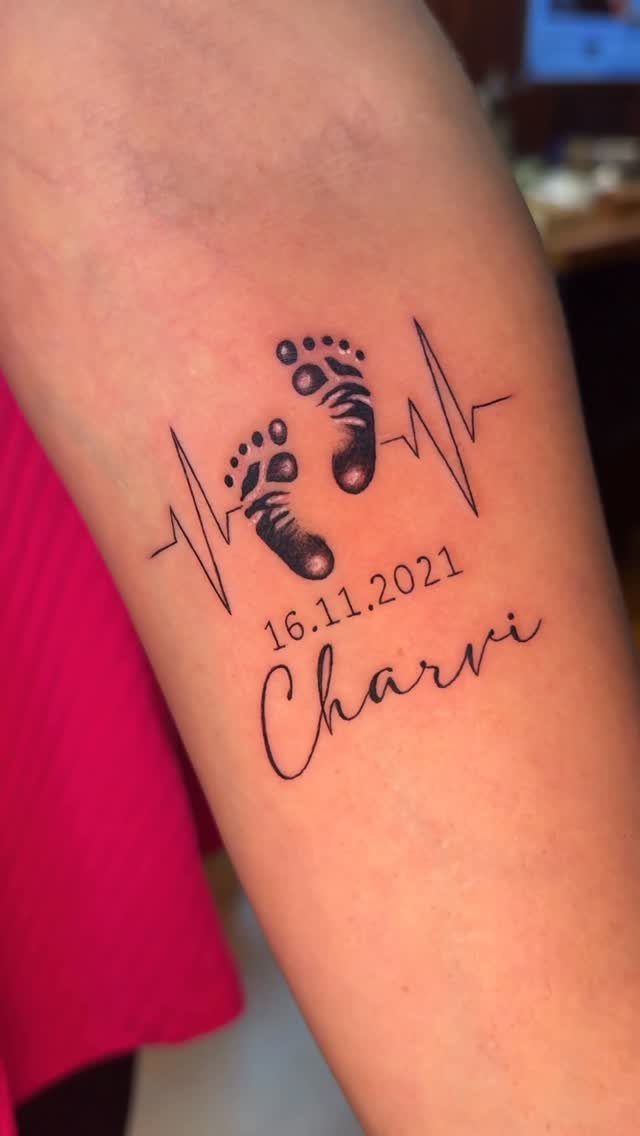
The footprints lock in the exact size they were at birth, and the name with the date turns it into a permanent record.
The whole piece reads clearly on the forearm, where there is room to arrange the elements in a row or stacked column.
Actual footprints from the hospital card make better reference than a generic image.
If the original prints are smudged, your artist can clean up the edges while keeping the shape accurate. Thin lines work for the prints, but the name should be bold enough to stay readable as the tattoo settles.
8. Holding Hands Name Tattoo
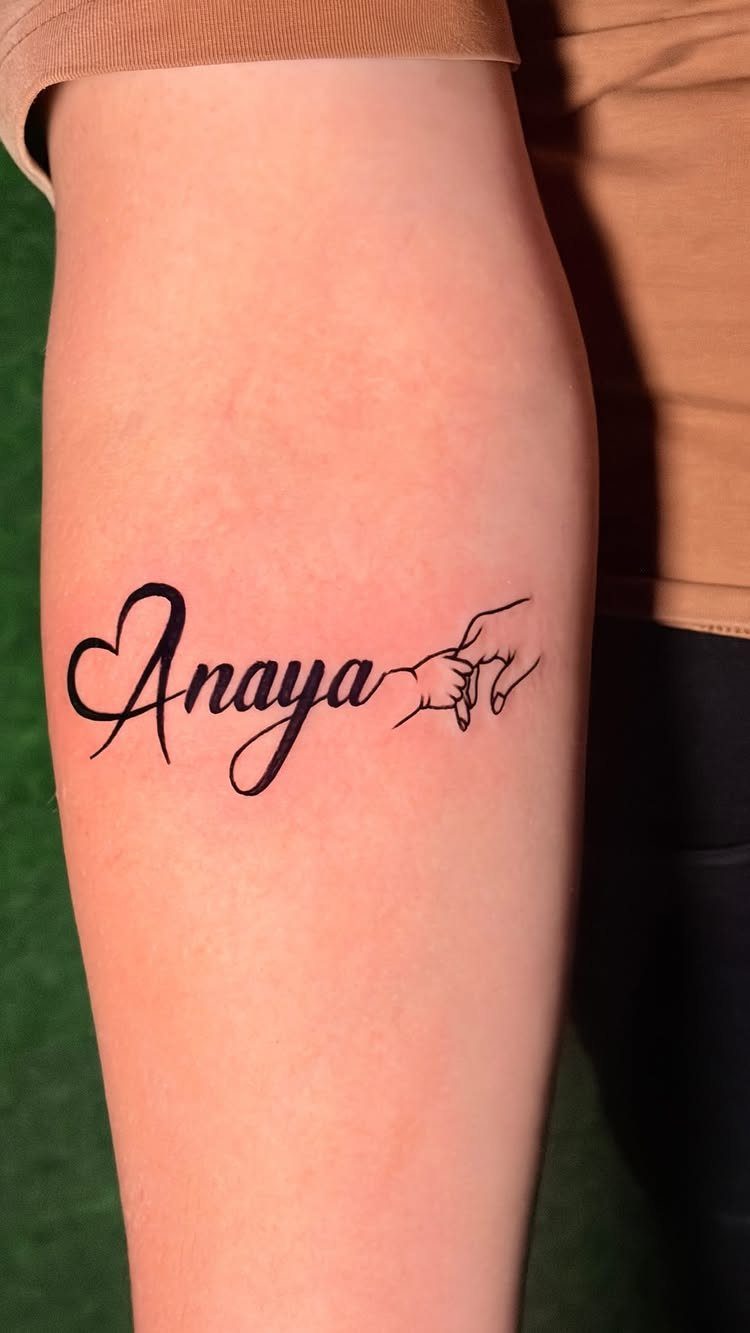
Two hands, one large and one small, drawn in a single unbroken line and placed next to the child’s name.
The line work stays minimal, so the tattoo reads at a glance and fits the forearm or wrist without taking up much room.
Simple line art ages well if the lines are thick enough.
Hair-thin strokes can fade or blur, especially on the hand where skin moves a lot. A medium line weight holds its shape longer, and the single-line style stays clean without shading that needs touch-ups.
9. Alphabet Blocks Name Tattoo
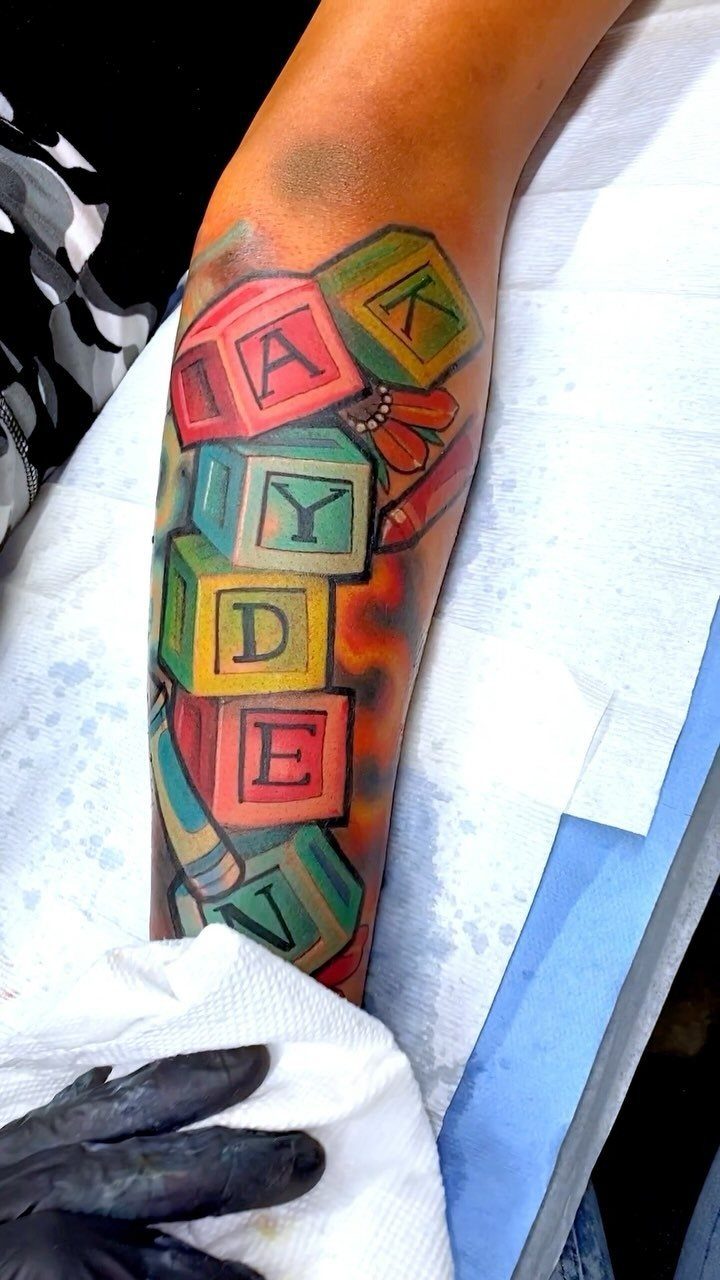
Stacked toy blocks spelling out a name letter by letter, each block shaded and colored to look three-dimensional. The design suits a child’s name and works vertically on the forearm, where the blocks can stack in a clean column.
Color keeps the blocks distinct but will fade faster than black ink. The shading gives depth, so the blocks look like they have real edges instead of flat letters.
10. Ornate Calligraphy Name Tattoo
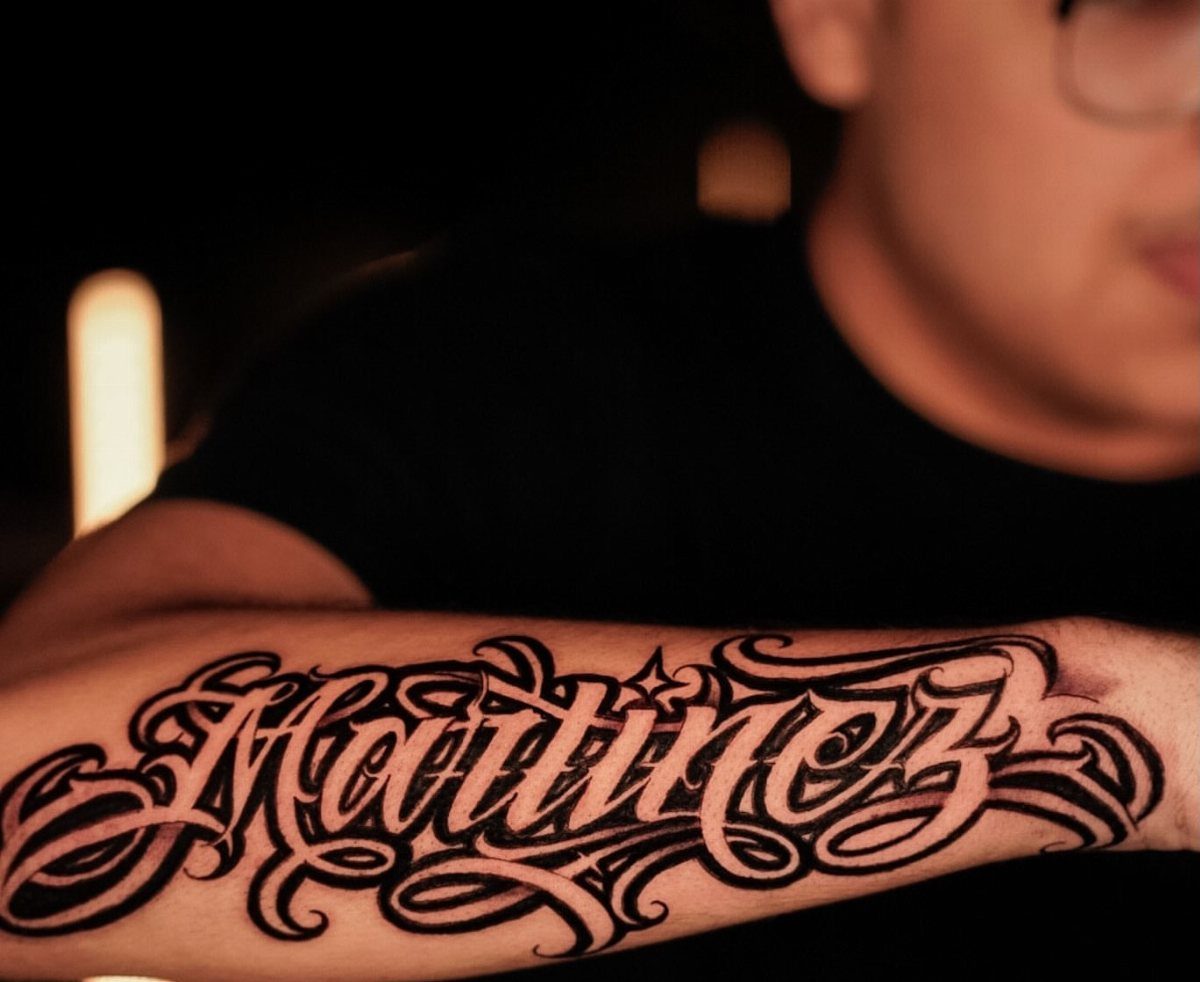
A surname set in heavy calligraphic script with tall capitals, thick strokes and decorative loops.
The size and the flourishes make this style read as formal and deliberate, and it takes up enough room that the forearm is the usual spot.
Ornate calligraphy needs space to stay legible.
If the letters are packed too tight or the flourishes cross too many times, the tattoo can look muddy after it heals. A bold weight with clean spacing holds up better than ultra-fine detail.
11. Name Tattoo with Birth Date
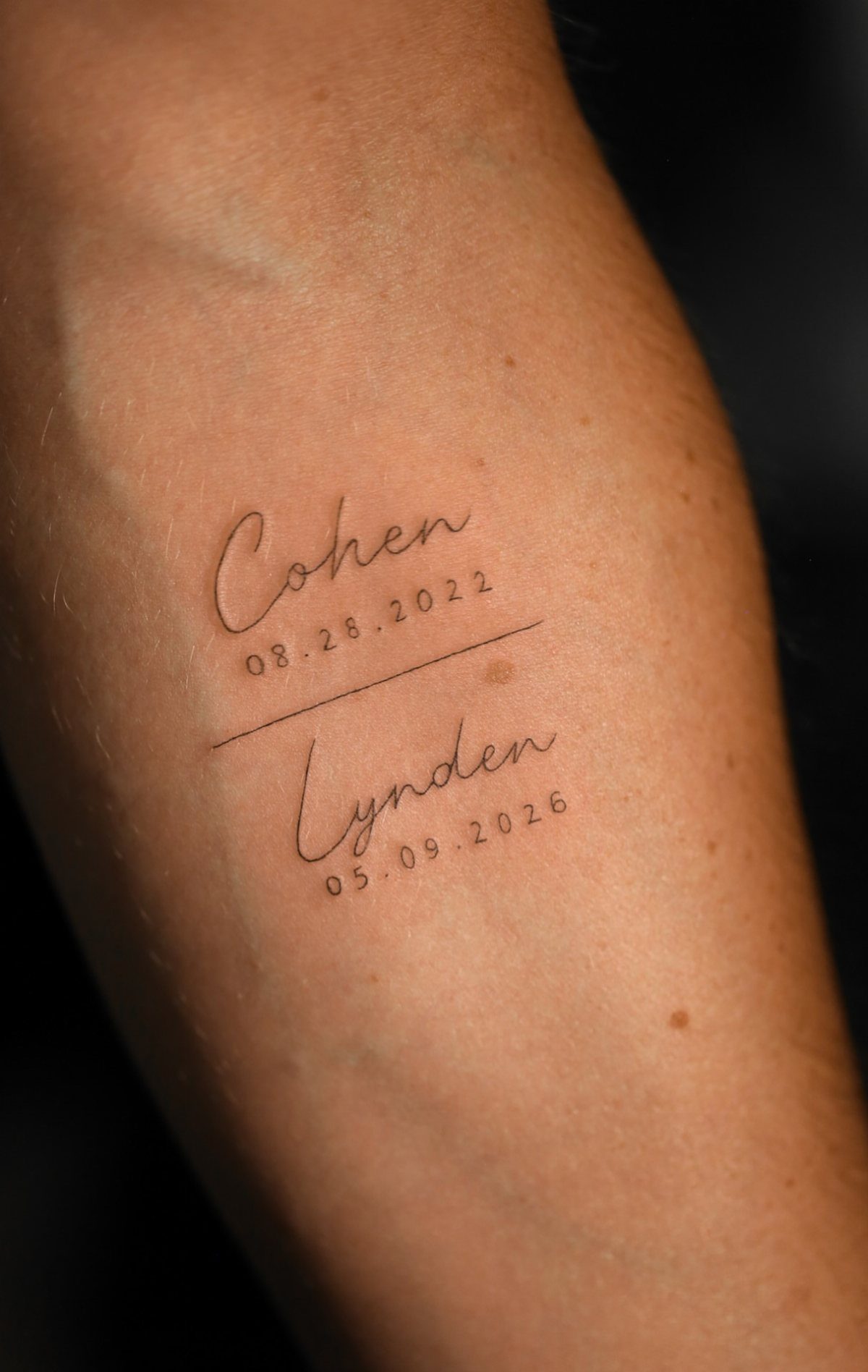
Each name sits above its date, and a thin horizontal line separates one child from the next. The layout is straightforward and fits multiple names on the forearm without crowding them.
Using the same script and date format for each entry keeps the list balanced.
If the names vary a lot in length, adjust the spacing rather than the letter size so the whole piece looks consistent. The thin divider line adds structure without competing with the names.
Advice on Name Tattoos
Names for children, parents or someone who has died carry low regret risk.
Those relationships do not change. Names for partners or friends are a different story.
Around 78% of people with tattoos regret at least one, and half of those regrets are name tattoos.
The number climbs when the name belongs to a boyfriend, girlfriend or close friend, because those relationships can end or shift in ways family ties do not.
If you want a tattoo that honors someone you are with now, consider a symbol, a date, matching designs or something abstract that holds meaning without spelling out their name.
You get the sentiment without locking in text that may feel wrong later.
Removal and cover-ups cost more than the original tattoo and take multiple sessions. A name is harder to rework than most other designs because the letters are already so specific.