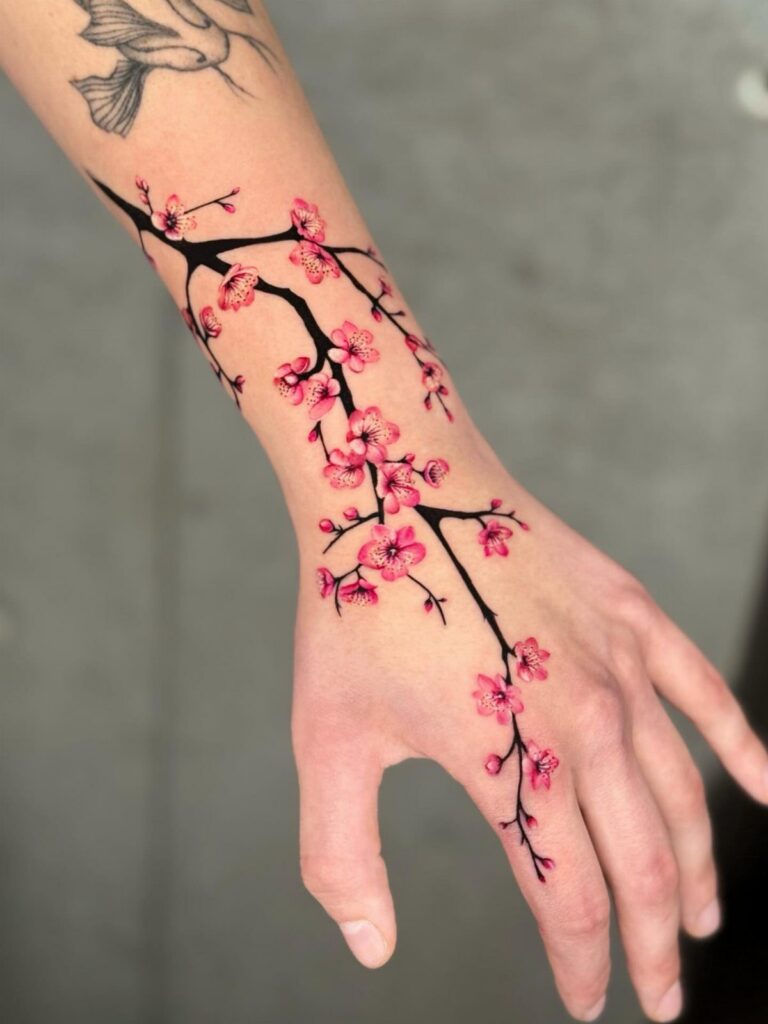
Cherry blossom tattoos range from a single flower to a full sleeve wrapped around the arm, and they pair naturally with dragons, koi fish, swords, foxes, pagodas and samurai.
Placement decides whether the piece reads delicate or bold: chest and shoulder suit soft petals and fine detail, while forearm, leg and full sleeve give branches room to follow your body’s natural curves without looking cropped.
Pink petals hold brightness longer than most pastels, which matters if you’re pairing the flowers with black line work or grey shading that will settle over time.
1. Faded Watercolor Cherry Blossom Tattoo
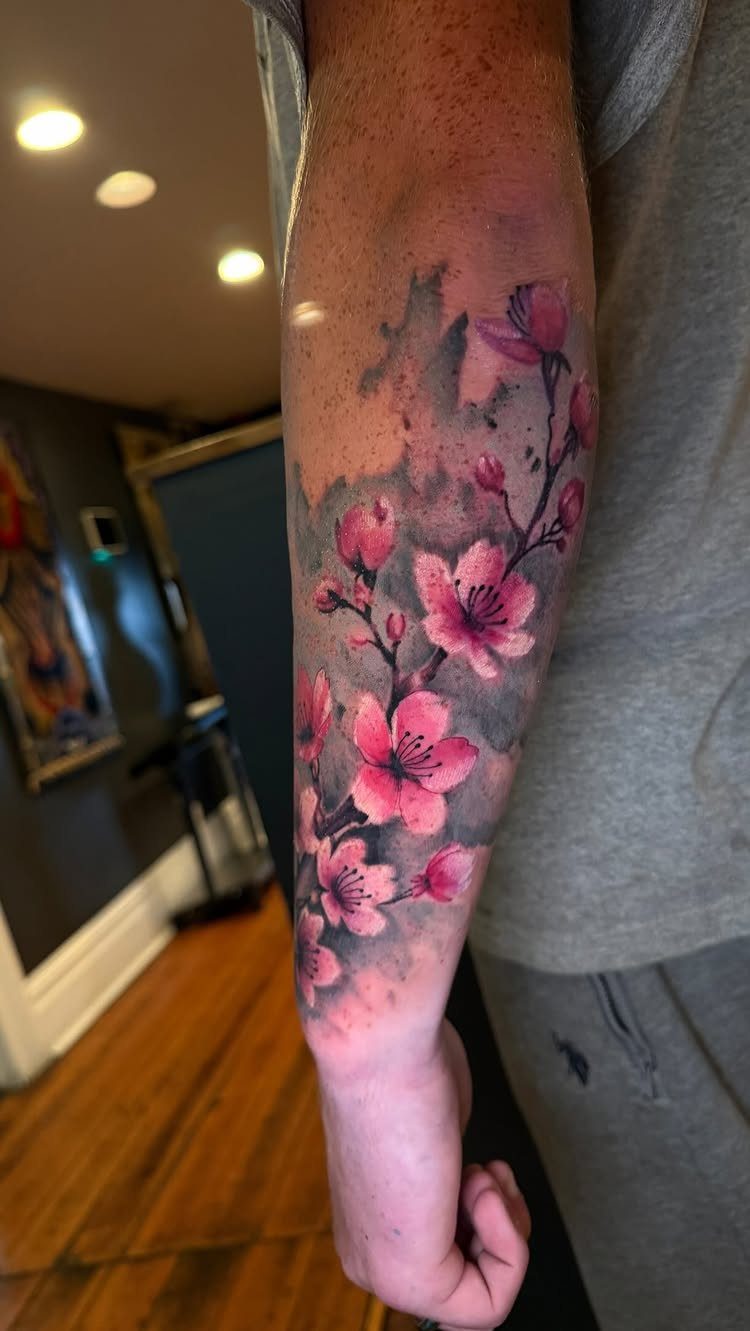
The wash of color behind these petals captures the reason cherry blossoms matter in the first place: beauty that fades.
Watercolor backgrounds soften the line between flower and skin, and the blurred edges make the piece read more like memory than botanical accuracy.
Pink holds its brightness better than pastels in other colors, which helps when the grey wash behind it starts to settle over time.
Visible placement with soft edges keeps the flowers delicate without losing contrast against your skin.
2. Cherry Blossom Chest Tattoo
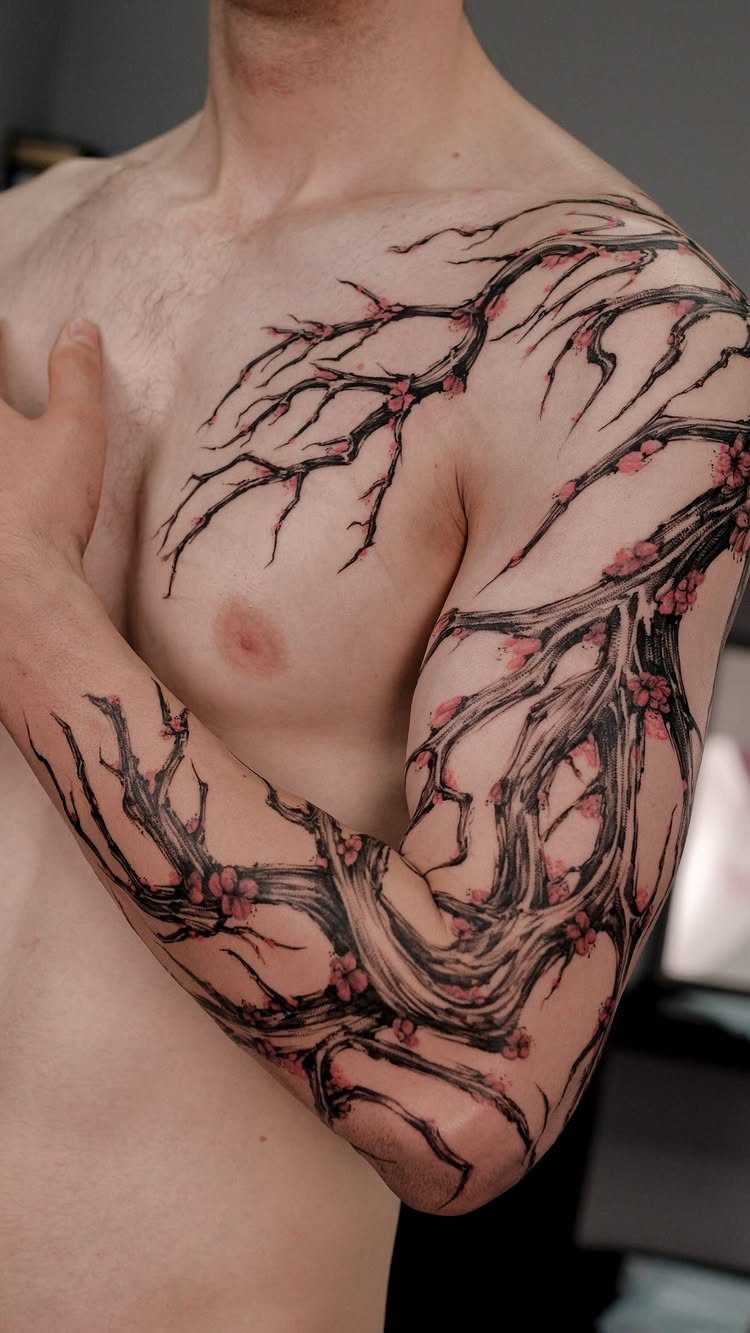
Chest placement gives cherry blossoms room to follow the natural curve of your shoulder and collarbone, which keeps the branch from looking stiff or cropped.
Men tend to go bigger here, letting the design flow across the pectoral and down the arm.
Women often angle the branch along the collarbone or tuck it under the curve of the shoulder, which reads more graceful and less like armor.
Pain is higher near the sternum and along bone, tolerable over muscle. A piece this size usually needs multiple sessions.
3. Cherry Blossom Dragon Tattoo
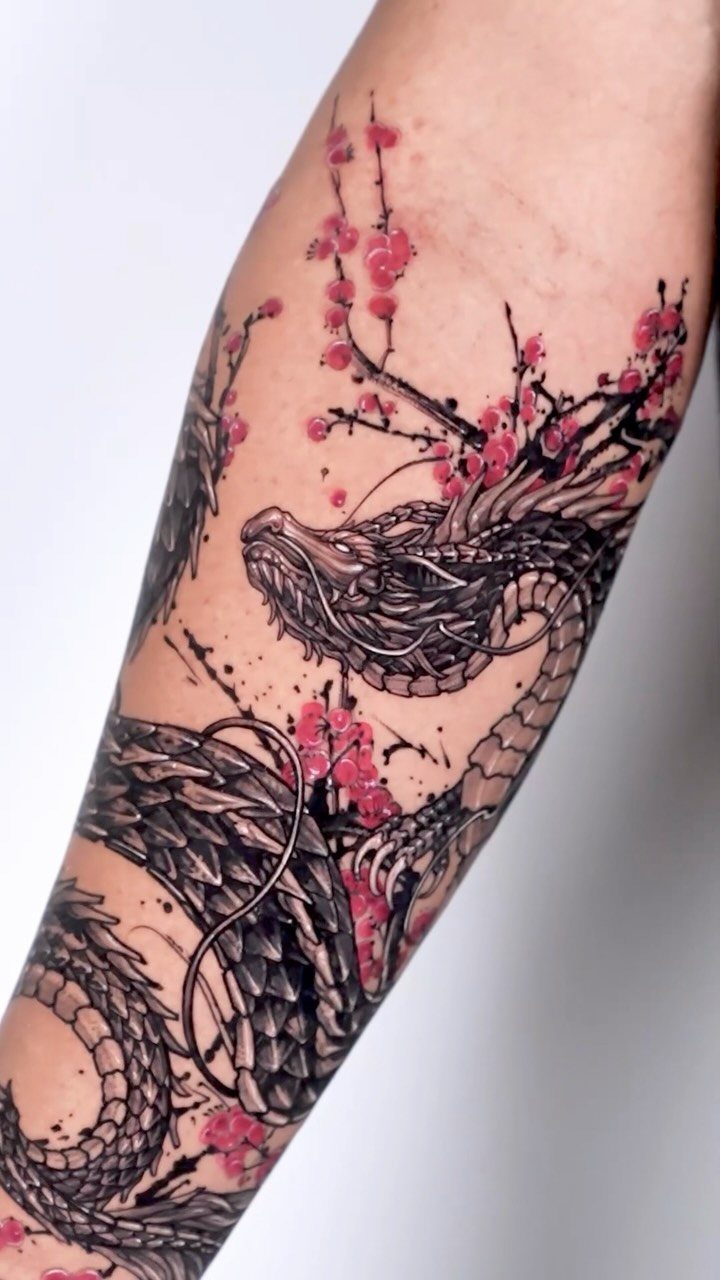
A dragon anchors this composition with weight and motion, and the cherry blossoms soften it without making it less serious.
Black and grey keep the dragon’s scales readable, and pink petals give the piece one accent color that won’t compete with the detail in the body.
The contrast works because both images carry meaning in Japanese art: the dragon represents power and protection, the blossoms mark time and change.
Placement matters. Forearm or upper arm gives the dragon length to coil, and the flowers can scatter along the scales or cluster near the head.
4. Cherry Blossom Tree Tattoo
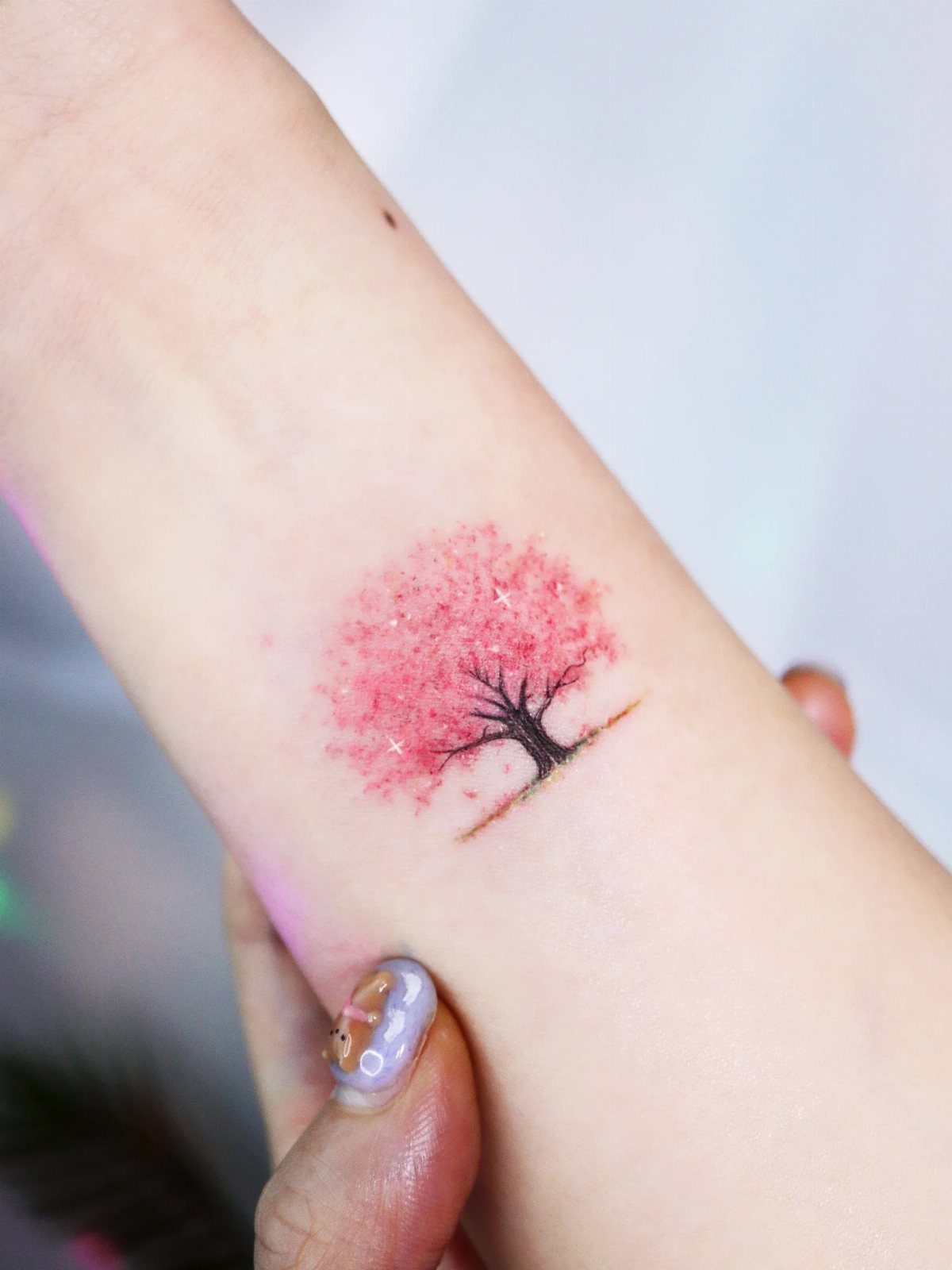
A full tree in miniature on the wrist gives you roots, trunk and canopy in a space most people reserve for a single flower.
The inner wrist sits flat and takes fine detail well, which a small tree requires. Pink flowers against a dark trunk give the piece contrast without adding a second large block of color.
Healing goes faster if you keep a watch off it while the skin closes.
5. Traditional Japanese Cherry Blossom Tattoo
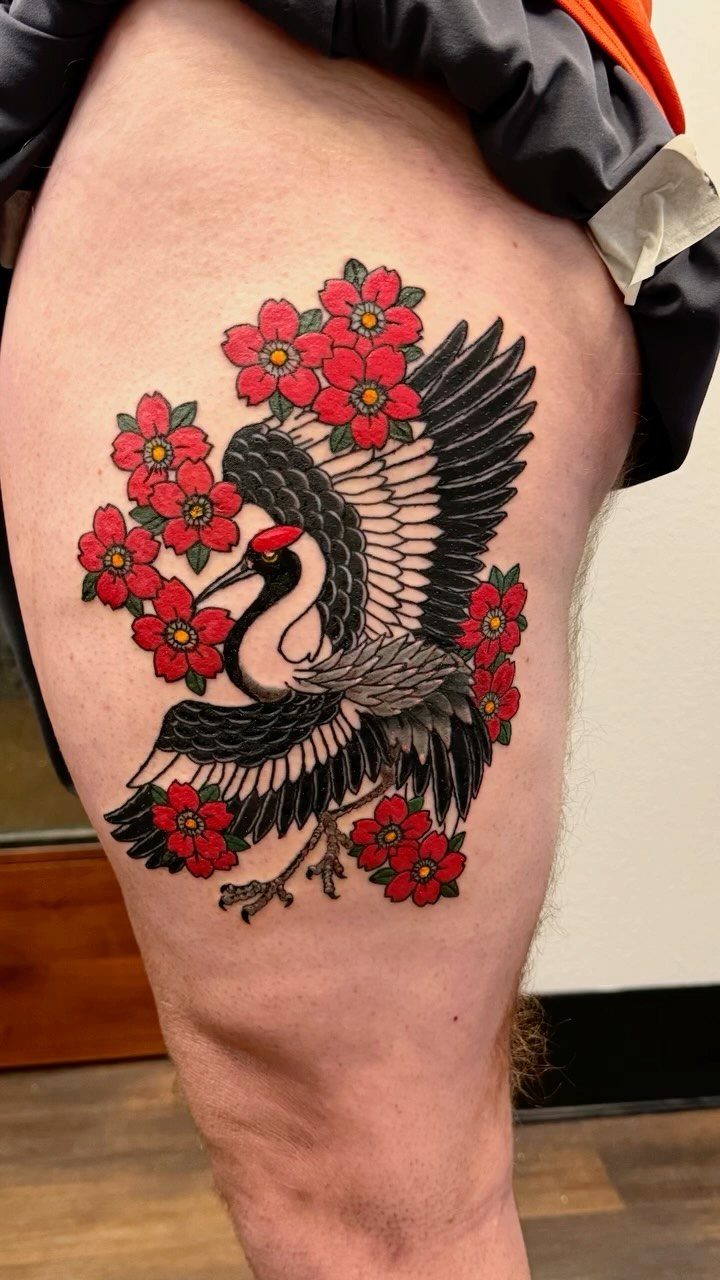
Traditional Japanese work uses bold black outlines, flat color fills and high contrast, and this crane-and-blossom piece follows all three.
The black crane stays readable at a distance, and red blossoms give the design one strong accent without softening the composition. Cranes symbolize longevity and good fortune in Japanese culture, and pairing them with cherry blossoms sets permanence against transience.
Thigh placement works well for traditional designs because the canvas is large, flat and easy to sit through. Session length depends on how much ground the design covers.
6. Cherry Blossom Branch Tattoo
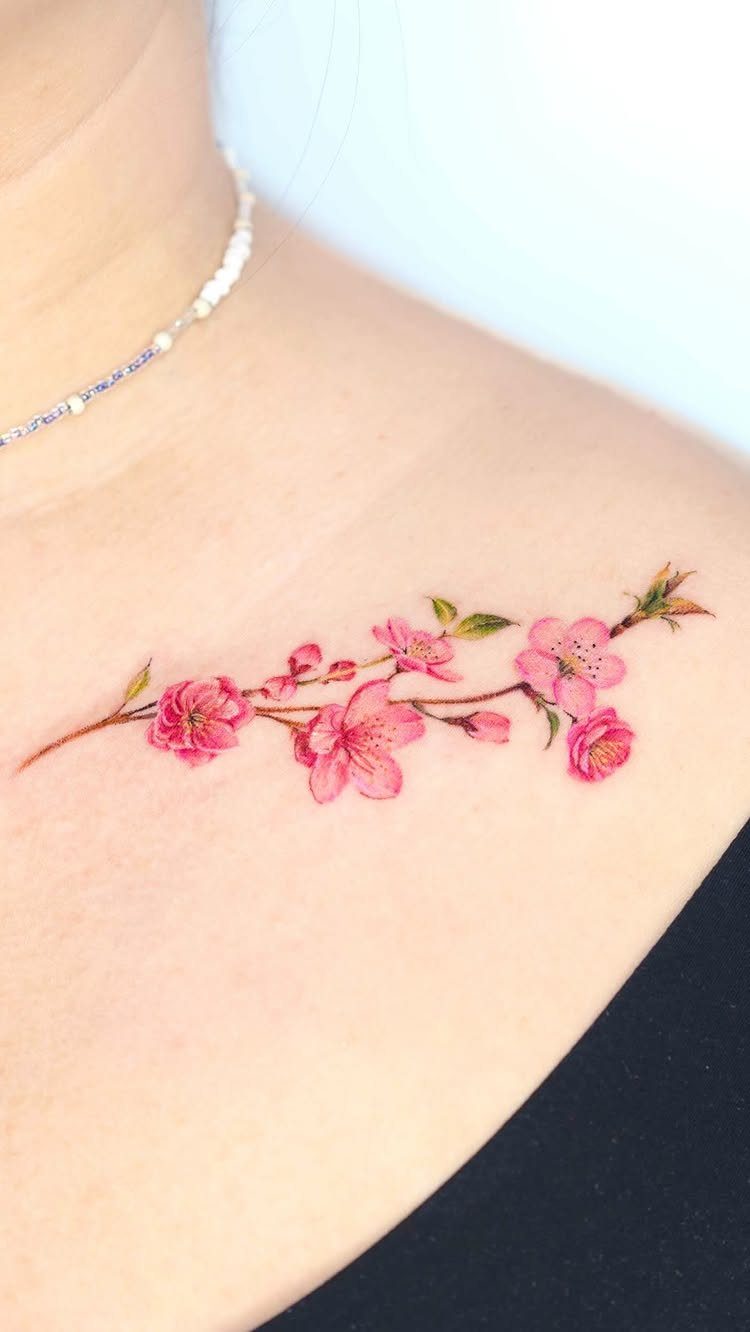
A branch across the collarbone follows the bone’s natural line, which keeps the tattoo from looking like it was dropped onto your shoulder at random.
This placement suits smaller builds and reads more like jewelry than a large-scale piece.
The curve of the branch can wrap slightly toward the shoulder or stay horizontal, depending on how much coverage you want when you’re wearing a crew neck or tank top.
Collarbone is a high-pain area because there’s little padding between skin and bone.
7. Cherry Blossom Forearm Tattoo
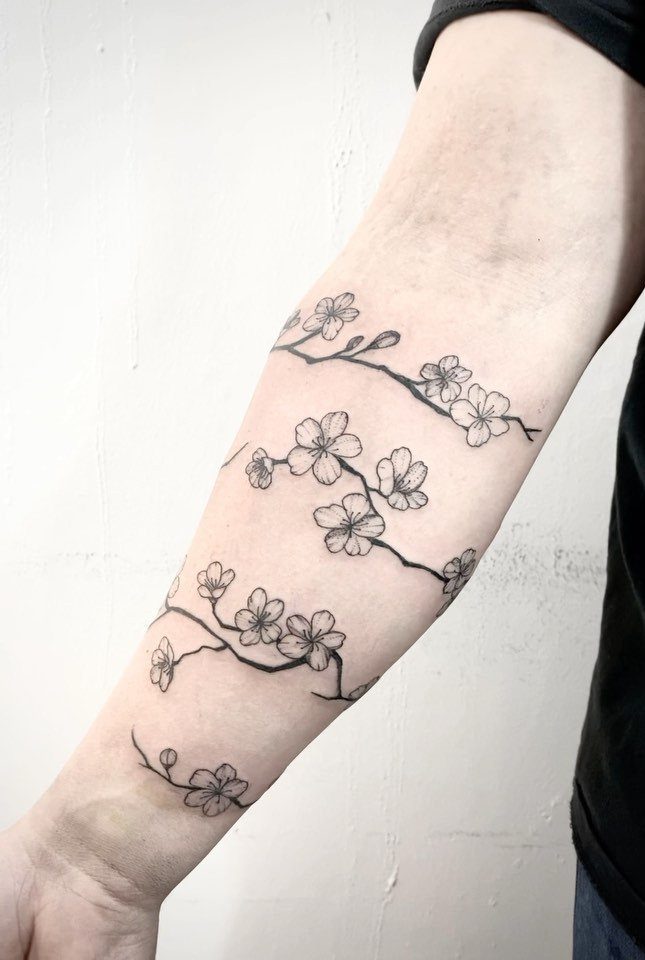
Forearm placement puts a cherry blossom branch where you can see it, which matters if the design holds personal meaning.
The wrap follows the natural curve of the arm, and black ink keeps the petals and branches readable without competing colors.
Forearms heal faster than joints or areas that bend frequently, and you can keep the piece covered or visible depending on sleeve length.
Expect middling discomfort since muscle pads the bone underneath.
8. Cherry Blossom and Moon Tattoo
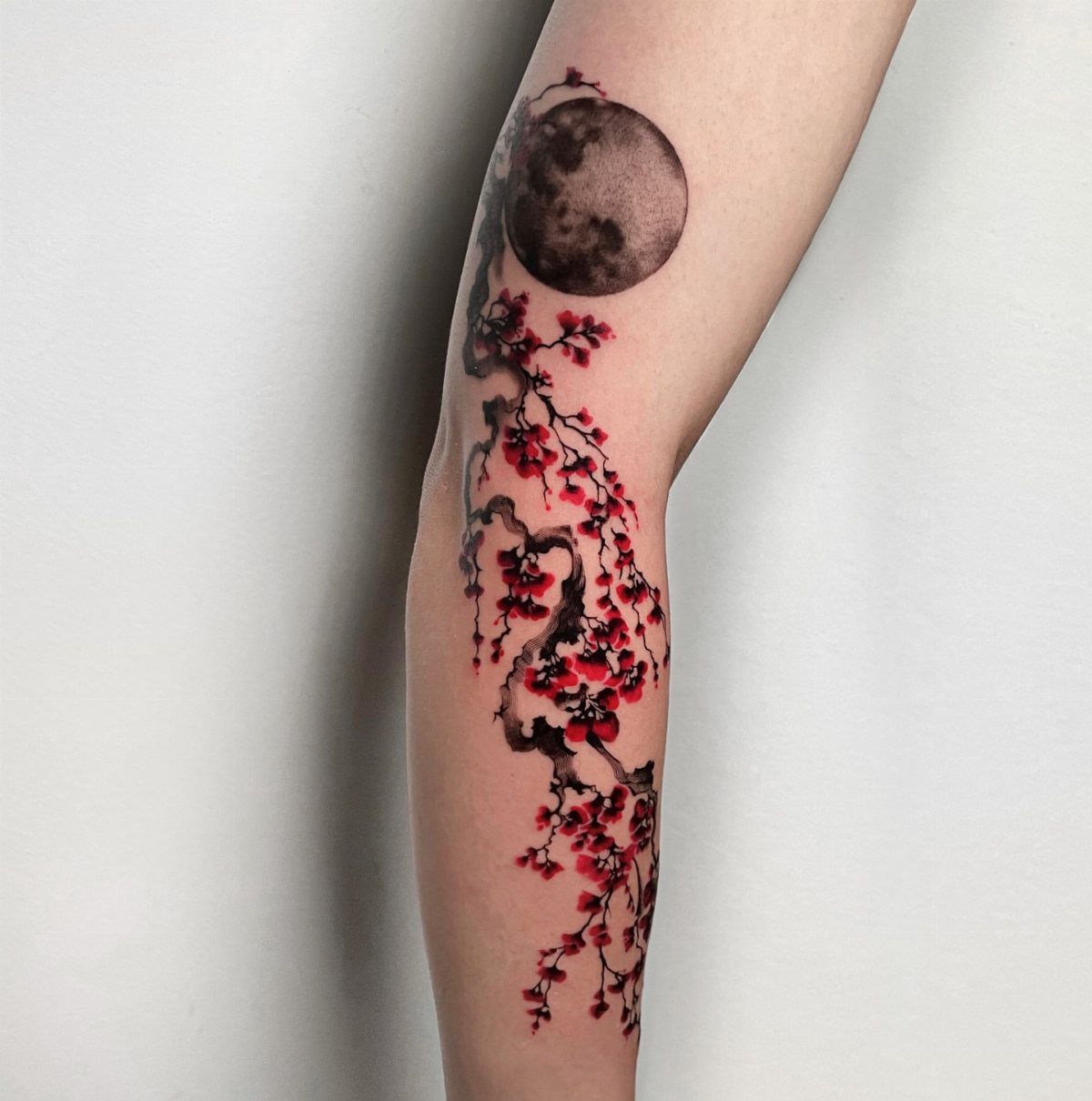
Pairing cherry blossoms with a moon ties the flower’s short bloom to lunar phases, which gives the piece a second layer of symbolism about time and renewal.
Red petals stand out against the grey tones of the moon, and the contrast keeps both elements distinct.
The moon can sit behind the branch or fill negative space, depending on how much of the design you want the flowers to dominate.
The forearm shows off a design with 2 focal points without forcing you to twist your arm.
9. Cherry Blossom with Sword Tattoo
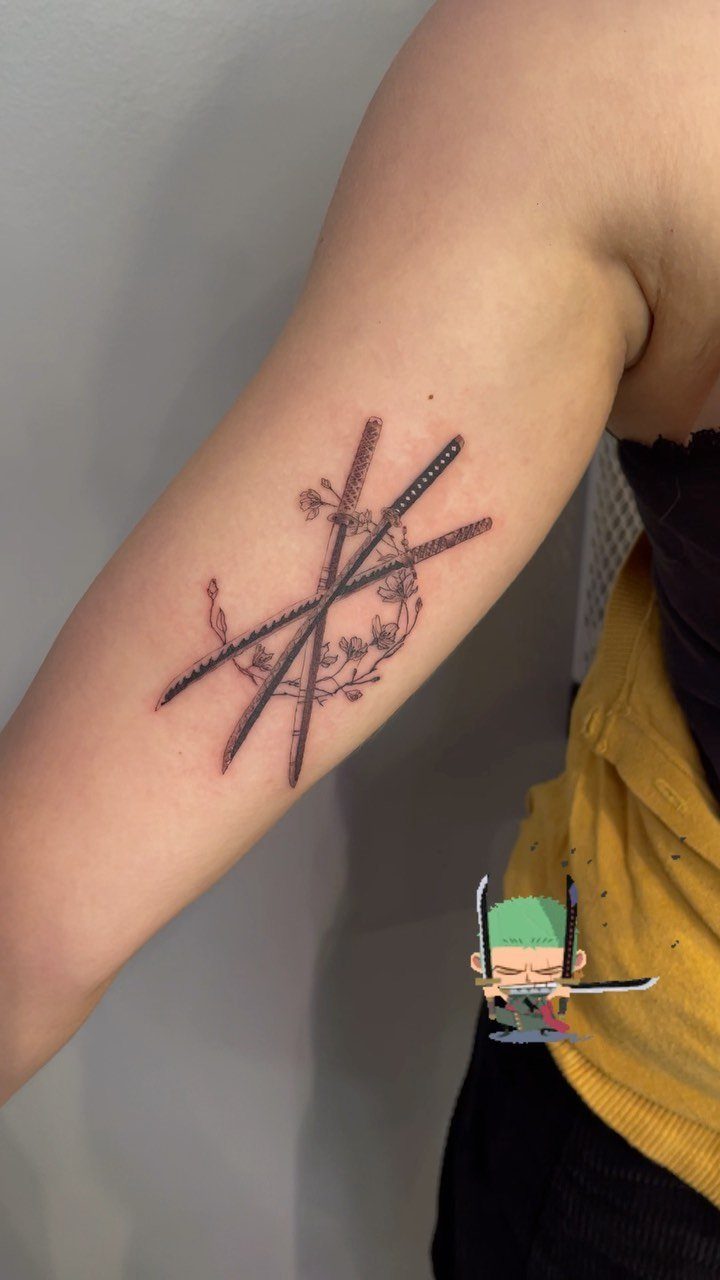
Crossed swords wrapped in cherry blossoms bring weight and structure to a flower that usually reads delicate, and the combination works because both carry meaning in Japanese warrior culture.
Black swords and pink or red blossoms separate the elements so nothing bleeds together visually.
Count on longer sessions if the sword guards and petals carry fine detail.
10. Cherry Blossom Landscape Tattoo
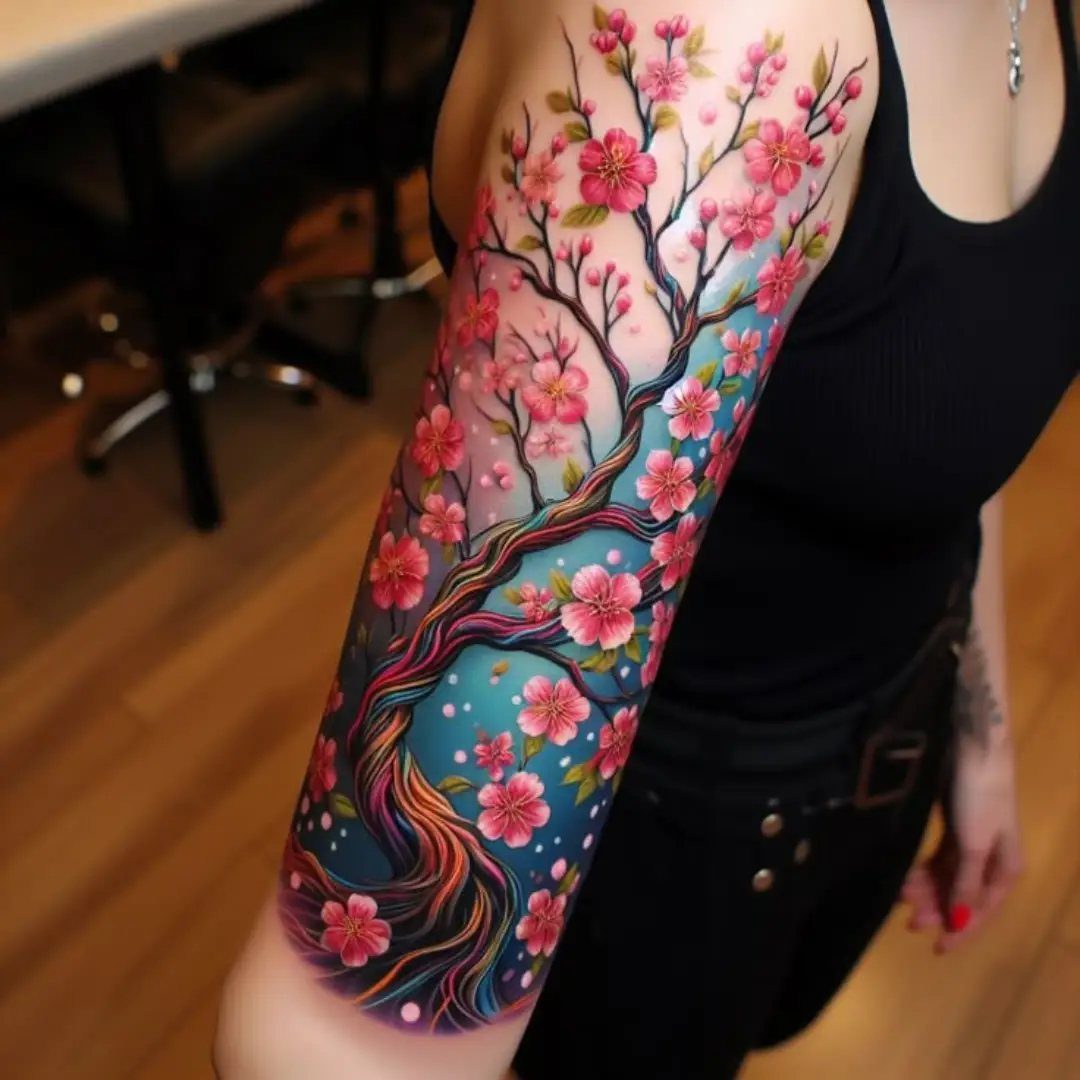
A landscape gives you sky, horizon and a full tree instead of isolating one branch, which suits readers who want the setting more than the close-up.
Color backgrounds take longer to heal than black and grey, and pink flowers against a blue gradient require multiple sessions to build the saturation. Arm placement works well because the canvas is curved, which gives the tree depth.
Keeping the design above the elbow means less fading from sun exposure if you wear short sleeves often.
11. Cherry Blossom Fox Tattoo
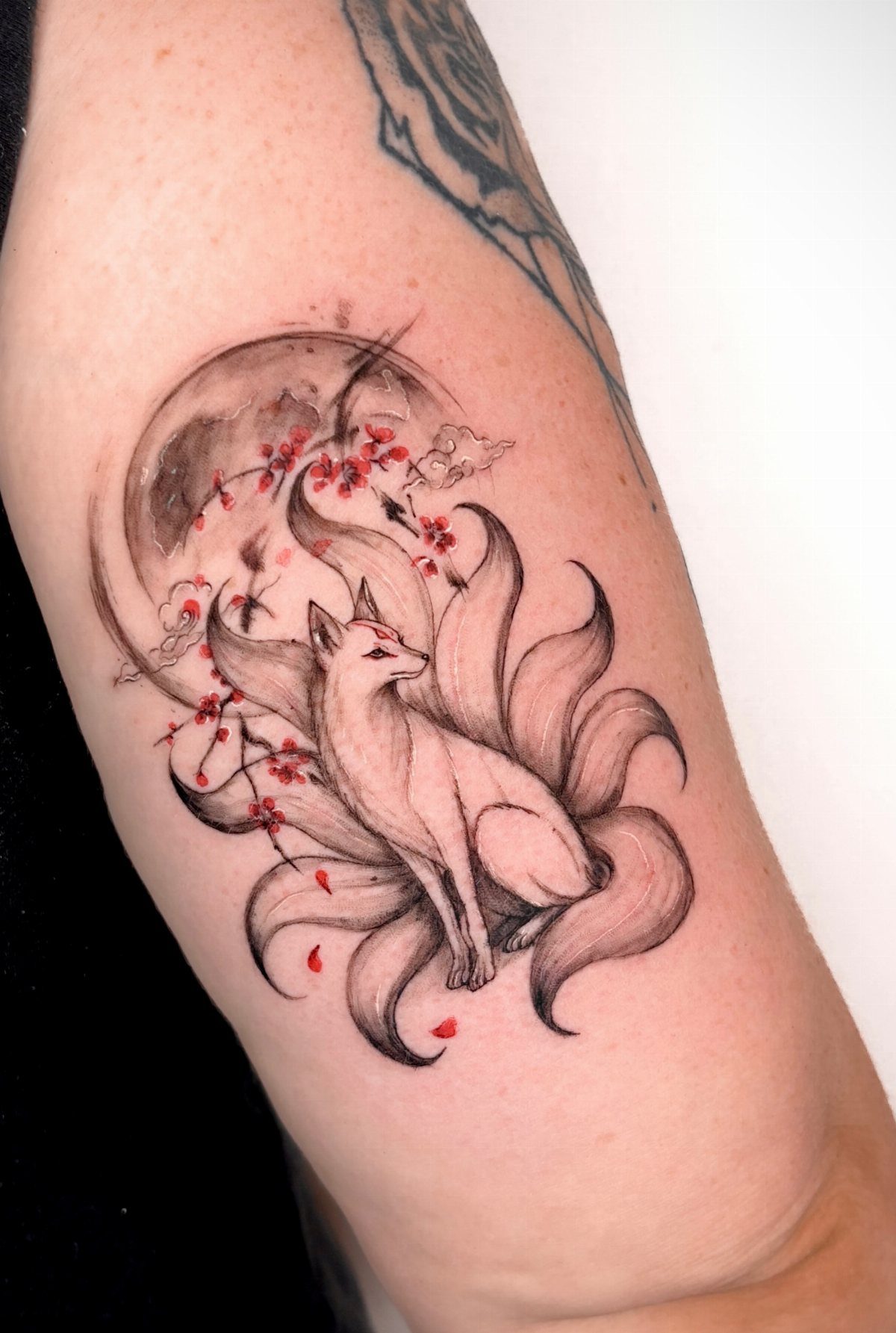
A fox with multiple tails references the kitsune from Japanese folklore, and adding cherry blossoms ties the mythical figure to nature and the passage of time.
White or grey ink for the fox and pink blossoms keep the 2 elements balanced, and the moon behind them fills the negative space without crowding the composition.
The number of tails signals the fox’s age and power in folklore, which adds meaning if that detail matters to you.
Placement on the upper arm or thigh gives the design room to include all the tails without shrinking them.
12. Cherry Blossom and Koi Fish Tattoo
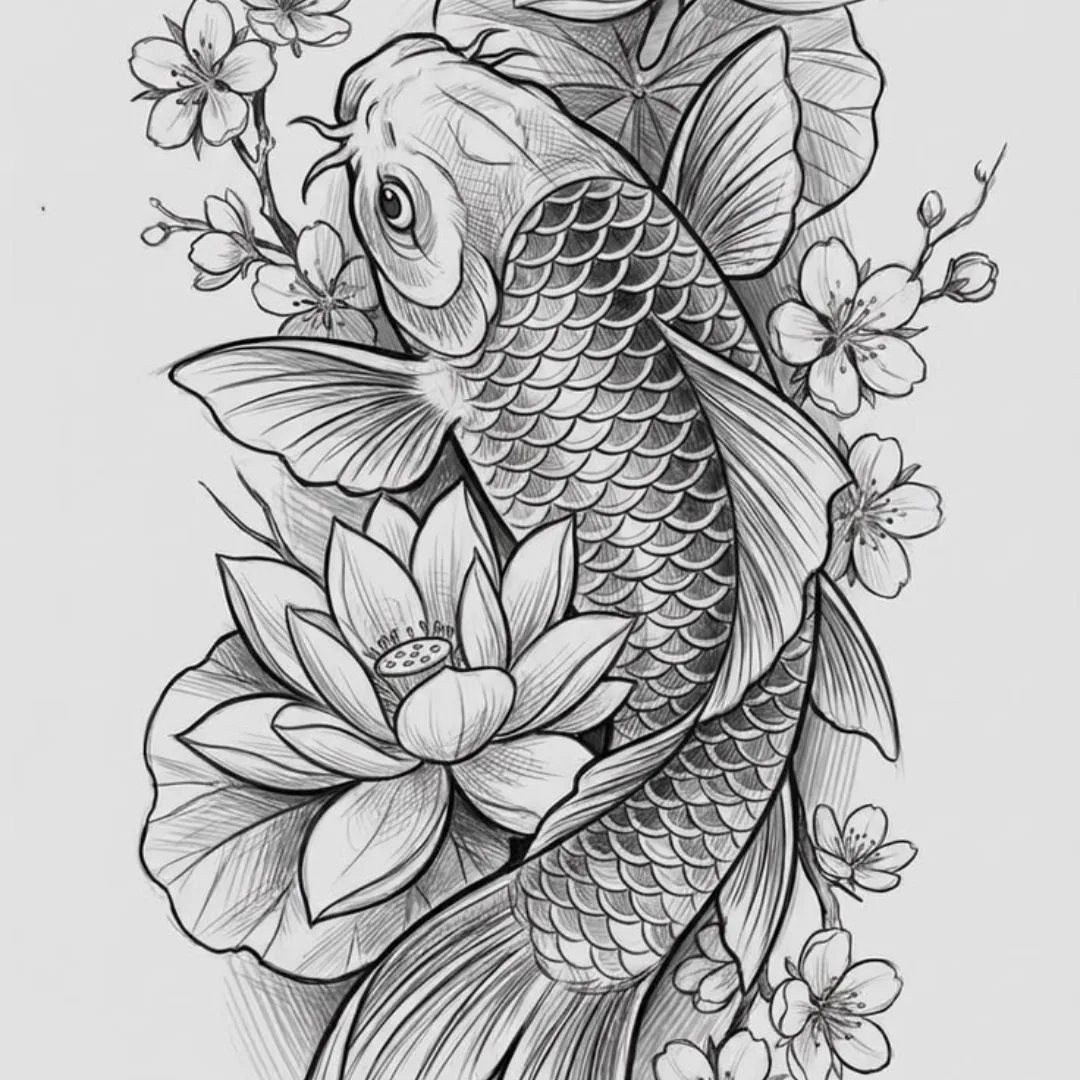
Koi swimming upstream against a current symbolize perseverance, and pairing them with cherry blossoms balances effort with the acceptance that not everything lasts.
Black line work keeps the fish’s scales and the flower petals distinct without relying on color, which ages better over time.
The lotus adds a third symbol tied to purity and spiritual growth, and the combination suits readers who want layered meaning in one piece.
Placement depends on how much length the koi needs to look like it’s moving.
13. Cherry Blossom and Compass Tattoo
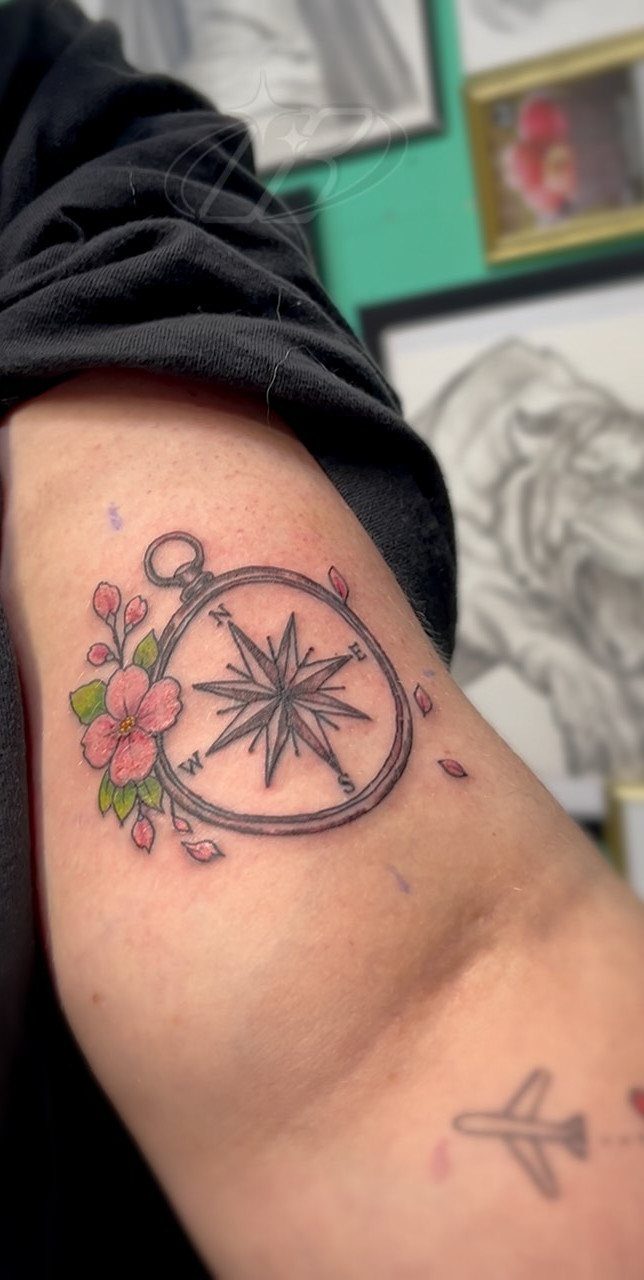
A compass centers this piece and gives the cherry blossoms a second meaning: beauty meets direction.
The wind rose adds fine detail that holds up if the piece stays small, and pink petals soften the geometric lines without losing the compass’s structure.
Falling petals fill negative space and keep the design from sitting too heavy on the arm.
Upper arm placement keeps the compass level when your arm hangs at your side, which matters if you want the cardinal points to read clearly.
14. Cherry Blossom Pagoda Tattoo
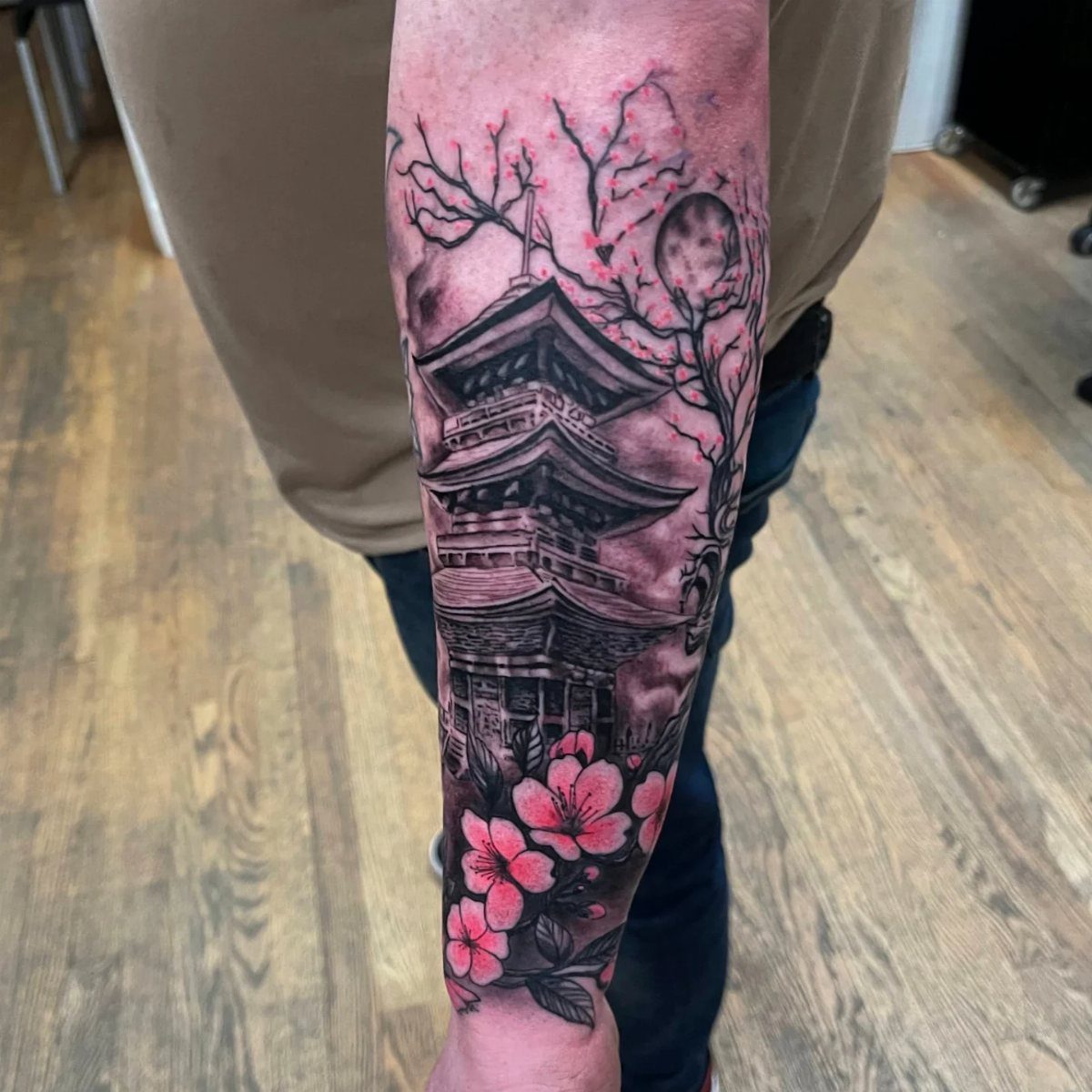
A pagoda with cherry blossoms ties architecture to nature, and the combination suits readers who want something rooted in Japanese culture without isolating one element.
The tiered roof gives the piece vertical structure, and pink flowers against black line work keep both the building and the branches readable. The moon fills the background without crowding the foreground.
Forearm placement works because the canvas is narrow enough to keep the pagoda vertical without distorting its proportions.
15. Black and White Cherry Blossom Tattoo
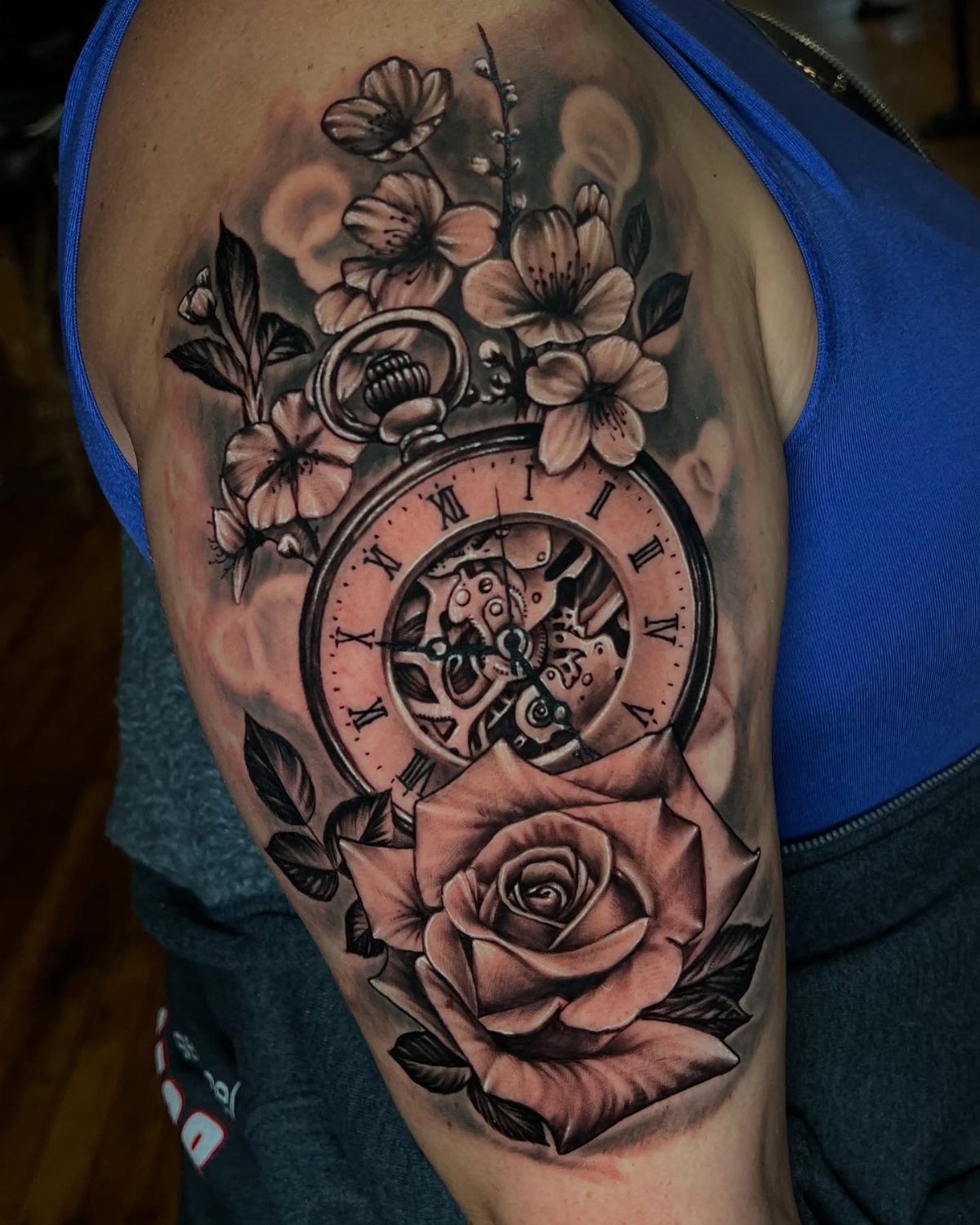
Removing color shifts the focus to form, and a black and grey cherry blossom design ages more predictably than one that relies on pink to stay bright.
Pairing the blossoms with a pocket watch and rose keeps the piece layered without needing a third accent color. The watch adds a second symbol about time, which complements the flower’s association with transience.
Upper arm gives you room for multiple elements without shrinking them, and grey shading holds detail better than solid black over large areas.
16. Small Single Cherry Blossom Flower Tattoo
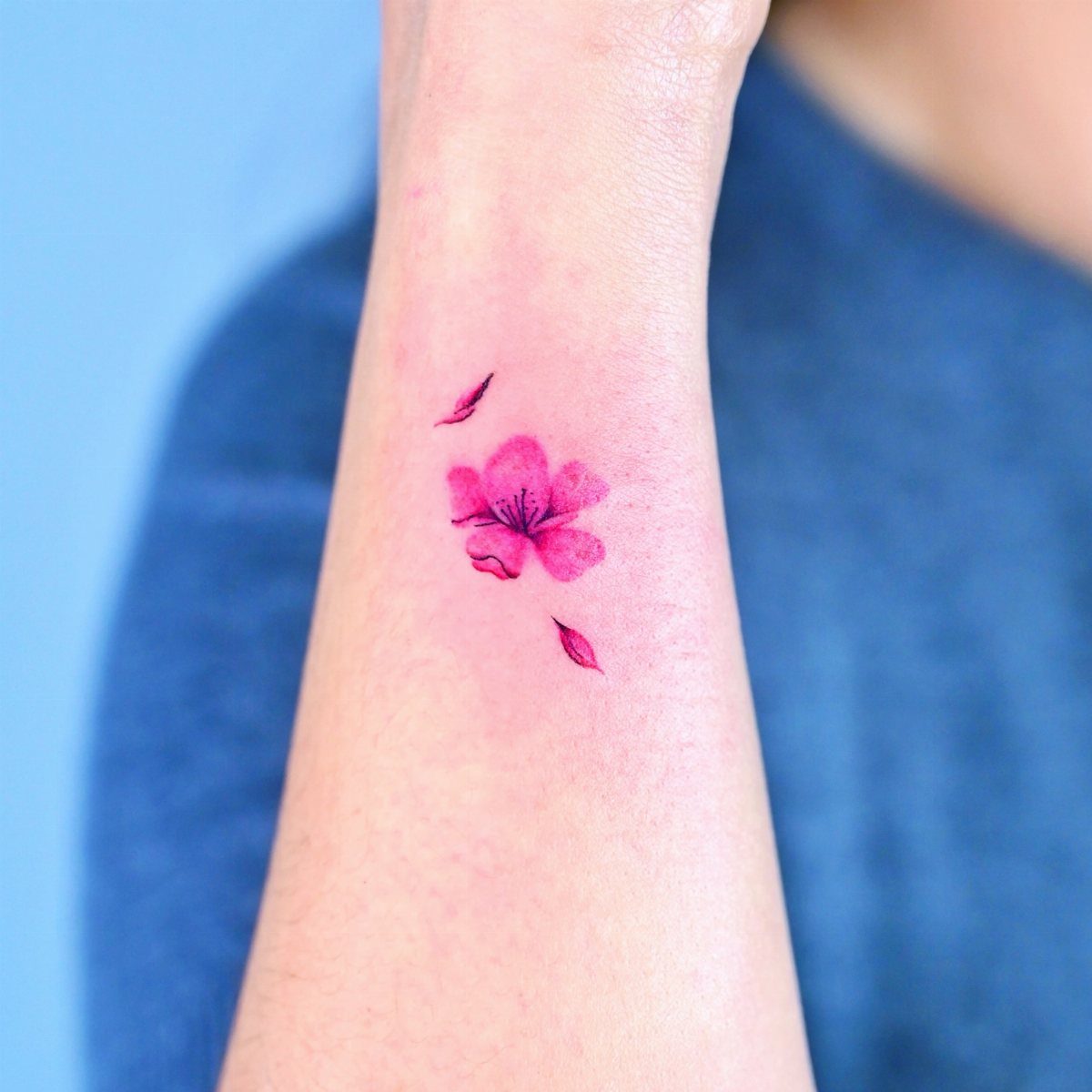
A single flower with 2 falling petals fits the inner wrist without wrapping or requiring multiple sessions.
The simplicity makes this one of the faster pieces to complete, and pink against bare skin leaves the design legible without a background. Inner wrist is a high-visibility spot and a moderately painful one because the skin is thin.
Healing takes roughly 2 weeks if you keep friction low and avoid tight watchbands.
17. Cherry Blossom Circle Tattoo
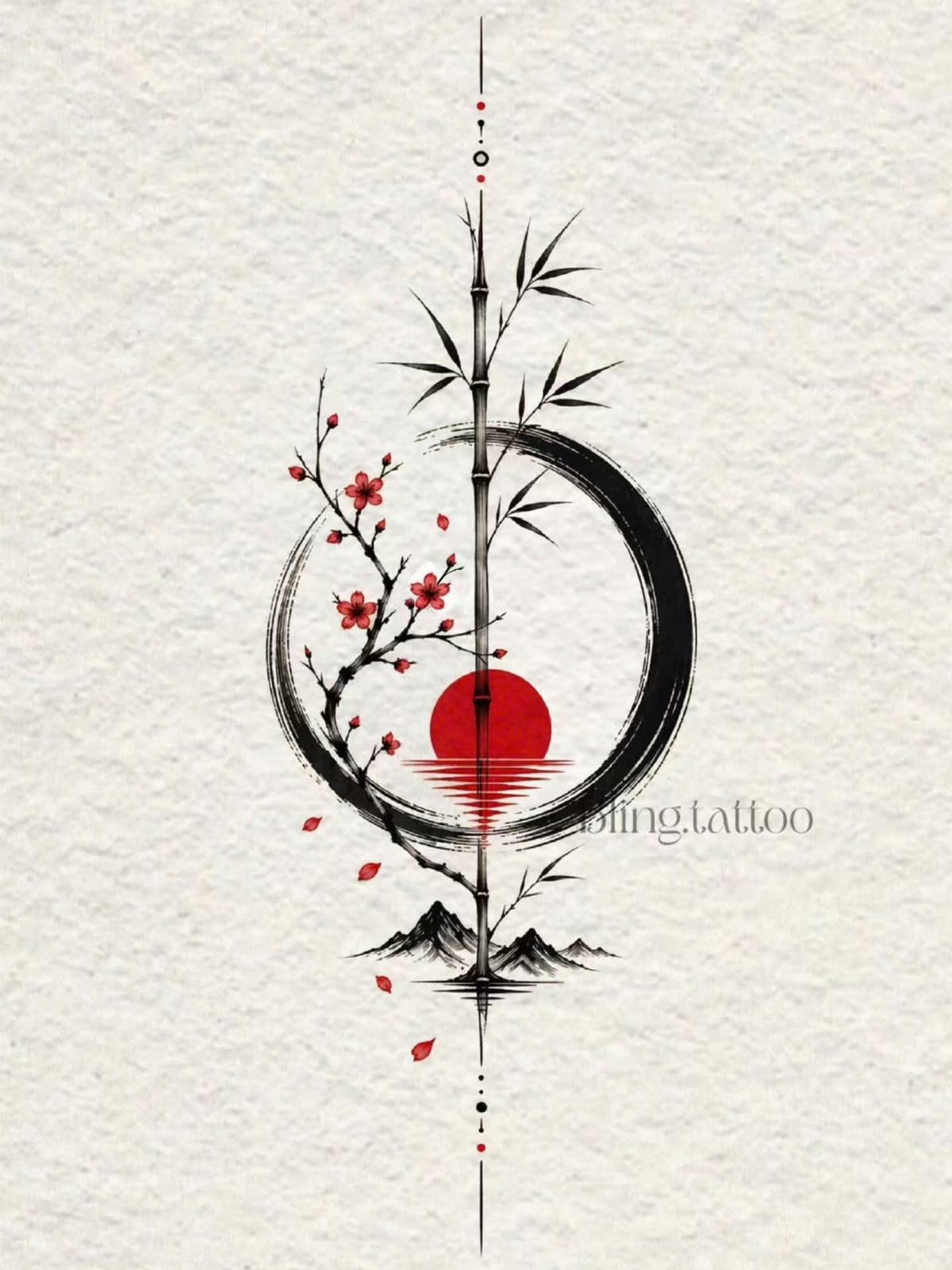
A brushstroke circle frames the cherry blossoms and bamboo, and the red sun anchors the composition without splitting the focus.
The circle represents completeness in Japanese art, and pairing it with transient cherry blossoms balances permanence against change. Bamboo adds resilience to the symbolism, and mountains in the background give the piece depth.
Placement depends on how much detail the bamboo carries; smaller circles suit the forearm, larger ones need the thigh or shoulder blade.
18. Cherry Blossom Leg Tattoo
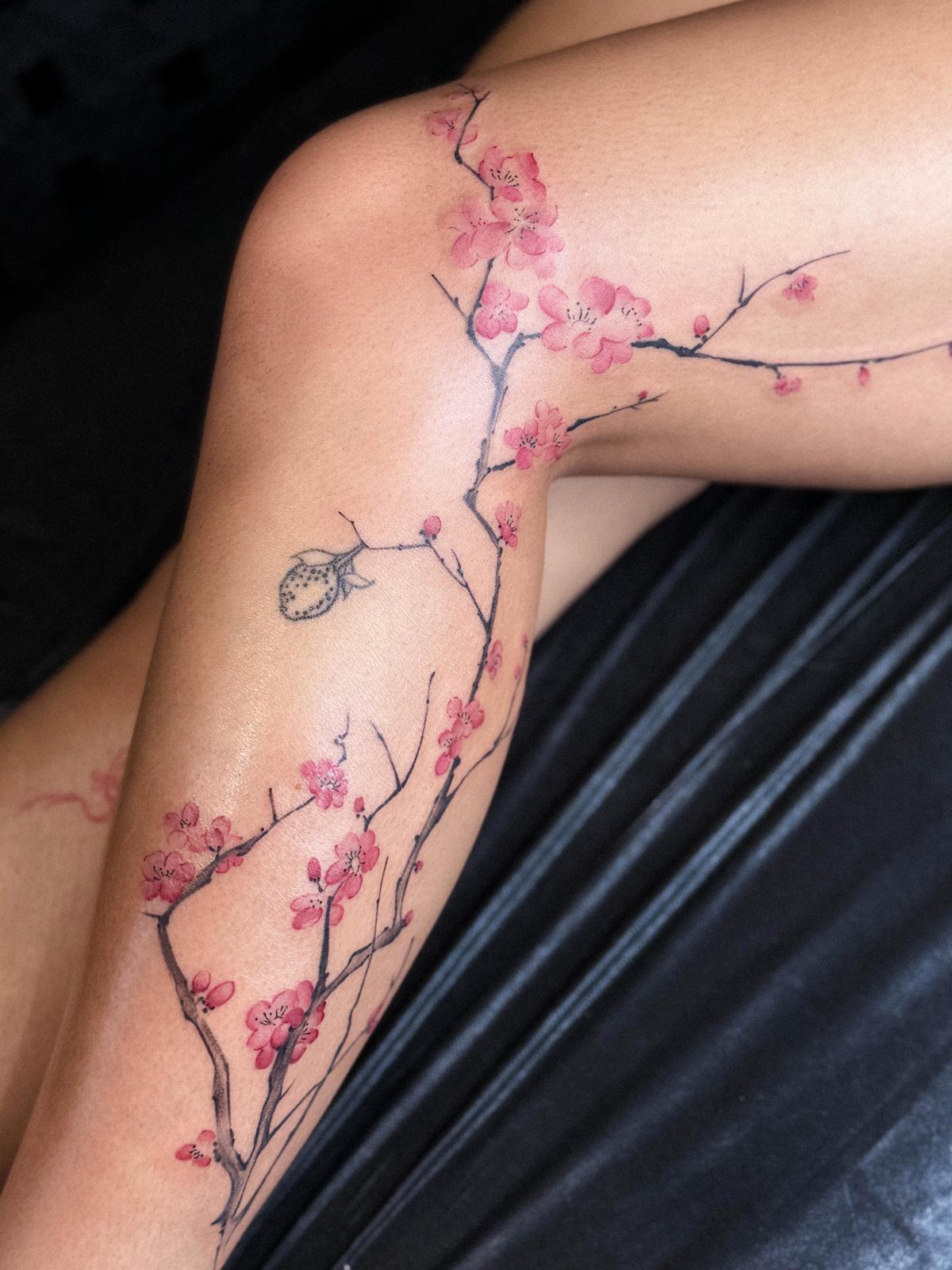
Leg placement follows the natural curve of the thigh or wraps down toward the knee, and a branch design suits that vertical flow better than a single flower.
Pink petals and a small bud give the piece one accent color, and the black branch keeps it grounded.
The knee sits close to bone, which raises discomfort during the session, but the thigh above it is one of the easier areas to sit through.
Expect better color retention on the outer thigh than the inner, where friction from movement is higher.
19. Cherry Blossom Sleeve Tattoo
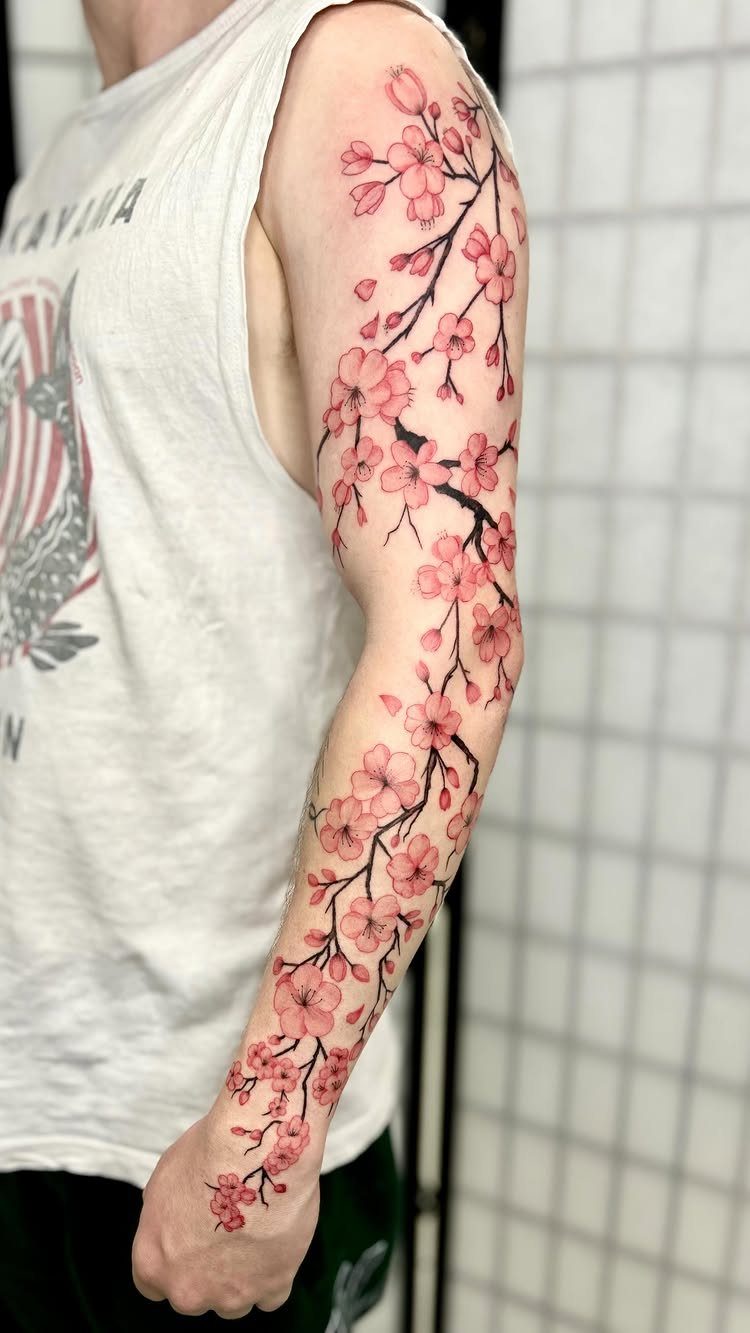
A full sleeve turns your arm into one continuous piece, and cherry blossoms suit that length because branches naturally flow.
Coverage from shoulder to wrist takes multiple sessions, split according to how much detail and color saturation you add.
Black branches with pink petals keep the design readable when the arm moves, and spacing between clusters prevents the piece from looking crowded once it heals.
Sleeve work hurts more near the elbow and inner bicep, where skin sits closer to bone and nerve endings run dense.
20. Cherry Blossom Shoulder Tattoo
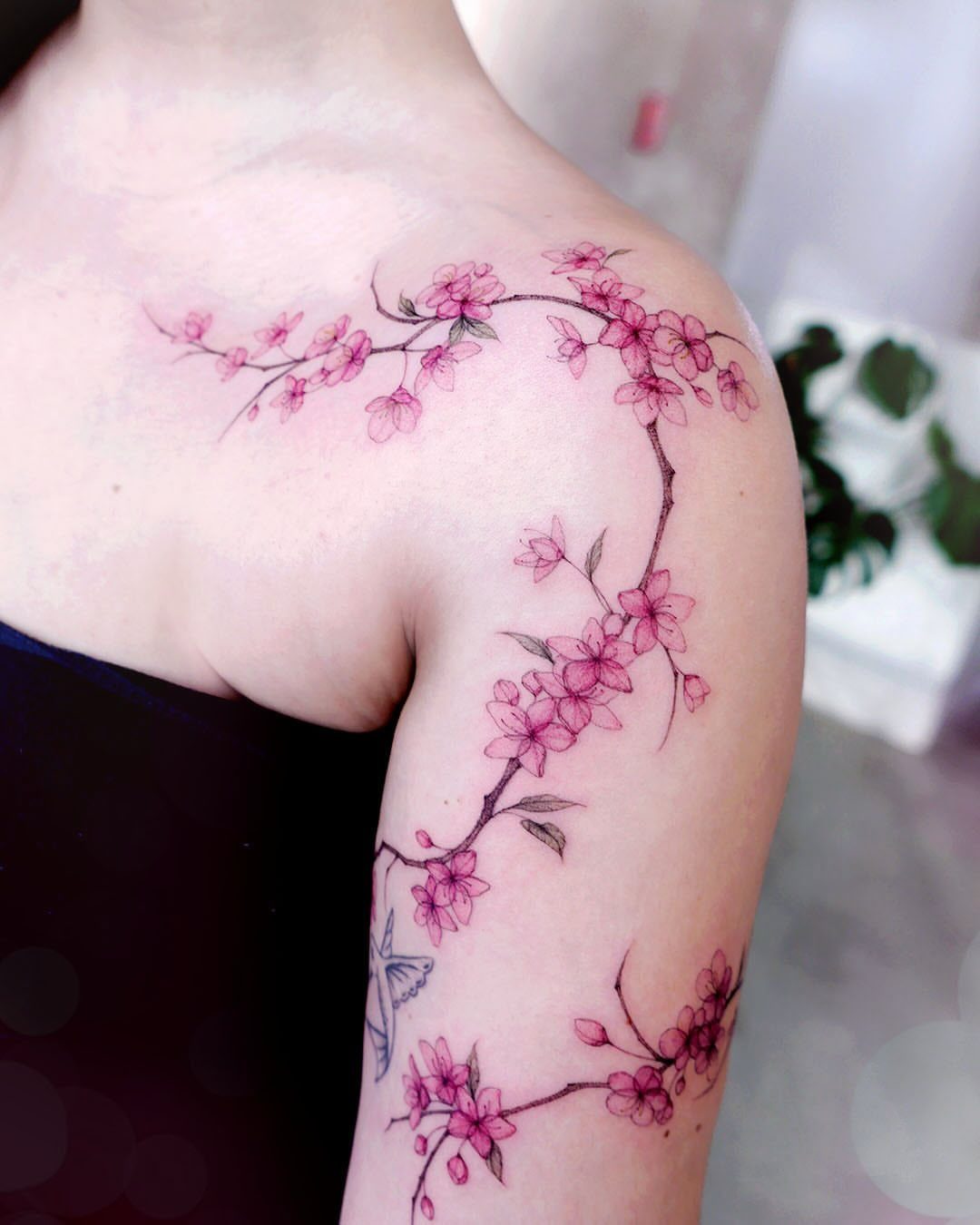
The shoulder’s curve lets a branch wrap naturally from the cap down onto the upper arm, and pink petals against bare skin keep the design soft without losing structure.
This placement suits readers who want coverage that shows in a tank top but stays hidden under a T-shirt. Shoulder sits over muscle, which makes it easier to sit through than bony areas like the collarbone.
Aftercare is straightforward since the shoulder doesn’t bend as much as a joint, so scabbing stays minimal if you avoid tight straps.
21. Samurai and Cherry Blossom Tattoo
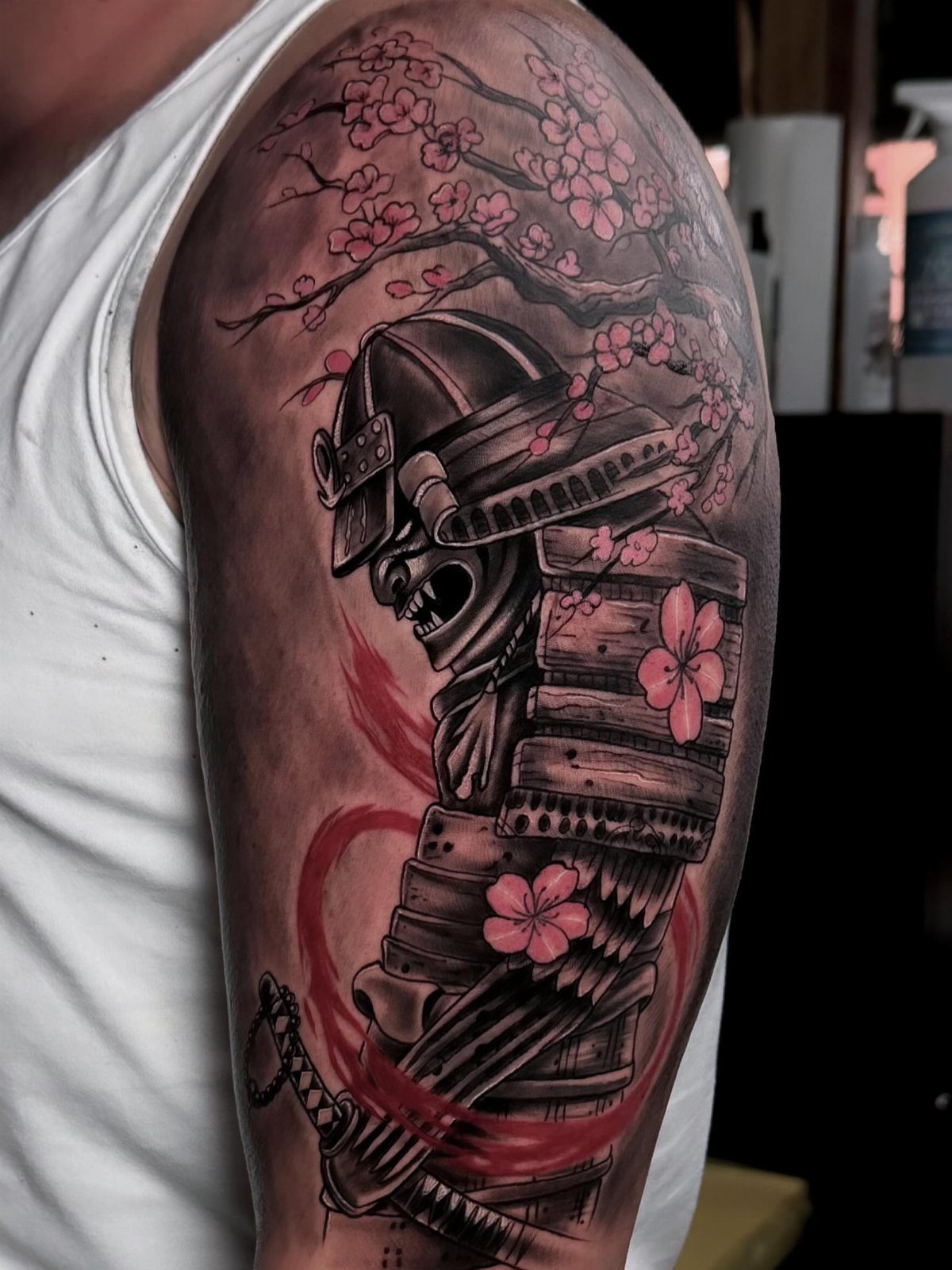
Samurai armor carries the weight of discipline and honor in Japanese culture, and cherry blossoms beside it soften the warrior image without contradicting it.
Upper arm placement keeps the design visible and gives the samurai’s helmet and chest plate enough room to stay proportional.
22. Cherry Blossom Armband Tattoo
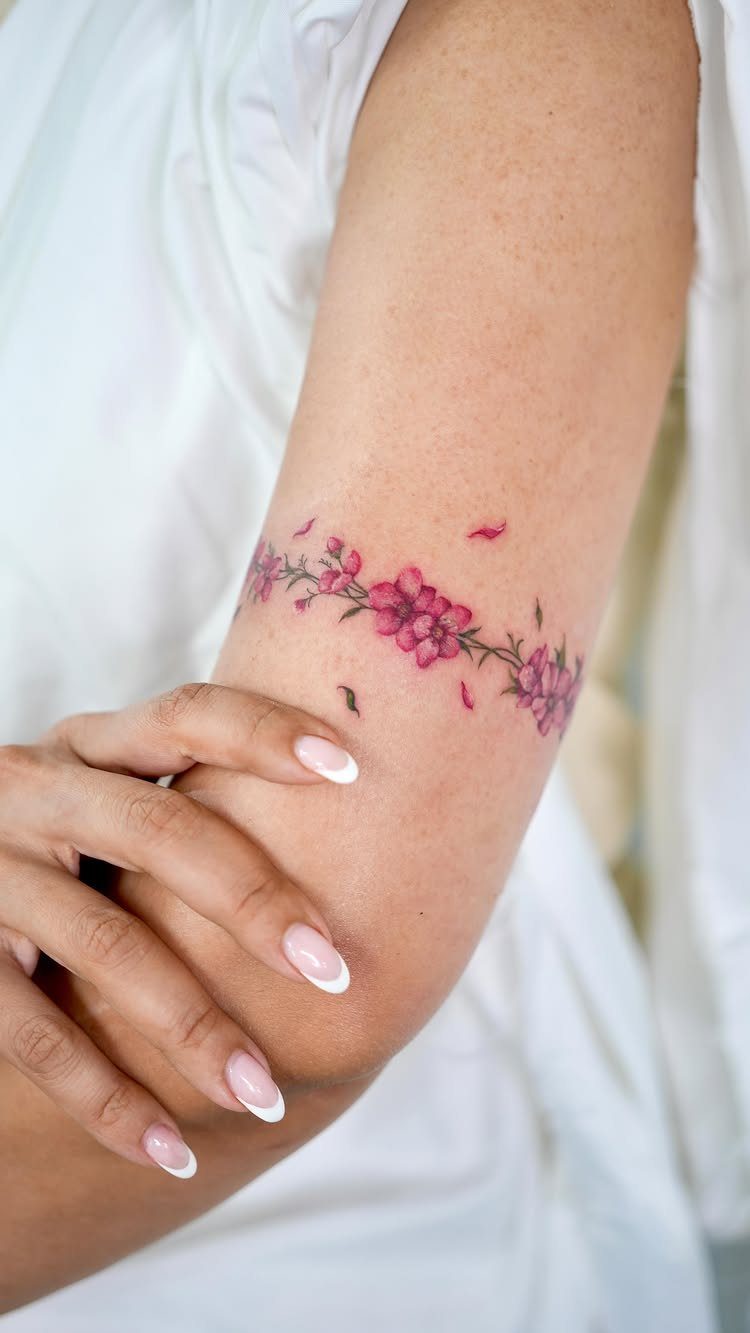
An armband wraps the bicep in a continuous ring of flowers, and the shape reads clearly whether your arm is bent or straight.
Pink blossoms against skin give the band enough contrast to stay distinct, and the circular composition suits readers who want symmetry. Bicep is a low-pain area because muscle pads the bone, and healing is faster than placements that flex constantly.
Width depends on how many blooms you want in the ring; a single row finishes faster than a stacked design.
Cultural Significance of Cherry Blossoms
During Hanami festivals across Japan, people gather to watch sakura petals bloom and fall within days, a celebration tied to the flower’s symbolism: beauty that does not last.
The flower’s short life reminds viewers to appreciate what won’t last, which is why it holds weight in Japanese art and carries meaning beyond decoration.
That transience also ties to renewal: the blossoms return each spring, marking the cycle of seasons and the idea that endings lead to beginnings.
Cherry blossoms carry a feminine association in Japanese culture, seen as delicate and graceful.
Japanese tradition treats the sakura as a natural wonder that deserves protection, and the short bloom period has shaped a cultural value: live in harmony with the things that change.
If you’re considering a cherry blossom tattoo with cultural roots, choosing an artist who works in Japanese or Asian-inspired styles keeps the imagery accurate and respectful.
Best Practices for Getting a Tattoo
Choosing an artist who specializes in Japanese or Asian-inspired designs matters if your cherry blossom tattoo references cultural imagery, particularly for larger pieces like sleeves or back work.
Before the session, keep your skin clean and moisturized, and skip alcohol or blood-thinning medication that day since both increase bleeding during the tattoo.
Smaller, more delicate pieces suit the hip, shoulder or ankle; sleeve or back placement gives designs room to flow.
Size, color and style are yours to adjust; pink is traditional, but adding other colors or pairing the blossoms with birds or waves makes the piece more personal.
After the session, follow your artist’s aftercare instructions closely. Proper healing keeps the lines sharp and the color bright as the tattoo settles.