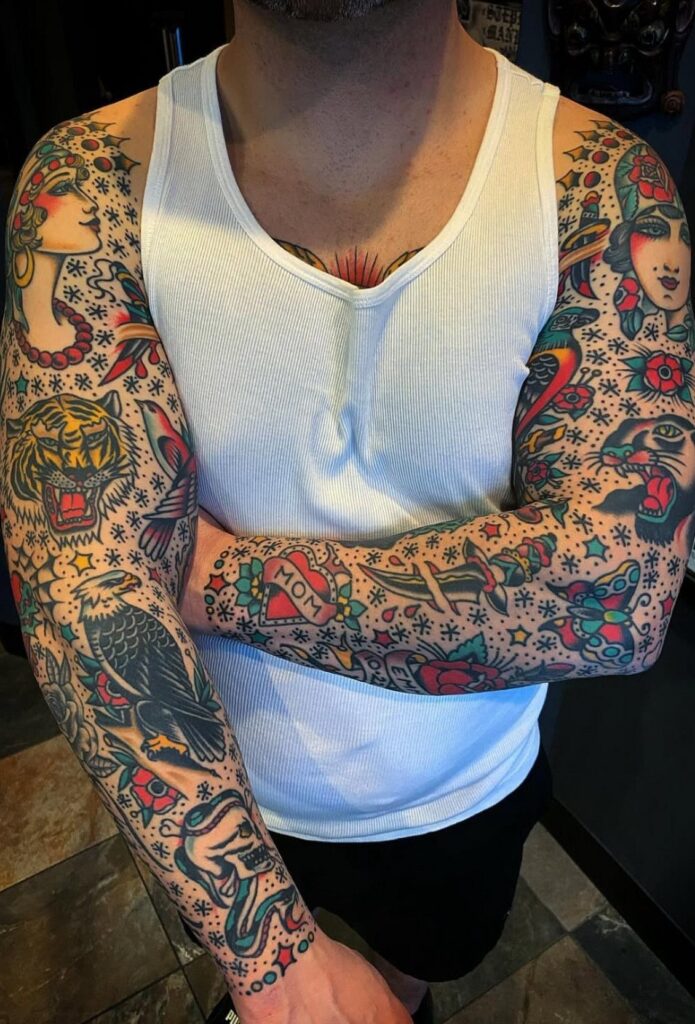
A sleeve runs shoulder to wrist and takes several sessions, with each section planned to sit well on its own before you add connecting background.
Color sleeves use a tight palette of red, yellow, green and blue with black outline, while black-and-grey builds depth through shading alone.
1. American Traditional Sleeve Tattoos
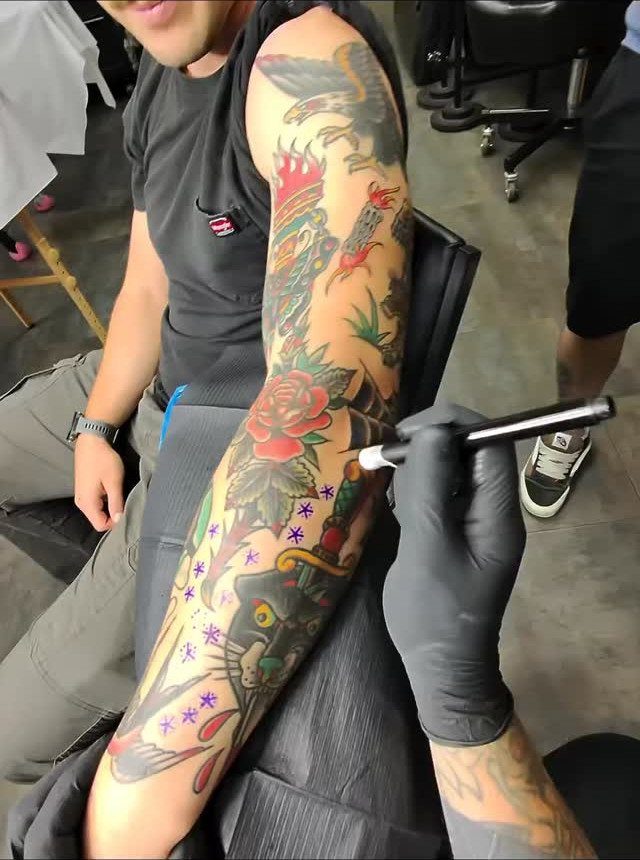
Bold black outlines and a limited color palette define this style, designed around the 1930s to read clearly as skin ages and ink spreads.
Red, yellow, green and blue fill shapes with minimal shading, so each image holds its form at a distance.
Covering shoulder to wrist, this scale of work unfolds across several sessions.
Most artists build it as separate pieces first, then connect them with filler: roses, daggers, banners, stars. That approach lets you pace the cost and see how each part heals before committing to the next section.
The style flatters muscular arms because the images wrap the contour instead of fighting it.
2. Black and Grey Traditional Sleeve
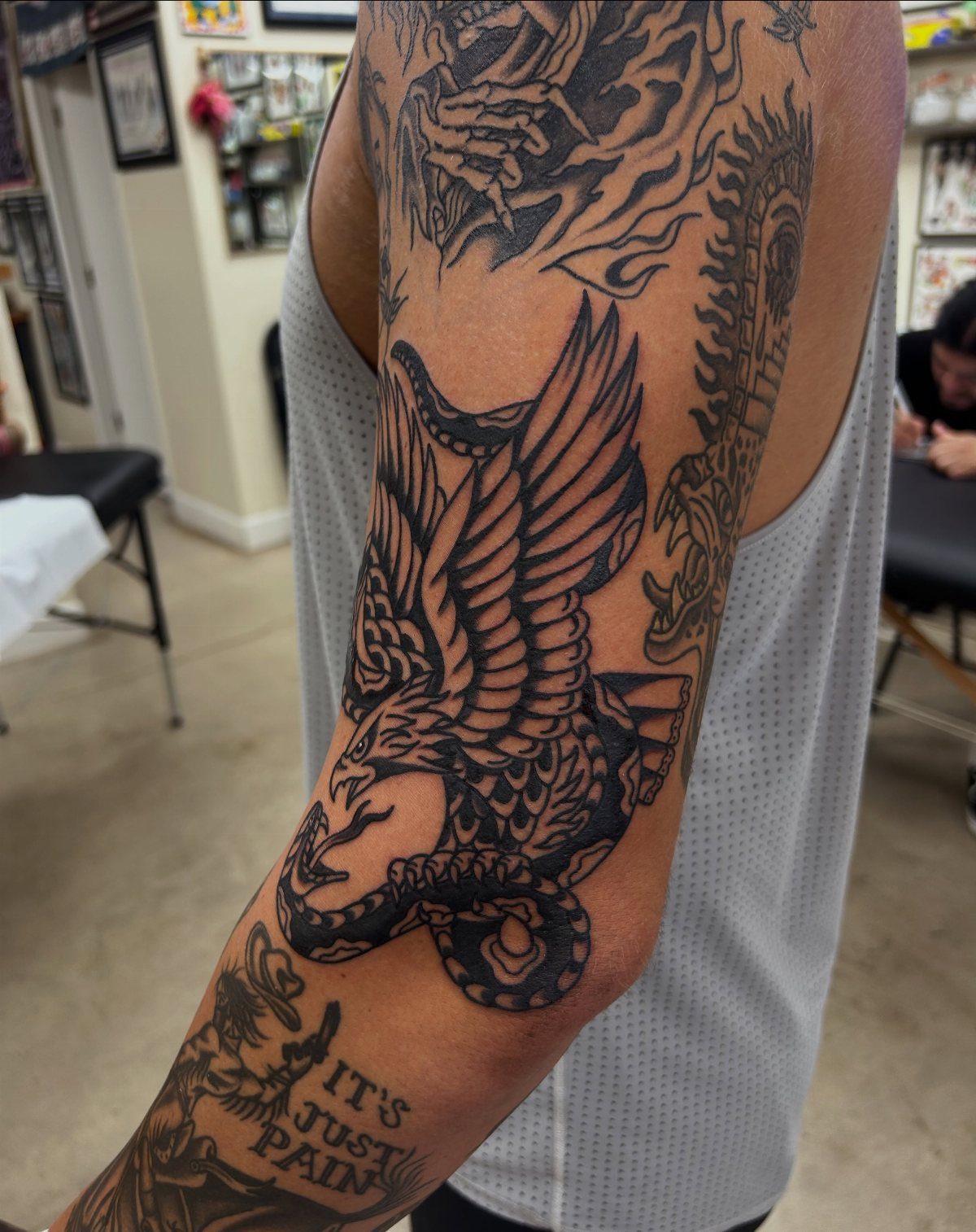
Removing color from American traditional work shifts the emphasis to line weight and contrast. Black ink carries all the detail, so the design depends on thick borders and careful gradation to separate foreground from background.
This version suits anyone who prefers a cooler, more understated palette or plans to wear the sleeve in formal settings. Black and grey also ages predictably: no color fade to manage, just a gradual softening of the shadows over decades.
Session time drops slightly compared to color work because there’s no need to swap cartridges or mix shades. The time commitment depends on how densely you pack the composition.
3. Cowboy Skull Traditional Sleeve
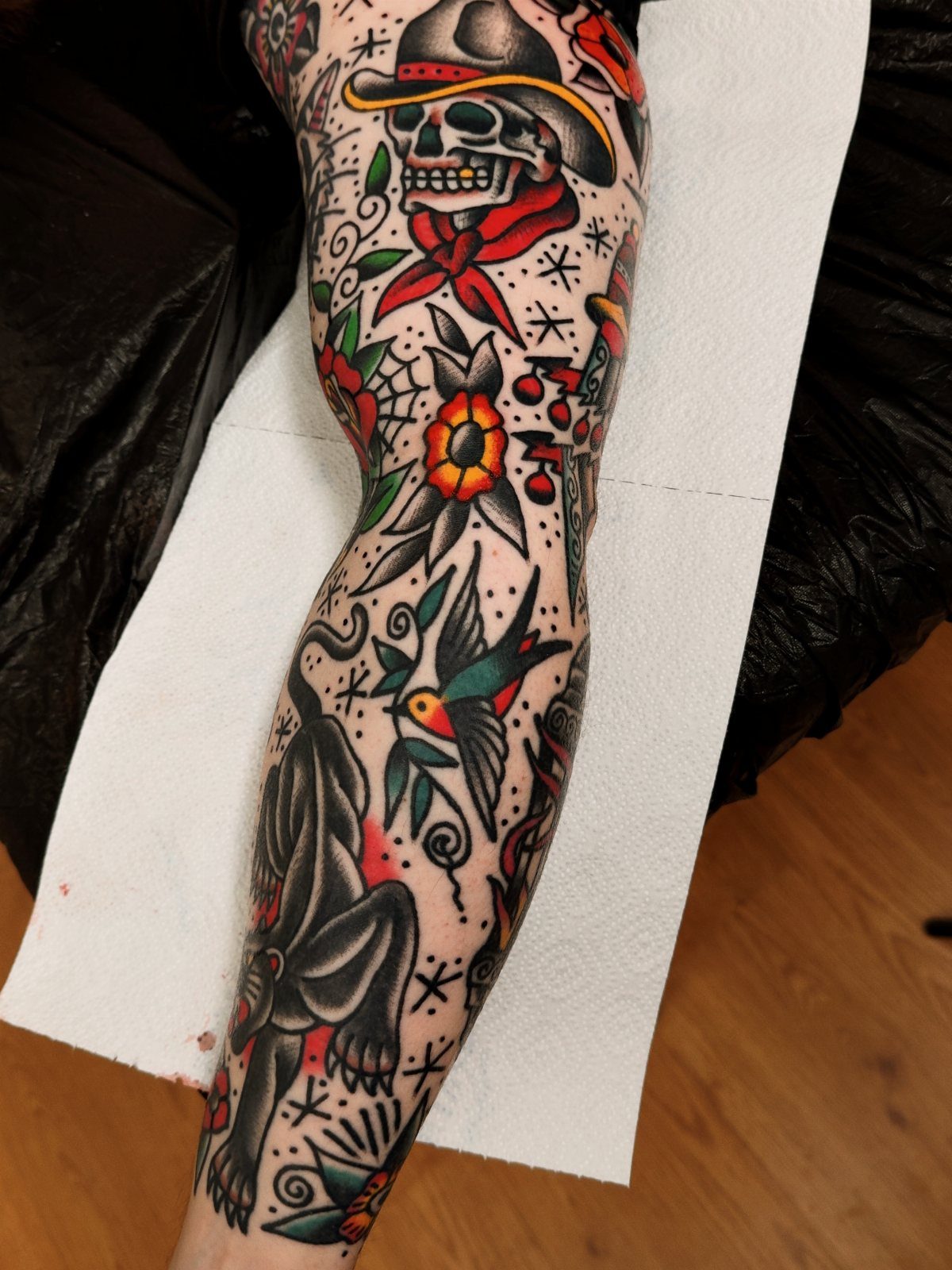
A cowboy skull wearing a bandana anchors the composition here, flanked by swallows in flight and clusters of roses.
The skull’s hollow eyes and bared teeth give the piece a Western outlaw edge, while the birds and flowers soften the tone and fill negative space.
This combination works well for anyone drawn to Americana or frontier imagery. The bandana lets you claim a detail: some clients choose a color or pattern tied to family, a favorite team or a military unit.
The skull’s shading and the petals on each rose require careful saturation so the image stays readable as it settles.
4. Traditional Woman Portrait Sleeve
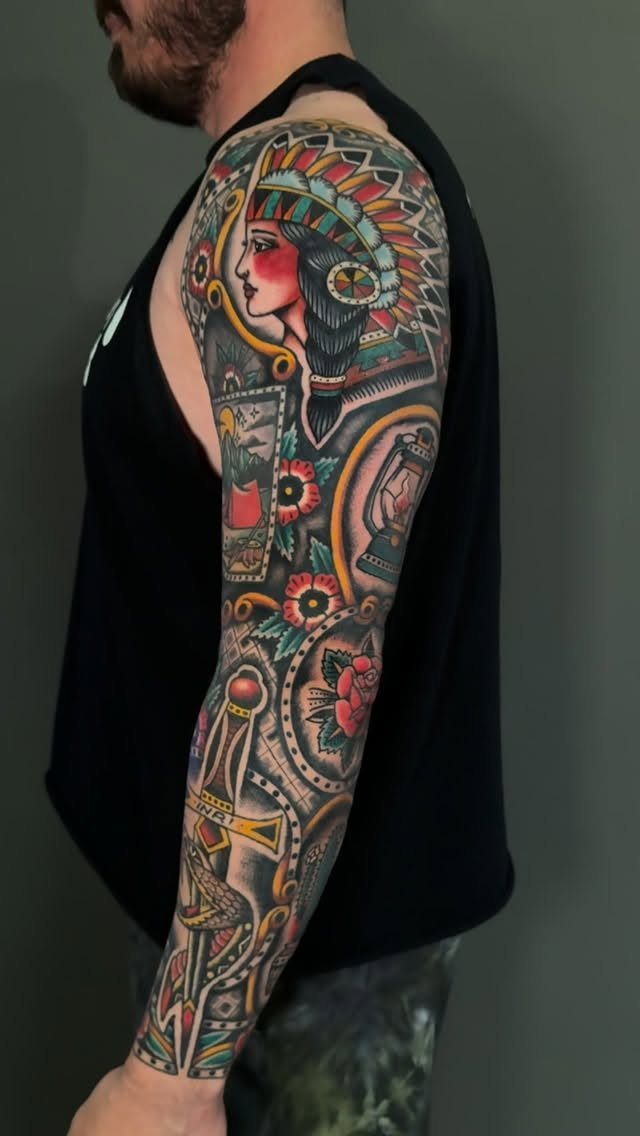
A portrait of a Native American woman in traditional attire sits at the center of this sleeve, surrounded by a lantern and a single rose.
Her headdress and jewelry carry fine line detail, while the lantern’s glow is rendered in soft yellow and orange.
Portrait work in this style demands an artist experienced in facial proportions and symmetry. A poorly executed face is the hardest element to fix later, so spend time reviewing your artist’s portfolio before committing.
The face alone demands focused work, and most artists break that into 2 sessions to avoid overworking the skin.
5. Traditional Eagle Sleeve
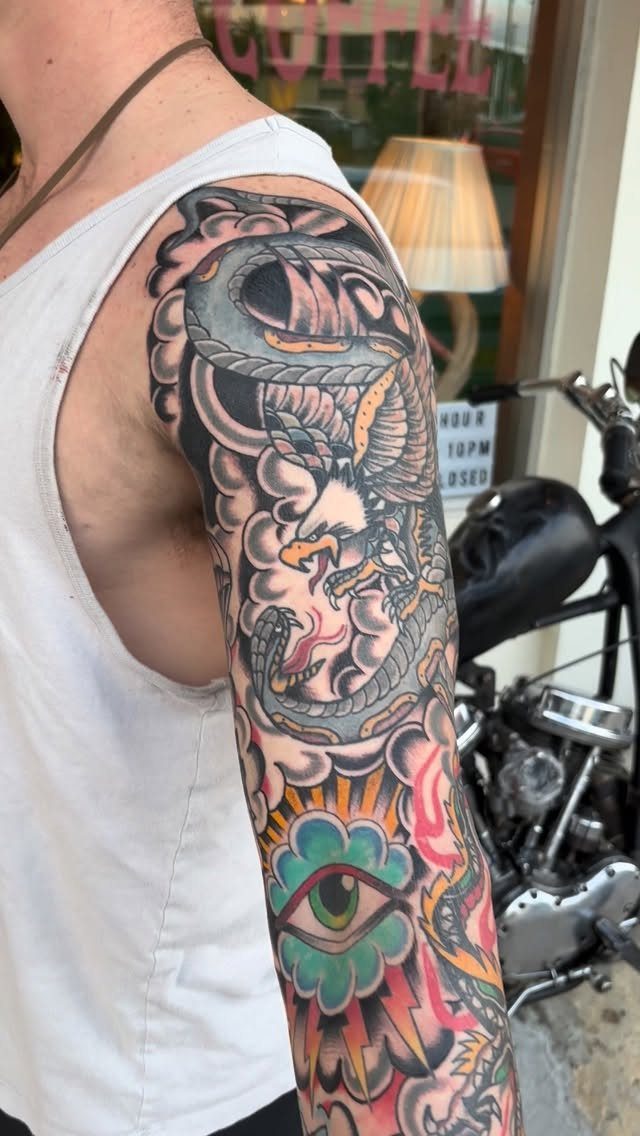
An eagle with outstretched wings dominates this sleeve, talons gripping a coiled snake while an all-seeing eye watches from below. The eagle’s feathers are rendered in bold black strokes, and the snake’s scales add texture without overcrowding the composition.
This design carries strong patriotic and protective symbolism. The eagle represents strength and freedom, the snake suggests danger or temptation, and the eye implies vigilance or spiritual awareness.
Session time depends on wing span and feather detail. The eagle’s head and talons require the most precision, so many artists tackle those sections first when your pain tolerance is highest.
6. Nautical Traditional Sleeve
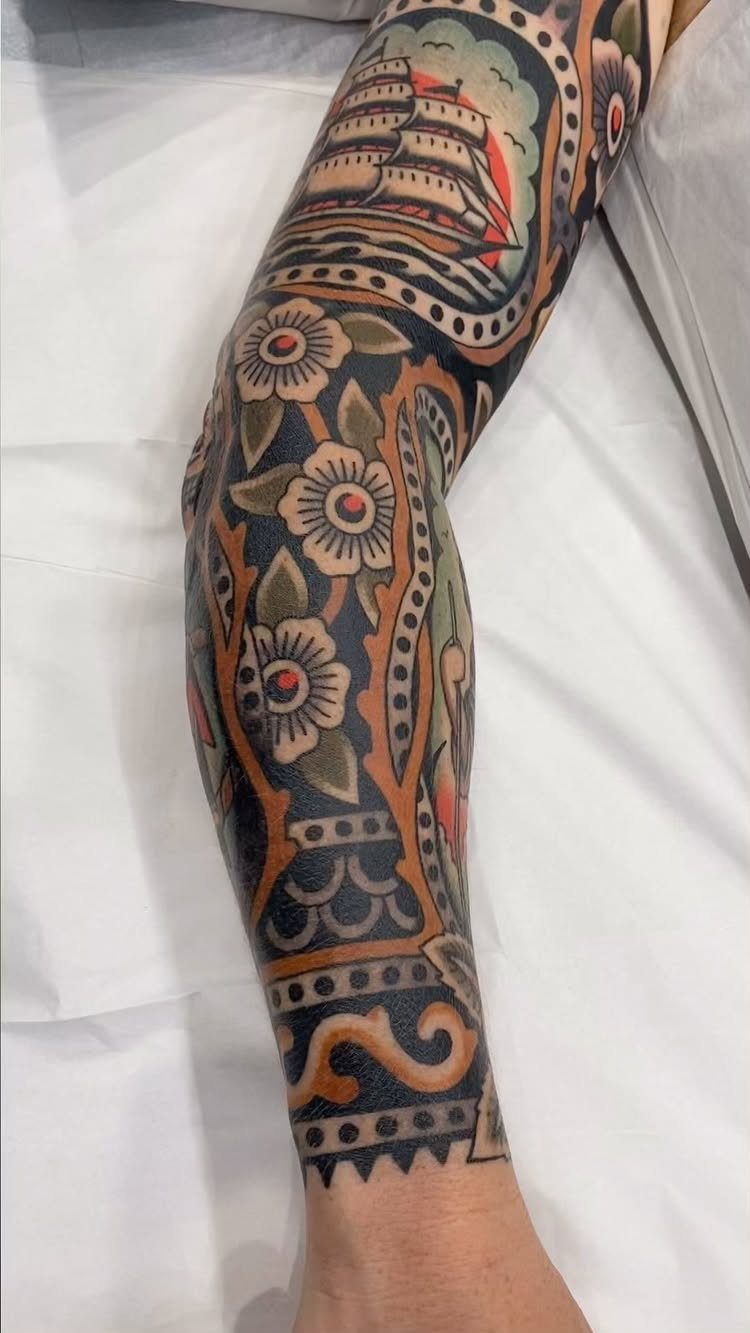
A tall-masted clipper ship in full sail commands the upper portion of this sleeve, with roses and ornamental scrollwork filling the surrounding space.
The rigging and sails are inked in fine black lines, while the flowers add bursts of red and green.
Maritime imagery suits anyone with a connection to the sea: military service, fishing heritage, or simply a love of nautical history.
The ship’s sails and the rose petals offer natural places to incorporate additional small elements later if the design needs balancing.
The ship’s rigging is time-intensive, and the floral borders require steady hand work to keep symmetrical across the curve of the limb.
7. Hand and Wrist Traditional Coverage
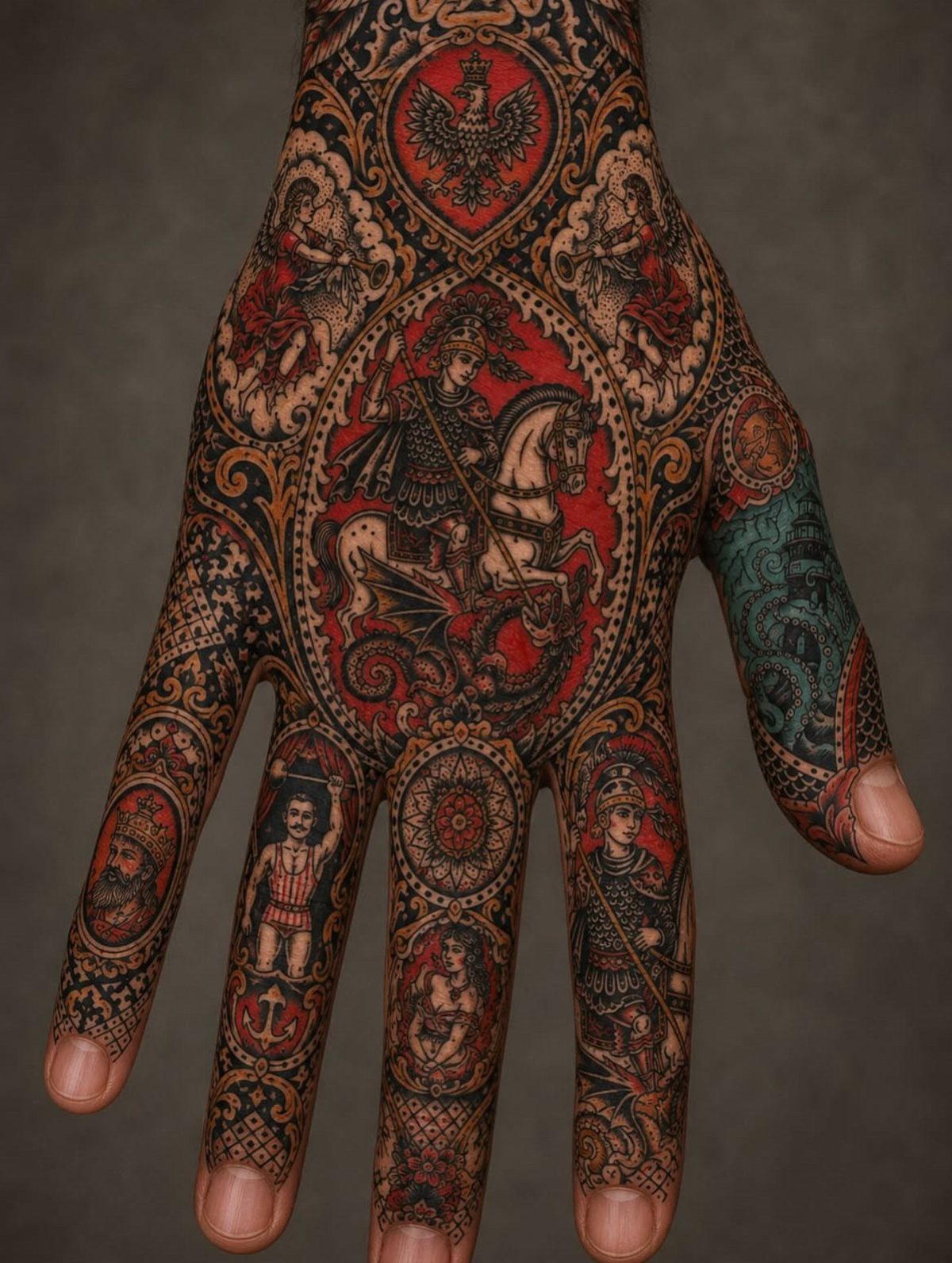
Extending coverage down onto the hand turns a sleeve into a visible statement in every handshake and gesture.
The knight and eagle here fill the wrist and back of the hand, with smaller elements packed into gaps so no skin shows through.
Hand tattoos fade faster than arm work because washing, sun exposure and friction wear the ink unevenly. Plan to book touch-up sessions every few years to keep the images sharp.
Pain peaks across the knuckles and the webbing between fingers, where bone sits close to the surface and nerve density runs high.
Cost of Sleeve Tattoos
Artists with more experience charge higher rates, and shops in major cities add another layer to the price.
Most artists work in blocks of 3 to 5 hours and bill by the session rather than quoting a flat rate up front.
That structure lets you pause between appointments if the budget tightens, though stopping midway through a sleeve means walking around with unfinished work for months.
Location affects pricing as much as experience does. A shop in a small Southern town charges less than a studio in Brooklyn or Los Angeles, even when the portfolios show comparable skill.
Tattoo Themes and Meanings
Patriotic imagery anchors many traditional sleeves: eagles for freedom and vigilance, flags for national pride, military insignia for service. These pieces often mark a veteran’s branch or deployment, with specific colors or banners added to honor a unit.
Folklore designs carry meanings tied to transformation and protection.
The panther represents strength and the willingness to defend, while the snake signals rebirth or the kind of wisdom earned through hardship. Skulls acknowledge mortality, often softened with roses or birds to balance the weight of the subject.
Each design holds personal significance beyond its traditional reading. A client might choose a panther because a parent served with a tank battalion, or a snake because recovery from illness felt like shedding old skin.
Tattoo Styles Evolution
American Traditional tattoo style’s core elements remain unchanged: the style still depends on thick borders and solid fills to keep images readable as ink spreads and skin ages.
What has shifted is the range of subjects and the precision of the line work.
Early traditional tattoos leaned heavily on nautical and military motifs because sailors and servicemen formed the bulk of the clientele. Modern artists working in the style add portraiture, Western scenes and custom compositions while keeping the same technical foundation.
The simplified, stylized rendering that defined the look a century ago still defines it now.
Frequently Asked Questions
What are traditional American tattoos called?
American traditional tattoos are often called old school tattoos. The approach pairs heavy black outlines with a tight palette of red, yellow, green and blue, and leans on imagery like eagles, anchors, roses and daggers.
What are the different types of arm sleeve tattoos?
Sleeve tattoos include full sleeves that run shoulder to wrist, half sleeves that stop at the elbow, quarter sleeves from shoulder to mid-bicep, and forearm sleeves that start below the elbow.
Full American traditional sleeves are typically built as separate pieces first, then connected with filler like roses, stars and banners across several sessions.