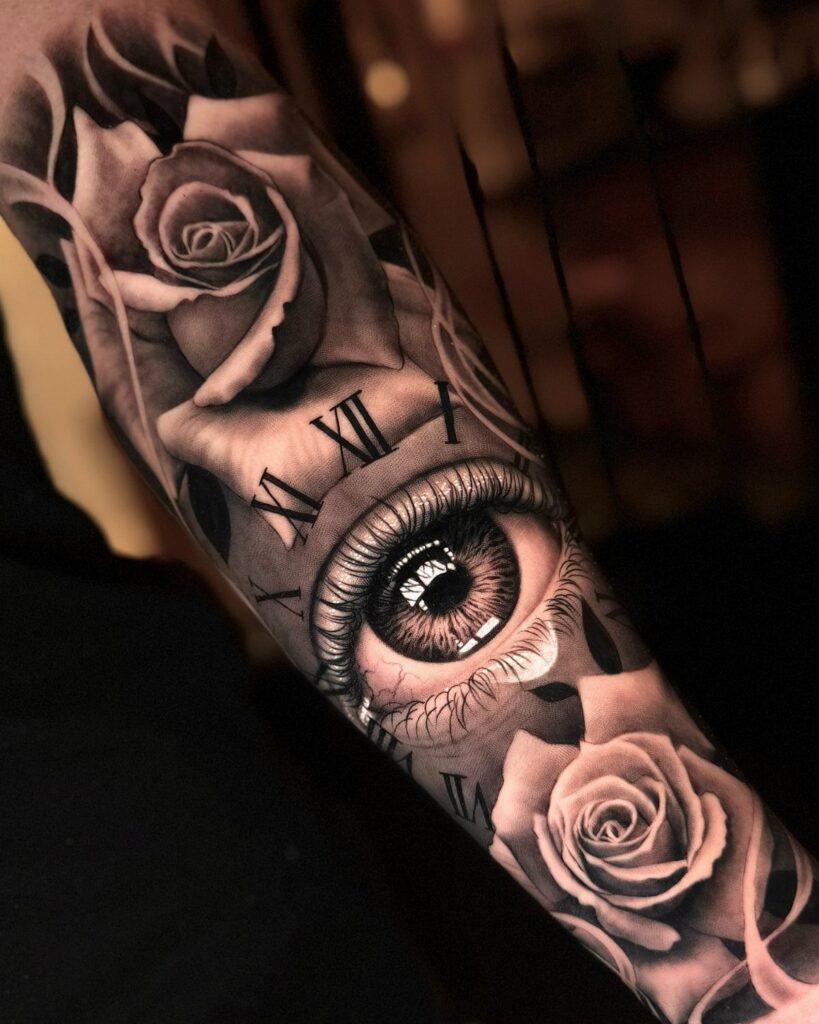
Black and grey ink relies on shading alone to create depth, which means the artist’s control over grey tones decides whether a portrait reads as dimensional or a skull flattens into a blur.
Your choice between realism, geometric precision, or flowing florals comes down to how much detail you want visible from a distance and whether the design needs room to sprawl or fits in a compact spot.
1. Realism Black and Grey Tattoos
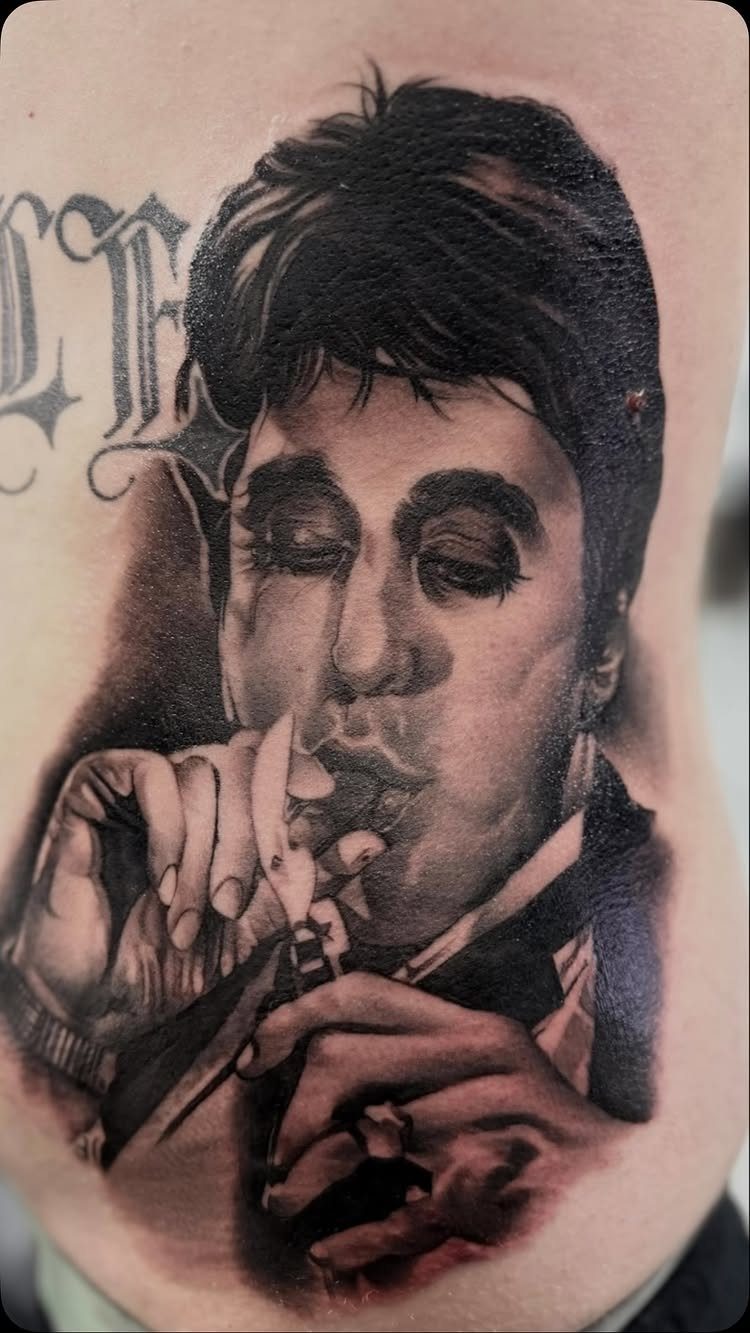
Realism in black and grey pulls off the look of a photograph on skin, capturing depth through shadow and highlight alone.
The approach suits anyone who wants a tattoo that reads as an actual person or scene rather than a stylized graphic.
Getting it right depends on finding an artist skilled in smooth gradations and fine detail work.
Faces, especially, need precise shading to look convincing. Expect longer sessions than simpler styles because the artist builds tone gradually with multiple passes.
You get a piece that holds attention from across the room and rewards a closer look.
2. Surrealism Black and Grey Tattoos
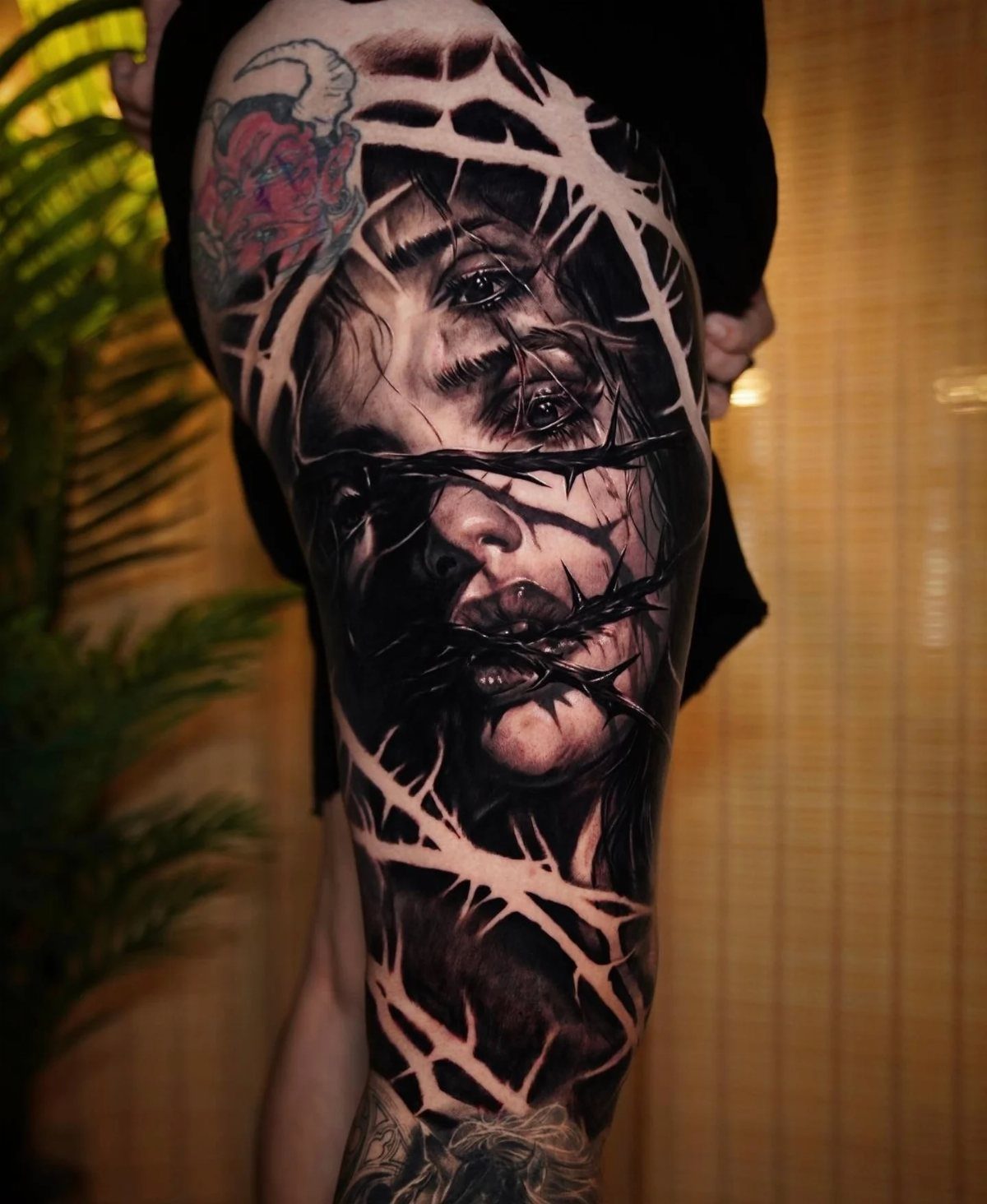
Surrealism lets you put dream logic on skin: objects that don’t belong together, perspectives that bend, faces that dissolve into other forms.
Black and grey puts all the weight on the strangeness of the composition rather than adding another layer with color.
The imagery often comes from personal symbolism or recurring dreams, so bring reference images and be ready to explain what you’re after.
Placement matters. Surreal designs tend to sprawl or need room to breathe, so think forearm, thigh, or ribs rather than ankle or wrist.
3. Portrait Black and Grey Tattoos
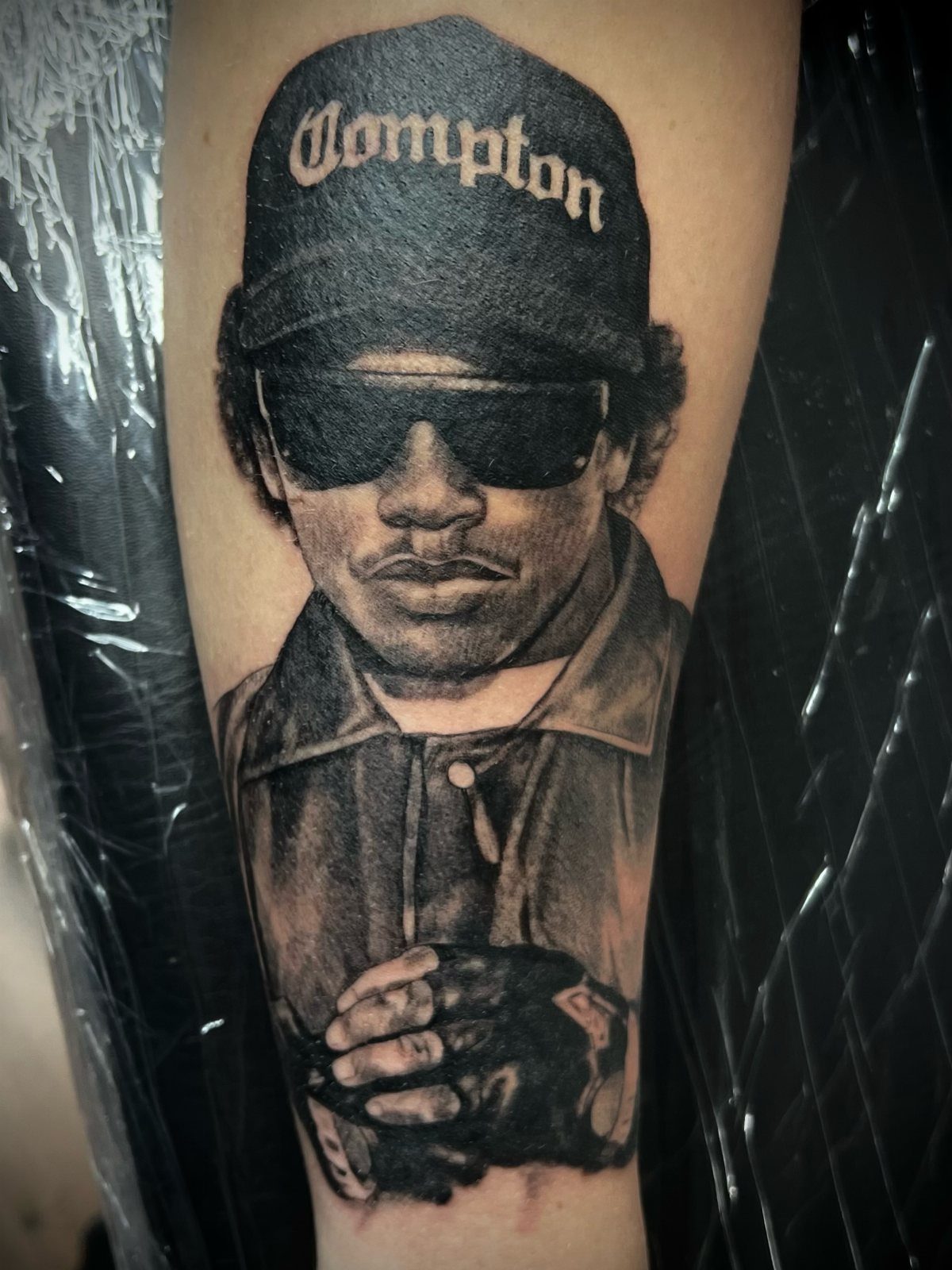
A portrait tattoo in black and grey puts a face on you permanently, usually someone who shaped your life or a character who speaks to you. The monochrome palette centers likeness and expression without the distraction of color matching.
Skill level separates a good portrait from one that misses the mark.
Look for an artist whose portfolio shows facial proportions and shading that actually resemble their reference photos. Bring a high-resolution image with good lighting and clear features.
Cost runs higher than most other tattoo styles because of the detail involved. Sessions run long for anything larger than a few inches.
4. Geometric Black and Grey Tattoos
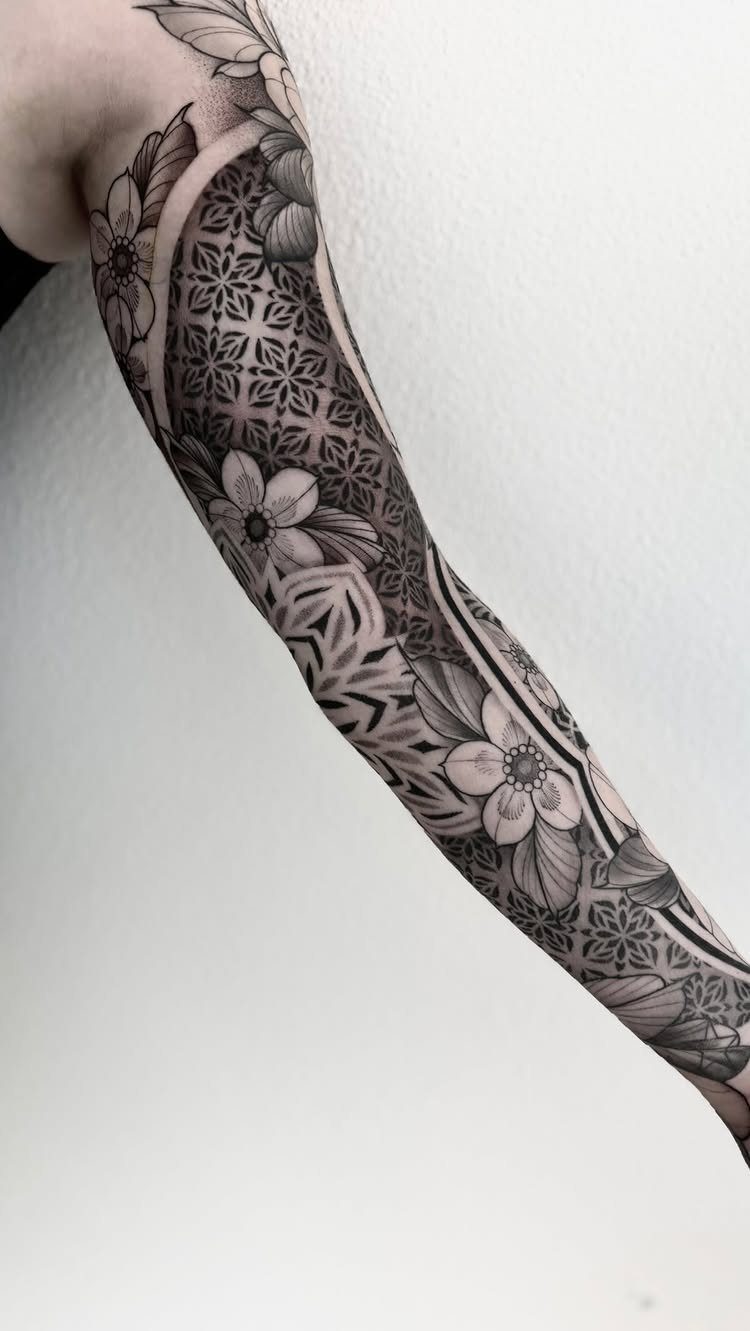
Geometric black and grey tattoos rely on clean lines and repeating patterns, often mixing circles, triangles, and hexagons with organic elements like flowers or animals. Hard-edged shapes set against softer shading create a look that feels both ancient and contemporary.
Symmetry matters here. A geometric piece that’s even slightly off-center or uneven will bother you every time you look at it, so choose an artist who can execute precision line work.
Placement works best on areas with flat, stable skin: forearm, shoulder, or calf. Spots that shift with movement or stretch over time will distort the geometry as years pass.
5. Black and Grey Nature Landscapes
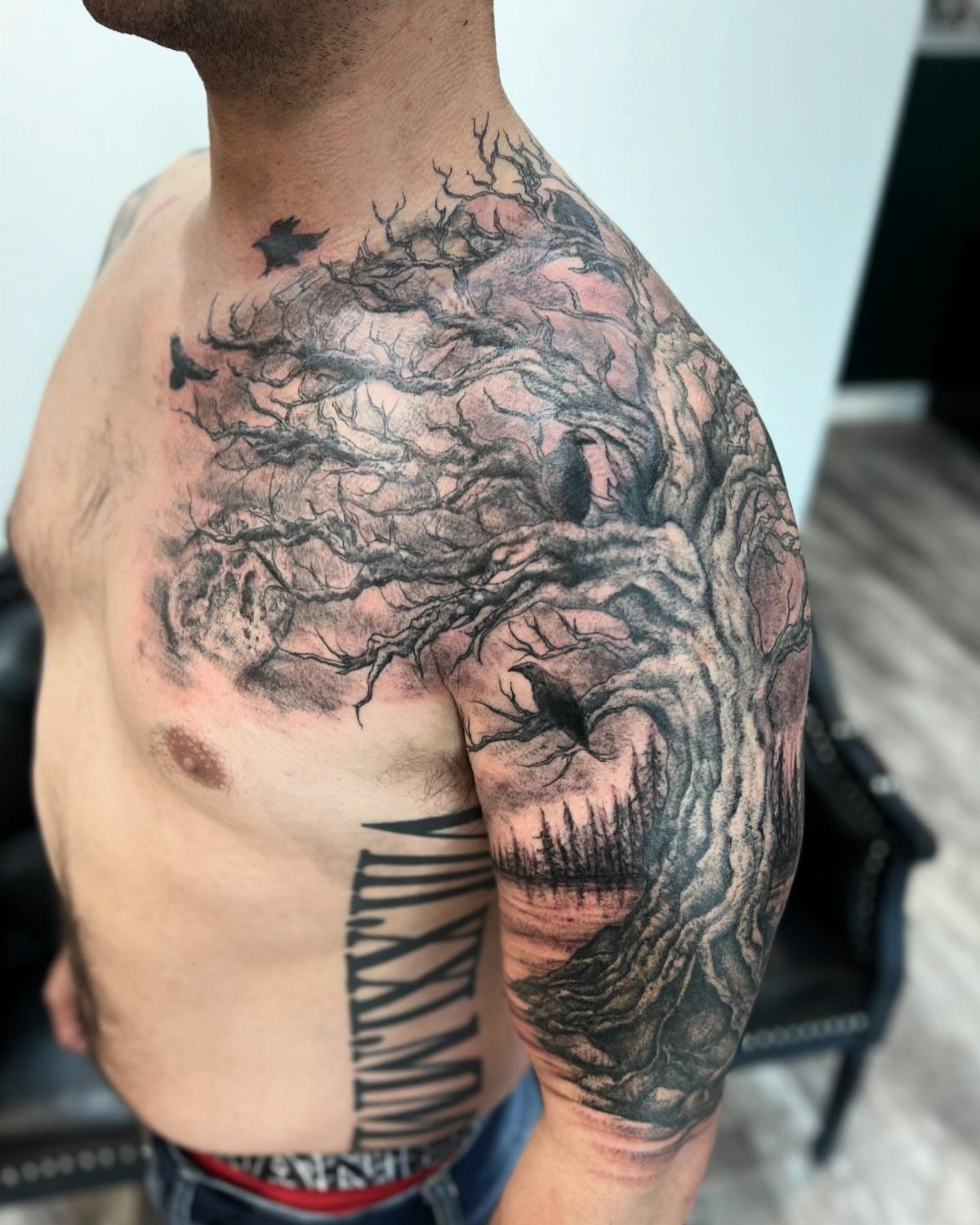
A nature landscape in black and grey puts a slice of outdoors on your body, whether that’s a mountain range, a forest edge, or a single gnarled tree.
Without color, the design depends entirely on shading to suggest distance, texture, and atmosphere.
Scale makes or breaks this style.
A landscape needs enough space to show depth, so think upper arm, back, or thigh rather than wrist or ankle. Tiny landscapes lose detail as they heal and tend to blur into a grey blob over time.
6. Floral Black and Grey Tattoos
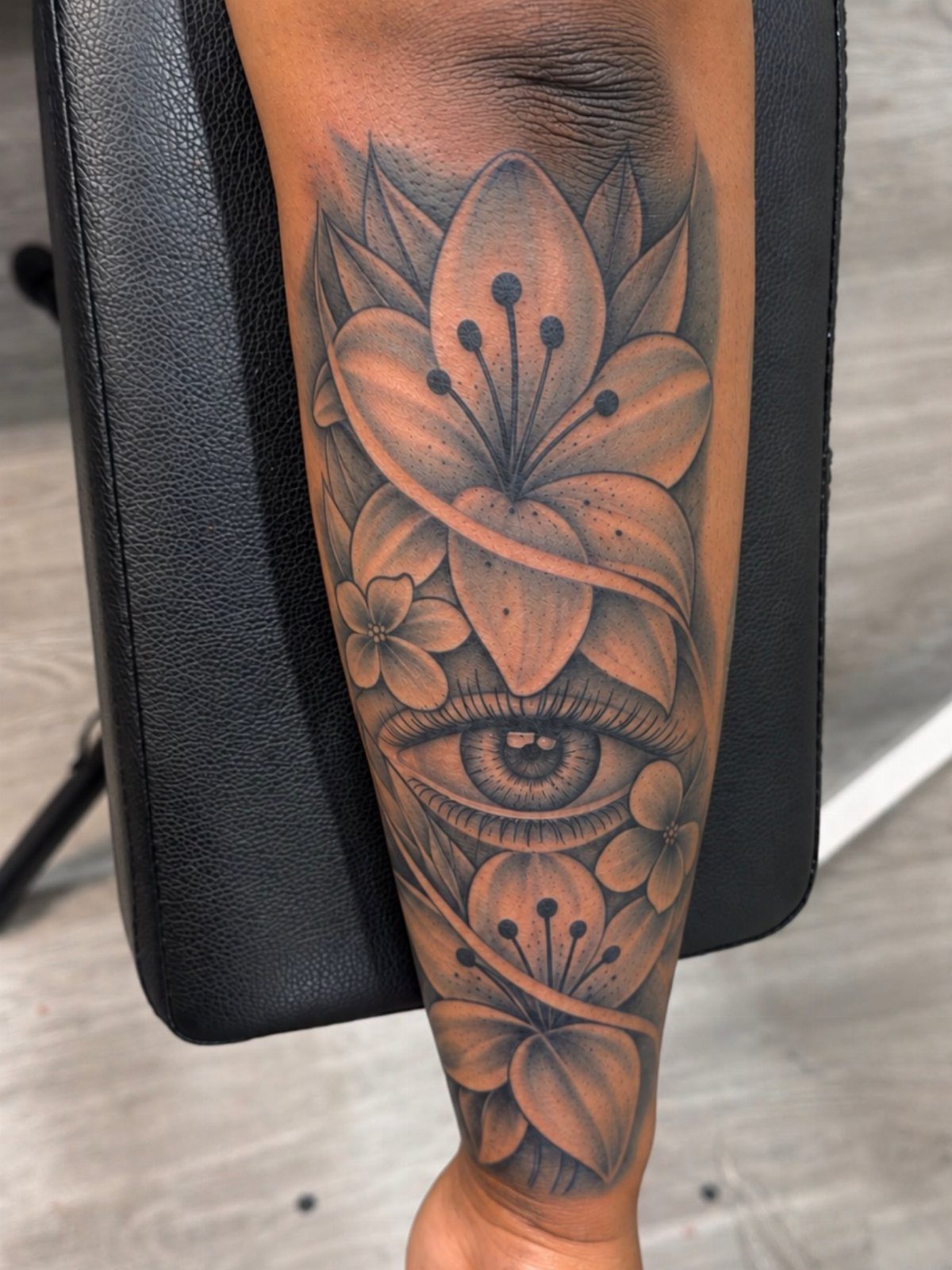
Floral designs in black and grey strip away the obvious appeal of color and lean on form and shadow instead.
Petals, stems, and leaves become studies in gradient and texture, which lends the piece a softer, more elegant feel than bold color florals.
This approach works well for anyone who wants a feminine design without the saturated look of traditional color work. Black and grey florals age gracefully because they don’t rely on bright pigments that fade unevenly.
Placement is flexible.
Florals adapt to curves, so they suit forearms, shoulders, ribs, and thighs equally well. Plan for a longer session when the piece reaches the size of your hand.
7. Skull Tattoos
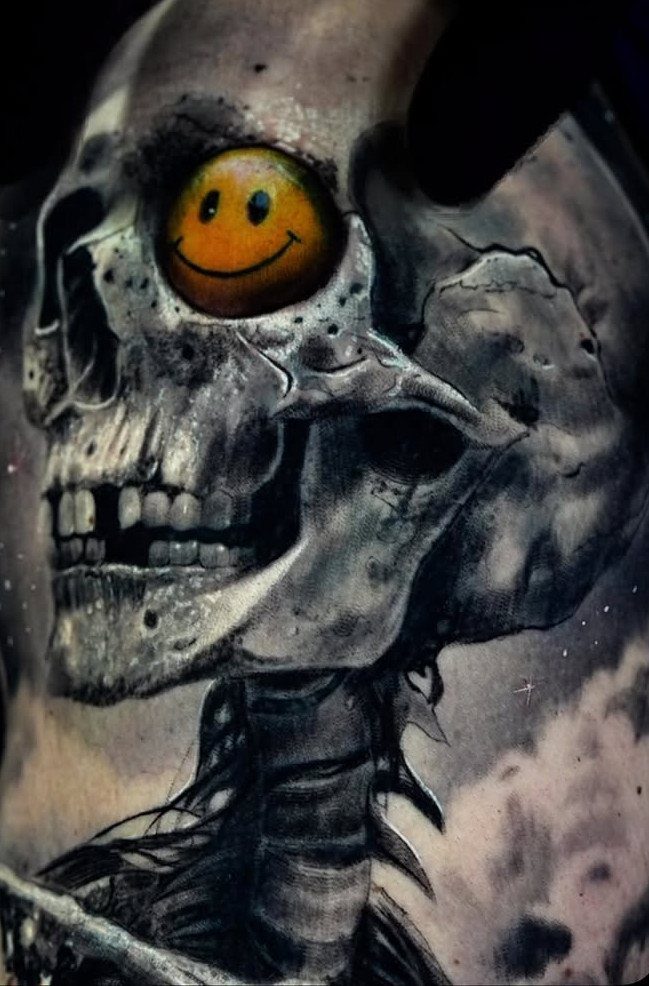
A skull in black and grey carries the weight of mortality without tipping into cartoon or horror. The image works as a reminder that time runs out, or as a symbol of starting over after something in your life ended.
Shading turns a simple skull into a dimensional piece rather than a flat outline. The piece can stand alone or anchor a larger composition with flowers, clocks, or other elements that tie into the same theme.
Placement depends on how large the skull needs to read. Forearm, upper arm, or calf give enough space for detail that lasts.
8. Timepiece Tattoos
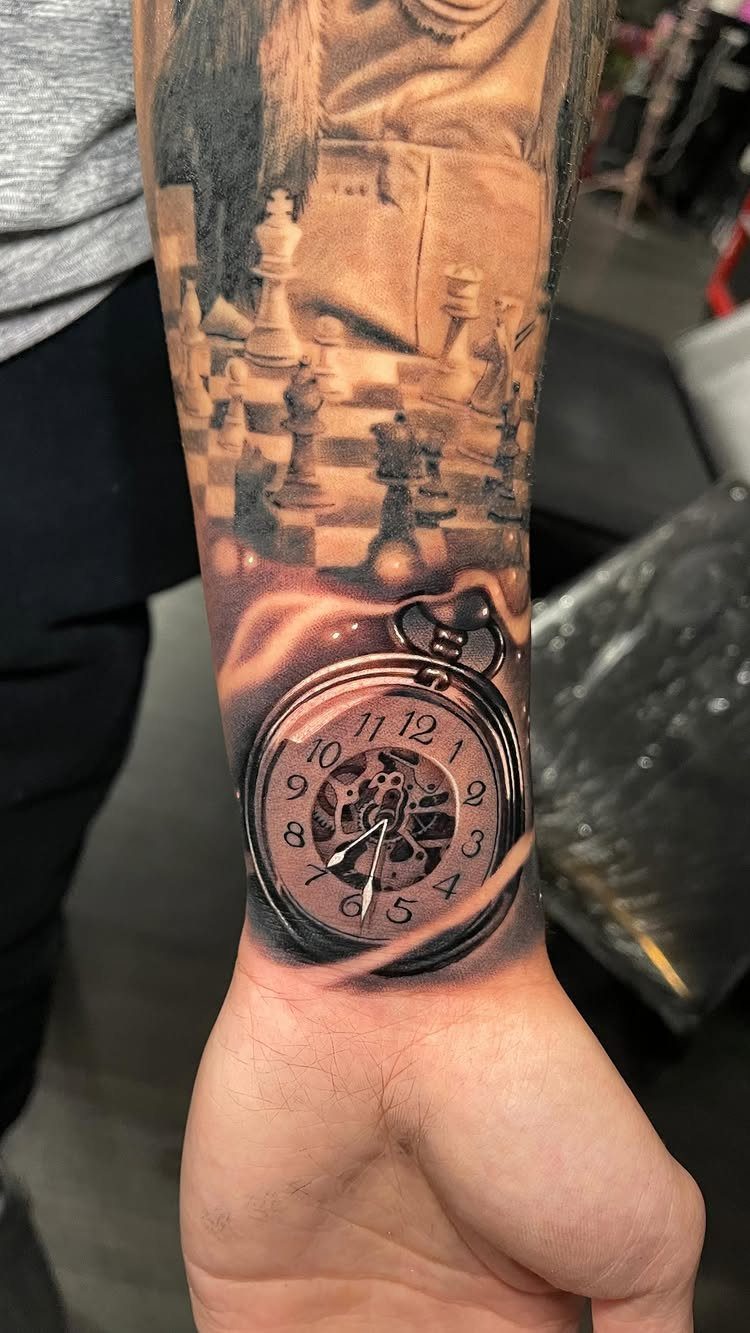
A pocket watch or clock face in black and grey pins time to your skin, often paired with objects that carry their own meaning: skulls, roses, or keys.
The design speaks to moments that changed you or the feeling that time is slipping past.
Detail in the watch face matters.
Roman numerals, gears, and hands need clean line work to stay readable as the tattoo settles. Blur here makes the whole piece lose its point.
Forearm placement lets you see the watch yourself, which suits a tattoo about your own timeline. Budget for a longer session if the watch sits inside a larger scene.
9. Tribal Black and Grey Designs
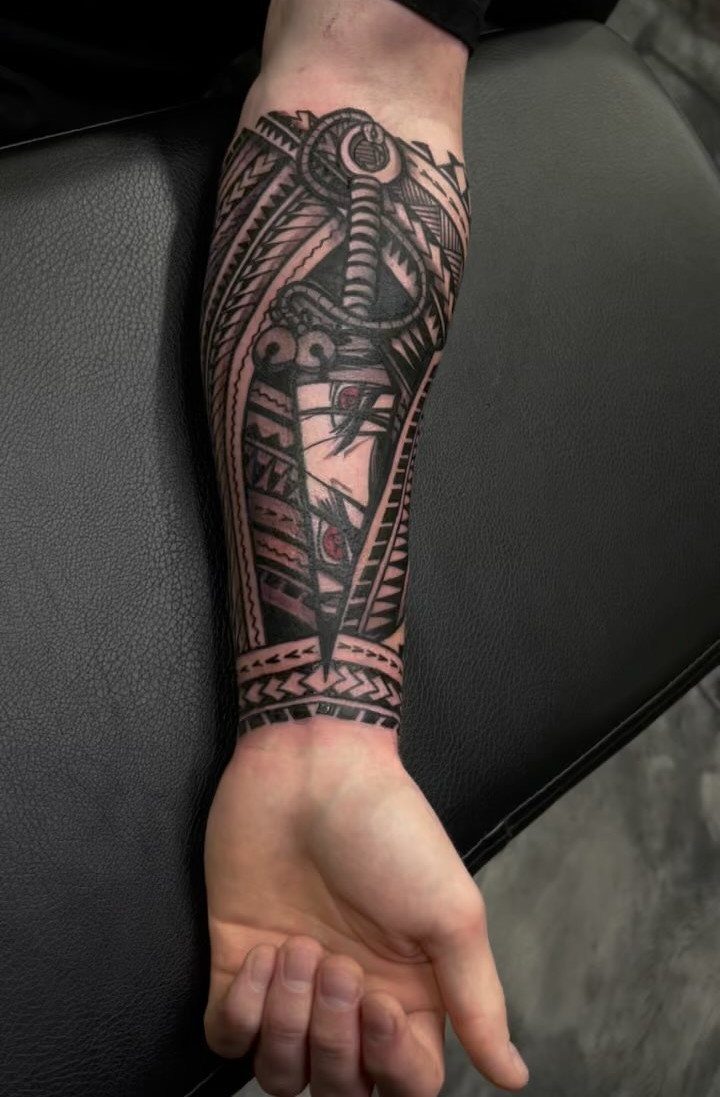
Tribal designs in black and grey pull from patterns that once marked identity and milestones in Polynesian, Maori, and other indigenous cultures. Bold shapes and negative space create high contrast that holds up over decades.
The style depends on thick lines and geometric repetition, so it ages better than fine-line work. Placement on the shoulder, upper arm, or calf follows the natural curve of muscle and reads clearly from a distance.
Respect matters here. If the pattern comes from a specific culture, understand what it signifies before you commit to wearing it.
10. Minimalist Black and Grey Tattoos
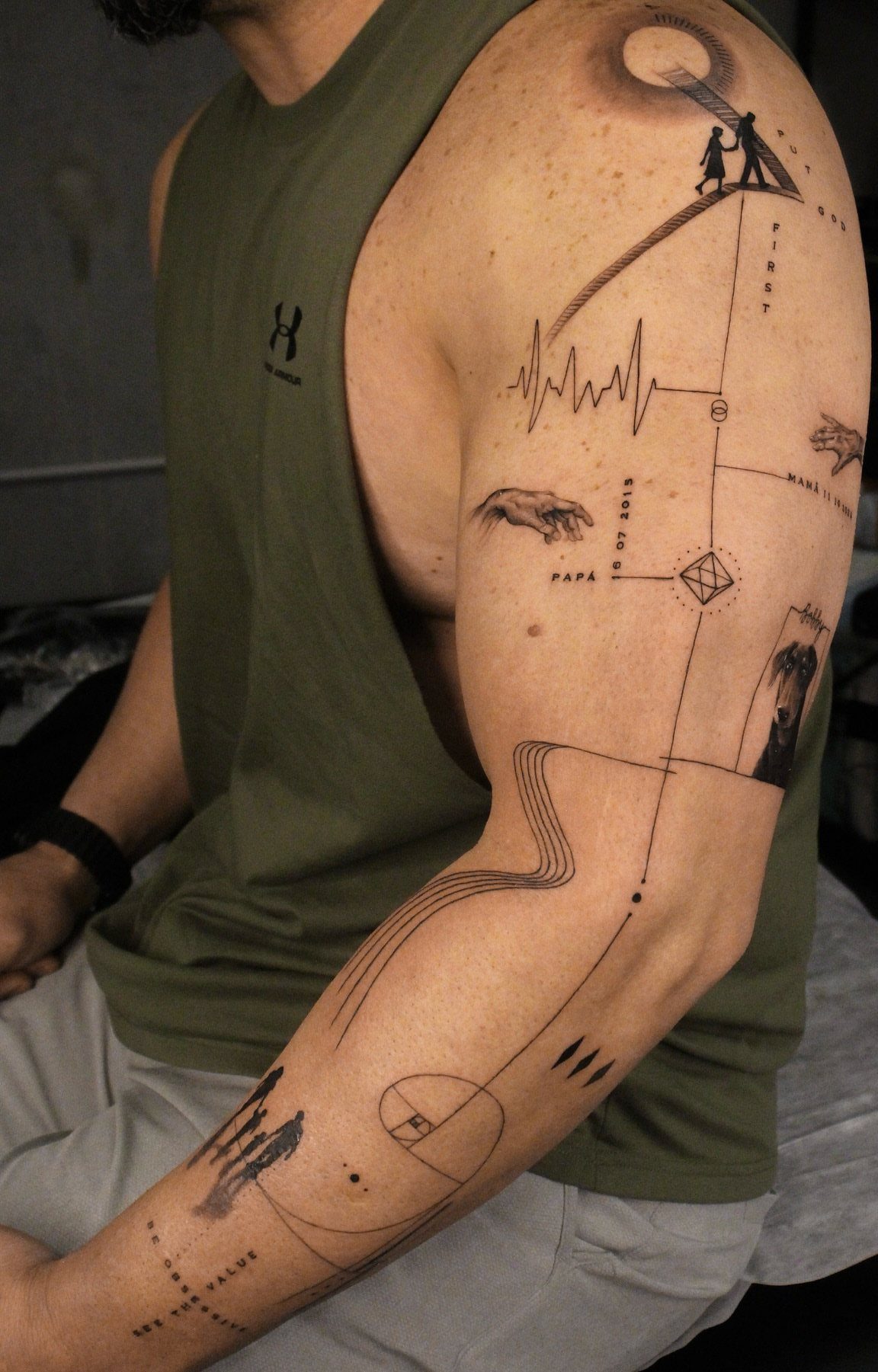
Minimalist black and grey tattoos strip the idea down to its skeleton: thin lines, small figures, and just enough detail to carry meaning without filling space.
The approach suits anyone who wants ink that stays private until you choose to show it.
Legibility depends on placement.
Fine lines blur faster on hands and feet than on forearms or ribs, where the skin stays stable. Keep the design simple enough that it will still read years later.
Cost runs lower than dense, shaded pieces because the artist spends less time on each pass. Sessions are shorter, and aftercare is straightforward.
11. Smile Now Cry Later Masks
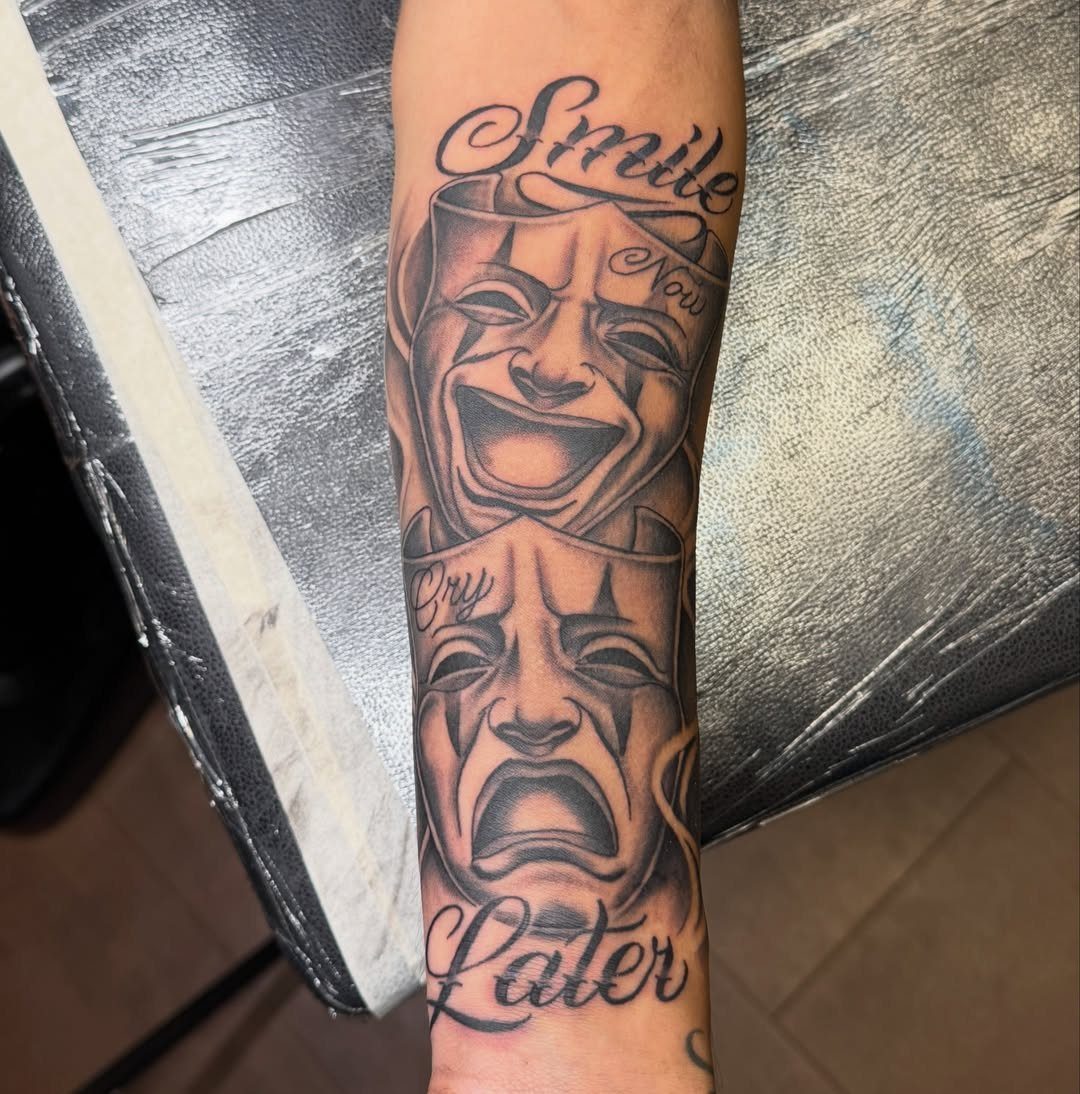
The comedy and tragedy masks in black and grey translate the theater symbol into a tattoo about emotional duality: joy and sorrow sitting side by side.
The phrase "Smile Now Cry Later" makes the meaning explicit, though the masks carry the idea on their own.
Line work and shading need to separate the 2 faces clearly, or the piece reads as muddy. Forearm placement keeps the masks visible to you and lets the design wrap slightly around the arm.
The style has roots in Chicano tattooing, where the masks represent resilience through hardship. Size matters less than execution, but anything smaller than a few inches loses the facial detail.
12. Mythical Jackalope Arm Sleeve
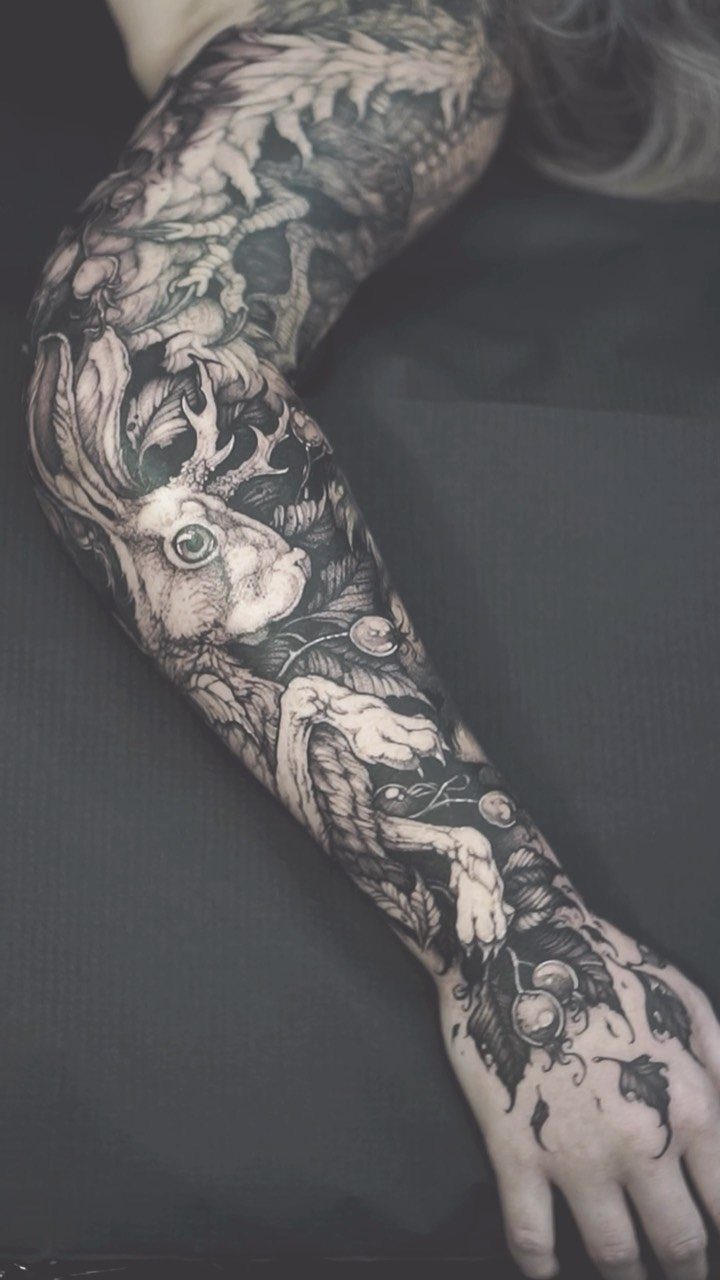
A jackalope sleeve fills the arm with folklore: the horned rabbit that never existed but feels like it should have. Surrounding leaves and organic patterns frame the creature and tie the design to wilderness and myth.
Full sleeves take multiple sessions, often several depending on how much shading and detail the artist layers in. Cost adds up, so budget several hundred at minimum and expect the process to stretch across months.
Placement on the arm lets the design wrap and follow muscle, which suits a composition with multiple elements. Black and grey keeps the focus on texture and form without competing colors.
13. Wildlife and Foliage Tattoo
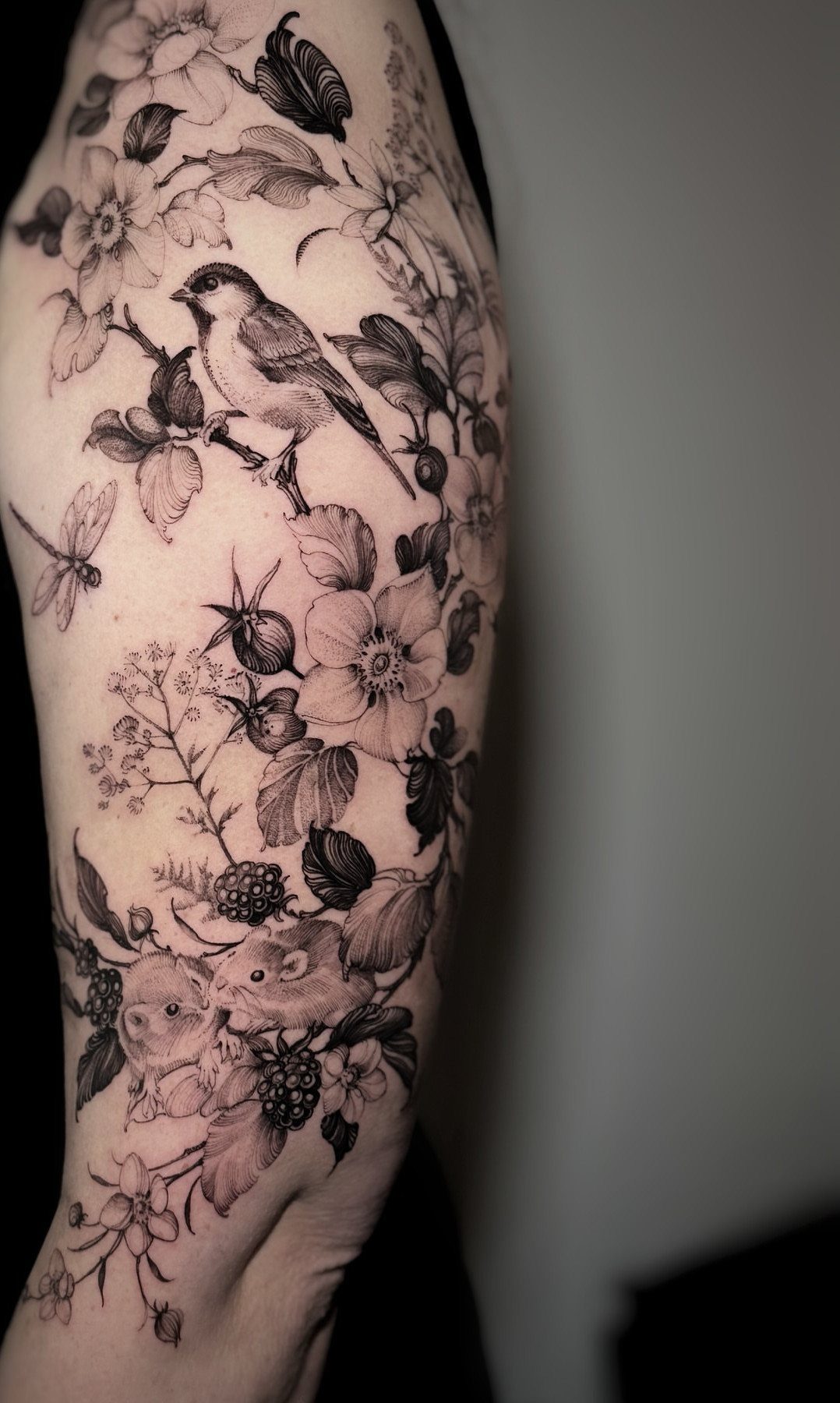
A wildlife and foliage tattoo layers several creatures and plants into one composition, giving you a scene that feels like you walked into a clearing and caught everything mid-motion.
The design suits an arm where the bird can sit higher near the shoulder and smaller elements like mice or insects fill space as the piece wraps around.
Getting this right takes an artist who can balance multiple focal points without letting one dominate. Too much contrast in one area pulls the eye there and leaves the rest feeling like filler.
Budget for a full or half sleeve depending on how much ground the piece covers. Sessions add up when you’re packing in this much detail.
Importance of Shading Techniques
Shading separates a tattoo that reads clearly from one that flattens into a grey smudge. Some artists mix black ink with white instead, which produces a thicker, brighter grey but requires slower application.
Subtle gradations take skill. An artist experienced in black and grey can move from soft, barely-there shading to harsh shadow within the same piece, creating contrast that makes the tattoo stand out.
Without strong black tones to anchor the lighter greys, the piece will fade faster and lose definition over time.
Shading done poorly looks blotchy and won’t hold up, which is why I recommend reviewing an artist’s portfolio specifically for their range of grey tones before booking.
Precision in shading is the difference between a tattoo that ages well and one that needs heavy touch-ups years later.
Black-and-gray (also black-and-grey, black and grey/gray) is a style of tattooing that uses black tattoo ink mixed with distilled water to create various tones in the skin.
Pros and Cons of Black and Grey Tattoos
Black and grey tattoos age more gracefully than color work.
The ink doesn’t fade unevenly the way bright pigments do, and touch-ups are less frequent. Cost runs lower because you’re not paying for multiple ink colors or the time it takes to blend them.
The style highlights detail and shading in ways that color can sometimes obscure, and realism translates especially well in monochrome.
Designs that depend on bold, saturated hues don’t work here, and some people find the lack of color flat or washed-out compared to brighter tattoos.
Healing takes longer because more ink goes into the skin, which means you’ll need to follow aftercare carefully to avoid infection. Maintenance is low because the ink doesn’t fade unevenly the way bright pigments do, and touch-ups are less frequent.
Some designs simply look dull without color, so consider whether the piece you have in mind holds up in monochrome before committing.
Choosing the Right Artist
An artist who can shift from pale, barely-there washes to hard black contrast has the control you need for this style. Look for smooth gradations rather than blotchy or inconsistent tones.
Check Instagram, tagged photos, and the studio’s website rather than defaulting to the closest shop.
Visit in person if you can, and ask for a consultation before booking. Chemistry between you and the artist counts, so pick someone who leaves you feeling sure about the work.
Ask which black and grey styles they specialize in.
An artist skilled in realism might not have the precision for geometric work, and vice versa. Research the studio as well to confirm it’s licensed and maintains clean working conditions.
Don’t rush this step. Your tattoo is permanent, and the artist’s shading skill determines how well it holds up over time.
Frequently Asked Questions
What are black and grey tattoos called?
Black and grey tattoos are sometimes called monochromatic tattoos. The name describes the approach: using only black ink and its diluted shades to build an image without any color.
Do black and grey tattoos last?
Black and grey tattoos hold up better than color work because the ink doesn’t fade unevenly. You’ll need fewer touch-ups over the years, and the design keeps its definition longer than bright pigments do.
Can color be added to black and grey tattoos?
Color can go on top of black and grey ink or around it to make the addition look intentional.
Solid black areas won’t take new pigment, but an artist can work color into the surrounding space or over lighter grey tones if you decide later you want it.