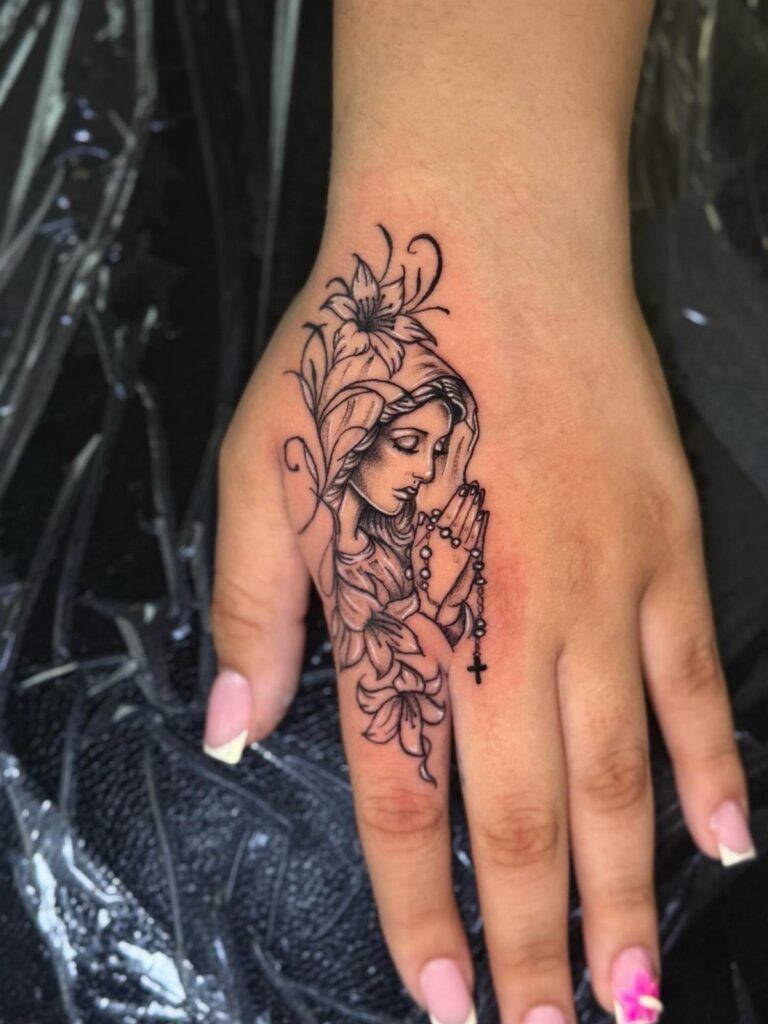
Virgin Mary tattoos range from small silhouettes that hold a profile and halo in fine line work to full back pieces that demand multiple sessions and carry Renaissance-level shading in the robes, plus sleeve and chest designs that leave room for roses, rays of light or a paired figure.
Mary stands for protection, maternal love and grace under suffering, and the image pulls weight from centuries of devotion whether you add roses, a rosary, rays of light, a halo, a dove or pair her with Baby Jesus or San Judas.
1. Crying Virgin Mary Tattoo
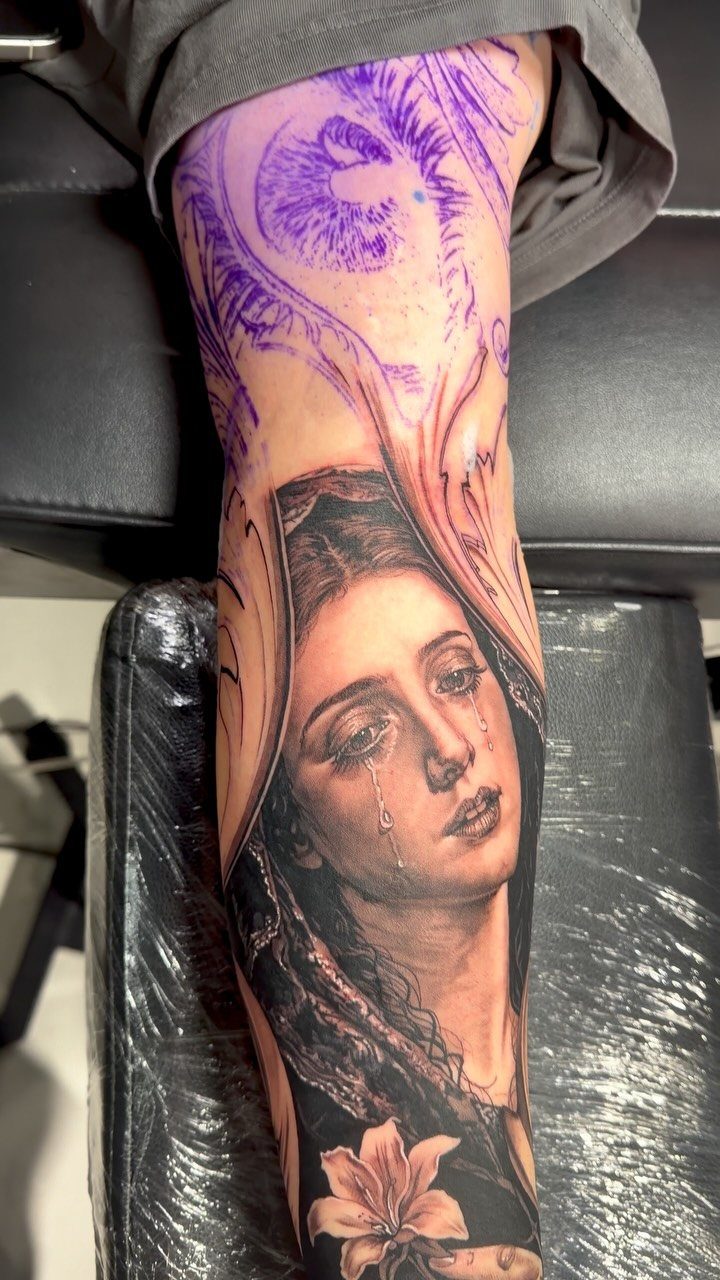
Tears running down Mary’s face turn the devotional into something rawer. The crying Virgin Mary speaks to grief, loss or the weight of faith itself.
Black and grey shading delivers the depth this needs.
A realism or fine-line approach keeps the face readable, and the tears legible, even as the piece ages. Placement matters: inner forearm or outer calf gives you room for the vertical flow and lets the expression land without crowding.
If you want the piece to carry personal loss, adding a date or name below keeps it specific without overloading the portrait.
2. Virgin Mary with Baby Jesus Tattoo
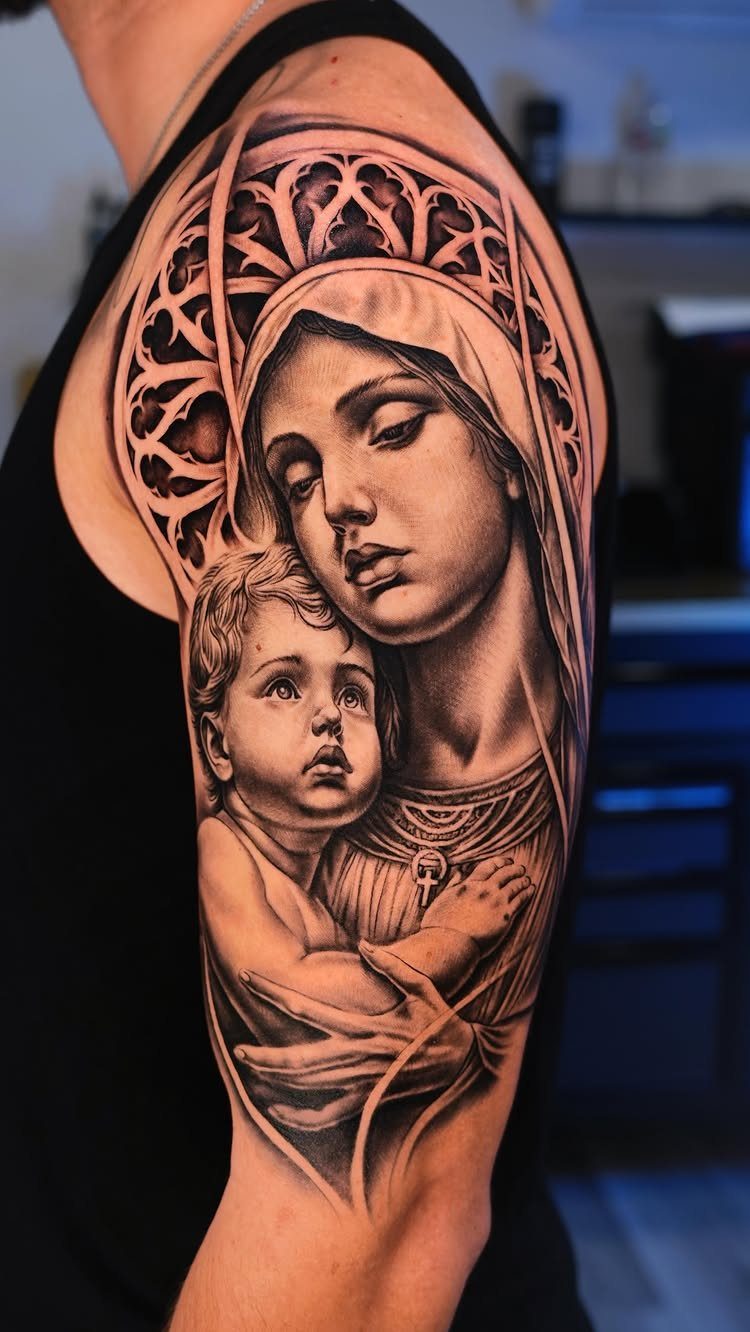
Mary holding the infant anchors the design in protection and maternal love. Faith and family read together in a single composition.
A Virgin Mary with Baby Jesus tattoo benefits from being completed across multiple sessions, since that approach makes sense for pieces with this much portrait work: you get cleaner lines and more controlled shading when you split the time.
A gothic arch or decorative frame lifts the figures off the skin and adds architectural weight. Upper arm and shoulder give you the vertical canvas this needs, and the curve of the muscle follows the drape of Mary’s robe.
3. Virgin Mary with Dove Tattoo
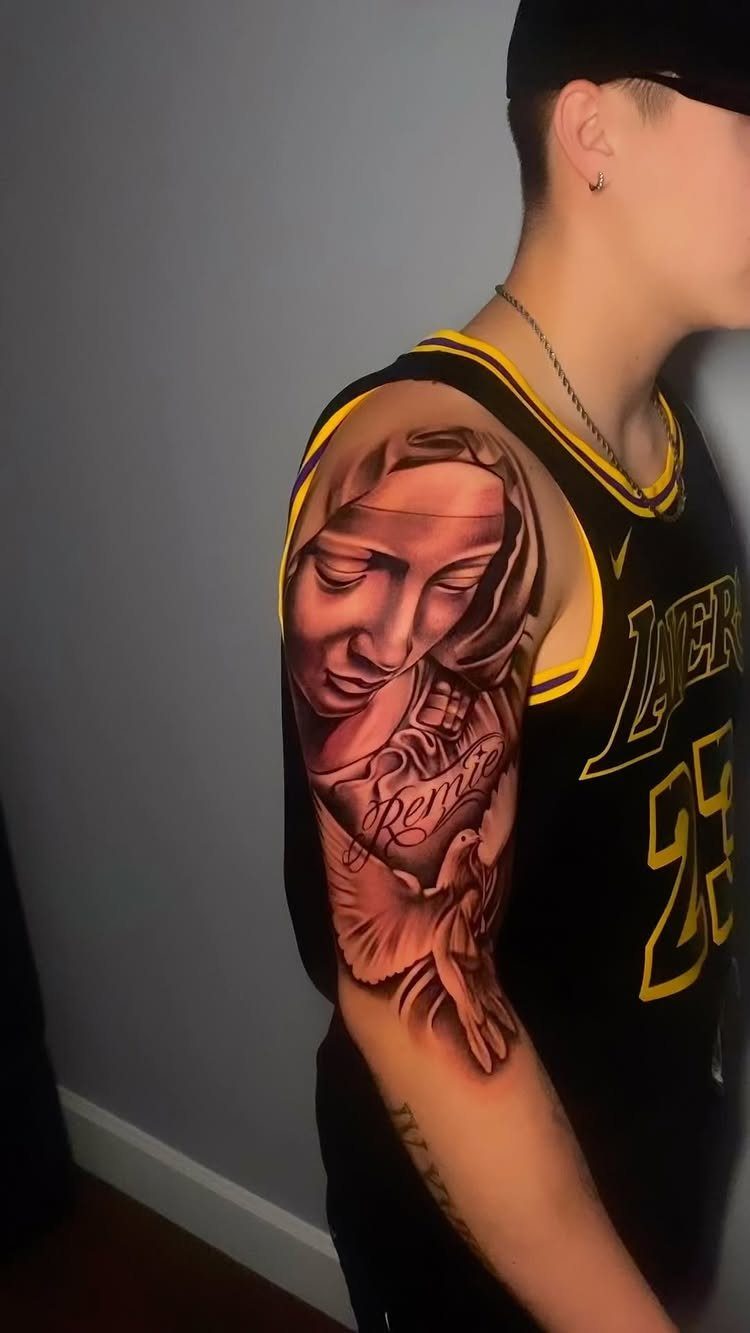
A dove rising beside or above Mary layers the Holy Spirit into the portrait. The bird reads as purity, grace, or divine presence depending on how you frame it.
Placement on the upper arm keeps both elements together without splitting the design across a joint. Script below personalizes the piece, and a name grounds the devotional image in someone specific.
Realism or illustrative shading keeps the dove from flattening out. Give the feathers enough contrast to read against the robe.
4. Virgin Mary Tattoo on Forearm
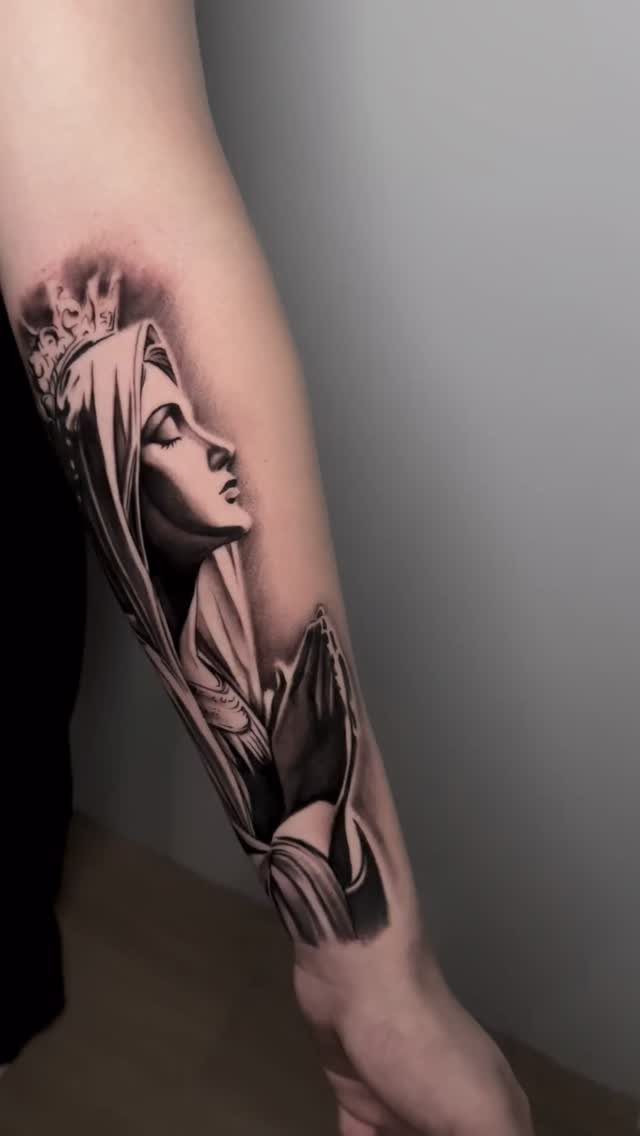
Forearm placement puts Mary where you see her daily and where others will too. The vertical format suits a standing portrait, and the flat plane of the inner forearm holds fine detail well.
Black and grey realism ages cleanly and keeps the face legible.
A crown or halo adds symbolic weight without requiring color. Shading on the robe and background gives the piece dimension, and a soft gradient behind the figure lifts her off the skin.
Session time depends on size and detail level.
5. Virgin Mary Tattoo with Halo
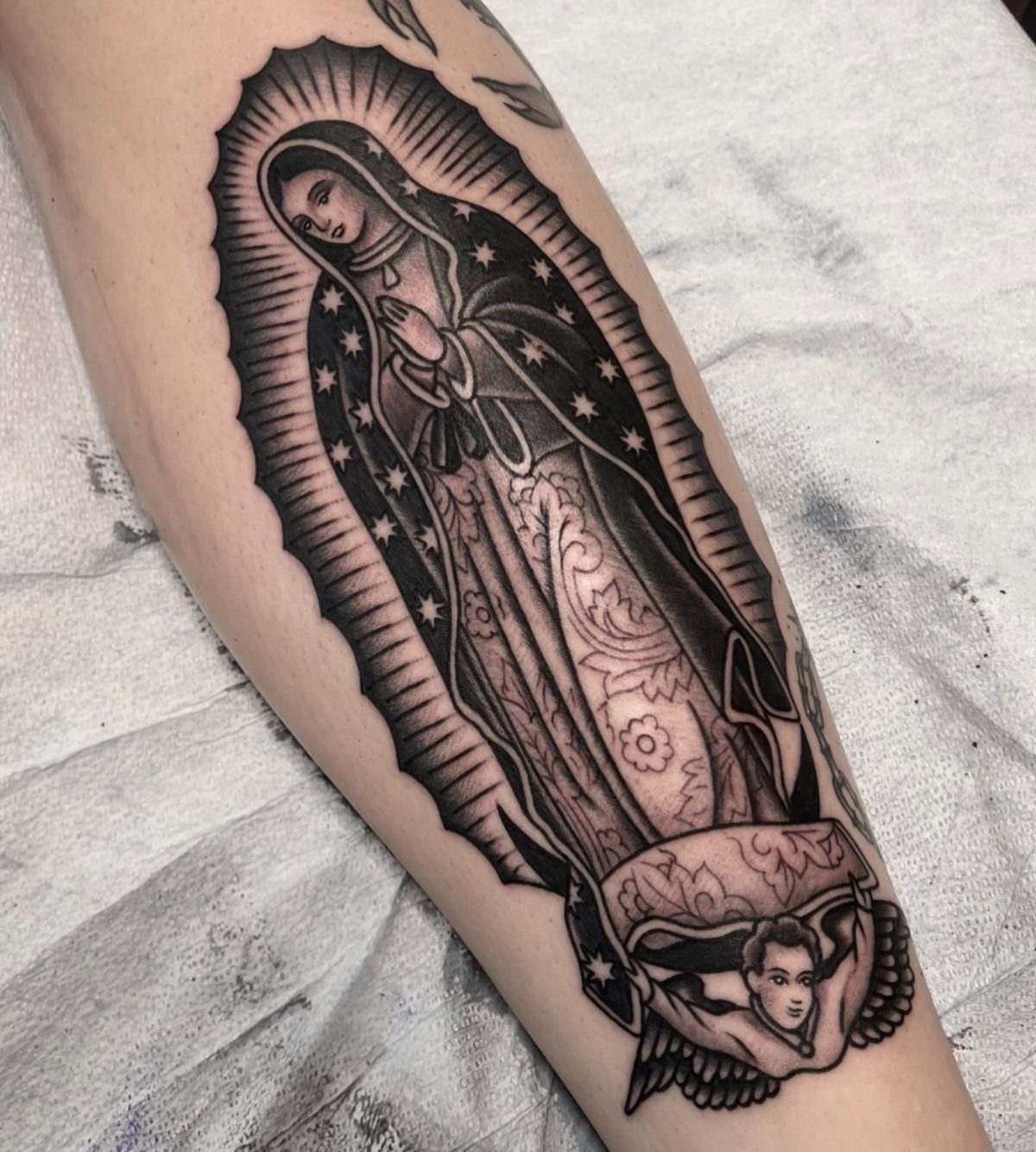
A halo ringing Mary’s head or radiating behind her signals divinity outright. The glow can be fine lines or bold rays depending on how much contrast you want.
Stars scattered around the halo add celestial context, and a cherub at the base of the composition brings in angelic protection.
Black and grey keeps the focus on form and shading, and a realism approach lets the face carry expression while the halo stays graphic.
Upper arm works well: the curve of the bicep mirrors the arc of the halo, and you have room for the full vertical span.
6. Virgin Mary Back Tattoo
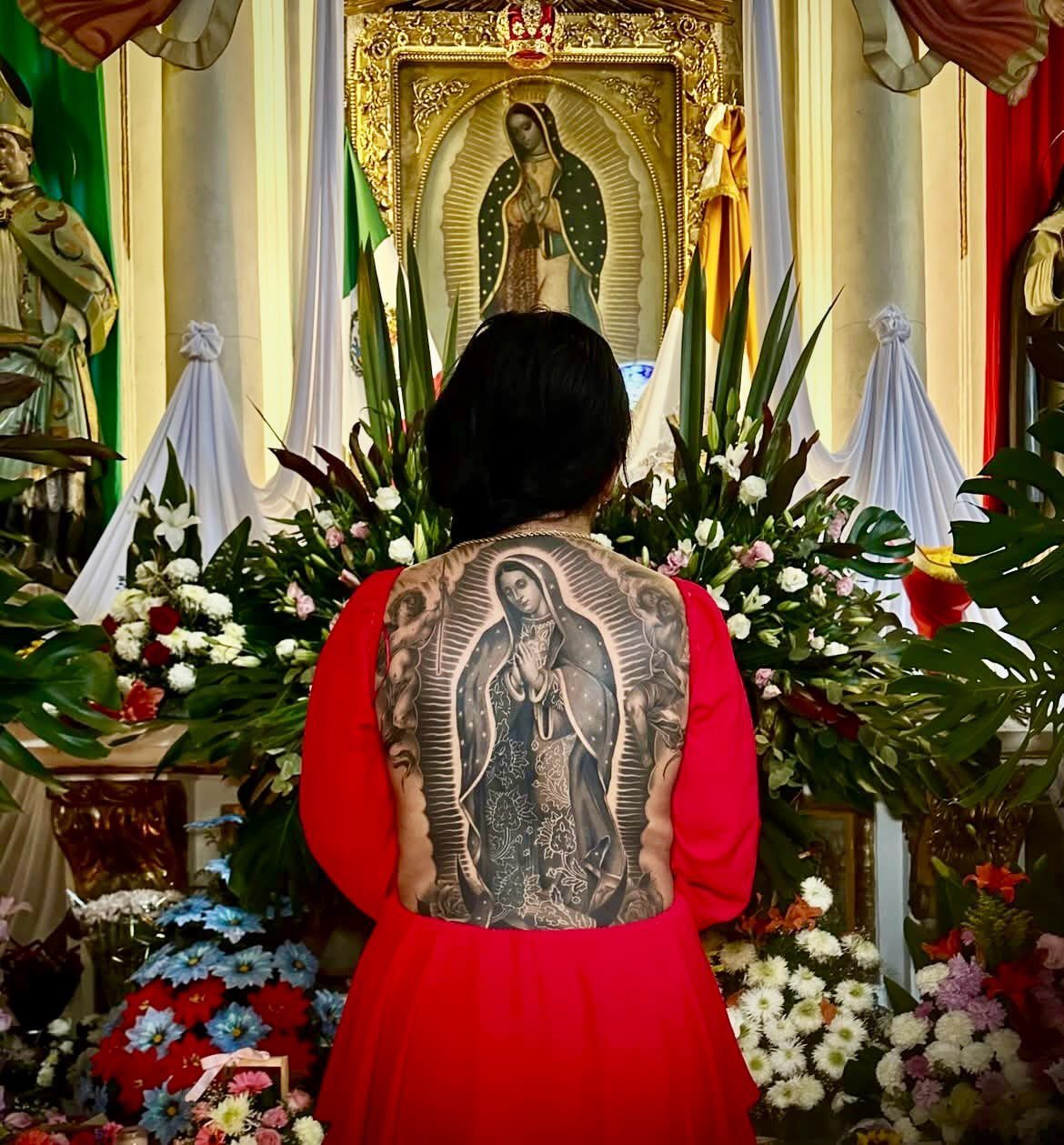
The back gives you a full canvas for a life-size or near-life-size portrait. Intricate robes, background detail, and deep shadow work all fit here without compromise.
This placement suits someone committed to a large-scale piece and willing to sit for multiple sessions.
Session time depends on the level of realism and how much background you add. Shading across the shoulder blades and spine requires a skilled hand to keep the image balanced as the body moves.
Healing a back piece takes patience: you’ll need help applying ointment, and sleeping face-down for the first few nights keeps pressure off the fresh ink.
7. Small Virgin Mary Silhouette Tattoo
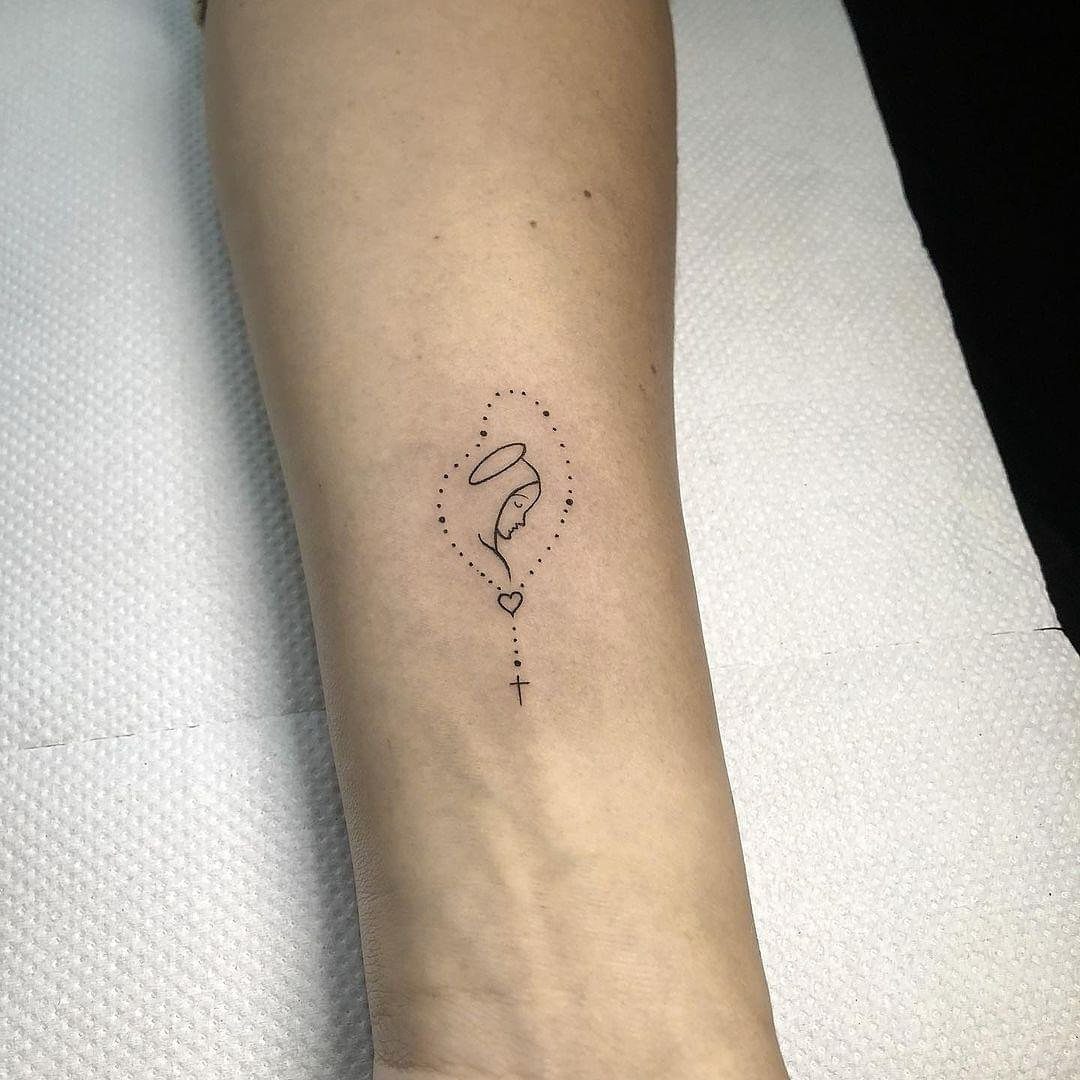
A silhouette strips Mary down to her outline and lets the shape carry the devotion. Fine line work keeps the profile clean, and a small halo or cross anchors the religious context without detail that can blur over time.
Wrist, ankle or behind the ear all work.
The smaller the piece, the simpler the line needs to be. Black ink holds best at this scale, and a single-needle technique gives you the precision a silhouette demands.
Sunscreen after healing keeps the lines from fading.
8. Virgin Mary with Rosary Tattoo
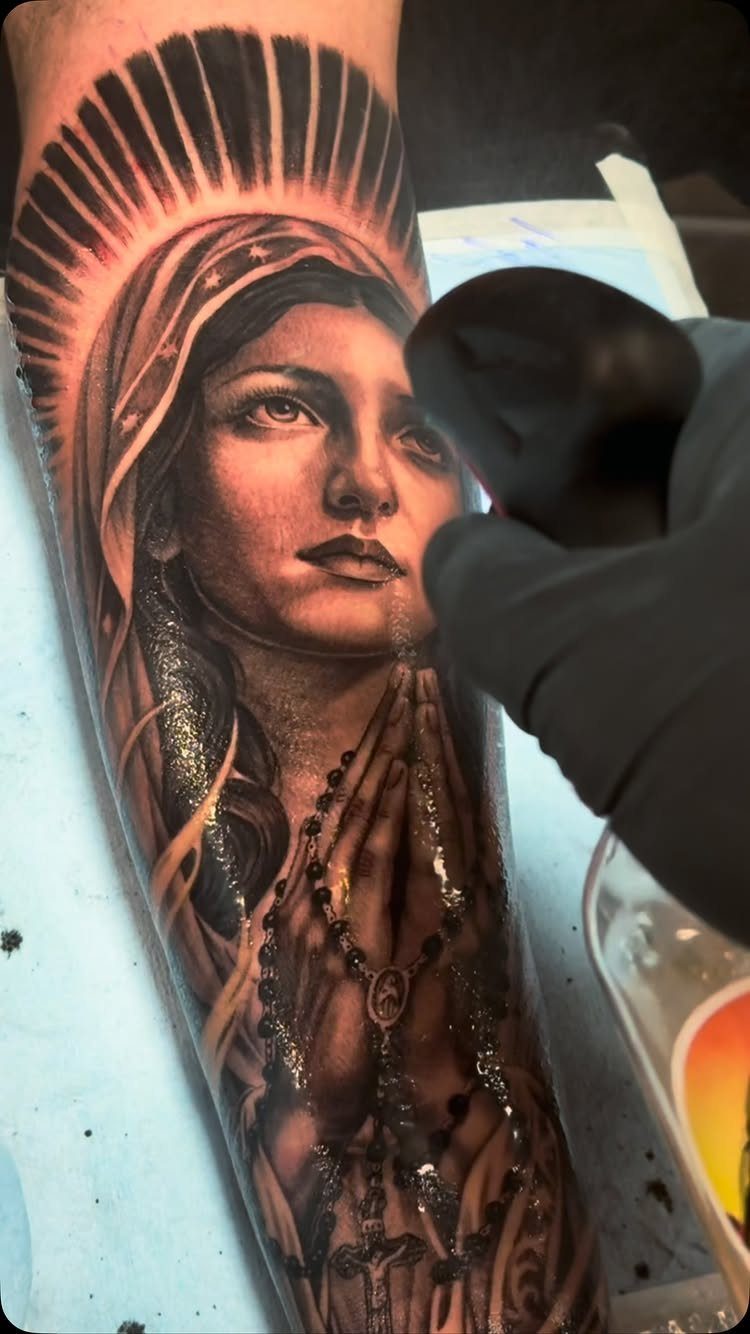
Draping a rosary through Mary’s hands or around her figure adds a layer of ritual and prayer. The beads read as devotion, and the crucifix at the end closes the composition with a focal point.
Each one needs enough separation to stay legible as the tattoo settles. Upper arm or outer forearm gives you the vertical space to run the full length of the rosary without breaking it across a joint.
If the rosary has personal history, your artist can match the bead count or crucifix style to the one you own.
9. Virgin Mary Skeleton Tattoo
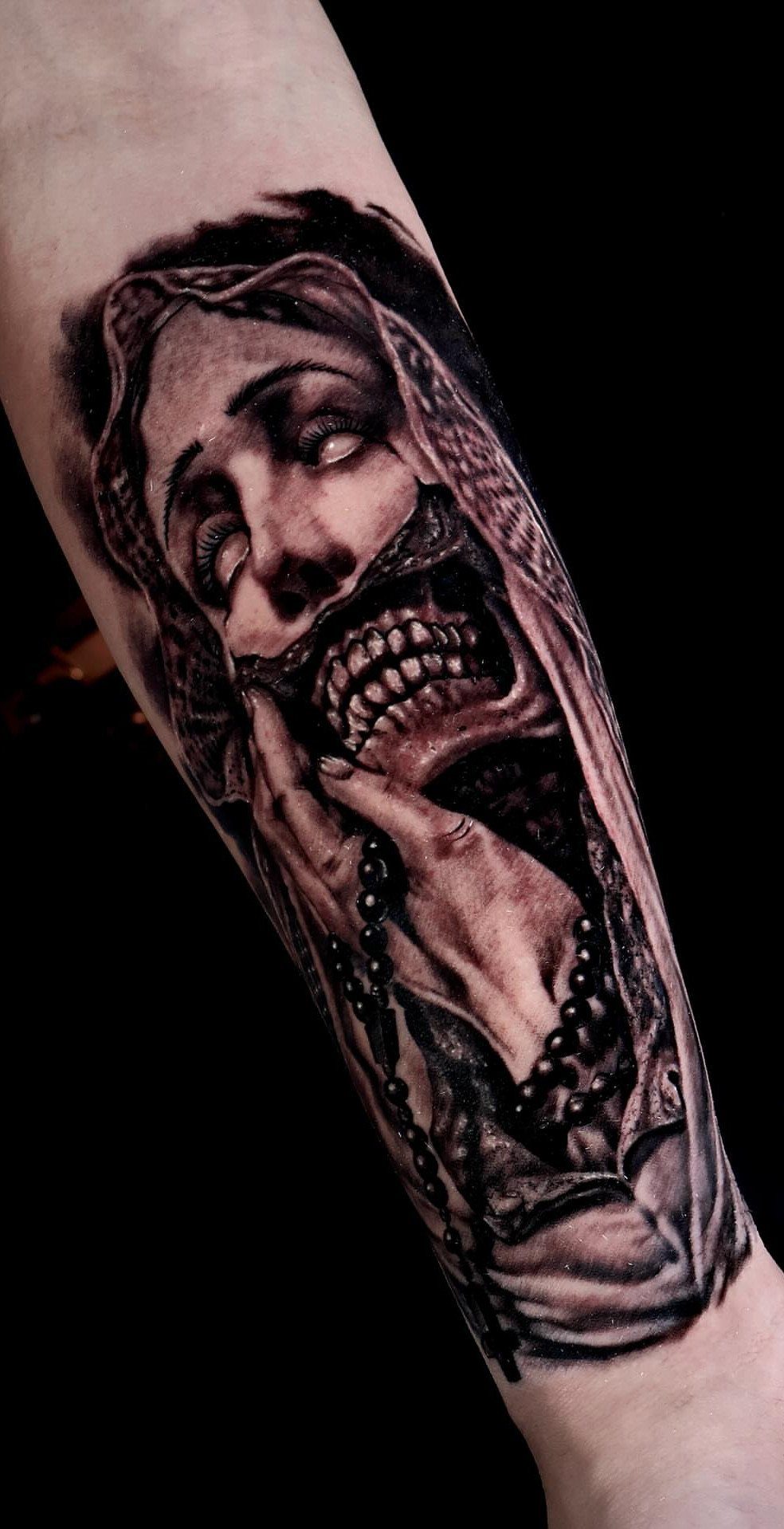
A skeletal jaw or hand under Mary’s veil flips the devotional into memento mori territory. Faith and mortality sit side by side, and the piece reads as reverence for life’s limit rather than disrespect.
The bone structure needs clean shading to stay readable, and too much detail in the skull can overwhelm the veil.
Forearm or upper arm keeps the image contained, and a rosary or flowers below softens the edge without losing the contrast.
This version suits someone who wants their faith art to carry weight, not just comfort.
10. Virgin Mary Arm Tattoo
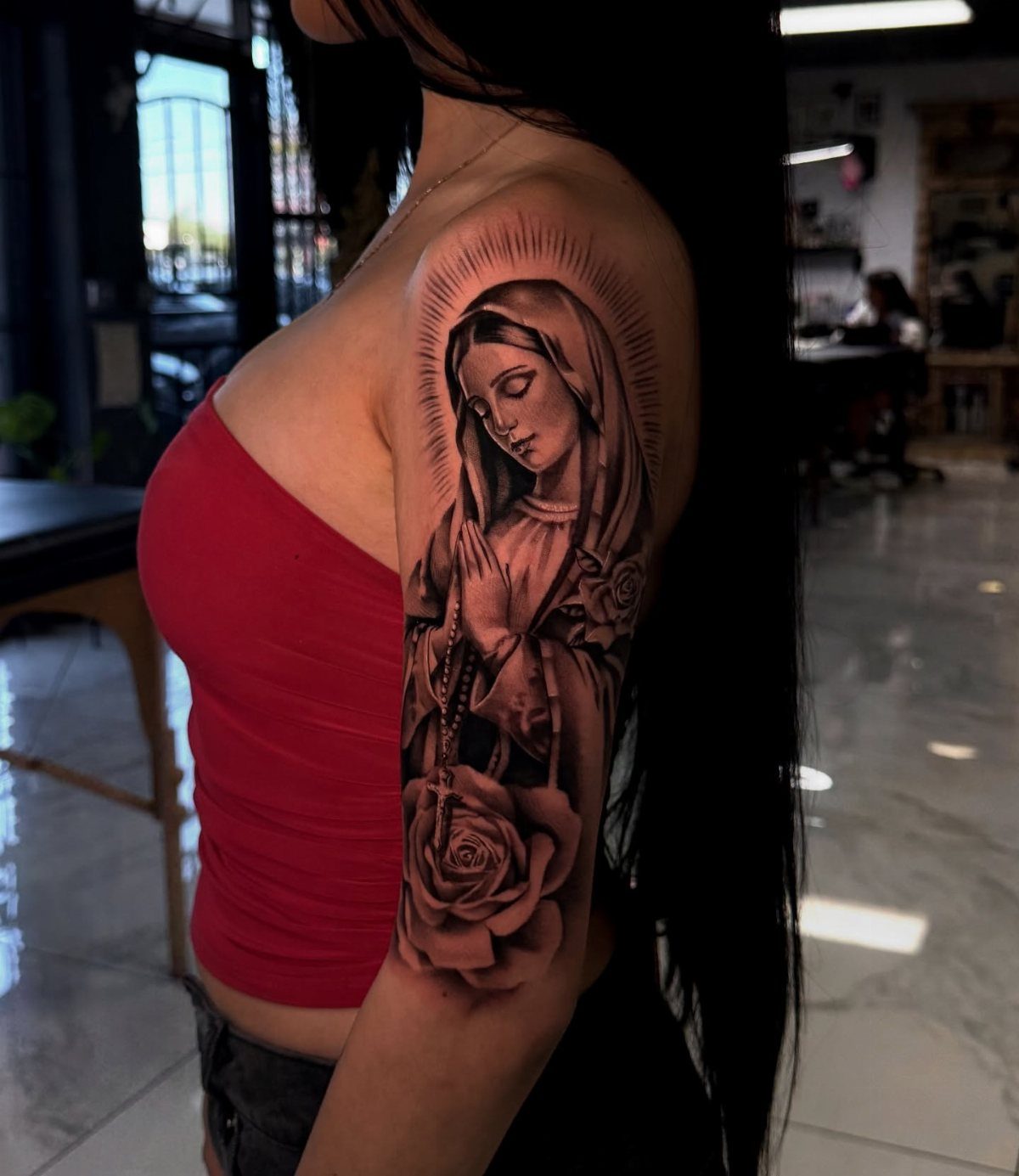
Upper arm placement fits a standing portrait and leaves room for background detail or script below.
The flat outer surface holds fine shading well, and the piece stays visible in short sleeves without demanding full exposure the way a forearm does.
This spot works for a first large tattoo.
You can cover it when needed, and session pain stays manageable since you’re working over muscle rather than bone. A halo, roses or rays of light fill the space around Mary without requiring a full sleeve commitment.
Clothing won’t rub the fresh ink the way a waistband or shoe might.
11. Virgin Mary Leg Tattoo
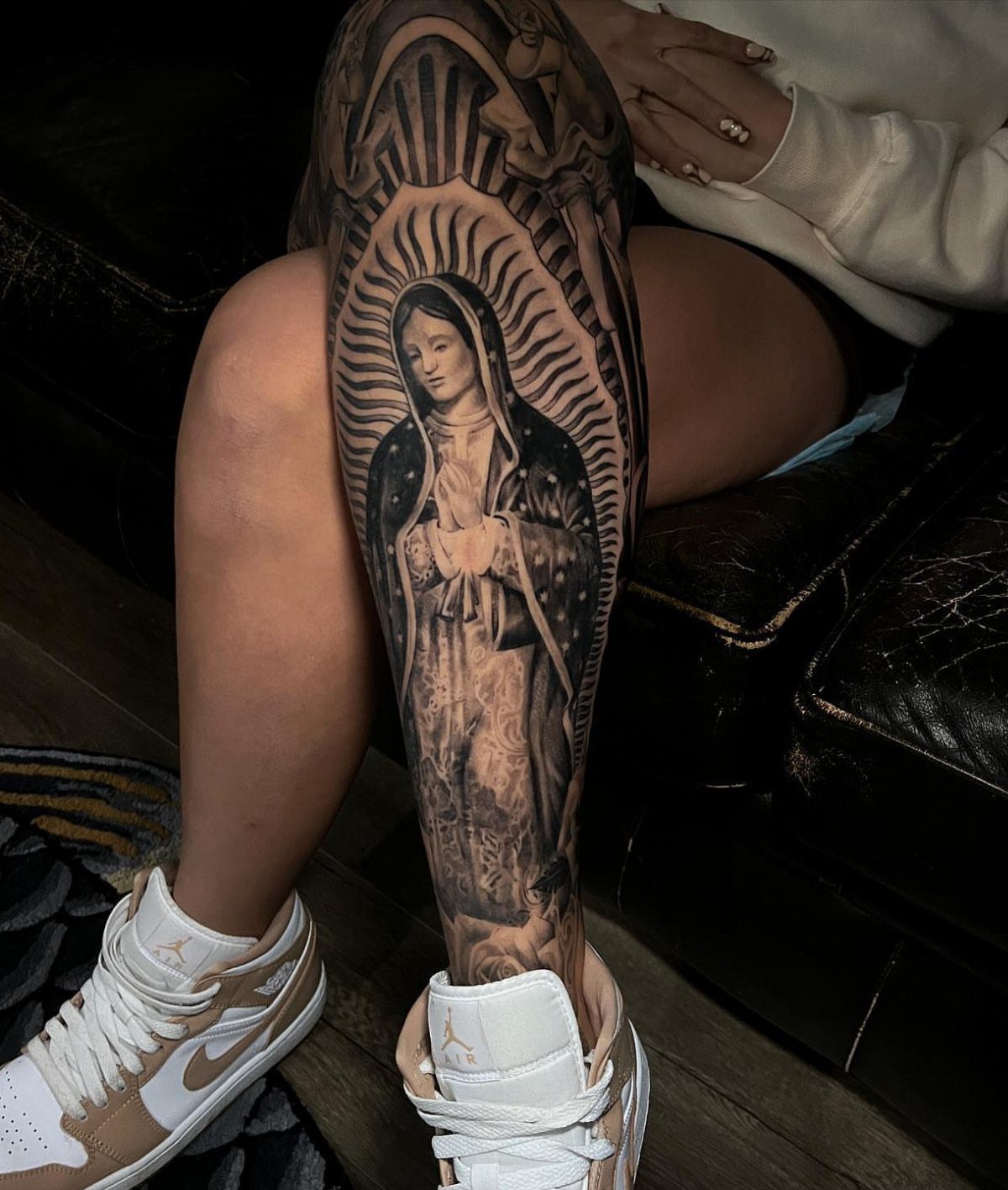
The leg offers a tall, uninterrupted canvas that suits a full-length portrait of Mary. Outer calf or thigh keeps the piece visible when you want it and covered when you don’t.
Shading across the curve of the muscle gives the robe dimension, and a realism approach keeps the face legible from a distance. Background rays or clouds fill the negative space without crowding the figure.
Pain varies by location: outer calf sits over muscle and stays tolerable, inner calf and shin run over bone and feel sharper. Session time depends on size and detail density.
12. Virgin Mary Sleeve Tattoo
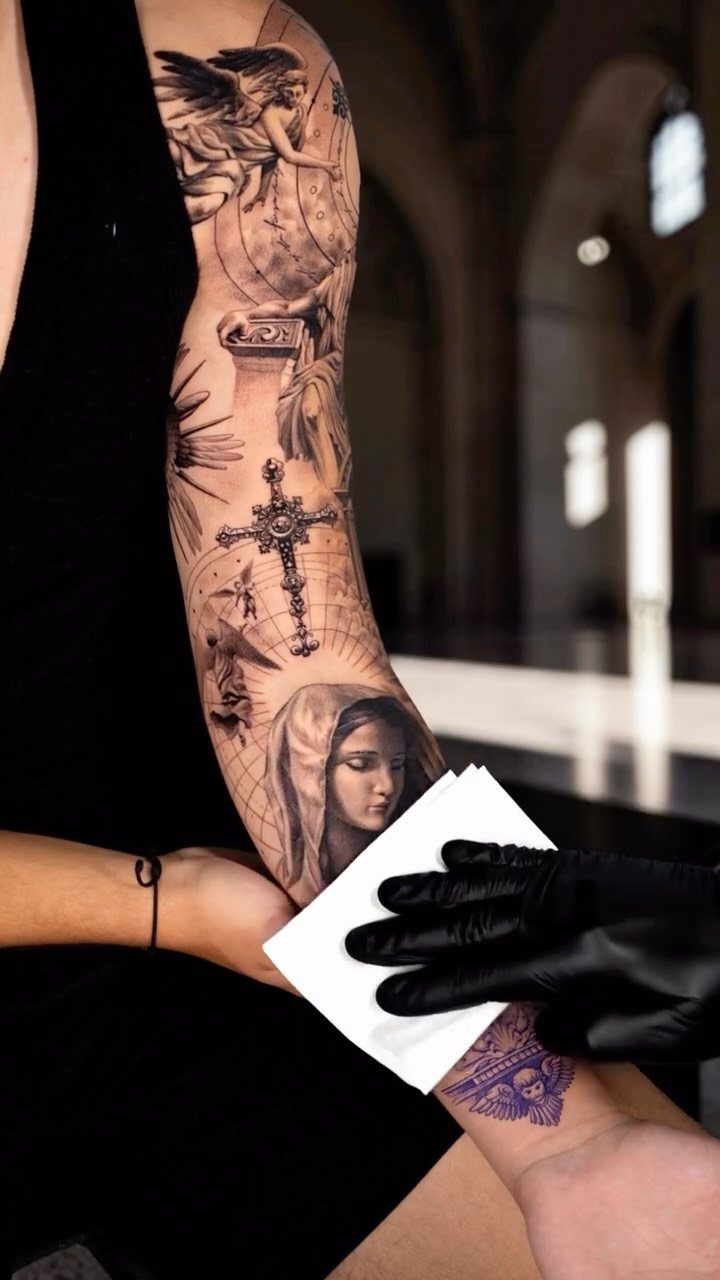
A sleeve dedicates the full arm to one cohesive religious narrative. Mary can anchor the piece at the shoulder or forearm, with roses, cherubs, clouds or script filling the rest of the canvas.
This takes multiple sessions spread across months. The design wraps around the arm, so your artist needs to plan how the elements connect as the limb rotates.
Healing happens in stages as each session finishes. You’ll need to avoid heavy lifting and sun exposure for the full process, which can stretch across several months.
13. Virgin Mary Chest Tattoo
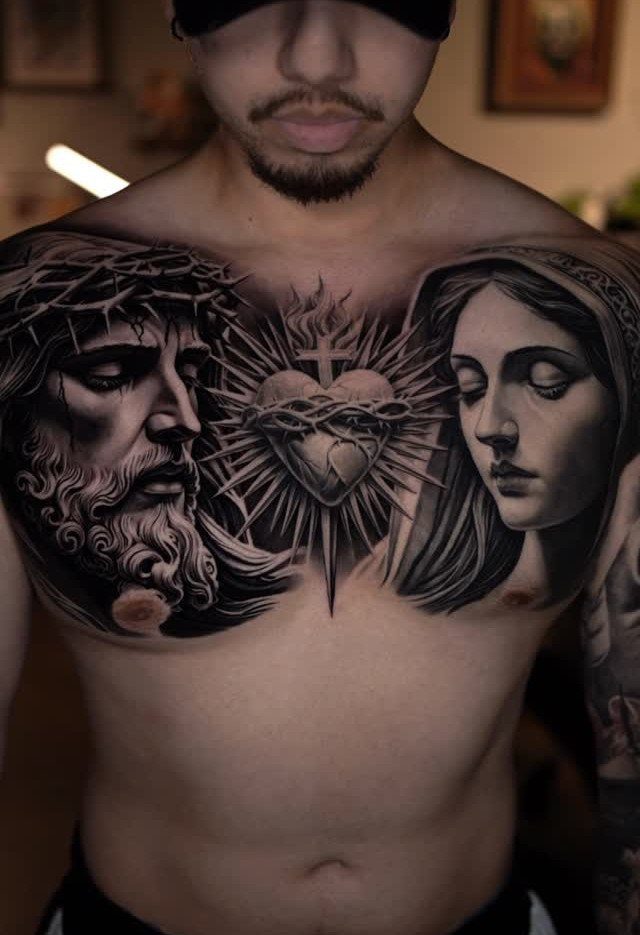
Chest placement centers Mary over the heart and stakes a visible claim to faith. The piece sits where you’ll feel it and where others will notice.
This spot works best for someone ready to explain their ink.
The chest holds detail well, but the skin over the sternum and collarbone registers pain more sharply than muscle-covered areas. Session time stretches if you’re adding surrounding elements like the Sacred Heart or other figures.
Healing requires loose clothing for the first week. Anything tight will rub the fresh ink and pull pigment out as it settles.
14. Virgin Mary with Roses Tattoo
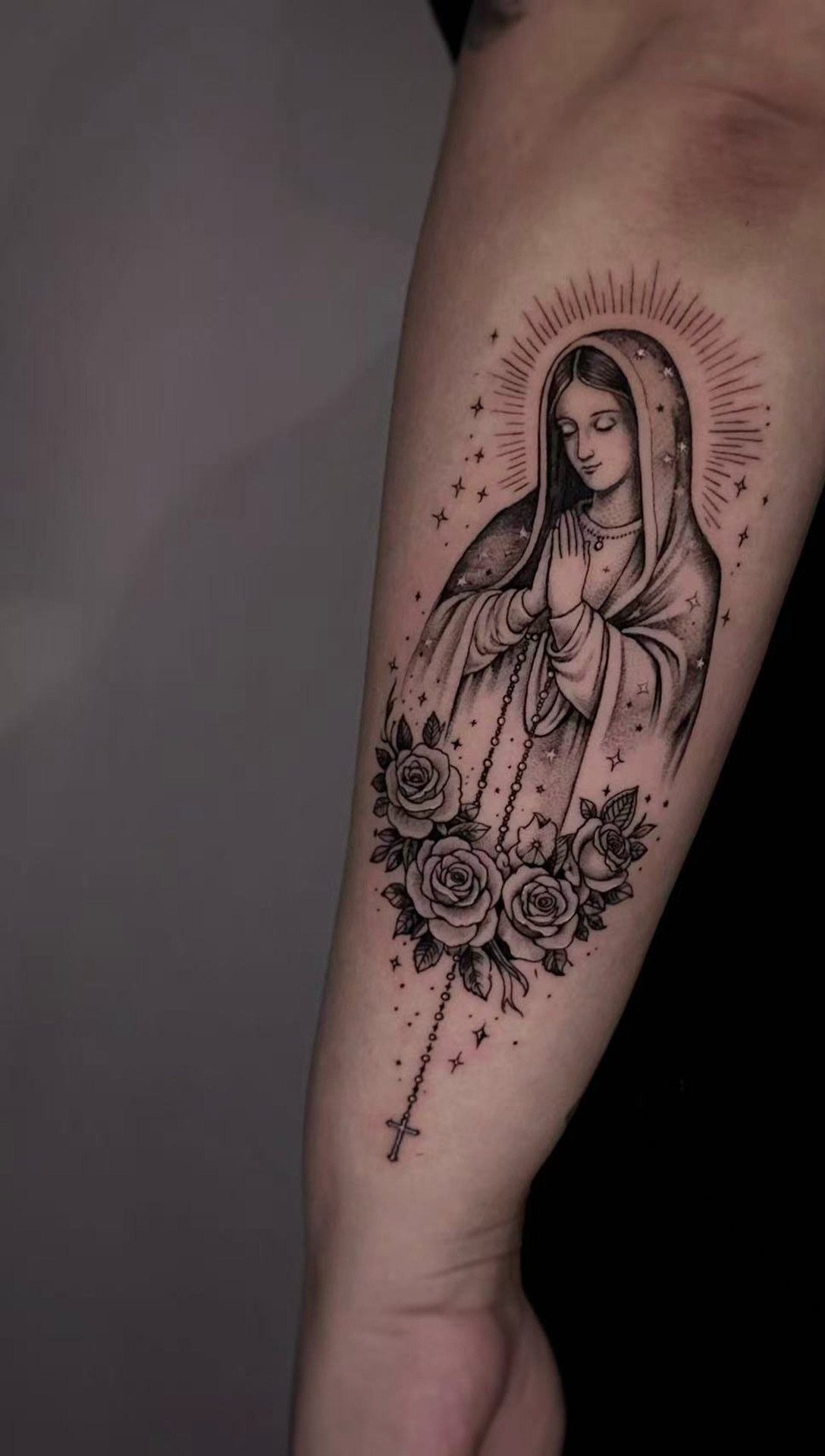
Roses clustered at the base of a Mary portrait tie beauty and devotion together. The flowers soften the religious weight without diluting it, and they give the composition a natural endpoint.
Monochrome realism holds up better than color because the shading reads as depth, not decoration. Praying hands and a rosary layer in ritual, and the combination reads as protection, memory or gratitude depending on what you bring to it.
Forearm placement keeps the full design visible and fits the vertical span this needs.
15. Jesus and Virgin Mary Tattoo with Maternal Grief
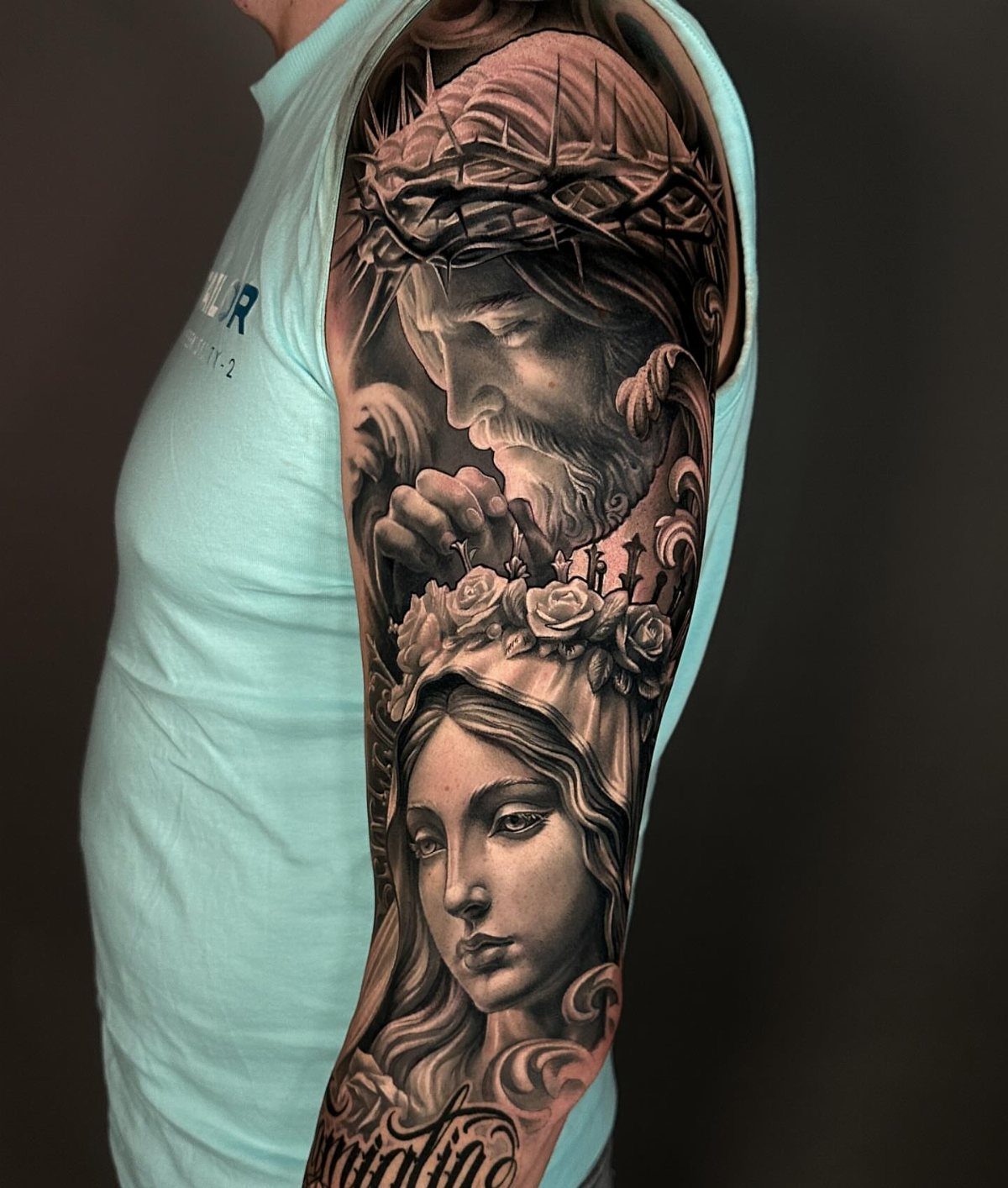
Pairing Jesus and Mary in one composition captures the Pietà without recreating the full scene. The 2 faces side by side read as shared suffering, and the floral crown on Mary balances the thorns.
The upper arm handles paired figures comfortably and keeps them on one continuous surface. Black and grey realism lets the expressions carry the emotional weight, and fine shading in the crowns keeps the detail legible as the tattoo ages.
If your devotion includes the hard parts, this composition gives them equal weight.
16. San Judas and Virgin Mary Tattoo
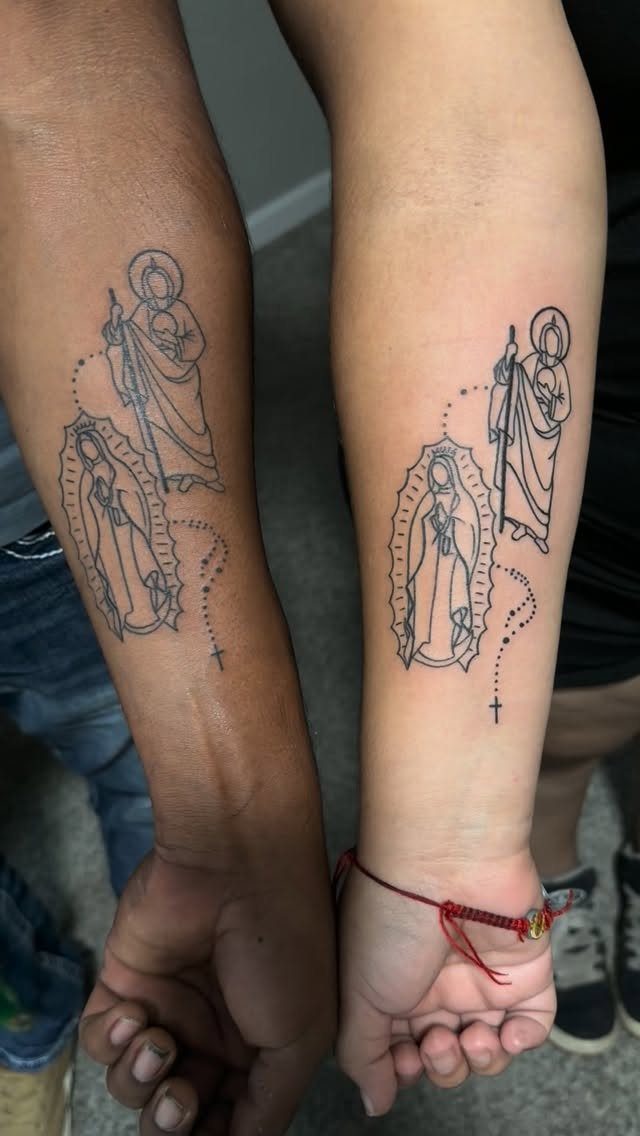
San Judas beside Mary doubles down on intercession.
Saint Jude covers lost causes and desperate situations, and Mary anchors protection and grace. Together they read as a complete prayer in ink.
A rosary linking the 2 figures connects the composition and keeps it from splitting into separate panels. Matching tattoos work here: each person carries one saint, and the designs mirror when placed side by side.
A vertical comp fits the forearm naturally and puts both figures where you’ll see them.
17. Virgin Mary Throat Tattoo
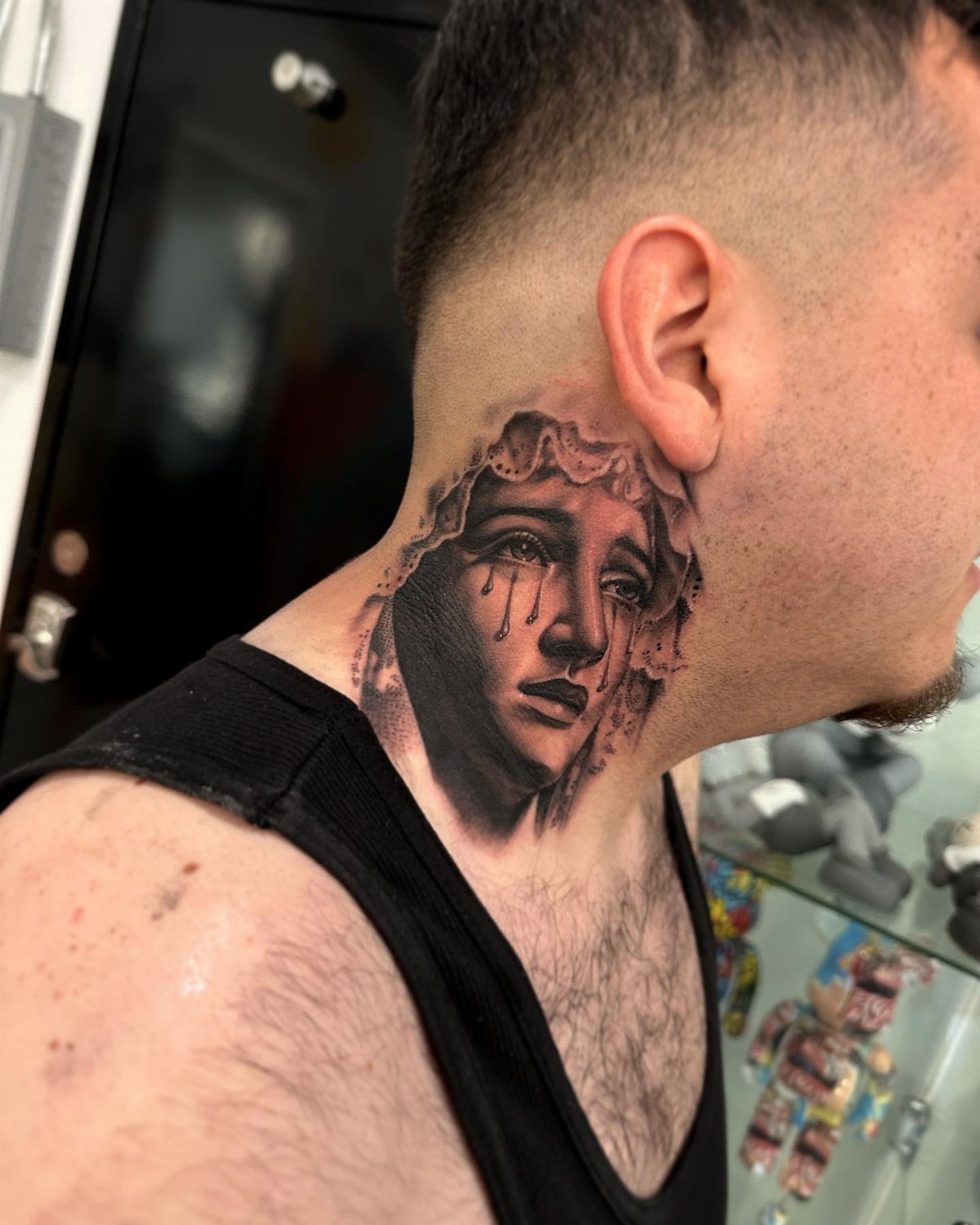
Throat placement puts Mary at the front of every conversation. This spot demands commitment: you can’t hide it under a collar, and the visibility reads as defiance or devotion depending on who’s looking.
Pain over the throat runs high.
The skin sits directly over cartilage and bone, and the area swells more than most. Healing takes care: you’ll need to avoid tight necklines and keep your head elevated while sleeping for the first few nights.
If discretion isn’t the goal, the throat makes the statement you’re after.
18. Virgin Mary Tattoo with Rays of Light
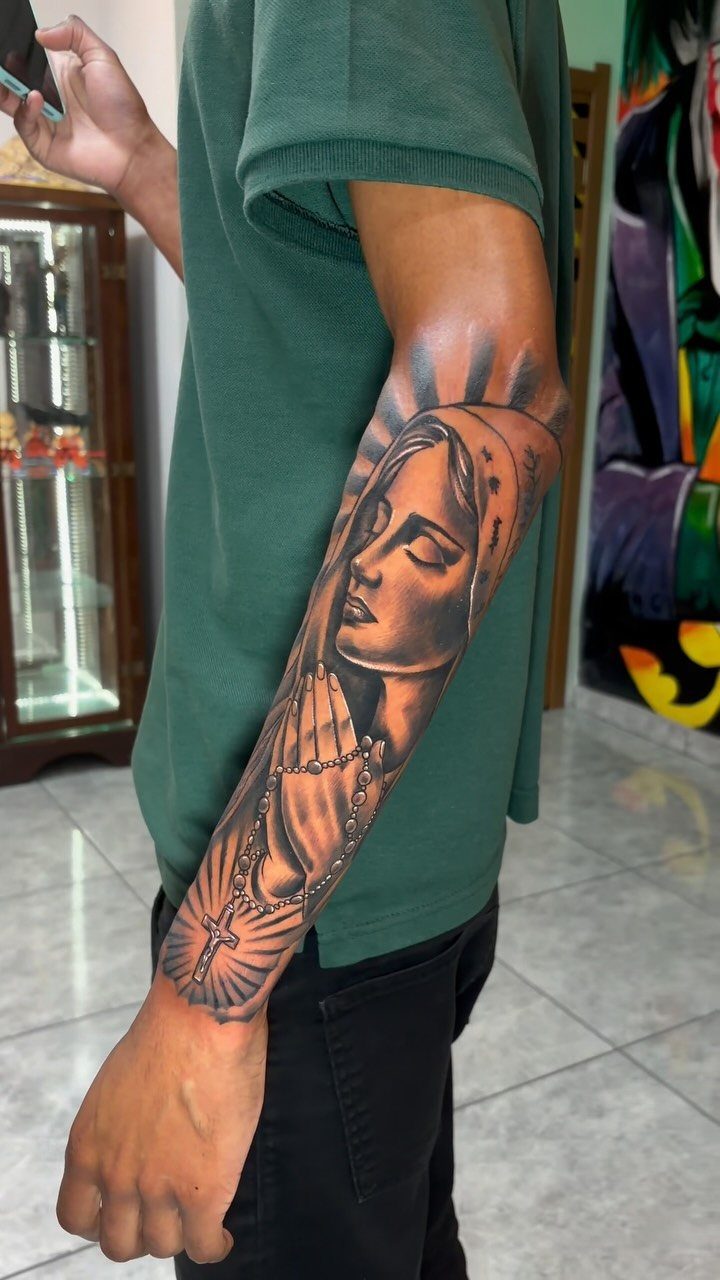
Rays radiating outward from Mary signal divine light and grace. The lines lift the portrait off the skin and add movement to an otherwise still figure.
Praying hands and rosary beads ground the design in ritual, and the rays give the composition a natural frame.
Black and grey keeps the contrast strong, and the lines need to taper cleanly to avoid looking heavy as the tattoo settles.
Forearm placement works: the flat surface holds the detail, and the vertical format suits the upward pull of the rays.
Meaning Behind Virgin Mary Tattoos
Mary stands for protection and faith in almost every tradition that includes her. The image draws from centuries of devotion, and the weight of that history shows up in what people choose to memorialize.
Purity and compassion anchor the symbolism, but strength runs through it just as clearly.
Mary endured loss and stayed present through it, and that combination of grace under suffering makes the tattoo meaningful for anyone who has carried something difficult without breaking.
Motherhood ties into the image naturally. Whether you’re honoring your own mother, marking your role as a parent, or recognizing the women who shaped you, Mary’s maternal presence fits that intent without requiring explanation.
She also functions as an intercessor in Christian belief: someone who carries prayers forward and offers comfort when direct answers feel distant. That role translates cleanly into ink for anyone who turns to faith during hard stretches.
Artistic Styles for Virgin Mary Tattoos
Traditional religious portraiture pulls directly from Renaissance and Baroque painting.
That means a solemn expression, downward gaze, halo, and flowing robes rendered in black and grey realism. Roses, doves, or light rays layer in without crowding the figure, and the style holds detail well as the tattoo ages.
Modern approaches strip the composition down or shift the tone.
Blackwork and geometric styles frame Mary inside mandalas or sacred geometry, which gives the religious image a contemporary edge. That approach works best when the face stays simple enough to read against the pattern.
Angels, rosaries, crosses, and floral elements fill the space around the figure and tie the piece to broader religious imagery.
Choosing the Right Tattoo Placement
Visibility decides a lot here. Arms, back, and legs accommodate large, detailed portraits and give you control over when the piece shows.
Forearm and upper arm work for medium-sized compositions that stay visible in short sleeves, and the back handles life-size figures with full background detail.
Wrist, ankle, and behind the ear fit smaller silhouettes and fine line work, but the reduced scale limits how much detail will hold over time.
Throat placement sits at the front of every interaction and cannot be hidden under a collar. Pain runs high over cartilage, and swelling lasts longer than most spots.
Frequently Asked Questions
What does a Virgin Mary crying tattoo symbolize?
Tears mark the piece with sorrow, whether for someone you’ve lost or the harder side of belief.
The image ties to the sorrow she endured during the crucifixion, and many people who’ve lived through personal hardship or trauma find meaning in that shared suffering.
A name or date turns the design into a memorial that carries a specific person.
Which flower represents Mother Mary?
Roses appear most often with Mary and carry associations of love and devotion. Lilies mean purity, and either bloom fits tucked around the portrait or filling the empty space behind her.
Is a Virgin Mary tattoo only for religious people?
No.
She carries religious meaning for Catholics and Christians, but in Latino and Filipino families she’s also a cultural icon, and plenty of people with no faith at all still see her as a symbol of a mother’s protection and strength.
The piece should come from respect and personal connection, not mockery or impulse.