Gothic cross tattoos separate by how much decoration wraps around the frame: filigree and floral details at one end, pointed edges and tribal flames at the other.
A simple cross with pointed ends reads clearly at any size and ages well in solid black ink, while ornate filigree or roses need forearm scale or larger to keep the fine lines from closing up over time.
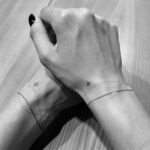
Placement follows the cross’s proportions: vertical designs sit cleanest on the forearm where the arm hangs naturally, and the wrist gives you enough room for outlines or a simple beaded chain.
Thorns, skulls and tribal flames push the design toward mortality and resilience, while roses and floral accents soften the gothic weight without erasing the devotional read.
1. Ornate Filigree Cross
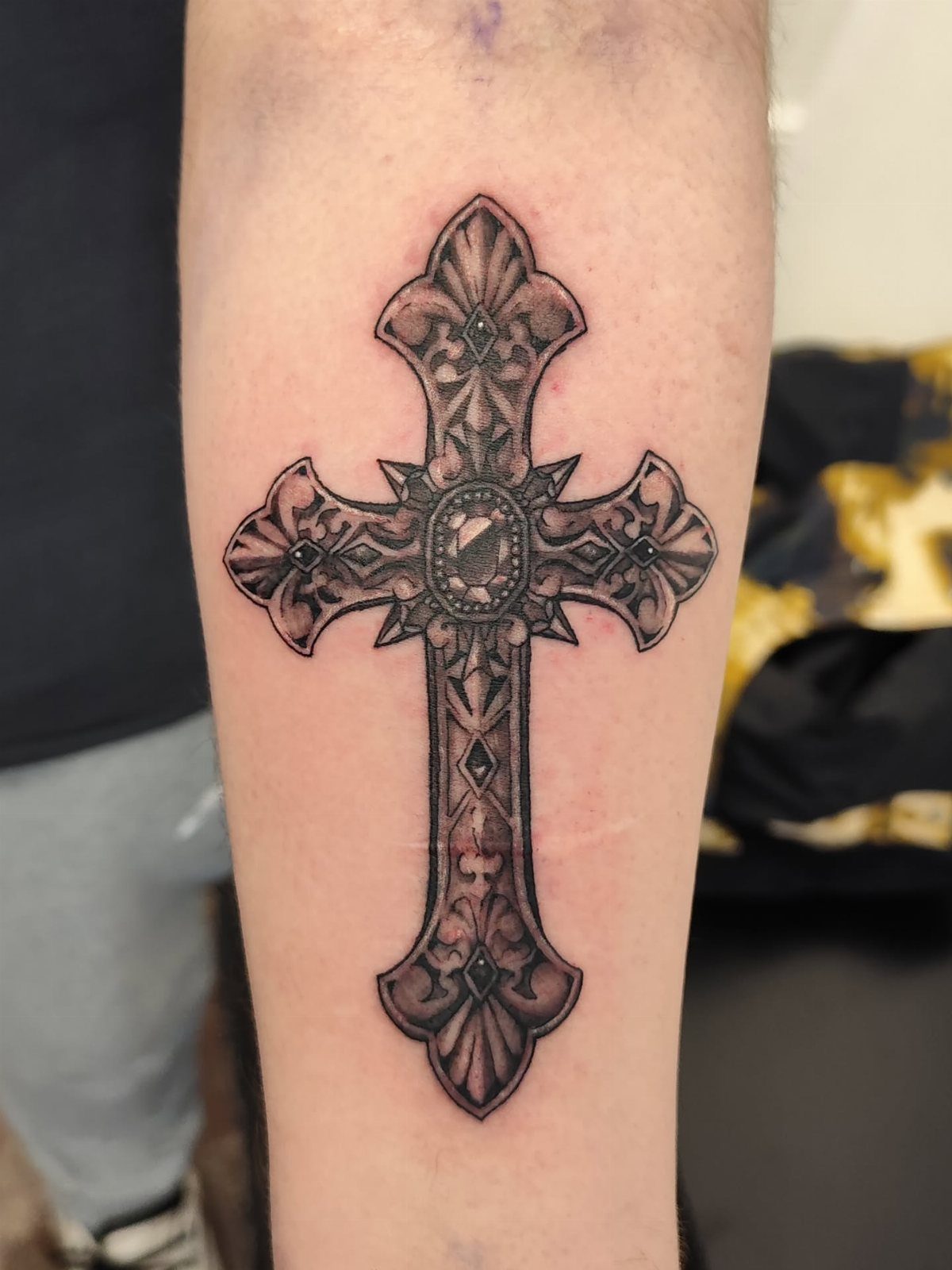
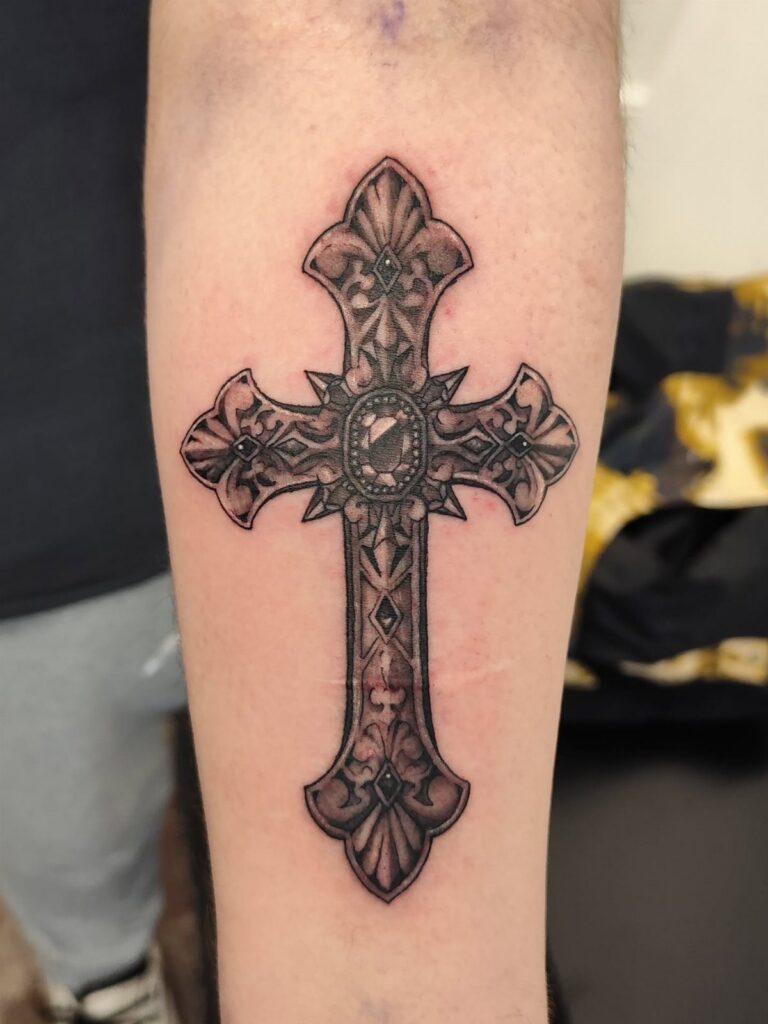
Filigree turns a cross into a piece of lace, with swirling vines, tiny petals and negative space carved between the lines.
The detail reads best at medium scale, forearm or larger, where the curves stay sharp and the open spaces keep the design from closing up as it ages.
Black ink alone gives the cleanest result. Shading can add depth, but too much gray risks muddying the fine lines over time.
2. Cross with Skull
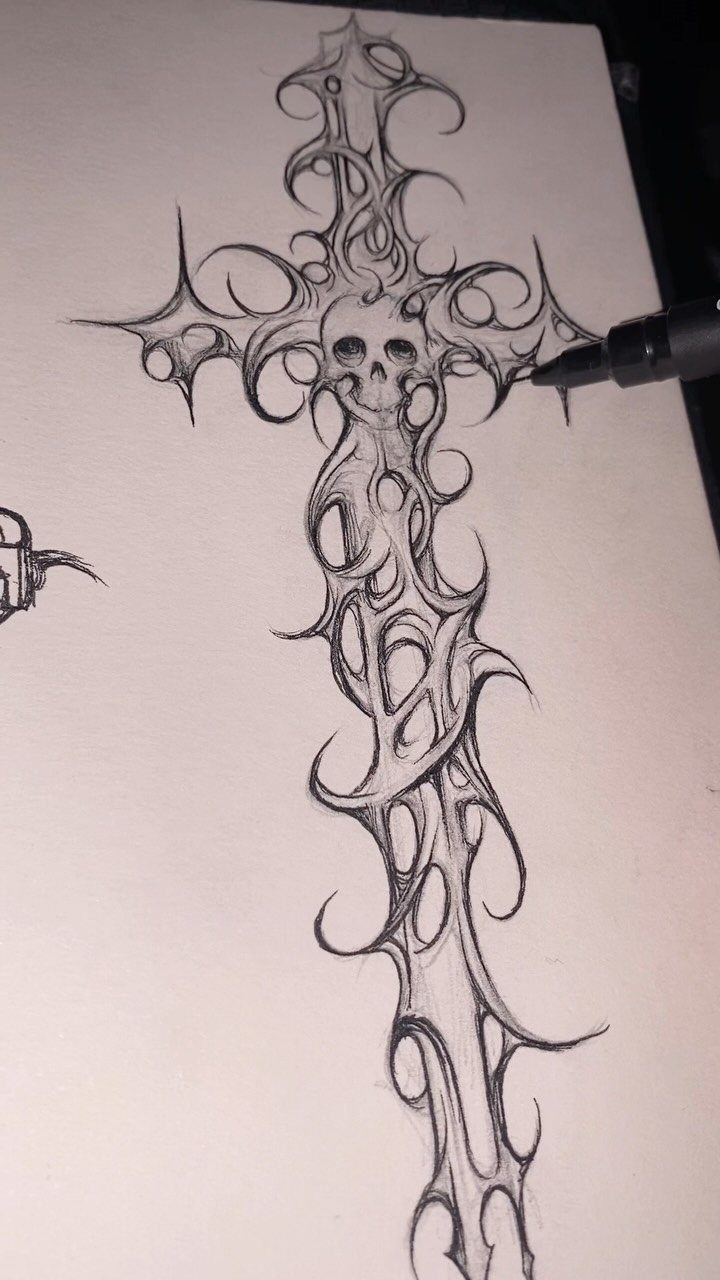
Placing a skull at the center of a cross layers mortality into devotion. The contrast works because both symbols sit in the same territory: life, death and what comes after.
Size matters here.
A small version loses the skull’s detail and the cross becomes an outline. I’d go forearm or shoulder blade minimum, where the skull can hold features and the cross arms have room to stretch.
Most artists render this in black and gray. Solid black fills hold better than intricate shading on the skull, and a bold cross frame keeps the composition from drifting.
3. Symmetrical Cross with Thorns
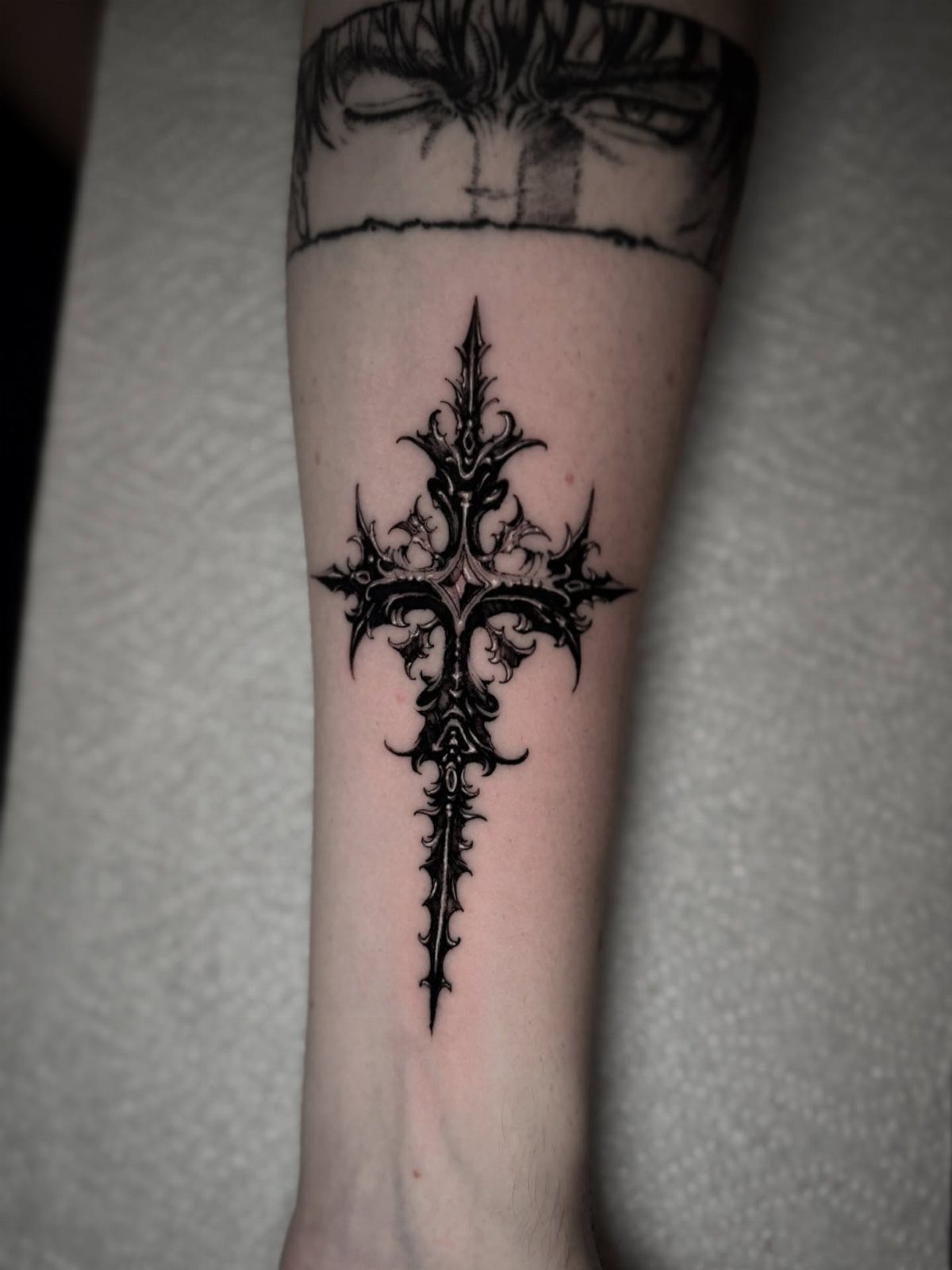
Thorns wrap the vertical and horizontal beams, turning the cross into something sharp and defensive. The symmetry matters: matched points on both sides and a clean center line keep the design from feeling unfinished.
This reads well at any size because the silhouette is strong. Forearm placement lets the cross sit vertical when your arm hangs, which is how most people picture it.
All black ink, no shading, gives the thorns their bite. Adding gray softens the edges and pulls back the aggression, which defeats the point.
4. Cross with Pointed Ends
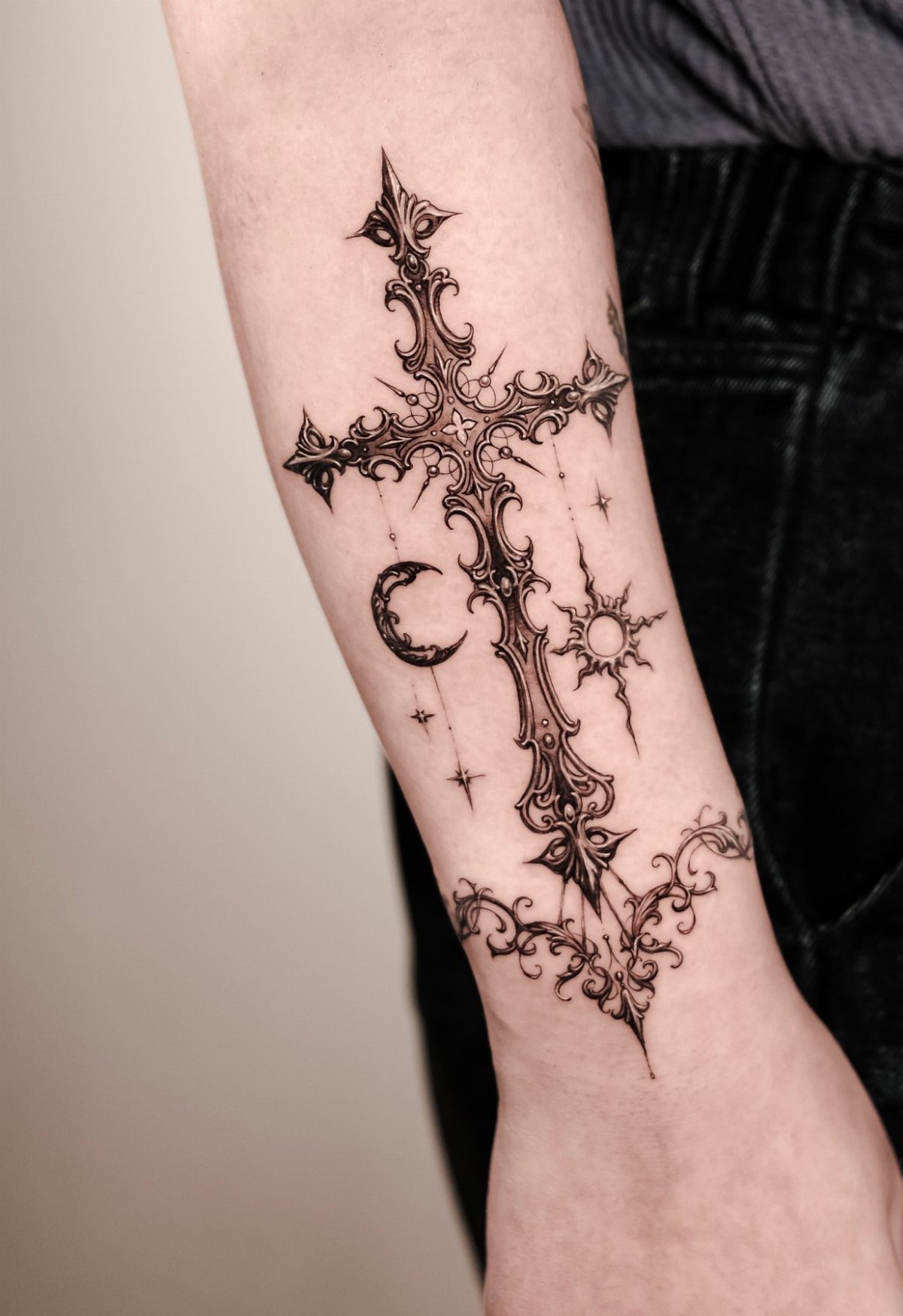
Pointed ends stretch the cross into something architectural, and the curves between them soften the geometry just enough.
Forearm placement lets the vertical lines read clearly. The pointed tips need room to taper cleanly.
Black ink with minimal shading keeps the lines crisp. Too much detail inside the curves can blur as the tattoo settles.
5. Cross with Tribal Flames
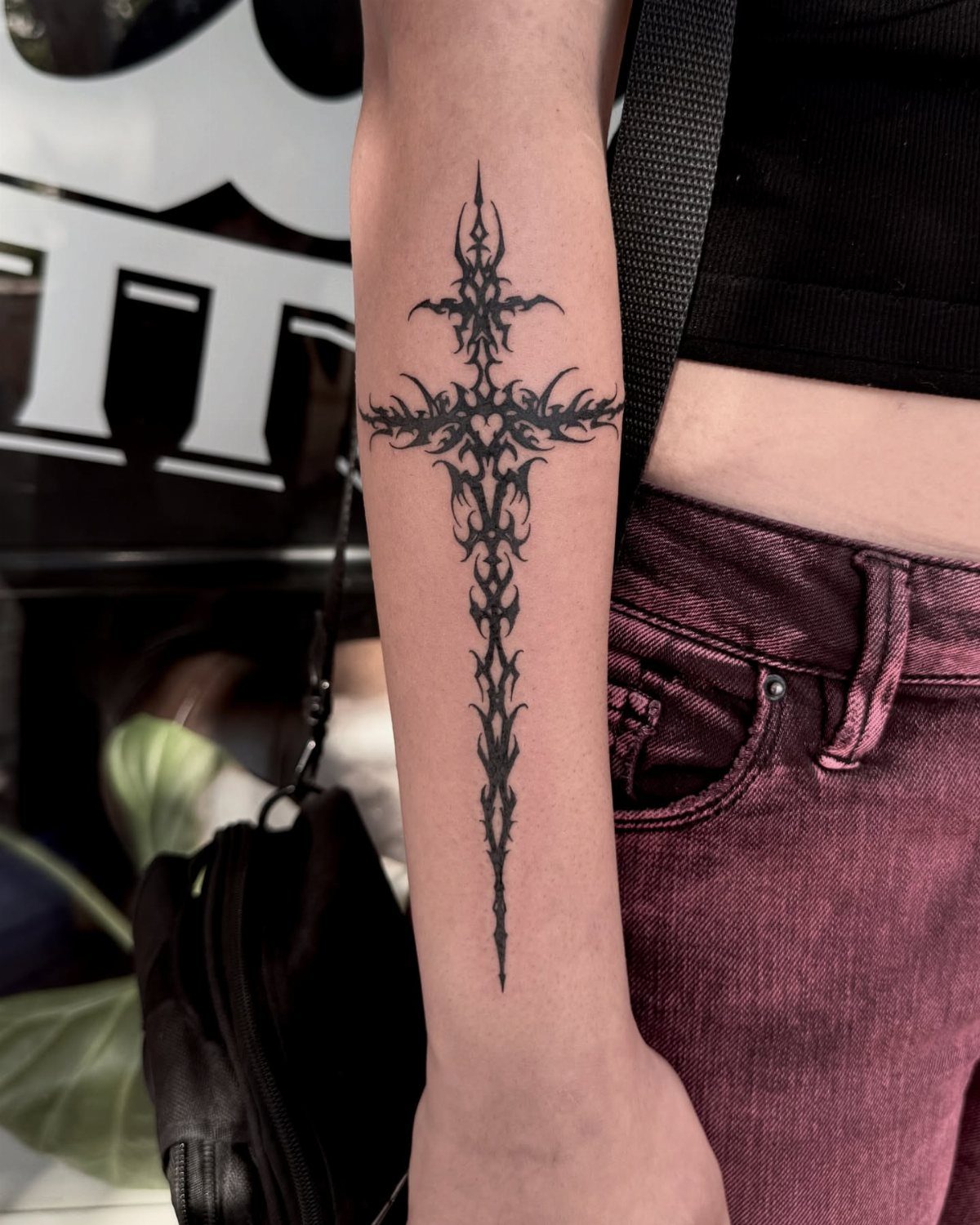
Tribal flames angle outward from the cross in sharp, curving bands that suggest motion without literal fire. The style is 90s heavy, which either fits your aesthetic or dates the piece depending on how you feel about that era.
Forearm or upper arm gives the flames room to flare. The curves need length to read as flames rather than generic spikes.
Solid black fills age the best here. The tribal style relies on bold negative space, and adding gray or color fights the graphic punch.
6. Cross with Roses
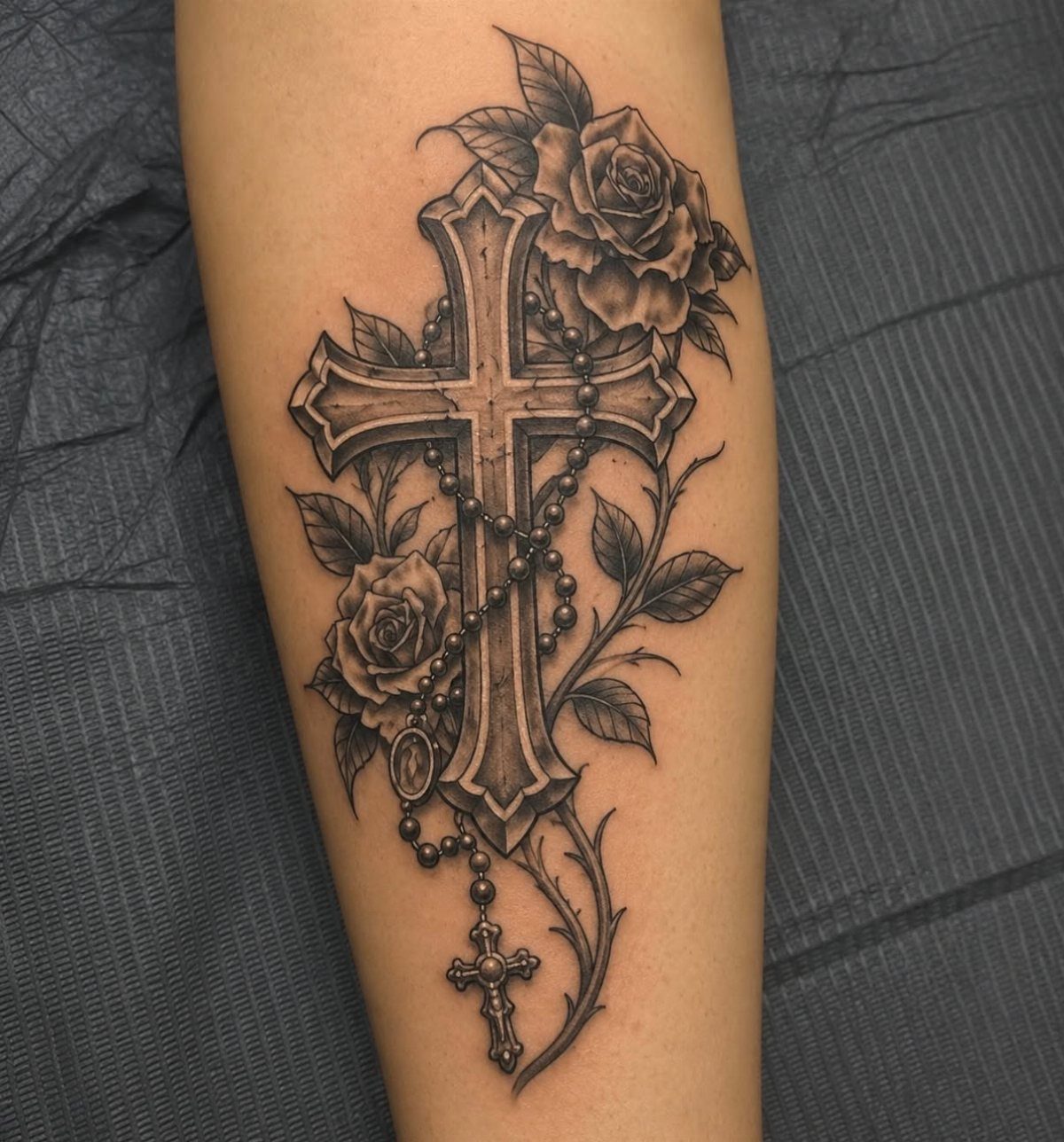
Roses and rosary beads soften a cross without losing the gothic weight. The thorny stems tie the flowers back to suffering and stop the piece tipping into decoration alone.
This version needs space.
I’d place it on the forearm or thigh, where the cross, roses and beads can each hold detail without competing. Black and gray shading gives the roses dimension while keeping the cross frame bold.
7. Cross with Beaded Chains
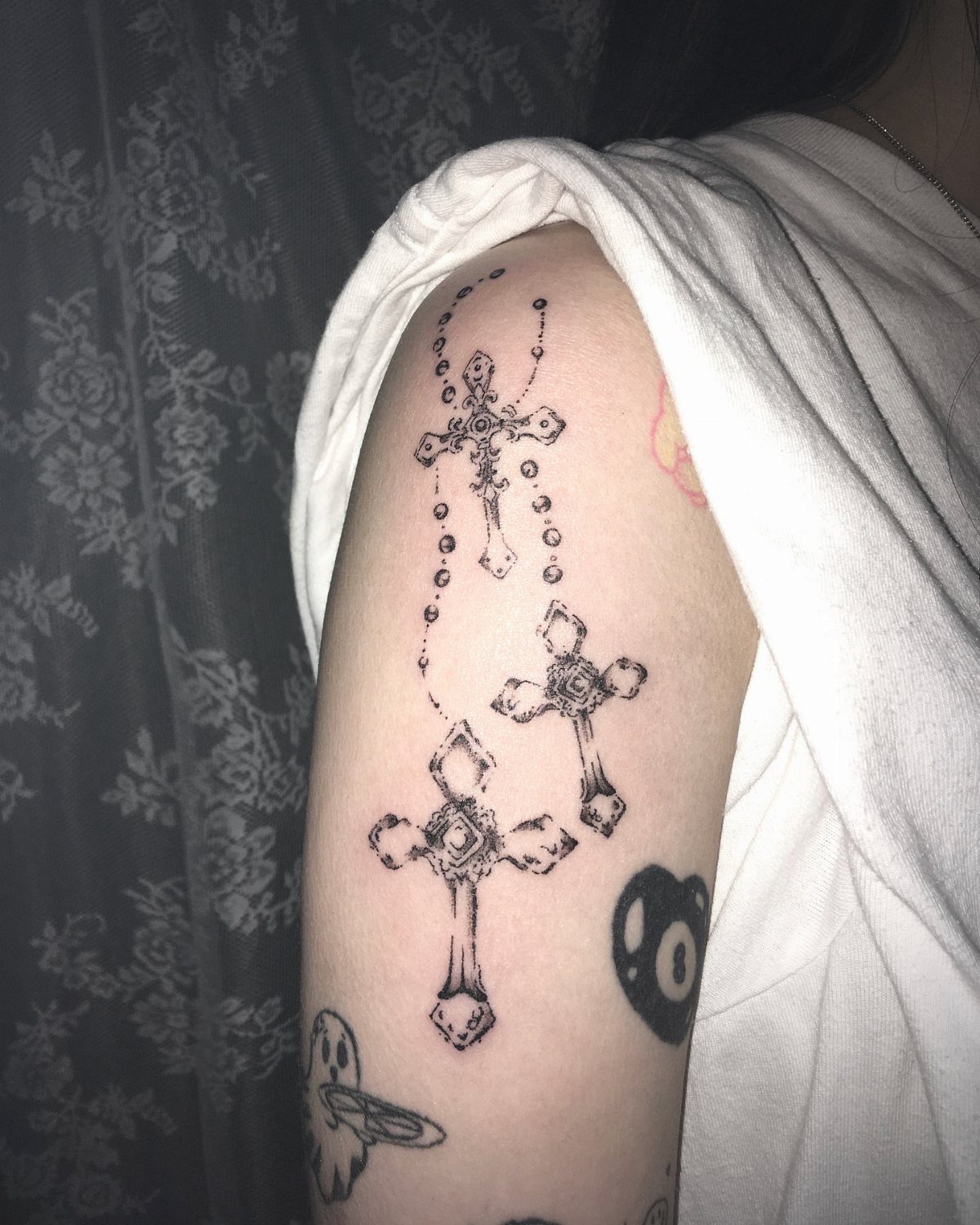
Beaded chains link multiple crosses into a single composition, either running between small crosses or dropping from a larger central one. The beads read as rosary elements without needing the full loop.
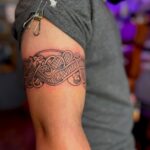
This works best when the chains follow the natural contours of the placement. On an upper arm, let them curve with the muscle rather than fighting it with straight lines.
The beads stay clear in solid black. Each bead needs enough separation to stay distinct as the tattoo settles, so spacing matters more than count.
8. Cross with Floral Accents
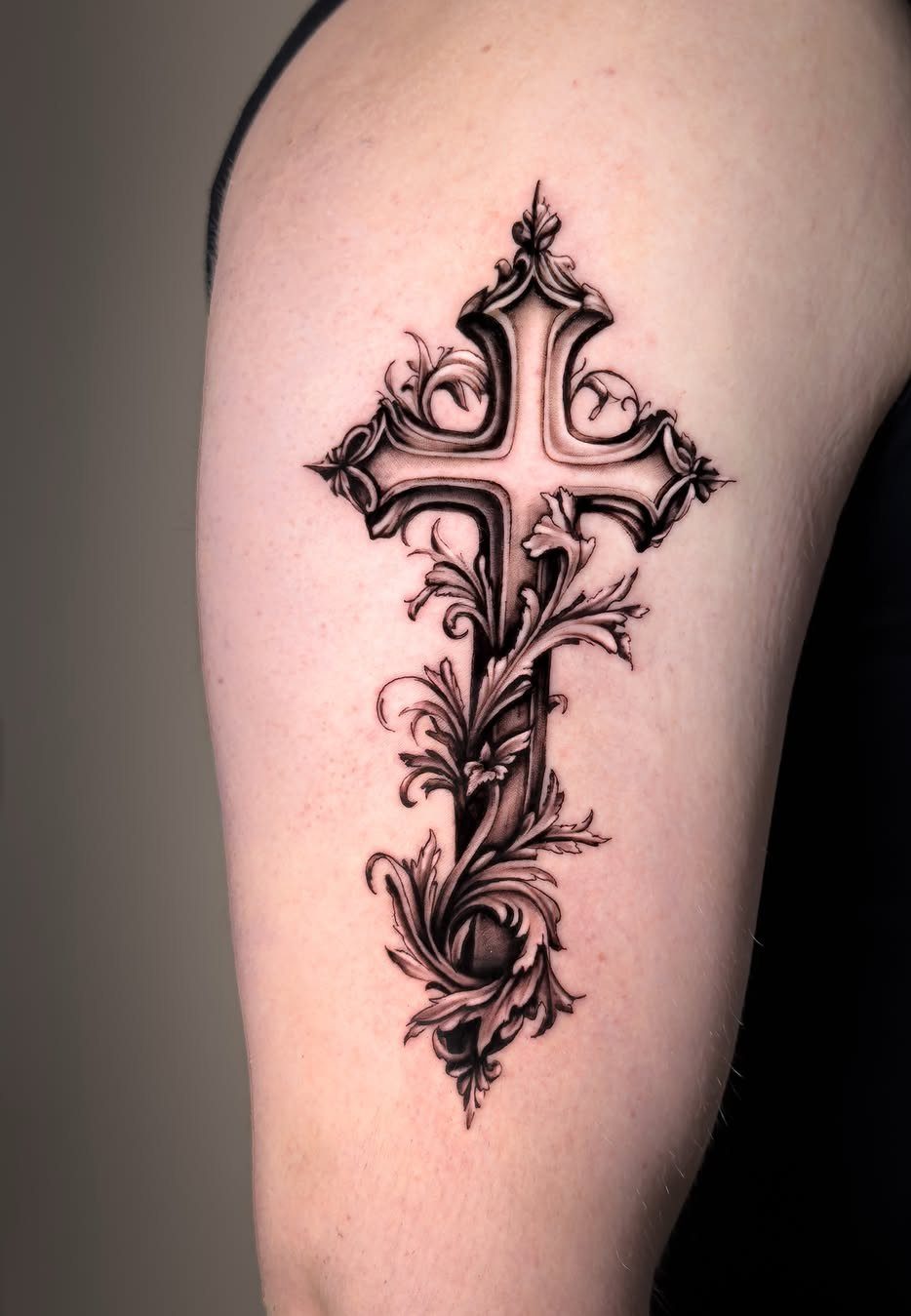
Floral accents fill the cross’s open spaces or grow from its base, softening the hard geometry without covering it. The flowers stay small enough that the cross still dominates the composition.
I’d keep the cross bold and the petals lighter in value so the hierarchy stays clear.
Black and gray shading lets the flowers add texture without competing for attention. Full color shifts the balance and can overpower the gothic weight of the cross itself.
Placement Options for Cross Tattoos
Wrist placement puts the cross where you’ll see it constantly, but the space limits detail. A simple outline or small symmetrical design holds up better than anything with fine lines or interior fills.
Forearm gives you the most flexibility. The cross can run vertical along the muscle or horizontal across the width, and there’s enough surface to support ornate versions, skulls, roses or chains while everything still reads clearly.
Back placement works for large pieces that need room to breathe. A cross with wings, multiple elements or heavy shading benefits from the uninterrupted canvas, though you won’t see it without a mirror.
Ankle lets you go small and conceal it easily. Simple crosses with pointed ends or minimal thorns fit the narrow space better than versions with surrounding florals or beads.
Meaning of Gothic Cross Tattoos
Gothic cross tattoos lean on the contrast between faith and darkness, pulling devotion into the same visual language as mortality and sacrifice.
The ornate flourishes and pointed ends reference medieval architecture and ecclesiastical metalwork, connecting the design to a time when spirituality and artistry overlapped in stone and ink.
Resilience shows up in the crosses wrapped with thorns or paired with skulls.
Those elements turn the symbol into something that acknowledges suffering rather than ignoring it, which appeals to people whose faith or philosophy includes hardship as part of the story.
The decorative details matter as much as the shape. Acanthus leaves, filigree and shaded contours give the cross weight and permanence, making it feel like something built to last rather than something borrowed from a trend.
Styles of Gothic Cross Tattoos
Ornate gothic crosses pull from historical metalwork and architecture, layering acanthus leaves, filigree scrolls and four-pointed stars into the frame.
These versions need space to hold the detail, and black and gray shading gives them dimension without losing the sharp edges.
Simple gothic crosses strip the design back to pointed ends, symmetrical arms and clean lines.
The style trades decoration for geometry, and the silhouette does the work. Solid black ink holds up bold as these versions age.
Both approaches stay rooted in black ink, which holds the gothic weight better than color. The difference comes down to how much ornamentation you want around the cross itself, and how much skin you’re willing to dedicate to the piece.
Frequently Asked Questions
What does a cross tattoo on the forearm mean?
A cross tattoo on the forearm often signals faith and devotion worn where you and others see it constantly.
The placement makes it visible during daily life, which suits people who want their beliefs out front rather than hidden. Forearm space also supports ornate versions with filigree, skulls or roses while keeping the cross itself readable.
Is gothic art a tattoo style?
Gothic art influences tattoo designs through its intricate, dark aesthetics pulled from medieval architecture and metalwork. The style shows up in ornate crosses with acanthus leaves, filigree scrolls and pointed ends that reference ecclesiastical design.
Medium to large scale gives the fine lines room to stay sharp, and black and gray shading preserves the gothic weight without losing detail.
What does the cross mean in goth?
The cross in goth culture represents faith and spirituality filtered through a lens that includes darkness and mortality rather than ignoring them.
Gothic crosses pair devotion with elements like skulls, thorns and sharp geometry, acknowledging suffering as part of the spiritual story.
The ornate decoration and pointed architecture connect the symbol to medieval church design, giving it historical weight alongside its modern edge.