Japanese tattoo patterns stretch from single koi or dragon forearms finished in one session to full bodysuits that take years to complete, and the choice depends on how much coverage you’re ready to commit to before you sit down.
Dragons, koi and waves suit arms and legs where the design can follow the limb’s natural curve, while Hannya masks, oni masks and geometric fills work on flatter surfaces like the forearm or chest.
Irezumi uses bold outlines and saturated color blocks to create continuous coverage across large areas, with background patterns filling every gap so no bare skin interrupts the composition.
1. Dragon Japanese Tattoo Pattern
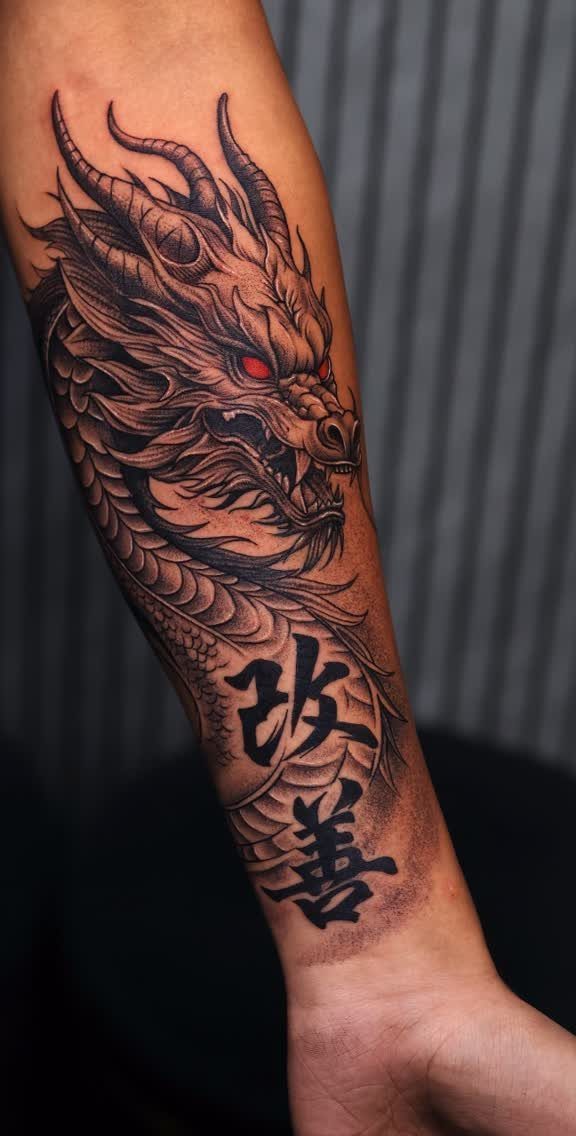
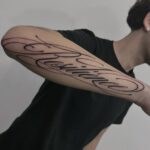
A dragon tattoo in Japanese style places scales, claws and motion front and center, usually worked in black and grey with selective color for the eyes or accent details.
The kanji characters often name the wearer or carry a meaning tied to the dragon itself.
Dragons in this tradition wind through space rather than sit static, so a forearm gives enough room for the head and part of the body to read clearly.
Red eyes stand out against monochrome ink and hold focus without needing a full-color palette.
The design scales up well to larger pieces if you want to continue it later.
2. Irezumi
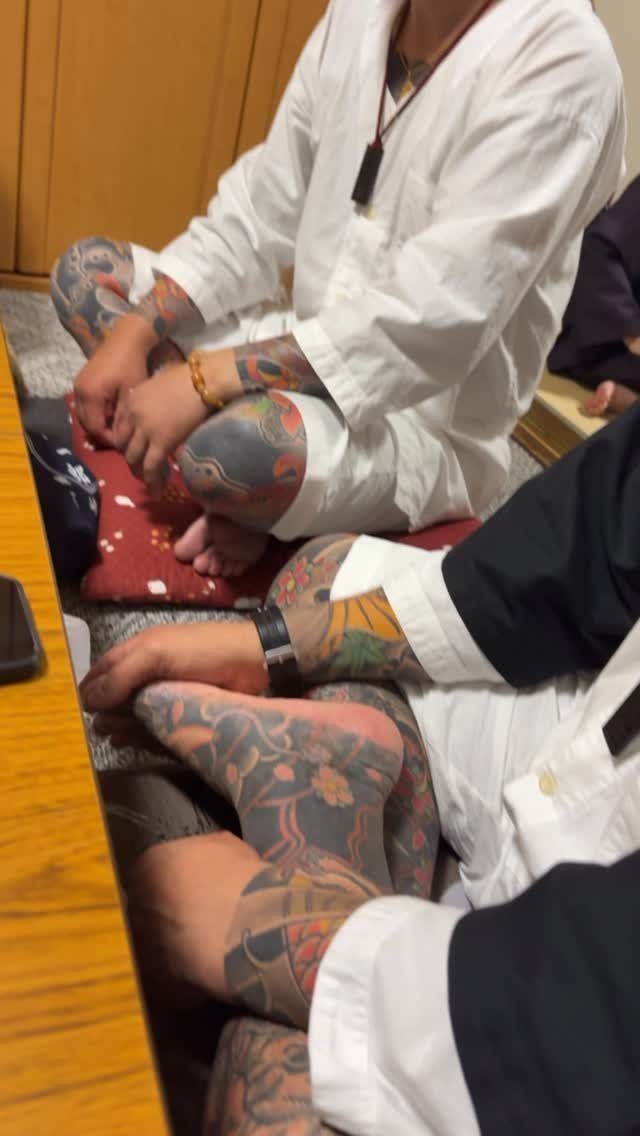
Irezumi refers to the full-coverage approach to Japanese tattooing, where large designs flow across the arms, legs, chest and back as one continuous composition. The style uses bold outlines, saturated color blocks and motifs drawn from folklore and nature.
Coverage this extensive takes multiple sessions spread over months or years, and the commitment shows. Background patterns fill the space between main subjects so no skin interrupts the design, which gives Irezumi its signature density.
If you’re planning a large piece, this is the framework that makes it read as intentional rather than collected over time.
3. Japanese Tattoo Sleeve
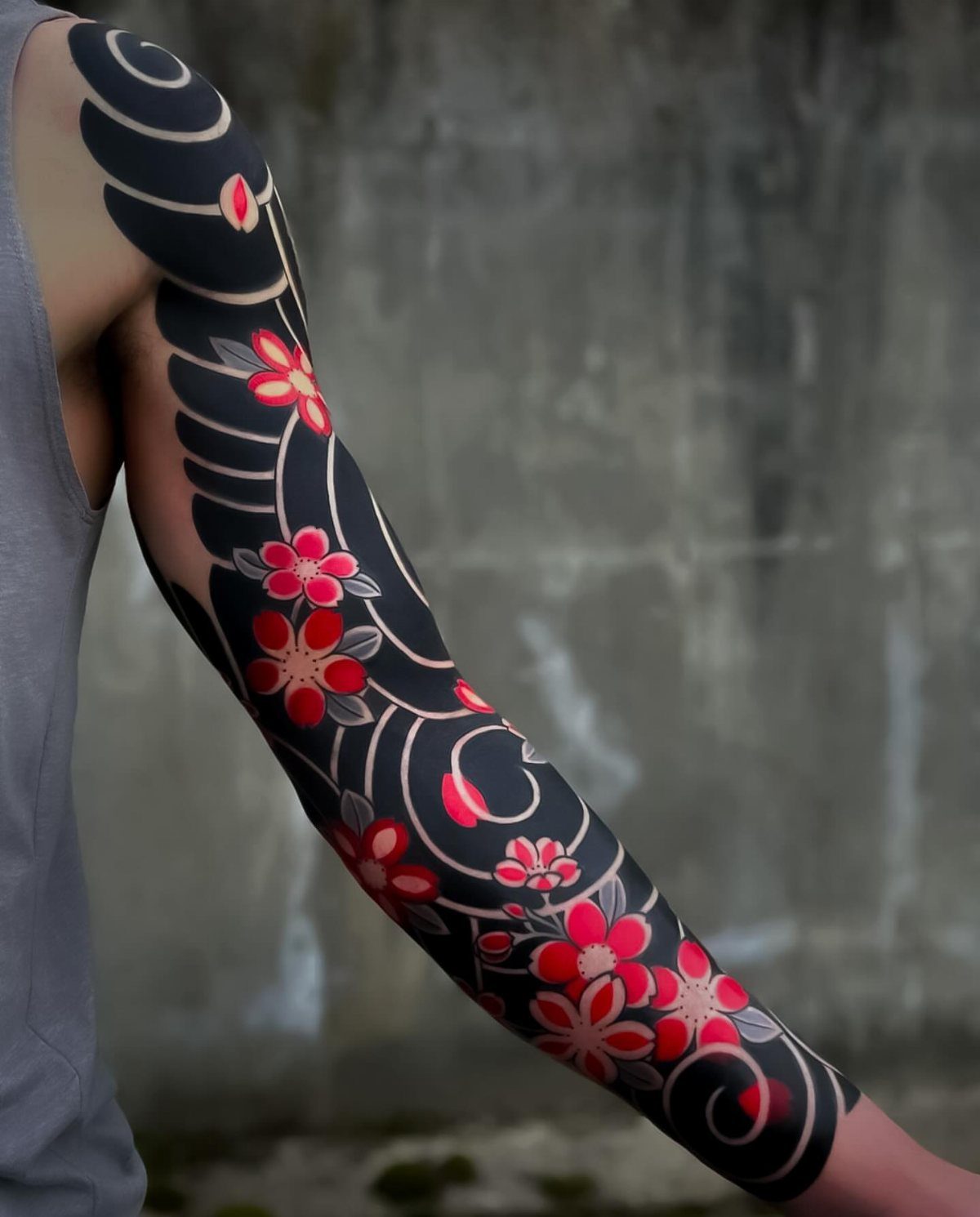
A sleeve tattoo covers the arm from shoulder to wrist in one unified design, and the Japanese approach layers waves, florals, animals or mythology into a composition that wraps the limb.
Balance the black line work and red flowers so motion and color sit as equals, neither one taking over.
Sleeves take several sessions to complete, and the design needs to work from every angle since the arm rotates. Black anchors the composition and red draws the eye without requiring a full spectrum.
This format suits someone ready to commit to a large visible piece that reads clearly at a distance.
4. Koi Fish Japanese Tattoo Pattern
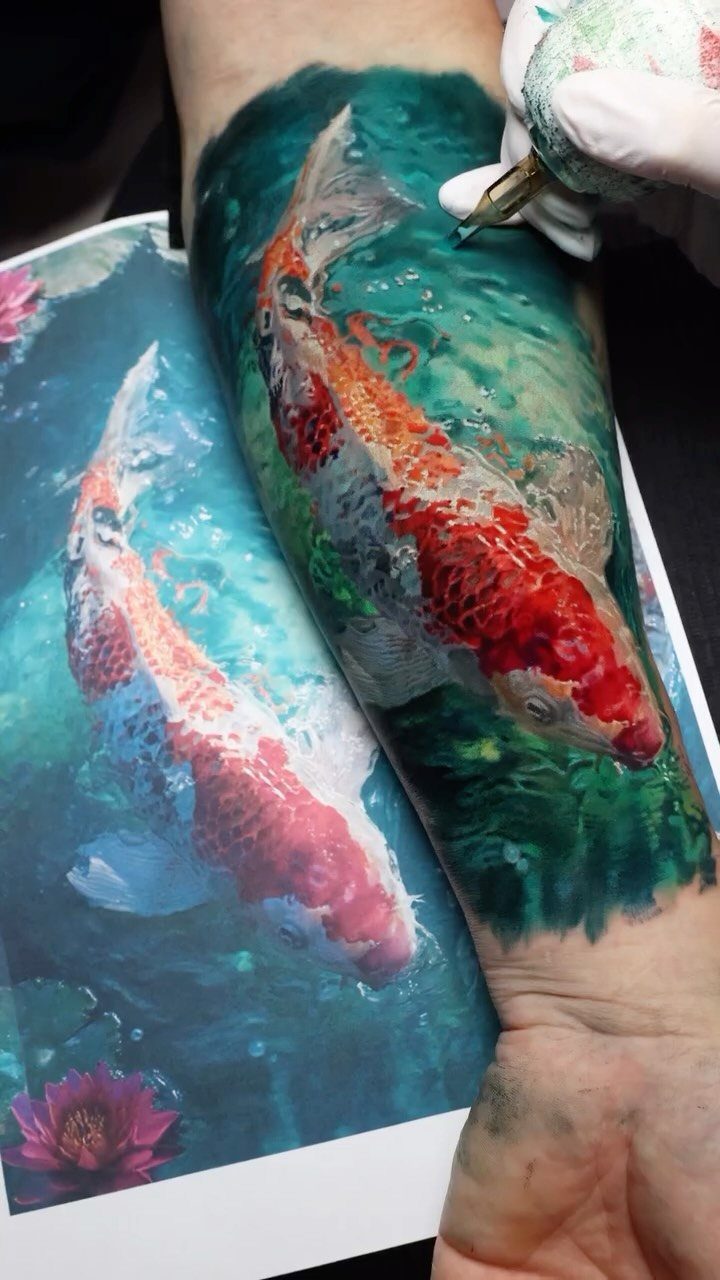
Koi fish tattoos carry associations with perseverance and upstream effort, and the bright orange, red and white scales make them one of the most recognizable Japanese motifs.
The fish curves naturally to follow the shape of a forearm, thigh or calf.
Color saturation matters here because the symbolism ties to the vivid appearance of real koi. Black outlines and water elements frame the fish and keep the design from floating in empty space.
Plan for touch-ups on the color over time, especially if the tattoo gets sun exposure.
5. Hannya Mask
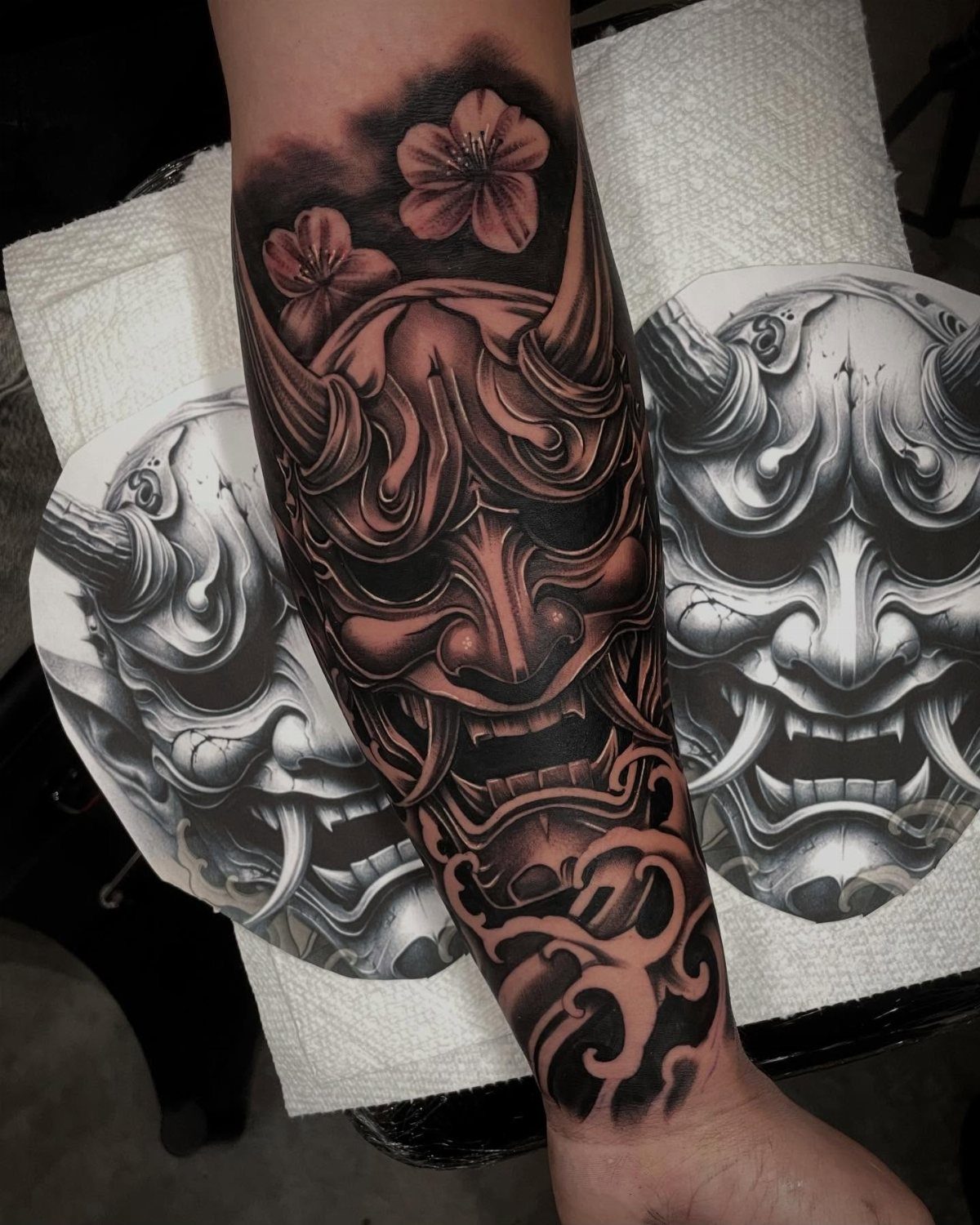
The Hannya mask is a woman caught in jealousy or rage, and the strong symmetry and expression hold up well in ink.
Horns, sharp teeth and hollow eyes give it immediate impact, and adding cherry blossoms softens the composition without diluting the mask’s intensity.
Black and grey keeps the focus on line work and shading, which is where the emotion in the mask comes through. A forearm or upper arm gives enough vertical space for the mask to sit upright and read clearly.
Reference sketches help, especially if your artist is adapting the proportions to fit your arm’s dimensions.
6. Wave Background Japanese Tattoo Pattern
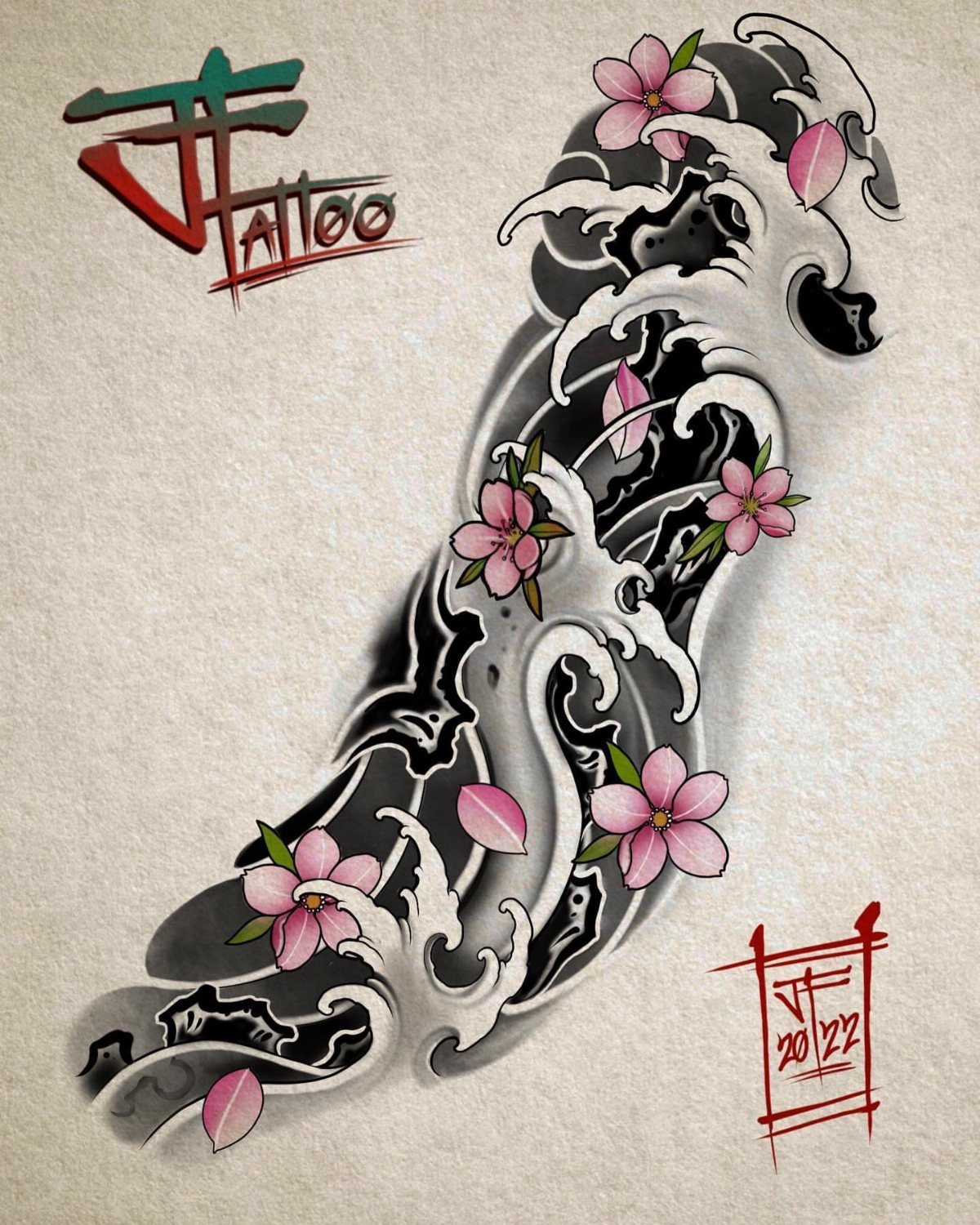
Wave patterns serve as background fill in Japanese tattoos, giving negative space structure and motion without competing with the main subject.
The curling lines and foam caps reference traditional ukiyo-e woodblock prints, and they work in black, grey or blue depending on the rest of the palette.
Cherry blossoms layered over waves add seasonal contrast and soften the linear rhythm of the water. This combination shows up often because it balances masculine and feminine elements in one frame.
If you’re building a larger piece over time, starting with a strong background lets you add focal motifs later without reworking what’s already there.
7. Tiger
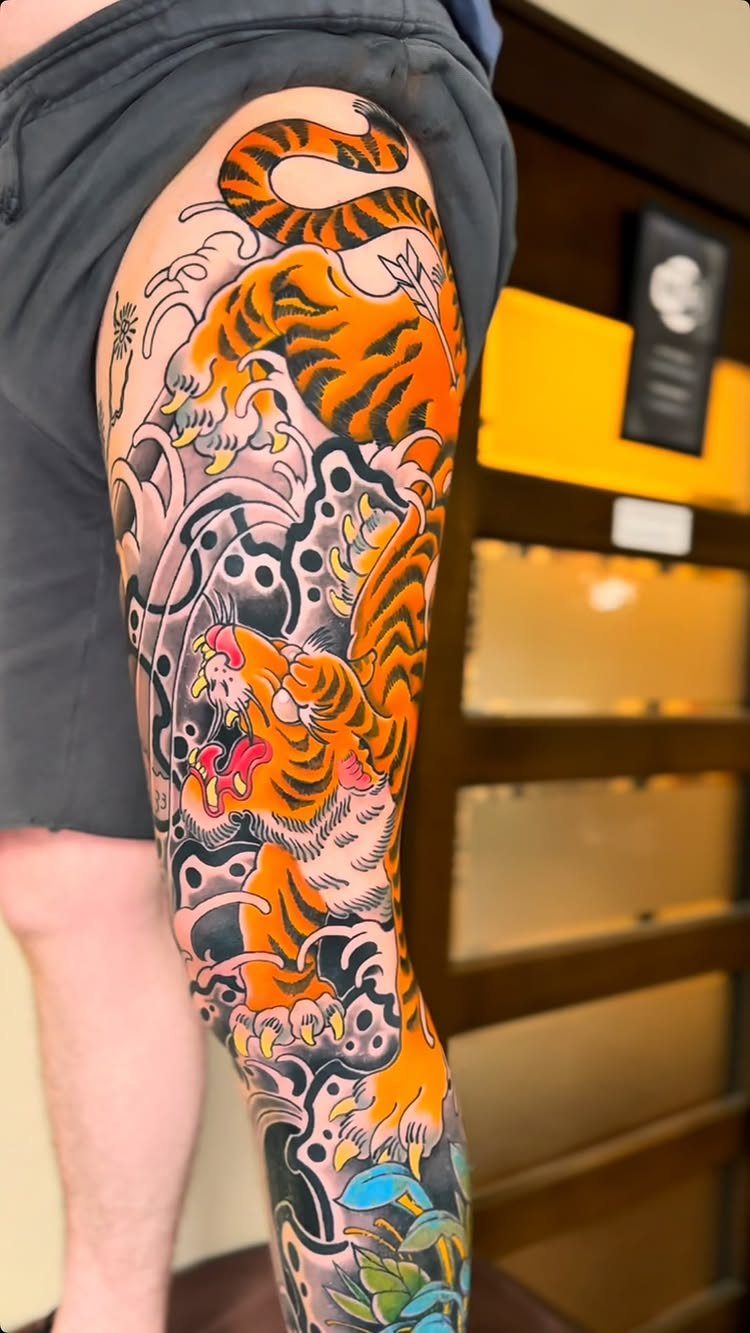
Orange and black stripes paired with grey waves create immediate motion, and the tiger holds cultural weight in Japanese folklore as a symbol of strength and protection.
The combination of warm body color against cool background tones keeps each element legible.
A full leg gives space for the tiger’s body to curve naturally without cramping the proportions. Waves and clouds fill the surrounding area so the design reads as one piece rather than a figure floating on bare skin.
This works well if you want a bold animal motif that balances power with traditional background elements.
8. Skull
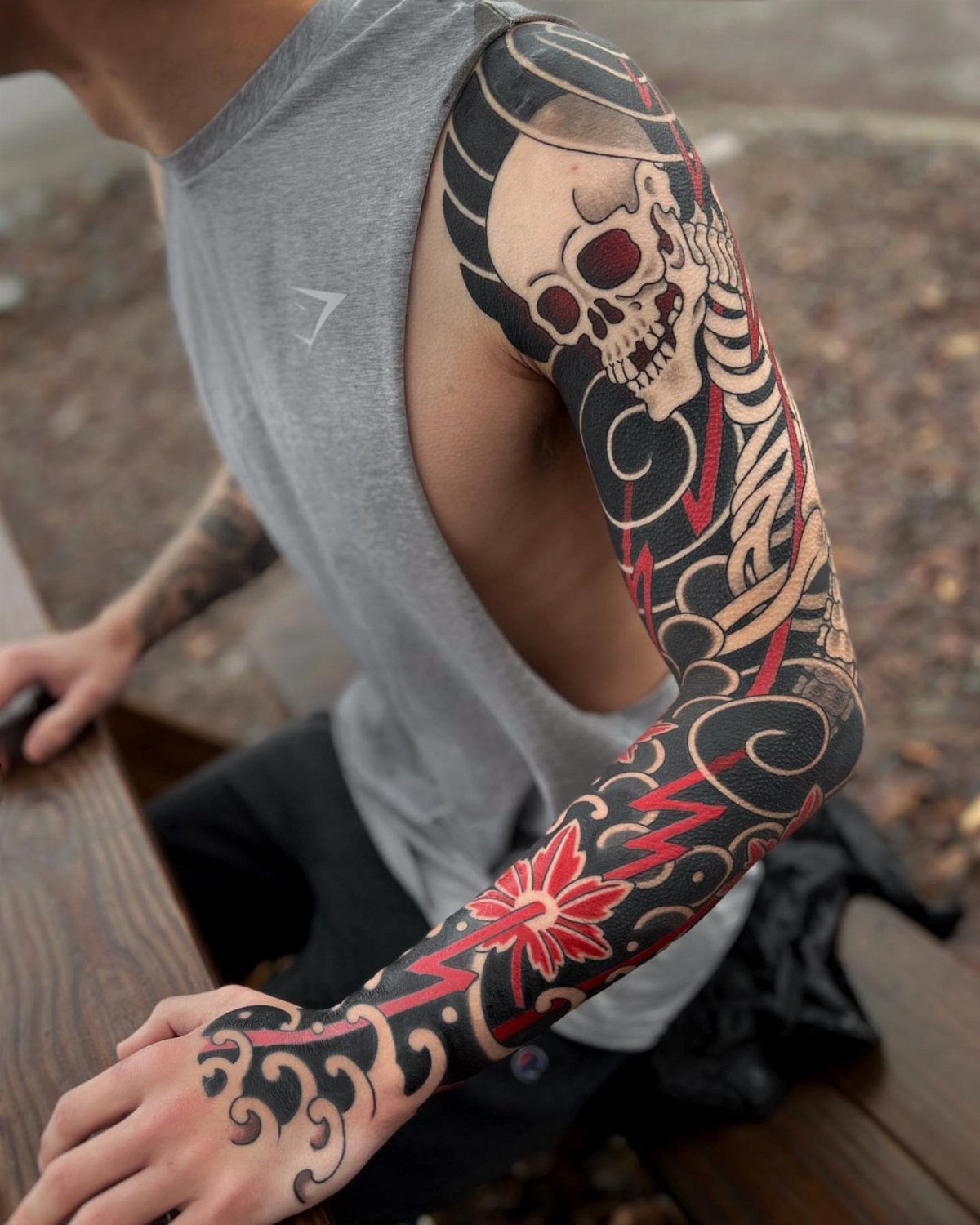
The skull shows up in Japanese tattooing as a reminder of mortality and the transient nature of life, distinct from its Western association with danger or rebellion.
Red lightning and floral patterns around it add energy and soften the starkness of bone.
A full sleeve allows room for the skull as the focal point while surrounding elements keep the composition from feeling heavy. Red pulls focus without requiring a full-color approach, and black line work holds everything together.
If you’re drawn to memento mori themes, this pattern bridges Japanese style with a motif familiar across tattoo traditions.
9. Phoenix
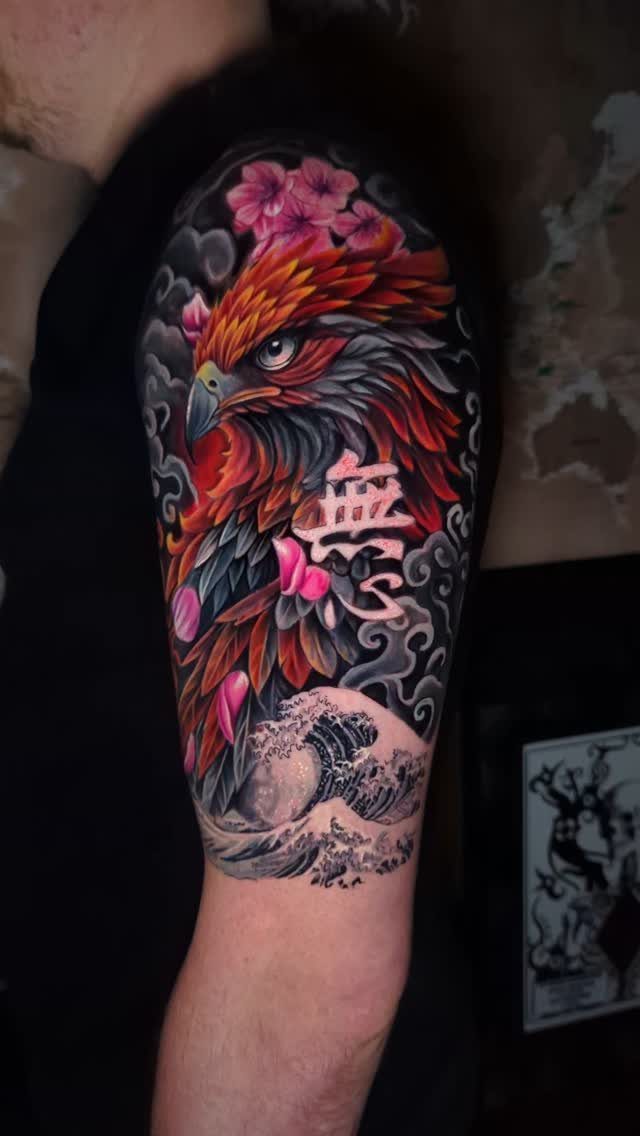
The phoenix in Japanese tattooing represents rebirth and renewal, adapted from Chinese mythology where the bird rises from fire.
An upper arm suits the vertical sweep of wings and tail feathers, and the curve of the limb supports the bird’s natural motion.
Color saturation matters here because the phoenix depends on fire tones to read clearly against background elements like waves and clouds.
10. Flower Japanese Tattoo Pattern
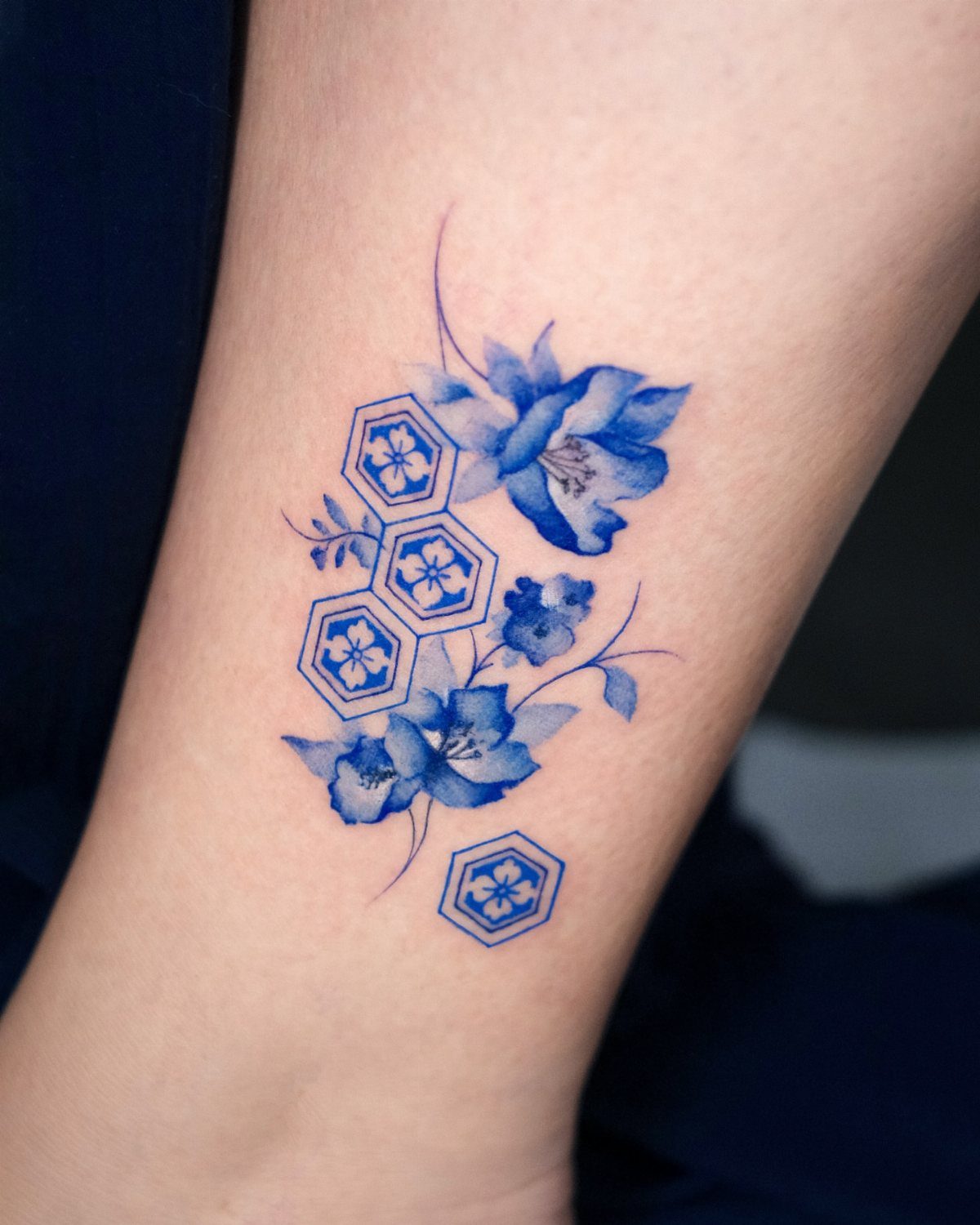
Flowers in Japanese tattooing range from cherry blossoms to peonies, chrysanthemums and lotus, each carrying its own associations. Blue ink paired with geometric hexagonal patterns creates a modern take that still references traditional motifs.
The watercolor effect softens edges and lets the design sit lighter on the skin than bold outlines would. A lower leg or forearm gives enough space for multiple blooms and keeps each one readable.
This approach suits someone who wants floral imagery but prefers a less saturated or less traditional color palette.
11. Japanese Tattoo Bodysuit
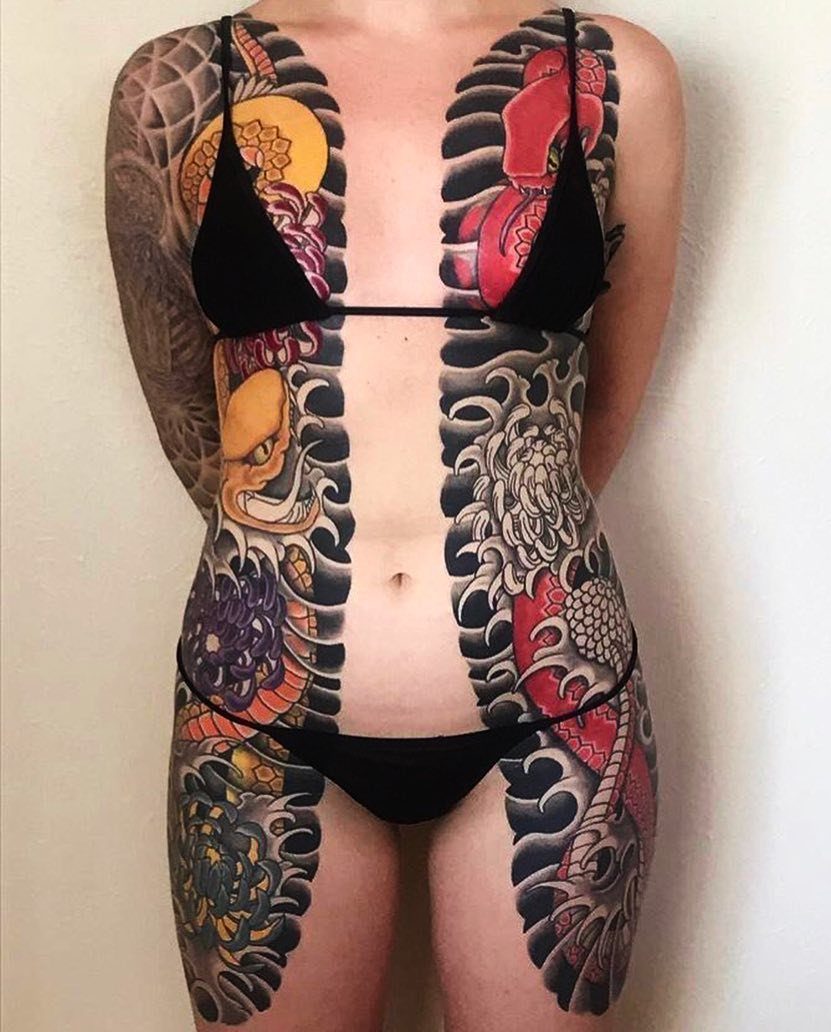
A bodysuit covers the torso, arms and sometimes legs in one continuous design, leaving only hands, feet, neck and face bare.
The composition treats the body as a single canvas, with waves, florals and figures flowing from one area to the next.
Completing a bodysuit takes years of sessions, and the design requires planning so each section connects visually. Color blocks and black line work balance across large surfaces so no single area dominates.
This is the most extensive format in Japanese tattooing, and it suits someone ready to commit to full coverage as a long-term project.
12. Geisha Japanese Tattoo
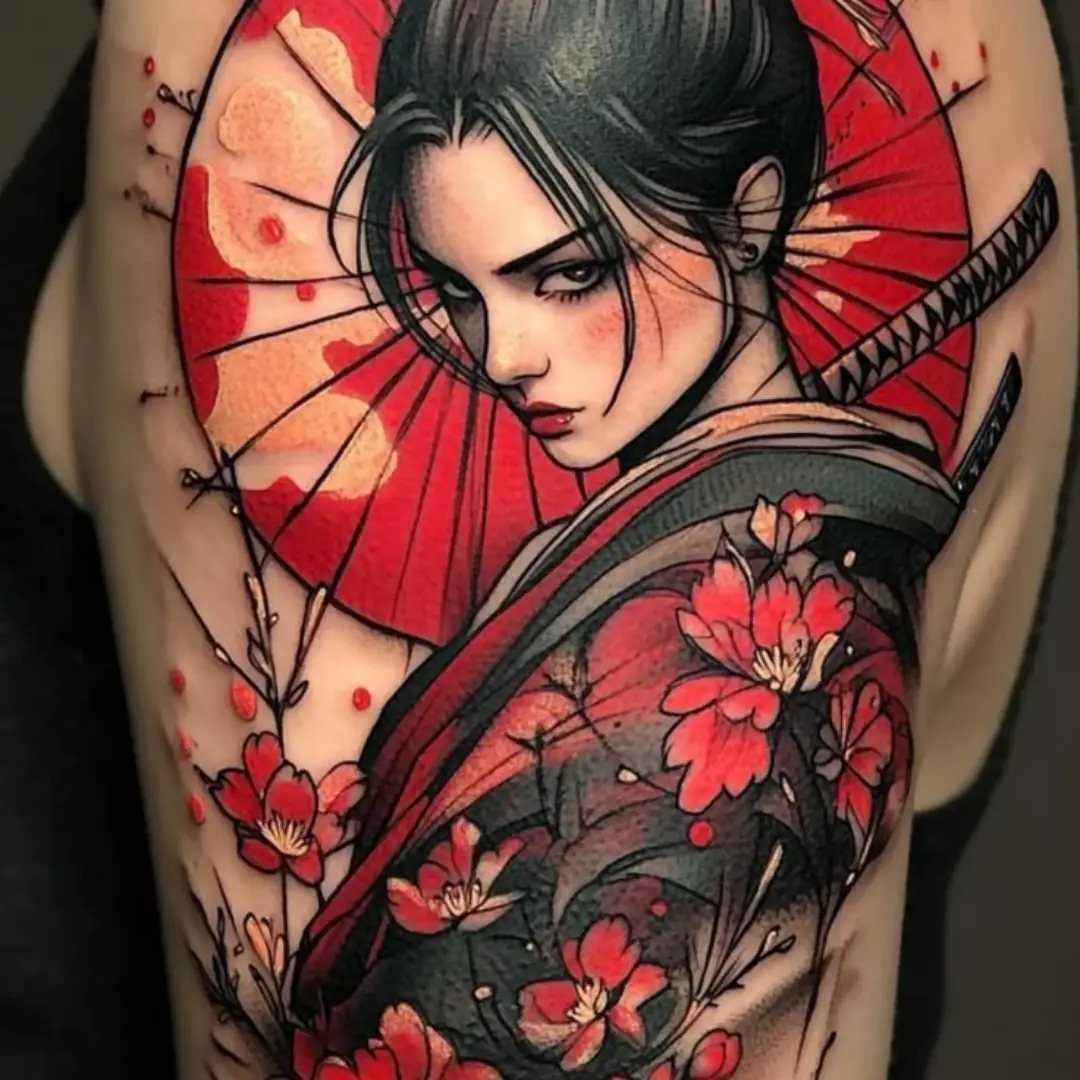
A geisha figure in a patterned kimono with a red umbrella and sword combines traditional imagery with an unexpected element of protection or defiance.
The detail in the fabric and hair requires a skilled artist who can handle fine line work within a Japanese framework.
An arm gives enough room for the figure to stand upright with the umbrella and sword visible without compressing proportions. Red accents in the umbrella and florals add color focus while keeping the rest of the palette controlled.
This works well if you want a human figure that carries both elegance and edge.
13. Japanese Landscape Tattoo
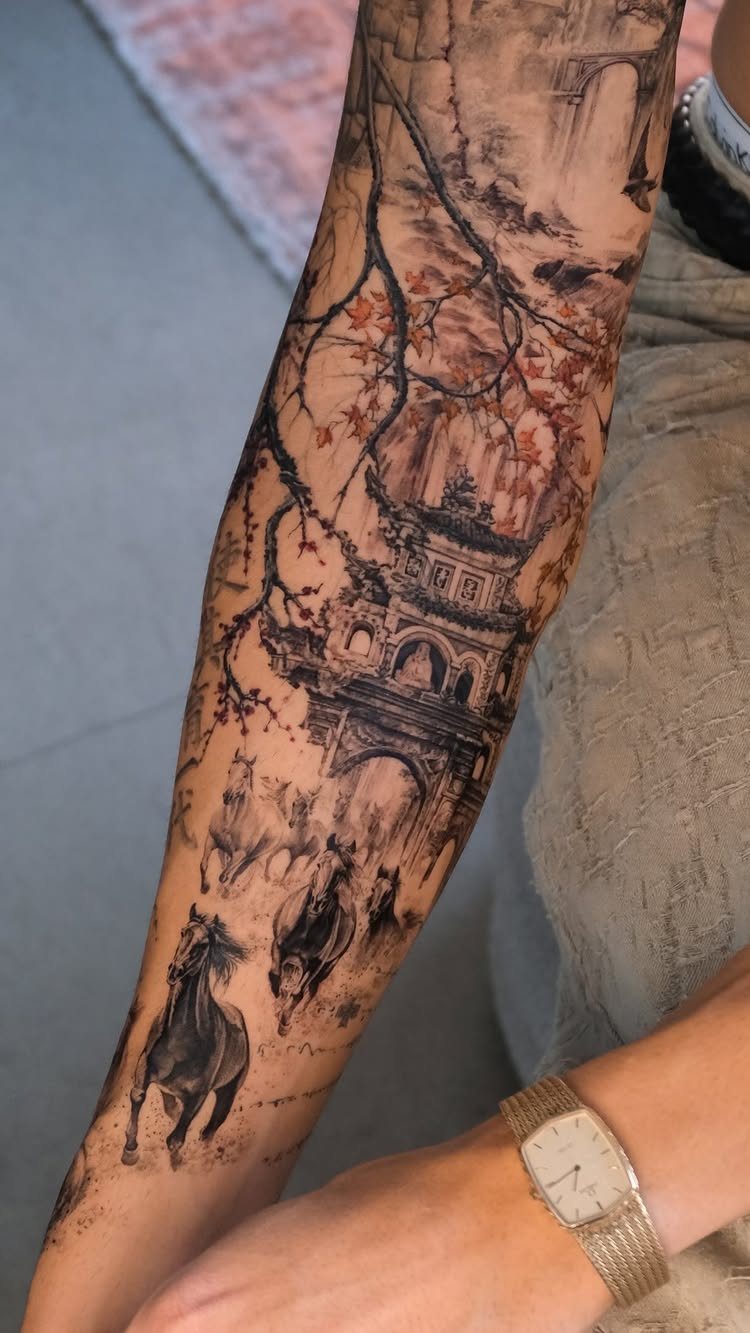
A landscape tattoo brings together architecture, animals and seasonal elements in one frame, and the black and grey palette lets line work and shading carry the entire composition.
A pagoda anchors the vertical structure while horses and falling leaves add motion and scale.
The arm’s length supports a scene that reads top to bottom without cramping any single element. Black ink ages predictably, and grey wash adds depth without the maintenance color requires.
This suits someone who wants narrative imagery that holds detail at a distance.
14. Oni Mask Hand Tattoo
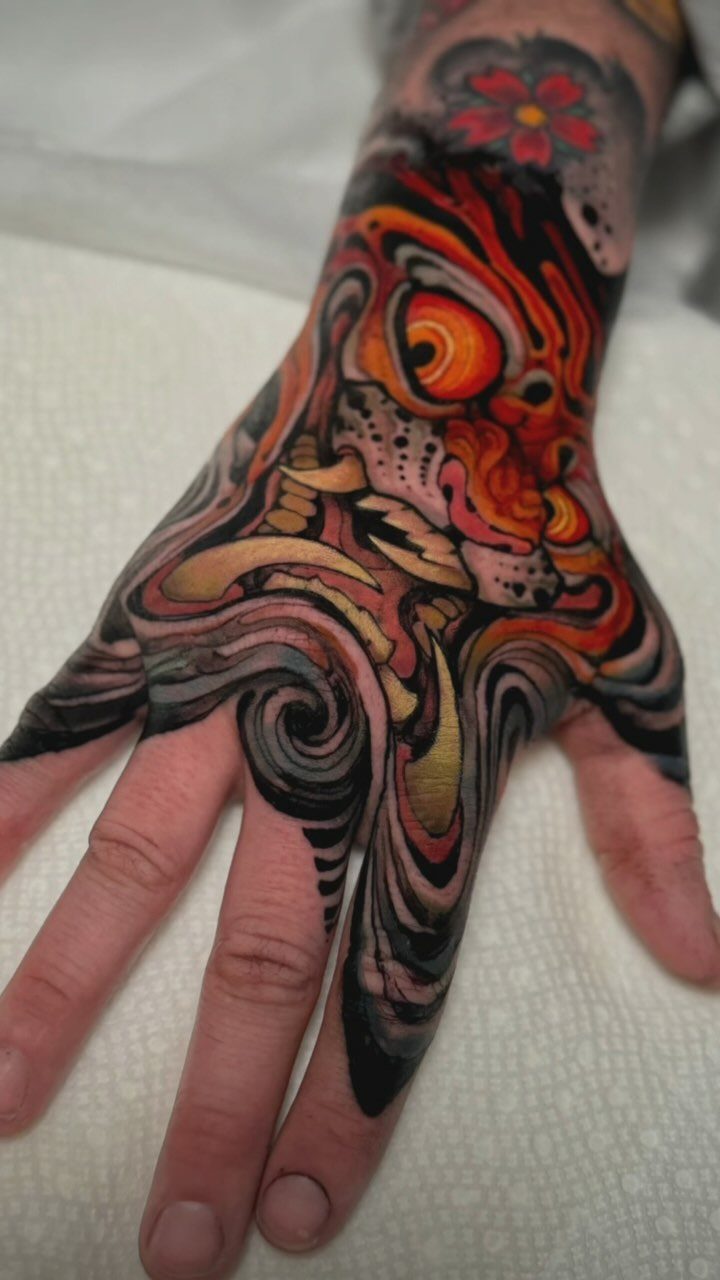
Oni masks represent demons or supernatural beings in Japanese folklore, and the bright orange eyes against dark swirling water create immediate contrast.
Hands fade faster than other placements because skin there sheds constantly and sees frequent friction. Plan for touch-ups every few years to keep the color saturated and the line work sharp.
The visibility and maintenance both require commitment, but the impact justifies both if you want a design that commands attention.
15. Geometric Japanese Pattern Tattoo
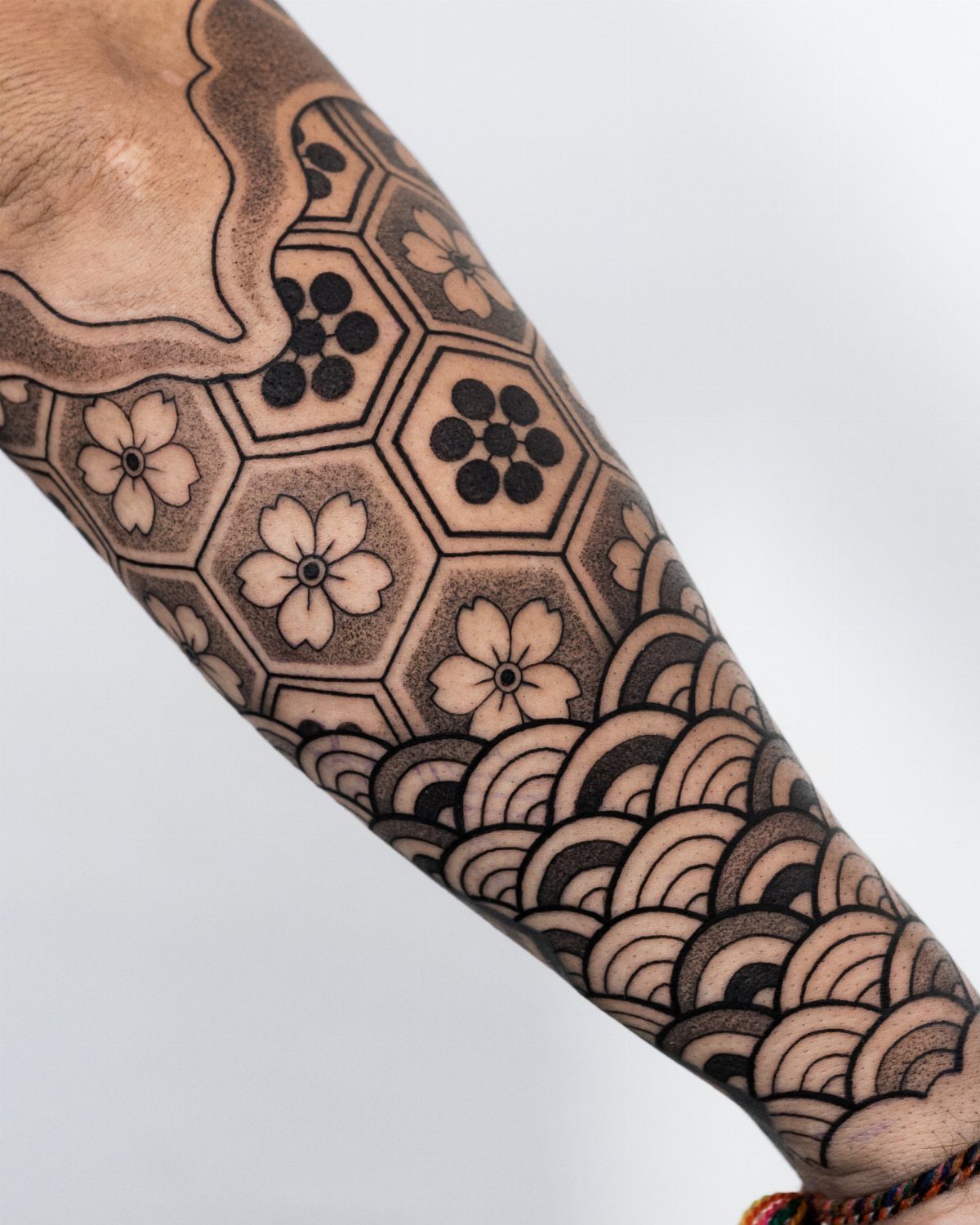
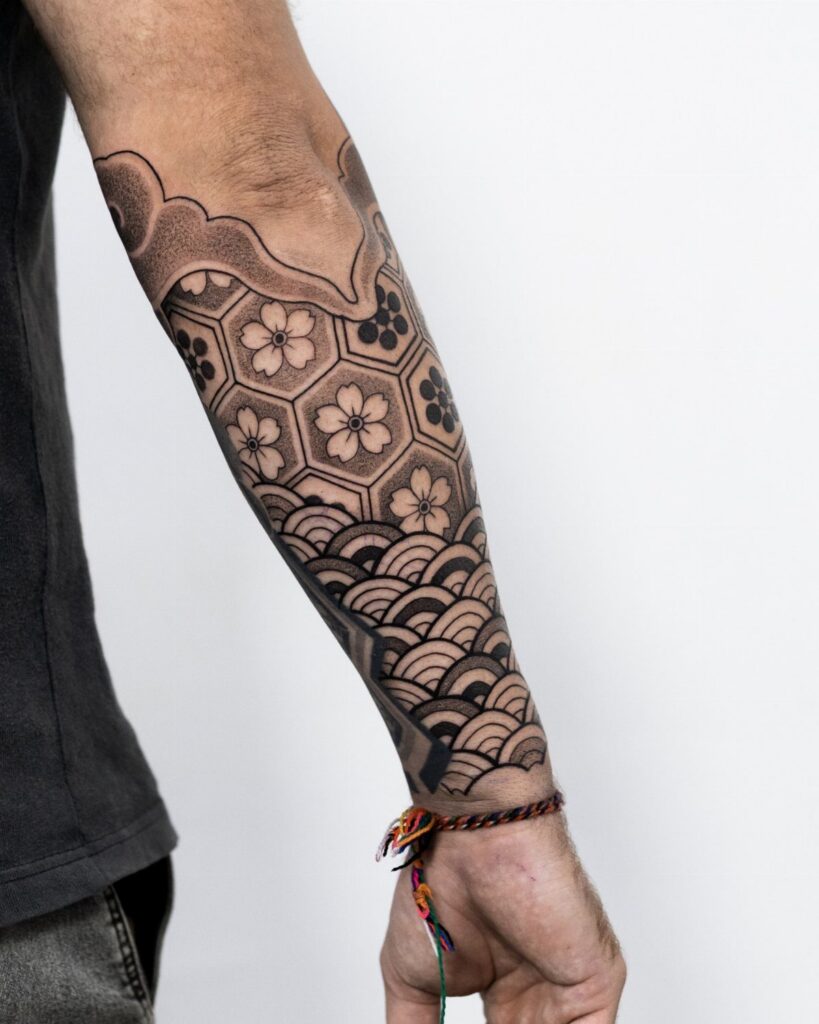
Geometric patterns like hexagonal kikko and overlapping seigaiha scales reference traditional Japanese armor and textile motifs, and working them in black ink keeps the focus on precision and repetition.
Cherry blossoms soften the rigidity of the geometry without breaking the pattern’s structure.
A forearm gives enough length for multiple pattern types to sit side by side, and the flat surface keeps lines straight. This approach suits someone drawn to Japanese aesthetics but looking for something less figurative than animals or masks.
The clean line work reads well at a distance and holds up as the tattoo ages.
16. Samurai Warrior Tattoo
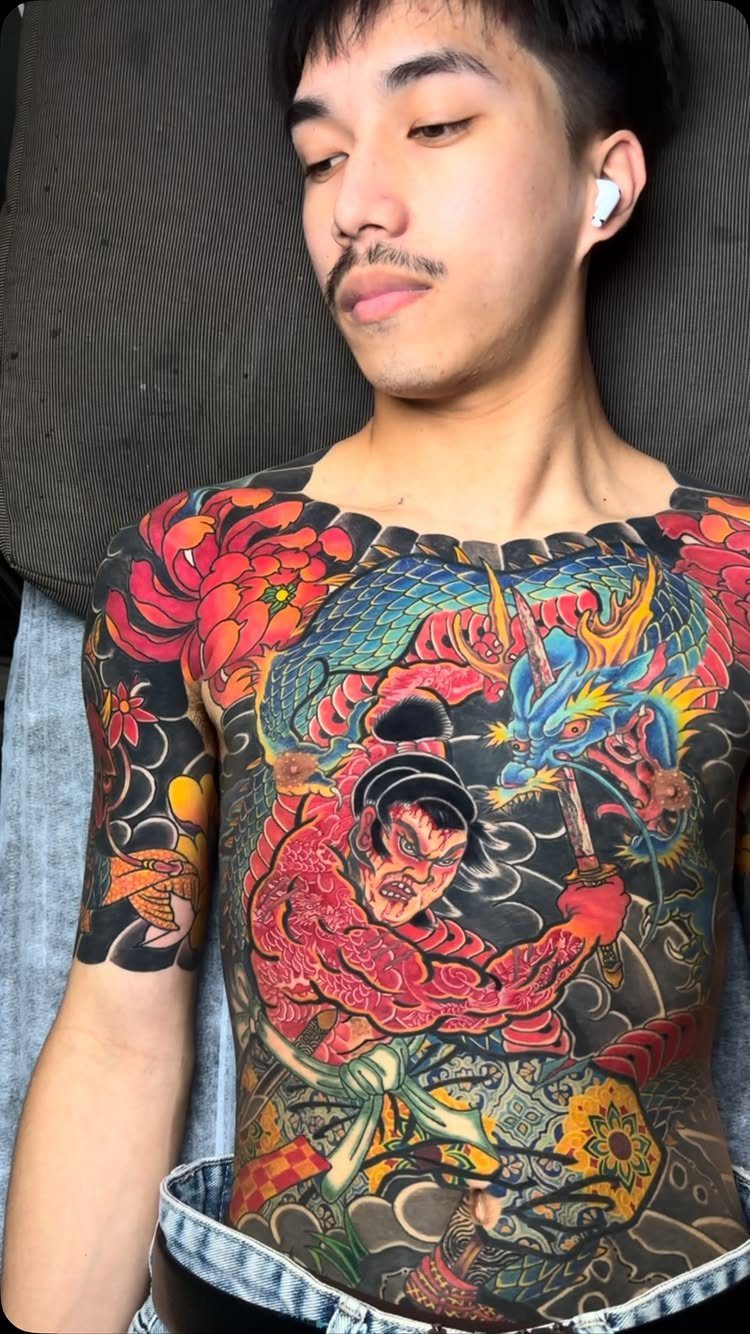
A torso tattoo combines a samurai figure and a dragon across the chest and ribs, with red and blue as the primary colors and wind and cloud shading filling the background.
The large surface area lets both subjects hold their proportions without overlapping in a way that loses detail.
Sessions for a piece this size stretch over months, and the ribs rank high for pain during the process. Red and blue hold saturation well but still benefit from occasional touch-ups, especially if the tattoo sees sun.
17. Japanese Leg Sleeve Tattoo
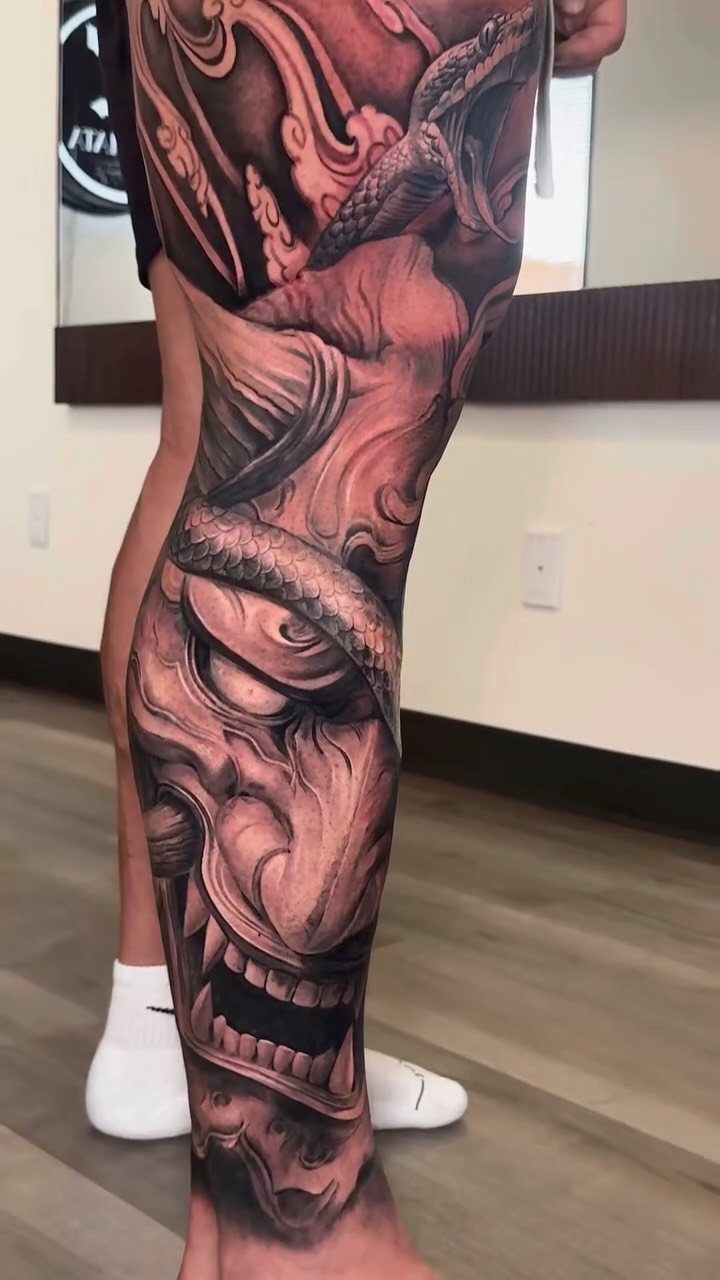
A leg sleeve covers the thigh, knee and calf in one continuous design, and the vertical format suits Japanese compositions that flow from top to bottom.
Demons, dragons and waves layer together with traditional shading techniques that give depth without relying on color.
Legs take ink differently than arms because the skin stretches and contracts with movement, so bold line work holds up better over time than fine detail.
The knee itself distorts any design that crosses it, so plan for that area as transition space rather than a focal point.
This format offers large coverage without the visibility of an arm sleeve.
18. Japanese Cloud Pattern Tattoo
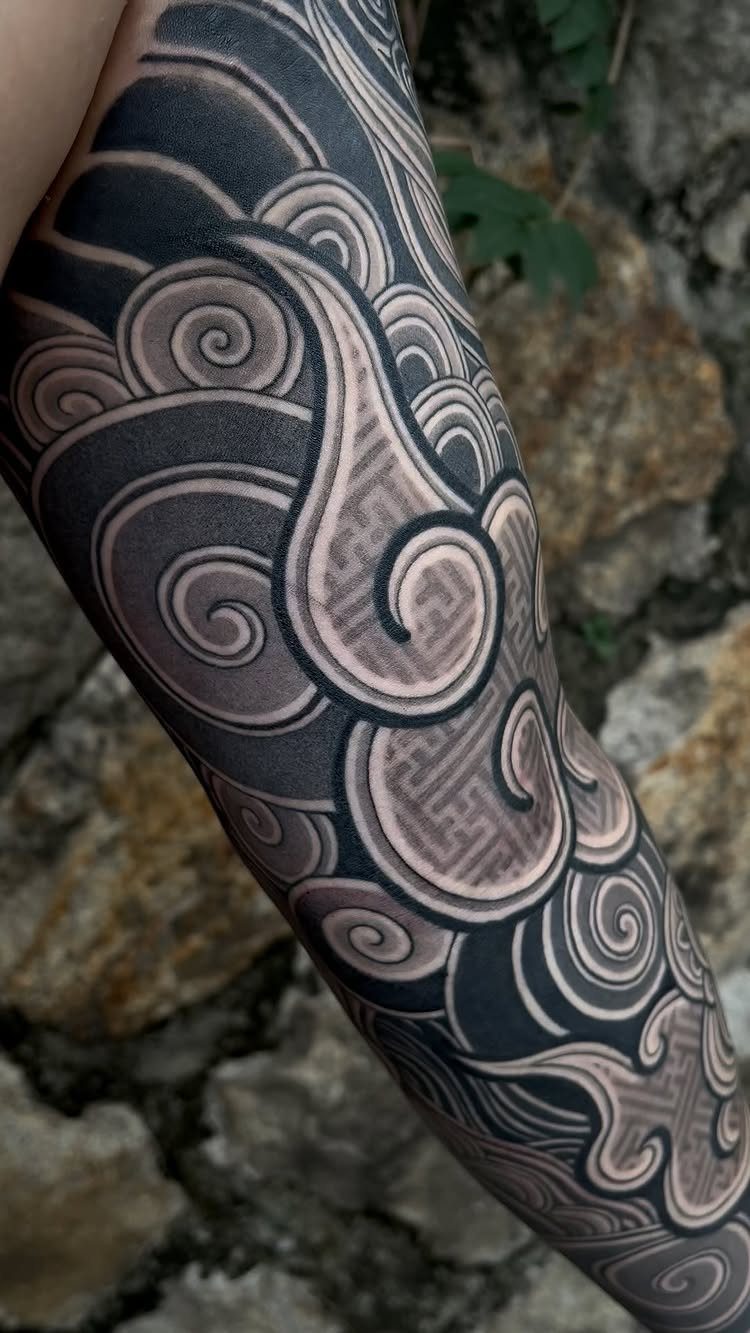
Cloud and wind patterns in black and grey create motion and texture without needing a focal subject, and the geometric line accents add structure to the organic shapes.
This pattern works as a standalone piece or as background fill for a larger composition you plan to build over time.
An arm gives enough room for the swirling lines to curve naturally, and the black and grey palette stays readable without competing with color if you add more later.
Shading depth matters here because it creates the sense of movement the pattern depends on.
This suits someone who wants traditional Japanese elements but prefers abstract forms over animals or figures.
19. Kitsune or Dog Mask Motif
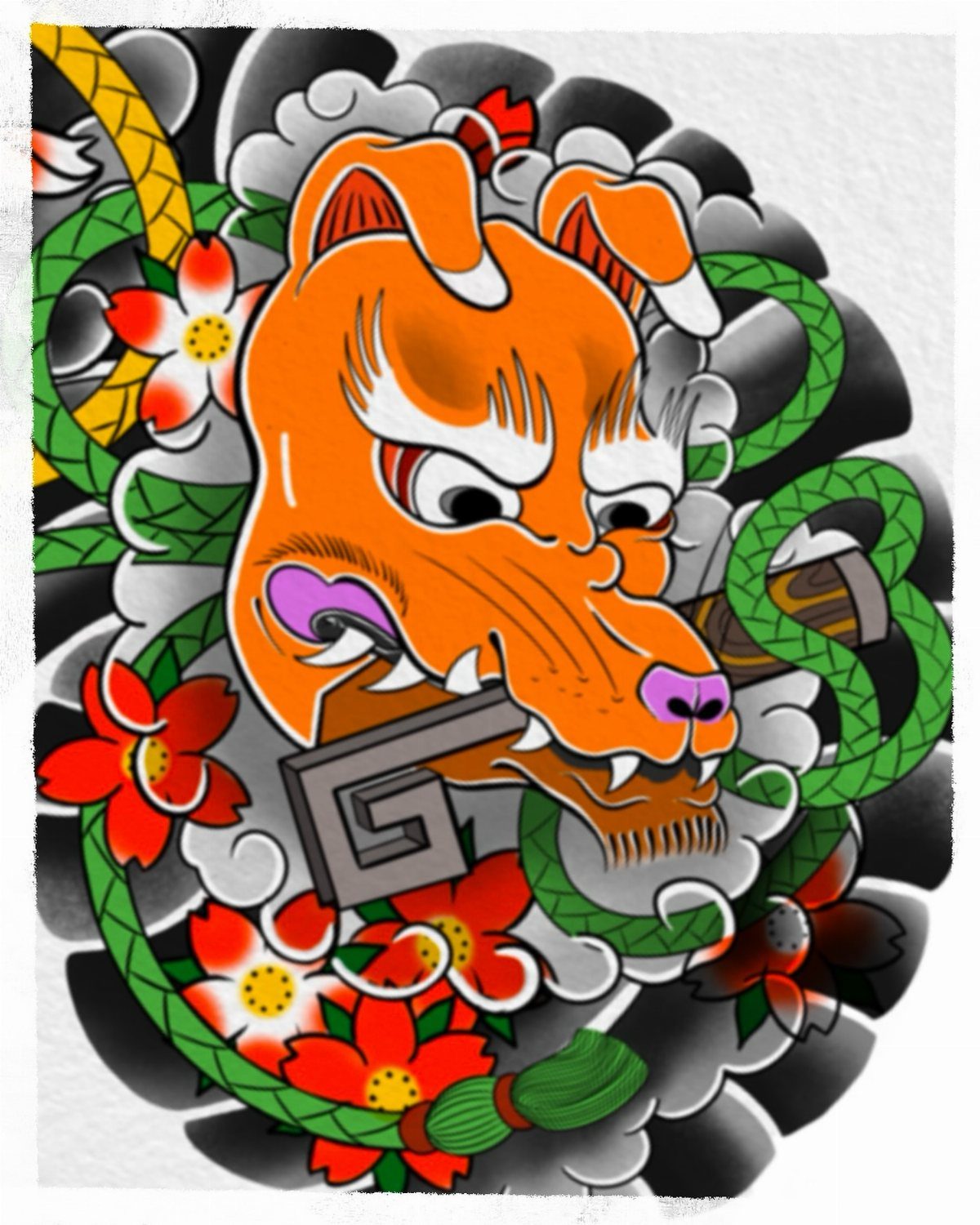
The orange mask with cherry blossoms, rope and cloud elements balances a bold central figure with softer seasonal detail. The combination keeps the composition from feeling too symmetrical while the bright color against neutral clouds holds focus.
The forearm suits a centered mask framed by peonies or maple leaves, while the upper arm lets you wrap clouds and scattered petals around both sides.
This suits someone drawn to Japanese folklore motifs who wants a design that reads clearly without requiring full sleeve coverage.
Tattoo Aftercare
Thick ointments trap moisture and can pull ink out during healing.
Keep the tattoo out of direct sunlight for at least 4 weeks.
UV exposure fades saturated colors faster than black and grey, and Japanese designs rely on color contrast to hold their impact. Once healed, sunscreen on the tattooed area extends the life of red, orange and blue tones.
Avoid soaking the tattoo in pools, hot tubs or baths until the skin has fully closed, usually around 3 weeks. Chlorine and prolonged water exposure both slow healing and increase the risk of infection.
Touch-ups maintain line sharpness and color saturation, especially on hands, feet and other high-friction placements. Most artists offer a free touch-up session within the first few months if needed.
Understanding Tattoo Culture
Japanese tattoo motifs carry specific meanings rooted in folklore, religion and history. Wearing a design without understanding its associations risks misrepresenting what the image communicates to people familiar with the tradition.
If you’re drawn to a particular subject, ask your artist about its cultural context before committing. Some motifs pair naturally because their meanings complement each other, while others sit at odds symbolically even if they look cohesive on paper.
Irezumi remains somewhat taboo in Japan despite being legal since 1948.
Public bathhouses, hot springs and gyms often prohibit entry for visibly tattooed individuals, though some allow it if the tattoo is covered. Younger generations have embraced the art form more openly, but the social stigma persists in certain spaces.
Tebori, the hand-tattooing method using a metal or wood rod, takes longer than electric needle work but preserves the traditional technique. Some artists and clients prioritize this approach to maintain the craft’s historical integrity.
Today, Japanese and non-Japanese tattoo artists alike often look to traditional Irezumi for inspiration. Though the practice has been legal in Japan since 1948, it is still somewhat taboo.