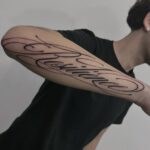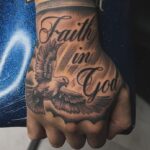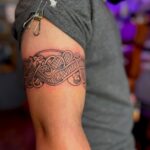
A Christian sleeve can run from a single cross with minimal shading to a full Last Supper realism piece that demands multiple sessions and an artist who can handle faces and consistent lighting.
1. Jesus Sleeve Tattoo
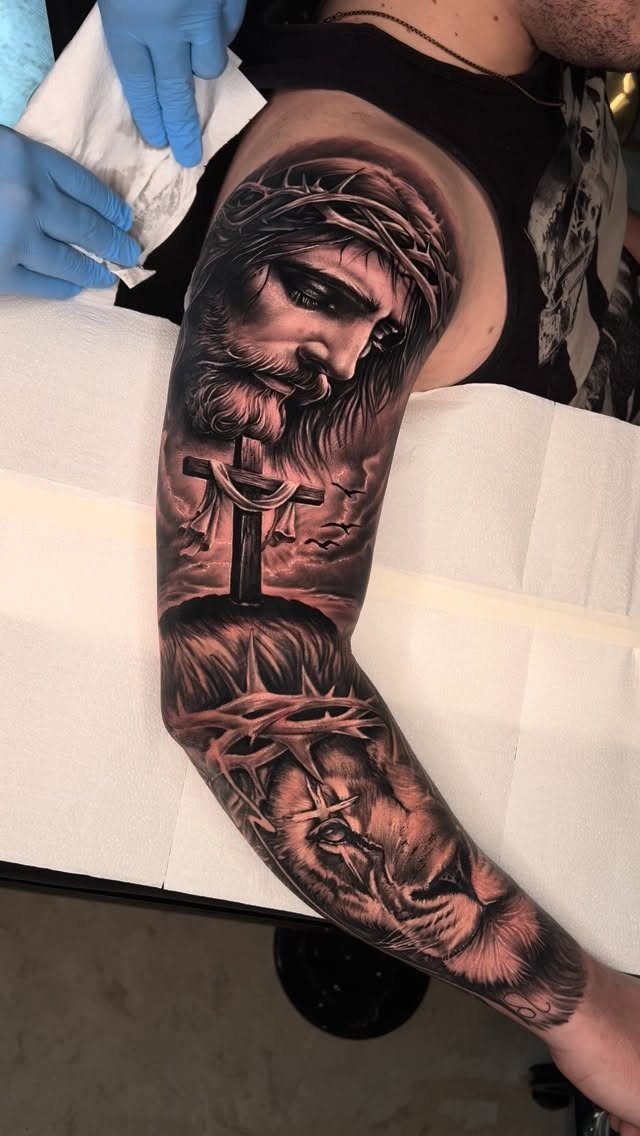
A portrait of Jesus anchors the sleeve, often paired with a crown of thorns, a cross, or other symbols that carry weight in the faith.
The level of detail in the face decides how well this reads, so look for an artist who works in black and grey realism and can handle shading that gives dimension.
The crown of thorns and cross fill the space around the portrait without crowding it. Placement on the upper arm or full sleeve gives the design room to breathe, and keeping the background simple lets the face stay the focus.
2. Cross Tattoo
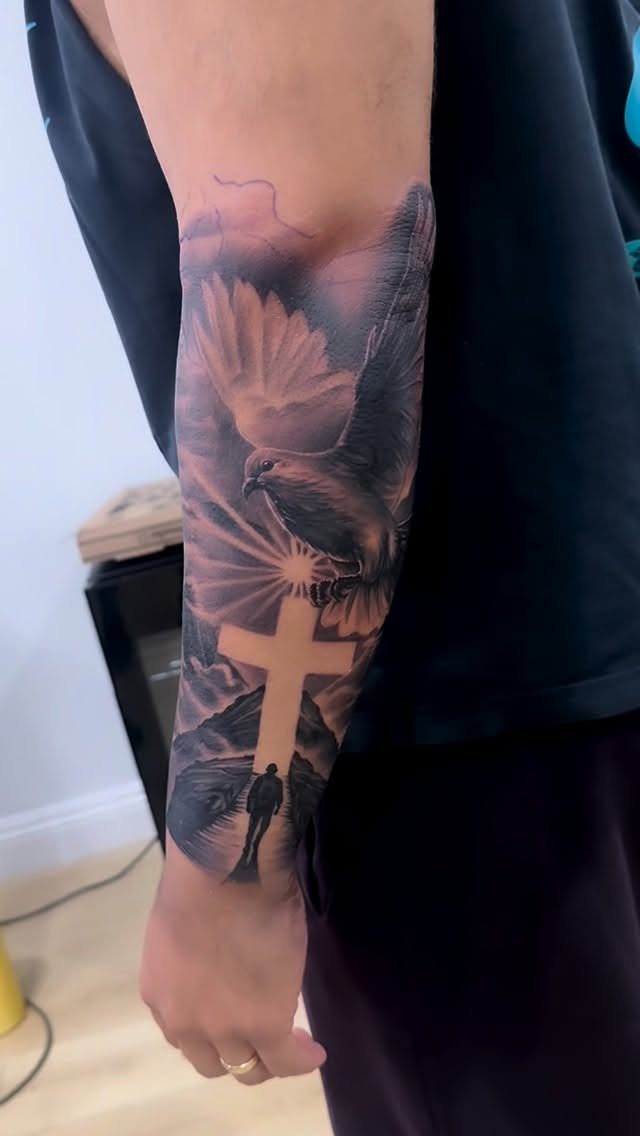
A cross alone can carry a full sleeve when you build around it with elements that mean something to you. Stacking it with doves, mountains, or silhouettes pulls the design together without forcing every inch to shout.
I like the way a glowing cross works as a light source in the composition, casting rays or highlights across the other elements.
Black and grey keeps it readable from a distance, and negative space around the cross prevents it from getting lost in the detail.
This scales well to forearm or half sleeve if a full sleeve feels like too much.
3. Angel Tattoo
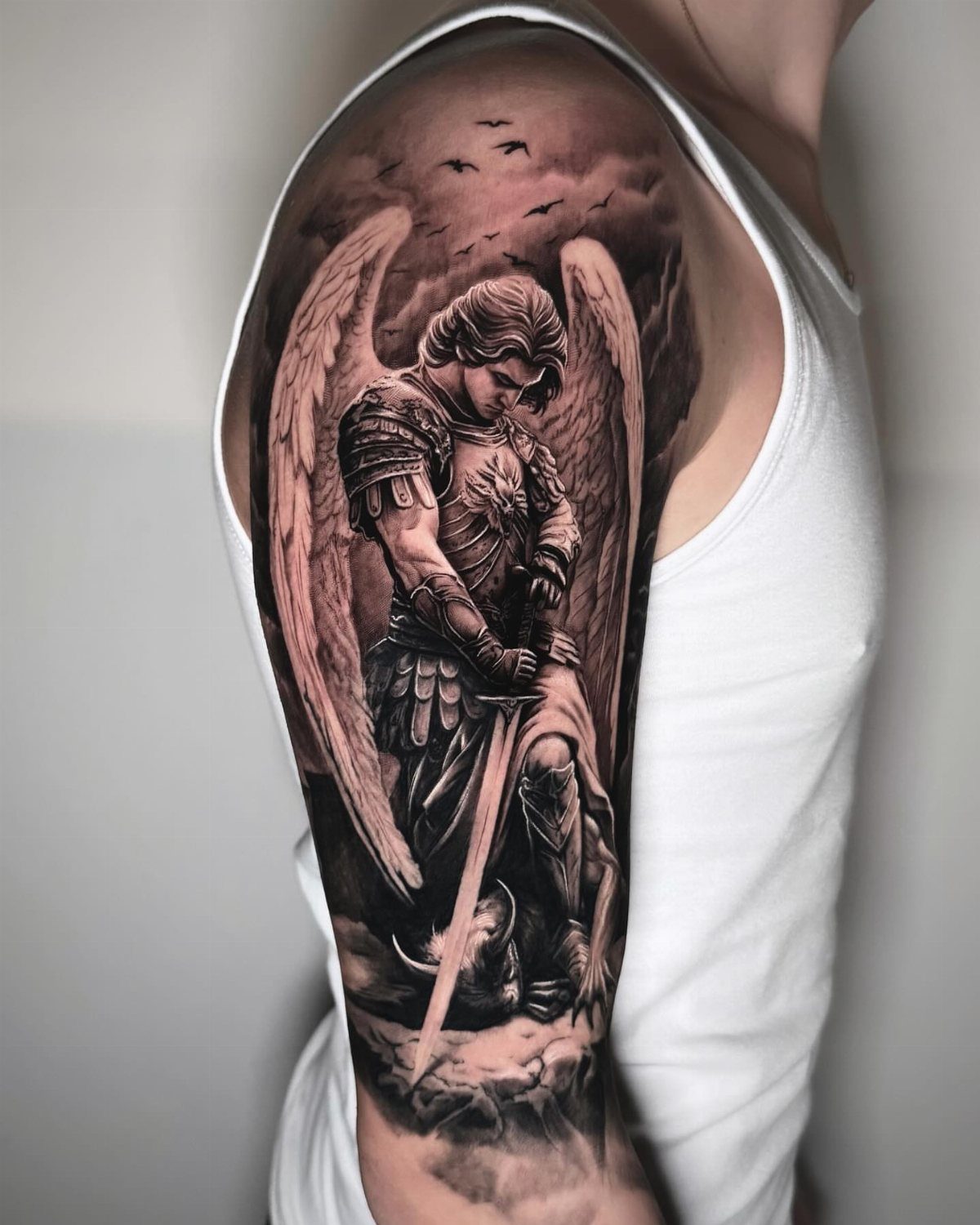
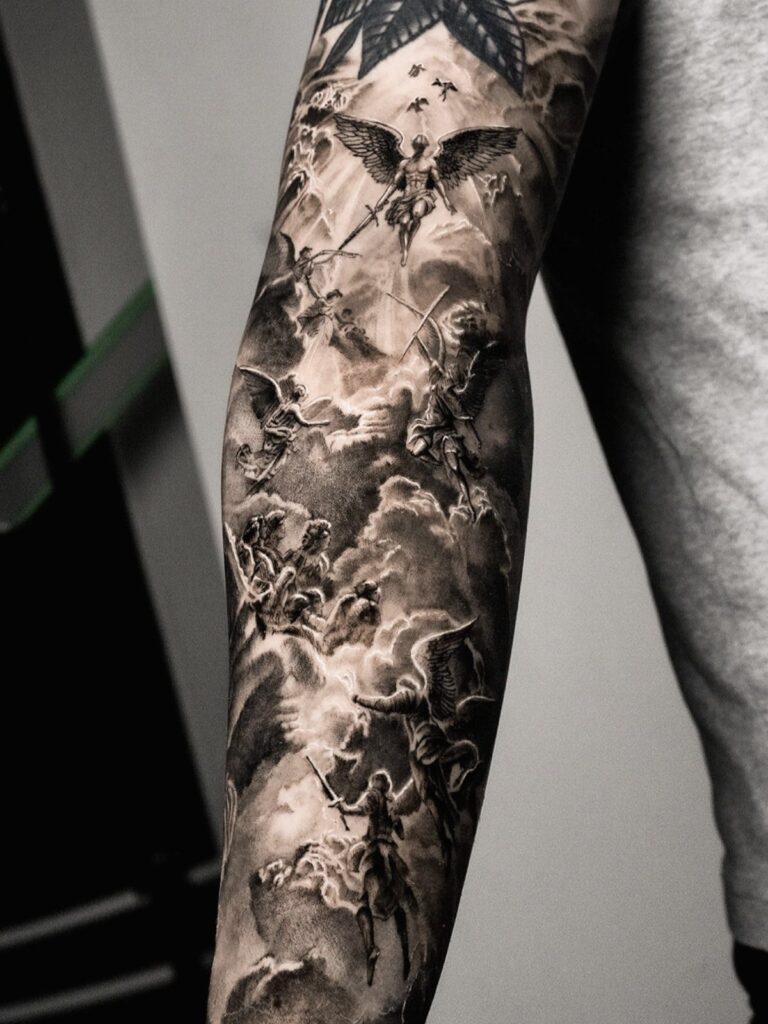
An armored angel with a sword and spread wings brings a warrior edge to a faith piece.
The realism style here demands an artist who can handle fabric folds, feather texture, and metal highlights, so scroll through portfolios before you commit.
Cloudy skies and birds fill the background without competing with the figure.
Upper arm or full sleeve gives this the vertical space it needs, and keeping the palette in black and grey keeps the focus on the angel’s expression and posture rather than on color that might date.
4. Dove Tattoo
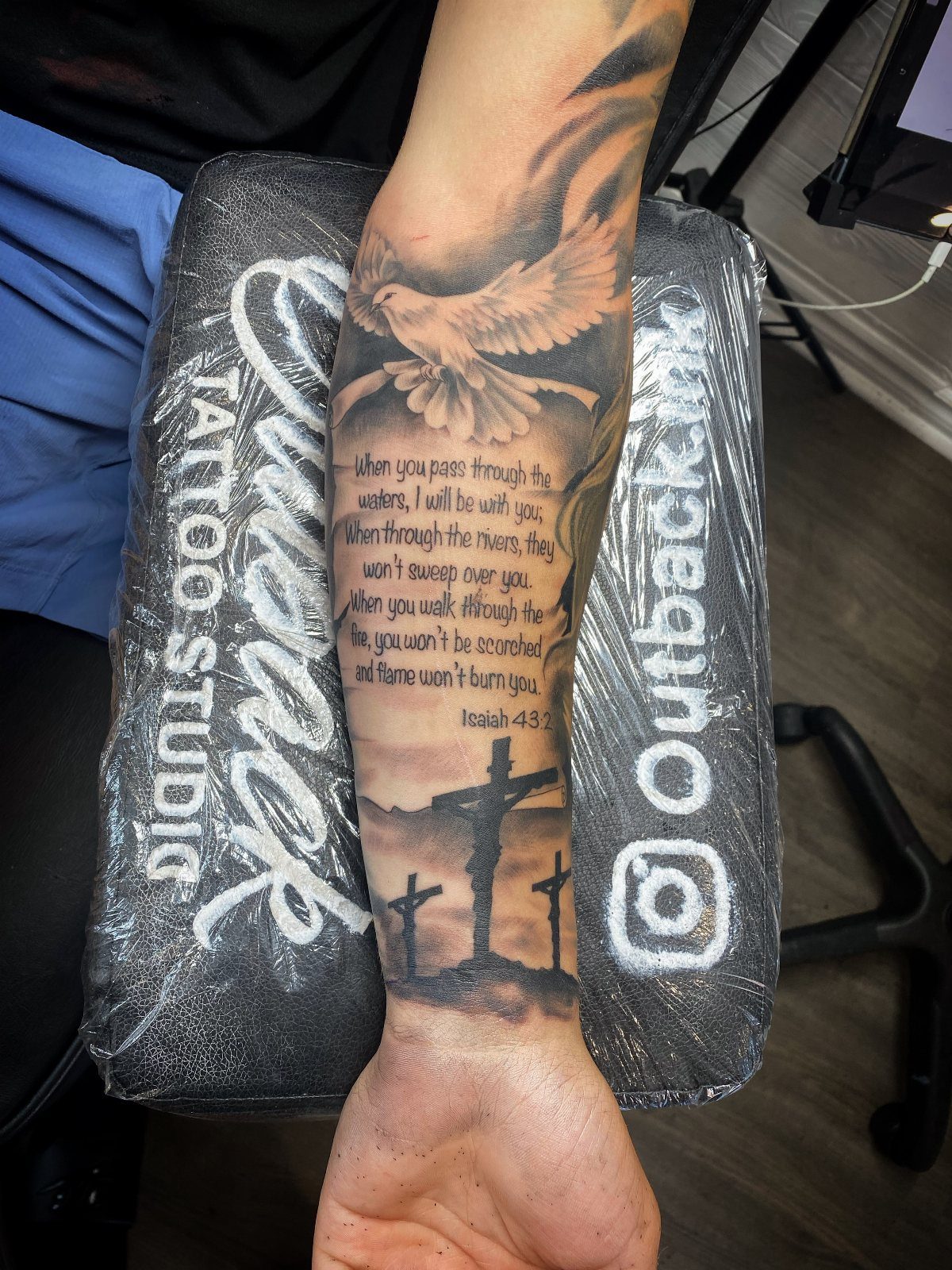
A dove paired with crosses and scripture turns a forearm sleeve into something you can read and look at. The verse reference, like Isaiah 43:2 here, keeps the text short and lets anyone who knows it fill in the rest.
Placement on the inner forearm puts the text where you can see it, which matters if the verse is there for you as much as for others.
Script should stay legible at size, so avoid anything too thin or ornate. The dove in flight balances the weight of the crosses and keeps the composition from sitting too heavy on one side.
5. Praying Hands Tattoo
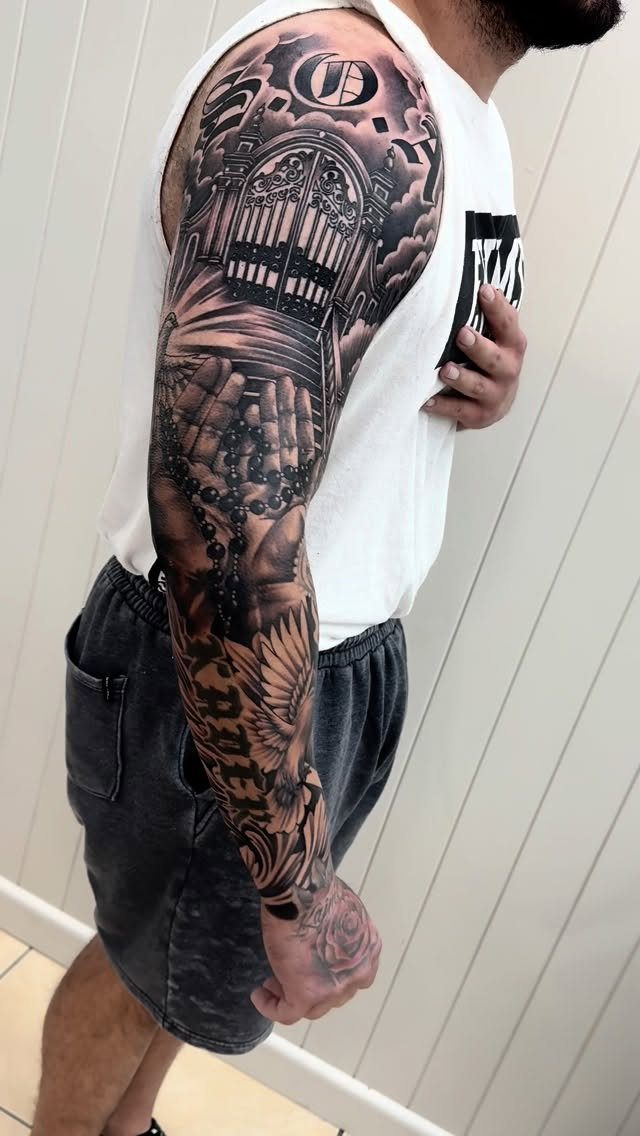
Praying hands with a rosary remain one of the most recognized images in Christian tattooing, and layering them with gates, roses, or clouds turns a single symbol into a full sleeve.
The beads draping from the hands add movement and give the eye a path through the design.
Black ink with grey tones on the hands shows age, texture, and the folds in the skin, which makes the piece feel more personal.
A full sleeve lets you add background elements without cramping the hands, and keeping the shading smooth rather than heavily textured helps this age cleanly over time.
6. Geometric Shapes with Religious Imagery Tattoo
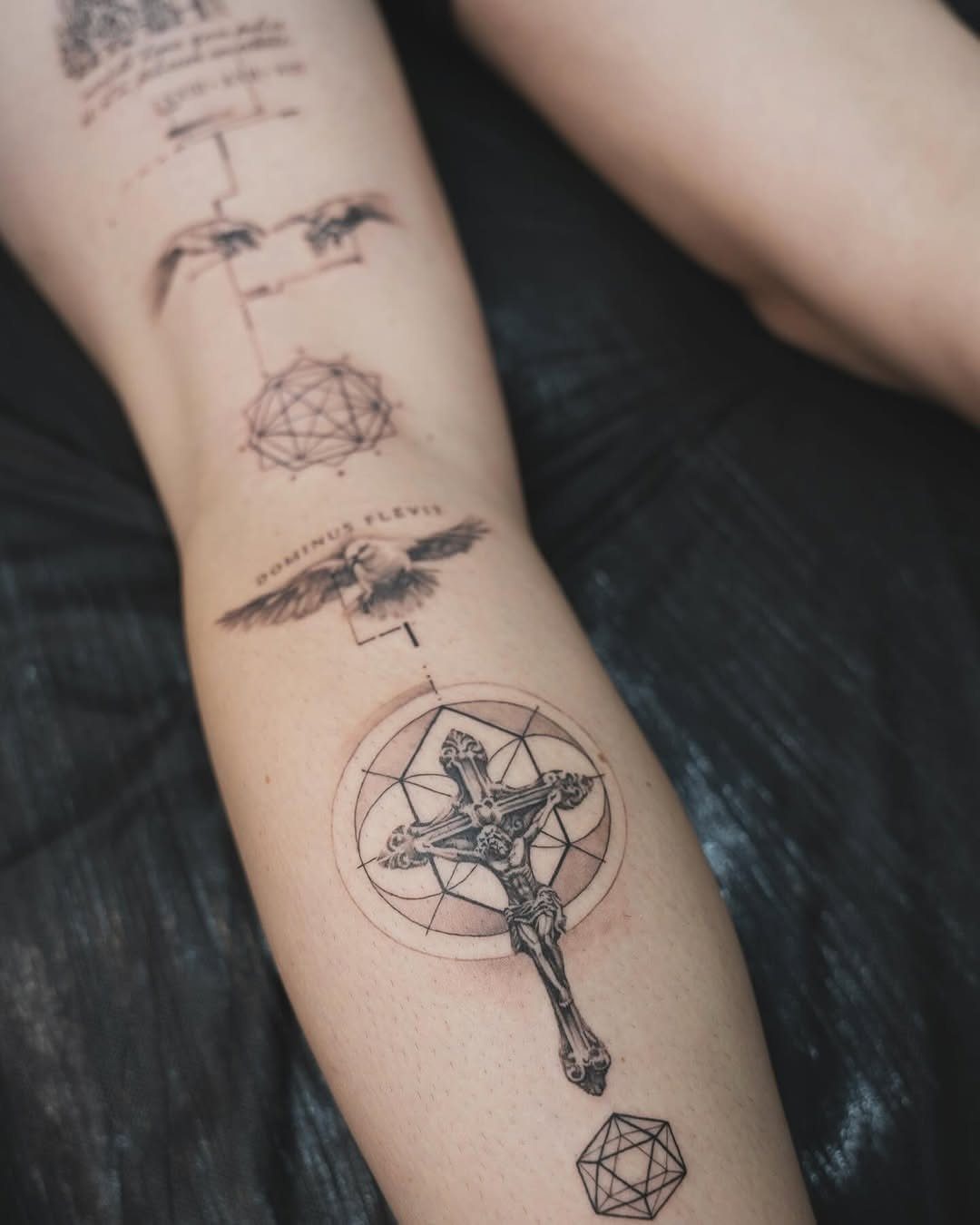
Geometric shapes framing a cross give a contemporary look to a traditional subject. Circles, triangles, and line work break up the organic shapes and add structure, which works well if you want something that reads modern without losing the meaning.
Text like "DOMINUS FLEVIT" adds a layer you won’t find in most faith sleeves, and Latin phrases keep the reference specific without spelling everything out.
Placement on the forearm or upper arm suits the linear elements, and fine line work here needs an artist who can keep lines crisp and evenly weighted.
7. Lion Tattoo
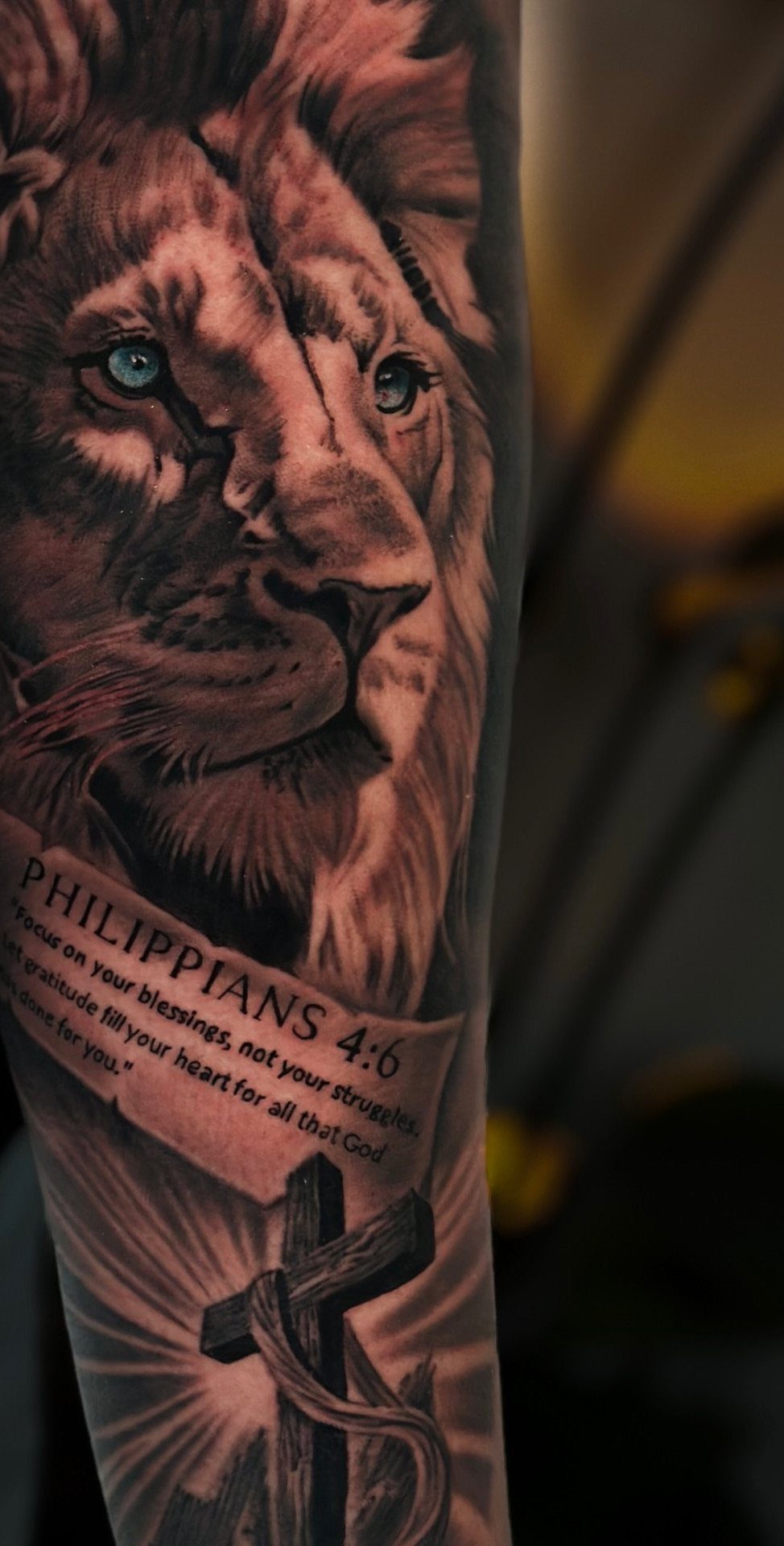
A lion paired with scripture and a cross brings the strength imagery from Revelation and Proverbs into a sleeve that holds up over time.
The verse reference on a banner keeps the text readable without taking over the composition, and placing it between the lion’s face and the cross creates three clear focal points.
Grayscale shading on the lion’s mane and face adds depth without color that might fade unevenly. Blue eyes stand out here, though most artists will recommend sticking with natural tones if the piece is meant to age cleanly.
8. Crown of Thorns Tattoo
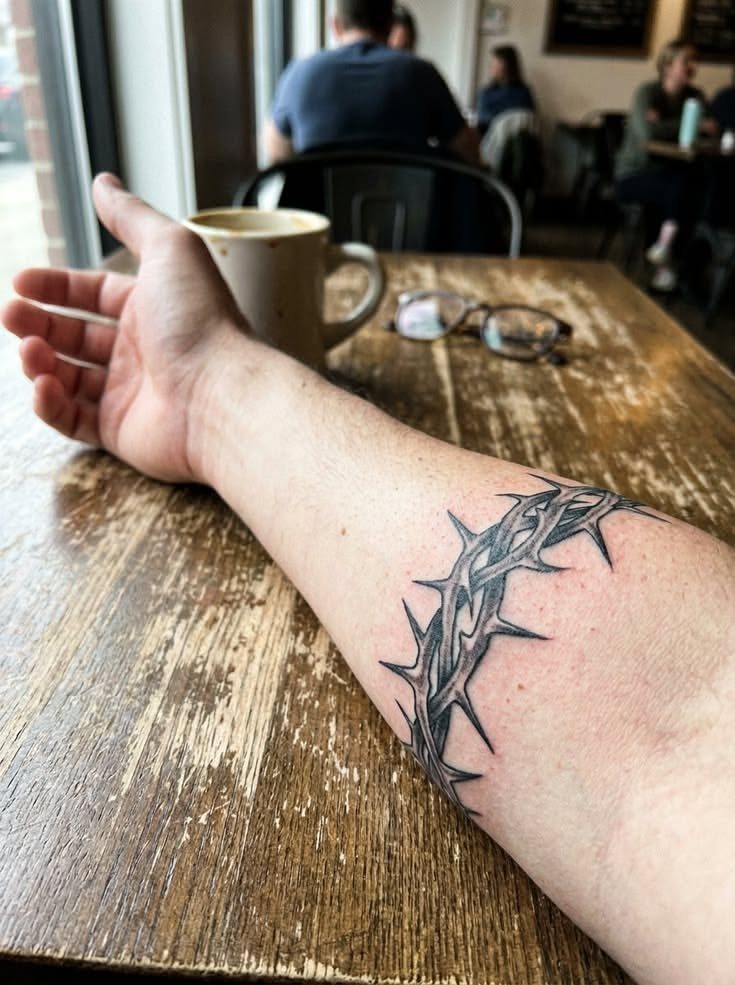
The circular shape fits the arm’s curve, and detailed work on the thorns keeps this from looking heavy or crowded.
This works as a standalone piece or as part of a larger sleeve. Keep the lines consistent in weight so the thorns stay sharp as the tattoo settles.
9. Floral Tattoos
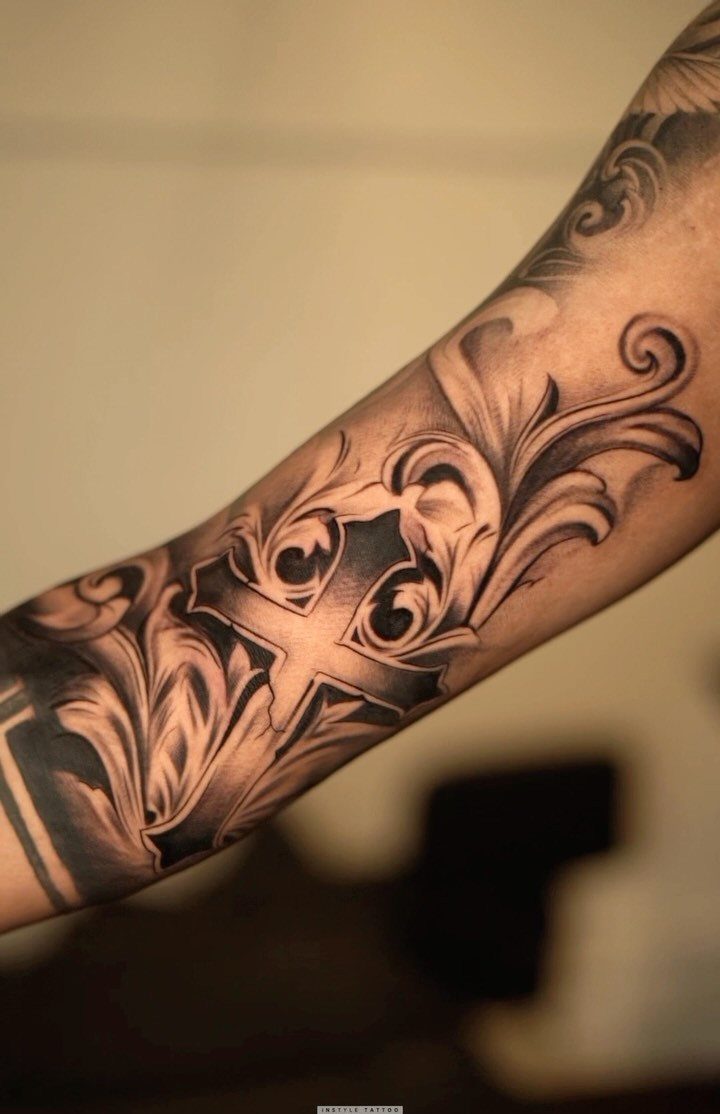
Ornate scrollwork and flowers around a cross soften the hard edges of the religious symbol without losing the meaning.
The florals here are decorative rather than specific blooms, which gives the artist room to shape them around the cross and fill the sleeve in a way that flows with the arm.
Grayscale shading keeps the focus on the cross while the scrolls add movement. This style ages well if the line work is clean and the shading gradual, so find someone who can handle both fine detail and smooth transitions.
10. Small Crosses Minimalist Christian Tattoo
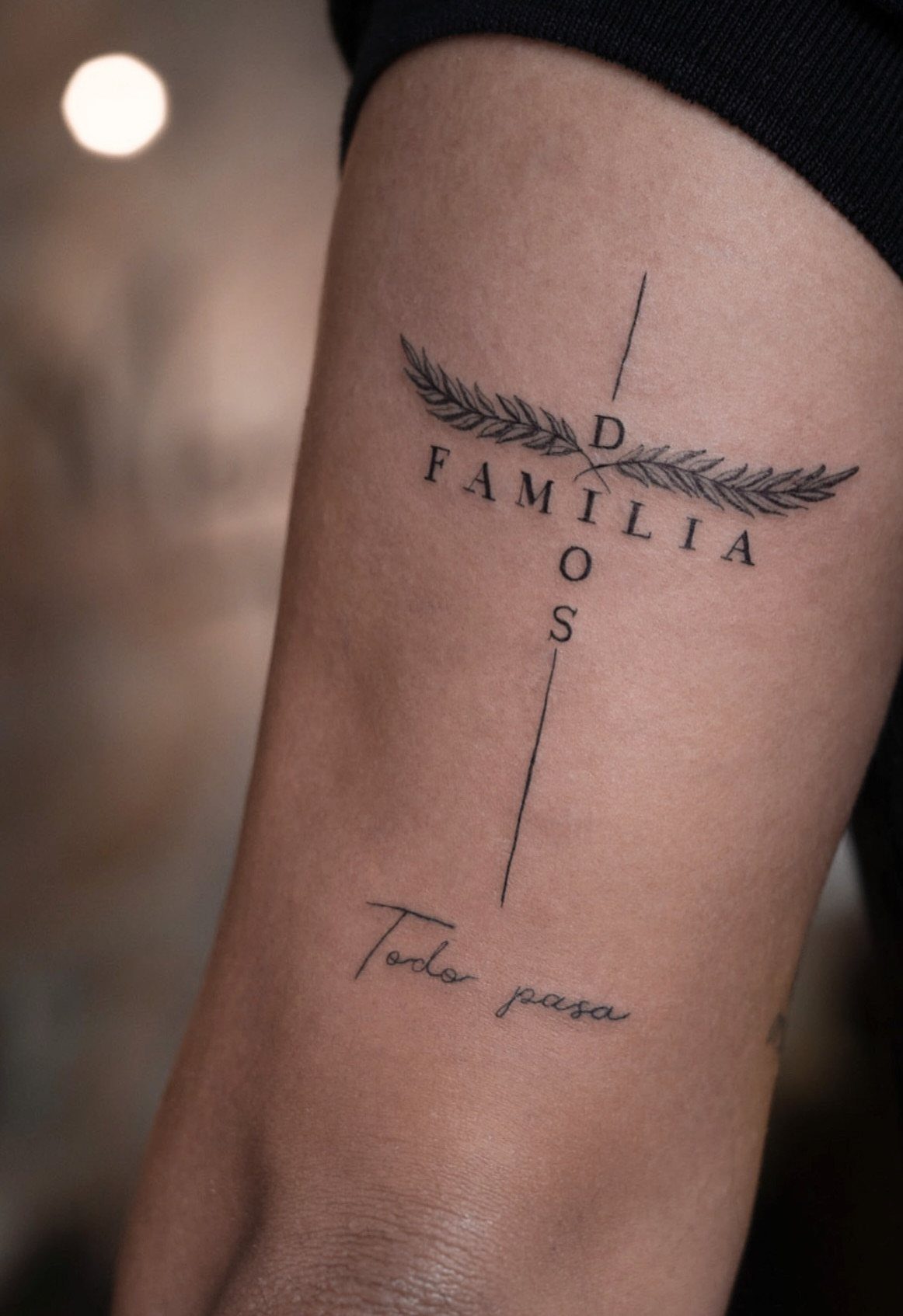
A simple cross with minimal text strips the design down to what matters most.
The laurel branch and single words here keep the composition open and easy to read, which suits a forearm placement where the tattoo will be visible in everyday settings.
Script in Spanish or another language adds personal meaning without needing to explain it to everyone who asks.
This scales to upper arm or wrist if the forearm feels too exposed, and the minimal line work means touch-ups should be straightforward as it ages.
11. Last Supper Colorful Realism Tattoo
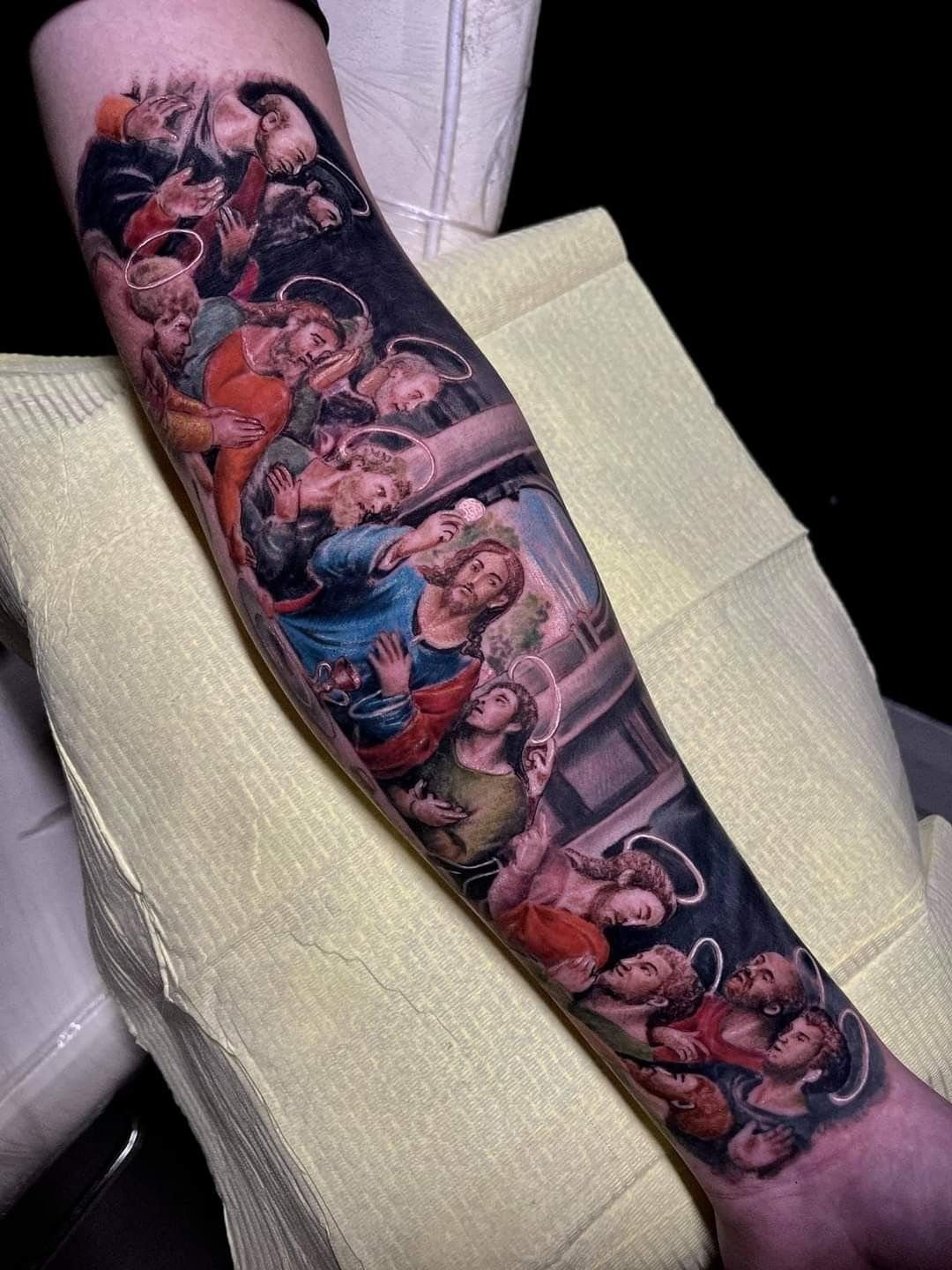
Realism work on the Last Supper demands an artist who can handle multiple faces, fabric folds, and consistent lighting across the entire scene.
Color here adds warmth to the skin tones and halos, though it also means more sitting time and more frequent touch-ups than black and grey.
A full forearm or upper arm gives this the horizontal space it needs.
The level of detail means this will cost more and take multiple sessions, so budget for that before you book. This reads best when the faces are clear and the composition isn’t cramped.
12. Scriptural Quotes
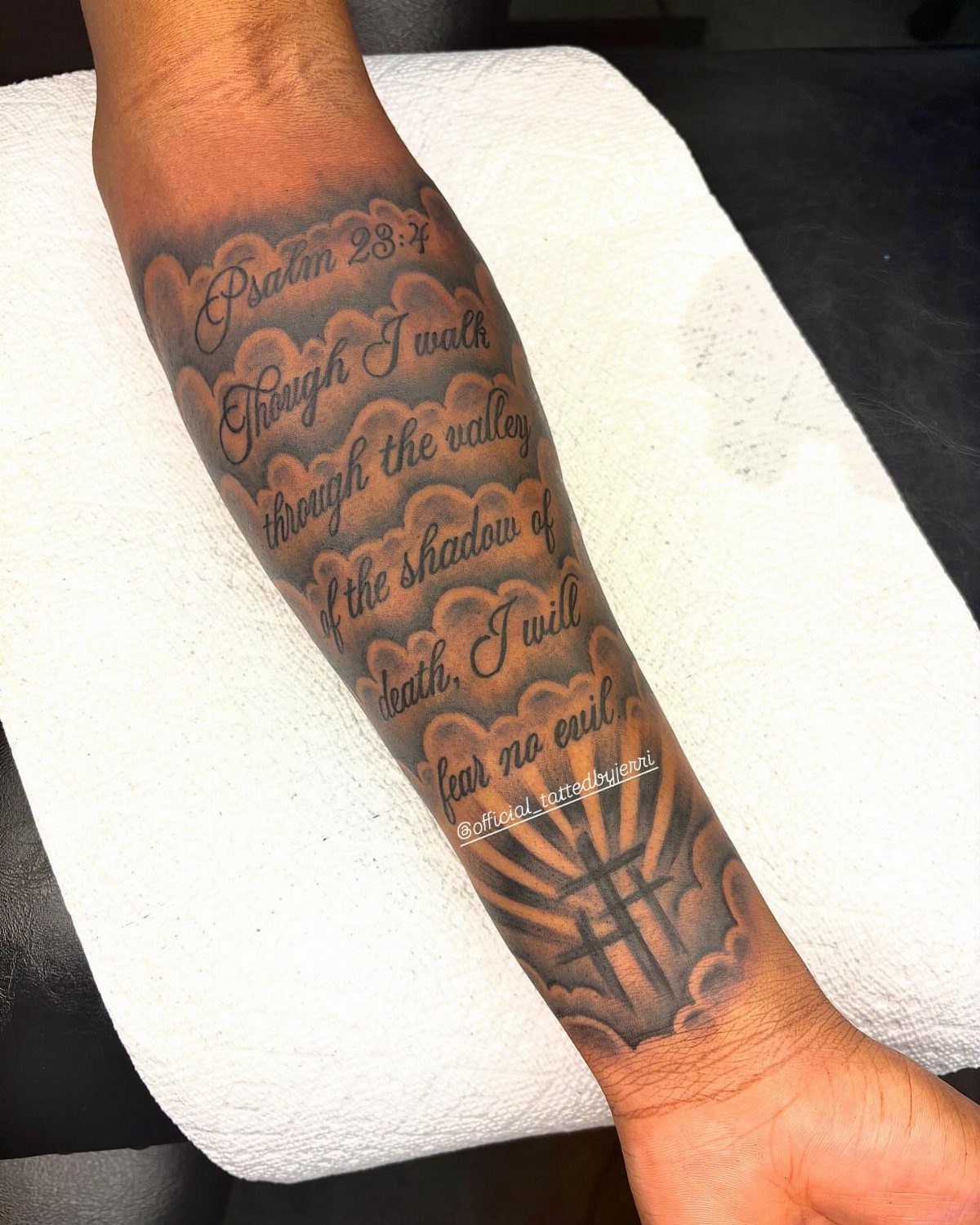
A verse laid over clouds and a cross turns the forearm into a readable piece that carries the exact words rather than just the reference.
Psalm 23:4 is short enough to fit without shrinking the font to something that will blur, and the cloud background keeps the text from sitting flat on the skin.
Script choice matters more here than in most tattoos because this will be read, not just looked at. The cross anchors the composition and gives the eye a place to land after reading the text.
13. Clouds and Rays of Light Tattoo
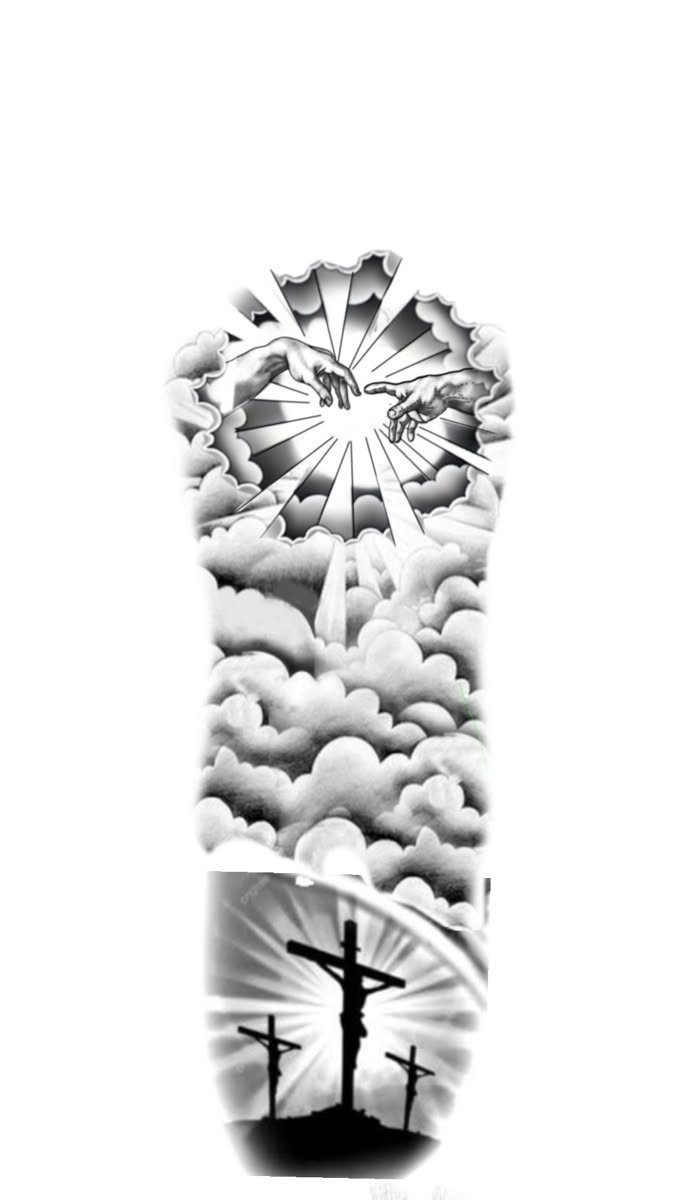
Hands reaching upward through parting clouds and beams of light create a sleeve centered on the moment of connection rather than a static symbol.
The 3 crosses on the hill place this in a specific scene, which gives the piece a narrative weight that a standalone cross might not carry.
Shading in the clouds and light rays needs smooth gradients to read as light breaking through rather than just shapes. Keep the hands detailed enough to show gesture without overworking the fingers, which can blur as the tattoo settles.
14. Warrior Tattoos
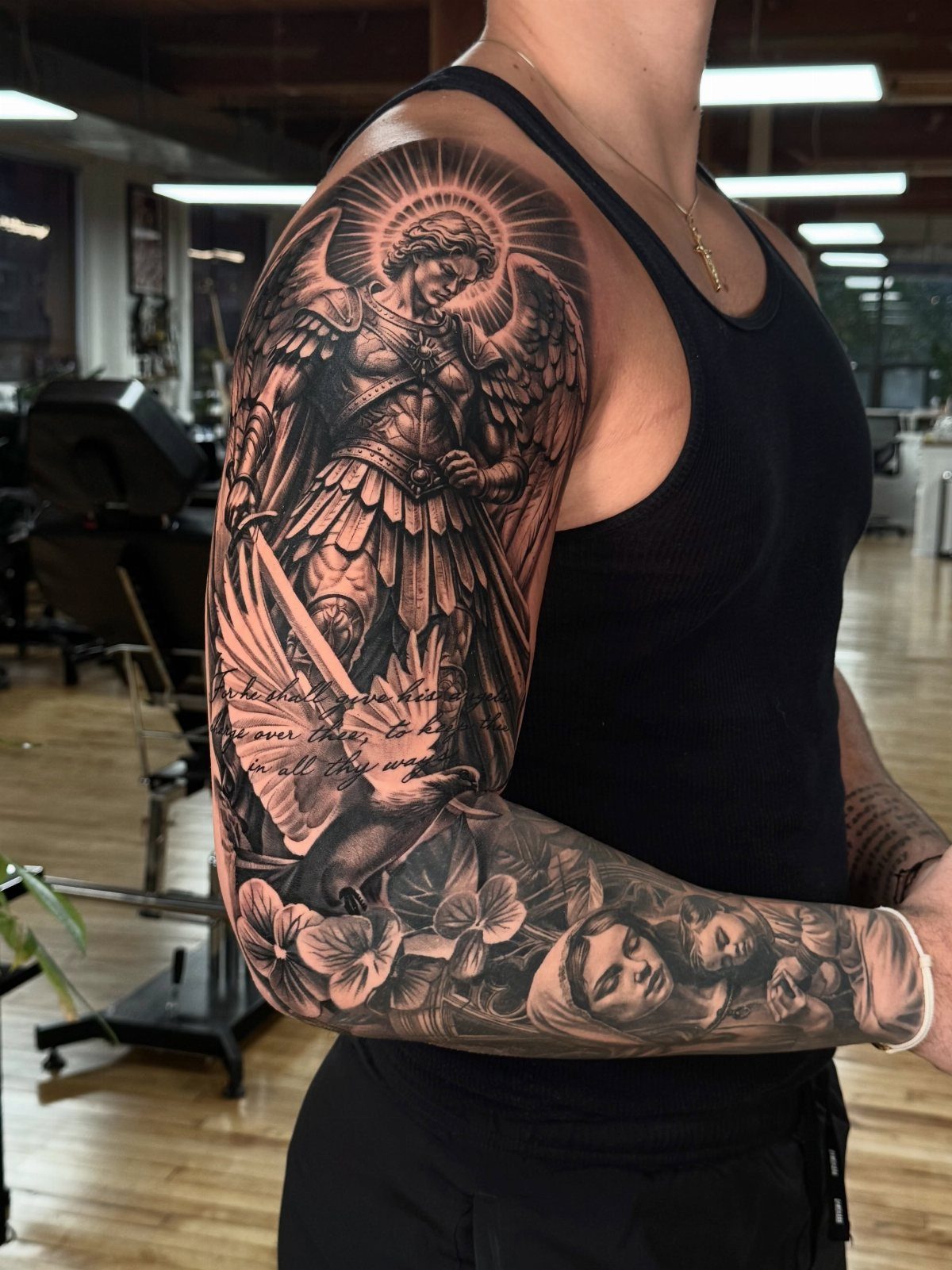
An armored figure with a sword and helmet brings the military imagery from Ephesians into a sleeve that reads as strength rather than serenity.
The armor details, chain mail, and metal plating demand an artist comfortable with texture and reflection, so check for realism work in their portfolio before you book.
Adding a dove or floral elements balances the harder edges of the armor without softening the overall message.
15. Cherub Tattoos
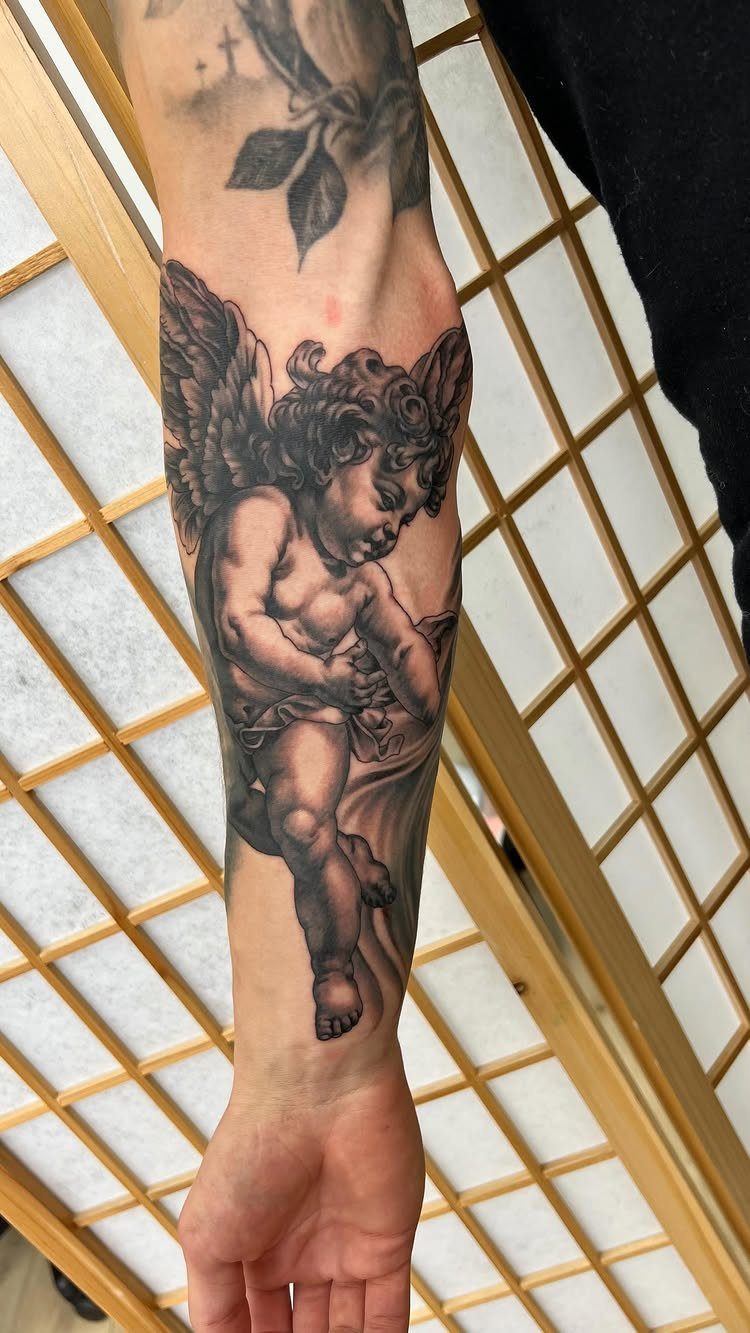
A single cherub with soft features and detailed wings offers a quieter alternative to the warrior or angel imagery that dominates most Christian sleeves.
If the forearm feels too visible, upper arm or shoulder gives the same scale with more privacy.
The infant face and wings read clearly from a distance, so keep the background minimal to avoid crowding. Fine line work on the feathers ages better when the artist uses consistent line weight throughout.
16. Rosary Tattoos
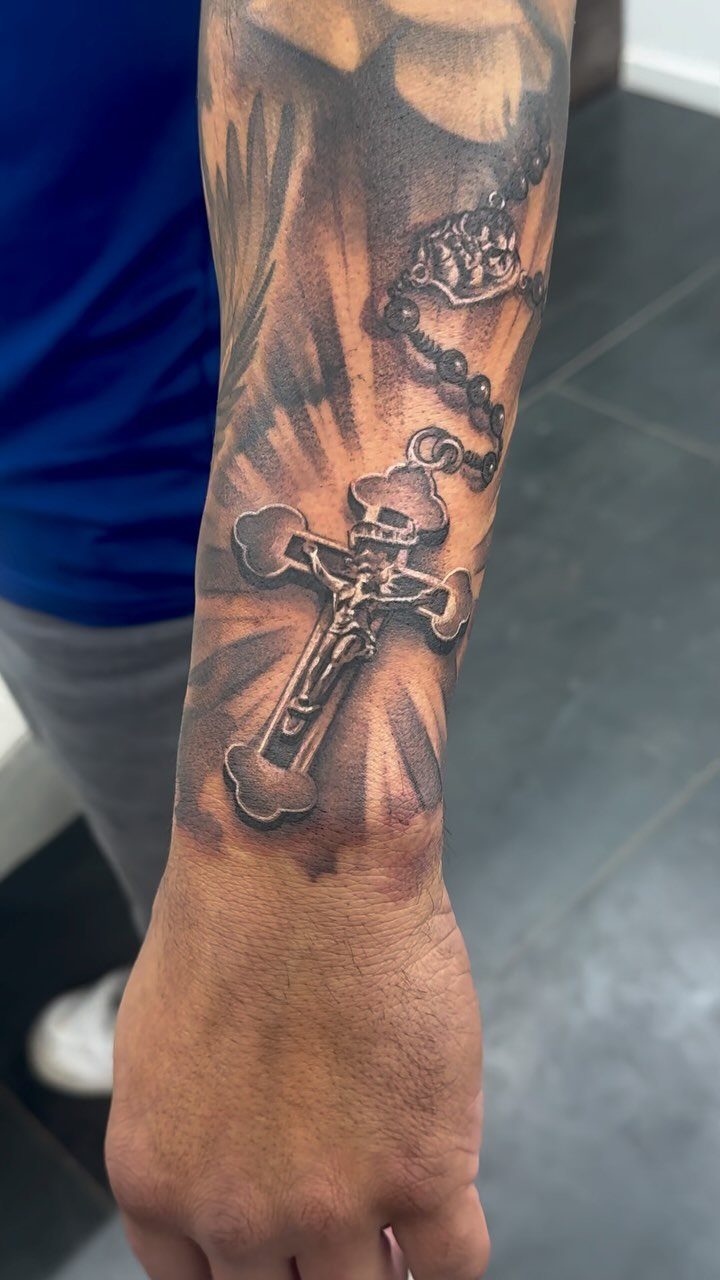
A rosary draped across the forearm with the crucifix as the focal point gives you a wearable reminder that doesn’t rely on a face or figure to carry meaning.
The beads wrapped around the arm follow the natural curve, and the light rays behind the crucifix add depth without competing for attention.
Shading in black and grey keeps the beads distinct and the crucifix readable as the tattoo ages. The rosary holds a sleeve together when other symbols branch out from it later.
17. Holy Book Tattoos
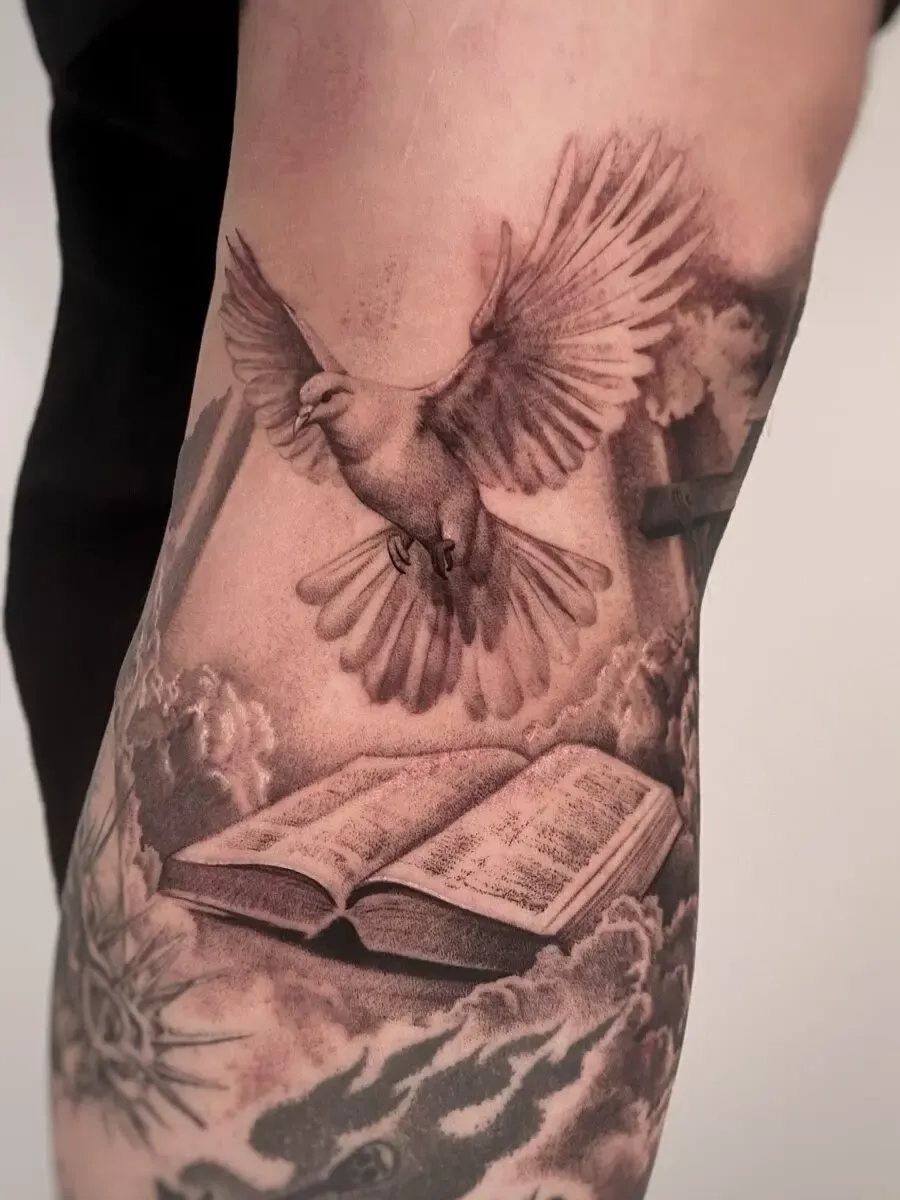
An open Bible with a dove rising from the pages turns scripture into a visual piece without needing to fit full verses into the design.
The clouds around the book and bird soften the edges and give the composition some movement, which keeps it from sitting too static on the arm.
Upper arm or forearm placement suits the vertical layout, and keeping the pages detailed enough to suggest text without spelling it out leaves room for interpretation.
Black and grey shading on the book’s pages should show depth and dimension so the Bible doesn’t flatten as the tattoo settles.
18. Celtic Crosses
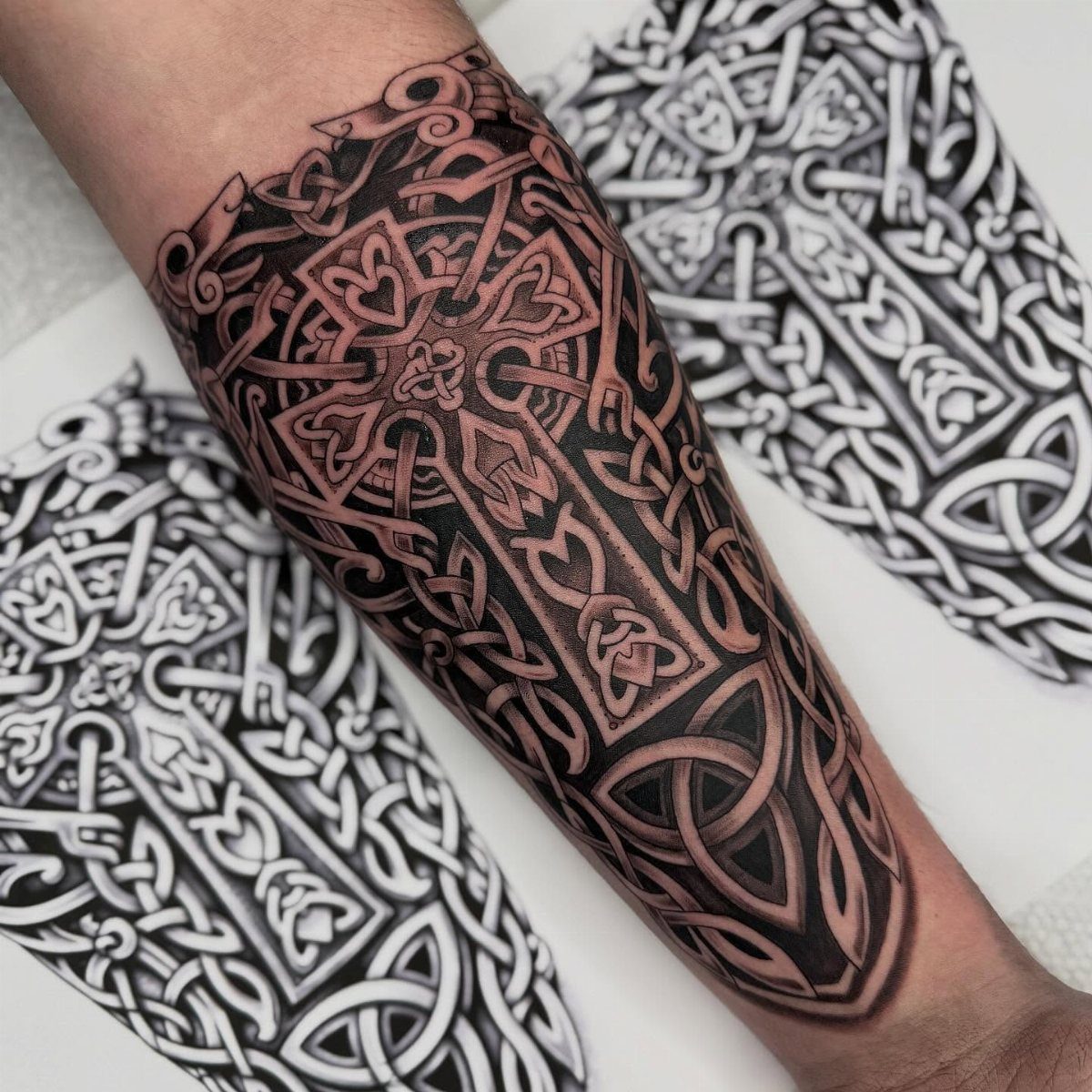
A Celtic cross pulls in the knotwork and circular ring that separate it from the simpler Latin cross, and the interlaced patterns give the design a historical weight that suits someone looking for something less common in Christian sleeves.
The black and grey shading here needs to keep the knotwork clear, which means avoiding heavy contrast that might cause the lines to bleed together over time.
Forearm placement lets the cross sit upright and keeps the knotwork visible in most settings.
The cross anchors a sleeve when other symbols fill the space around it. Find an artist who has done Celtic work before, as the line consistency matters more here than in most other designs.
Choosing a Tattoo Design
Start with the symbol or scene that matters most to you, then decide where on the arm it belongs.
A portrait or detailed figure needs the flat surface of the upper arm or forearm to read clearly, while a wrapping design like a rosary or crown of thorns follows the arm’s natural curve.
Placement affects visibility in most work settings. A forearm sleeve stays visible in short sleeves, while an upper arm piece hides under most business clothing.
Size the text large enough that the letters stay crisp as the tattoo settles, and avoid script fonts with thin strokes that blur over time.
Look at the artist’s healed work, not just fresh photos. Realism and fine line work show their real quality after a year, and an artist who posts follow-ups is usually confident the piece will hold.
Tattoos and Christianity
Christian tattooing has moved from fringe practice to common expression in the last 20 years, with many believers treating permanent ink as a visible statement of faith rather than a violation of it.
The Leviticus prohibition on marking the body referred to pagan mourning rituals, and most modern theologians read it as historically specific rather than a blanket rule.
That said, some denominations still discourage or reject tattoos outright, so check with your own community if church opinion matters to you.
A visible sleeve will draw questions, and being clear on your own reasoning before you sit in the chair saves awkward conversations later.
The personal significance of the design outweighs the debate over whether Christians should get tattooed at all.
Tattoo Styles and Techniques
Black and grey realism dominates Christian sleeves because it ages predictably and keeps the focus on form rather than color that might fade or shift.
Smooth gradients in the shading give depth to clouds, fabric, and skin tones without the maintenance cost of color that needs touch-ups every few years.
Colorful realism works when the palette stays muted and the skin tones look natural rather than overly saturated.
Full color on a Last Supper or angel scene adds warmth but also sitting time and expense, and bright colors on religious imagery can read as decorative rather than reverent.
Frequently Asked Questions
Why are tattoos no longer a sin?
Christian tattooing has shifted from fringe to mainstream over the last 20 years as more believers understand the Leviticus prohibition as specific to ancient mourning practices, not a blanket rule against all body marking.
Theologians generally read the passage in its historical context rather than applying it literally today. Faith-based designs have become common enough that the old debate over whether Christians should ink at all has mostly faded.
Do the Bible allow tattoos?
The single verse that addresses marking the body was about pagan mourning practices, not the tattoos people get today. Most modern interpretations treat the Leviticus rule as historically specific.