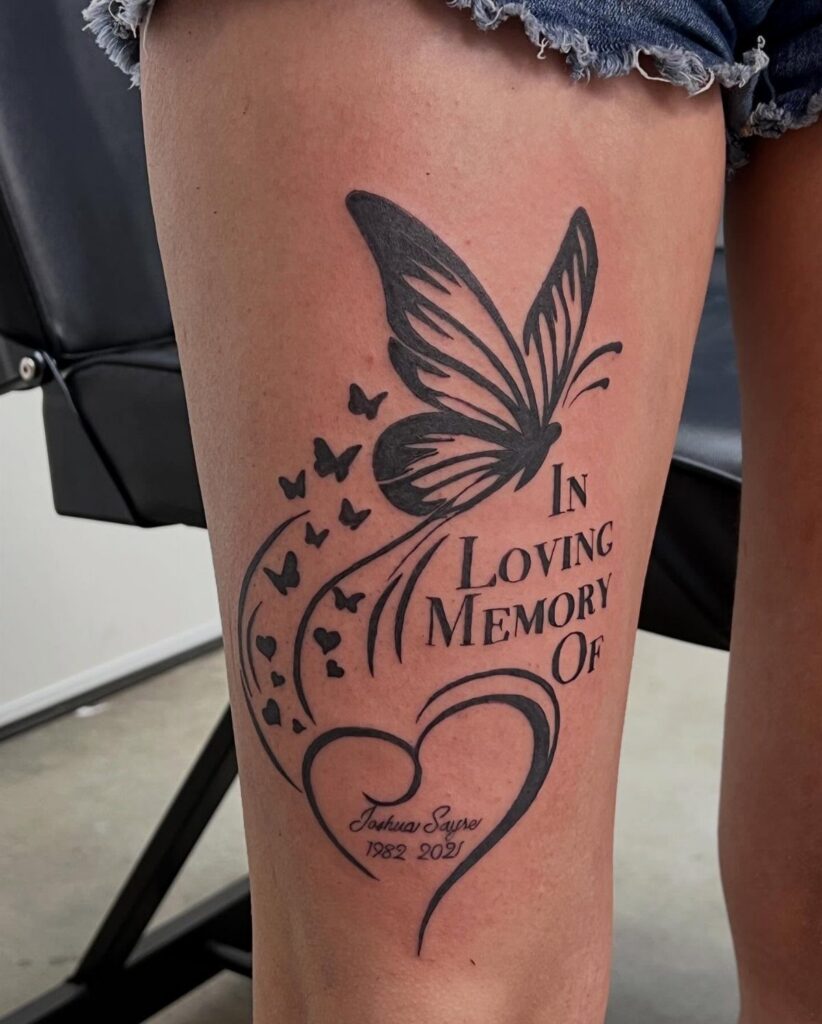
A memorial tattoo spans simple text and dates on a forearm to a full-scale portrait on the back, and the right design depends on whether you want their image, their words, a symbol or a print that marked what you shared.
Angels and wings read traditional, a puzzle piece with one missing says the gap stays open, and a paw print or handprint works when the loss was someone close or a pet.
1. Date and Name Tattoo
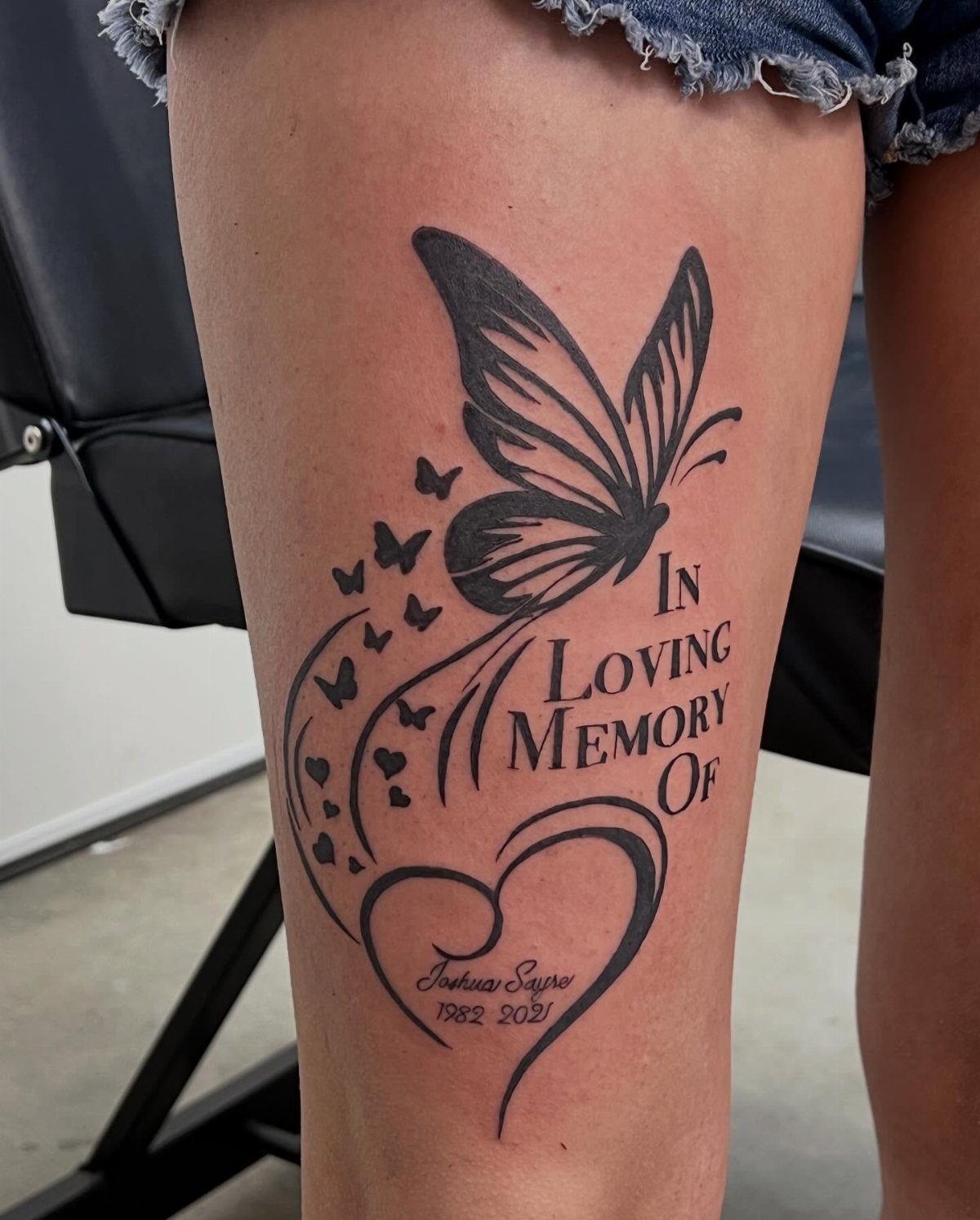
The name and dates mark who you lost and when, spelled out in a way anyone can read.
Placement depends on how visible you want it: forearm if you want to see it daily, shoulder or thigh for something more private.
Lettering style matters here. Script reads softer, block letters stay crisp over time.
I’d add a small symbol if the design feels bare with text alone. A butterfly, rose or cross fills the space and balances the text.
Keep the font size large enough that the year stays readable as the ink settles.
2. Angel or Cherub Tattoo
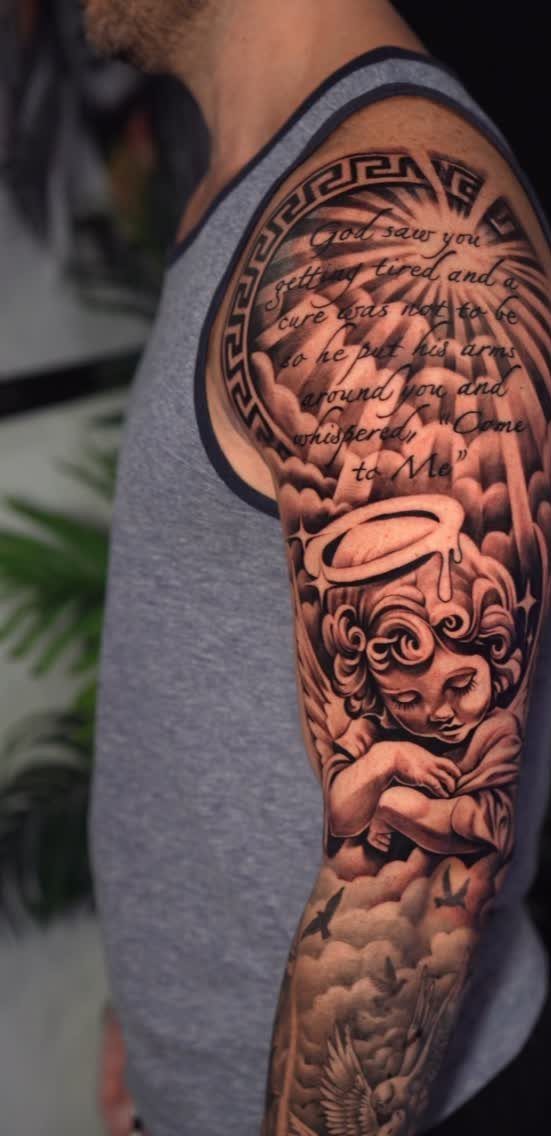
A cherub or angel signals the person is at peace, watched over. The halo and clouds frame the figure and give the tattoo a vertical shape that fills an upper arm or shoulder blade naturally.
Shading around the cherub adds depth without heavy linework. Text works better below the clouds than woven through the image.
Cherubs work best in grayscale. Color can soften the look, but most memorial pieces lean traditional, and that palette ages cleanly.
3. Portrait Tattoo
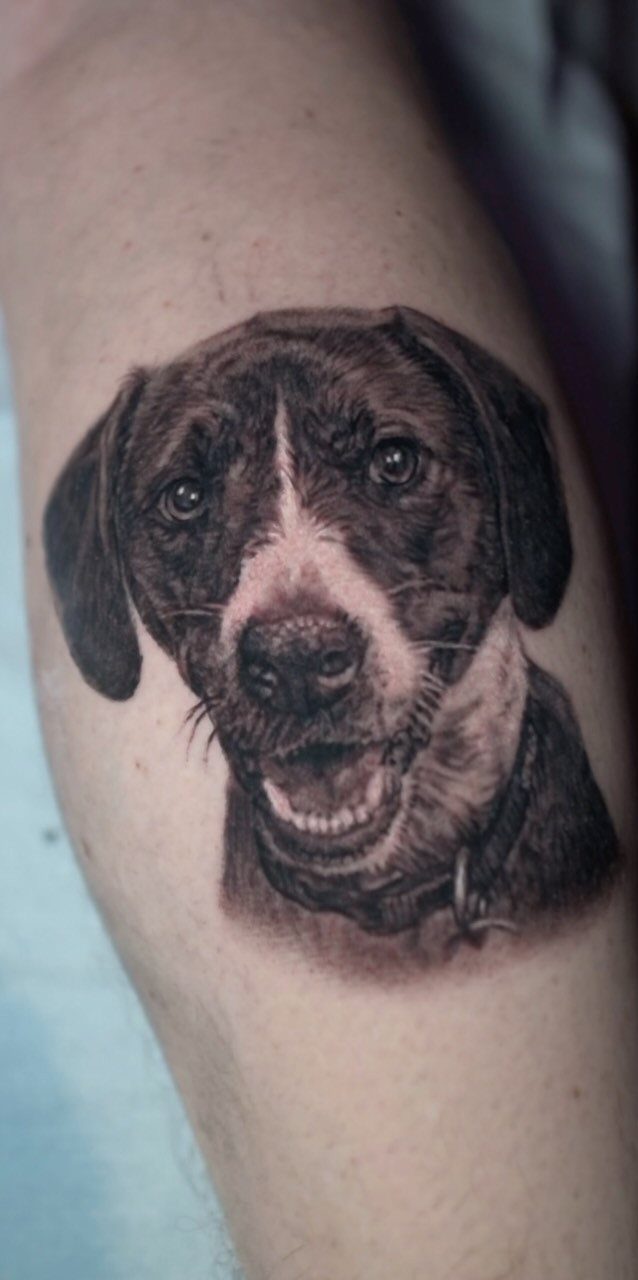
A portrait gives you their face, detailed enough to recognize at a glance. Grayscale realism is the standard here because skin tones compress better without color and the tattoo holds its clarity longer.
This is not a design to rush.
Find an artist whose portfolio shows multiple portrait pieces with sharp features and accurate proportions. A portrait done poorly reads wrong immediately, and fixing one is harder than starting over.
Size matters.
Go large enough that the features stay readable. Upper arm, back or thigh all have the surface area.
4. Paw Prints Tattoo
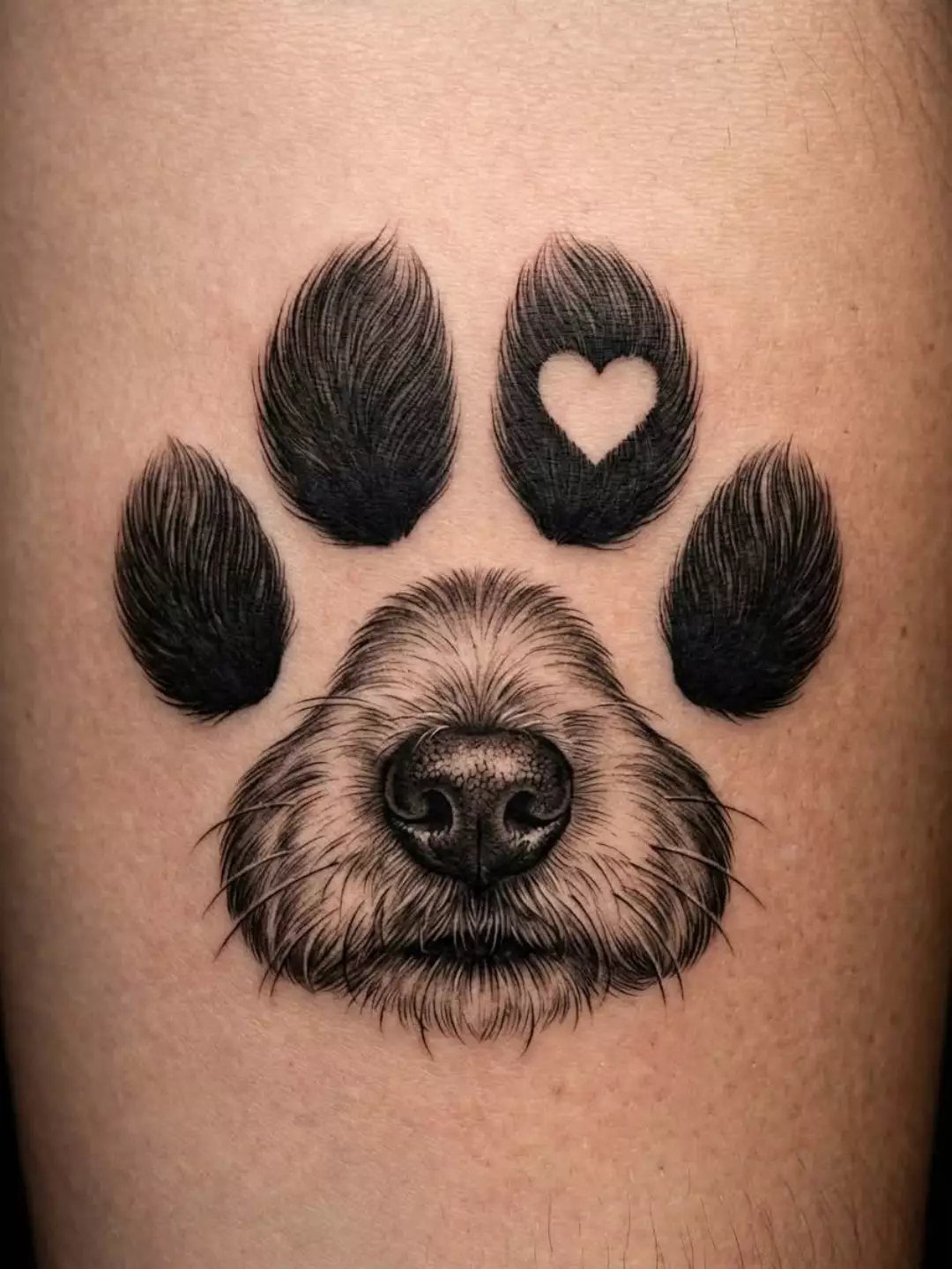
A paw print is immediate if the loss was a pet. The print shape is simple, but adding detail inside the pads turns it into something more personal than a stock outline.
Adding your dog’s actual paw print to the tattoo makes it specific to your dog rather than any dog. I’ve seen names worked into the toes or a collar tag hung from the print.
Placement is flexible. Wrist, ankle or shoulder all work because the design fits small.
5. Handwriting or Signature Tattoo
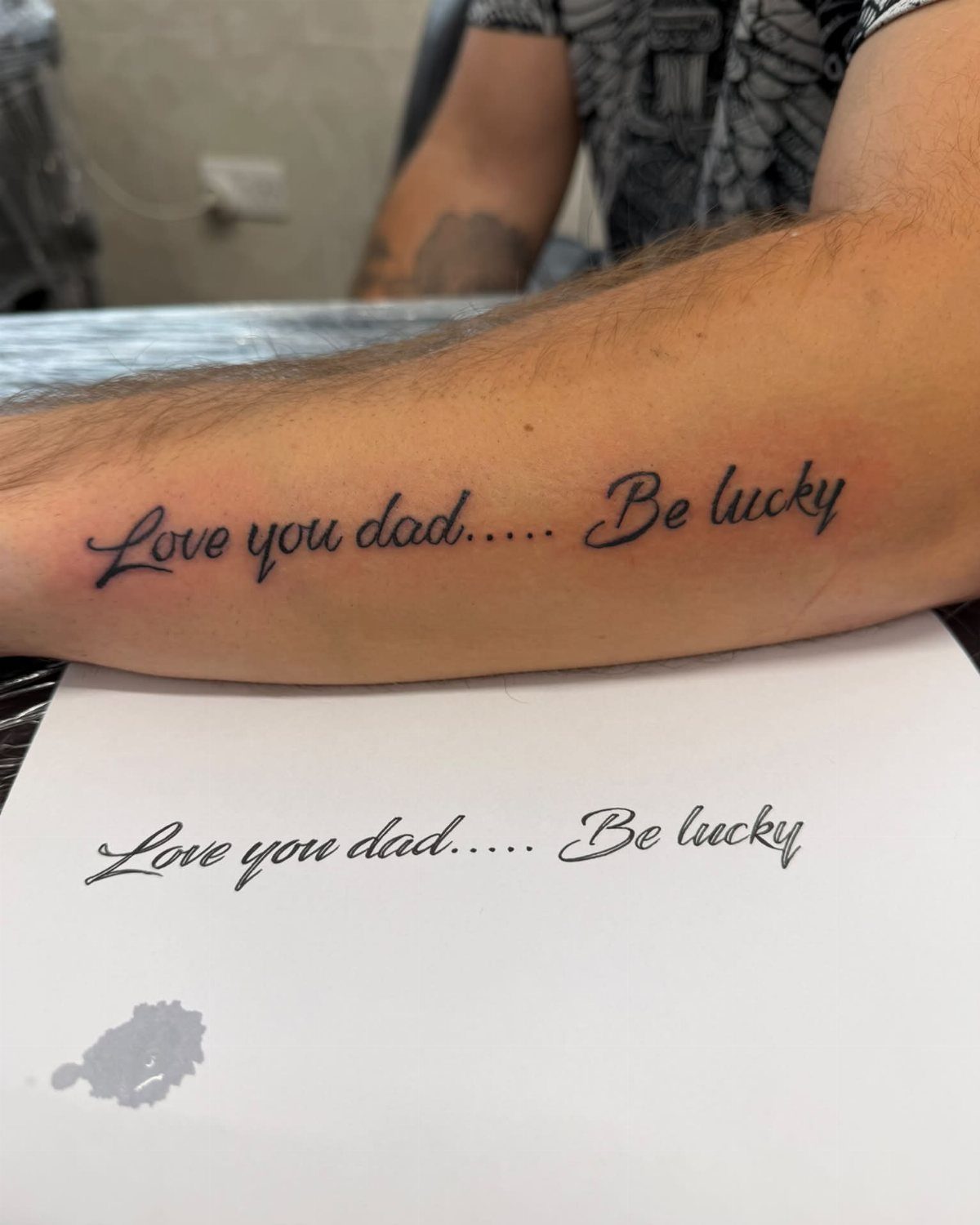
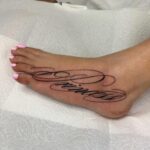
Using their actual handwriting pulls a specific moment into the design.
A last note, a card, even a grocery list, anything handwritten becomes the source. The tattoo artist traces it directly so the loops and slant stay identical.
Legibility is the trade-off. Cursive that was clear on paper can blur once it heals, especially if the letters are small or the pen pressure was light in the original.
I’d scan the handwriting sample and send it to your artist before the appointment to confirm it will transfer cleanly.
Forearm is common because you can read it yourself without a mirror.
6. Quote or Lyric Tattoo
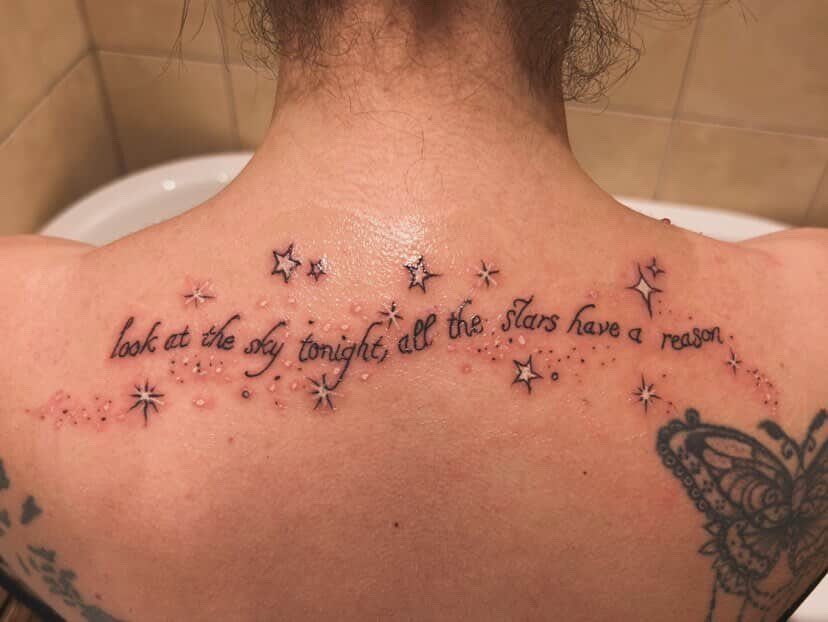
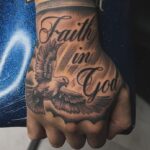
A line from a song or a phrase they said often gives you their voice without needing their image. The stars here frame the text and keep the design from sitting flat on the skin.
Script fonts read softer, but sans-serif stays sharp if the quote is long.
Keep the word count low so the lettering can stay large enough to age well. Upper back, ribcage or collarbone all suit horizontal text blocks.
White ink for the stars fades faster than black, so if longevity matters, stick with grey shading or small black outlines instead.
7. Footprint or Handprint Tattoo
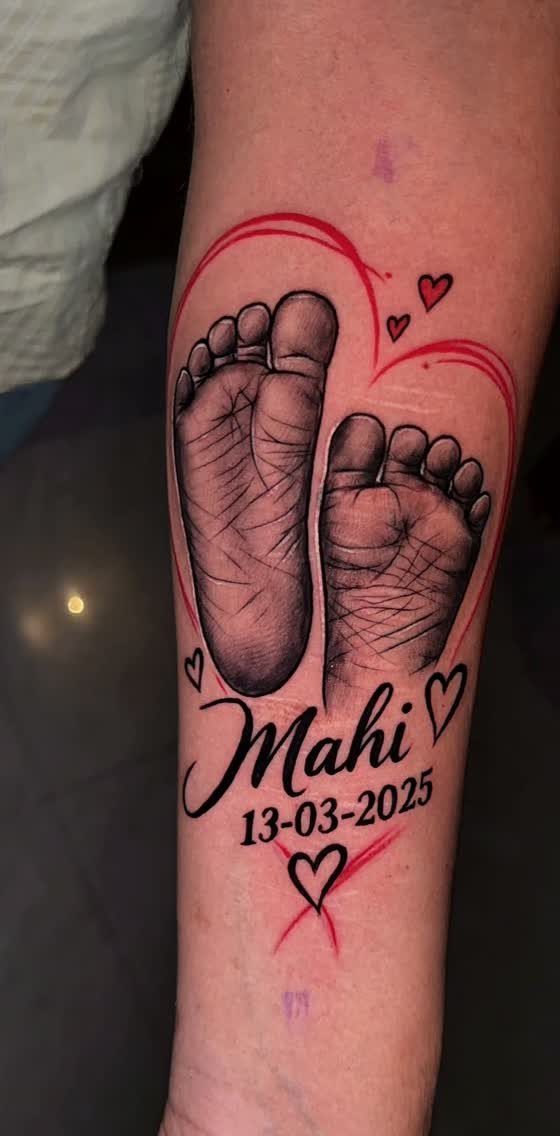
A baby’s footprint or handprint turns a hospital record into a tattoo.
Ink color can mark the meaning.
Black reads as memorial, red as celebration or love. The date and name anchor the print so the tattoo reads complete on its own.
Forearm lets you see it without turning, and the print fits the width naturally.
8. Wings Tattoo
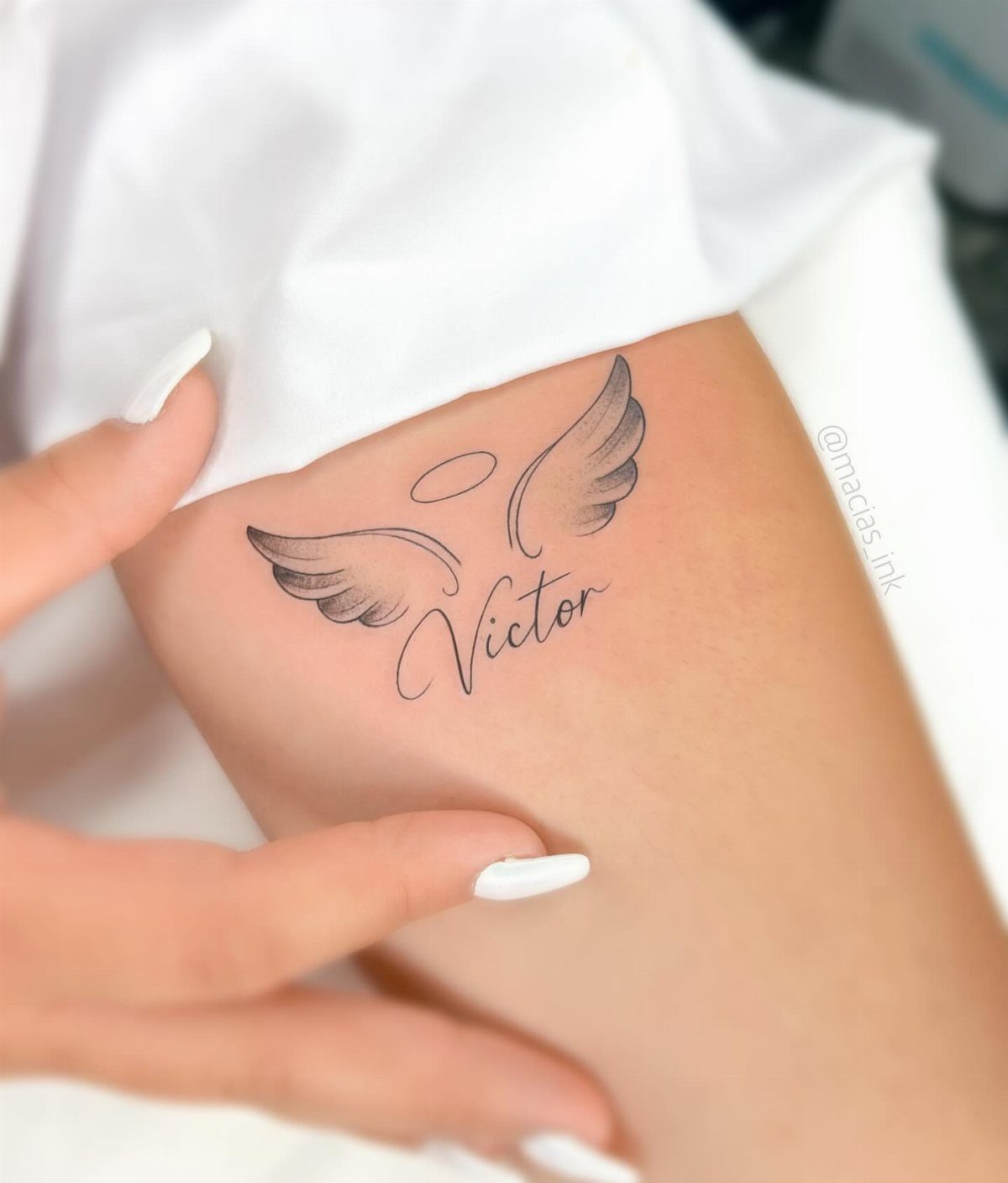
Wings give the person flight, the idea they moved beyond the weight of the world. Paired wings work across the back, but a single set fits an upper arm or shoulder when space is limited.
The halo makes the loss explicit without adding text. If you want their name in the design, place it between the wings or below them so the shapes stay separate and readable.
Grayscale shading keeps the feathers defined. Line weight matters here because thin lines in the feathers blur faster than bold outlines.
9. Heartbeat Line Tattoo
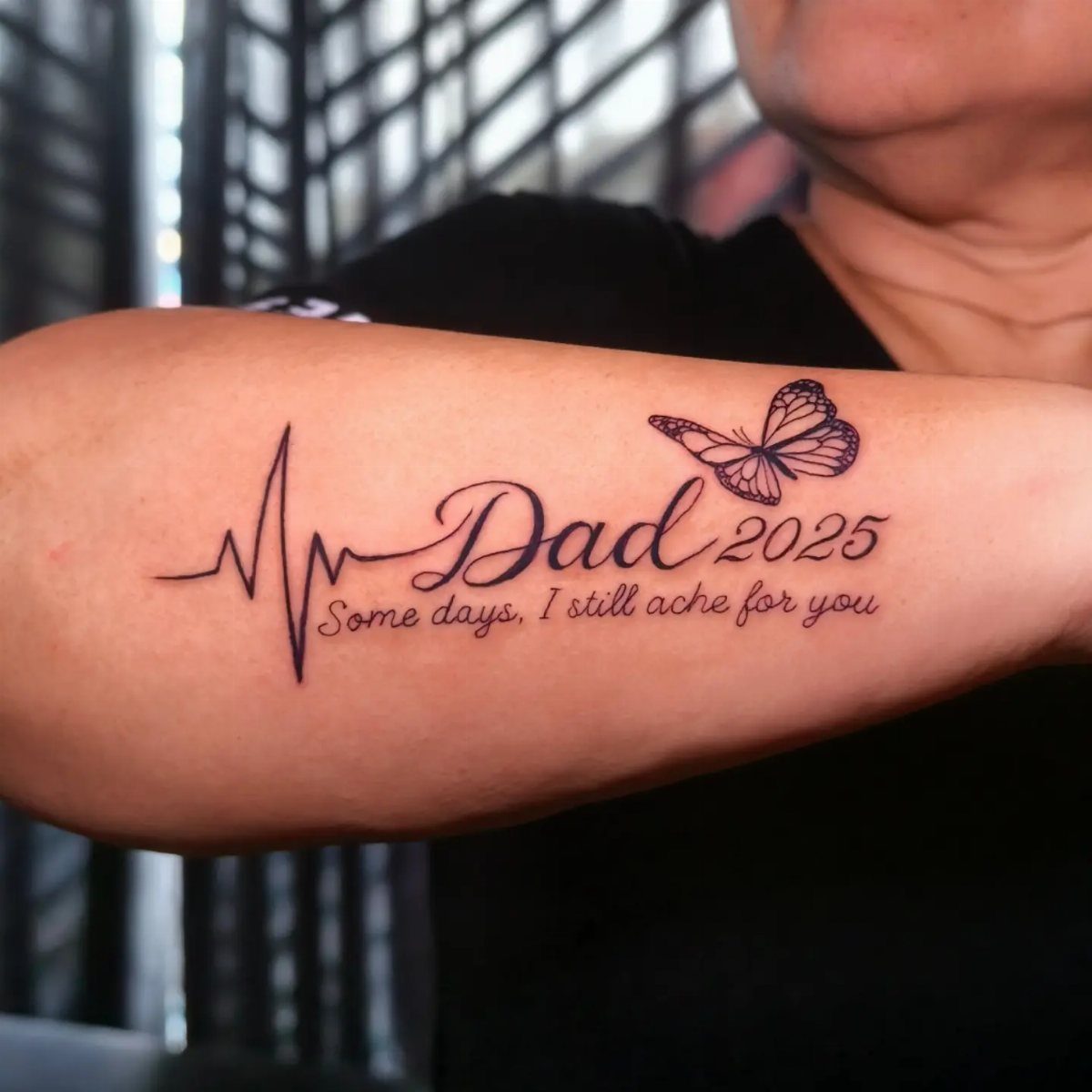
The heartbeat line pulls from an EKG, the last proof their heart was working. The spikes flatten into a straight line at the end, marking the moment it stopped.
Text below the line personalizes it.
A name, year or short phrase keeps the design grounded. The butterfly here softens the line without covering it.
Forearm is common because the horizontal line follows the muscle and stays readable from any angle. Keep the line thick enough that the peaks hold their shape over time.
10. Missing Puzzle Piece Tattoo
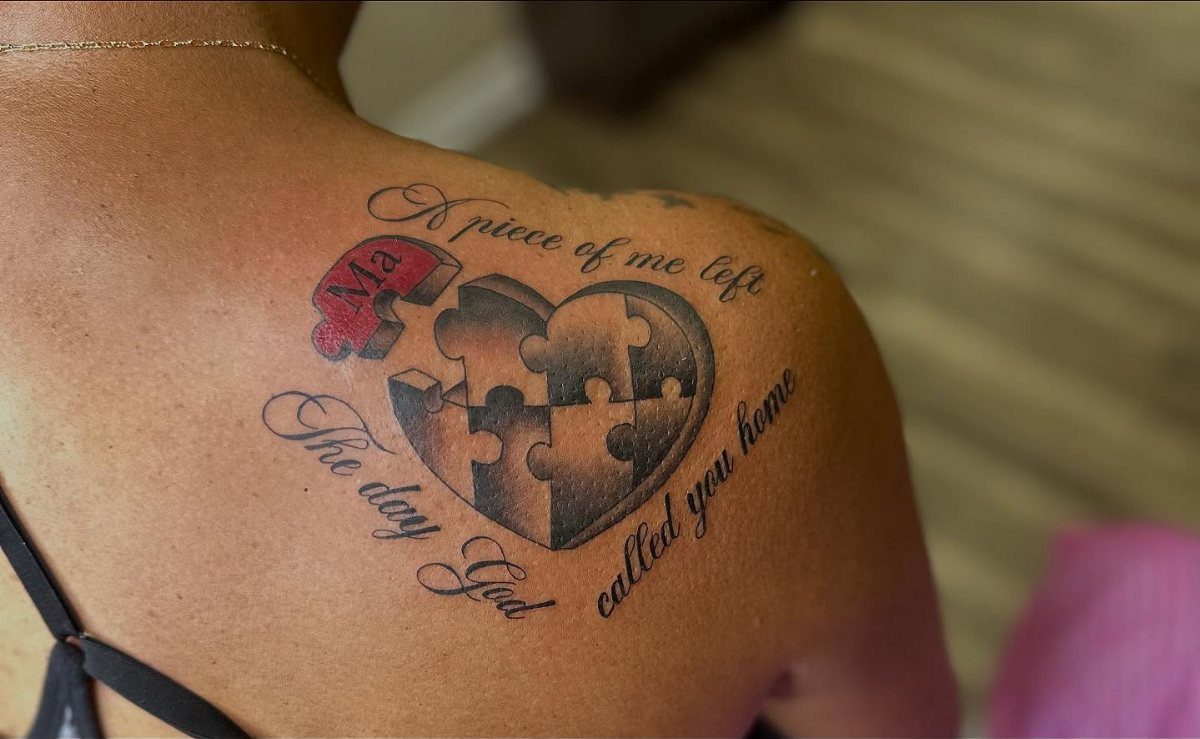
A puzzle with one piece missing says the loss left a gap that nothing else fills. The heart shape frames the puzzle and keeps the metaphor clear.
Color on the missing piece draws the eye to what is gone.
Red works, but any color that contrasts with the rest of the puzzle will read. Text can sit inside the heart or around it, whichever leaves the puzzle itself uncluttered.
Shoulder or upper back gives the design room to breathe. The puzzle needs enough pieces that one missing registers visually.
Considerations Before Getting a Tattoo
A memorial tattoo sits on your skin permanently, so the design needs to hold up beyond the first month.
Think through visibility before you commit. A forearm piece shows every day at work, while a shoulder or ribcage placement stays covered in most settings.
The design itself should pull from something specific to the person you lost, not from a template you saw repeated across social media. A symbol that meant something to them beats a generic shape every time.
Retouching may be needed after a few years depending on placement. Areas that move frequently or get sun exposure fade faster, so plan for maintenance if the tattoo sits on hands, feet or anywhere clothing does not cover.
Personal meaning matters more than how the design photographs. If it resonates with you and marks the loss clearly, the tattoo does its job.
How Memorial Tattoos Aid in Grieving
A memorial tattoo can close the distance grief creates. Carrying a permanent mark tied to someone you lost keeps them present in a way other reminders do not.
The design that helps depends entirely on your relationship with that person.
A small, simple tattoo works for some, while others need detail and scale to feel the connection. What registers as meaningful for you is what counts, not what another person would choose.
Sitting with an artist to design the piece, then going through the session, becomes part of how you process the loss. You take time to decide what represents them best, then commit to wearing that mark.
The tattoo becomes a lasting tribute you carry, something you can look at when the loss feels heavy, and for many people that sense of permanence brings comfort during the hardest stretches of grief.
What Not to Do with Memorial Tattoos
Do not pick a design because it is trending. If the image does not hold weight for you personally, it will read hollow once the trend passes, and you will still be wearing it.
A memorial tattoo only works if it connects directly to the person you lost.
A symbol that mattered to them, their handwriting, a phrase they repeated, anything specific to your relationship will outlast a generic shape you chose because it looked good in someone else’s photo.
If you do not feel strongly about a design, skip it entirely. Wait until something resonates before you sit down with the artist.
Frequently Asked Questions
What is a memorial tattoo?
A memorial tattoo honors someone you lost and carries their memory on your skin permanently.
What symbol represents losing a loved one?
Wings, angels, roses and crosses all mark loss directly, each with slightly different weight. Wings signal the person has moved beyond the world, while angels and cherubs suggest they’re at peace.
A heartbeat line that flattens shows the exact moment life stopped, and a missing puzzle piece says the gap they left can’t be filled.