Black outlines in a stained glass tattoo need to be at least twice the width of a standard fine-line piece, or the borders blur and colors bleed together within a few years.
Placement decides which structure fits: forearm handles a single vertical panel, thigh takes a circular design, back or sleeve gives you room for a multi-panel layout with a Gothic arch.
Color or black-and-grey changes how the piece reads: jewel tones look like church glass, monochrome keeps the geometry and the light-through-glass effect without the color.
1. Jesus Stained Glass Tattoo
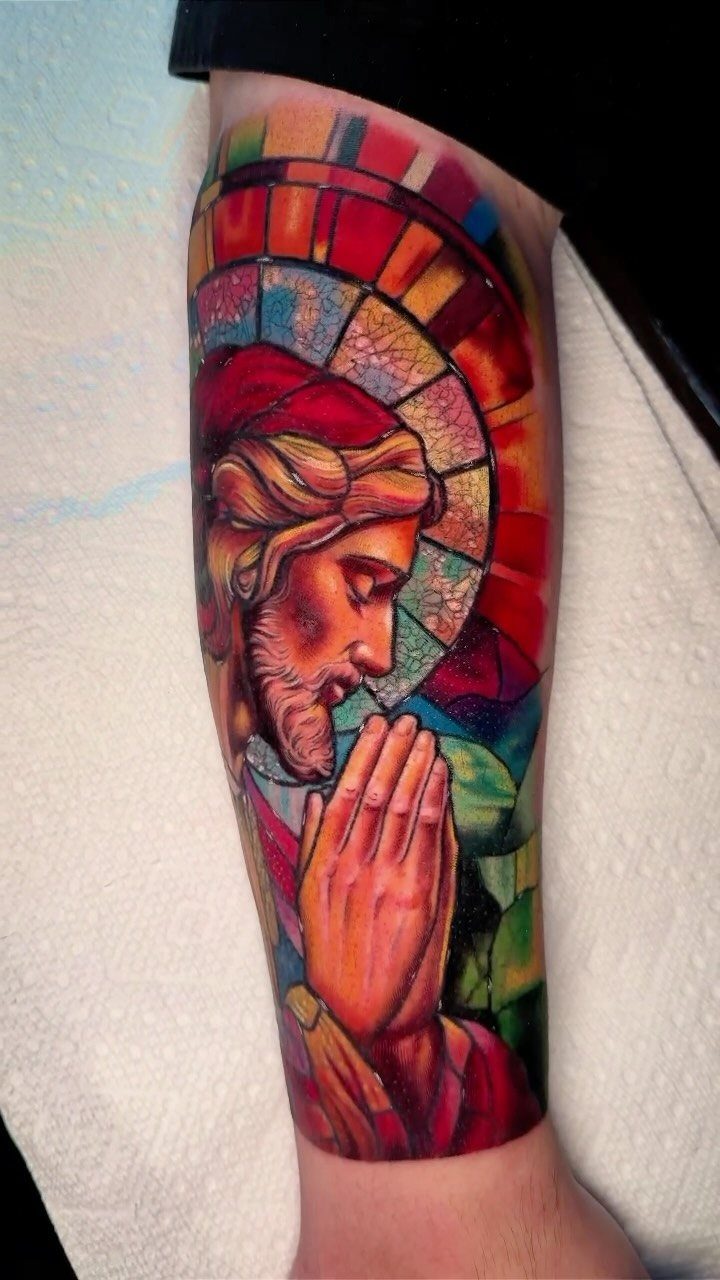
A religious figure framed in stained glass puts devotion front and center. The panel structure lets you divide the piece into sections of bold color, each one separated by thick black lines that read like leading in real church glass.
A vertical window shape on the forearm suits praying hands or a portrait. The halo and colors stay visible without needing a large surface.
Adding roses or thorns in the border ties the image to sacrifice or renewal. Line weight matters: thin outlines lose the architectural feel, heavy ones hold the design together as it ages.
2. Flower Stained Glass Tattoo
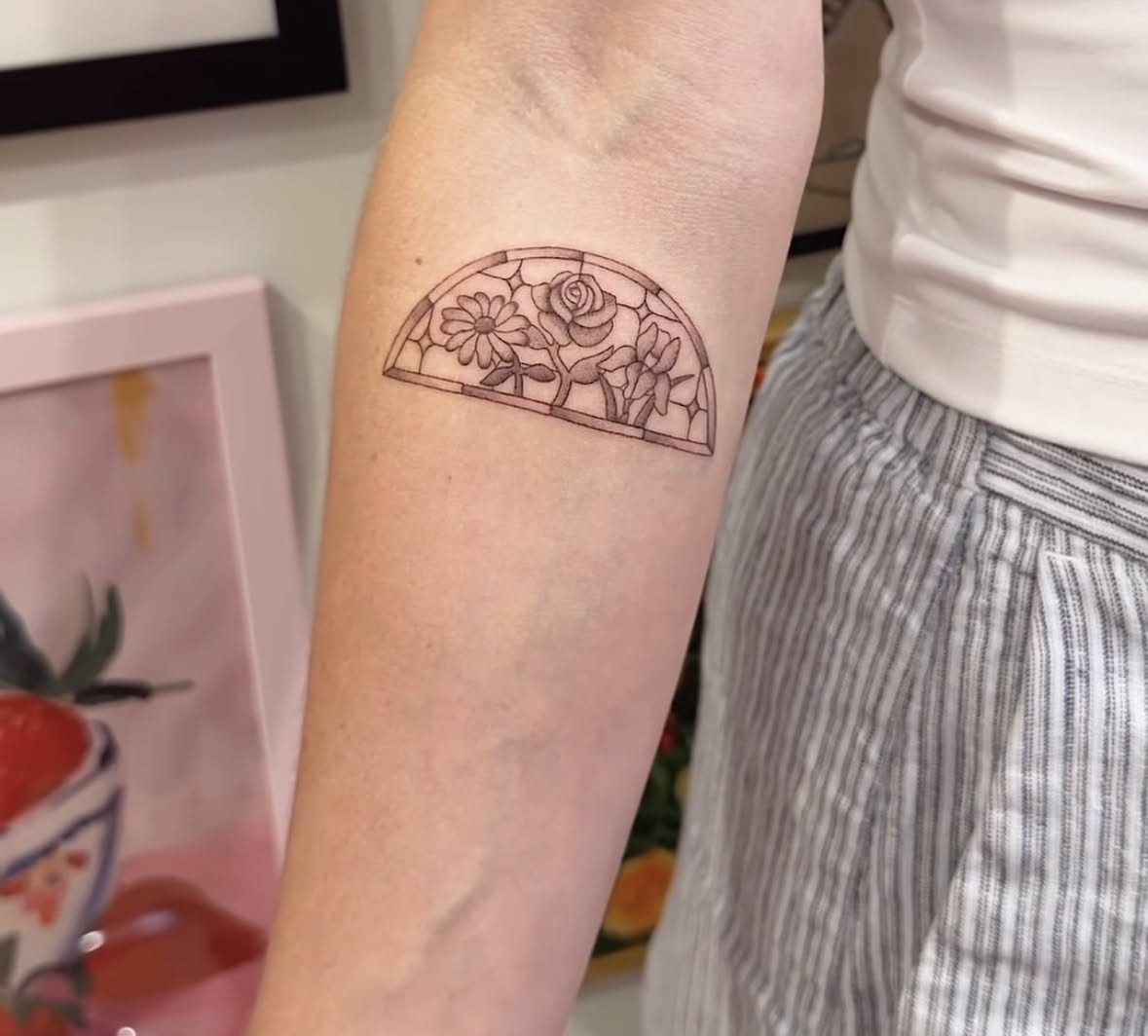
Flowers inside a stained glass frame give you botanical detail without the soft watercolor look most floral tattoos lean on. The black outlines anchor each petal and leaf, so the design stays crisp even when it’s small.
A semi-circle or arched window fits the inner forearm without wrapping, and linework alone keeps it light if you’re not ready for a full-color piece.
3 blooms in different stages, bud to full flower, add variety and keep the panel clear. Inner forearm heals faster than outer placements and shows less sun fade over time.
3. Geometric Patterns
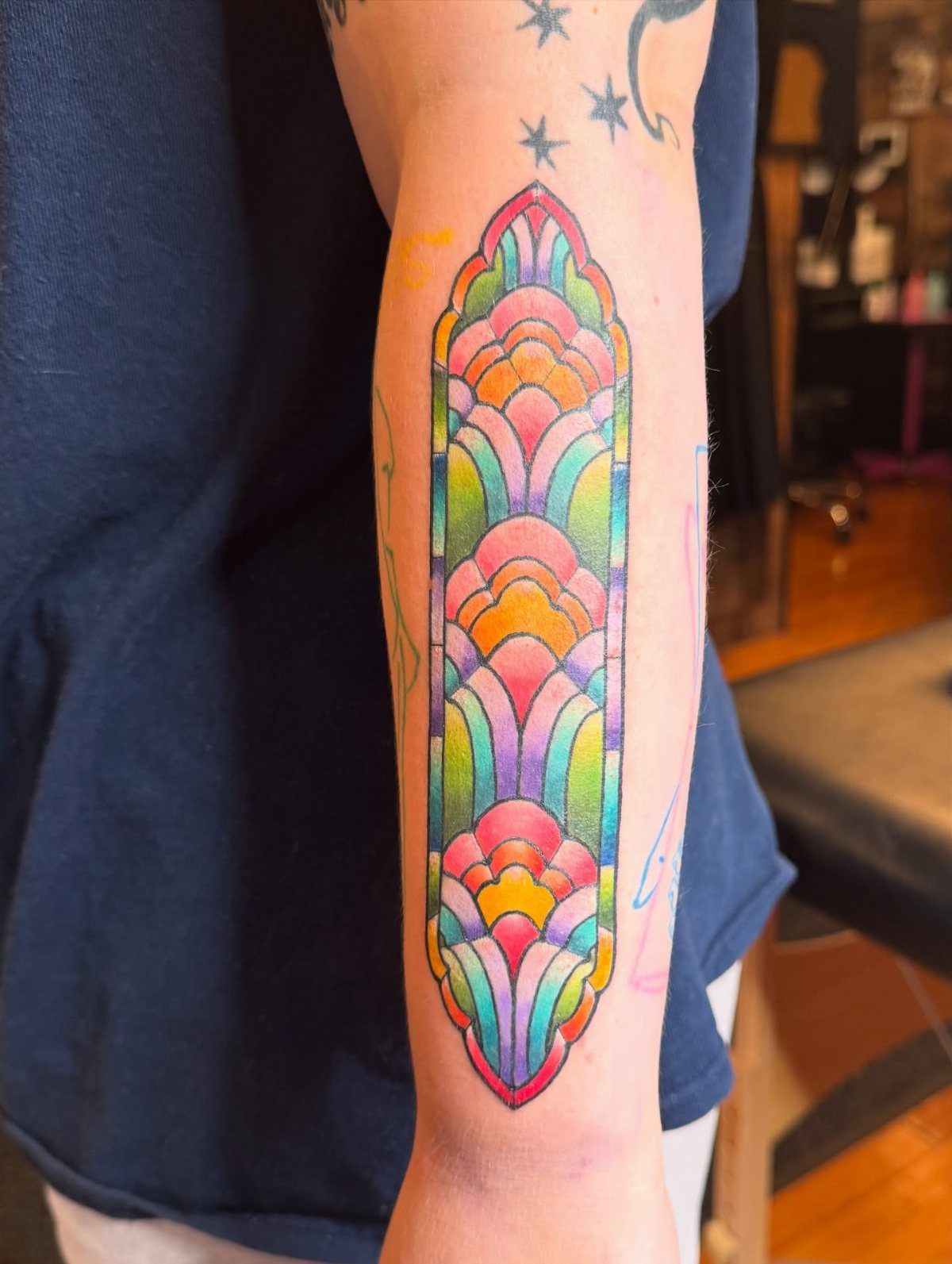
Geometric stained glass pulls from Art Deco and modern design rather than church windows. Scalloped patterns, repeating arcs and tessellated shapes fill the forearm with color that feels more architectural than symbolic.
Color saturation defines this style. Jewel tones, cyan, magenta and amber, sit next to each other with hard black borders, and the contrast keeps each section distinct.
Forearm placement lets the design curve with your arm, so the geometry doesn’t feel flat. Symmetry is optional: some artists offset the pattern to follow muscle contour instead of forcing a mirror image.
4. Dragonfly Stained Glass Tattoo
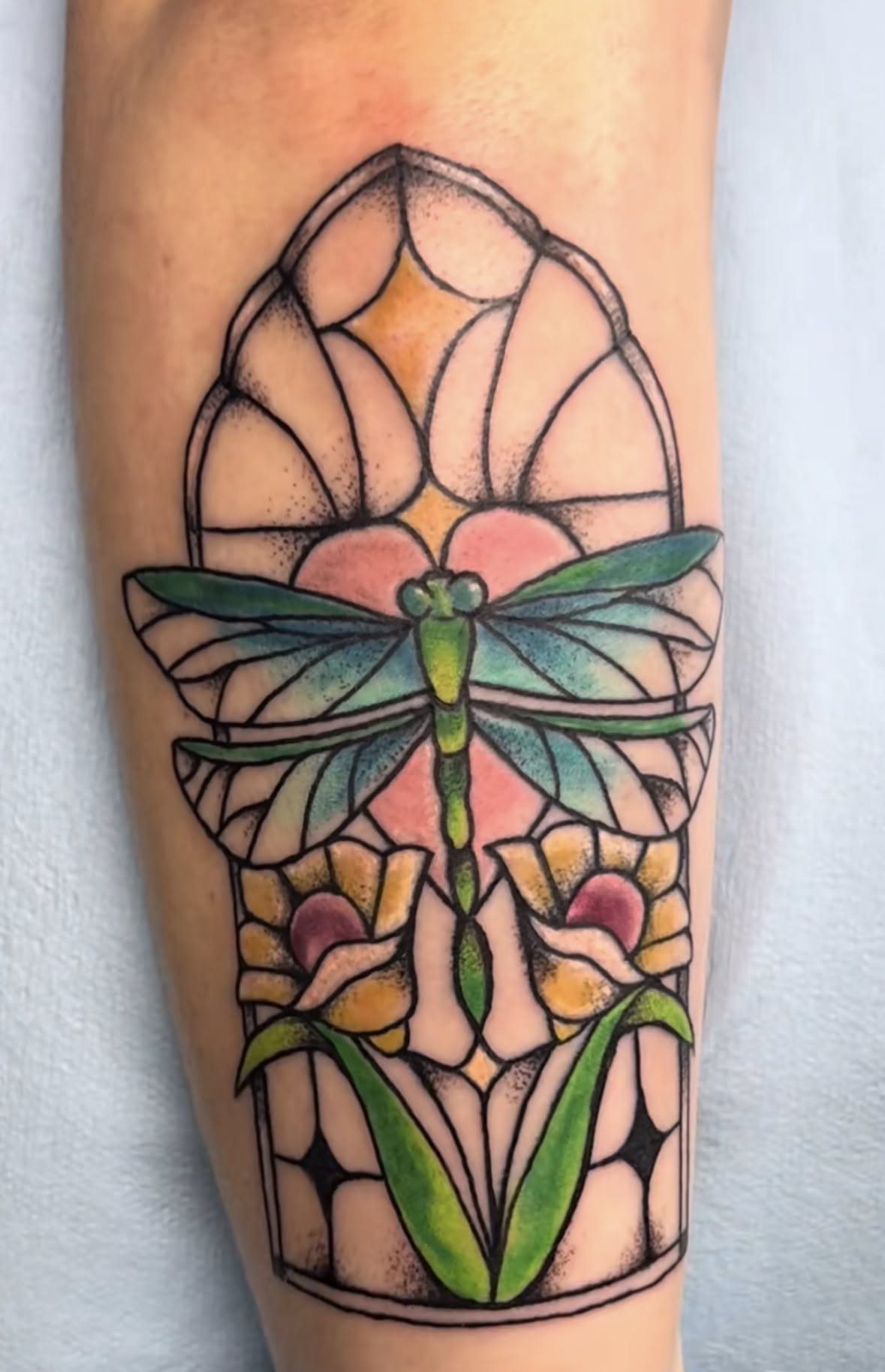
Dragonfly wings translate naturally into stained glass panels. Each wing section becomes a separate pane of color, and the black outlines mimic the natural veining.
Flowers at the base add a second layer of detail without competing with the insect. Dragonflies symbolize change and adaptability, so the design works as a memorial or a marker for a transition.
Wing span determines size: smaller dragonflies lose the individual panels, larger ones need more surface than most arms offer. Thigh gives you the width.
5. Sun and Moon Stained Glass Tattoo
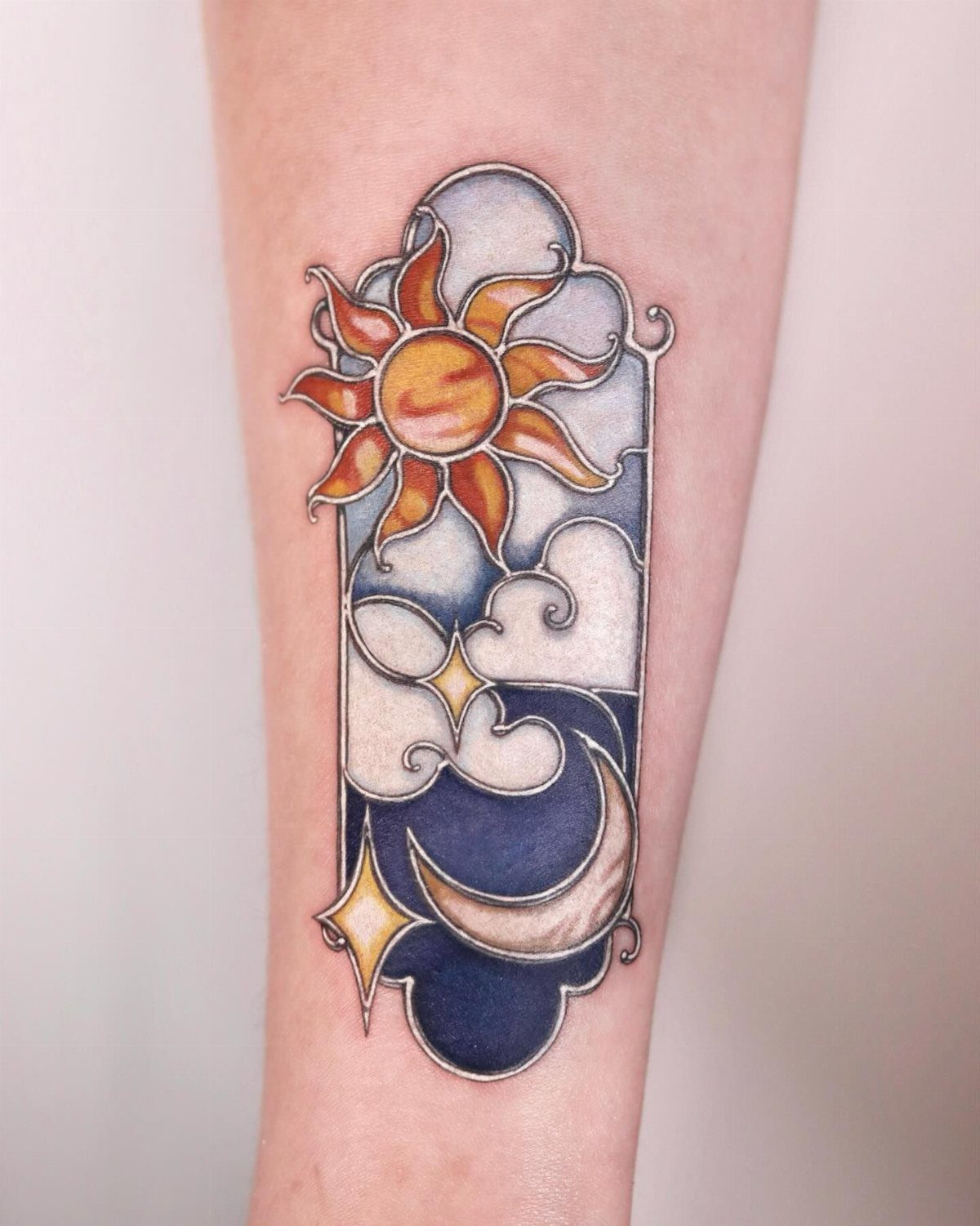
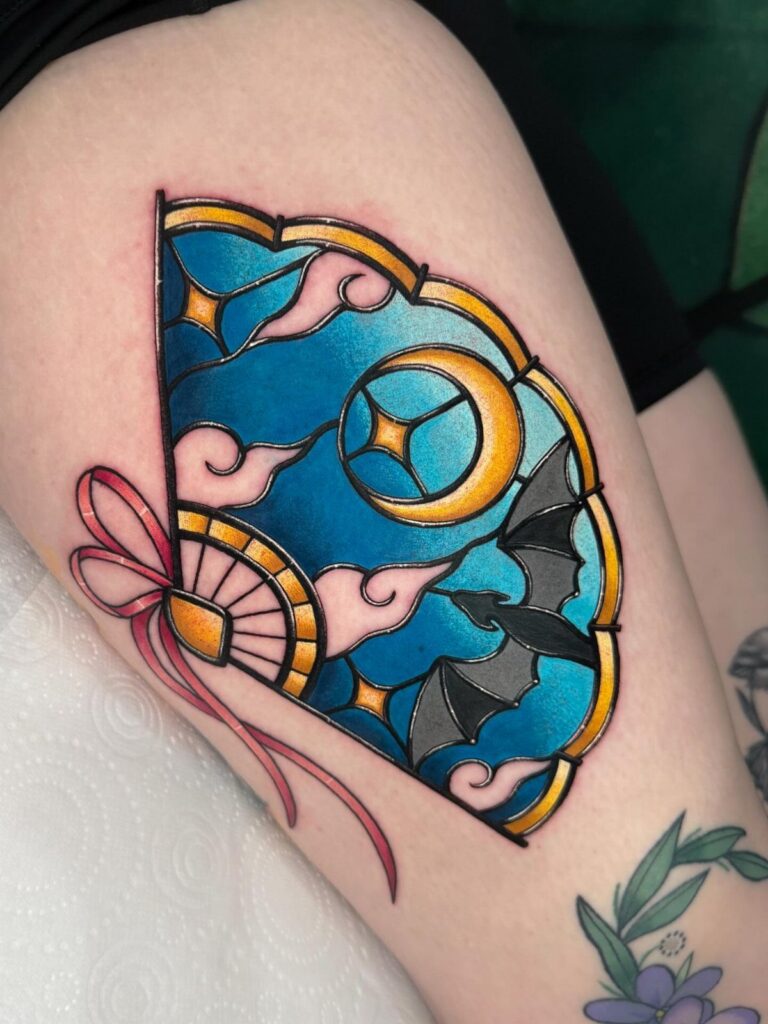
Sun and moon in one frame balances opposites: day and night, light and shadow, masculine and feminine. Stars or clouds in the background fill the negative space and keep the composition from feeling sparse.
The circular sun and crescent moon fit neatly into a vertical window shape, so forearm or calf works without forcing the design to wrap.
Color choice sets the mood: warm yellows and cool blues keep it traditional, monochrome makes it more understated. Line thickness should match across both elements or the moon disappears next to a bold sun.
6. Gothic Arch Stained Glass Tattoo
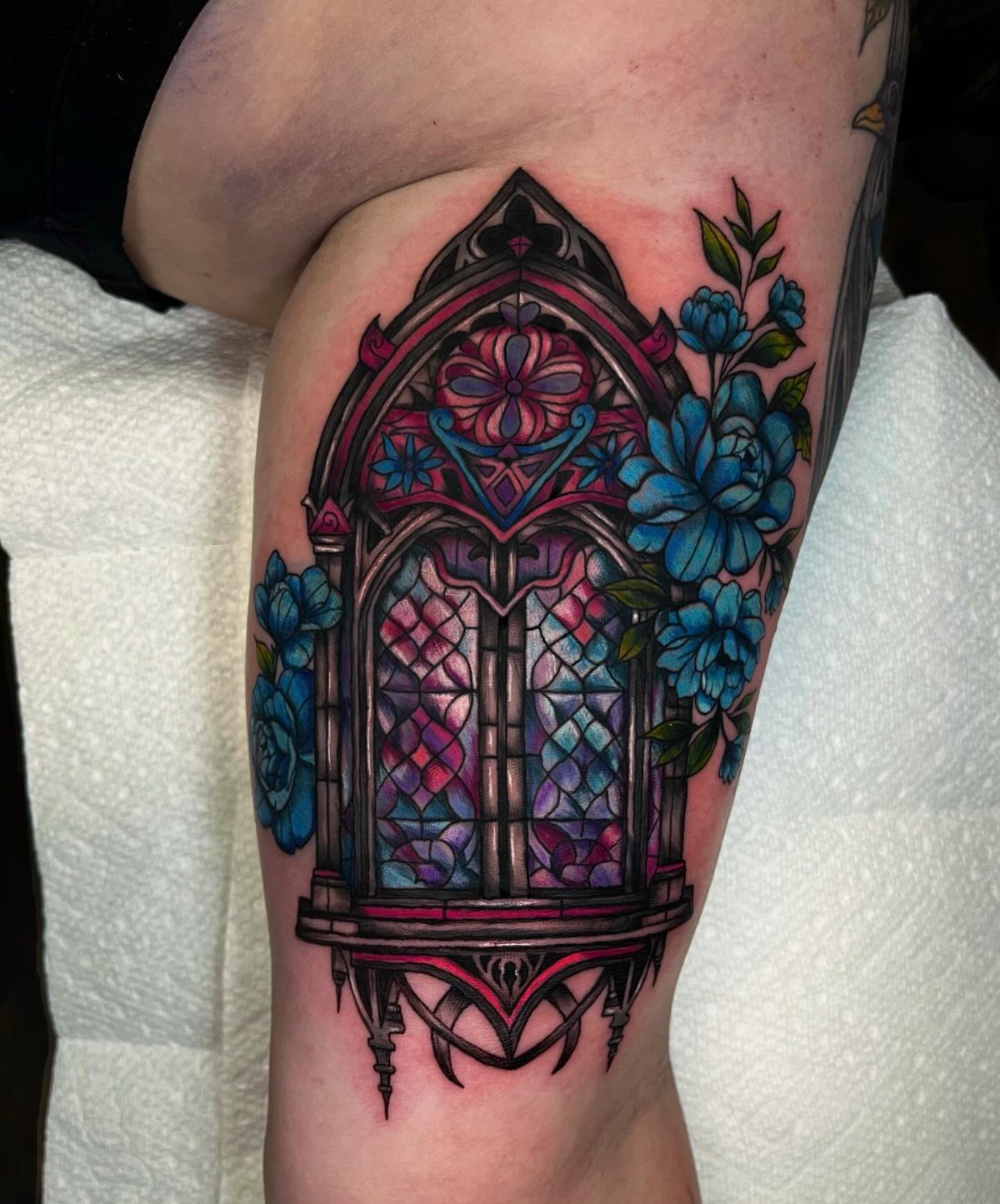
A gothic arch brings cathedral architecture into the design. The pointed top and narrow proportions suit a leg or forearm, and flowers around the frame soften the rigid geometry.
Blue flowers keep the palette cool and church-like, but you can shift to red or purple if you want a warmer feel.
The arch itself can stay empty as a frame, or you can fill it with a scene, portrait or symbol.
Lower leg placement works because the vertical space matches the arch’s natural proportions. Black shading in the stonework adds depth, but too much gray can muddy the stained glass sections.
7. Black and White Stained Glass Tattoo
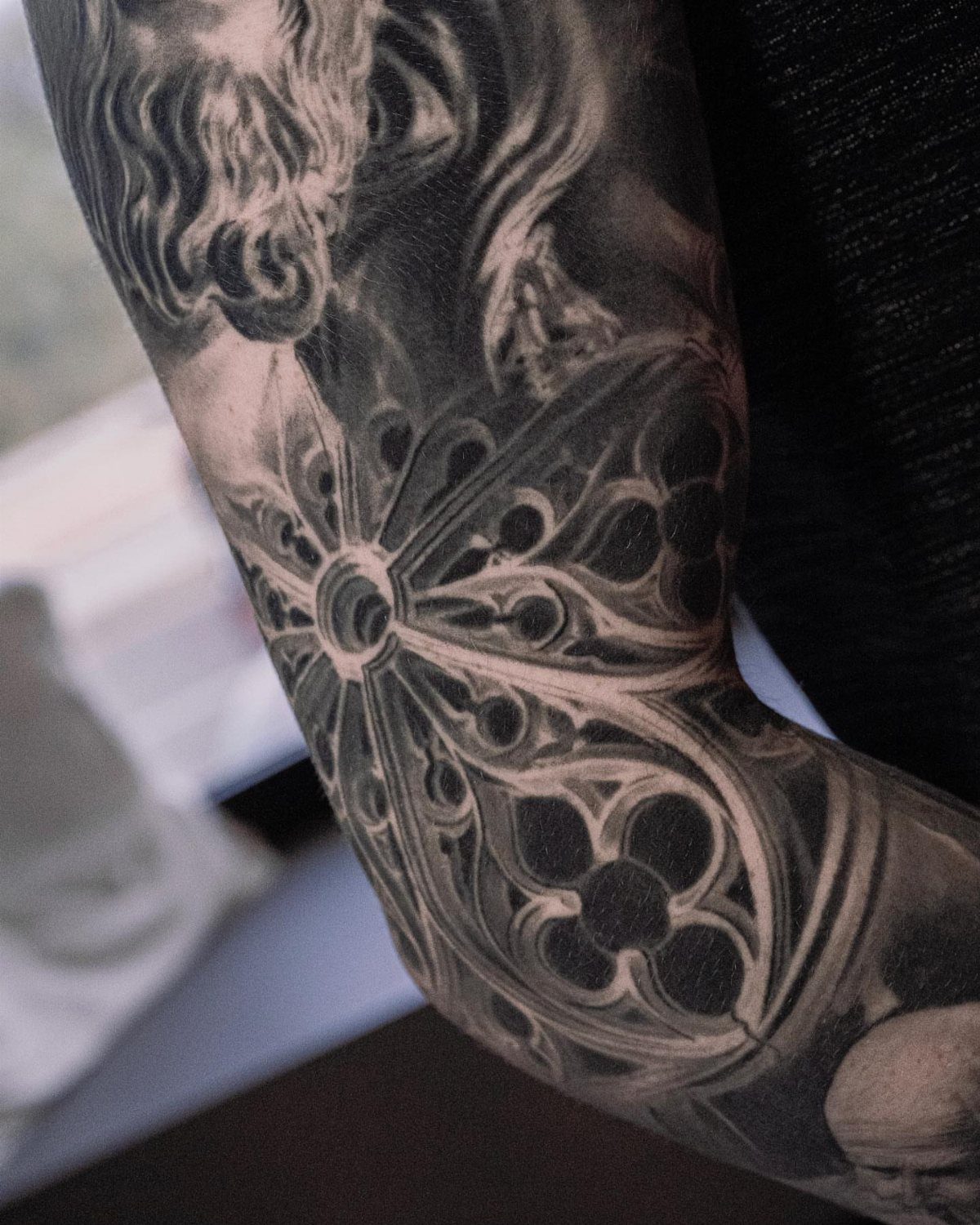
Dropping color keeps the stained glass structure without the church window reference. Black and grey lets the linework and shading carry the design, and a rose window pattern reads clearly at smaller sizes where full color can look busy.
The mandala-like symmetry of a rose window fits a circular spot like shoulder or knee, but it works as a standalone piece on the forearm too.
Shading inside each panel adds depth where color would normally separate sections. No color also means faster sessions and less touch-up over time.
8. Full Sleeve Tattoos
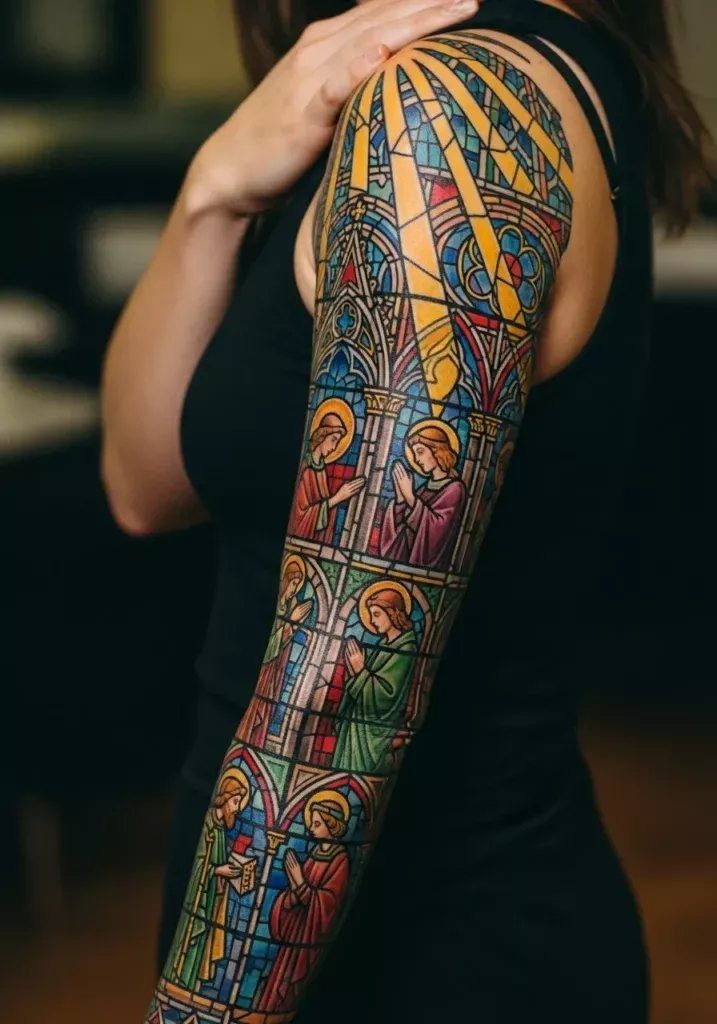
Covering your arm from shoulder to wrist turns it into a vertical gallery of stained glass panels. Multiple windows stack or connect, and you can theme each section separately or run one continuous scene from shoulder to wrist.
Religious figures, animals and florals all fit inside their own frames, so the design grows over multiple sessions without needing a master plan from day one.
Sleeve coverage depends on how much detail you pack in. Inner arm hurts more than outer, and color saturation there fades faster, so plan touch-ups if you go bold.
Tattoo Placement Advice
Arm placement offers a vertical canvas that matches the proportions of a cathedral window.
Forearm width accommodates clear panel divisions without wrapping around to the back. Upper arm offers more surface for multiple windows stacked or a taller single arch.
Thigh works when you need width for a horizontal composition or a large circular rose window. The flat surface keeps geometric patterns from distorcing, and you can sit for longer sessions without the nerve pain that hits ribs or spine.
Back gives you the most space for a full church window layout with multiple figures or a landscape scene divided into panels. A back piece lets you frame the design with architectural details like columns or stone borders.
Color Usage
Black outlines in stained glass tattoos need to be thick, at least twice the width of a standard fine-line tattoo.
Thin lines blur as the ink spreads under the skin, and when 2 color sections share a faint border, they bleed together within a few years.
Red, teal, amber and cobalt stay distinct because the black acts as a barrier during healing and prevents the colors from mixing as the skin shifts.
Flat color saturation, no gradients, keeps the stained glass look intact.
Real leaded glass doesn’t fade from dark to light within a single pane, and tattoos that mimic that structure age better when each section is one solid tone from edge to edge.
Design Inspiration
Religious art supplies ready-made compositions that already work in vertical panels.
Saints, angels and biblical scenes were designed for stained glass centuries ago, so the proportions and color blocking translate directly to skin. Gothic arches and halos give you natural frame elements without adding extra ornamentation.
Nature subjects, insects and florals especially, adapt well because their symmetry fits the compartmentalized structure. A butterfly or dragonfly splits neatly into mirrored wing panels, and each section can hold a different color without losing the insect’s shape.
Repeating arcs, hexagons and tessellated shapes fill space efficiently and scale down to smaller placements without losing detail.