Name tattoos land anywhere from fingers and wrists that stay visible through every workday to ribs and feet that stay private until you choose otherwise.
The right placement depends on how much exposure you want and how much pain you can sit through: thin-skinned spots like the ribs and neck hurt more than padded areas like the forearm and chest, and areas closer to bone finish faster but feel sharper.
1. Wrist Tattoo for Names
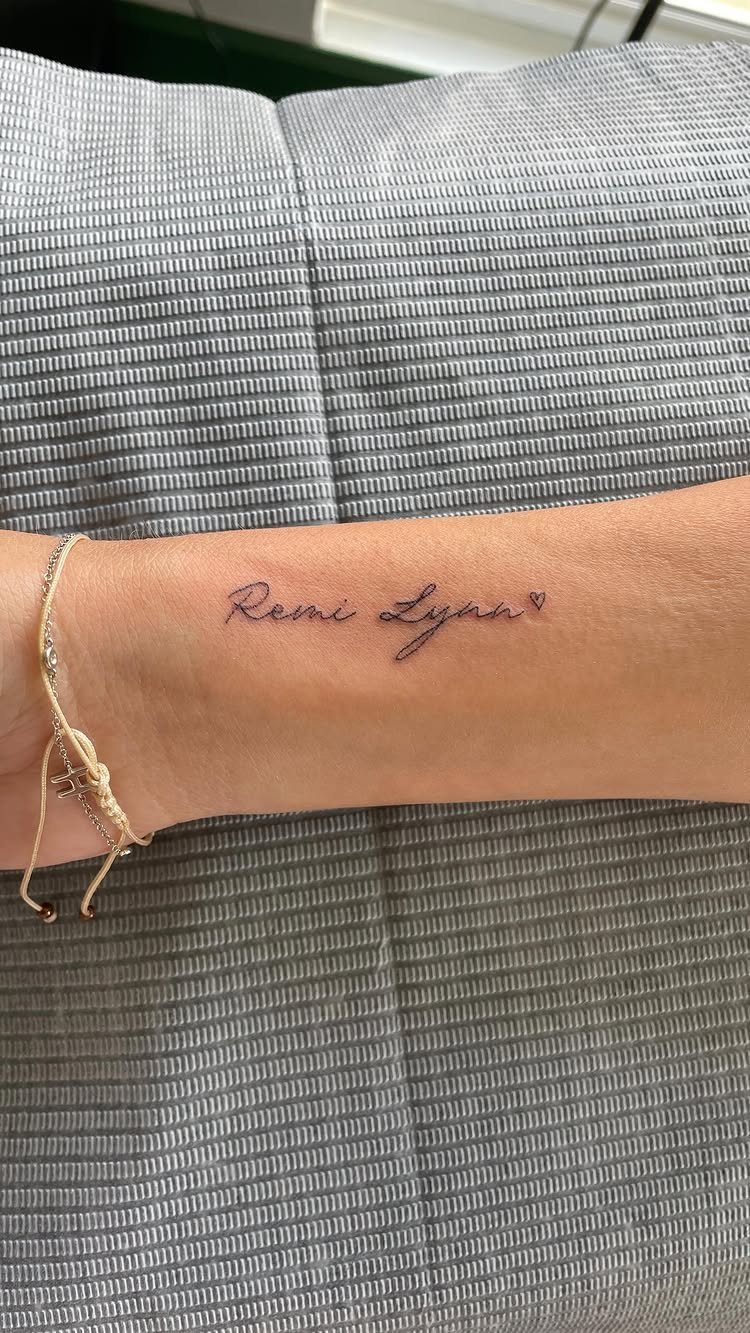
The inner wrist puts a name where you will see it every day. Script suits the narrow space better than block letters, and a small accent like a heart or date keeps the design balanced without crowding the area.
Wrist tattoos sit in the open, so plan for full visibility at work and in formal settings.
The skin here is thin and the bone sits close, which makes the session sharp but short. Most single-name pieces finish in under an hour.
Expect some fading over time. Hands see constant sun and washing, so stick with black instead of color.
2. Chest Tattoo for Names
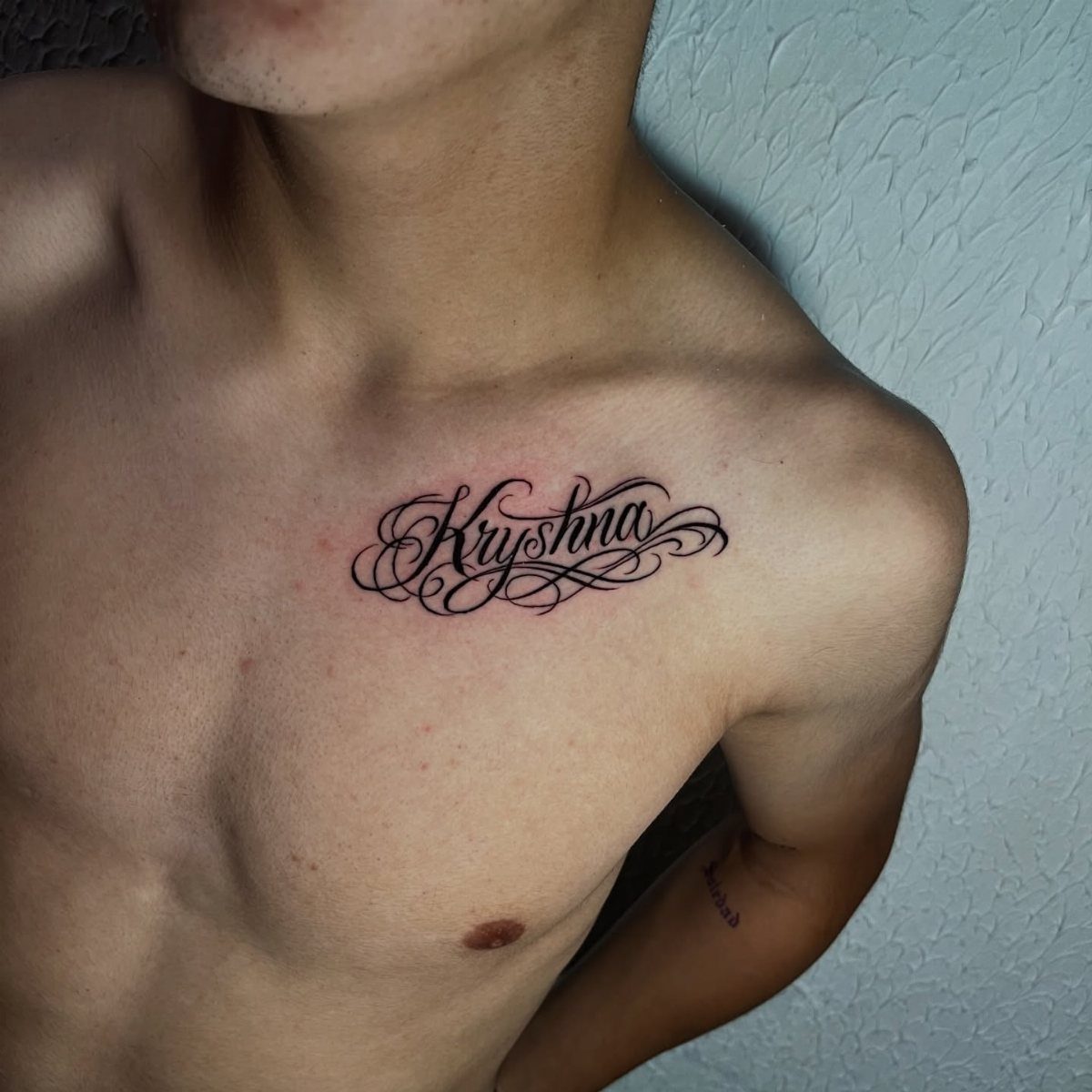
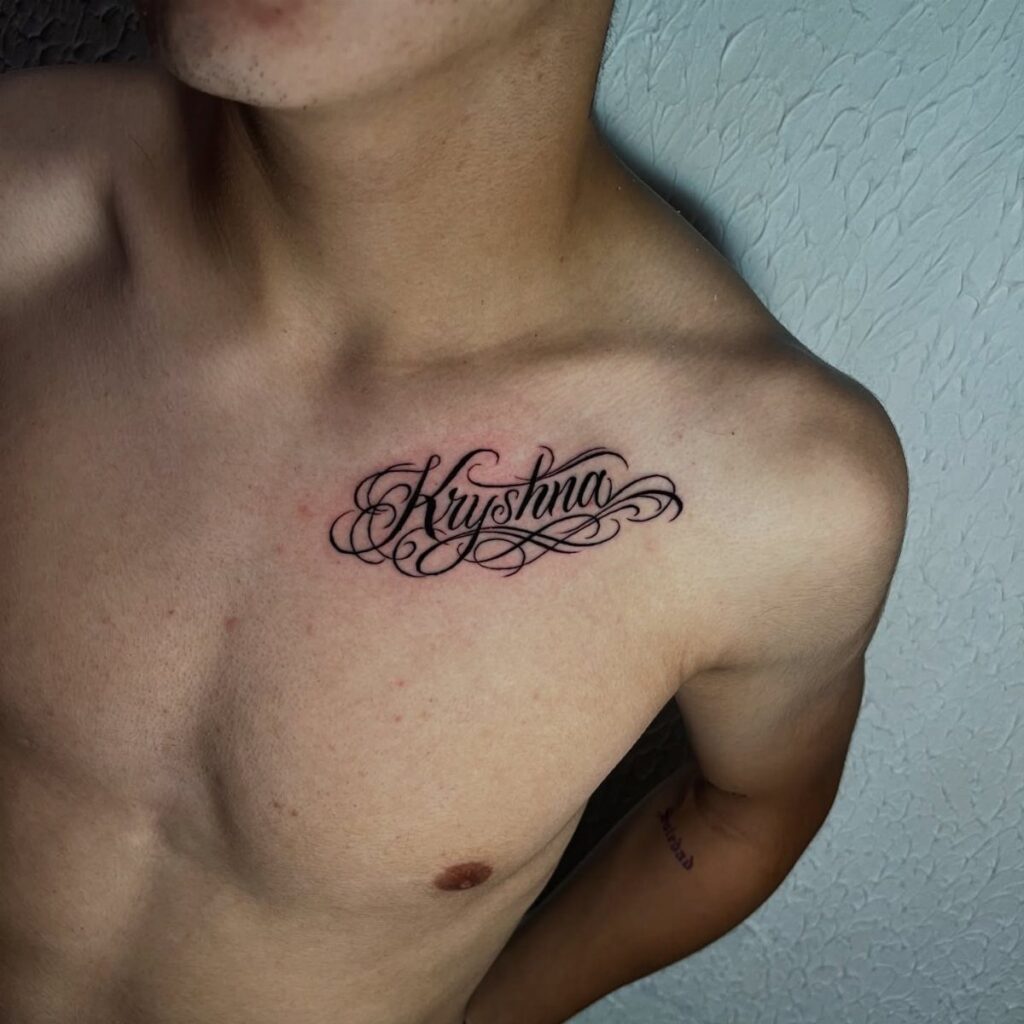
A name across the chest sits close to the heart, which gives memorial and family pieces extra weight. The area offers enough room for script to breathe, and the flat surface keeps letterforms clean.
Placement near the collarbone shows with most shirts unbuttoned or during summer, so think through how often you want the tattoo visible. Skin here is moderately sensitive, less sharp than bone-on-bone spots but not as easy as the outer arm.
3. Neck Tattoo for Names
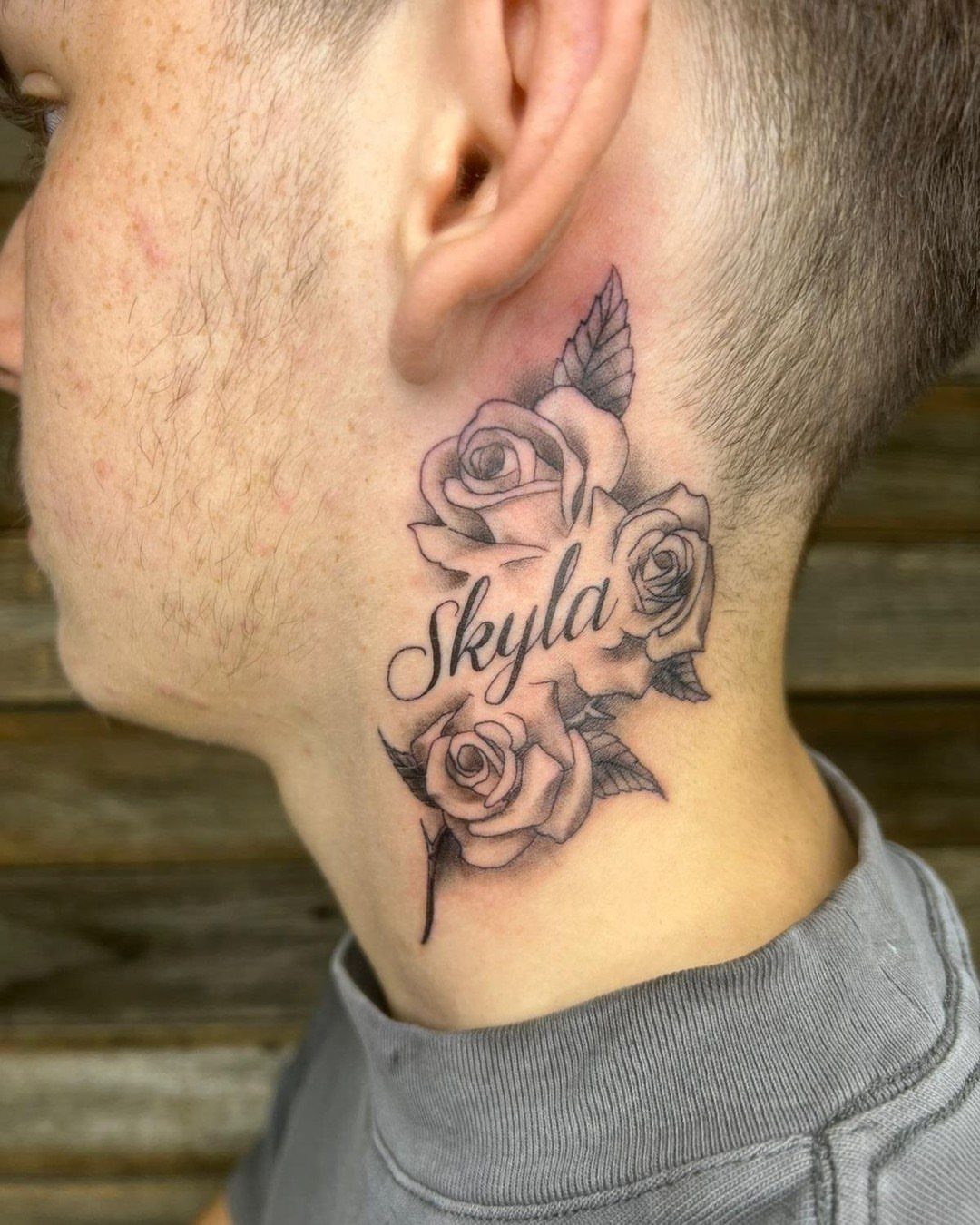
Placing a name on the neck makes it part of every conversation. Adding roses or other florals around the script softens the lines and fills the space without looking sparse.
Neck tattoos are highly visible and difficult to cover in professional settings, so this is a commitment to full exposure.
The sides of the neck are more painful than the back, and sitting still matters because any movement throws off fine lettering.
Black and grey shading on the flowers lets the name stay sharp while adding depth.
4. Ribcage Tattoo for Names
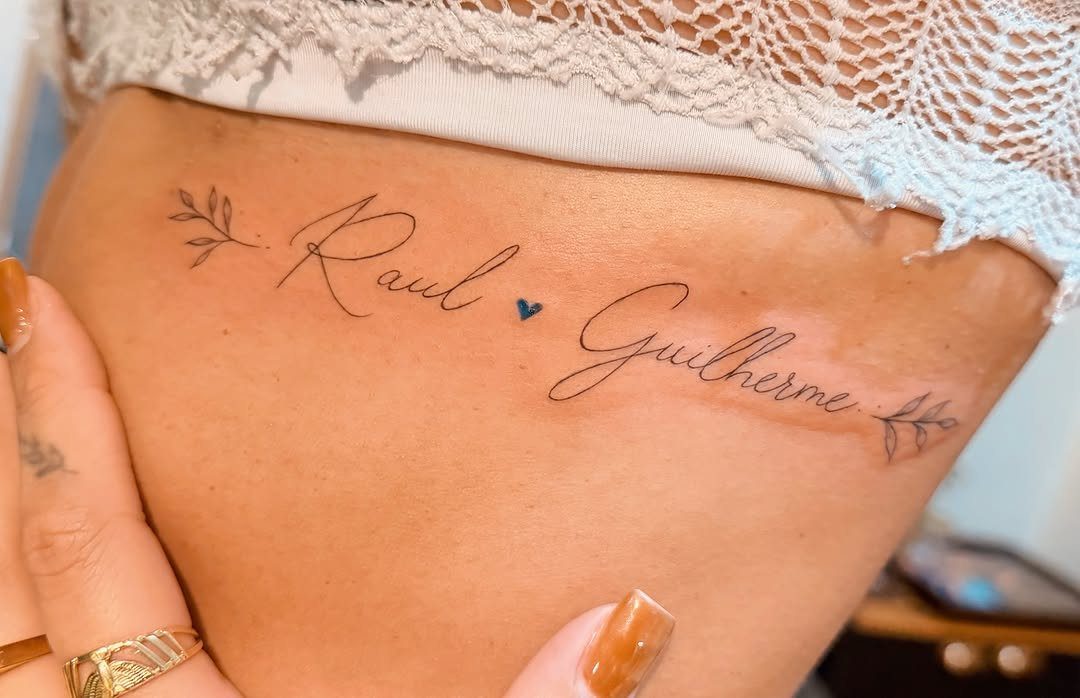
The ribcage offers a long, vertical canvas that works well for 2 names stacked or side by side. Adding a small symbol between them, like a heart or leaf sprigs, ties the names together without taking over.
This spot is private unless you choose to show it, and the pain is real.
The ribs sit directly under thin skin with very little padding, and every breath moves the area slightly, which makes the session harder to sit through.
Expect tenderness for several days after, especially when bending or twisting.
5. Forearm Tattoo for Names
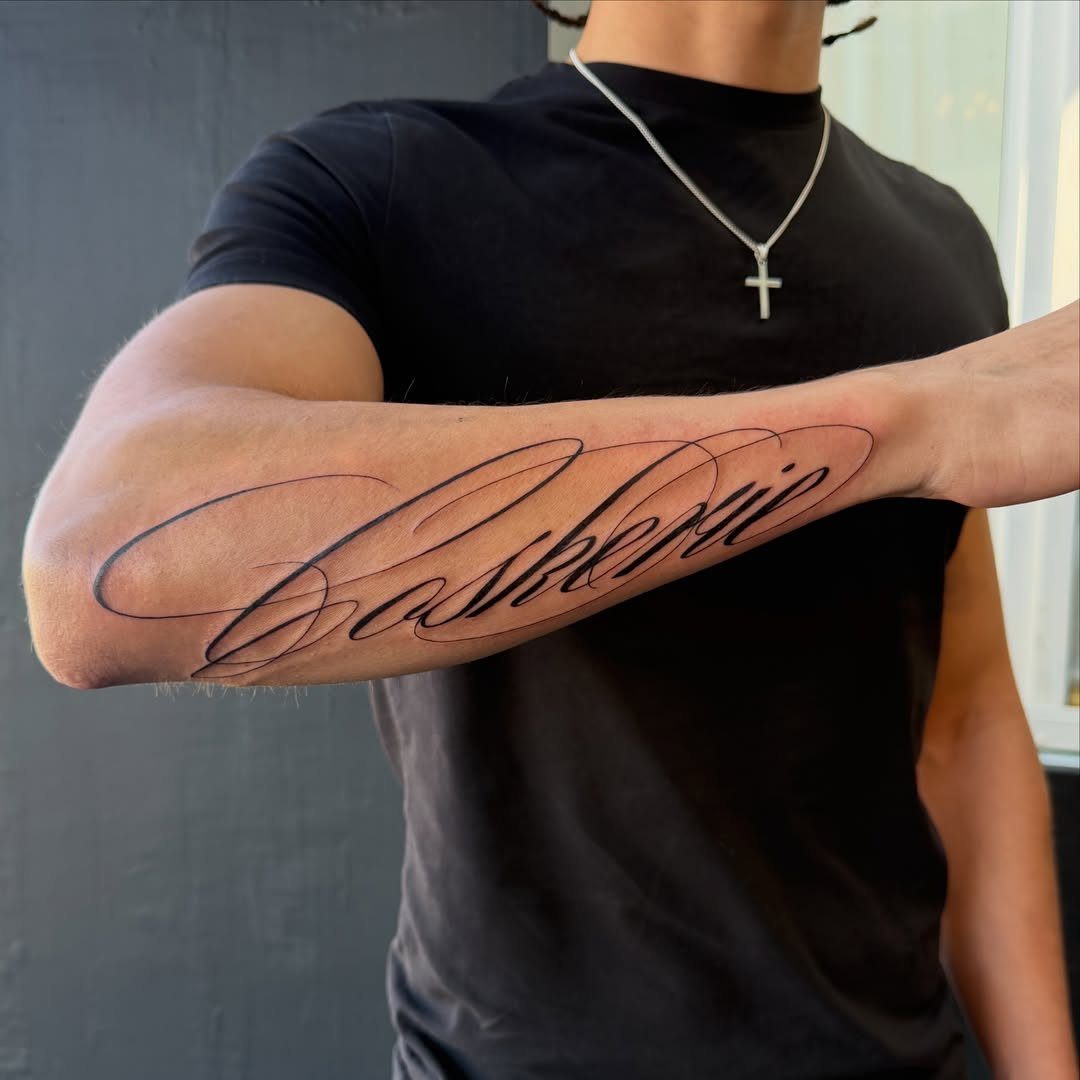
A name down the forearm reads easily and stays visible without requiring short sleeves.
The forearm gives enough length for a single name in a tall, flowing script, and the muscle underneath provides padding that makes the session more tolerable than bonier spots.
This placement works for people who want the tattoo in sight most of the time. It shows in any professional setting where sleeves are rolled, so consider that before committing.
The area heals quickly and fades slowly because it sees less friction than hands or feet.
6. Finger Tattoo for Names
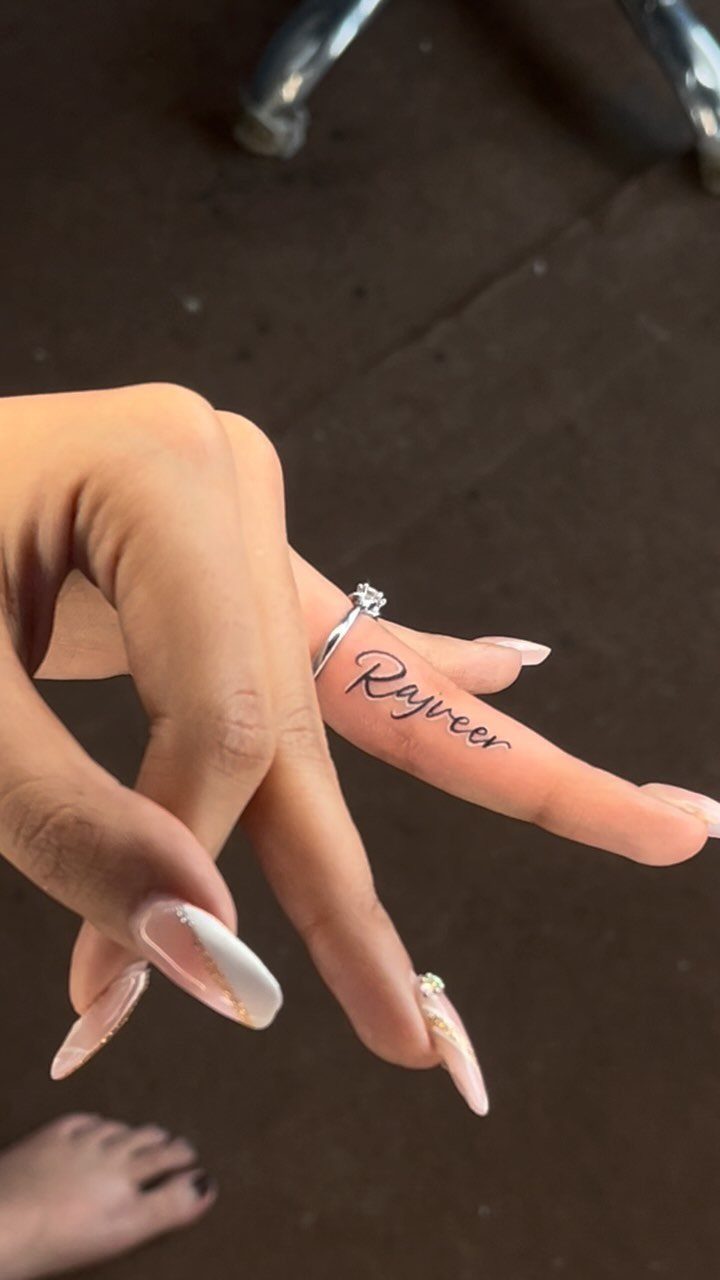
Finger tattoos fit short names or initials along the side of the finger, where they sit next to rings or stand alone.
The small space limits font choices to simple script or block letters, and anything too delicate will blur within a few years.
Fingers are among the fastest-fading placements: the outer layer turns over fast and contact is constant.
Pain is moderate. Some artists hesitate to tattoo fingers because of how poorly they age, so ask about their policy before booking.
7. Behind the Ear Tattoo for Names
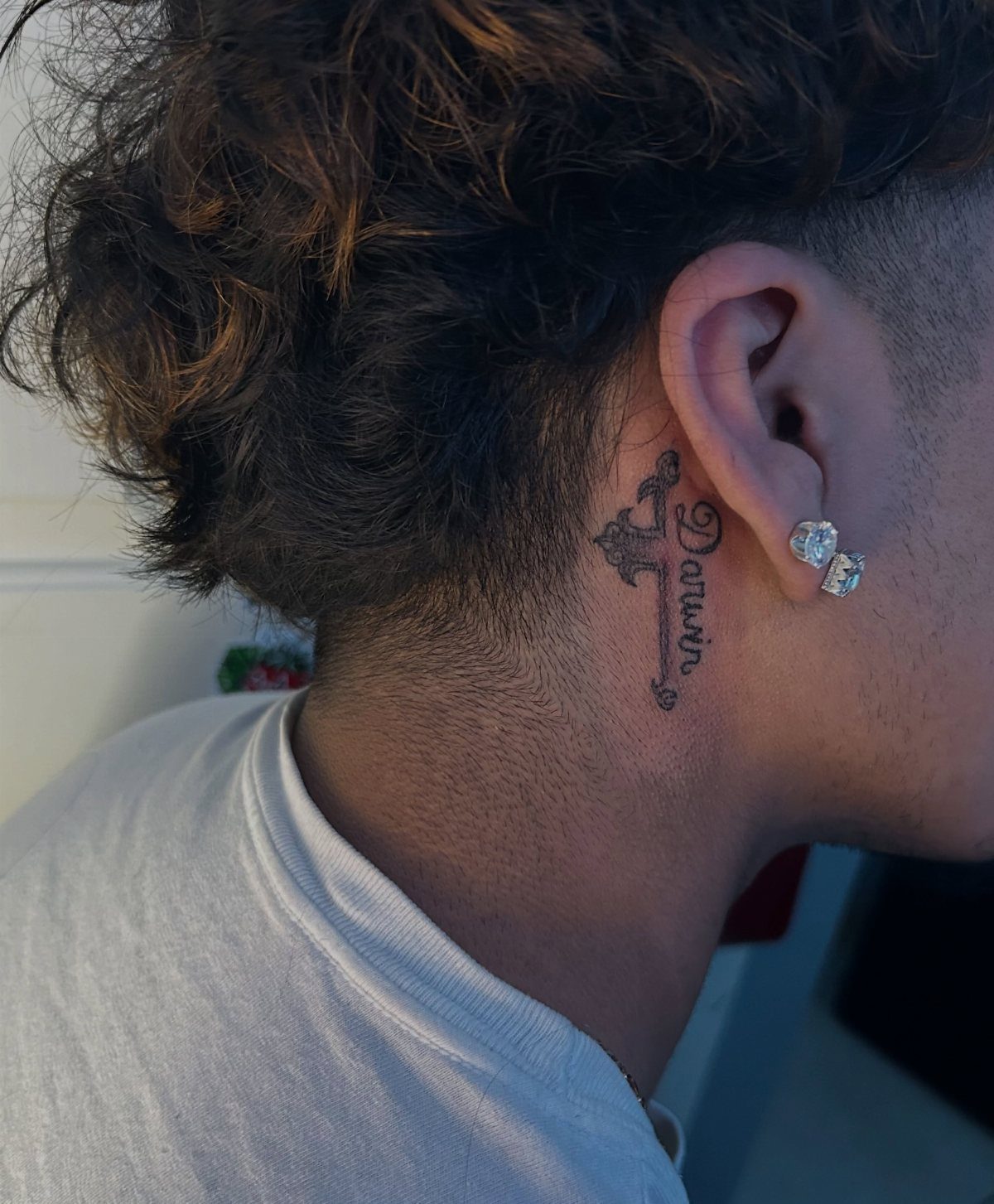
A name tucked in the curve where your ear meets your skull stays hidden until you tie your hair up or turn your head.
The compact space fits short names or initials better than anything long, and simple lettering reads cleaner than ornate script in such a small area.
Most sessions finish fast because there is not much room to cover.
This spot fades slower than hands or feet because it sees less sun and friction, but expect touch-ups if the lines start to soften.
In fact, name tattoos are the most sought after tattoo designs, despite being the simplest, with many of them just having a name inked on it. The event is a grade ii race and offers $300,000 purse.
8. Foot Tattoo for Names
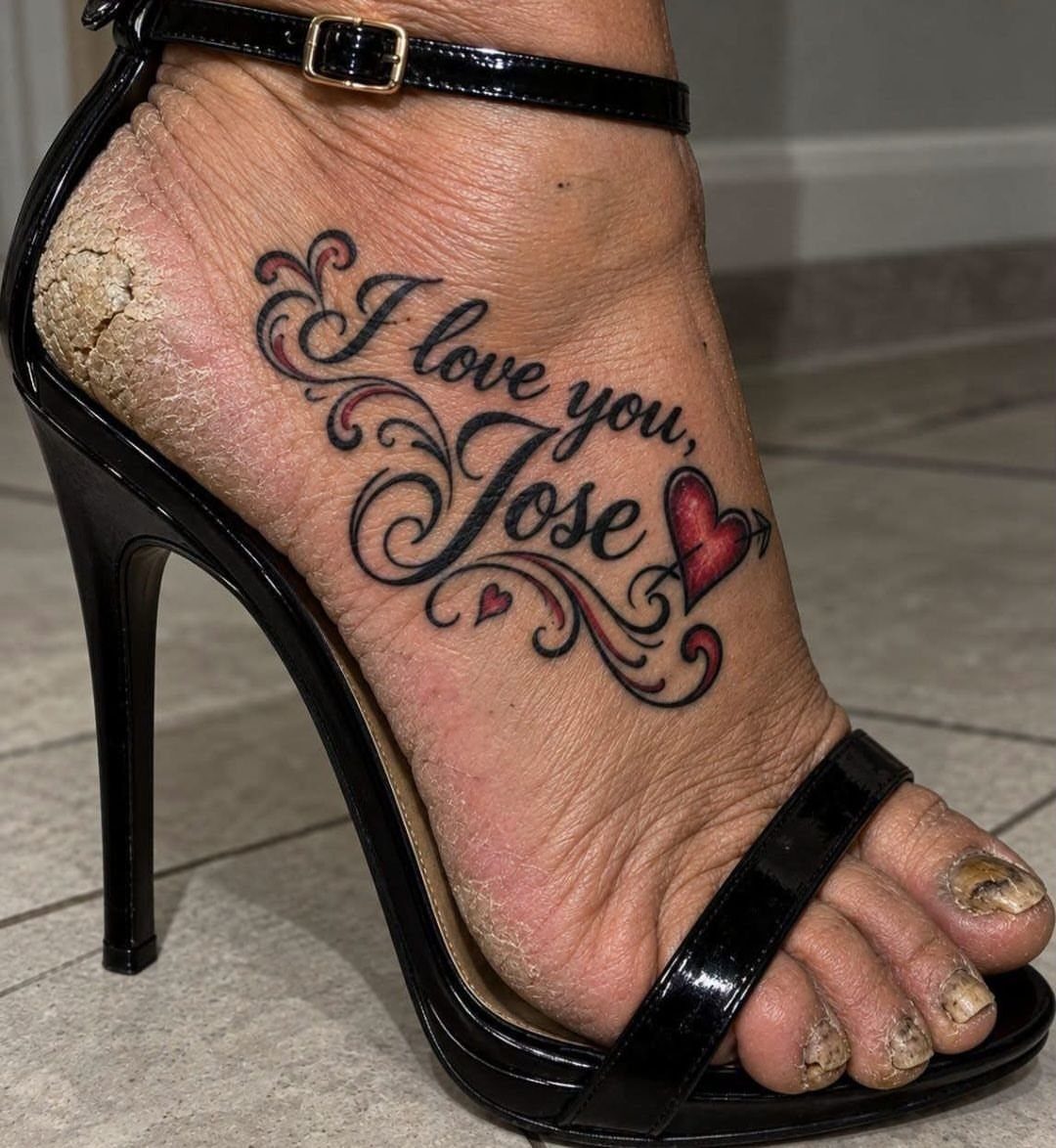
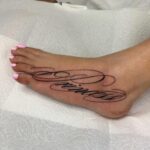
A name along the side of the foot stays private in most settings but shows in sandals or at the beach. Script flows naturally along the curve, and small accents like hearts or swirls fill the space without overwhelming it.
Foot tattoos fade faster than most placements because shoes rub constantly and the skin regenerates quickly. Black holds better than color, and expect the ink to need a refresh within a few years.
Pain sits somewhere in the middle: the top of the foot has less padding than the outer arm, but the session is short.
Choosing the Right Size
Start with how the name breaks into letters. A full first name in script needs room to stay readable, which rules out the smallest spots on the body.
Match the orientation to the canvas.
Font size matters more than most people expect.
Go too small and the letters blur together as the ink spreads under the skin over the years. Most artists recommend keeping script letters at least a quarter-inch tall, and bolder if the placement sees a lot of friction.
Incorporating Design Elements
Symbols pull double duty: they balance the composition and add a layer of meaning the name alone might not carry.
A rose next to a parent’s name signals love and loss, while an infinity loop around a partner’s name suggests permanence.
Keep the accent smaller than the text. A heart or date should support the name, not compete with it, so size it at half the height of the letters or less.
Florals and geometric shapes age differently.
Flowers need shading to read well, and that shading can fade or blur if the lines are too fine. Simple shapes like stars, arrows or dots hold their form longer because they rely on solid outlines instead of soft gradients.
Visibility Considerations
Visibility shapes more than aesthetics. A tattoo on your forearm or the side of your neck will show in every handshake, interview and family photo, while a ribcage or foot placement stays covered unless you decide otherwise.
Think through your work environment before committing to a visible spot. Some industries still treat tattoos as a barrier to advancement, and covering a wrist or finger tattoo daily gets old fast.
Private placements give you control.
A name on your chest or ribs stays hidden under most clothing, which lets you choose when to share it. That privacy also means the tattoo is for you first, not for anyone else’s reaction.
Frequently Asked Questions
What are the best places to get a name tattoo?
The wrist, forearm and chest rank highest for name tattoos because they balance visibility with enough space for script to stay readable.
The wrist puts the name in constant view, the forearm offers length for flowing lettering and less pain, and the chest keeps it close to the heart with room for the letters to breathe.
Each spot trades different levels of exposure and comfort, so pick based on how often you want it seen and how much sitting time you can handle.
How much does it usually cost to get a name tattooed?
A single name in simple script on a small spot like the wrist or finger typically depends on the artist’s rate and your location.
Larger placements with design elements like florals or dates cost more because they take longer to complete.
Most artists charge by the hour rather than by the piece, so expect to pay their hourly rate for however long the session lasts.
What styles are popular for name tattoos?
Script dominates name tattoos because it flows naturally and fits narrow spaces like wrists and forearms better than block letters.
Bold lettering works when you want the name to stand out on larger areas like the chest or ribcage, and minimalist sans-serif fonts suit spots like fingers where detail would blur.
Cursive stays the most requested because it feels personal and reads clearly at small sizes.
Can I get a name tattoo that includes additional design elements?
You can add symbols like hearts, roses, dates or infinity loops to a name tattoo as long as you keep them smaller than the text so they support rather than compete with the lettering.
Florals soften the composition and add meaning, while simple shapes like stars or arrows rely on solid outlines that stay crisp over time.