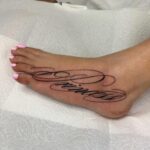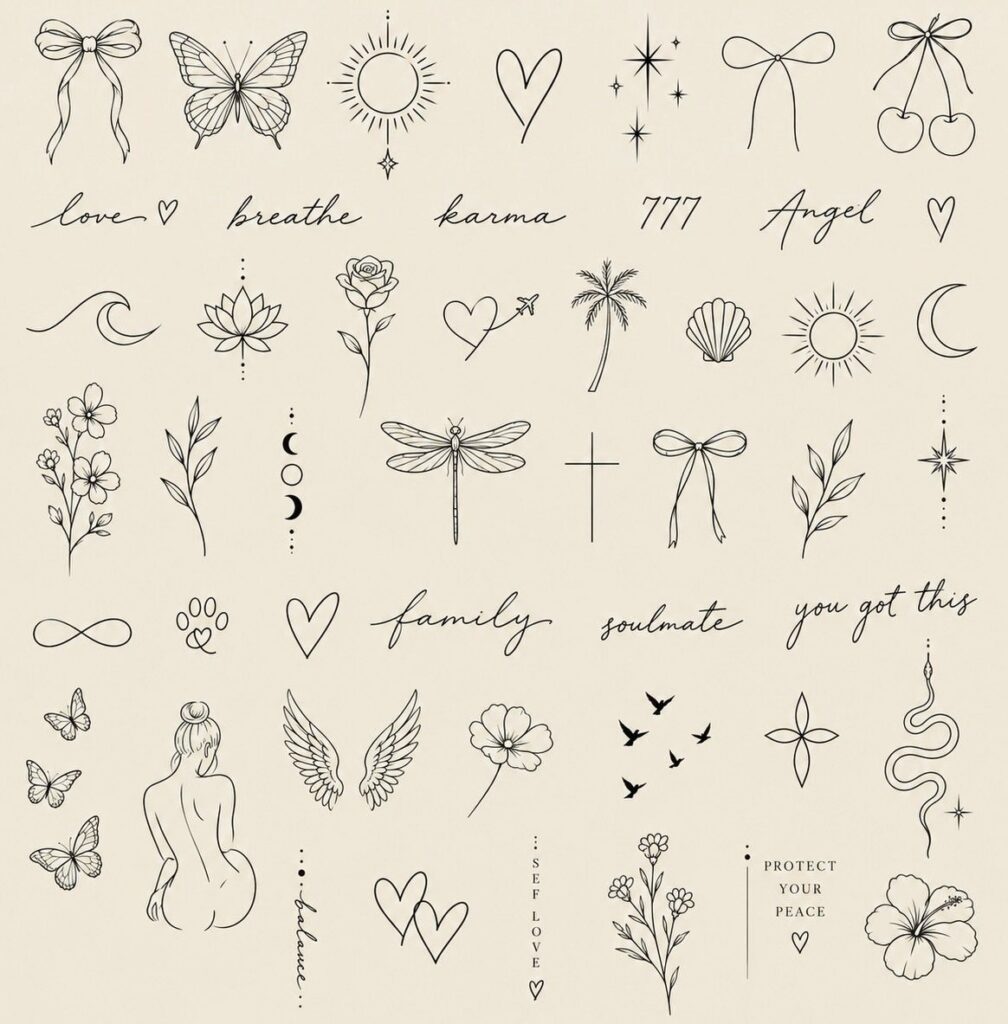
A flash sheet is a page of small ready-to-use designs drawn at tattoo scale, and the style you pick sets how long the piece takes and how well it holds up over time.
The style you pick affects how much time you spend in the chair and how the design reads years from now.
1. Pre-drawn Tattoo Flash Sheet Designs
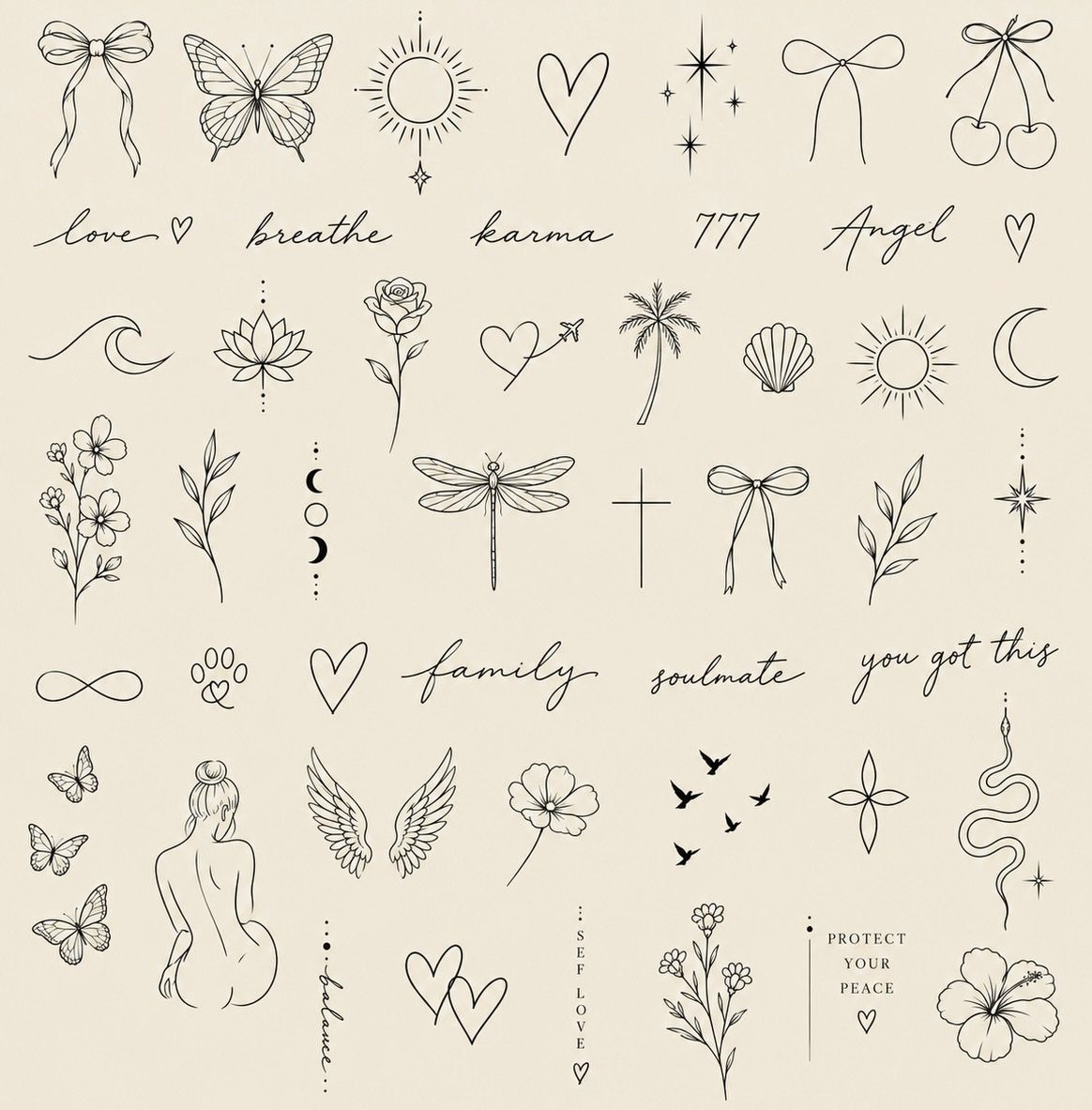
A flash sheet is a page of small ready-to-use designs that a client picks from directly. Each piece is drawn at tattoo scale, so what you see on the sheet is roughly what lands on skin.
Most shops hang flash on the wall or keep it in binders at the counter.
Pre-drawn work like this speeds up walk-ins since the stencil is already finished, and the artist can quote a flat price on the spot. Butterflies, script words and snakes move fast; florals and portrait silhouettes less so.
Ask whether it can be done same-day or needs an appointment.
Tattoo flash is commonly printed on 11×14 inch sheets in North America.
2. Full-color and Outline Tattoo Flash Sheets
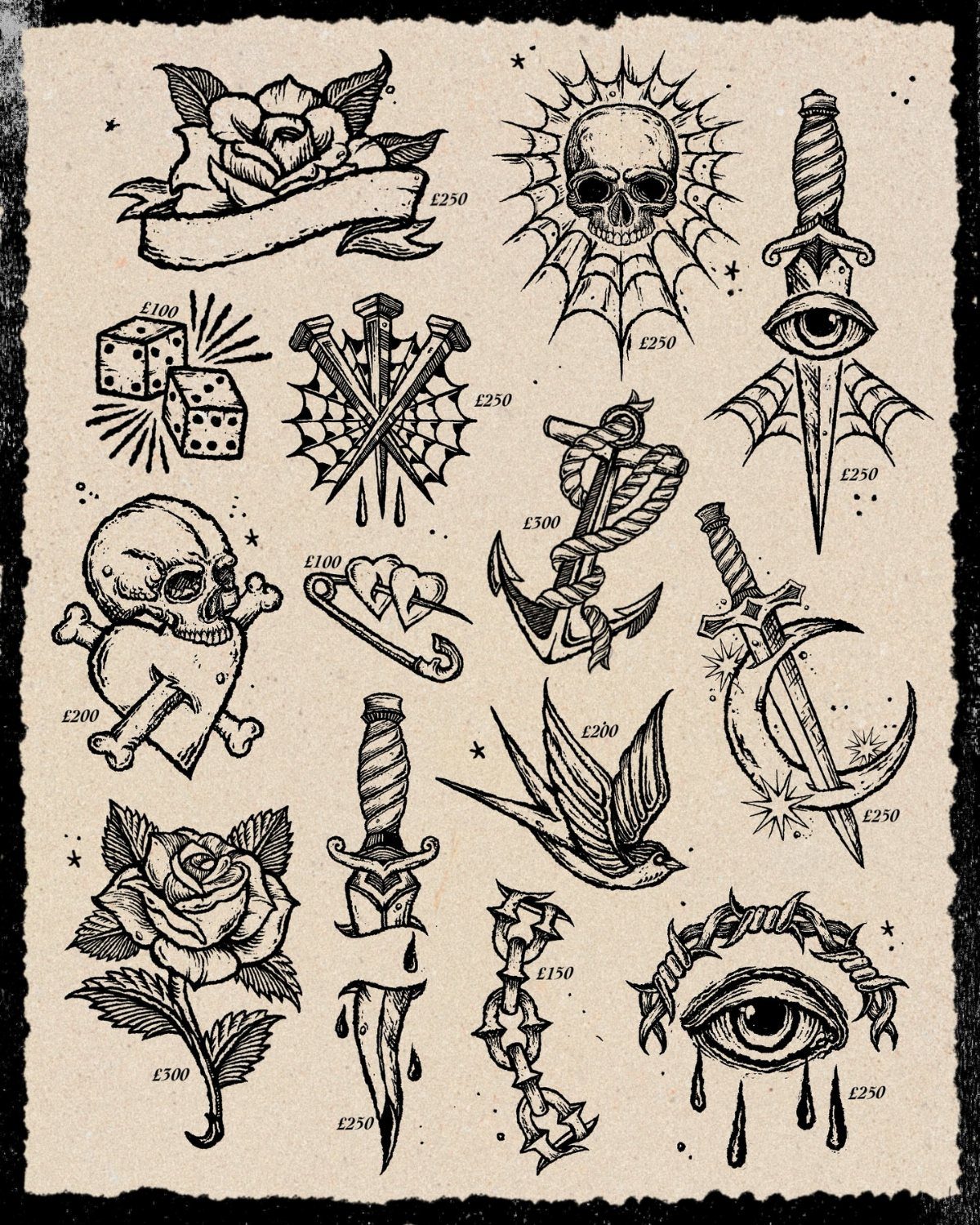
Some sheets offer both clean outlines and fully shaded versions, letting you choose how much detail you want.
Shops that work this way often price the outline lower than the colored piece, since shading and color packing add chair time.
This format works well when you know the subject but are still deciding how bold you want it to look.
3. American Traditional Tattoo Flash Sheet
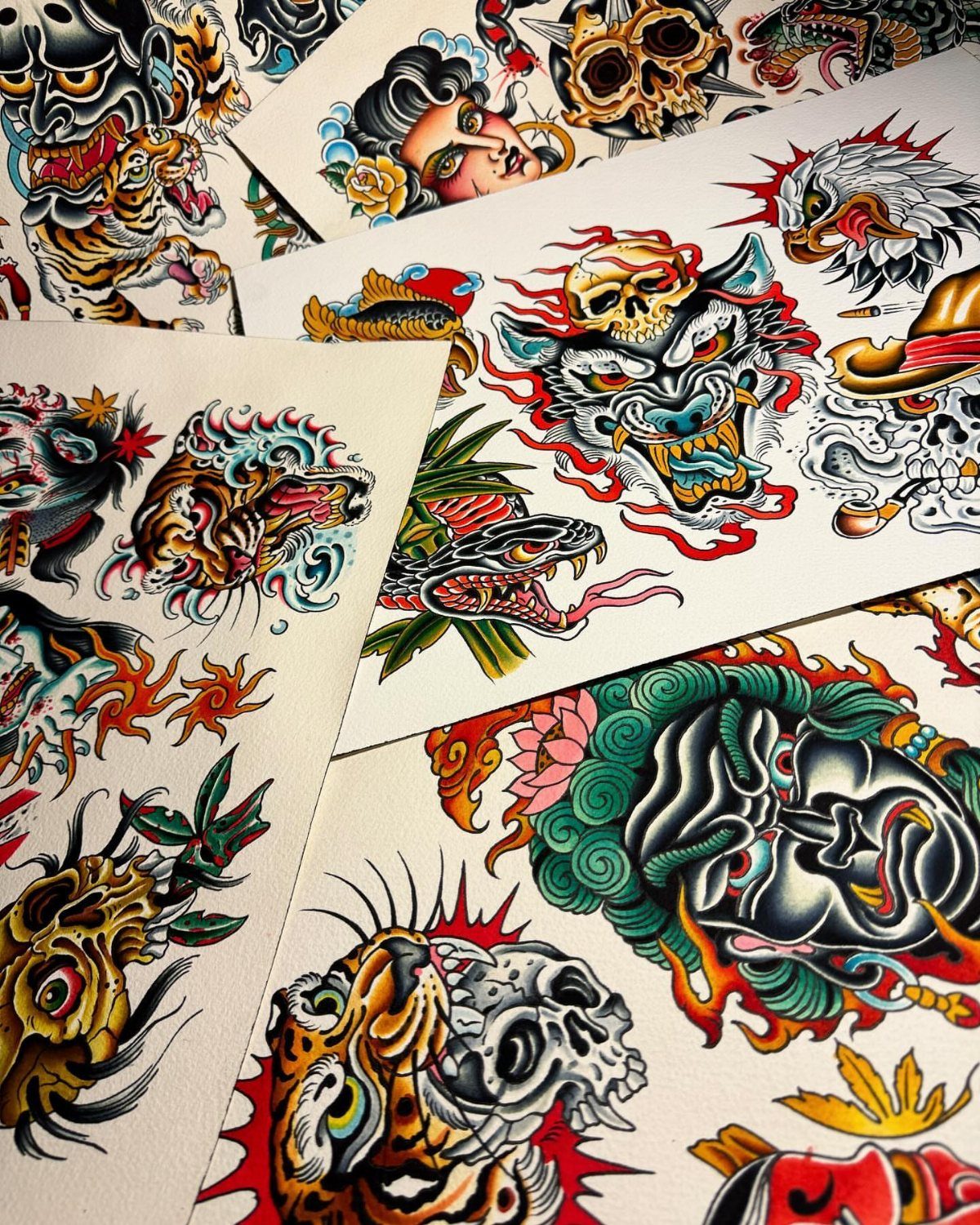
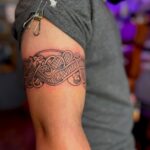
Bold black outlines, a limited palette of red, yellow, green and blue, and subjects that hold up small: roses, daggers, panthers, eagles, anchors.
The style was built for fast, clean tattooing on sailors and soldiers, so the designs are deliberately simple and read clearly even after decades of sun and aging.
Line weight is heavy, shading is minimal, and colors stay inside their borders.
Pick this for something that will still look sharp years from now.
4. Black and Grey Detailed Flash
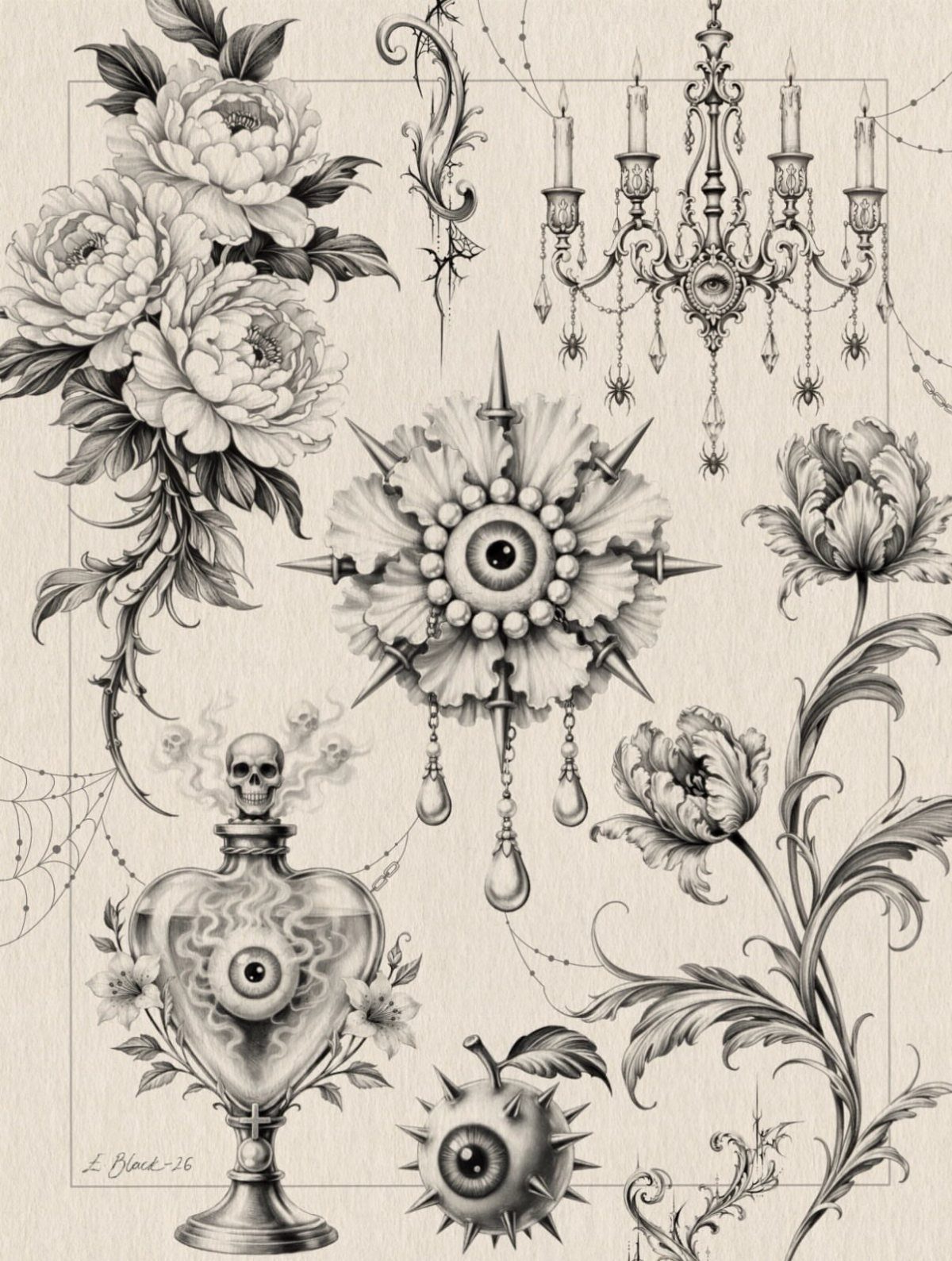
Black and grey flash leans on fine gradient work instead of solid color blocks. Peonies get soft petal folds, chandeliers pick up reflected light, and portrait elements like eyes carry subtle tonal shifts that give them dimension.
This style takes longer to tattoo than bold traditional work because the artist is layering diluted ink to build up shadows gradually. A piece this detailed usually needs a longer session, even at a small size.
If you like realism but want something softer than full color, grey wash gives you depth without the commitment to a palette.
5. Western Themed Flash Sheet
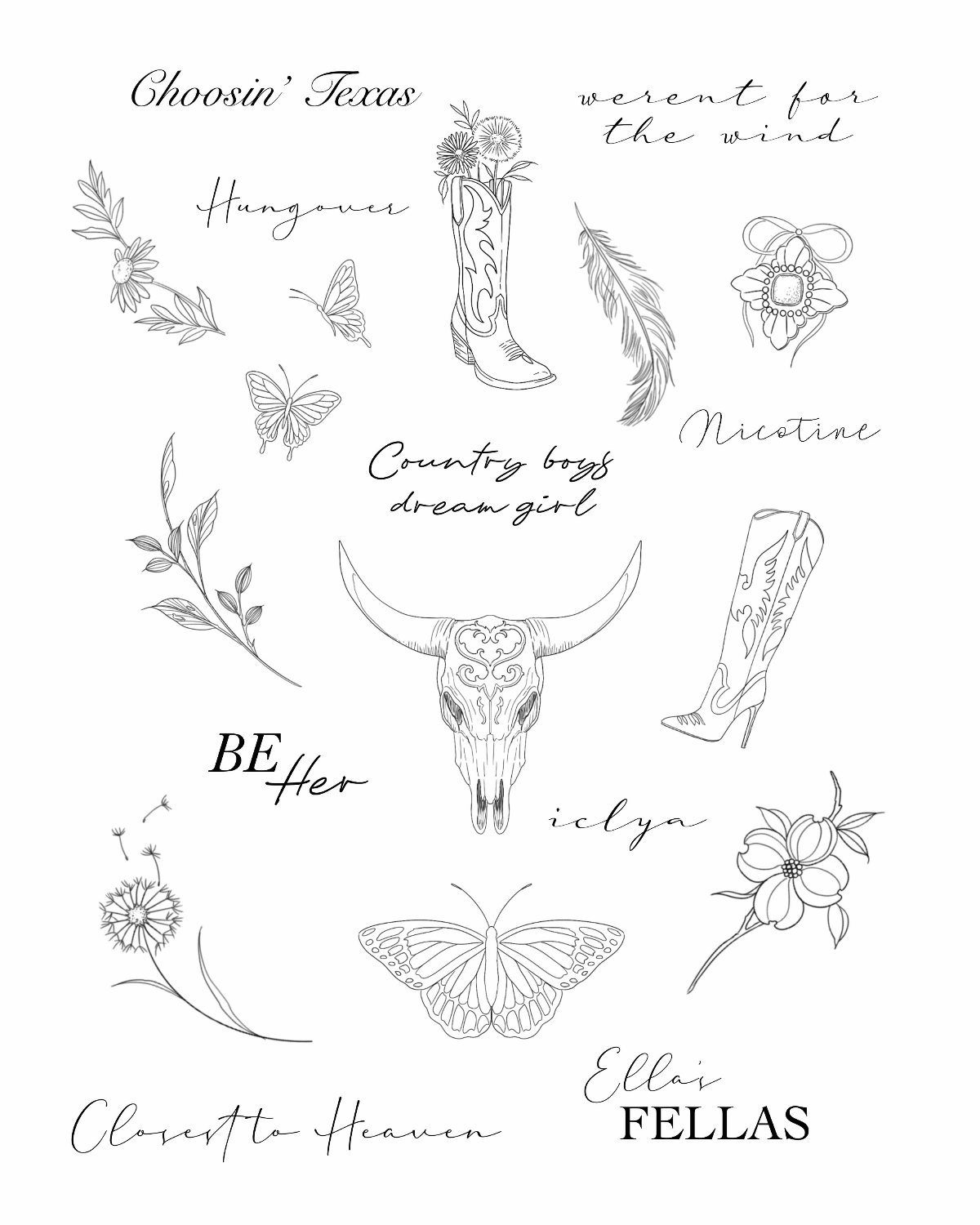
Western flash pulls from ranch and rodeo imagery: longhorn skulls, leather boots with spurs, feathers, wildflowers.
The line is clean and the subject matter skews rural, so it suits anyone with ties to country life or just a preference for that aesthetic.
"Choosin’ Texas" and similar lines work if they match where you are from or how you identify, but skip them if the phrase does not feel like yours.
A steer skull or a pair of boots holds up well on an arm or thigh, and the open line style keeps healing straightforward.
6. Blackwork Flash with Red Accents
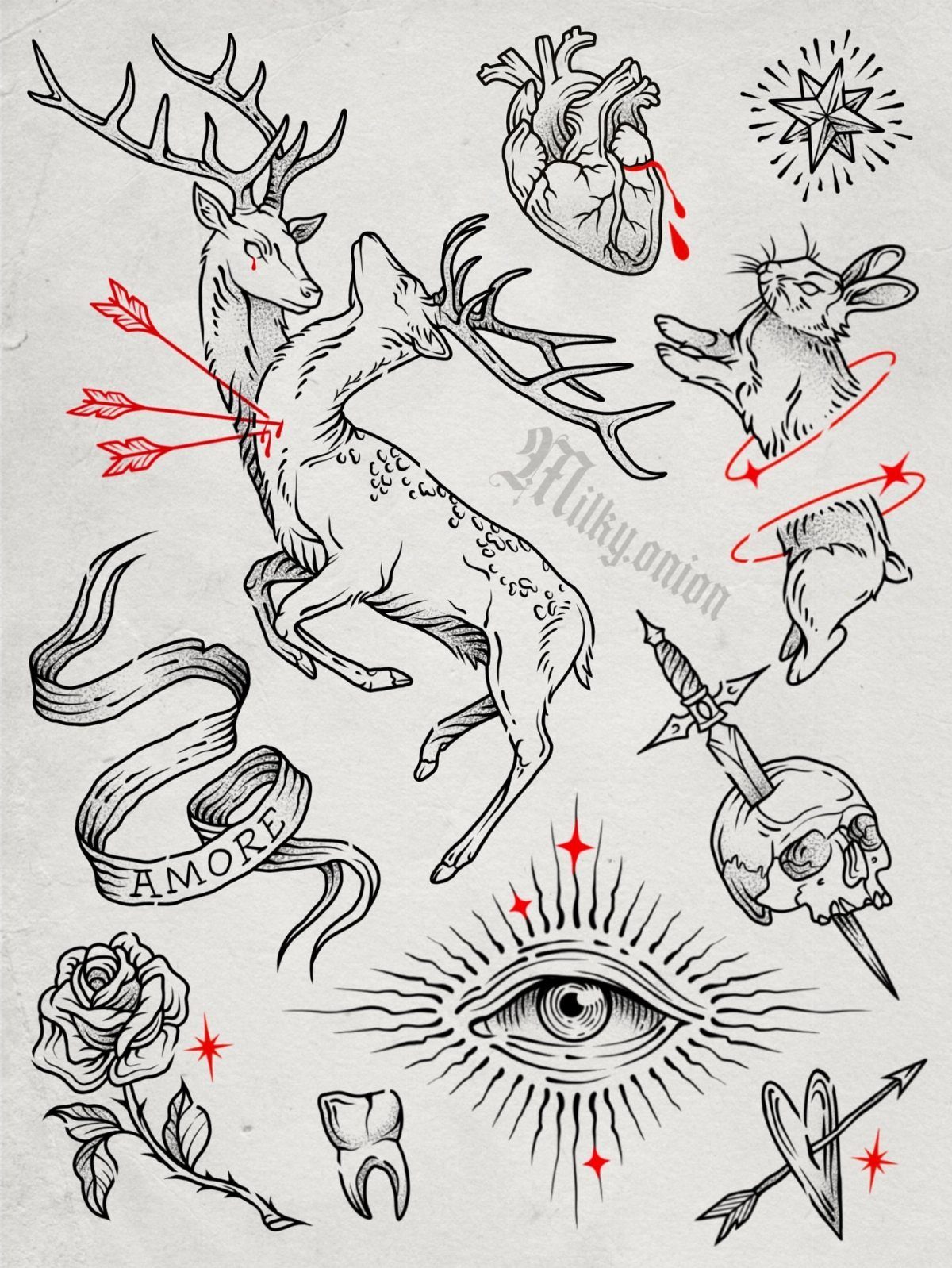
Blackwork flash uses solid black ink for the bulk of the design, then drops in one accent color to pull focus.
Here it is red arrows through the deer and possibly a red heart or banner, but the rest stays stark black line and fill.
The contrast makes the red pop harder than it would on a full-color sheet, and the limited palette holds everything together. Single-color accents also heal predictably since there is less ink mixing and fewer passes over the same area.
This approach works when you want a design that feels bold but not busy.
7. Fine Line Script and Symbols
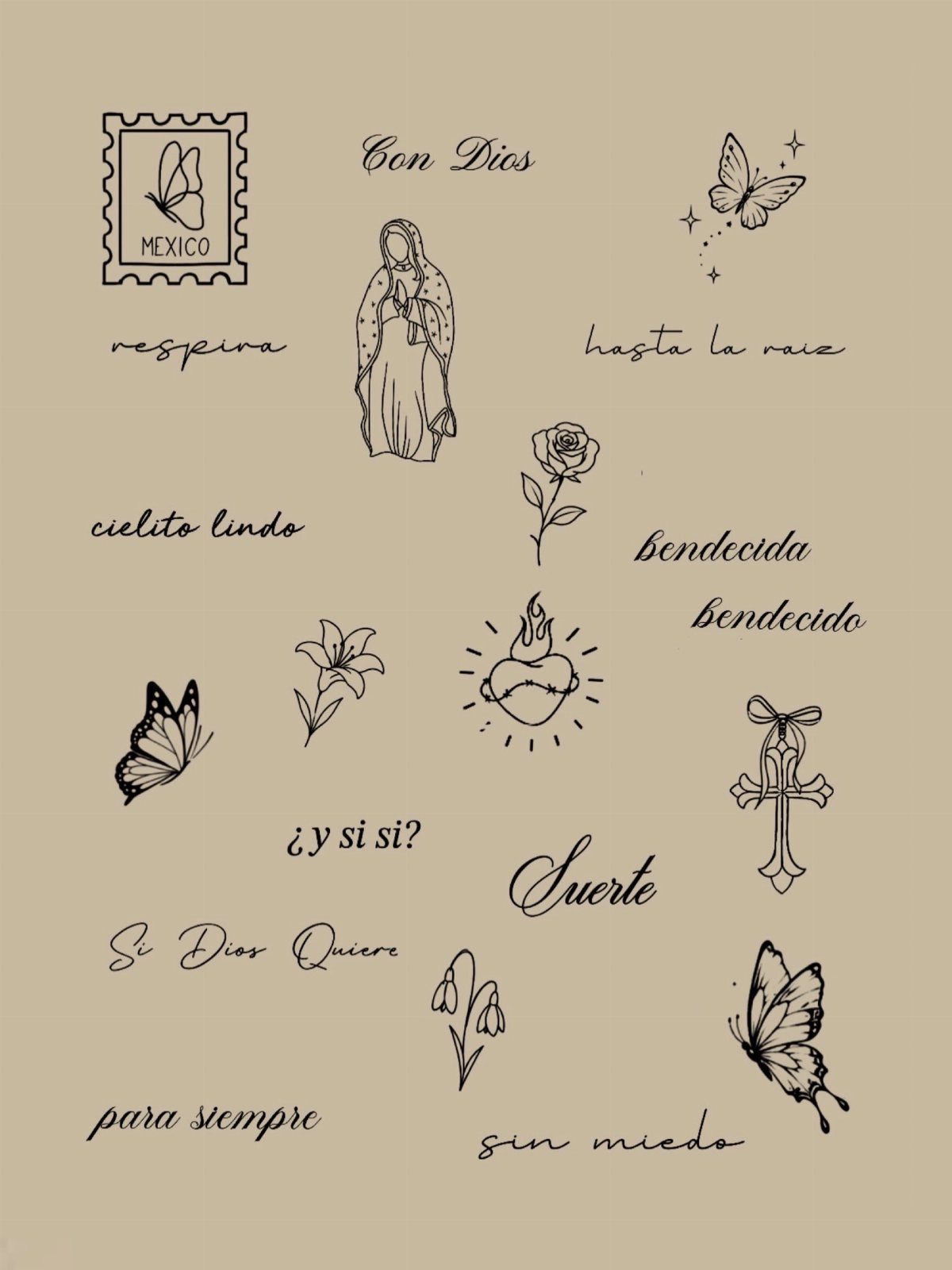
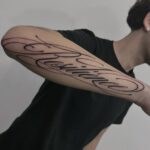
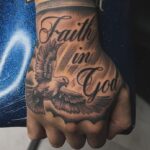
Script flash pairs religious iconography with hand-lettered phrases, usually in Spanish. "Con Dios," "para siempre," and similar lines work if the language fits your background or faith; otherwise they read as borrowed.
The butterflies, sacred hearts and Marian imagery are standard Catholic tattoo vocabulary and hold meaning for people raised in that tradition.
Fine line work like this heals well at small sizes but needs a steady hand, so check that your artist has script samples in their portfolio before you book.
A phrase in your own language will age better than one you picked for the look alone.
8. Cute Micro Line Flash Sheet
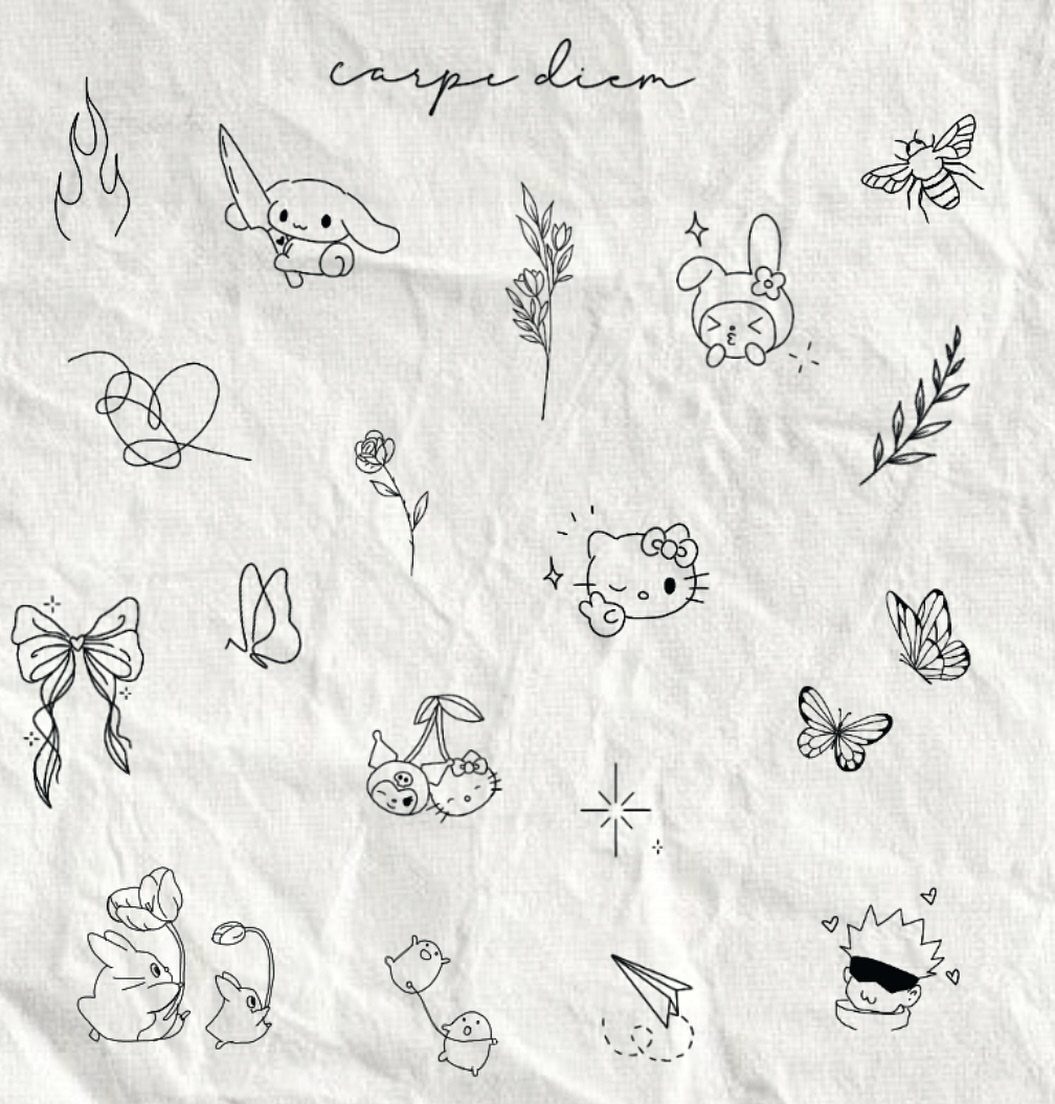
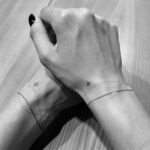
Micro flash is built for visibility at very small scale. Hello Kitty, bows and butterflies are drawn with minimal detail so they still read clearly when tattooed under an inch tall.
Tiny line work holds up best on flat, low-friction skin: inner forearm, collarbone, upper neck. On the hand or foot, lines this thin can blur or fade faster since the skin moves and sheds more often.
Something small enough to hide or stack with other pieces gives you options that stay legible long-term.
Choosing Tattoo Flash Designs
Spend time flipping through all of them before you settle on a design, since each artist’s work shows a different approach to line weight, subject matter and composition.
The way an artist handles shading, color balance or detail in a pre-drawn piece tells you how they will approach your skin. If you see a flash sheet full of tight, clean work, that precision carries over to the tattoo.
Ask about placement once you have narrowed your choice.
An artist who has tattooed the same design multiple times knows which body part it reads best on and where the proportions hold up. That recommendation is worth following.
Tattoo Flash for Practice
Flash gives apprentice artists a way to practice line work and shading without needing to design from scratch.
Copying designs from established tattooers helps build technical skill, but that work does not belong in a portfolio or on social media since it is not original.
Many shops stock sheets from other artists and make them available to walk-ins.
Purchased flash can go on your wall and be tattooed on clients, but it cannot be presented as your own work when applying for apprenticeships or studio spots.
Bold, simple subjects like roses, anchors and daggers were built to age well, and many artists still work from those classic forms because they produce clean, long-lasting results.
Social Media Influence
Social media lets clients browse flash from artists across the country without stepping into a shop first.
Hashtags like #tattooflash and #tattooart surface thousands of designs in seconds, so you can compare styles and find work that matches what you are looking for before you book.
For artists, posting flash online builds an audience and shows potential clients what they are ready to tattoo.
Flash that gets attention on Instagram or TikTok often turns into same-day appointments, since the design is already drawn and the stencil can be pulled immediately.
Flash also gives artists a way to highlight the subjects and styles they most enjoy putting on skin. When someone creates work they are excited about, the quality of the final tattoo tends to be stronger.
Frequently Asked Questions
What is a flash sheet in tattooing?
A flash sheet is a page of pre-drawn tattoo designs laid out together for clients to pick from on the spot.
Shops hang them on walls or keep them in binders at the counter, and each design is already drawn at tattoo scale so you see what will go on your skin.
The stencil sits ready to transfer and the artist knows the price before the client sits down.
Where can I buy tattoo flash sheets?
You can buy flash from other tattoo artists online, at conventions, or directly from professional flash designers who sell copyrighted prints.
Shops pin purchased flash to the wall so clients can pick a design the same day. You can ink someone else’s flash on a client, but the finished tattoo stays off your portfolio and your social accounts.