A Christian tattoo for women runs from a single-word script behind the ear to a full realism Virgin Mary or Christ portrait that needs the forearm or upper arm, and the choice comes down to how much detail the symbol requires to hold its meaning.
A dove or an Ichthys fish reads clearly at an inch, while a Virgin Mary or kneeling figure demands space for shading in the fabric and face.
1. Dove Tattoo
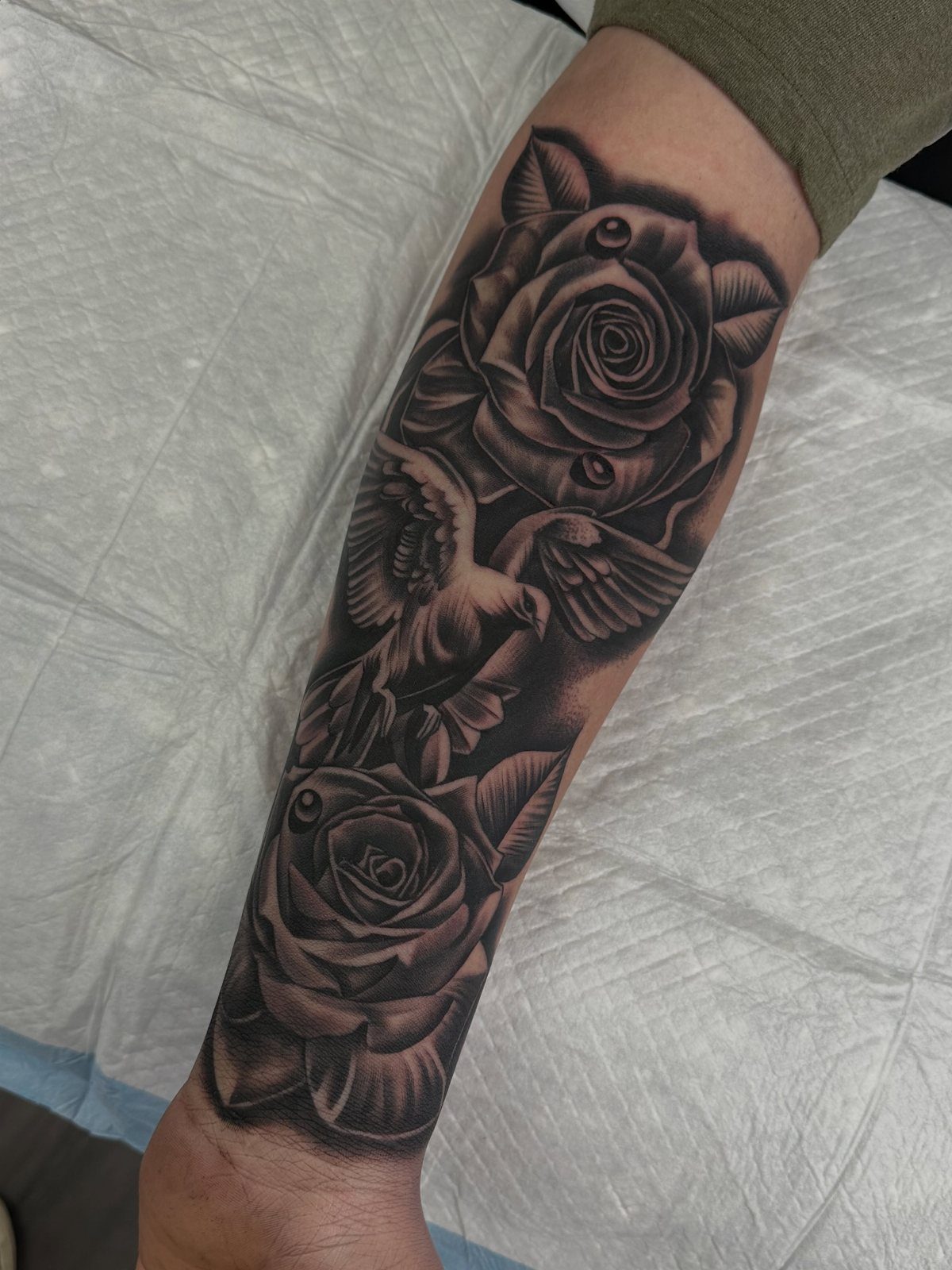
A dove in flight carries the Holy Spirit across the forearm, flanked here by 2 roses that soften the symbol without competing with it.
Black and grey shading lets the bird read clearly from a distance, and the rose petals add weight around the edges so the design fills the space.
A forearm dove sits where you can show it or hide it depending on the day. The size holds detail well, and the open wings give the composition natural balance.
A smaller dove on the wrist or collarbone gives you the same symbol in a quieter form. The symbol stays recognizable even at an inch.
2. Crown of Thorns Tattoo
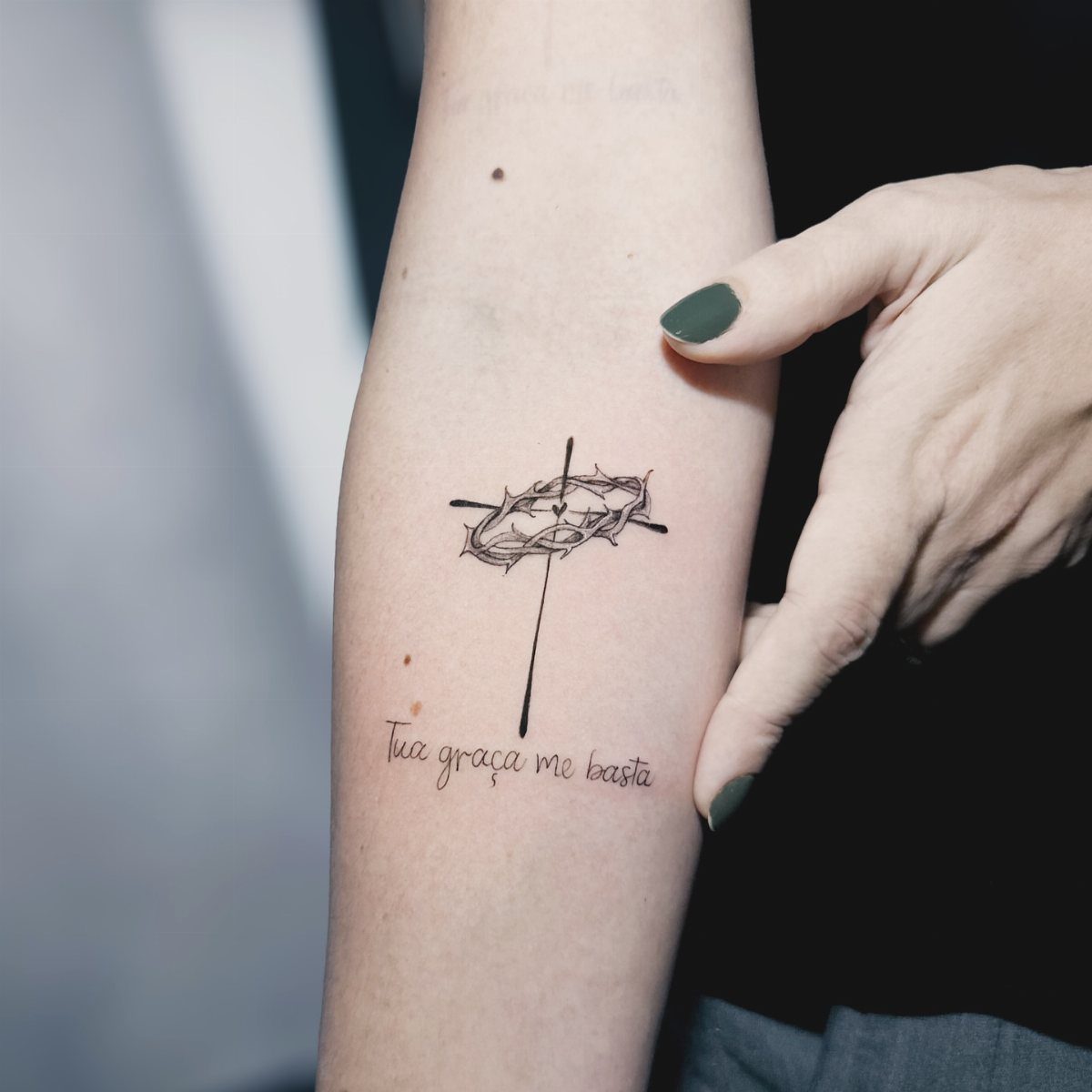
The crown of thorns wraps the cross at its center, pulling the eye straight to the sacrifice. Black line work keeps it sharp, and the Portuguese text underneath anchors the image without crowding it.
Forearm placement puts the design where you see it daily. The vertical shape fits the natural line of the arm, and the crown detail holds up at this scale without needing heavy shading.
Text in another language adds personal meaning while keeping the design accessible to strangers. If you choose script, keep it to one short phrase so the letters stay legible as the tattoo ages.
3. Rosary Tattoo
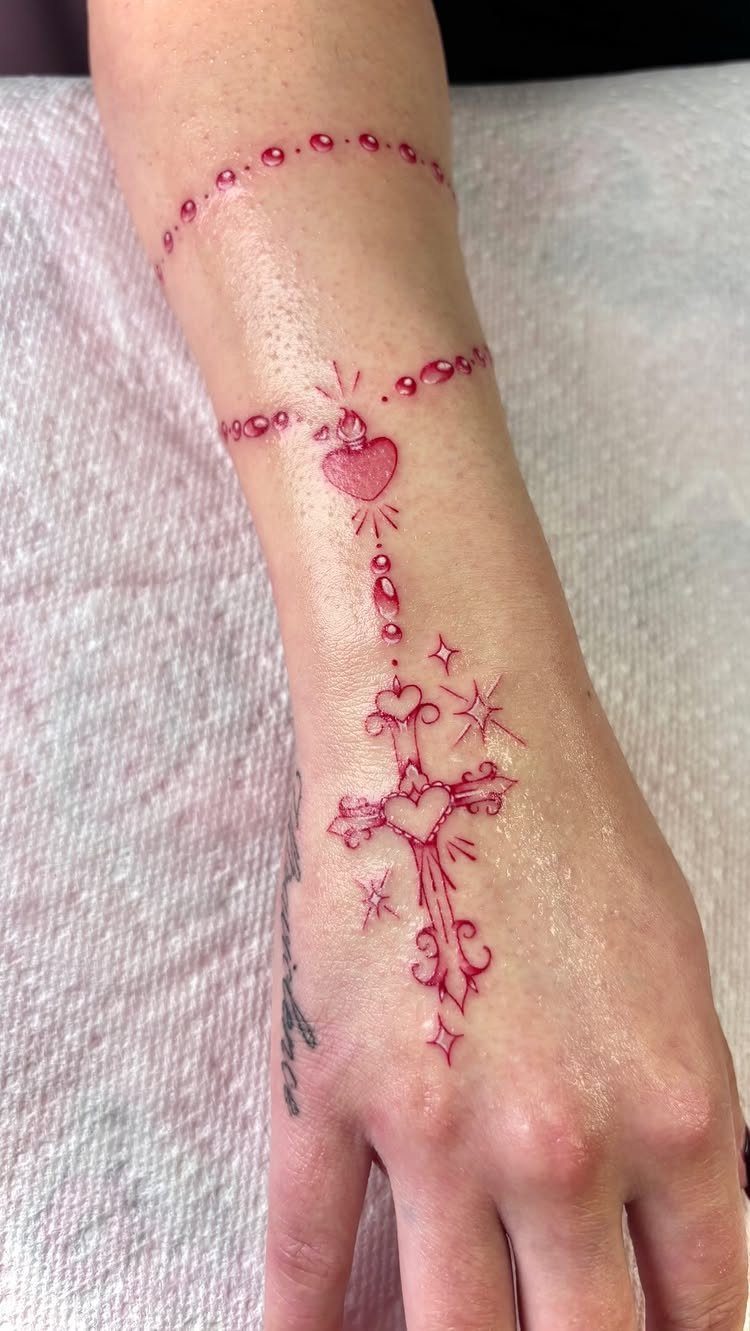
Red ink gives this rosary a softer read than black, and the heart at the center ties devotion to love in a way that feels immediate.
The beads drape across the wrist with enough slack to look natural, and the decorative cross keeps the bottom weighted.
The wrist puts the rosary where you’ll see it most of the day. Red ink fades faster than black, so expect a touch-up every few years to keep the color saturated.
A full rosary wrapping the wrist or forearm gives you more beads to work with, but this condensed version stays readable and leaves room for other tattoos nearby.
4. Angel Wings Tattoo
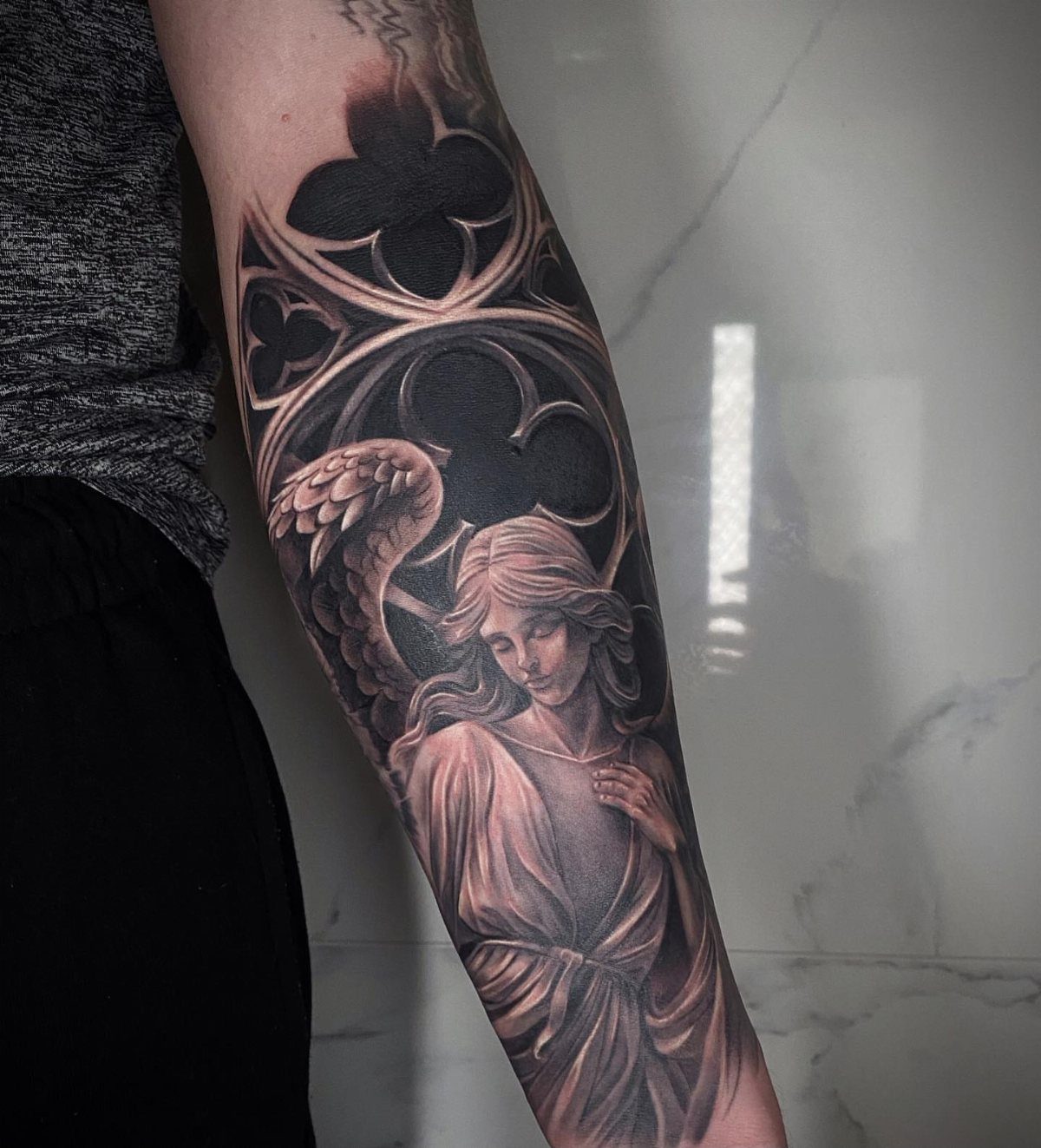
An angel under a gothic arch turns the forearm into a vertical canvas, and the architectural frame gives the figure a sense of place without needing background scenery.
Black and grey realism needs a skilled artist, but the depth it gives you holds up at any distance.
Forearm placement suits the vertical composition, and the size allows enough detail in the wings and archway to make both elements read clearly. The shading builds dimension without filling every inch, so the design stays open.
A pair of wings on the shoulder blade or upper back gives you the symbol without the full figure. The symbol carries the same protection, and the placement feels more private.
5. Ichthys (Christian Fish) Tattoo
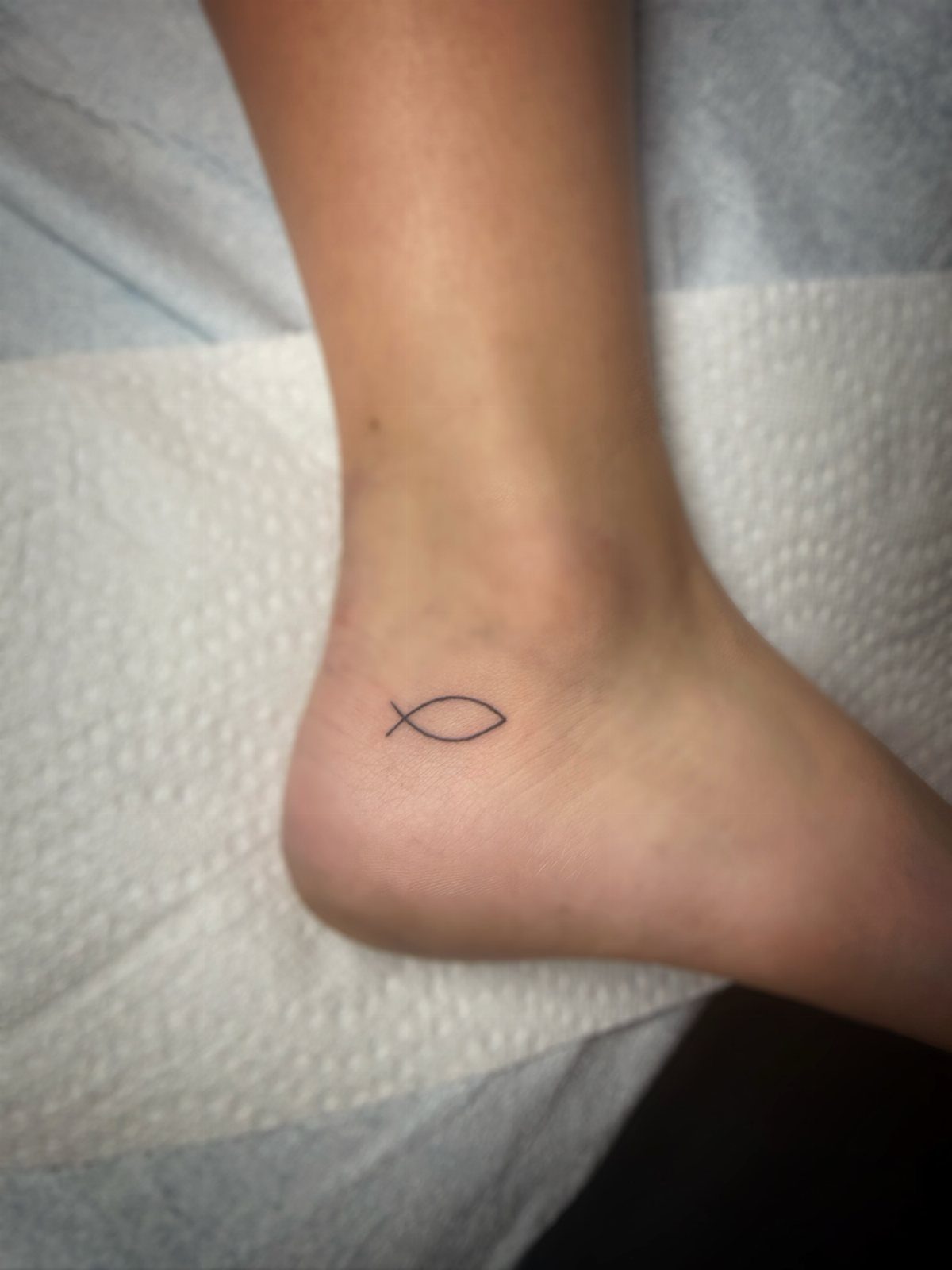
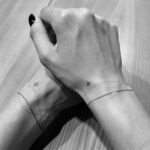
The Ichthys sits small on the ankle, a single curved line with a tail that every early Christian would recognize.
Black ink keeps it simple, and the size means you can tuck it into a boot or sandal strap depending on the day.
Ankle placement works for a first tattoo or something you want subtle. The fish stays legible even at this scale, and the clean line work ages well because there is no shading to blur.
If you want it more visible, the wrist or behind the ear gives you the same discreet read with easier access. The symbol works anywhere you can fit an inch of ink.
6. Trinity Tattoo
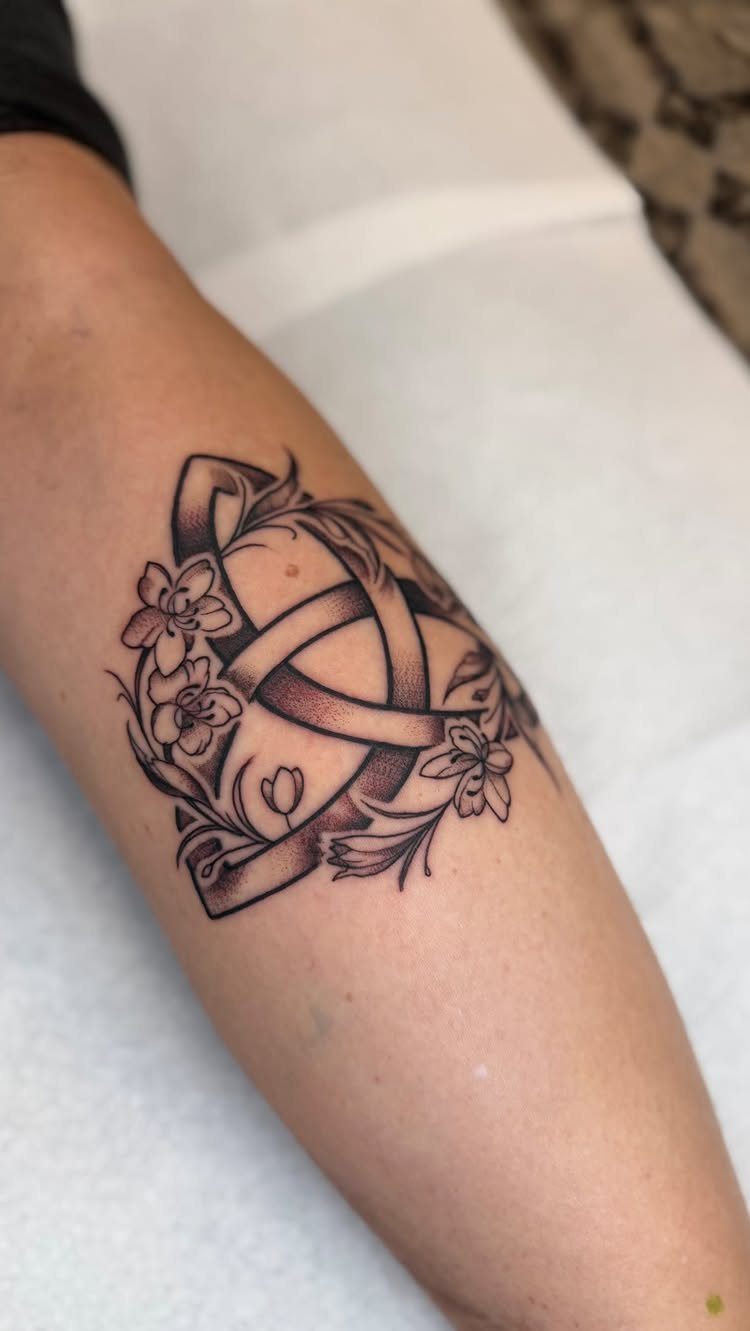
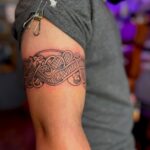
The Triquetra knot locks three arcs into one unbroken loop, and the floral accents here soften the geometry without covering it. Black ink keeps the design readable, and the flowers add organic detail where the lines meet.
The lower leg leaves space to add more florals down the line. The knot itself stays small enough to fit on a wrist or shoulder, but the leg lets you scale it up without losing the clean intersections.
If you skip the flowers, the bare Triquetra reads just as clearly and takes up less space. The Trinity symbol holds its meaning either way, and the simpler version ages with sharper lines.
7. Grace in Elegant Script Tattoo
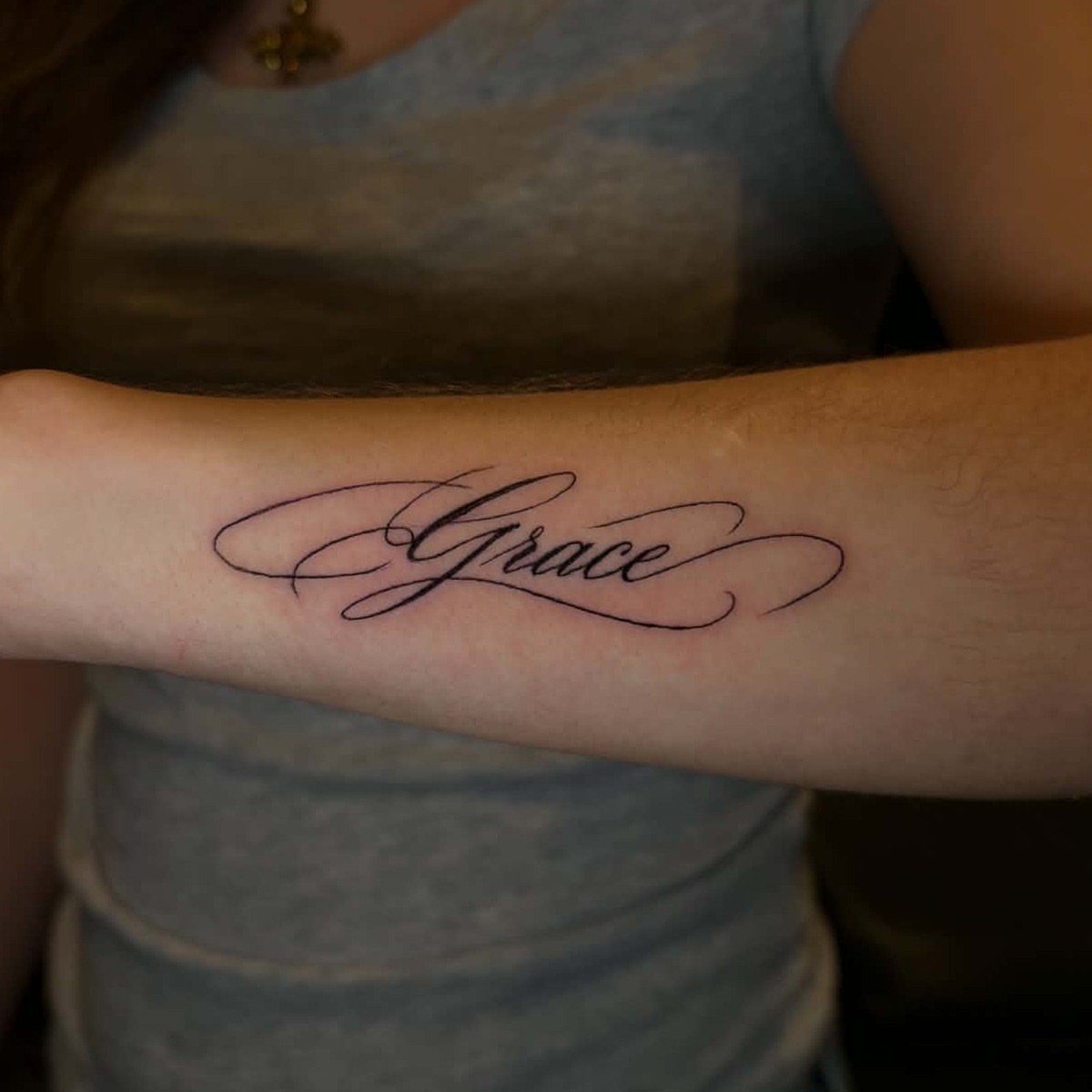
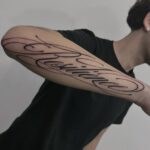
A single word in flowing script across the forearm leaves no detail to decode. Cursive at this scale reads clearly, and black ink holds the letter edges clean against skin.
Script tattoos need careful spacing so the letters stay distinct as they age. A forearm gives you enough length to write the word without cramping the curves, and the placement keeps it visible when you want it.
If you go smaller, behind the ear or on the wrist, pick a shorter word or simpler lettering. Fine script blurs faster than bold, so a thicker stroke holds up better over time.
8. Faith Tattoo
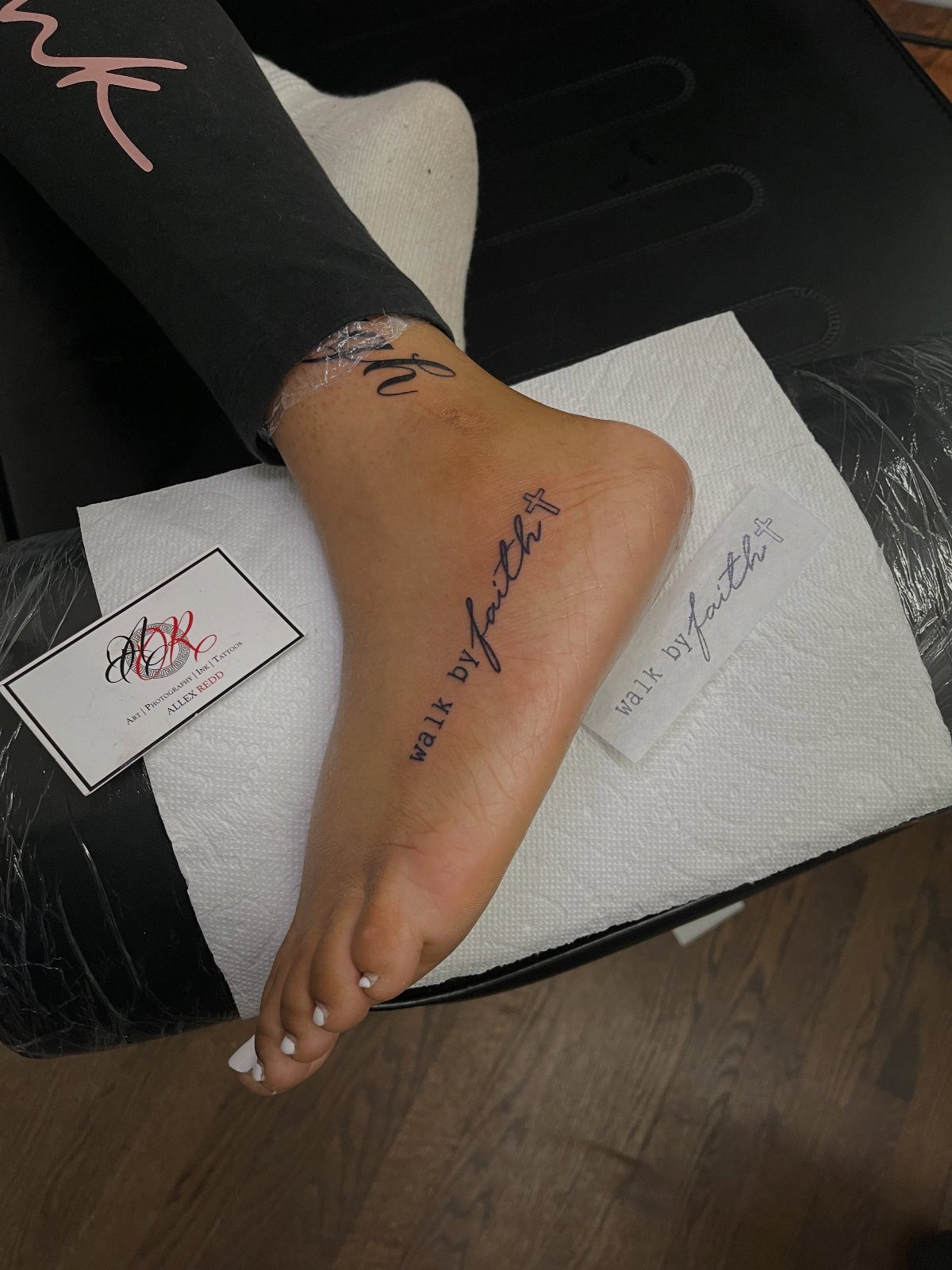
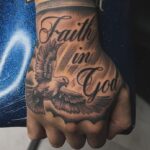
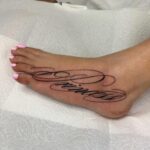
The phrase runs along the length of the foot, one word flowing into the next, with the cross anchoring the end. Black cursive keeps it readable, and the foot gives you a natural baseline that follows the shape.
Foot tattoos hurt more than most placements because the skin sits close to bone. Shoes rub the area, which slows healing, so give yourself time before wearing anything snug.
The symbol reads just as clearly in half the space.
9. God Is Greater Than the Highs and Lows
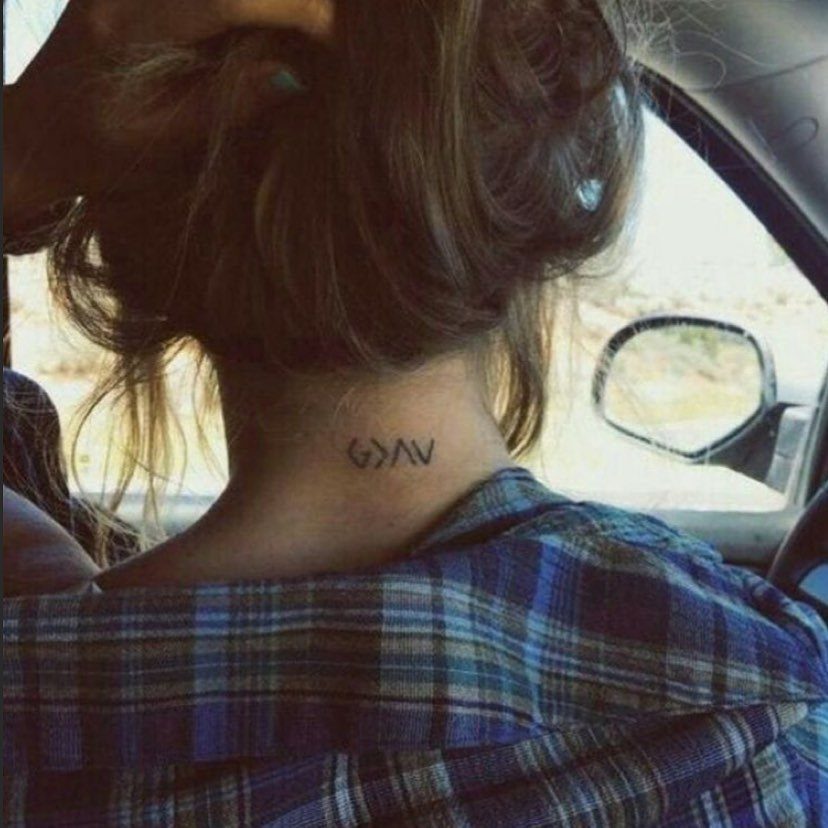
The shorthand compresses a whole phrase: G for God, the greater-than and less-than symbols, and a V for the highs and lows.
The back of the neck keeps it small and personal, readable in an updo but hidden with your hair down.
The symbols sit tight enough to fit on a wrist or behind the ear for easier visibility. Black ink at this scale needs clean lines, so find an artist who works fine detail regularly.
The full phrase spelled out needs the forearm or ribcage, where the length fits comfortably.
10. Sacred Heart Tattoo
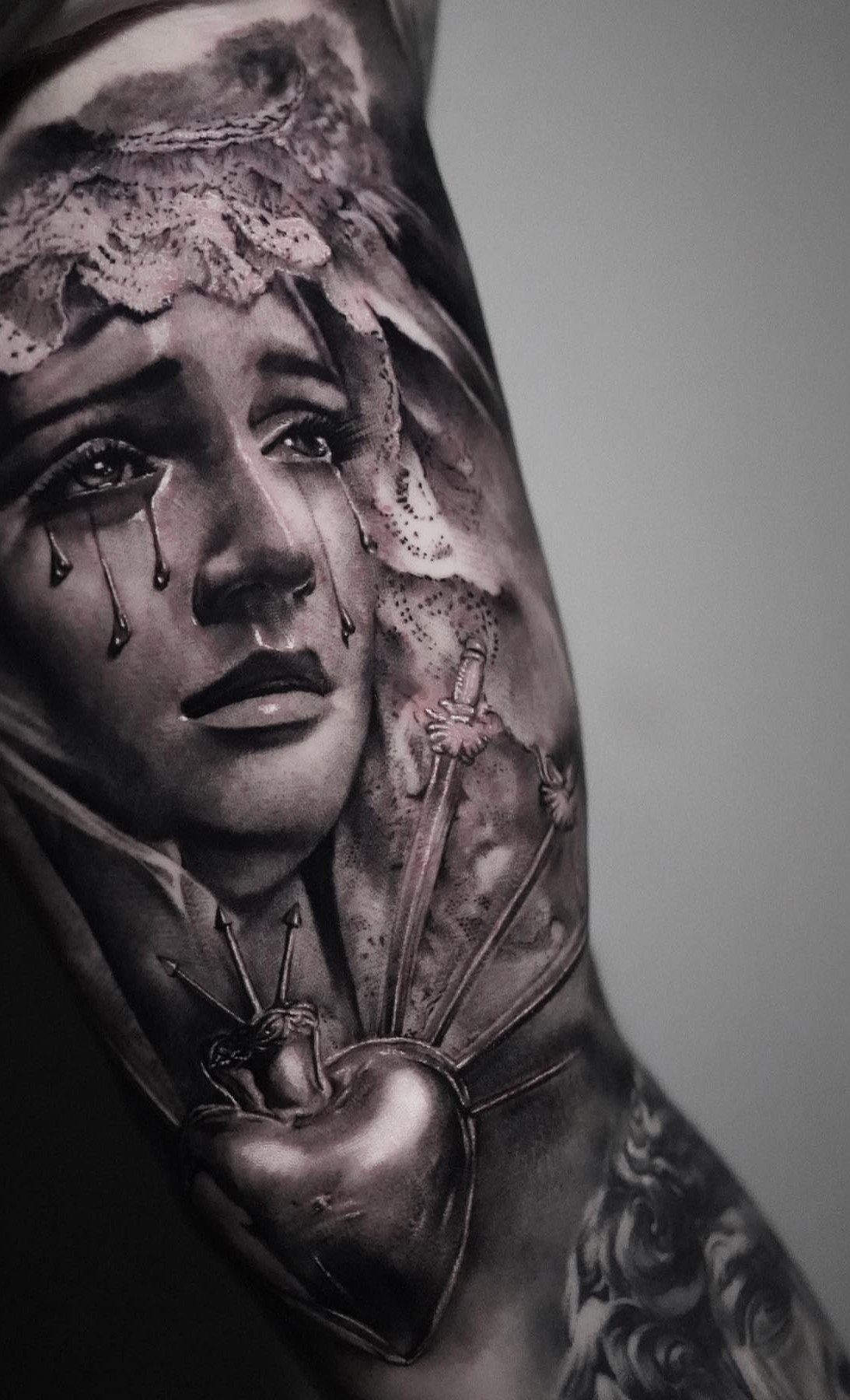
The weeping woman above the pierced heart adds a second layer of sorrow, and realism at this level requires an artist who can render both the face and the fabric veil.
Black and grey shading builds the depth, and the swords through the heart anchor the composition at the bottom.
This design needs space to breathe. The upper arm gives you enough canvas for the detail in the lace and the expression, and the vertical layout fits the natural curve.
A simpler sacred heart without the figure keeps the symbol clear at a smaller scale. The heart alone reads on a wrist or ankle and carries the same devotion.
11. Lamb Tattoo
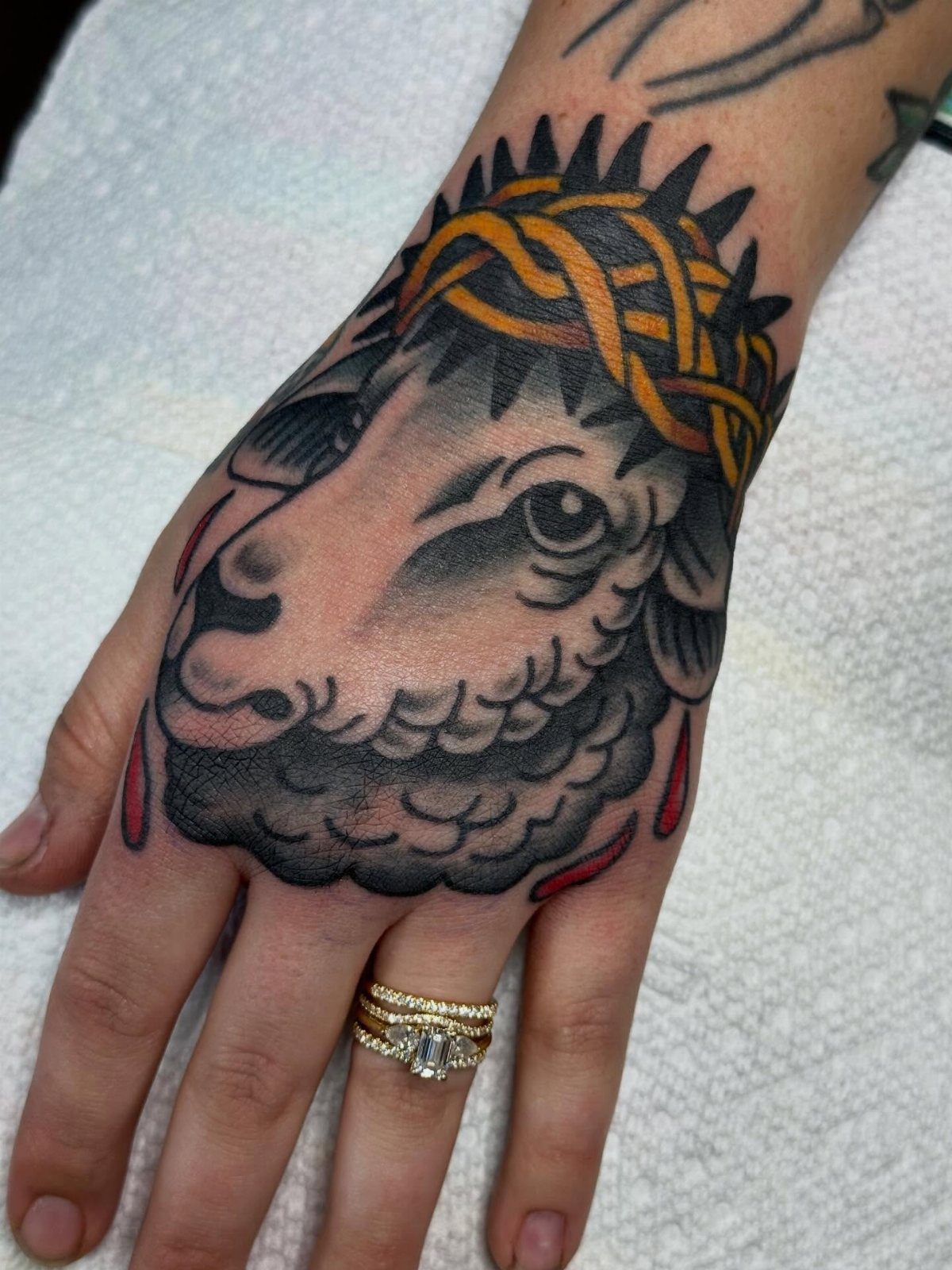
The lamb crowned with thorns sits on the back of the hand, a tight composition that fits between the knuckles and wrist.
Black and grey realism gives the face enough definition to read clearly, and the thorns frame the head without crowding the edges.
Expect a touch-up every few years, and plan for the fact that gloves and handwashing will test the ink.
A forearm or shoulder gives you the same image with less maintenance.
12. Praying Hands Tattoo
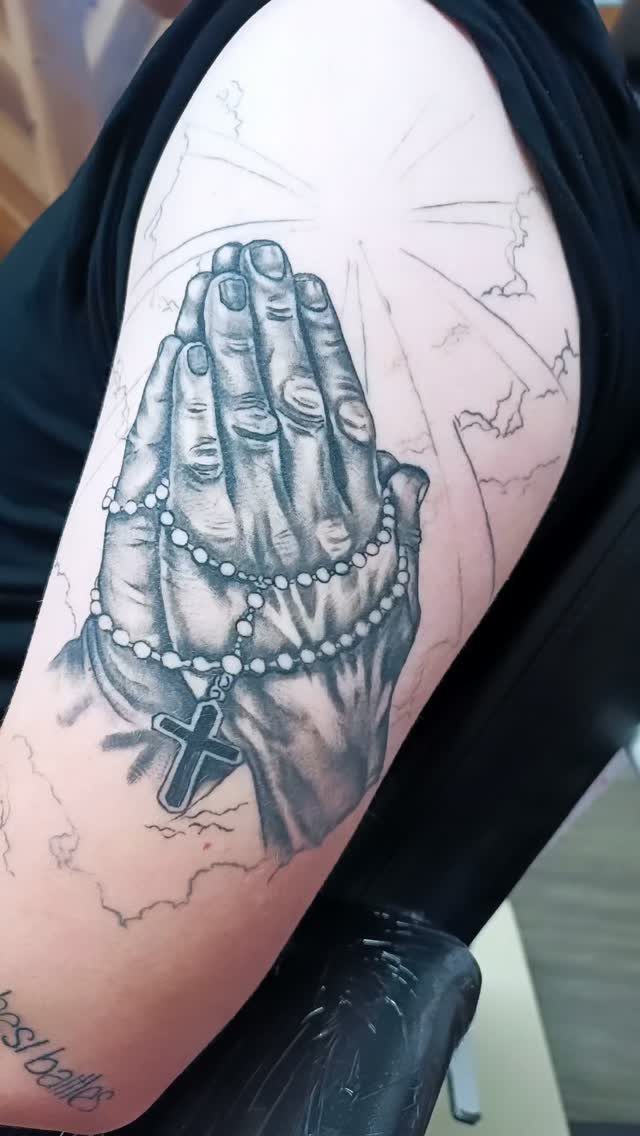
Praying hands with a rosary loop between the fingers, and the cross hangs at the bottom where the composition needs weight.
Black and grey shading builds dimension in the knuckles and folds, and the upper arm gives you enough space for the full detail.
The upper arm hides easily under a sleeve and shows when you want it. The shading holds up well here because the skin stays protected from sun most of the year.
The hands alone read clearly at half the size and leave room for other designs nearby.
13. Cross and Crucifix
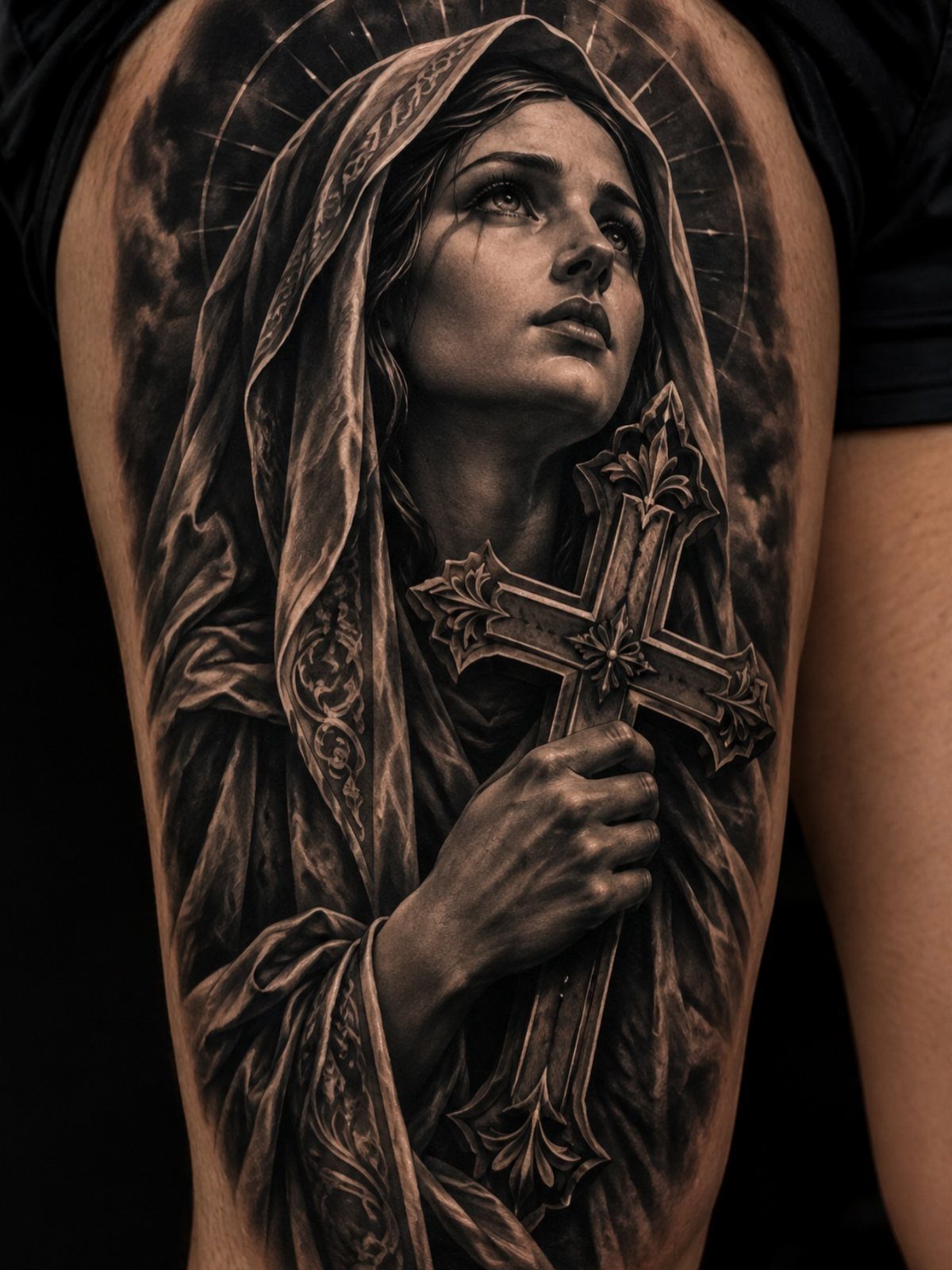
The veiled woman holds the cross close, her figure framed by soft clouds that let the realism breathe.
A cross alone, whether Latin or crucifix, fits a wrist or collarbone at half the size. The symbol carries the same weight without the figure, and the simpler form ages with cleaner lines.
If you add a figure, expect the tattoo to need an artist who works portraiture regularly. Faces and fabric demand precision, and poor execution shows immediately.
14. Floral Cross Design
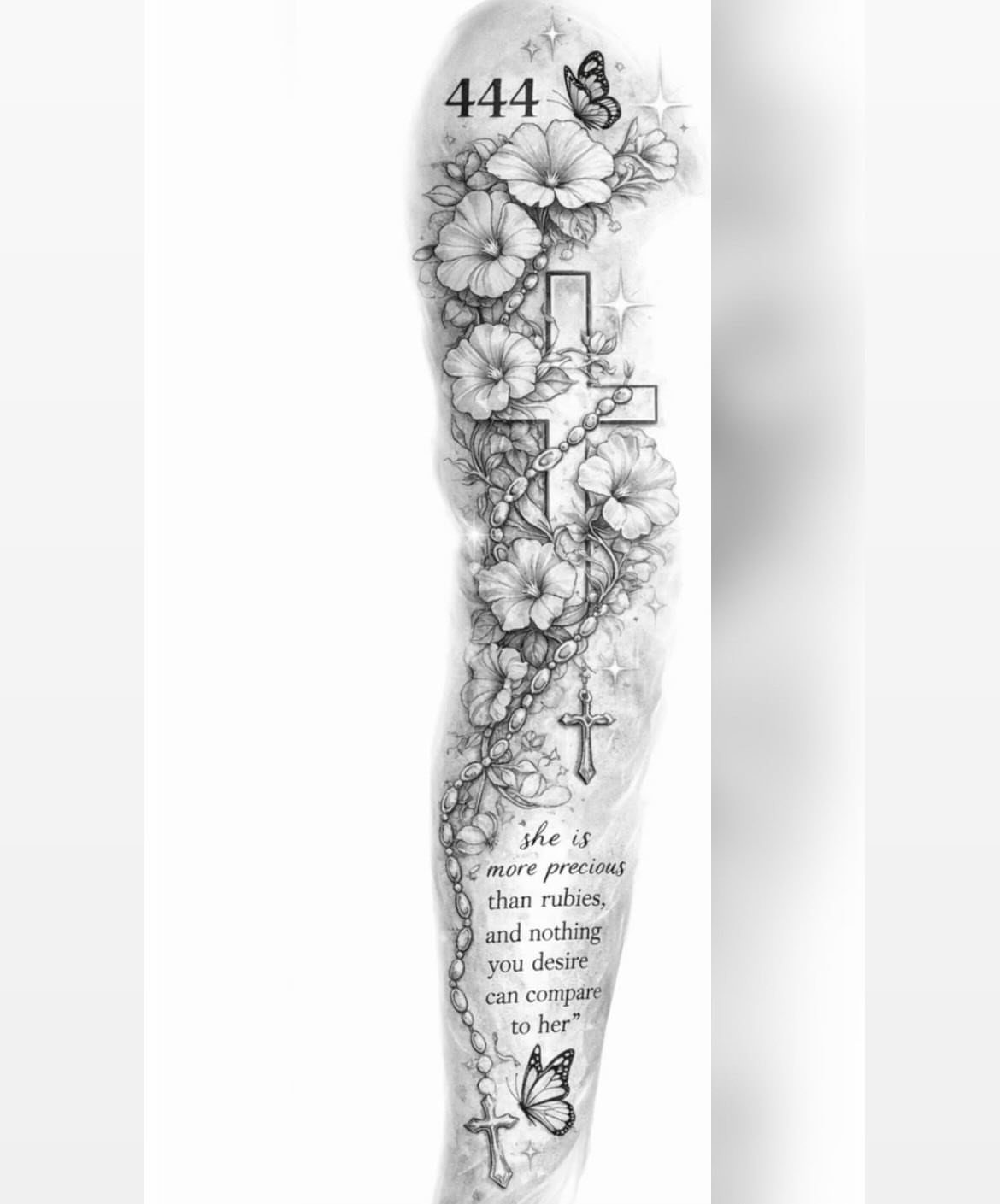
Flowers climb the cross stems, and the butterflies pull the eye upward while the rosary beads anchor the bottom.
Script runs underneath the floral cross without competing for space. Black and grey keeps every element distinct, and the forearm lets you layer symbols without cramming them.
Floral crosses work at any scale. A single bloom wrapping a small cross on the wrist stays just as readable, and the organic shapes soften the geometry without covering the meaning.
If you plan to add more over time, leave space between elements now. Tight compositions look full immediately but box you in later.
15. John 3:16 Tattoo
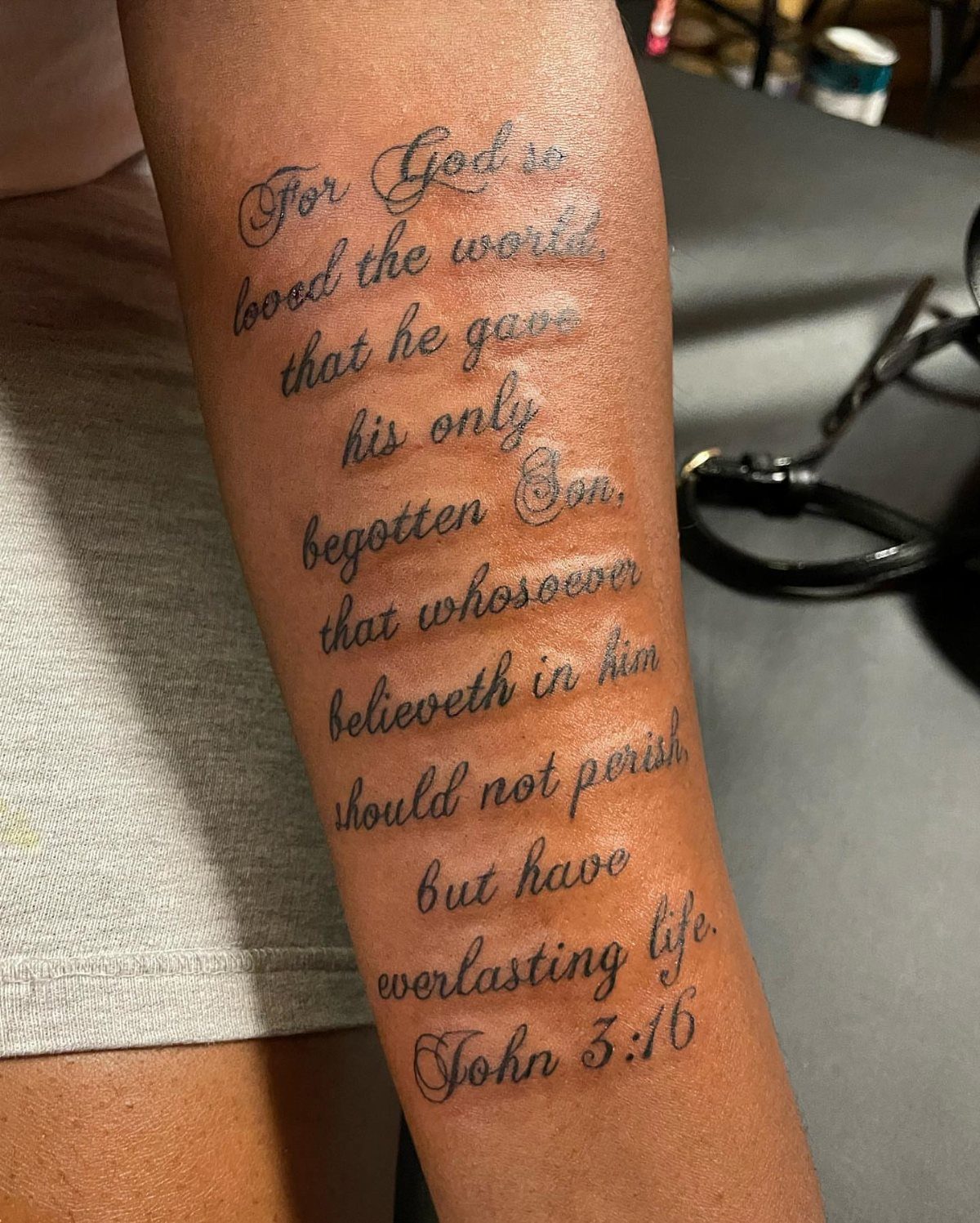
The full verse spelled out across the forearm gives you every word of the passage, and cursive script at this scale stays legible if the artist spaces it carefully.
Black ink holds the letter edges sharp, and the length needs the forearm or ribcage to fit without cramping the lines.
A citation alone, John 3:16 in smaller script, delivers the reference in a fraction of the space. Readers who know the verse will recognize it, and the shorter version fits a wrist or collarbone easily.
16. Vine and Branches Illustration
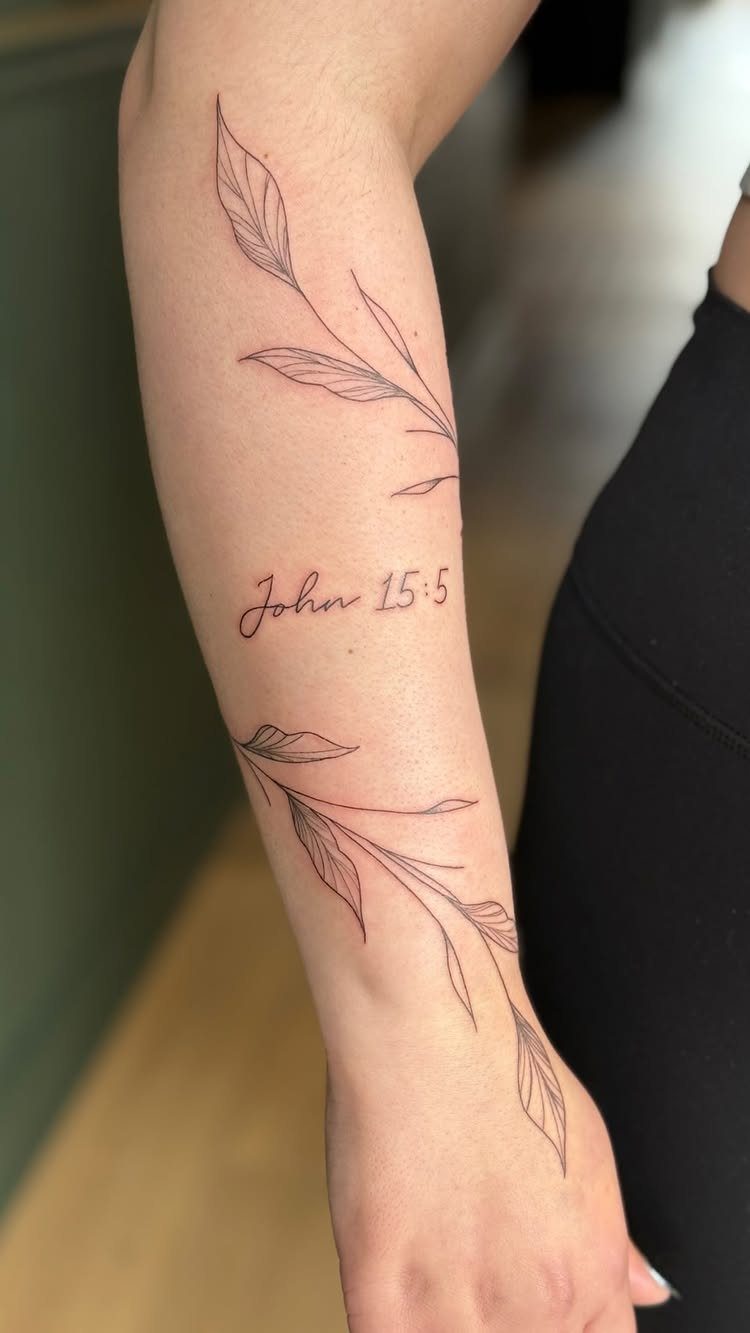
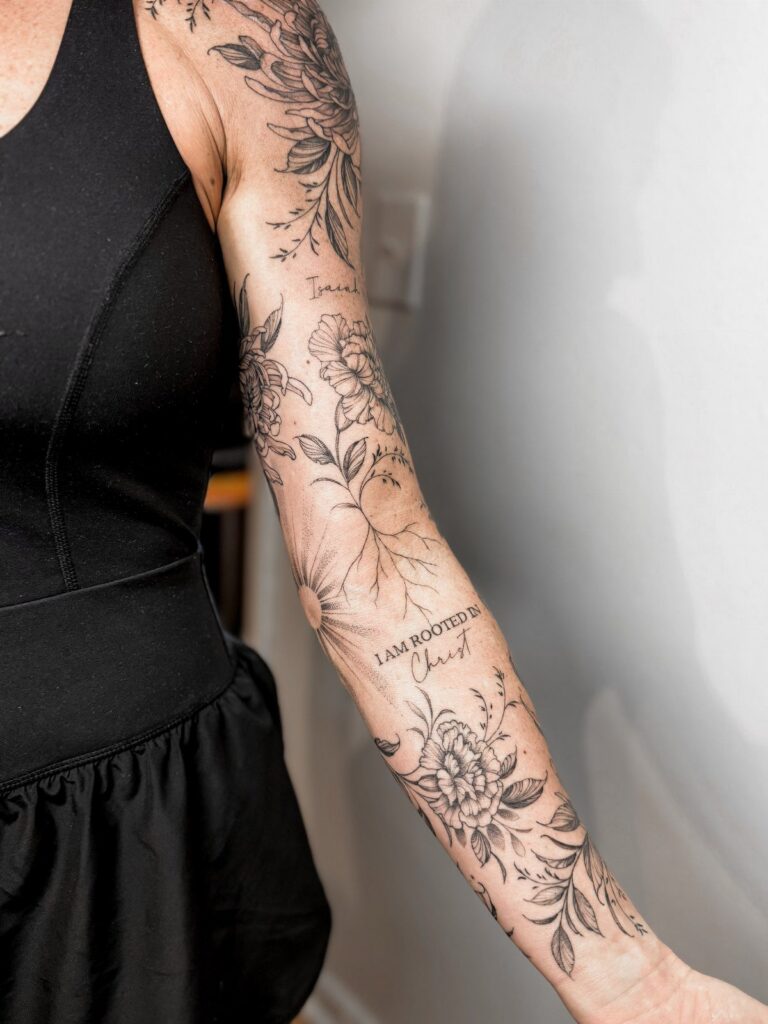
Two leafy branches frame the citation John 15:5, and fine line work keeps the leaves delicate without losing definition. The verse refers to Christ as the vine and believers as branches, so the illustration ties directly to the text.
The forearm suits the horizontal layout, and the citation alone needs less than an inch if you skip the branches.
Fine line tattoos require an artist who works at small scale regularly, and the thinner lines blur faster than bold ink.
17. Red Ink Jesus Script Tattoo
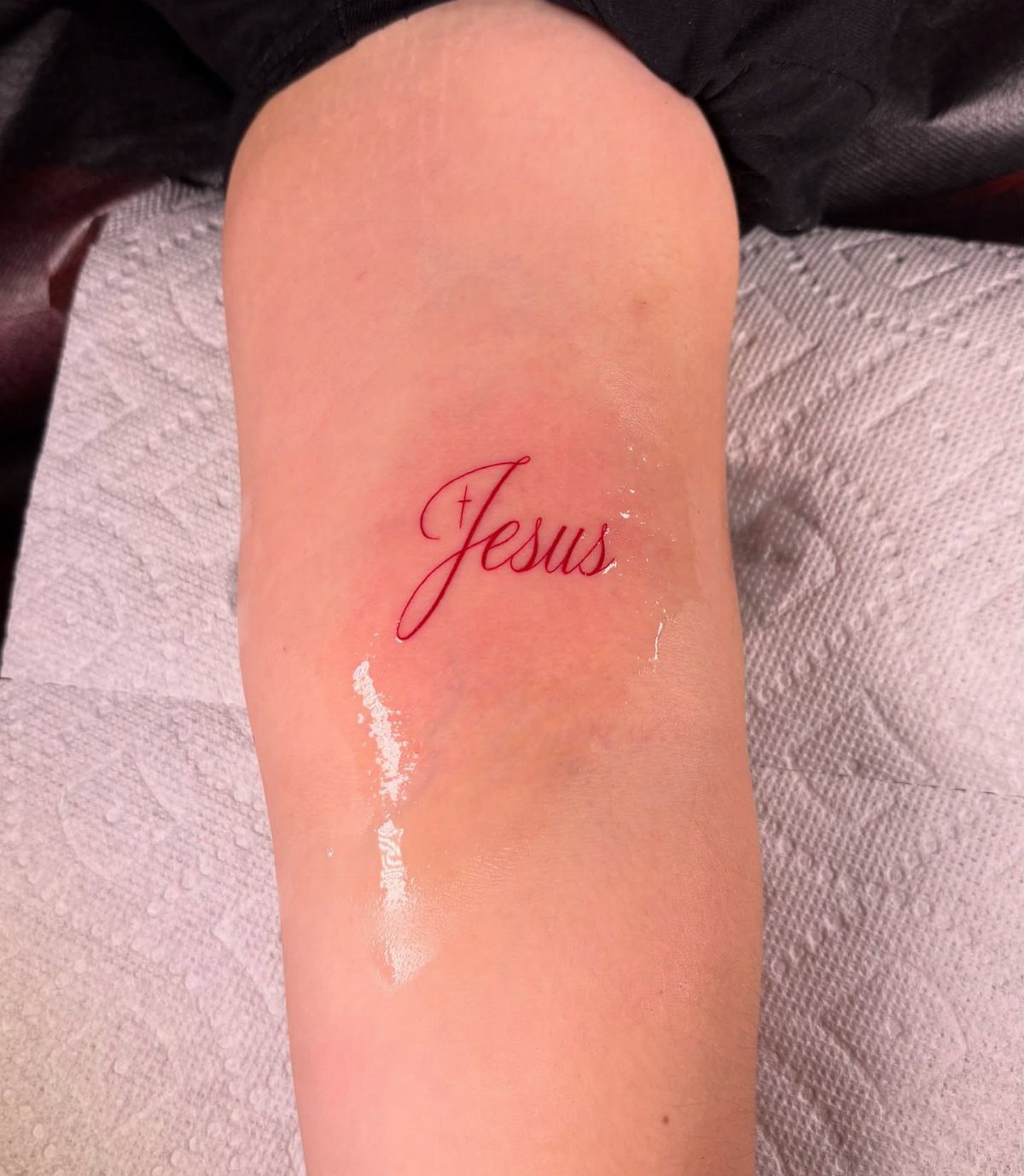
Red cursive spells Jesus with a small cross folded into the J, and the color reads softer than black while still holding contrast against skin.
The forearm keeps it visible, and the size fits most spots where you have a few inches to spare.
Black ink holds longer and requires less maintenance. The name carries the same meaning in either color, and the choice comes down to how often you want to revisit the shop.
18. Scriptural Quote with Floral Framing
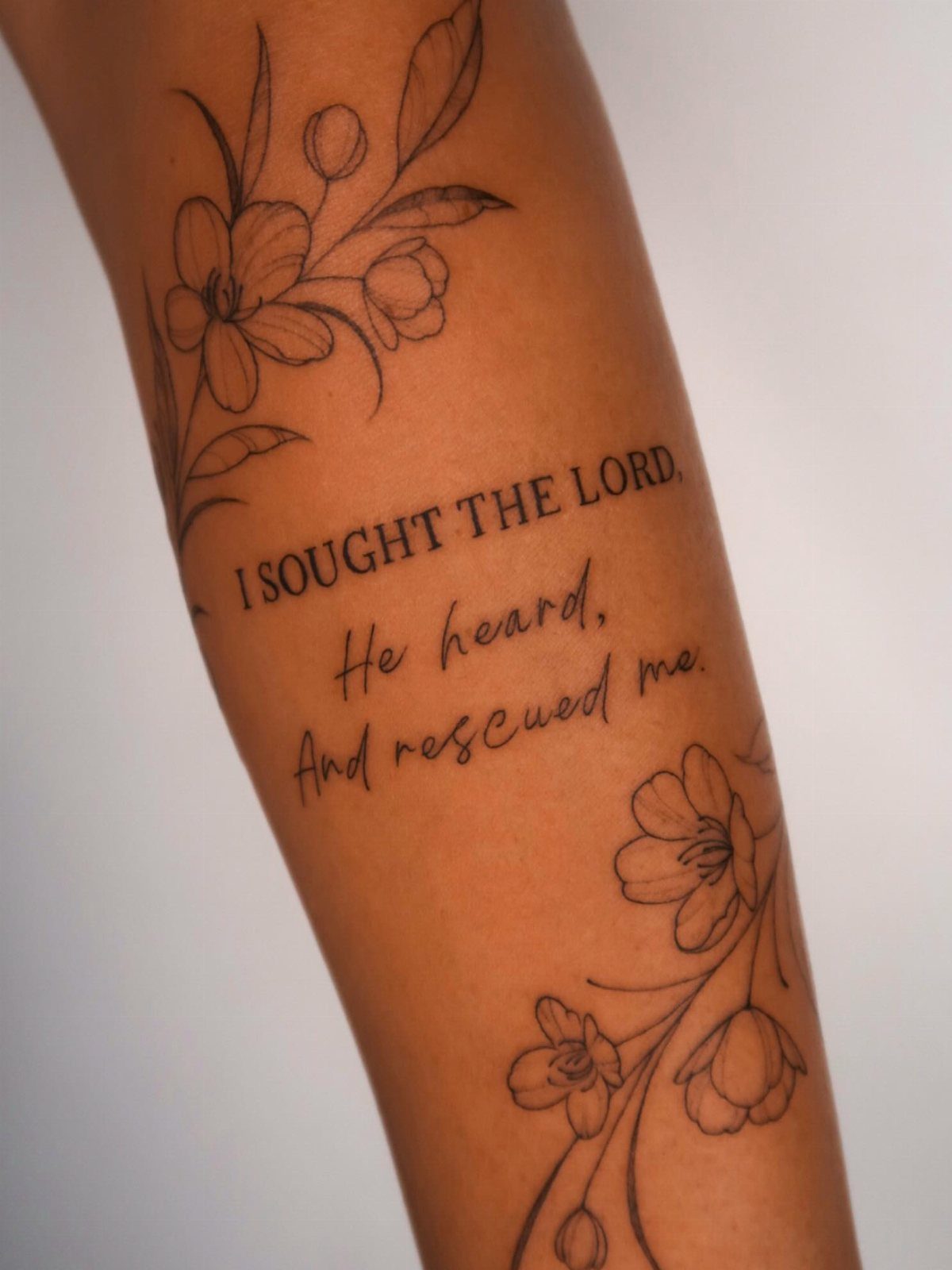
The passage runs in clean capitals down the center, and the botanical line drawings frame the text without crowding it. Leaves and blossoms wrap the top and bottom, and the black ink keeps every line readable against skin.
Floral framing works with any length of text. A single line of scripture fits a wrist or collarbone with smaller blooms, and the flowers add dimension to a passage that might otherwise sit flat.
If you go this route, pick a verse short enough to read at a glance. Long passages need the forearm or ribcage, and the more words you add, the smaller the lettering has to run.
19. Virgin Mary Realism Tattoo
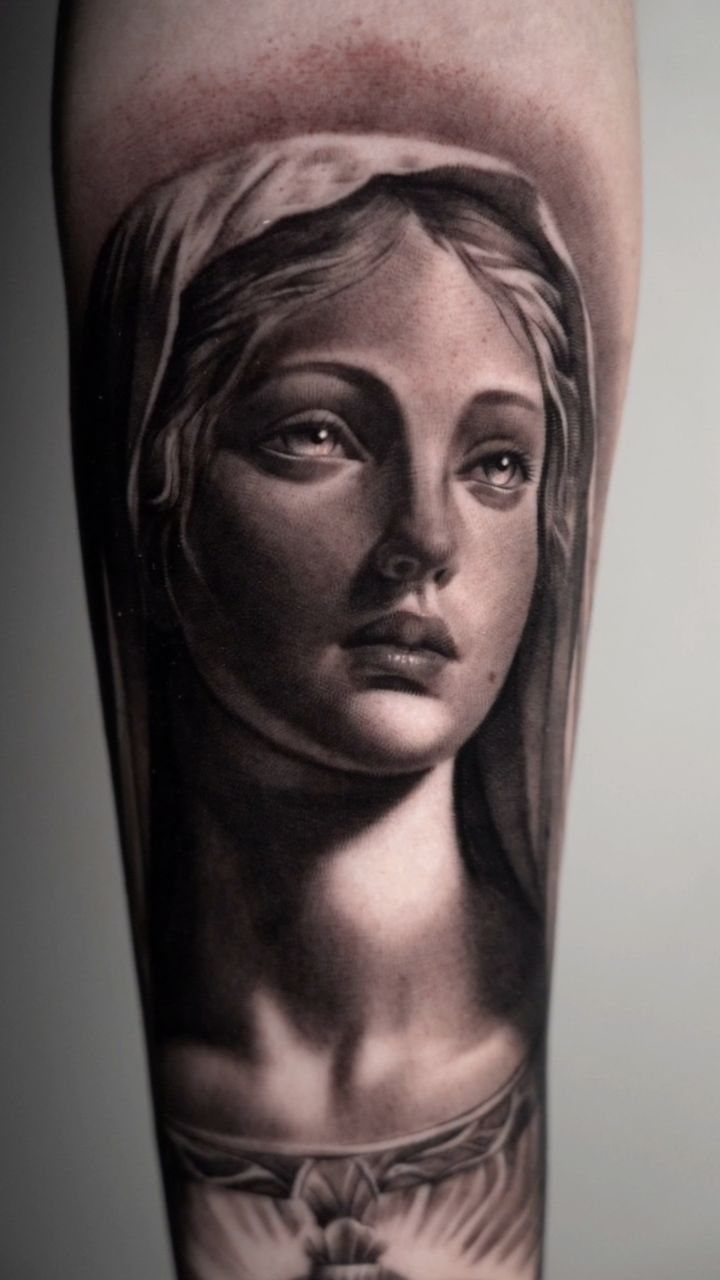
The veil drapes softly over her face, and the upward gaze gives the portrait a quiet reverence that realism captures better than any outline.
Black and grey shading builds the folds in the fabric and the gentle tilt of her head, and the arm placement keeps it visible or covered depending on sleeves.
Realism portraits require an artist experienced in faces and fabric. Poor shading flattens the features, and a rushed job shows in the expression more than anywhere else.
A smaller version on the forearm or shoulder blade holds the same devotion without demanding as much canvas.
20. Kneeling Before Christ Illustration
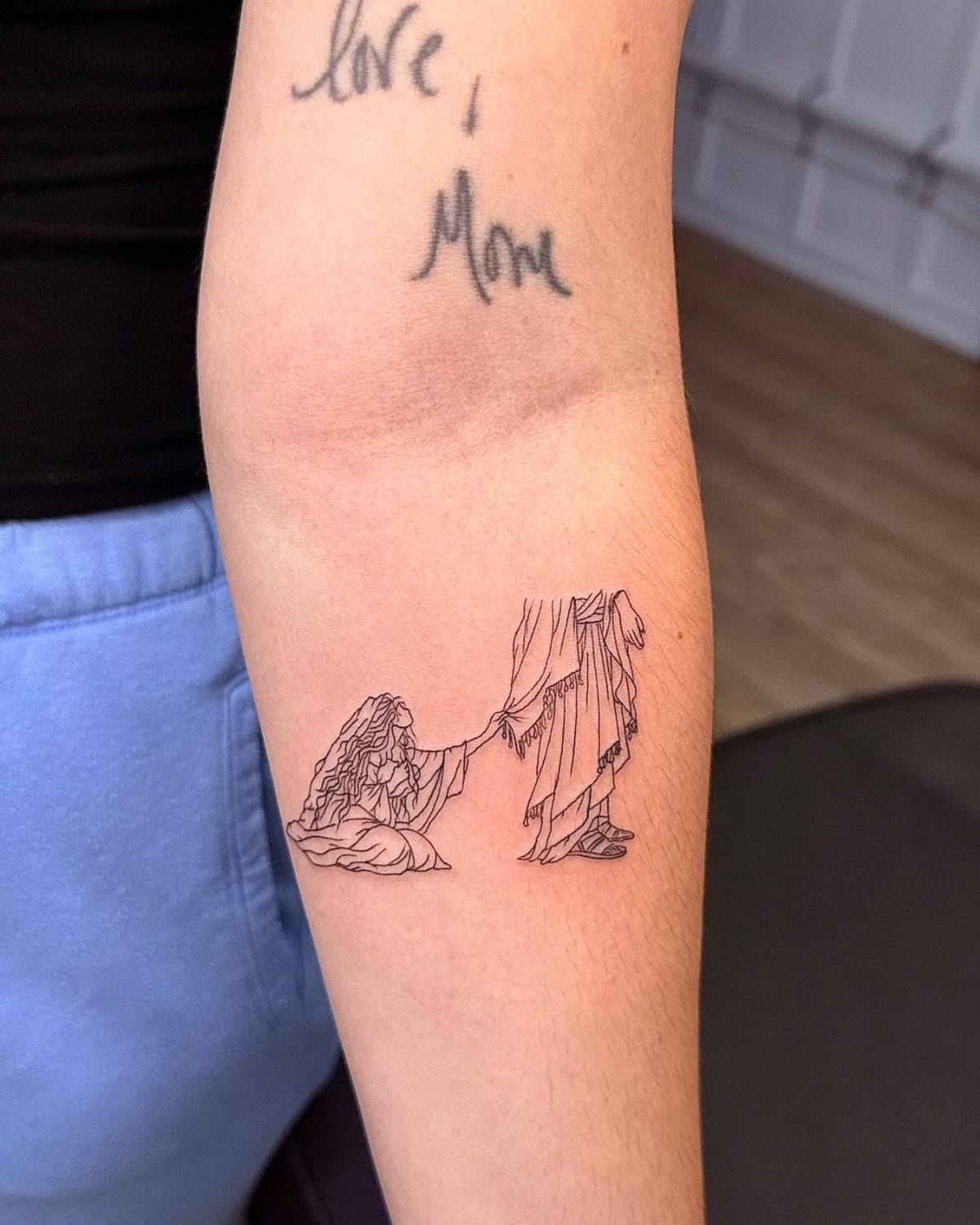
Fine line work keeps the figures delicate, and the kneeling pose makes the relationship clear without adding heavy shading. The forearm suits the vertical composition, and the simple black ink holds the outlines sharp without filling the space.
Fine line tattoos age differently than bold work. The thinner lines blur faster, so pick an artist who works at this scale regularly and expect touch-ups down the line.
A bolder outline version on the upper arm or shoulder blade will last longer with less maintenance. The scene carries the same meaning either way.
Significance of Christian Tattoos
A Christian tattoo puts your faith on your skin where you see it every morning, a physical anchor when belief feels abstract.
The image outlasts the moment that prompted it, which means the best designs hold meaning that runs deeper than a single verse or season.
Women choose these tattoos to mark transformation, loss, or a commitment that words alone never quite captured.
A dove or a cross carries weight without explanation, and the permanence matches the stakes. You wear your testimony whether anyone asks about it or not.
The line from Isaiah about engraving names on palms gives the practice a scriptural nod, though not every tradition reads it that way.
If permanence worries you, start small with a symbol that already sits firmly in your belief, not one you hope will grow into meaning later.
Small cross tattoos are very popular, particularly for women as they send a powerful message, but are also understated. A cross tattoo is not only a reminder of Jesus’ death on a cross, it represents a person’s call to be a disciple of Jesus.
Placement Ideas
The forearm and wrist keep a tattoo visible during most daily tasks, which suits a design meant as a personal reminder.
A wrist or forearm piece sits where you see it dozens of times a day, typing or reaching for something, so the symbol becomes part of your routine instead of something you forget about.
The shoulder blade and ribcage hide under most clothing, giving you control over who sees it.
The ribs hurt more than other placements because the skin sits tight against bone, and healing takes longer when fabric rubs the area. Plan for that if you go this route.
Inner wrist and behind-the-ear placements both stay covered easily and show when you choose, and the smaller scale limits detail but keeps the symbol recognizable.
Modern Trends
Christian tattoos shifted from niche to common as more women treated ink as testimony instead of rebellion.
What used to sit quietly on a wrist now climbs forearms and shoulders, and the designs themselves moved from simple crosses to full portraits and scripture passages wrapped in florals.
The change reflects a broader acceptance of body art in religious circles, though not every congregation agrees.
A tattoo that declares faith publicly carries more social weight than it did a generation ago, and that visibility is part of the appeal for many women now.
Single words in script, like "Blessed" or "Redeemed", show up frequently because they compress a whole story into something legible at a glance. The brevity works when the meaning already sits firmly in your mind.
Frequently Asked Questions
What does God say about Christian tattoos?
The Bible does not directly address modern tattoos. Leviticus 19:28 mentions body markings, but many Christians today read that passage in its historical context as a prohibition against pagan mourning rituals rather than all permanent ink.
The interpretation turns on intention: a tattoo that honors God and serves as testimony stands apart from the practices that verse condemned.
What does the Bible say about tattoos on a woman?
The Bible does not single out women in its references to body markings.
Leviticus 19:28 addresses the practice in general, and modern Christians interpret that verse in light of its original context, which concerned pagan mourning rituals rather than personal expressions of faith.
The same considerations apply regardless of gender: intention matters more than the ink itself.
Why are tattoos no longer a sin?
Many Christians now view tattoos as expressions of faith rather than violations of Old Testament law. The shift comes from reading Leviticus 19:28 in historical context: the verse addressed pagan mourning practices, not all permanent markings.
Tattoos that honor God instead of engaging in the rituals that passage condemned fall outside its scope, and acceptance has grown as more believers treat ink as testimony rather than rebellion.