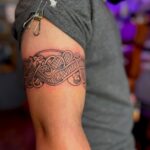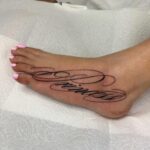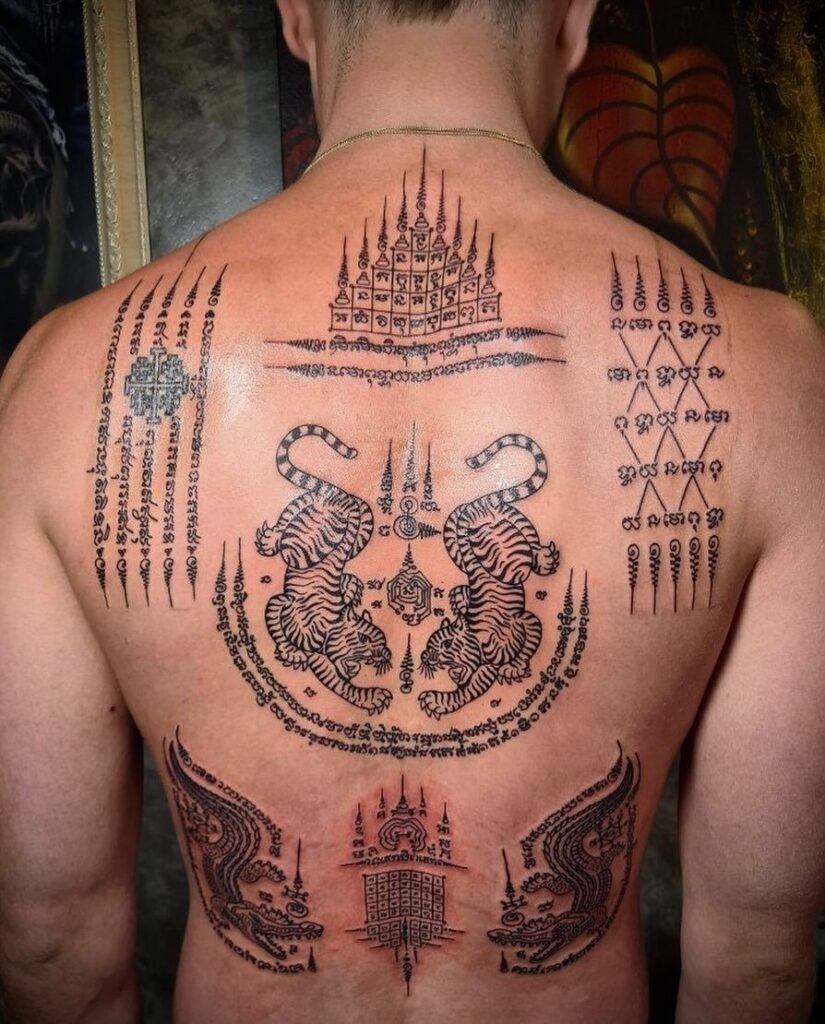
Sak Yant tattoos range from a single geometric yantra on the shoulder to a full back that layers tigers, cobras, demon faces and lines of script across several sessions.
The choice comes down to what you want the tattoo to do: protection, courage, fortune or spiritual discipline, since each yantra carries a specific blessing tied to the figures and script that make it up.
1. Hah Taew (5 Lines)
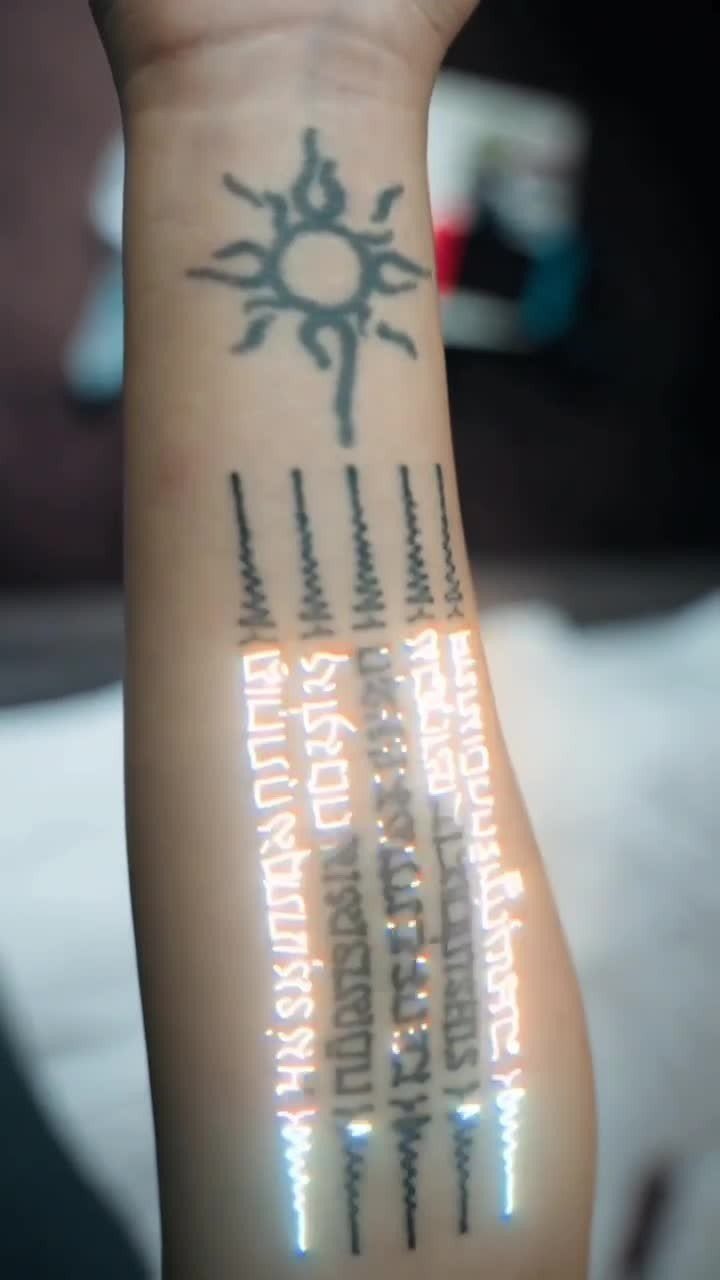
Hah Taew consists of 5 vertical lines of script, each one carrying a different blessing. The format gives a tall, narrow shape that fits a spine, forearm or the back of a calf.
Each line carries a different blessing: protection from harm, good fortune, personal magnetism, success in what you attempt. A monk or ajarn who applies it traditionally recites the corresponding prayers while tapping the design into place.
The vertical rhythm reads cleanly from a distance and ages well because there is no fine detail to blur.
Adding a sun or yantra symbol above the lines gives the eye somewhere to land before it reads down through the script.
2. Suea Koo (Twin Tigers)
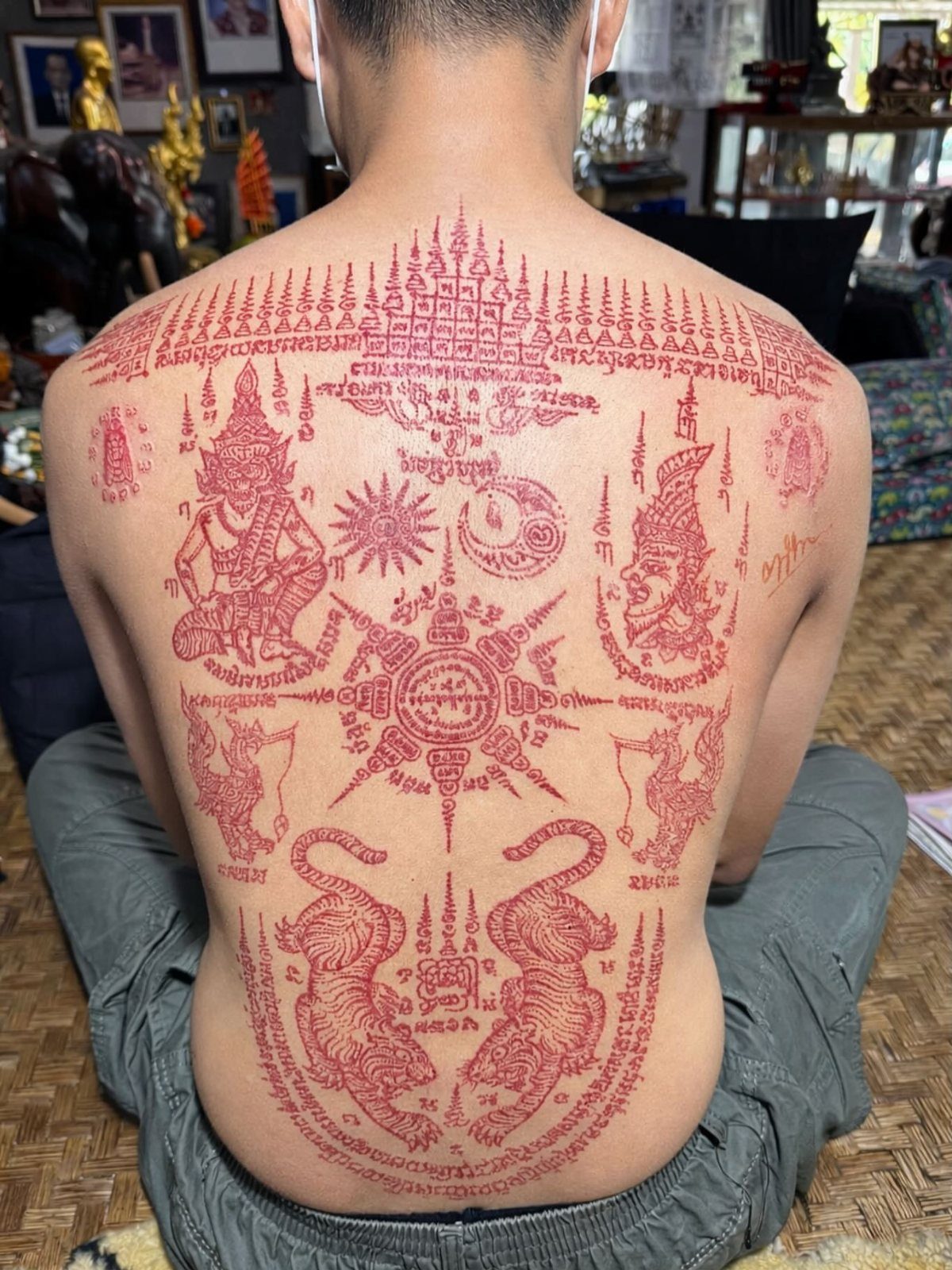
Twin tigers facing outward from a central point make up the core of Suea Koo. The design pulls from the belief that a pair of tigers brings courage, authority and the ability to lead.
Red ink adds intensity and makes the piece stand out, though black is just as traditional. A full back gives enough room for both tigers plus the script and deity figures that often frame them.
The symmetry works well on the body: one tiger on each side of the spine, balanced and readable.
A design this large takes several hours under the needle and costs more than a single yantra, but the scale suits someone who wants a centerpiece.
3. Paed Tidt (8 Directions)
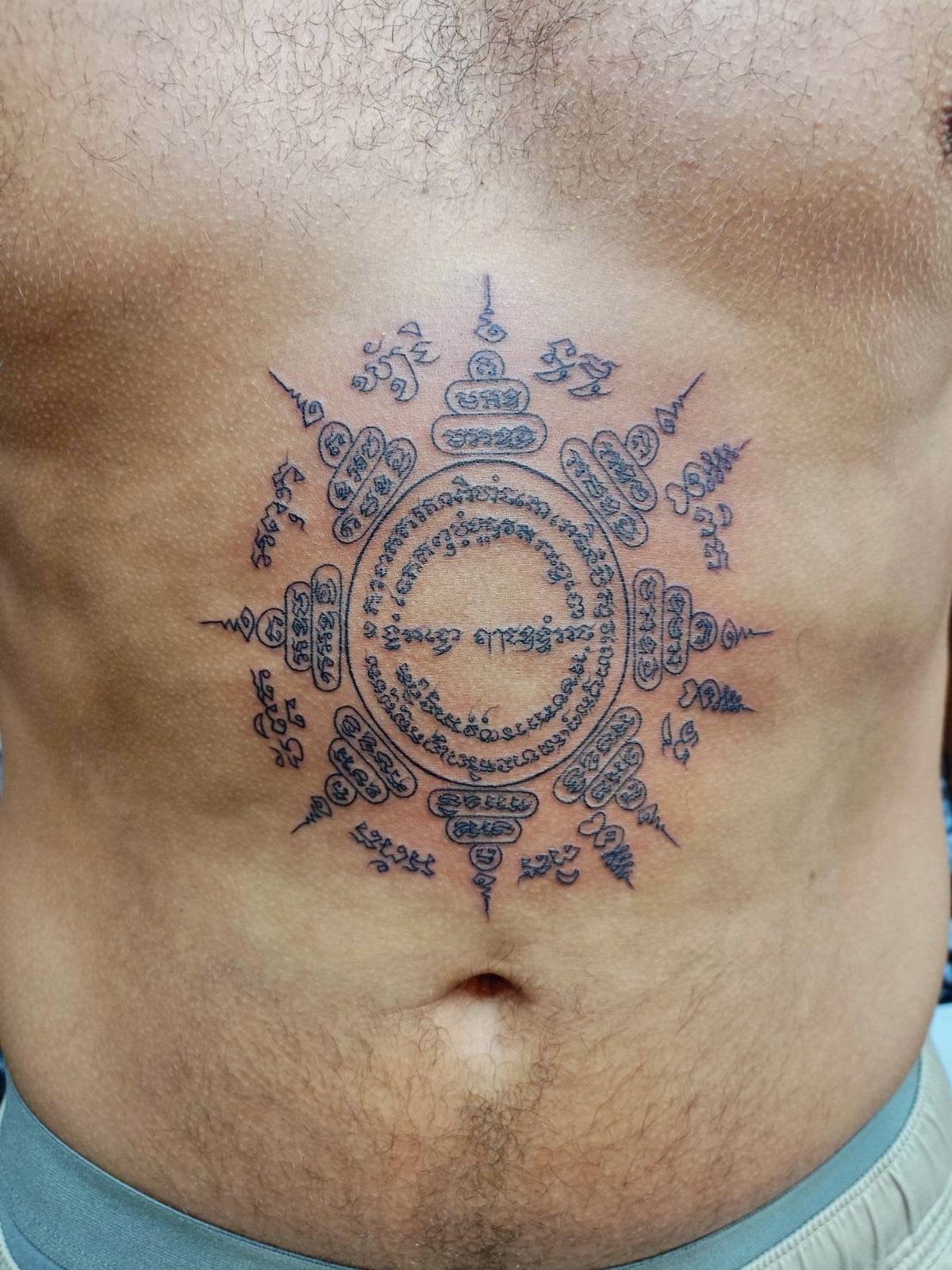
Paed Tidt arranges protective script around a central symbol, each segment facing outward to guard against harm from every direction. The design blocks harm from every direction, a concept built into the structure itself.
Placing it on the torso, as seen here, keeps it centered on the body. Blue ink is less common than black but shows up in some temple traditions and gives the piece a distinct look without changing the meaning.
The geometry stays legible as it heals, and the script that runs along each axis adds detail without complicating the outline. A circular layout fits naturally on flat areas like the chest, abdomen or upper back.
4. Muay Thai Fighter with Sak Yant Tattoos
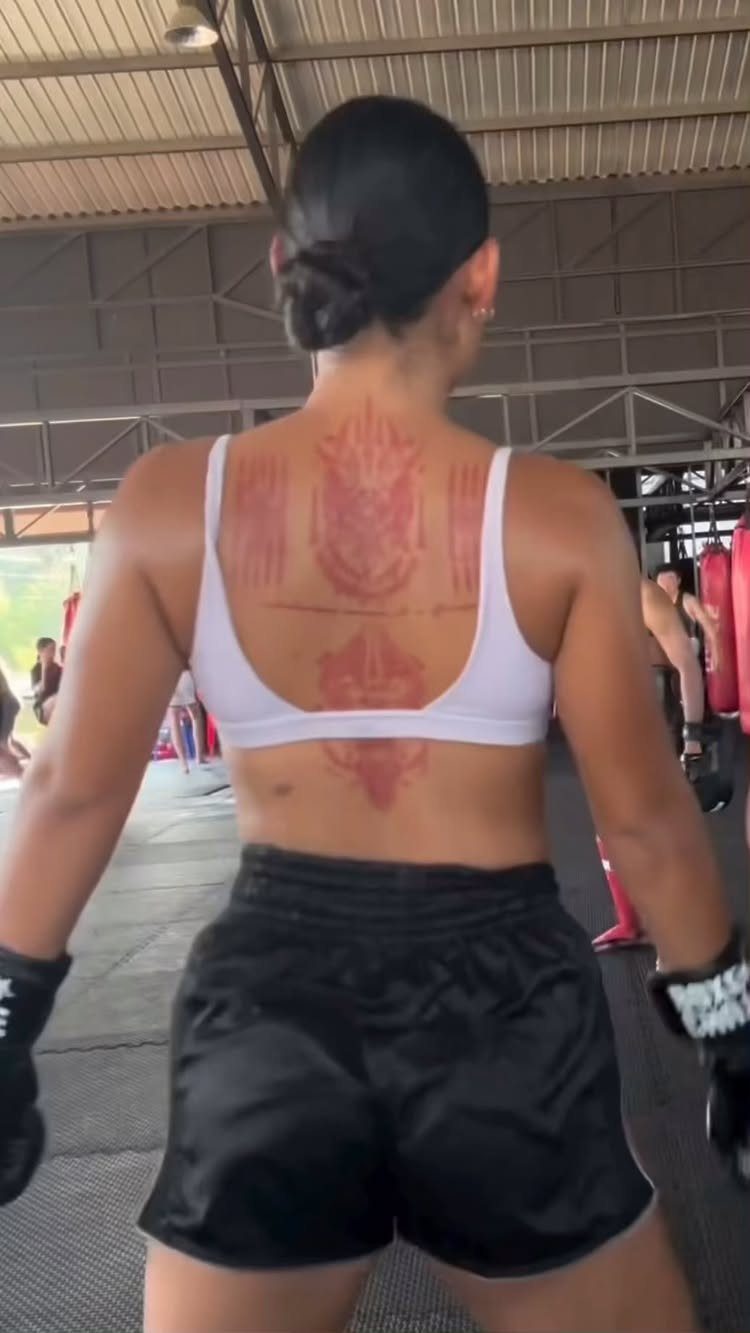
Muay Thai fighters often wear Sak Yant as a visible link to the art’s spiritual side. The tattoos are believed to offer protection in the ring and remind the fighter of the discipline the training demands.
Large back pieces, sometimes done in red, combine multiple yantras and animal figures. A fighter choosing this route usually receives the tattoo from a monk or ajarn, keeping the ritual intact.
The connection between the sport and the tradition runs deep enough that many gyms in Thailand display images of common Sak Yant designs. For someone training seriously, the tattoo reinforces the culture behind the punches.
5. Sak Yant for Women
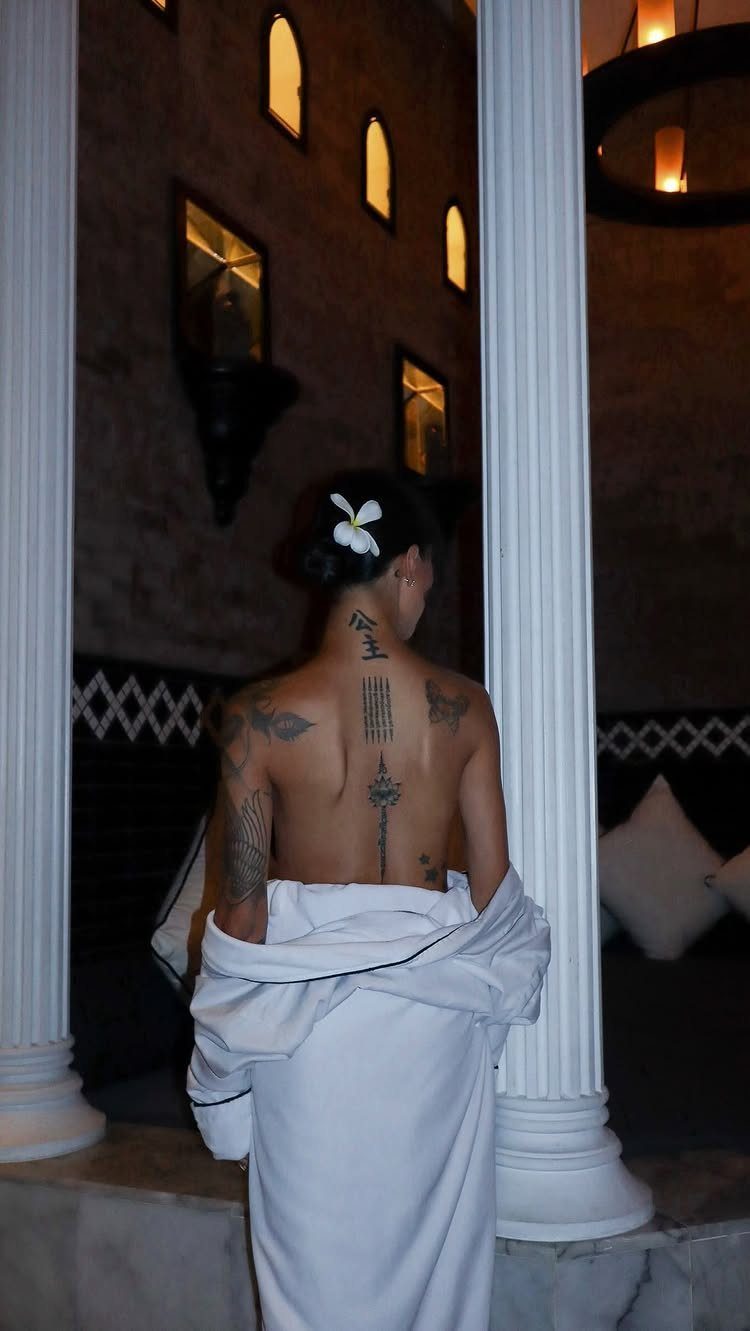
Sak Yant is not restricted by gender. Women receive the same designs and blessings as men, and the placement options are identical.
What changes is personal preference: smaller yantras on the shoulder, upper back or arm are common starting points, and layering multiple designs over time builds a larger piece without committing to a full back right away.
An ajarn applies the tattoo using the same hand-poked method, though the process may differ depending on the recipient.
The ritual, the script and the blessing remain consistent. If a particular temple or practitioner limits access for women, finding another who does not is straightforward.
6. Sak Yant Designs
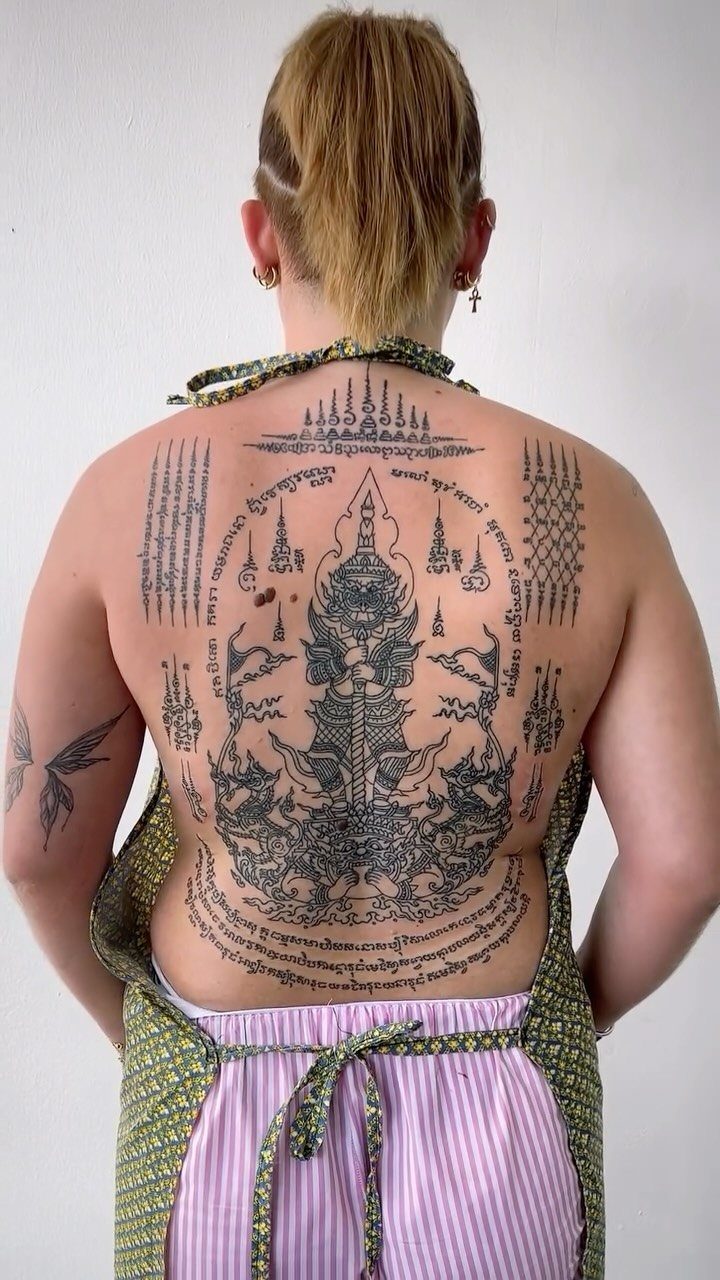
Sak Yant covers a wide range of designs, each tied to a specific meaning. Some focus on protection, others on fortune, strength or wisdom.
Staying with black lets the script and the line quality do the work, since that’s where the meaning sits.
A piece this large takes multiple sessions and calls for a practitioner who can hold the proportions steady as the design spreads across the whole back.
Choosing a design starts with deciding what you want the tattoo to do.
Talk to the monk or ajarn about your goals, and they will suggest the yantra that fits. The script and symbols are not decorative; they carry the prayer, so accuracy matters.
7. Phra Rahu (The Demon)
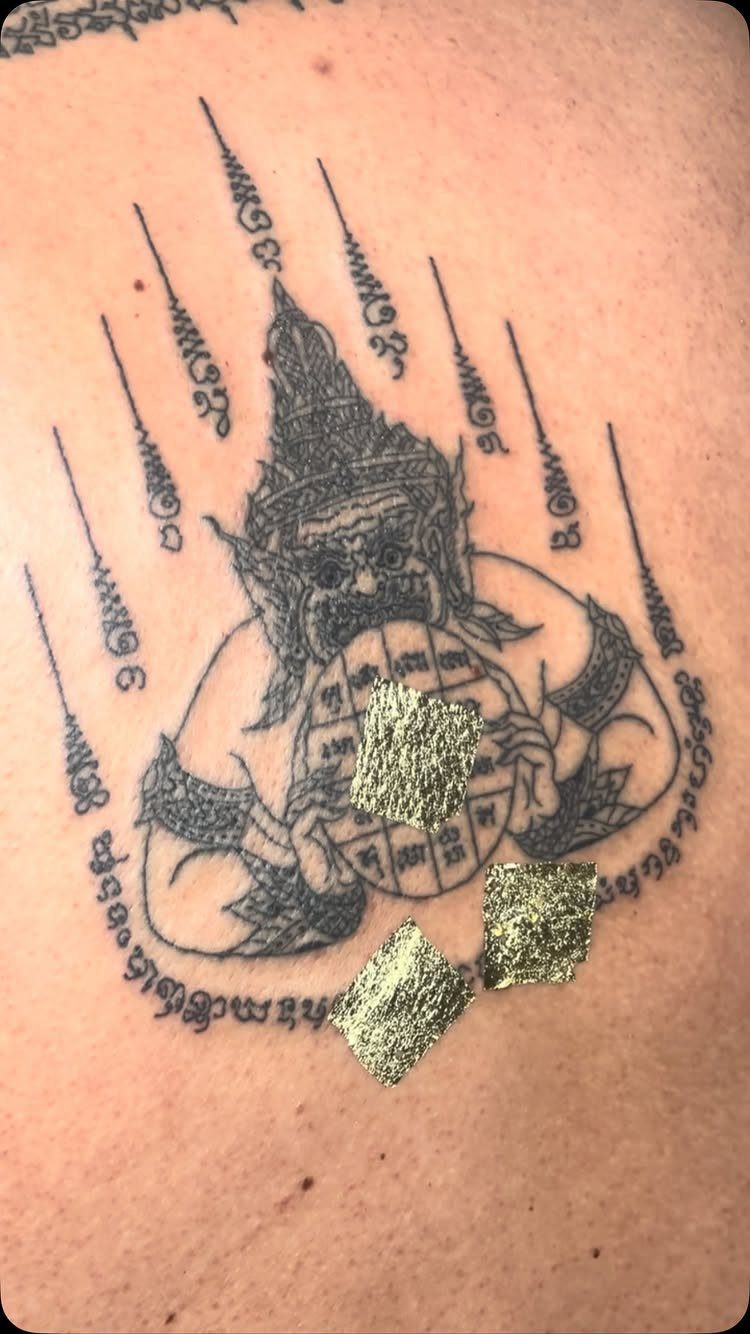
Phra Rahu appears as a demon figure swallowing the moon or sun, tied to protection against misfortune and bad luck. The design carries script and often includes gold leaf applied directly to the skin during the blessing, as seen here.
The gold leaf marks where the monk or ajarn has blessed the tattoo, and it stays in place for a few days before it wears off naturally.
The figure and the framing script hold the focus when you stick to solid black.
Placing it on the torso or upper back gives enough space for the deity and the surrounding text. The design reads clearly once healed, and the script holds detail without needing a large canvas.
8. Animal Sak Yant Tattoos
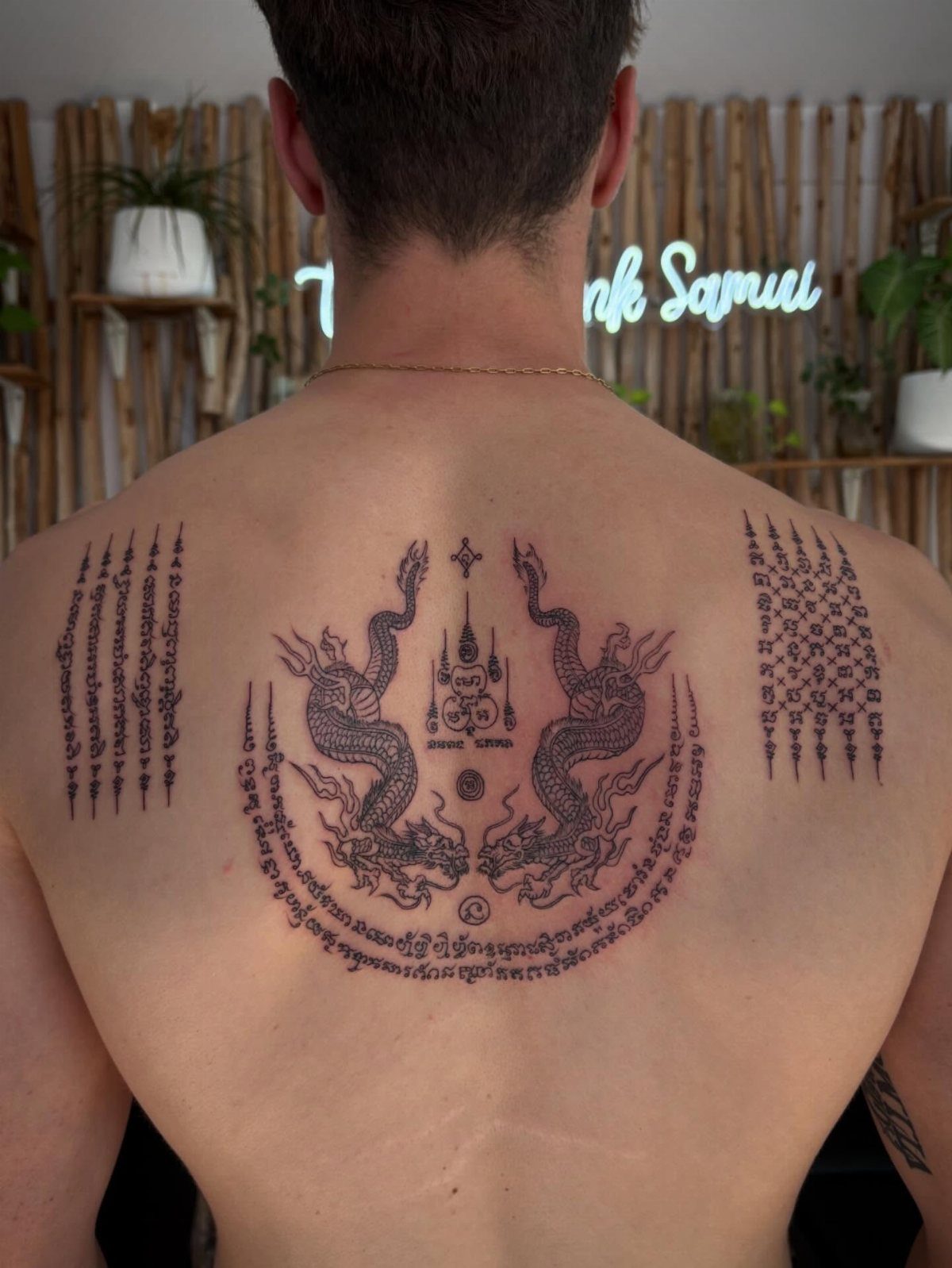
Dragons, serpents, tigers and other creatures show up often in Sak Yant because each animal carries a specific trait: strength, wisdom, protection or stealth. The script that surrounds them ties the image to the blessing.
Solid black holds the line work sharp and lets the script stand out against the figures.
The symmetry common to these designs balances well on the body, and the repetition of geometric patterns around the animals fills space without losing clarity. Choosing the animal depends on what quality you want the tattoo to reinforce.
9. Full Back Sak Yant
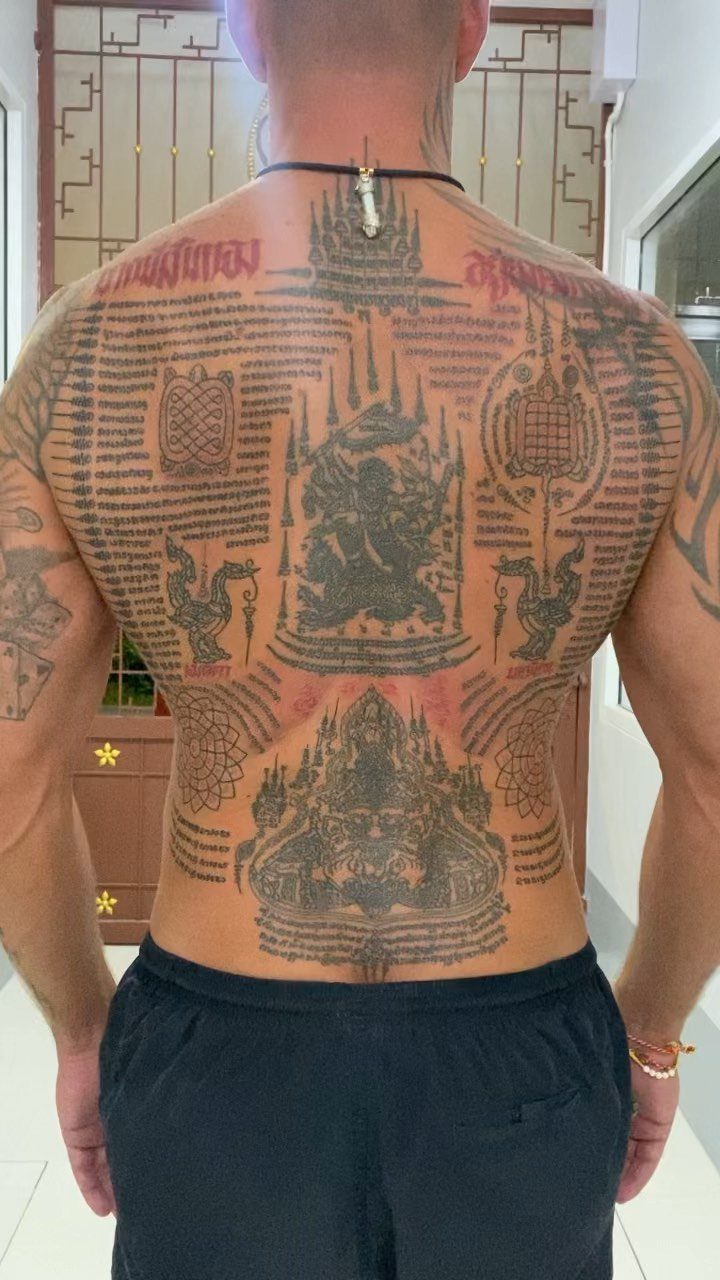
Covering the entire back with Sak Yant means layering multiple yantras, deities and script into one continuous piece. The design builds over time, sometimes across several sessions, and each section carries its own meaning.
A full back reads as a complete system rather than separate tattoos. The script runs vertically, horizontally and diagonally, filling the space between larger figures and keeping the composition balanced.
This approach takes hours under the needle and requires a practitioner who can maintain proportion across a large surface. Black ink ages well at this scale, and the absence of fine shading means the design stays readable for years.
10. Traditional Hand Poking Process
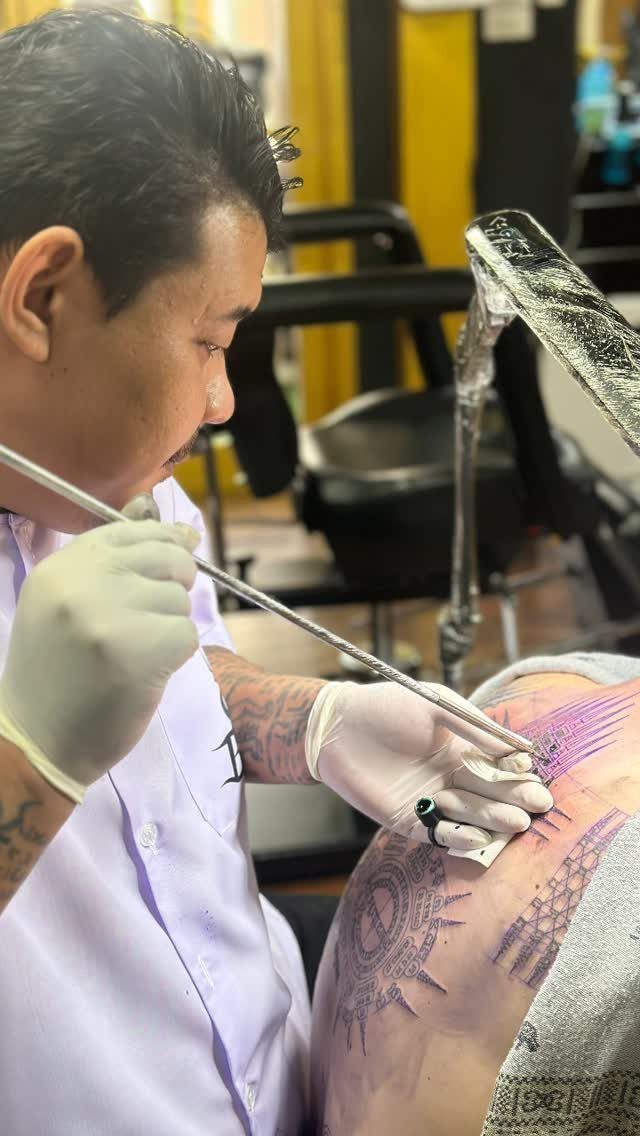
Hand poking uses a long metal rod tipped with a needle, tapped into the skin by hand rather than driven by a machine.
The method moves slower than a tattoo gun but stays close to the way Sak Yant has been applied for centuries.
Each tap deposits a small amount of ink, and the rhythm is steady but not fast.
A monk or ajarn trained in this method controls the depth and angle of each strike, which is why the outcome depends heavily on the skill of the person applying it.
The process takes longer than machine work, but many people seeking Sak Yant prefer it for the ritual continuity.
11. Hand and Finger Sak Yant
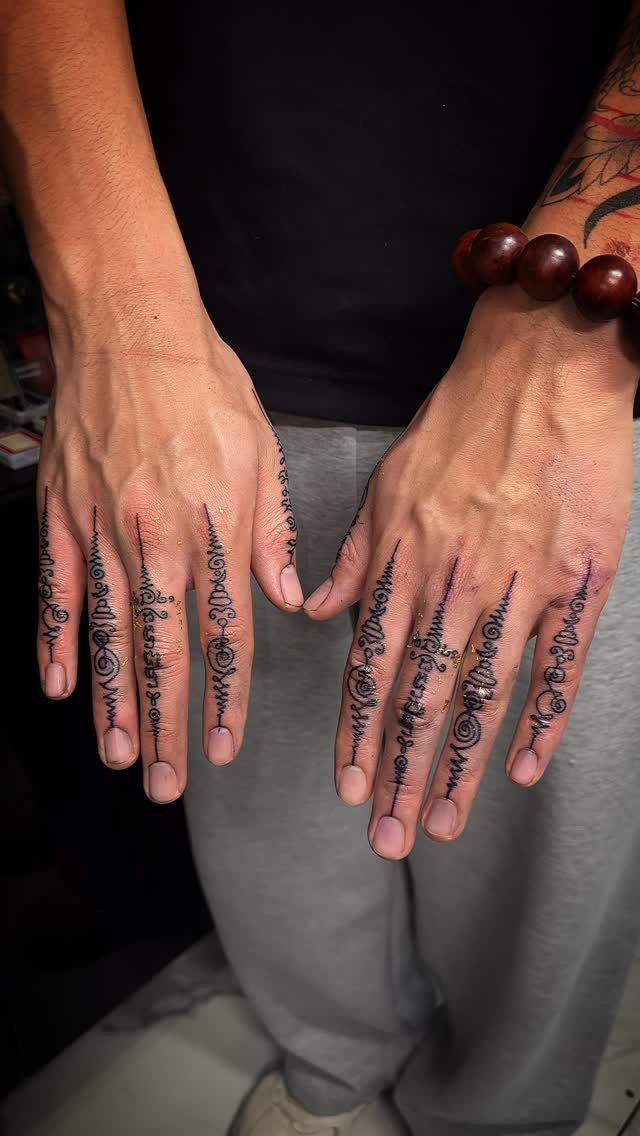
Geometric lines and spirals running across the hands and fingers create a compact version of Sak Yant that stays visible. The narrow space limits how much script fits, so the design focuses on shape and symmetry.
Hands heal slower than other areas because they move constantly and come into contact with more surfaces. Keeping the tattoo clean during the first week takes attention, and sun exposure fades hand tattoos faster than pieces on covered areas.
Black ink holds better over time than color on hands, and simple geometry ages more predictably than fine detail. The placement suits someone who wants their Sak Yant to show in daily life.
12. Leg Sak Yant Tattoo
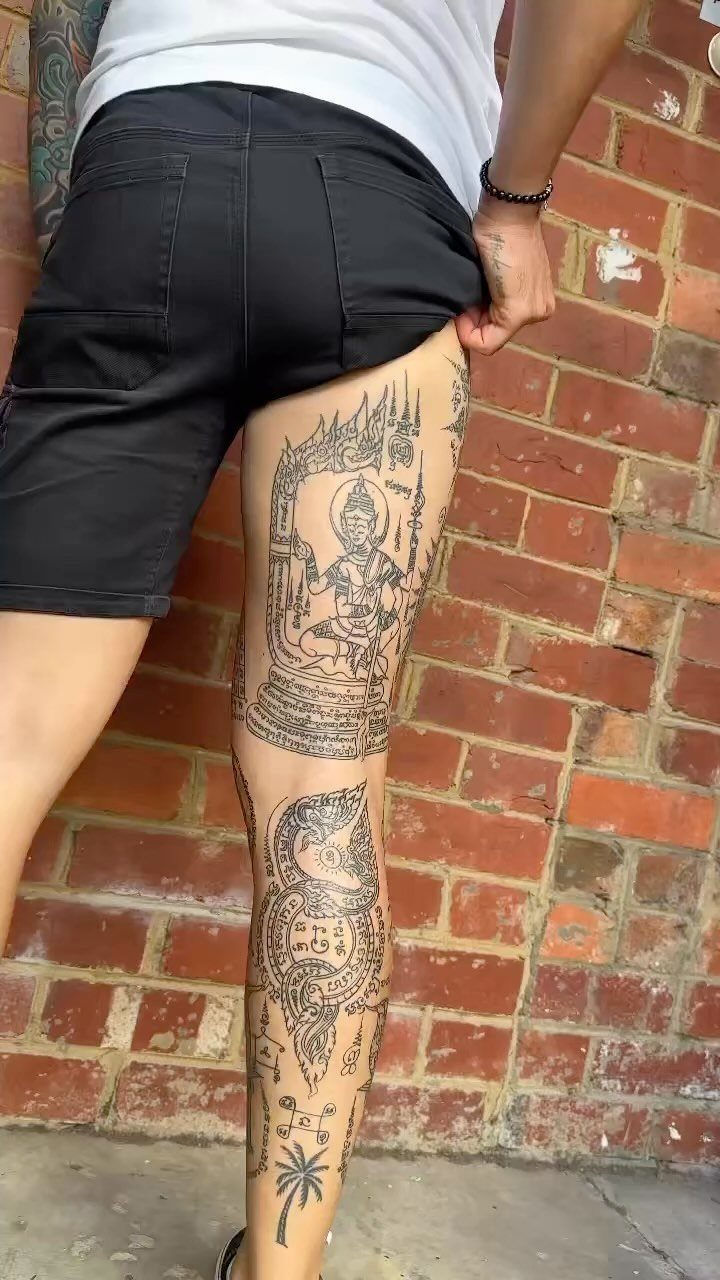
Placing Sak Yant on the leg spreads the design across 2 areas: the thigh holds larger figures and dense script, while the calf can carry a continuation or a separate yantra.
The vertical length of the leg suits tall, stacked compositions.
Spiritual figures and Thai text anchor the design, and solid black holds the line work clean as it heals.
A leg placement stays hidden or visible depending on what you wear, which makes it a practical choice for someone who needs flexibility.
The thigh offers more flat surface than the calf, so intricate detail works better there. Healing takes about 2 weeks, and keeping clothing loose around the tattoo during that time prevents irritation.
13. Red Ink Sak Yant
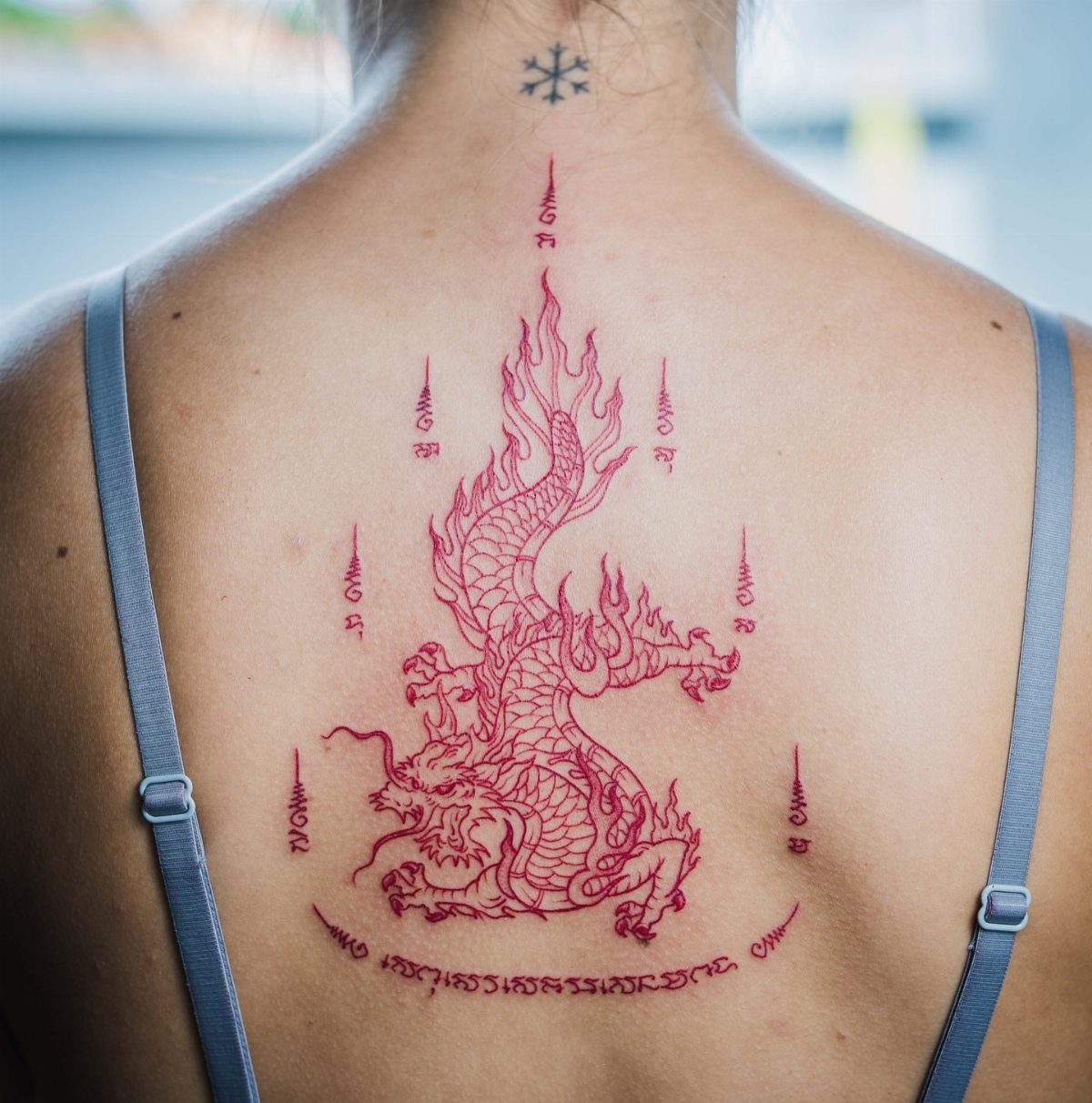
Red ink changes the intensity of a Sak Yant without altering its meaning. The color stands out against the skin more than black and adds visual weight to figures like the mythical creature visible here.
Red is less common than black in traditional practice, but some monks and ajarns use it for specific yantras or when a recipient requests it. The script and the creature’s outline hold the same blessings regardless of ink color.
Healing time stays the same as black, around 2 weeks, though red can fade slightly faster with sun exposure. Keeping it covered during the first summer helps the color stay sharp.
14. Upper Arm and Shoulder
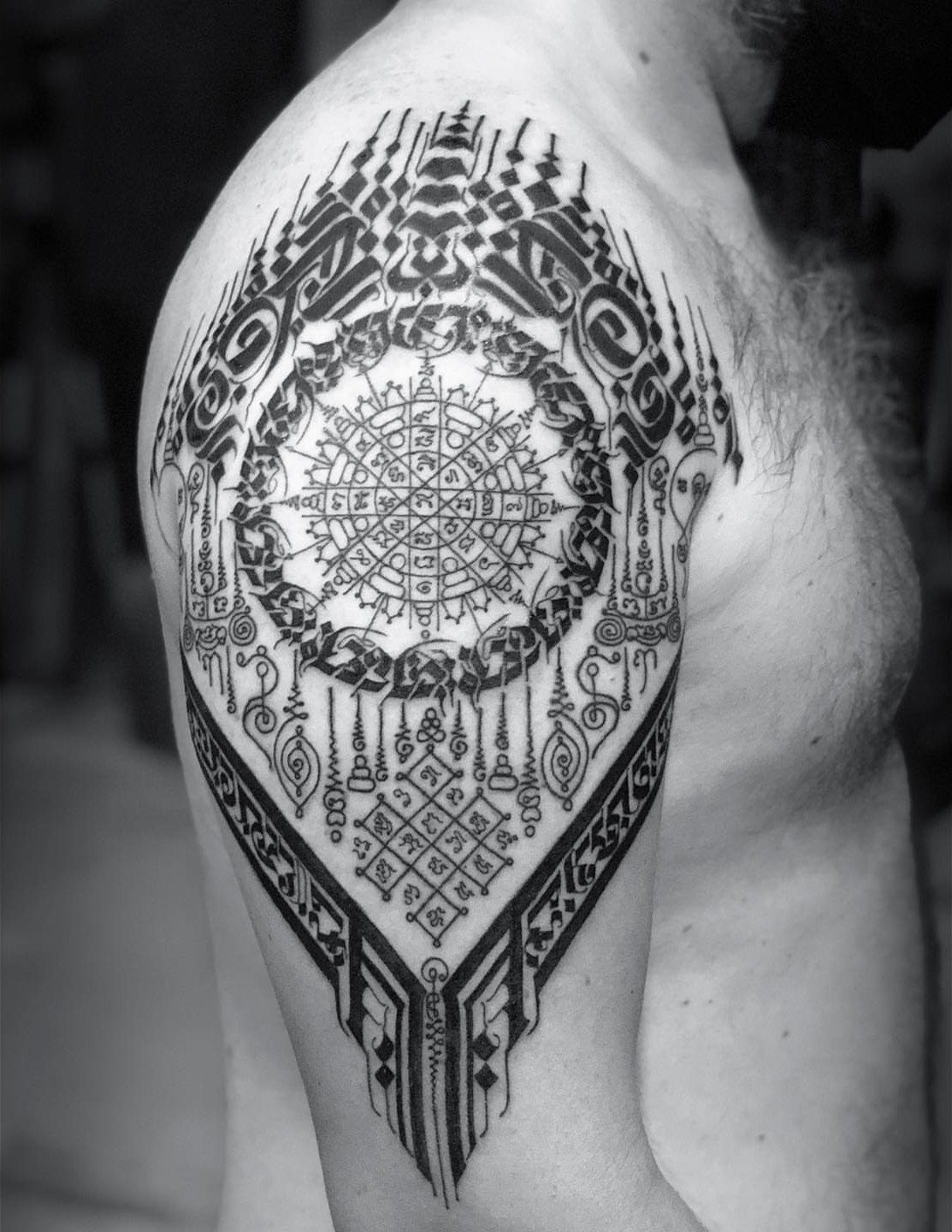
A circular geometric yantra fits naturally on the shoulder because the curve of the deltoid follows the edge of the design. The script runs along the perimeter, and the central pattern anchors the composition.
This placement sits high enough to stay visible in a tank top but disappears under a sleeve. The shoulder heals faster than areas that bend or rub against clothing, which makes it a practical spot for detailed script.
Pure black geometry stays crisp over time, and the absence of fine shading means the lines age predictably.
15. Gold Leaf Blessing Ritual
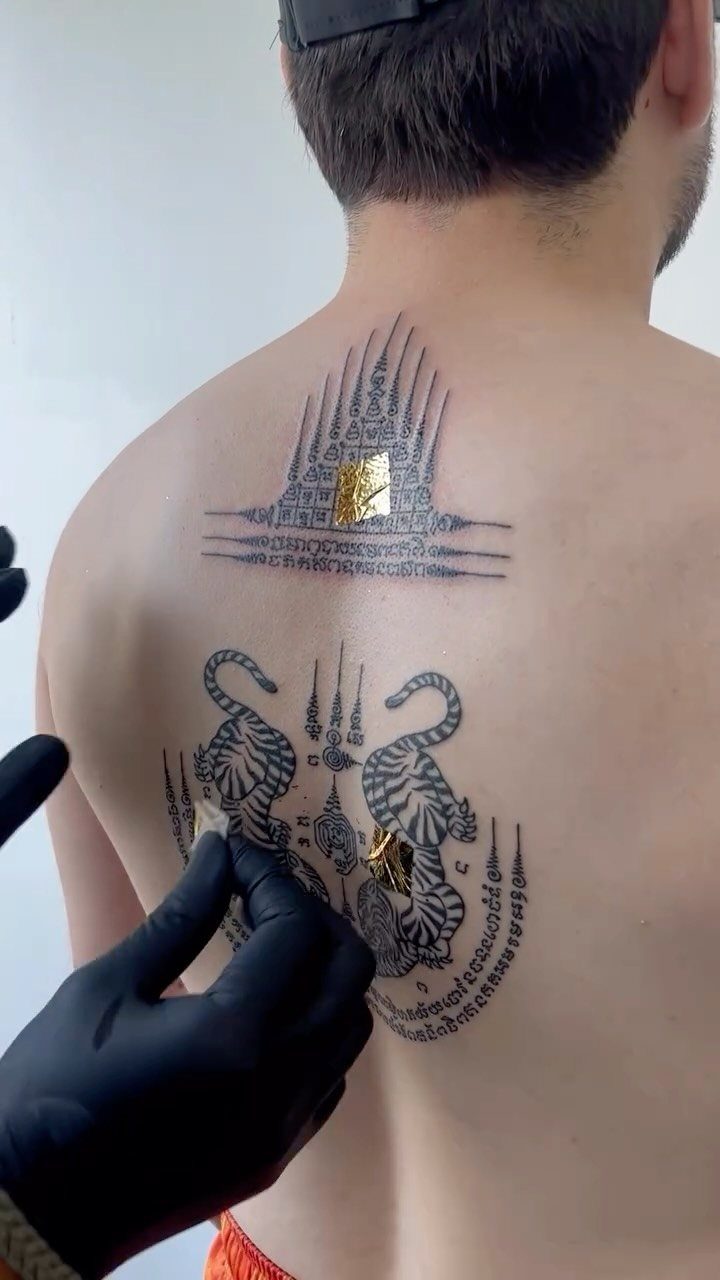
Gold leaf pressed onto a fresh Sak Yant marks the blessing ceremony. The monk or ajarn applies it after the tattoo is complete, often while reciting prayers specific to the design.
The leaf sticks to the ink and surrounding skin, and it wears off naturally over the next few days. It does not change the tattoo itself, but it completes the ritual for many who seek traditional Sak Yant.
Some temples include the gold leaf in the session, while others add a separate fee. The gloves visible here keep the application clean and protect the fresh tattoo.
16. Gao Yord (Nine Peaks)
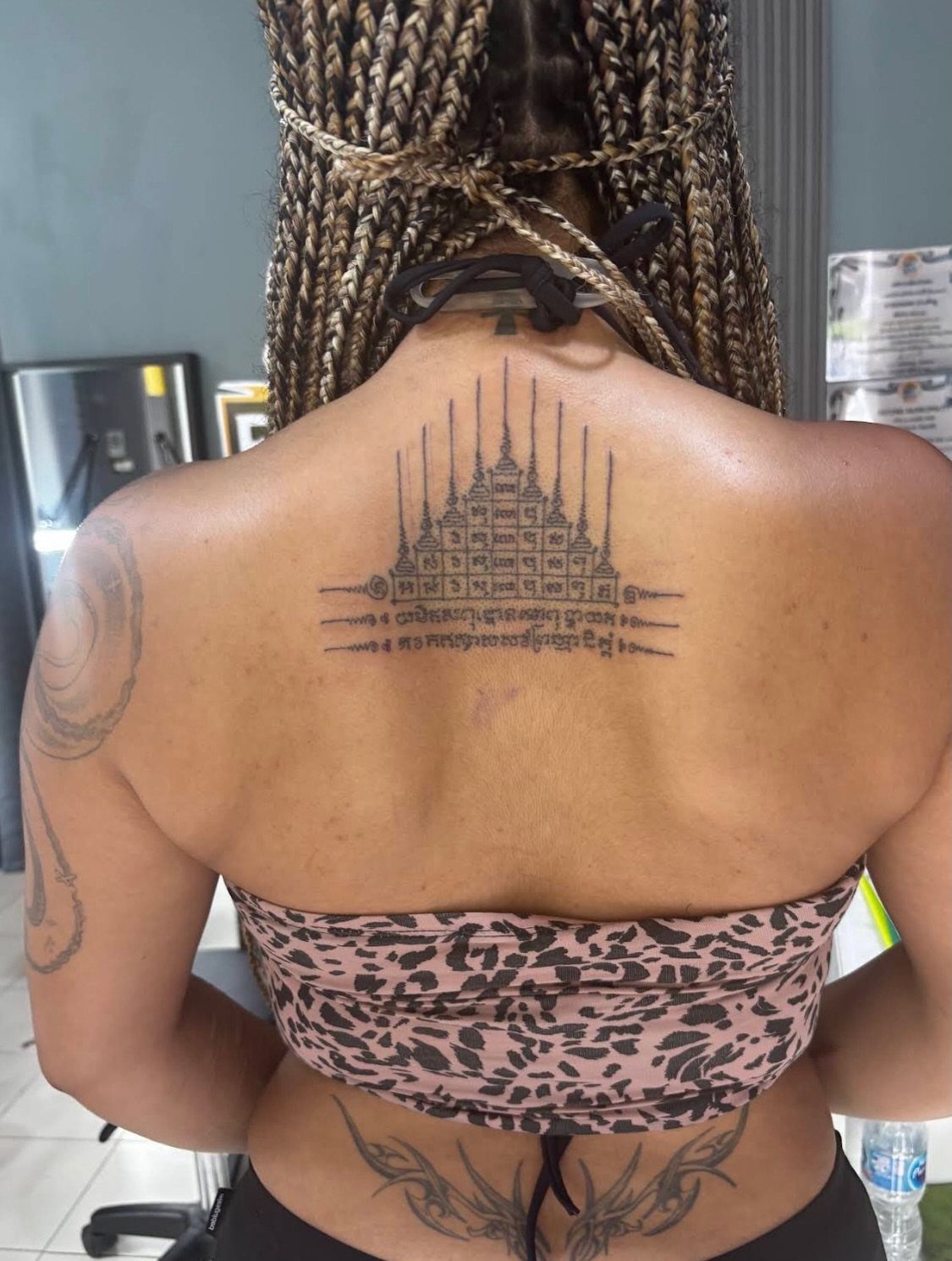
Gao Yord forms a stacked pyramid of 9 spires, each one representing a level of spiritual protection. Placing it at the top of the spine centers the design and leaves room below for additional yantras if you add them later.
The geometric structure reads clearly from a distance and holds its shape as it heals. Pure black lines stay sharp, and the script that often surrounds the peaks adds detail without cluttering the silhouette.
This yantra is one of the most recognized Sak Yant designs and carries blessings tied to protection and good fortune. A monk or ajarn typically applies it during a traditional ceremony.
17. Cobra Snake Sak Yant
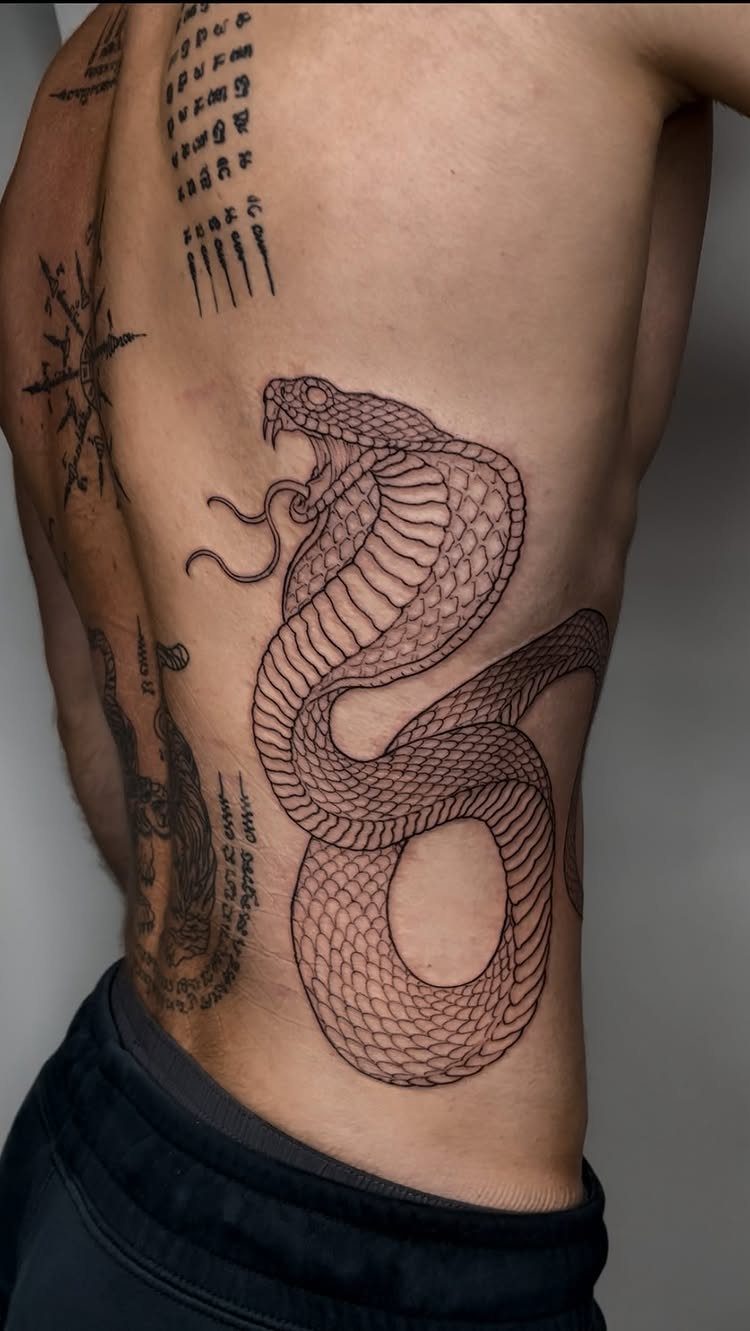
A cobra along the ribs follows the natural curve of the torso and pairs well with script that runs parallel to the spine.
Ribs rank among the more painful spots for a tattoo because there is less muscle between the skin and bone. Sessions on the ribs usually run shorter, and some people split the work across multiple visits.
Black ink holds the cobra’s outline clearly, and avoiding heavy shading keeps the design readable as it ages. The script adds context to the figure and fills the space between the snake and the spine.
18. Forearm Sak Yant Tattoo
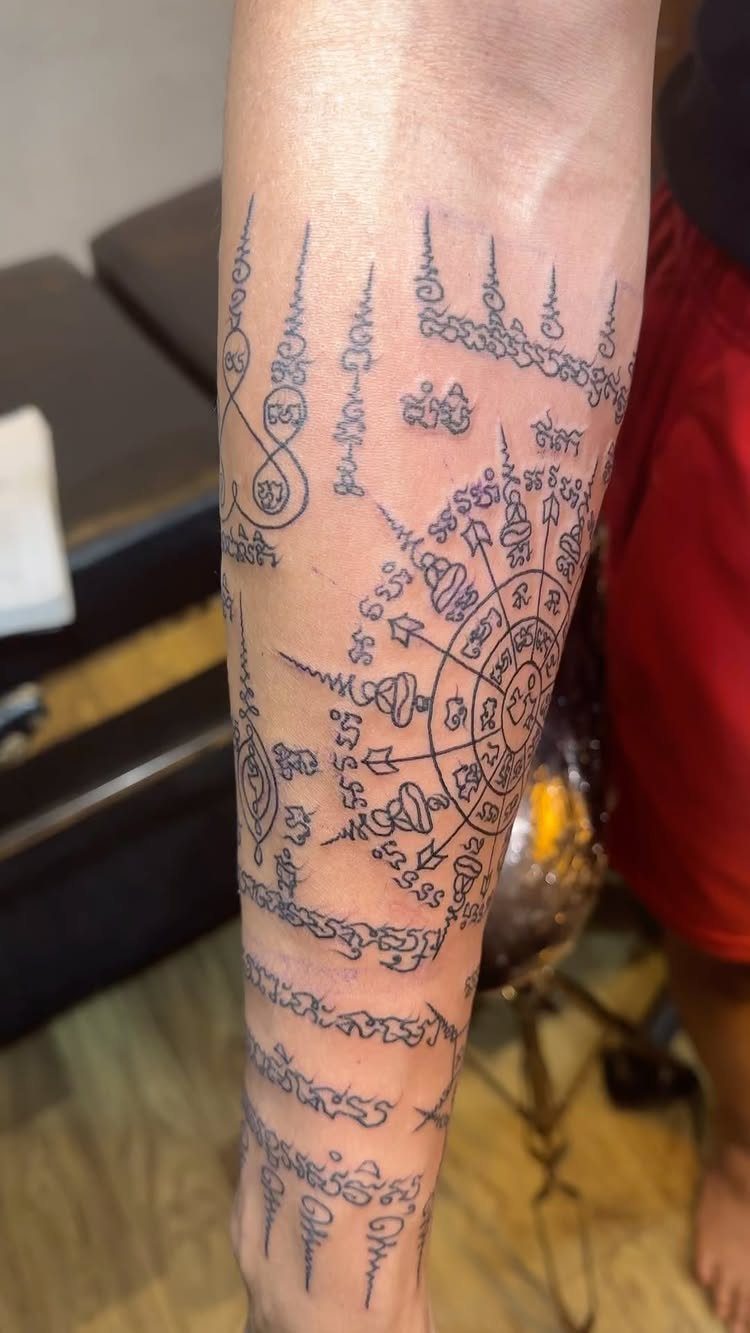
Placing Sak Yant on the forearm keeps the design visible and gives enough length for stacked geometric patterns and script.
The flat surface of the inner forearm holds detail well, and the outer side works for designs that wrap slightly around the arm.
Forearms heal in about 2 weeks and are easier to keep clean than hands or feet. Sun exposure is harder to avoid on the forearm, so applying sunscreen once healed prevents the black ink from fading.
The script stays legible at this scale, and the geometry holds its shape as the tattoo ages.
19. Spine Sak Yant Tattoo
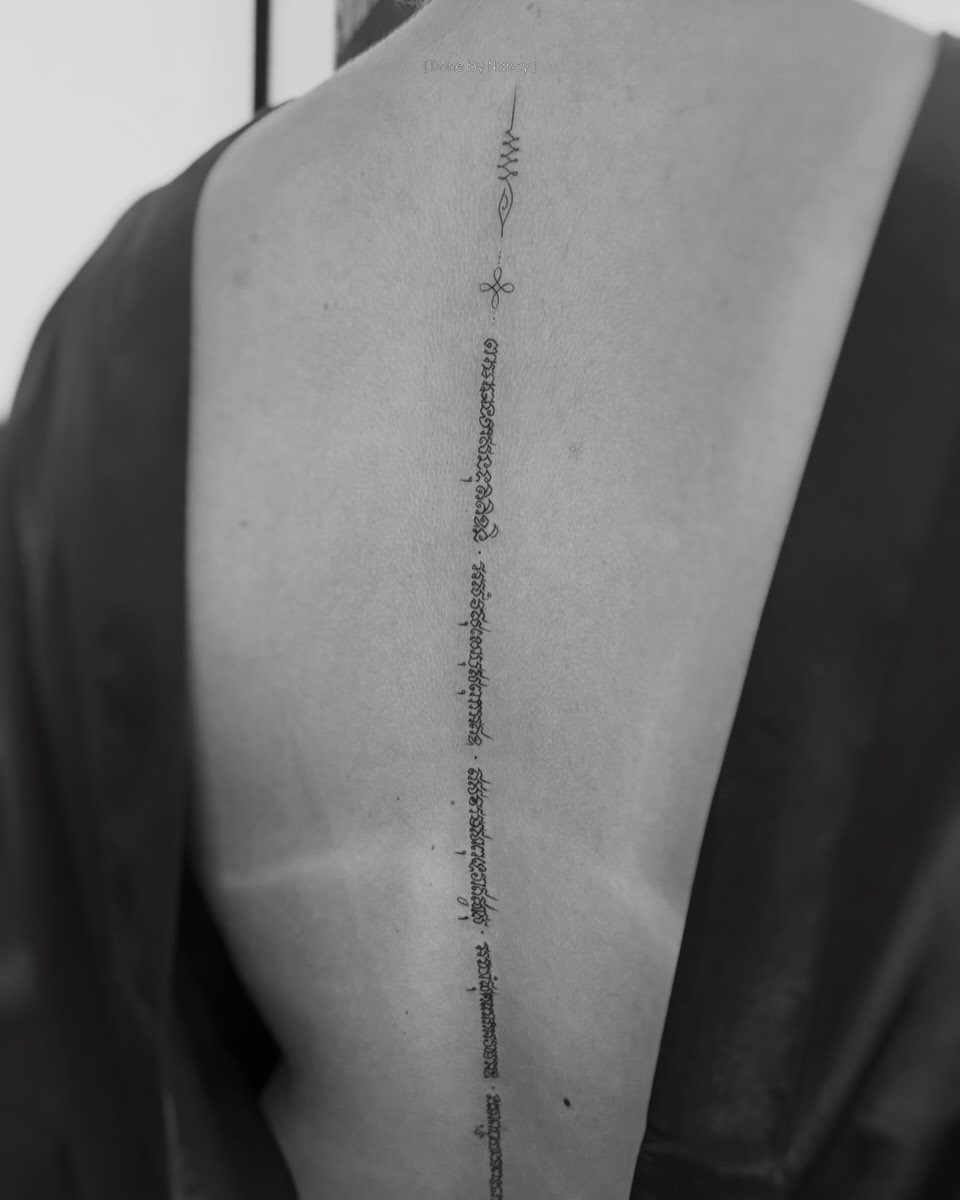
Running script and symbols down the spine keeps the design centered and balanced.
The vertical strip of skin along the spine holds long compositions without needing much width, and the natural line of the body guides the eye through the script from top to bottom.
The spine ranks high for pain because the needle works directly over bone with little muscle underneath. Sessions often stay shorter because of that.
Black script stays readable as it heals, and keeping the design narrow means you can add pieces on the shoulder blades or lower back later without the compositions fighting each other.
Respect and Cultural Sensitivity
Learning what the design means before you commit to it keeps the choice grounded in something real rather than pure visual appeal.
Finding a practitioner who understands the ritual and the script ensures the tattoo is applied correctly.
Studios outside Thailand offer Sak Yant-inspired designs, but traveling to Thailand for an authentic application from a respected master connects the tattoo to its origin.
The culture itself is inclusive. Anyone can receive a Sak Yant as long as the approach is respectful and the ritual is honored.
Pain and Care Considerations
Each tap of the rod feels sharper and more deliberate, and the process takes longer overall. Pain tolerance varies, but expect the experience to rank higher than machine work.
Hygiene matters.
A reputable monk or ajarn uses clean tools, and you should confirm that before the session starts. Your safest bet is a temple appointment at Wat Bang Phra or a practitioner with a solid reputation.
Aftercare follows the same rules as any tattoo: keep the area clean, avoid soaking it and stay out of direct sun while it heals.
Following those instructions prevents infection and keeps the ink from fading prematurely. Healing takes about 2 weeks.
Modern Perceptions
Studios in other countries now offer Sak Yant-inspired work, and some travelers make the trip to Thailand specifically to receive one from a monk or ajarn.
The appeal crosses borders, but the core of the tradition stays rooted in Thai culture and the spiritual framework that built it.
What started as a practice linked to Muay Thai fighters and monks now reaches a much wider audience, including people with no connection to combat sports or Buddhism.
The designs still carry the same meanings they always did, and the ritual remains intact for those who seek it out.