A faith cross tattoo runs anywhere from a one-hour session for a simple wrist piece to several hours for a cross with shading, praying hands or roses.
The decision comes down to whether you want the cross alone or paired with script, praying hands, roses, butterflies or symbols like infinity.
Placement matters for pain and visibility: the inner wrist stings but keeps the piece visible daily, while the upper arm or calf offers more space and less discomfort during the session.
Fine line work like a heartbeat cross demands precision from your artist, since thin lines blur faster as the tattoo ages.
1. Walk by Faith Cross
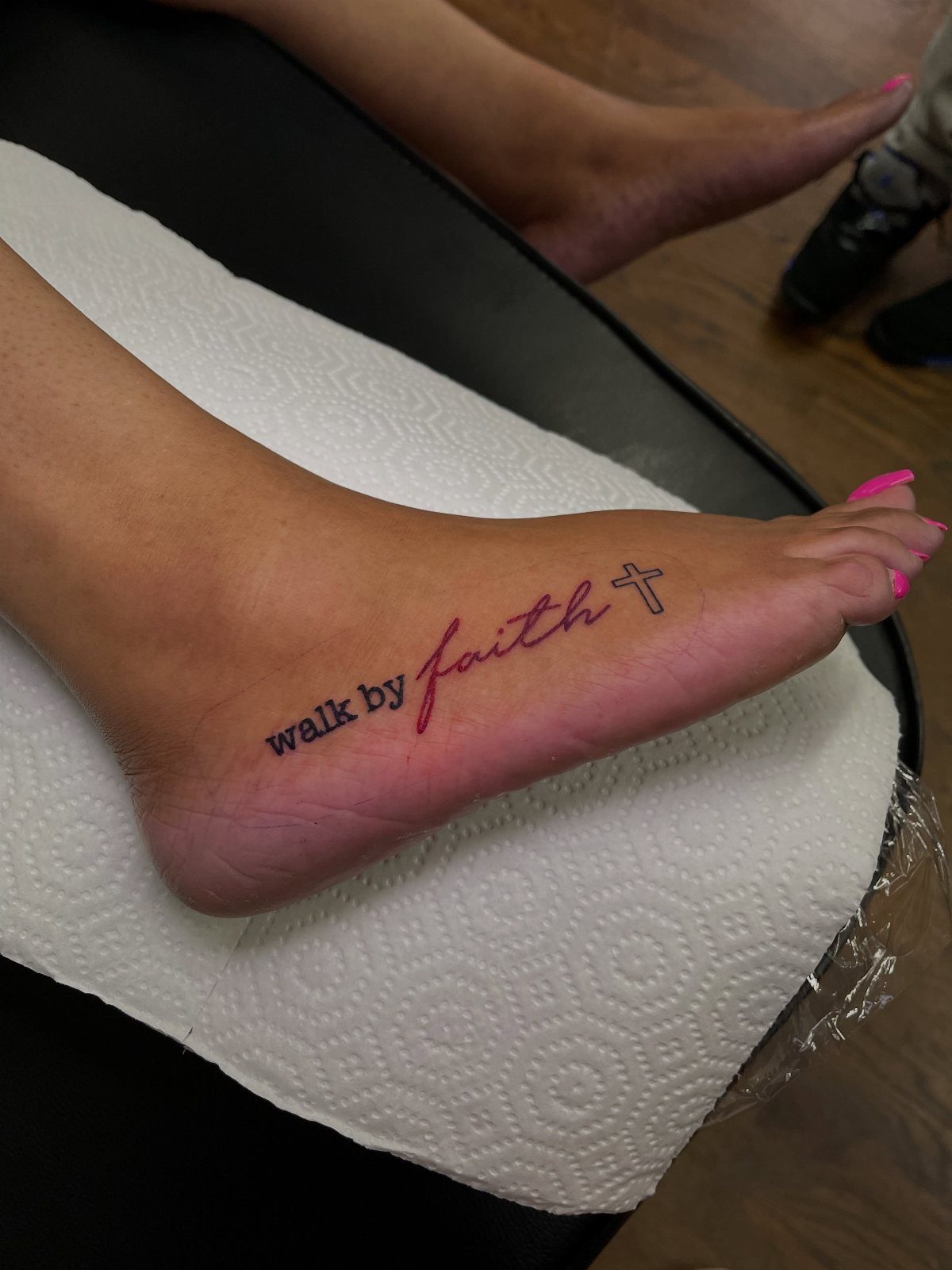
The cross sits on the foot, paired with the phrase "walk by faith" in script that matches the line weight of the cross itself.
Placement on the top of the foot keeps it visible in sandals or when barefoot, though the foot ranks high for pain since the skin sits close to bone with little padding underneath.
The phrase ties the design to forward motion, which the foot placement reinforces. The inner wrist or forearm carries the same idea with less discomfort during the session, and you’ll see it daily without a mirror.
2. Faith Over Fear Cross
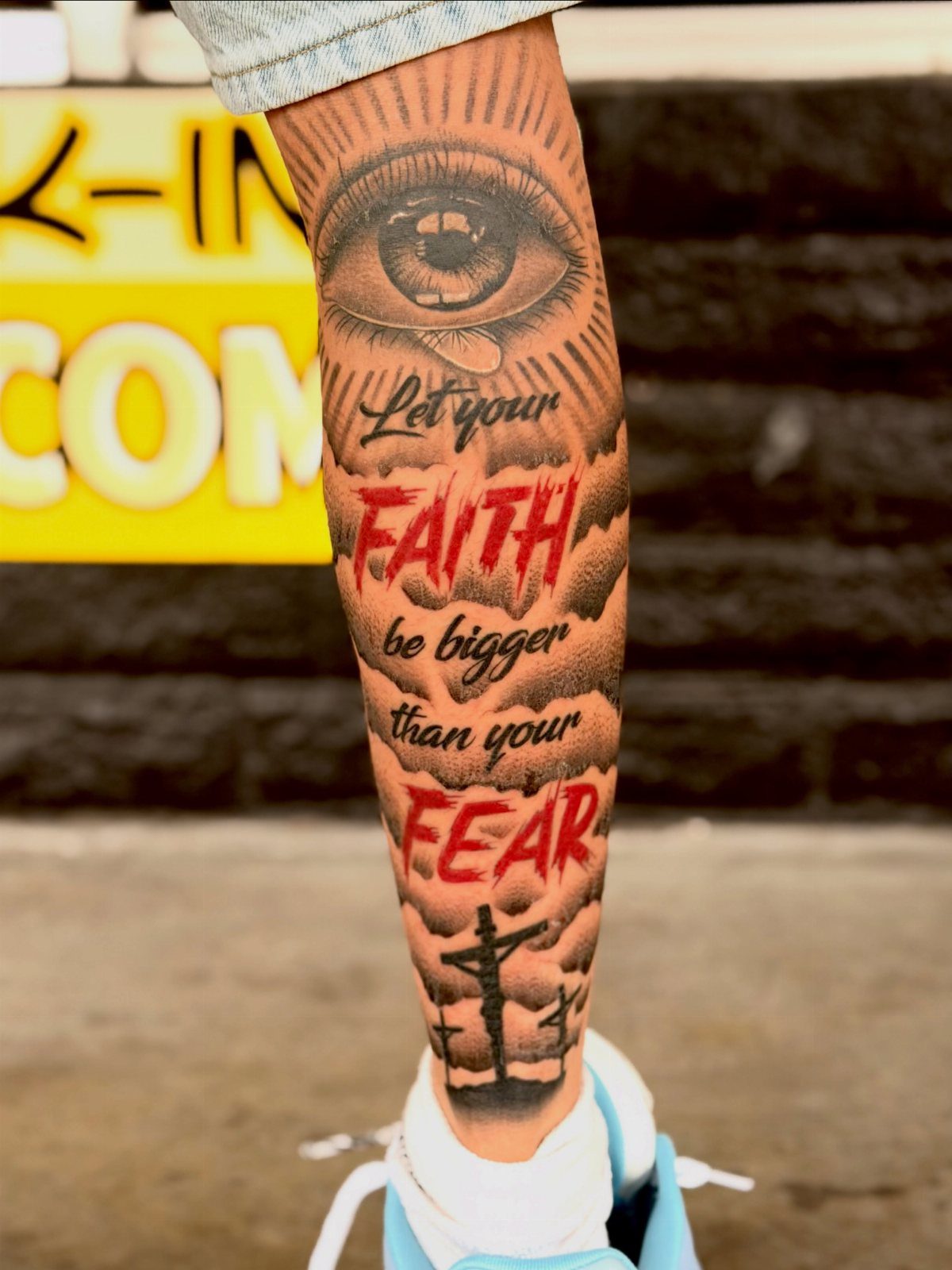
This version builds a vertical composition that stacks an eye, clouds, a cross, and the phrase "Let your FAITH be bigger than your FEAR" on the lower leg.
The eye and clouds add symbolic depth, while the cross anchors the message at the bottom of the design.
Lower leg placement like this one works well for a taller tattoo that reads from top to bottom.
The calf has enough muscle to soften the sting compared to the shin, and the area heals without constant friction from waistbands or tight clothing.
3. Faith Cross with Cursive Text
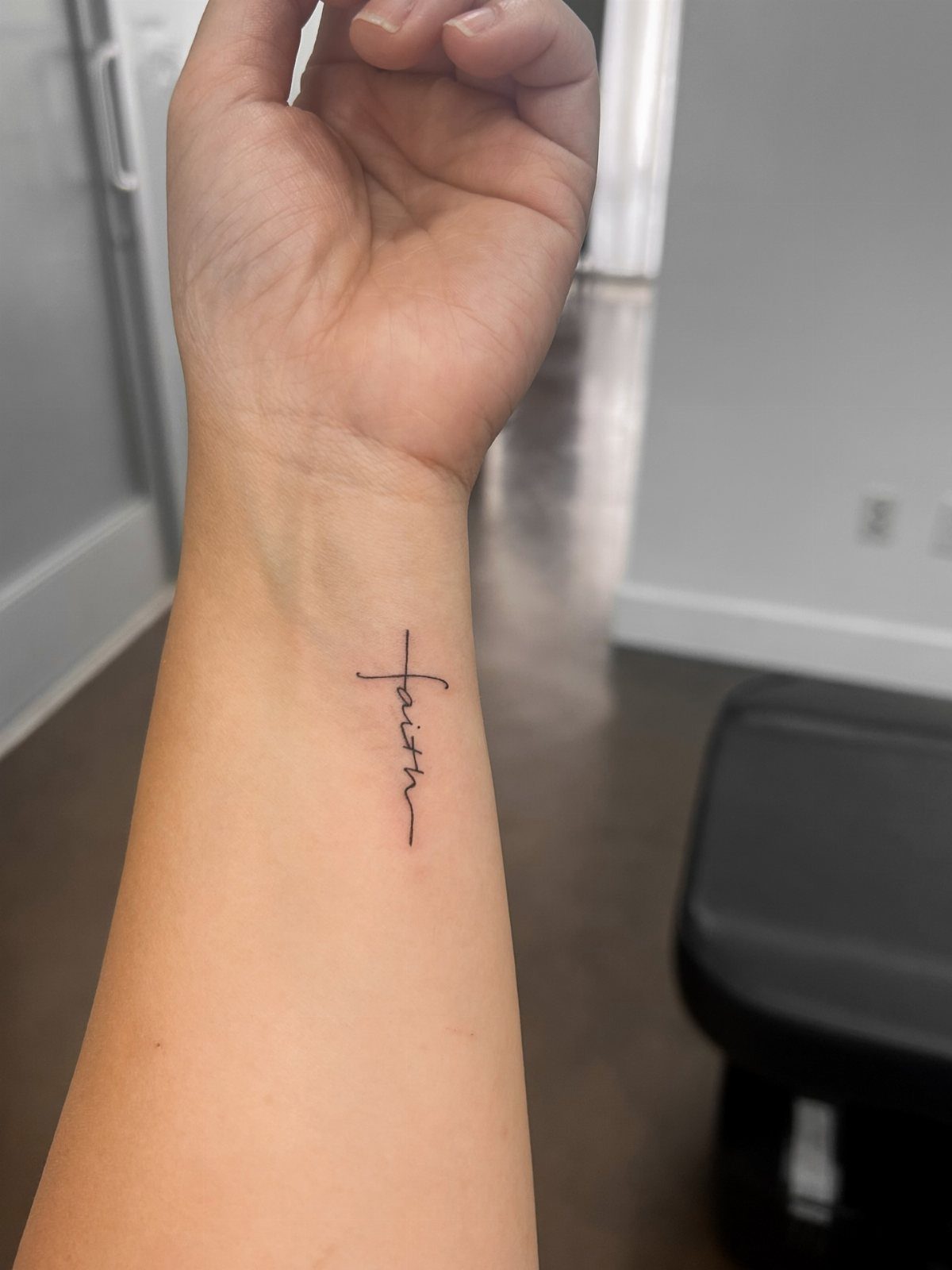
The cross forms when the word "faith" in cursive becomes the vertical beam, intersecting a simple horizontal line. What you get is a design that reads as both text and symbol without needing a separate illustration alongside it.
Inner wrist placement keeps it small and readable, which also keeps the cost and session time low. The wrist does sting since the skin is thin and the bones sit close, but the session runs short for something this minimal.
Line weight matters here: too thin and the cursive will blur after a few years, so ask your artist to keep the lines bold enough to age cleanly.
4. Cross with Praying Hands
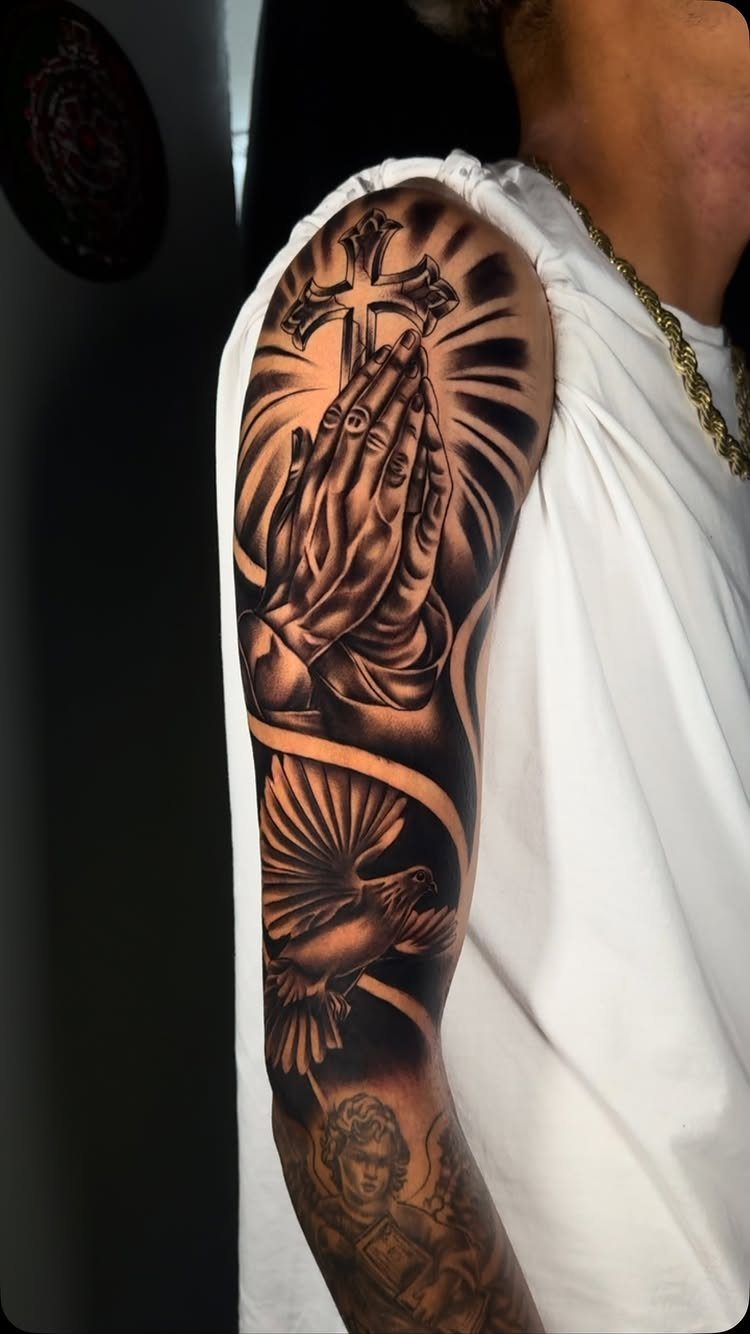
Praying hands paired with a cross is a combination that has been around in tattoo iconography for decades, often expanded with additional elements like doves or cherubs.
The hands typically rest below or beside the cross, and the black and grey shading gives the design the depth it needs to read clearly on the upper arm.
Upper arm placement offers a flat canvas with enough space for detail work and minimal pain compared to bonier areas.
A piece this size, covering several inches and including multiple elements, takes time depending on how much shading and detail the artist adds.
The upper arm also heals easily since clothing does not rub the area as much as a forearm or ribcage would.
5. Cross with Infinity Symbol
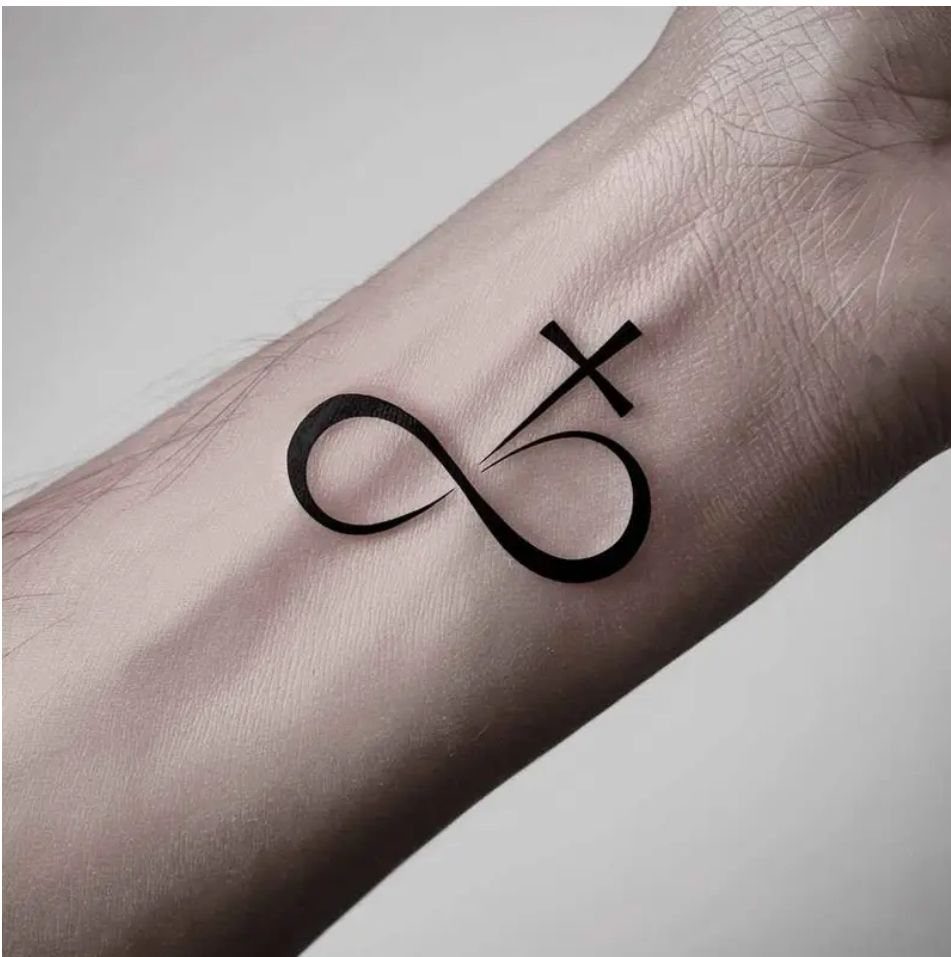
The cross intersects the infinity symbol at the center, so both shapes share a common midpoint and the design reads as a single unified mark rather than 2 separate pieces.
The result is compact, which suits the inner wrist where space is limited and fine detail still reads clearly.
Inner wrist hurts more than fleshier spots, but a piece this small finishes fast.
Black ink holds cleanest for fine lines like these, and keeping the line weight consistent between the cross and the infinity loop helps both elements balance visually as the tattoo ages.
6. Ornate Cross with Rose
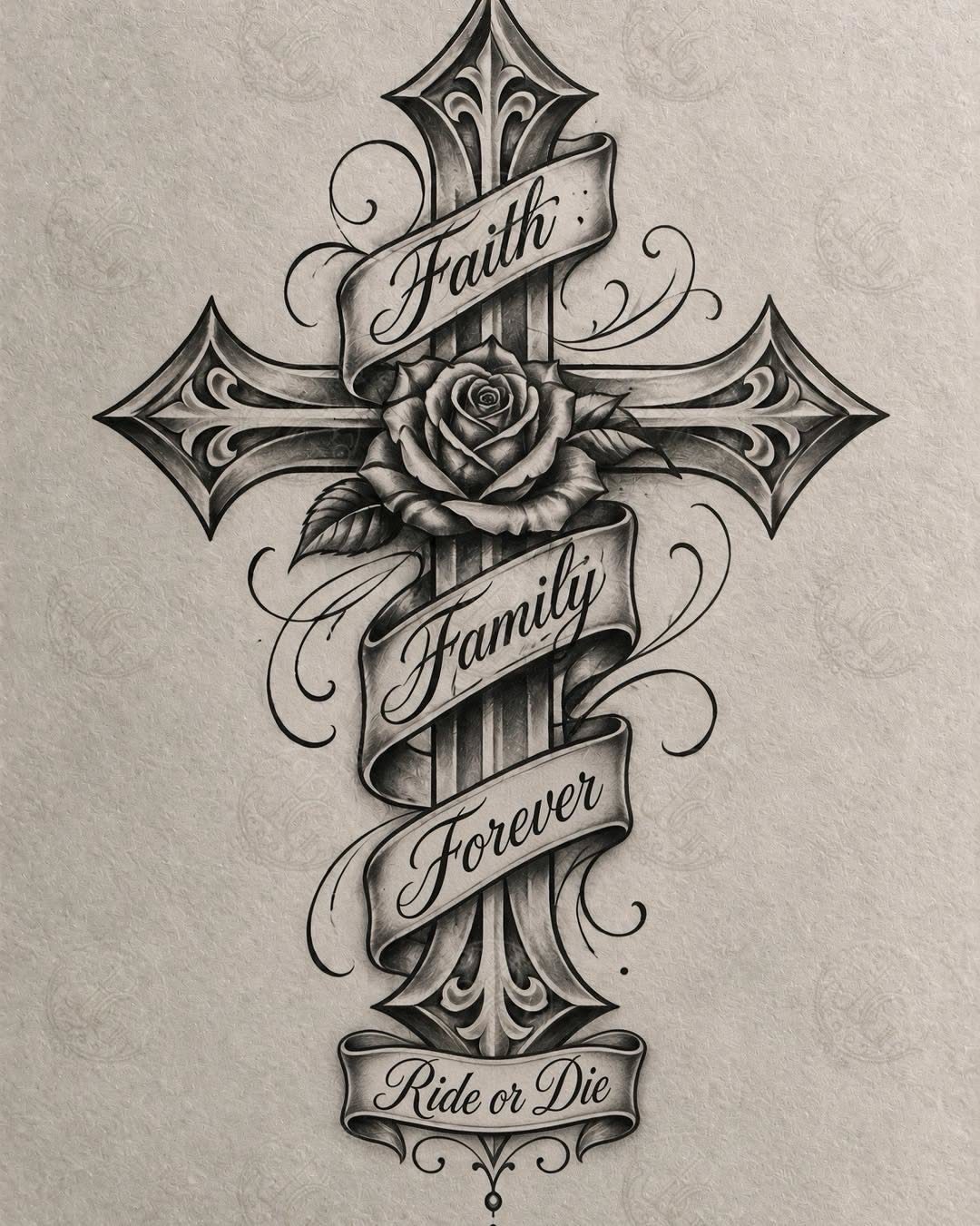
An ornate cross frames a central rose, with banners woven through the design carrying words like "Faith", "Family", or other personal text.
The cross typically features decorative flourishes at the ends of each beam, and the rose sits where the arms meet, softening the geometry with organic curves.
This style leans traditional, with bold outlines and room for shading in the petals and ribbon folds.
Forearm or upper arm placement gives the design enough space to include multiple text banners without crowding the rose or losing detail in the cross itself.
A piece this detailed takes time, and black and grey or limited color both work depending on whether you want the rose to stand out or blend with the rest of the composition.
7. Heartbeat Cross
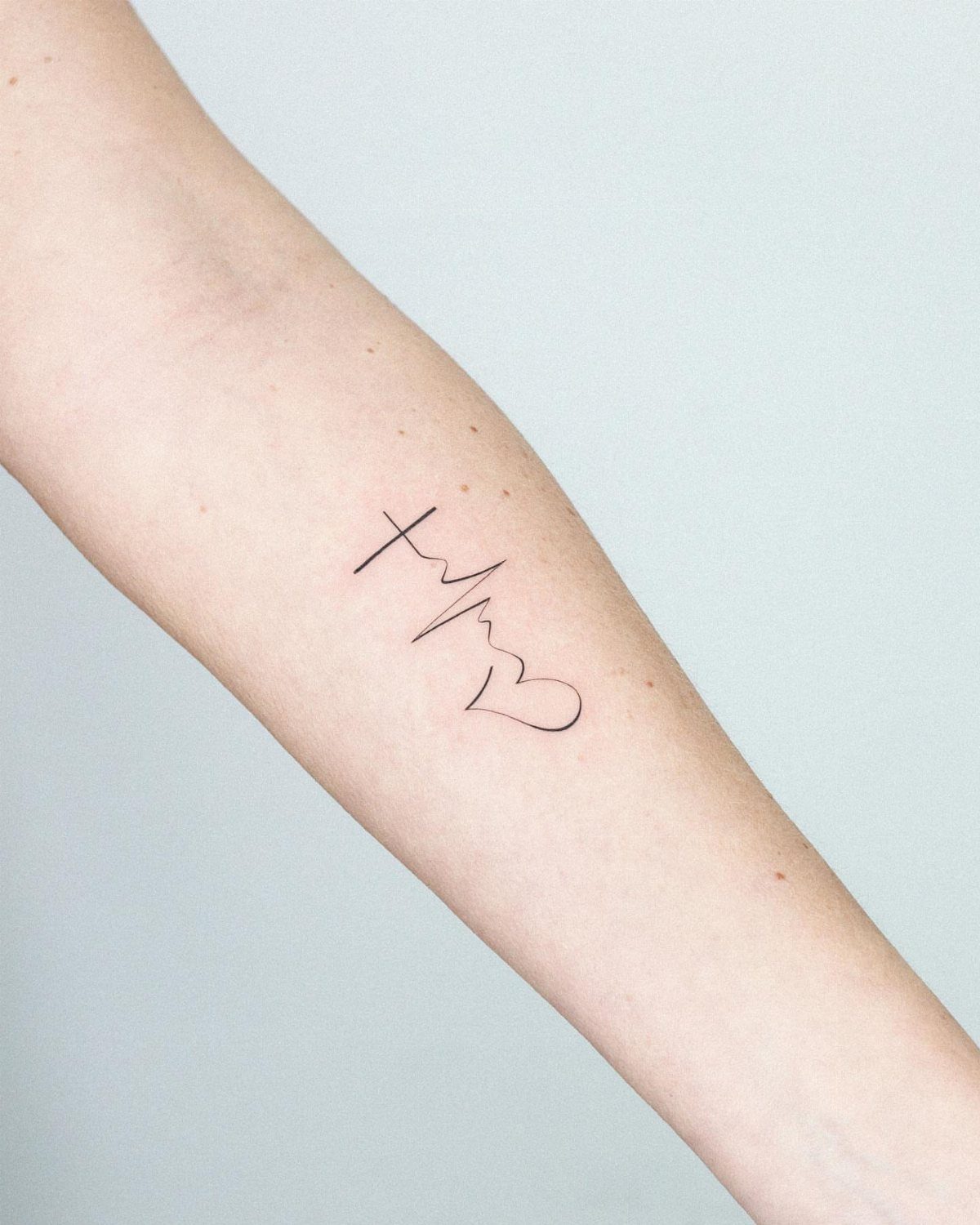
A cross drops into an EKG heartbeat line, which then curves into a heart shape at the end. The rhythm breaks where the cross lands, tying faith directly to life and pulse rather than keeping the 2 symbols separate.
Forearm placement like this one keeps the design visible and fits a horizontal layout without needing much height.
The line work stays minimal, so the session runs fast and the cost stays low. Keep the line weight consistent between the heartbeat and the cross so both age at the same rate without one fading faster than the other.
8. Cross with Butterflies
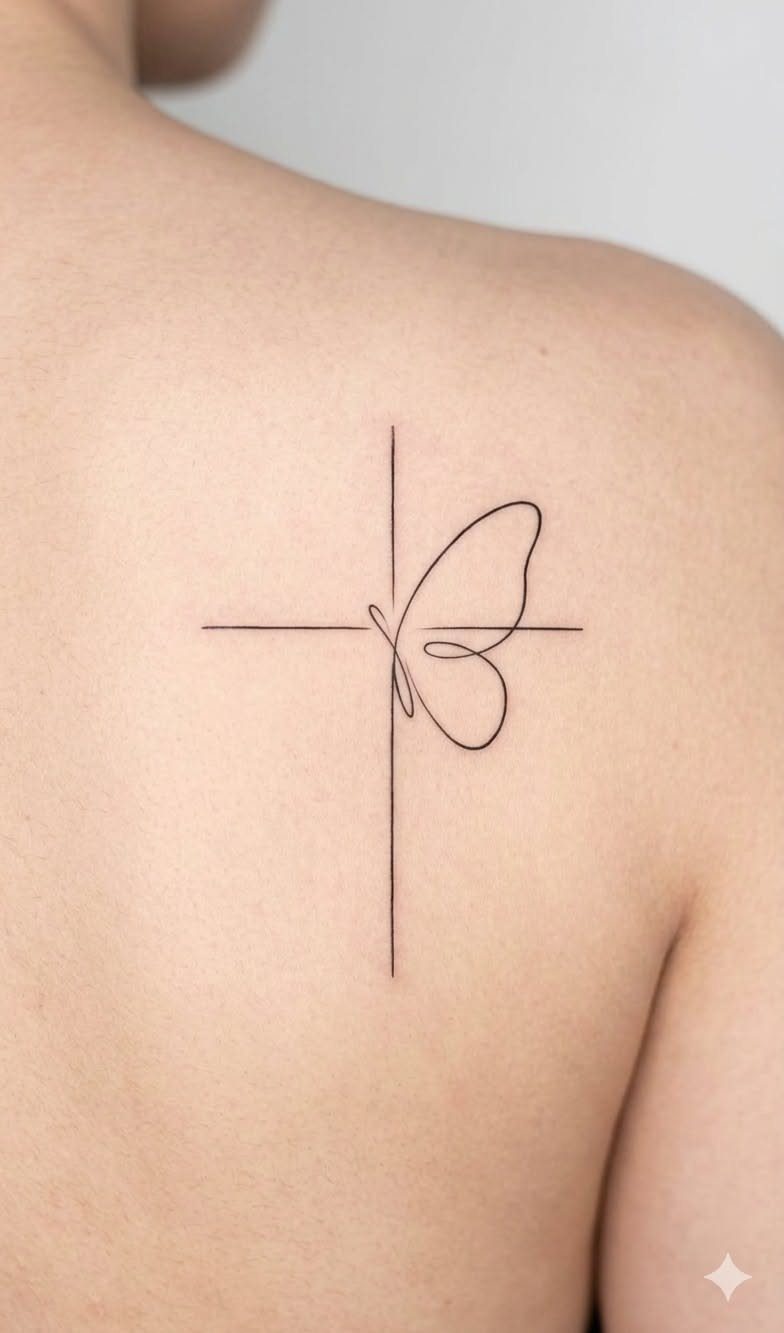
A butterfly forms at the center of the cross, its body aligned with the vertical beam and its wings spanning the horizontal.
The single-line approach keeps the design delicate, which suits readers looking for something understated rather than bold traditional imagery.
Upper back placement gives the piece a centered canvas that reads clearly when visible but stays covered most of the time.
Fine line work like this requires an artist comfortable with minimal tattooing, since thin lines demand precision and can blur if the needle depth is inconsistent. A piece this small finishes in under an hour.
Meaning of Faith Tattoos
Faith tattoos lean on the cross as the central symbol, but the meaning shifts with what you pair it with.
A standalone cross marks religious identity; adding script like "walk by faith" or "faith over fear" makes the commitment verbal and pushes the piece into motivational territory.
The permanence matters here. A faith tattoo commits you to a visible declaration of belief, so most people place it where they’ll see it daily or where it can stay covered when context requires it.
Wrist, forearm, and upper arm rank highest for that reason.
If your faith ties to a specific tradition, check with your religious community first. Some denominations discourage or prohibit tattoos, and knowing that before the appointment saves regret later.