A heart tattoo with a name inside it locks the design to one specific person rather than love as an abstract idea, and that specificity is part of the appeal whether the name belongs to a partner, a parent, a child, or a friend.
An infinity heart with names works small because the loop loses detail past a few inches, a traditional heart with banner holds the name clearly on larger spots, and a heartbeat line runs horizontal so it needs width more than height.
1. Name Inside a Heart
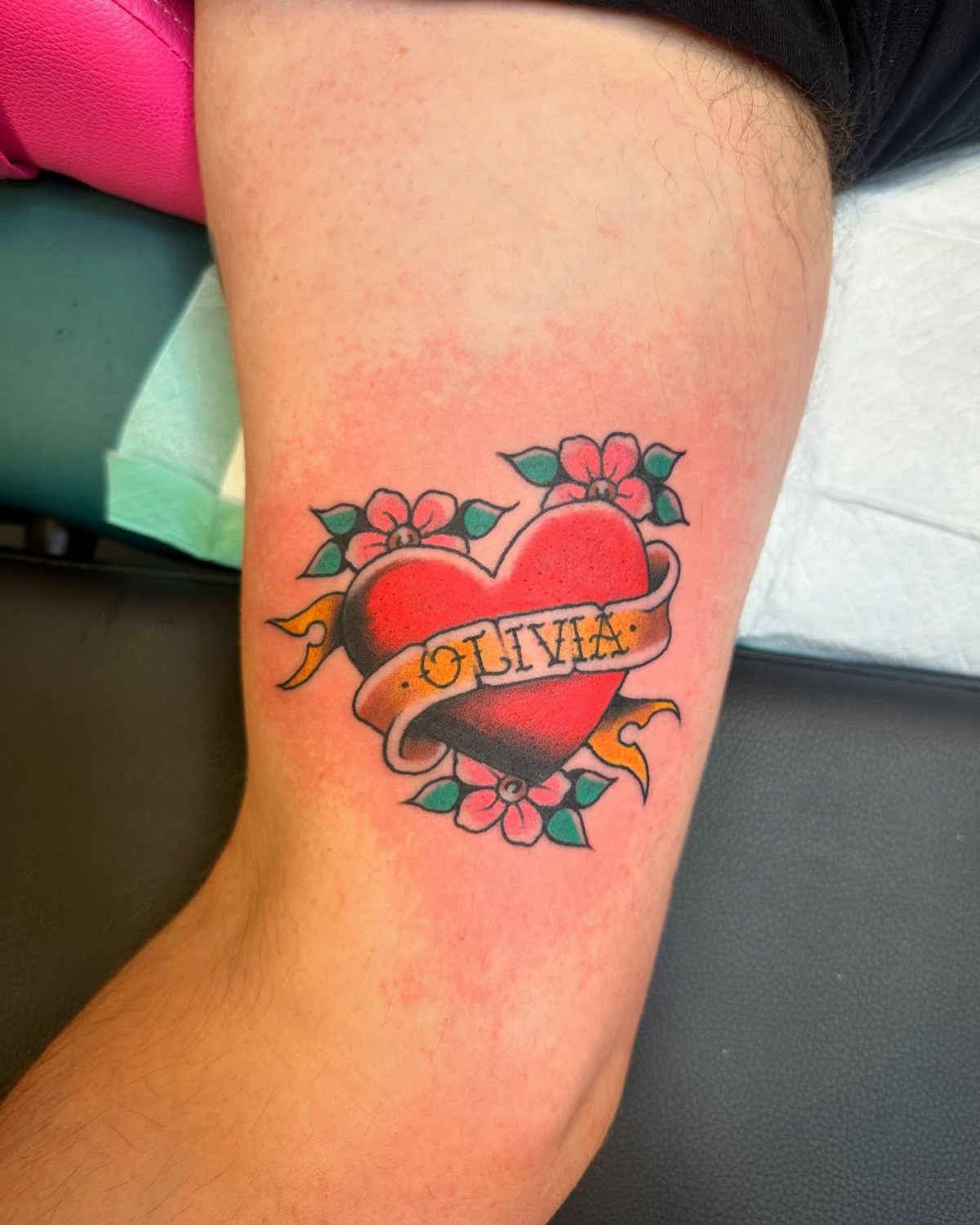
The name sits inside a heart outline, often with a banner running through or below it. This design works well when you want one name front and center without extra symbols competing for attention.
Most artists place these on the forearm, upper arm, or calf where the heart shape reads clearly. Smaller versions lose detail in the banner scroll, and the lettering becomes hard to read over time.
Traditional shading in red with black outlines holds up best. Flowers or leaves around the heart add color and leave the name legible.
2. Infinity Heart Tattoo with Names
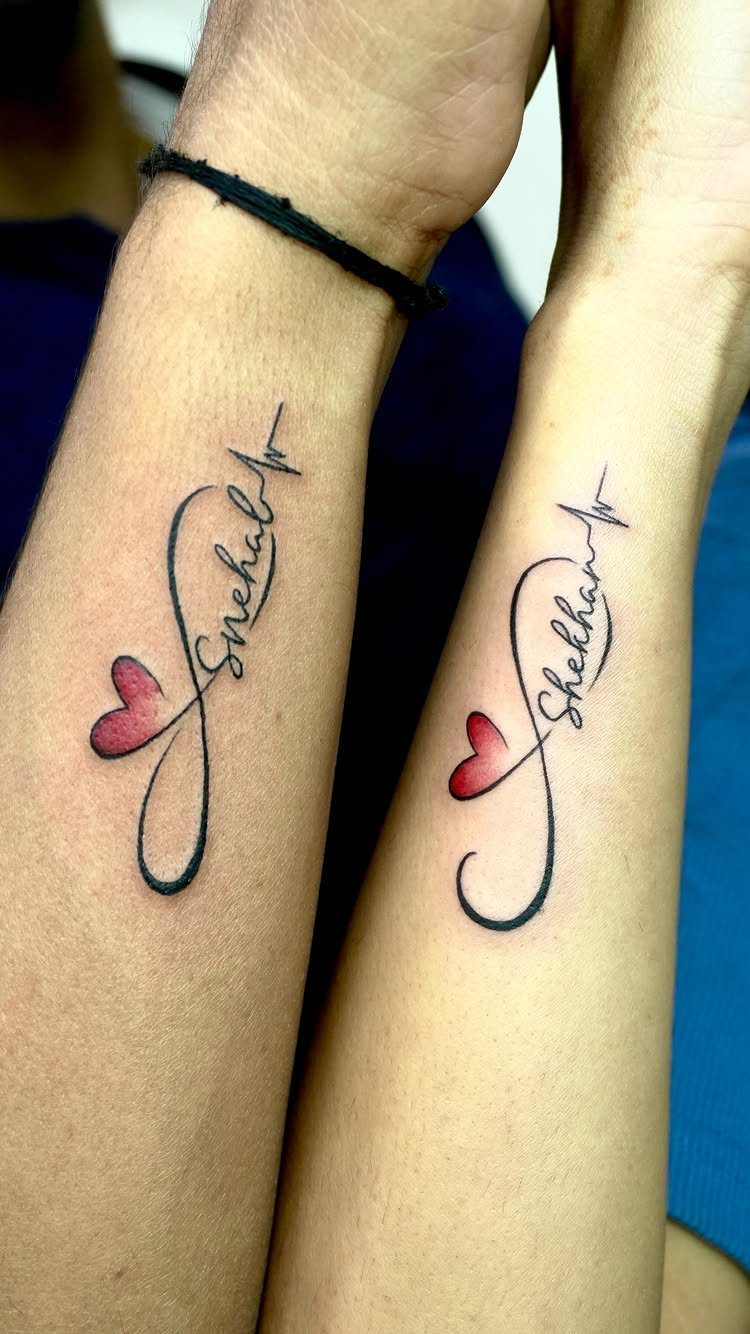
The infinity loop threads through a small heart, with names written along the line or inside the heart itself. Matching pairs are common: one name on each person’s wrist or forearm, connecting the idea of endless commitment.
The design stays small because the infinity symbol reads cleanest at that scale. Black linework is standard, with the heart filled in red or left as an outline.
I like this one for couples or parent-child tattoos. The heartbeat line sometimes runs through the loop for added meaning, though that adds detail you need to keep legible.
3. Traditional Heart Tattoo with Names
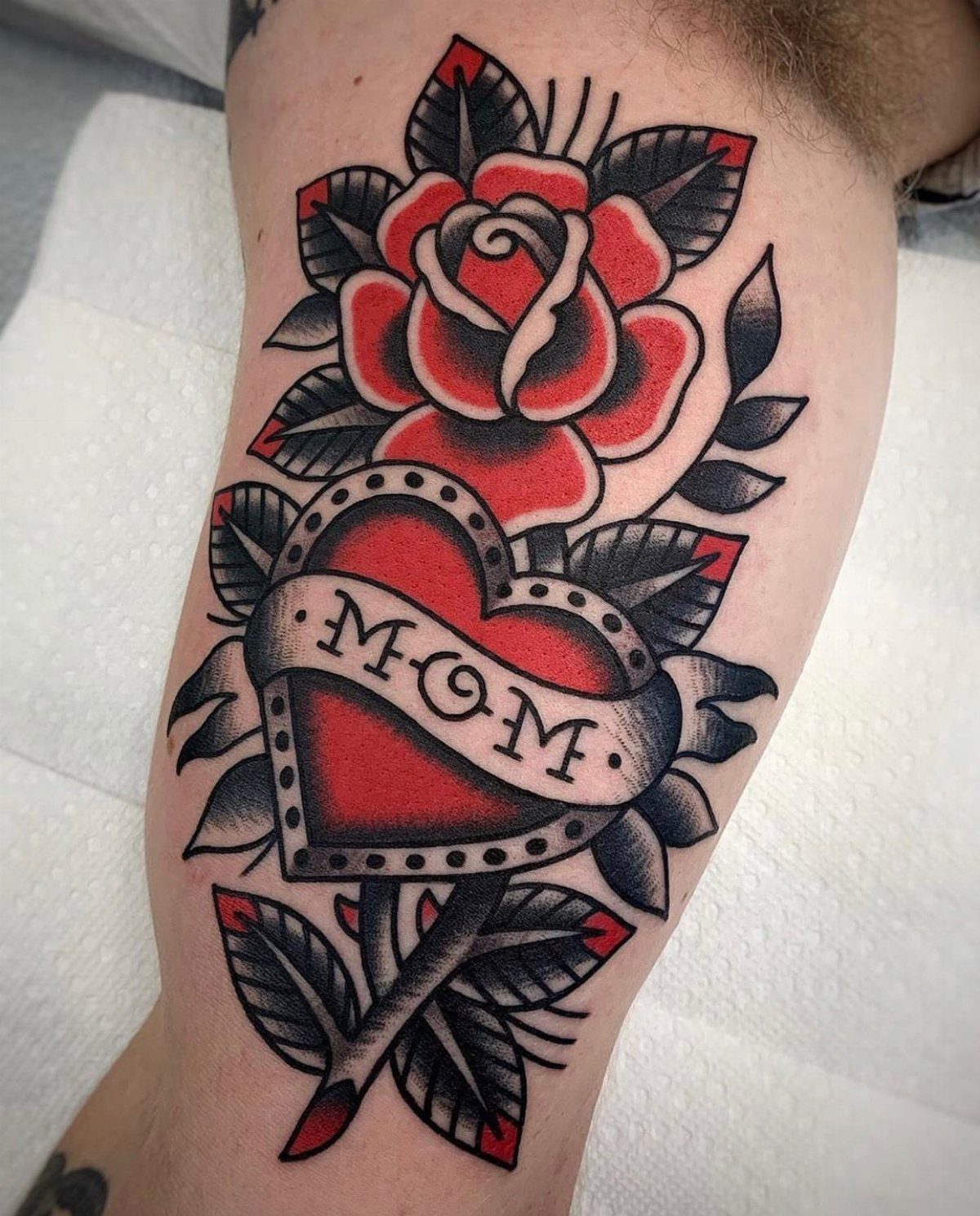
A bold red heart with black outlines and a ribbon banner for the name, often paired with a rose or other classic imagery. The style pulls from American traditional tattooing, so the colors stay saturated and the lines stay thick.
Artists recommend placing these on areas with more surface, like the thigh, upper arm, or chest, where the design can keep its impact. The thick linework holds well, and regular touch-ups keep the red bright.
This design suits anyone who wants a straightforward, readable tribute that will still look sharp decades from now.
4. Floral Heart Tattoo with Names
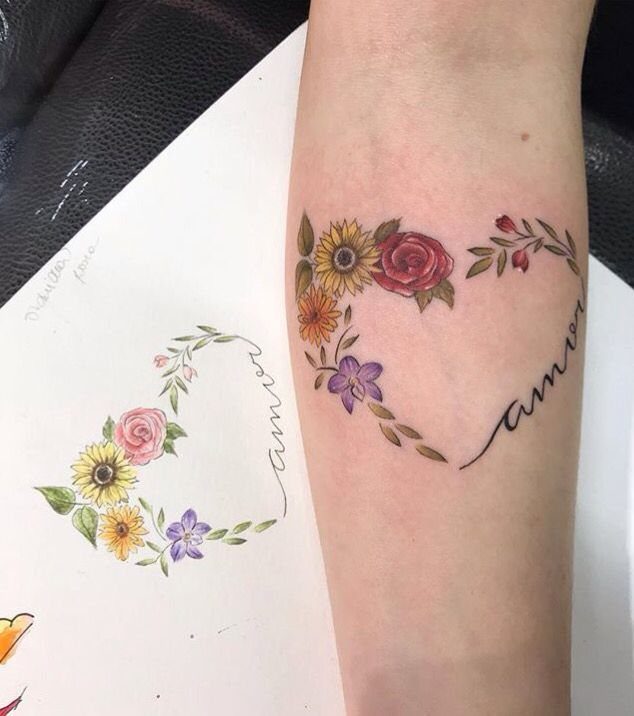
Flowers wrap around or fill the heart shape, with the name lettered across the center or woven into the petals. The floral detail softens the heart outline and gives the artist room to work in color.
Placement depends on how much detail you want: a simple heart with one or two flowers fits on a wrist or ankle, while a fuller arrangement needs the forearm or shoulder.
Color work costs more and takes longer to heal than black linework, but the result reads less like a standard heart tattoo. Roses, peonies, and wildflowers are the usual choices.
5. Heartbeat Line with Name
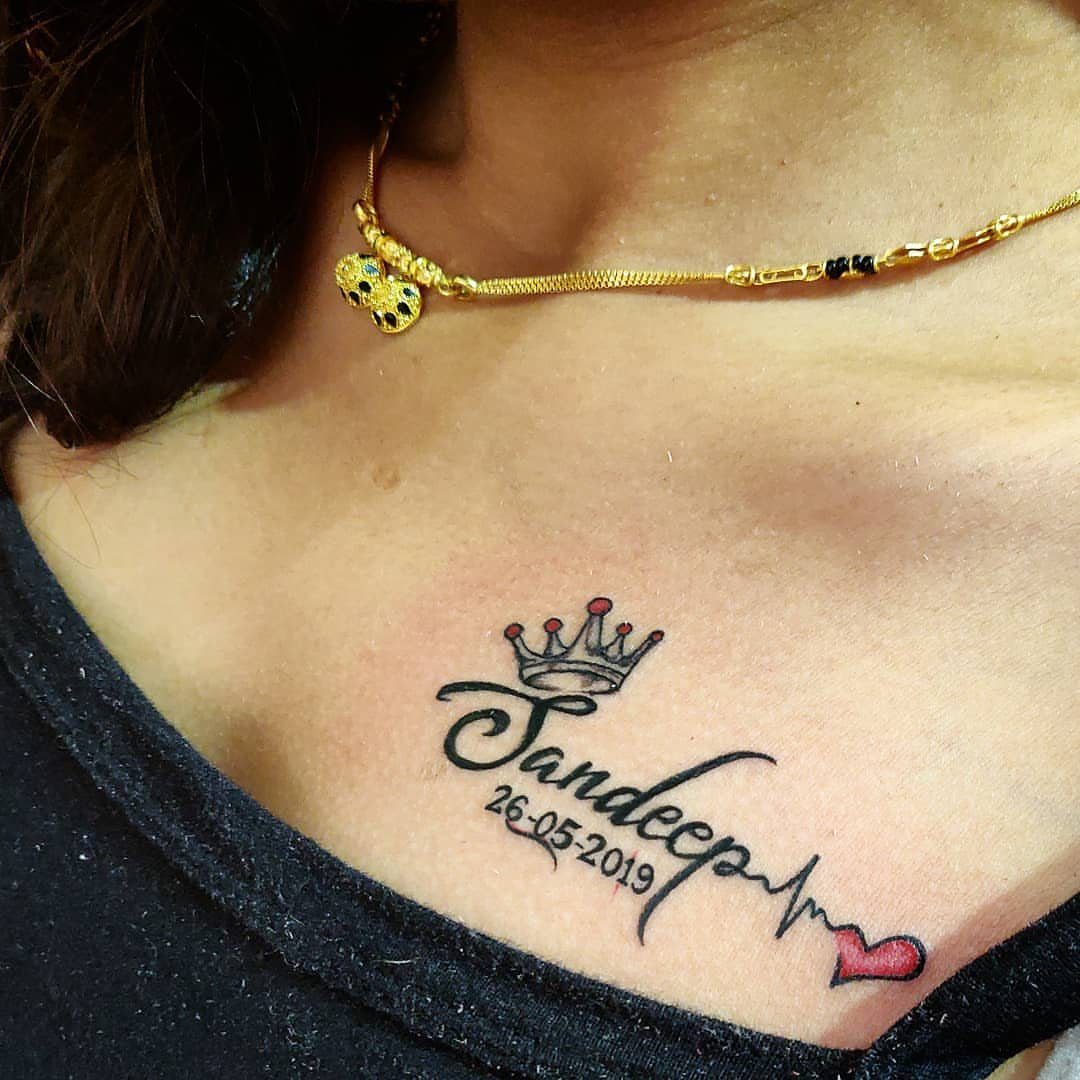
Dates, crowns, or other small symbols fit easily into the design without making it crowded.
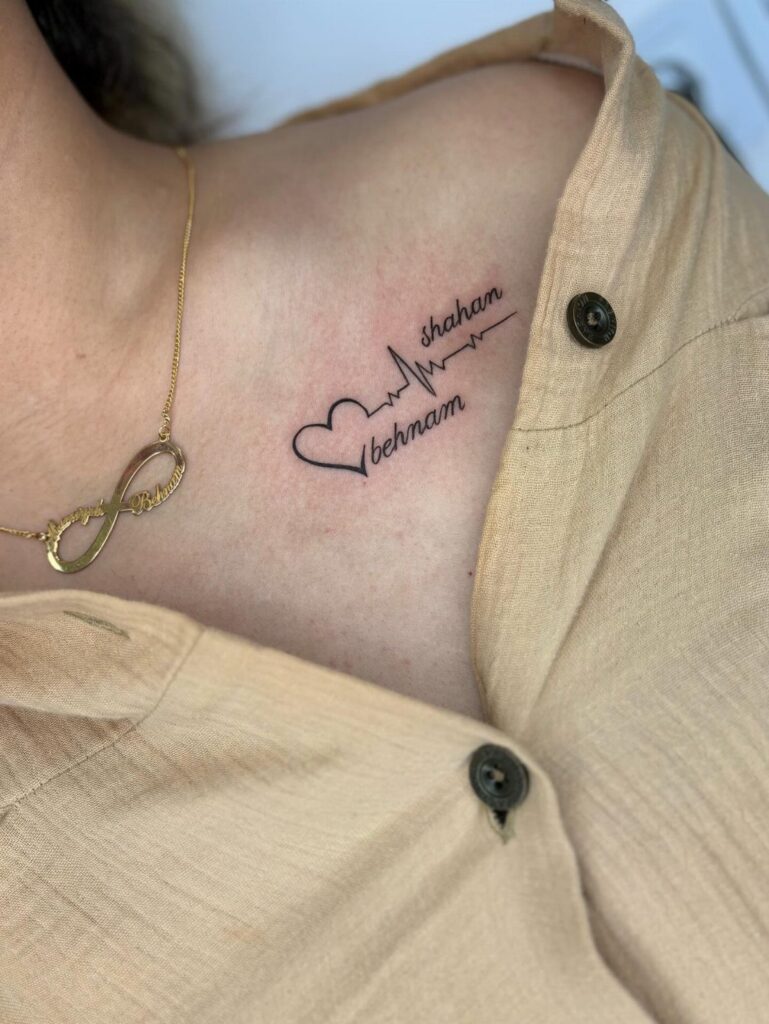
This one works well on narrow spaces like the collarbone, inner forearm, or ribcage where a horizontal line follows the body’s natural shape.
The line stays thin, so placement on areas that flex or stretch too much can blur the peaks over time.
Black ink keeps the line crisp. Adding color to the heart gives one focal point without complicating the rest.
6. Cursive Name Heart Tattoo
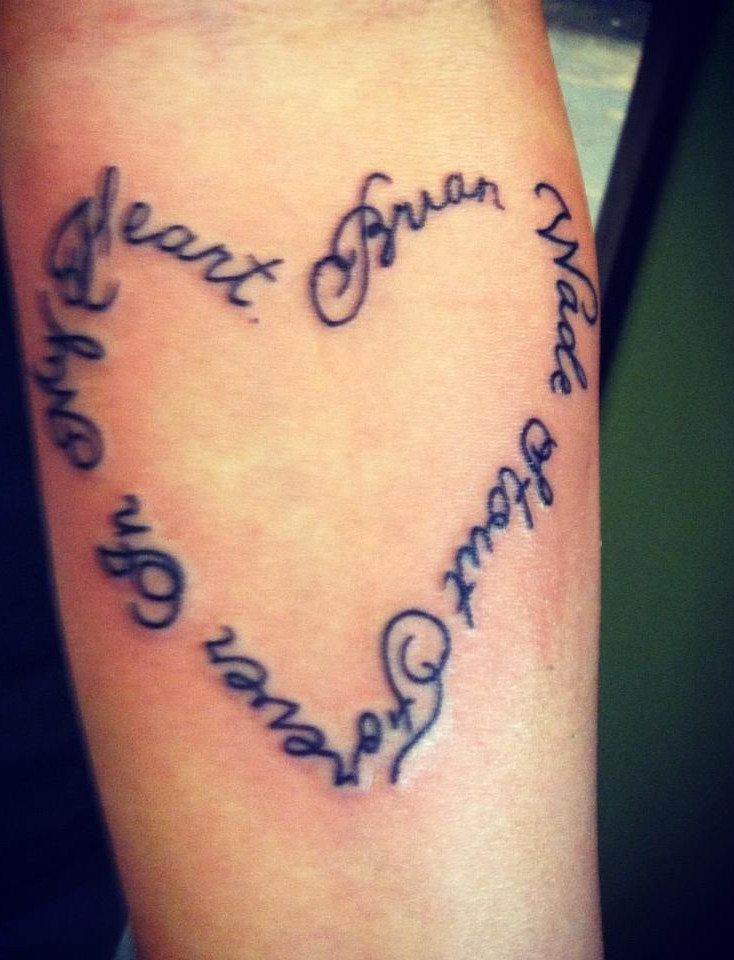
The names are written in cursive script, looping and bending to form a heart shape instead of drawing a separate heart outline.
Two or more names work best because the letters need enough length to curve into the shape without forcing it.
Script fonts with flowing tails and connecting letters form the cleanest heart; block letters do not curve as naturally.
This design reads more subtly than a solid heart outline. Black ink is standard, though thin line script fades faster than bold traditional work and may need a touch-up down the line.
Meaning of Heart Tattoos
Sailors used heart tattoos to carry the thought of someone waiting for them on shore, a tradition that kept the design visible and meaningful through long stretches at sea.
Adding a name pins the design to a specific person rather than love as an abstract idea.
That specificity is part of the appeal: the tattoo names exactly who matters, whether that is a partner, a parent, a child, or a friend.
The heart reads as love across most cultures, which makes the symbol work without needing explanation.
Placement on visible skin, such as the wrist or forearm, signals that the relationship is something you are willing to show openly.
Customization Options
Font choice changes how the name reads. Bolder fonts work better inside a banner or on a straight line, where thick letters stay legible as the tattoo ages.
Color adds cost and healing time.
Placement Suggestions
The chest works for larger designs that include more detail, like flowers or multiple names.
The back gives room for larger or more complex designs but hides the tattoo unless you choose to show it.
Visibility matters if the tattoo is meant to be seen regularly. Placing it on the inner forearm or wrist keeps it in your own line of sight as much as anyone else’s.
Narrow spaces like the ribcage or ankle limit how much detail fits, so simpler outlines work better there than designs with heavy shading or multiple elements.
Frequently Asked Questions
What is the traditional heart tattoo?
Traditional heart tattoos feature solid red fill, heavy black outlines and banners that hold names or symbols like roses and daggers.
The style comes from American traditional tattooing, where saturated colors and heavy linework keep the design readable for decades. Sailors made the style popular in the 1900s, wearing names of wives and sweethearts through months at sea.
What is a 3 line tattoo?
A 3 line tattoo here usually means three heart shapes stacked or linked, each one framing a different name in script.
The design suits families or small groups when you want individual representation inside a single piece. Black outlines stay readable over time, and the stacked or flowing shape fits narrow spots like the forearm or ribs.