A wolf howling at the moon speaks to independence and pack loyalty, a phoenix climbing out of its own ashes marks survival after a hard reset, and an anchor planted in the foreground says you hold steady when everything else shifts.
A lion’s mane holds fine line better than a dragon’s scales, a compass rose sits cleanly on the forearm while an hourglass fits the outer bicep, and bold black outlines on a bear or eagle stay readable longer than tight shading on a Japanese mask.
1. Wolf Tattoo
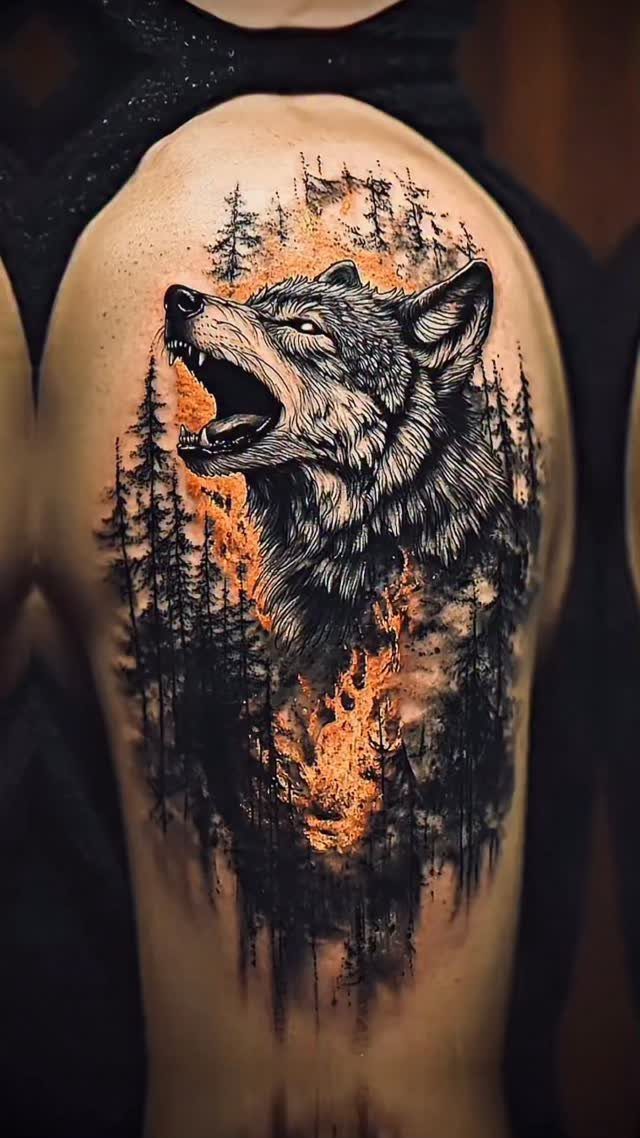
A wolf mid-howl reads as loyalty and instinct, the animal that protects its pack and trusts what it knows before what it sees. Men pick this one to mark brotherhood or family, something that held when other things didn’t.
The burning forest behind it pulls the meaning forward: survival through collapse, or the choice to keep going when the ground gives out.
I’d keep the fire subtle if the wolf is already detailed, since 2 busy elements fight for the same space.
A wolf reads well on the upper arm. The howl needs vertical room.
2. Phoenix Tattoo
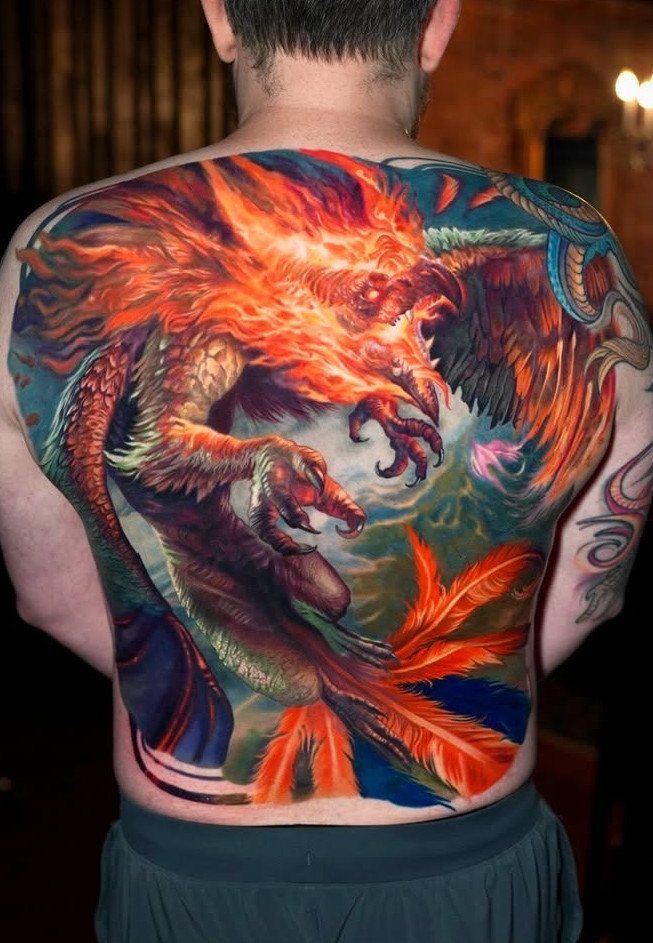
A phoenix rising from flame says you rebuilt after something ended, and the full-back placement gives it the span it needs to work.
Men choose this after recovery, divorce, or a stretch that changed how they see the room they’re standing in.
Color makes the fire real. Orange, red and gold in the wings and tail separate the bird from the background, and black shading in the feathers keeps the shape crisp as it heals.
A black-and-grey version works but loses the heat, which is half the point.
A full phoenix takes multiple sessions spread over weeks. The back tolerates the needle well, but sitting that long still adds up.
3. Lion Tattoo
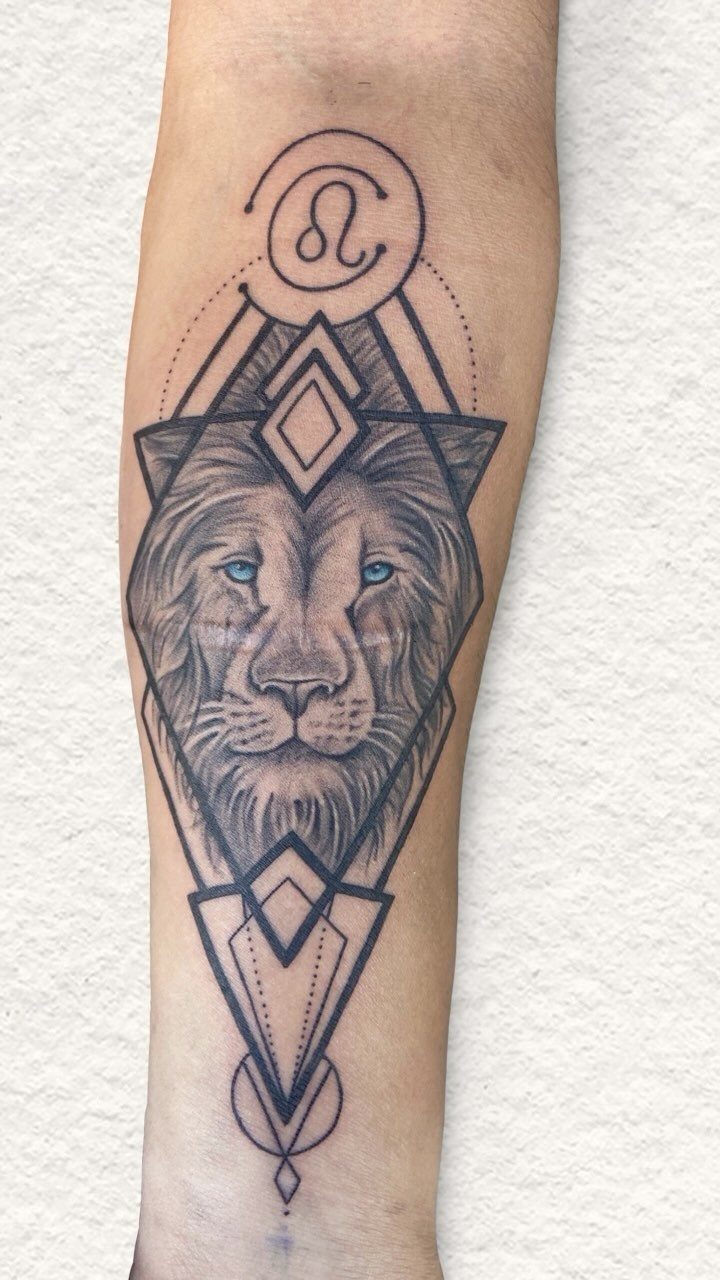
A lion staring forward means courage that doesn’t flinch, and the Leo glyph underneath ties it to birthdate if that matters to you.
Forearm placement keeps it visible. The vertical shape fits the muscle and reads clearly whether your arm is bent or straight.
Black and grey ages better than color on a lion. Fur detail softens fast, so ask your artist to keep the contrast strong in the mane and around the eyes where the design holds its weight.
4. Anchor Tattoo
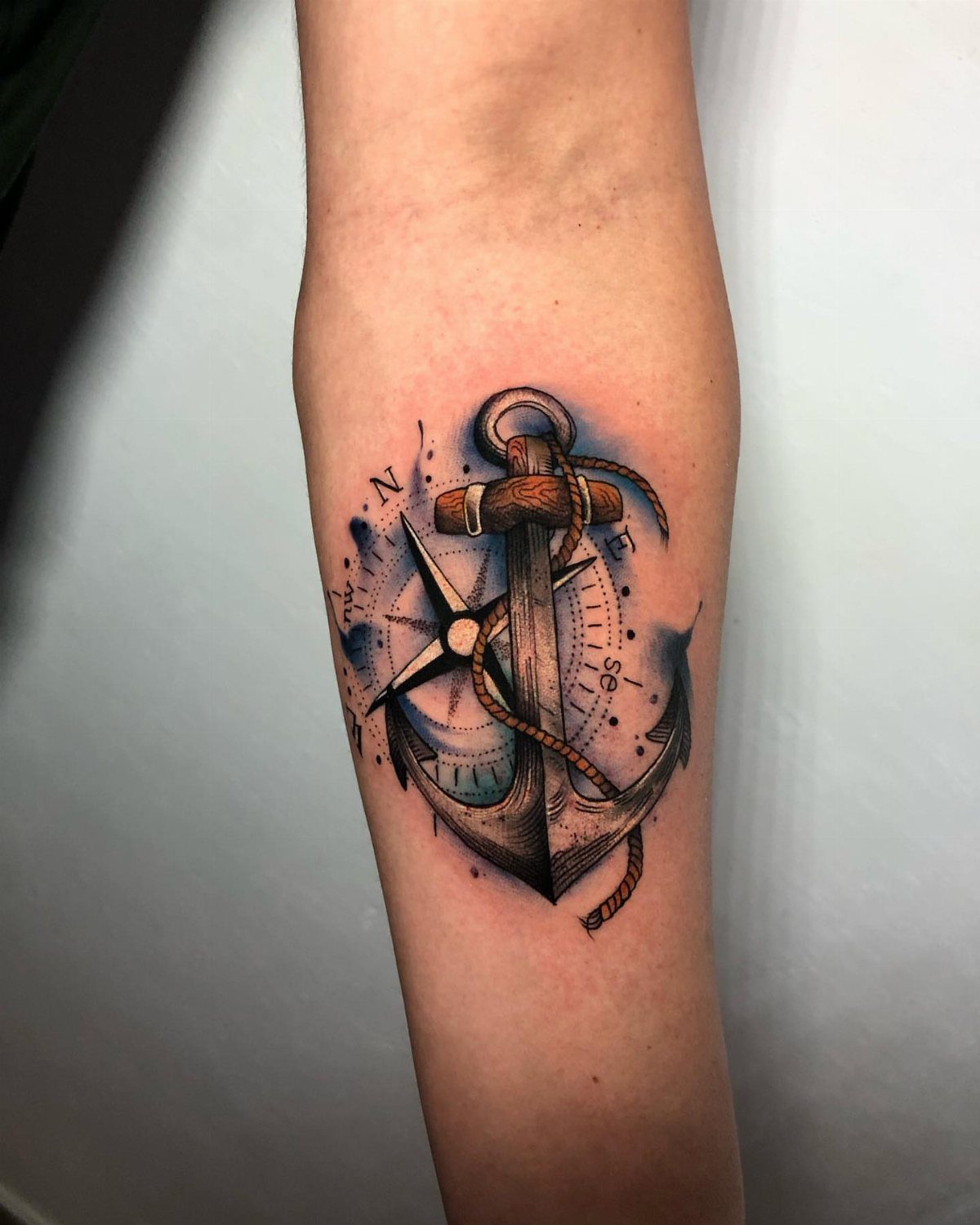
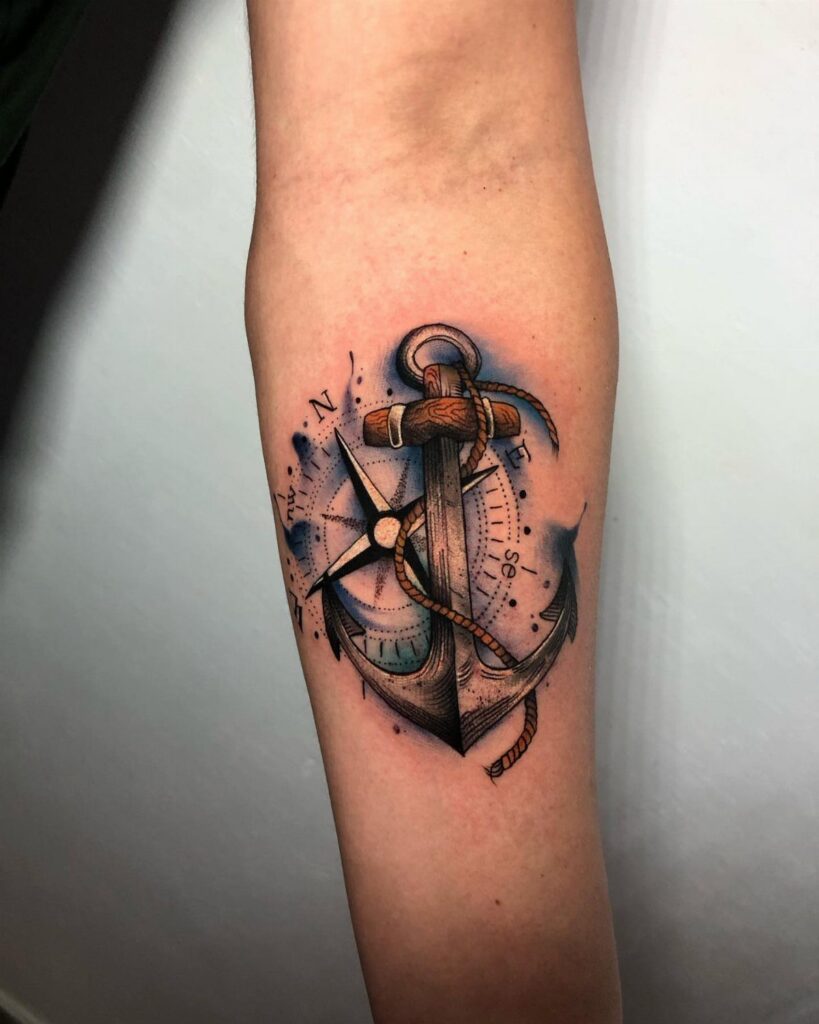
An anchor with rope coiled around the shank says you stay grounded when things move, and the compass rose behind it adds direction to that stability.
Men pick this when they want a reminder that holding steady and knowing where you’re going aren’t opposites.
The rope gives the design texture and fills space around the anchor itself. I’d keep the compass faint or line-only so the anchor stays the focus, since 2 bold symbols in the same small area cancel each other out.
Forearm works because the vertical line suits the shape and looks right when your arm hangs naturally.
5. Dragon Tattoo
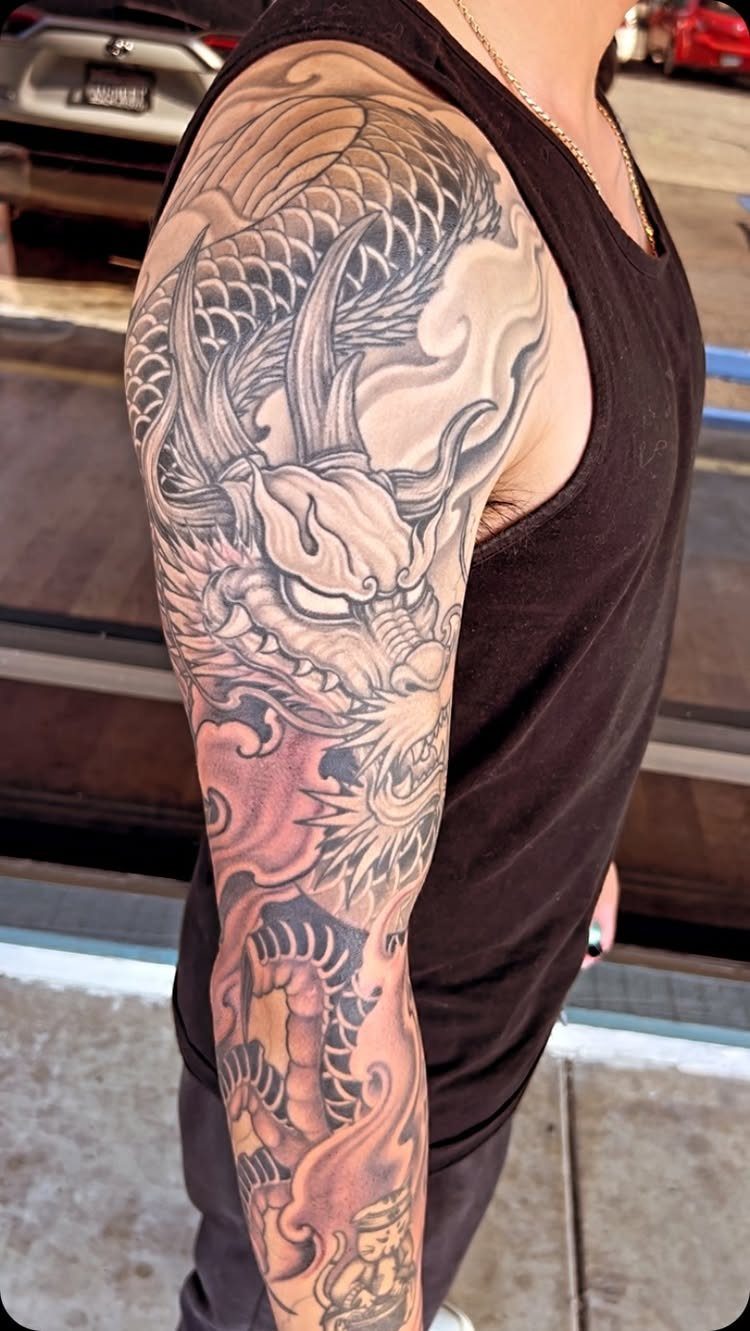
A dragon coiled around the shoulder and upper arm represents power that moves with you, not against you, and men choose it to mark ambition that’s already proven itself.
The black and grey shading here keeps the scales sharp and the body readable as it wraps muscle.
Shoulder placement lets the design follow the natural curve of your arm, and the tail or head can extend down toward the bicep or up onto the chest for more coverage later.
I’d avoid overworking the background since the dragon itself carries enough detail to hold attention.
Time in the chair depends on how far the design travels. The shoulder tolerates ink well but the inner arm closer to the armpit stings more.
6. Snake Tattoo
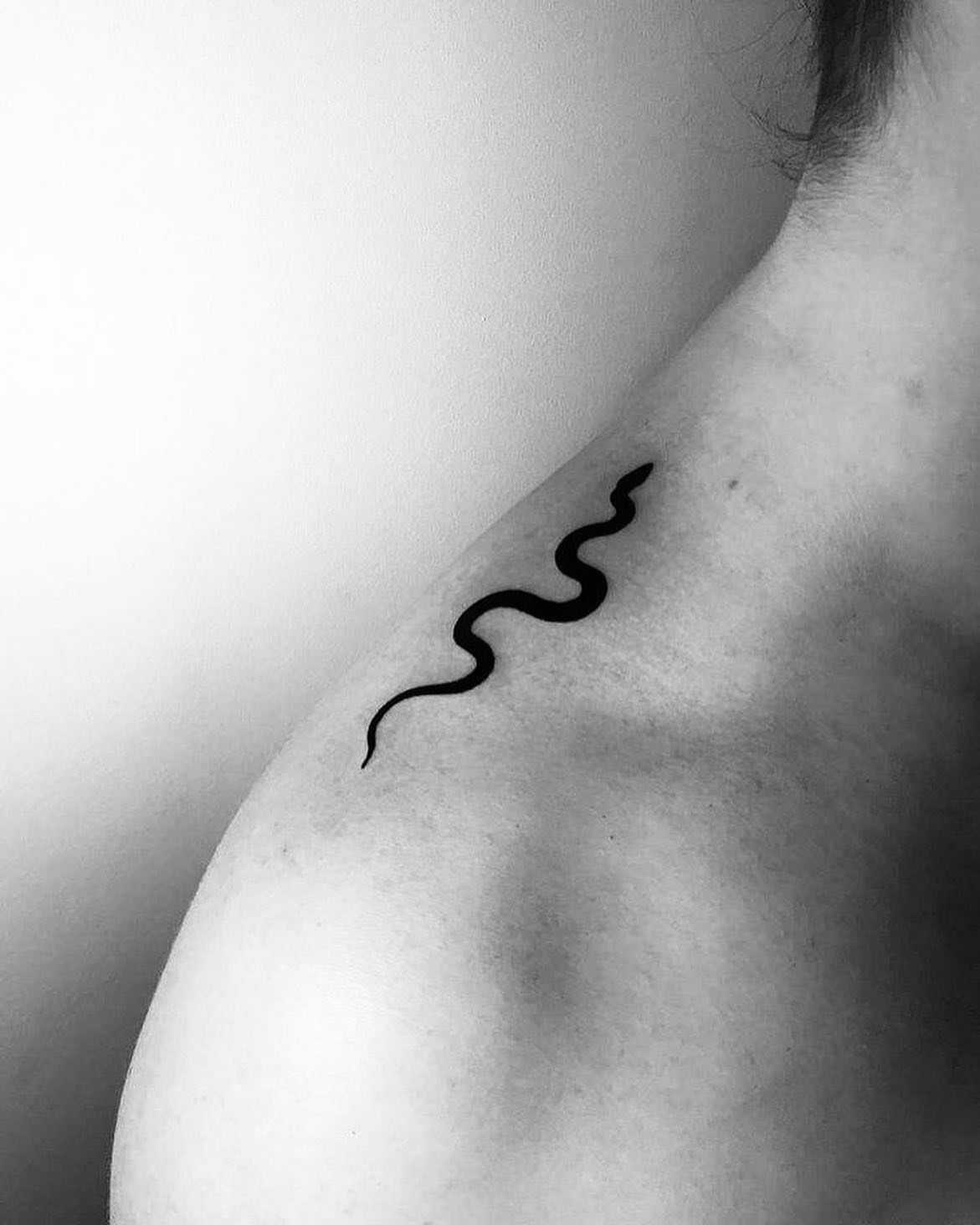
A snake moving across the shoulder blade and upper back marks transformation, the animal that sheds its skin and keeps going.
Minimalist line work like this one reads clean and ages without blur, since there’s no shading to soften or color to fade.
The curve of the snake should follow the natural line of your shoulder and spine, not fight it.
A stiff or overly symmetrical shape looks stamped on rather than part of the body. I’d place this where the snake’s movement matches how your shoulder actually moves when you lift your arm.
Small and simple means one session, and healing is faster than a shaded piece.
7. Semicolon Tattoo
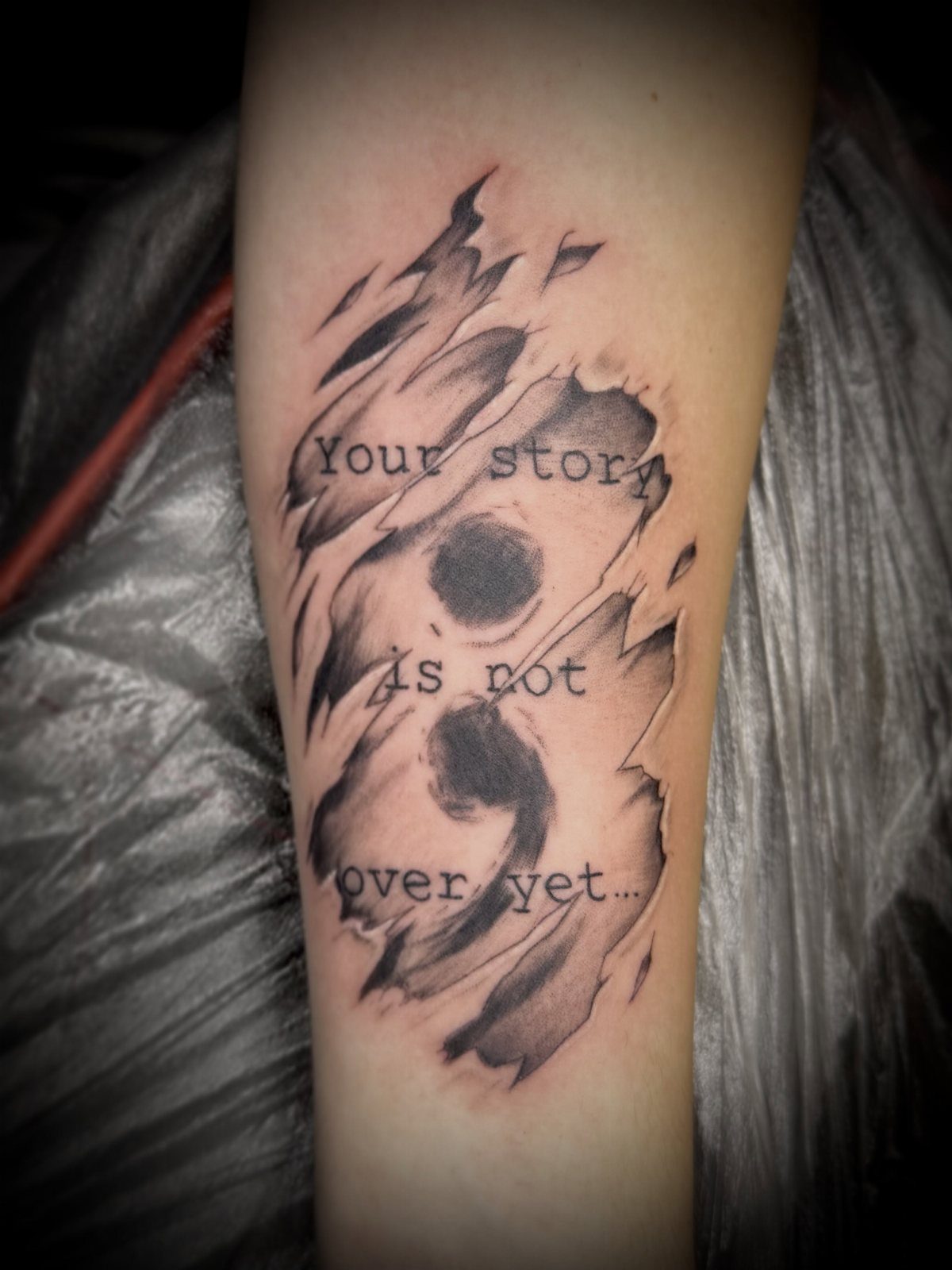
A semicolon says the sentence could have ended but didn’t, and men get this after surviving something that nearly stopped them. The ripped-paper effect around it makes the punctuation look like it tore through to stay visible.
Adding text like "Your story is not over yet" makes the meaning explicit if you want that, though the semicolon alone carries the message. Forearm placement keeps it where you see it daily, which is often the point.
Small, simple, one session. This one heals fast.
8. Eagle Tattoo
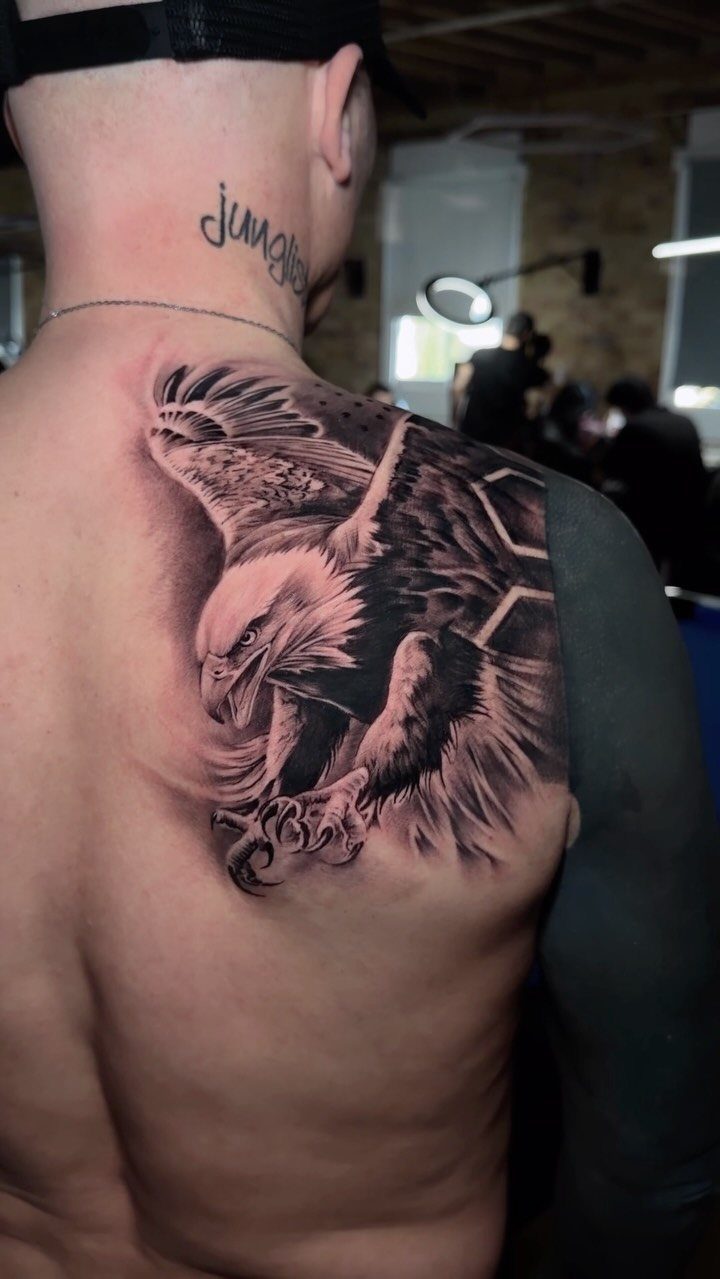
An eagle with wings spread across the upper back and shoulder represents freedom and the ability to see what’s coming before it arrives. Men pick this for strength that doesn’t need to announce itself.
Black and grey shading keeps the feathers sharp and the shape readable as it moves with your shoulder.
The back gives the wingspan room to sit naturally, and the design can extend onto the shoulder or down the spine if you want more coverage later.
Upper back tolerates the needle well. Expect multiple sessions for a piece this size.
9. Compass Tattoo
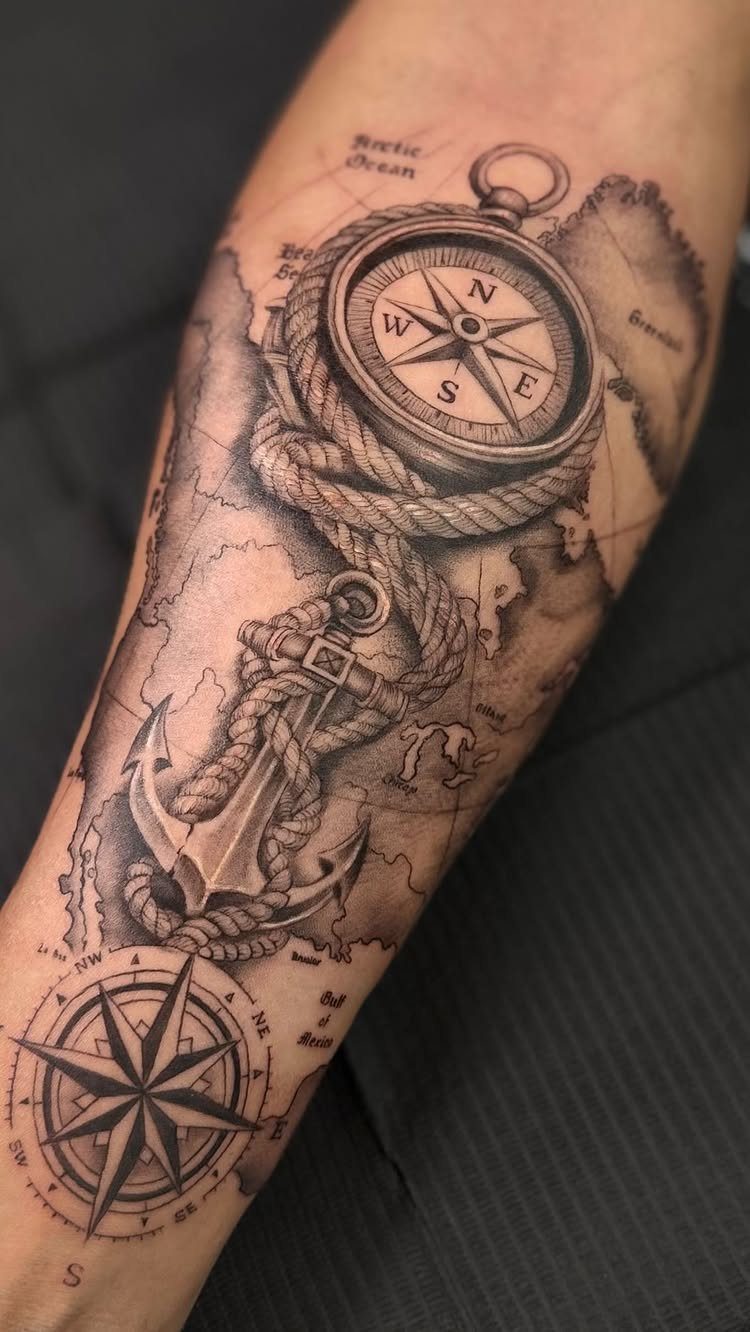
A compass with an anchor and map background says you know where you’re headed and what keeps you steady along the way. The rope detail fills space and ties the elements together without competing for attention.
Forearm works because the design reads clearly when your arm hangs straight and you can see it without a mirror. Black and grey ages cleanly, and keeping the map detail subtle lets the compass and anchor stay the focus.
This much detail takes a few hours in one sitting.
10. Bear Tattoo
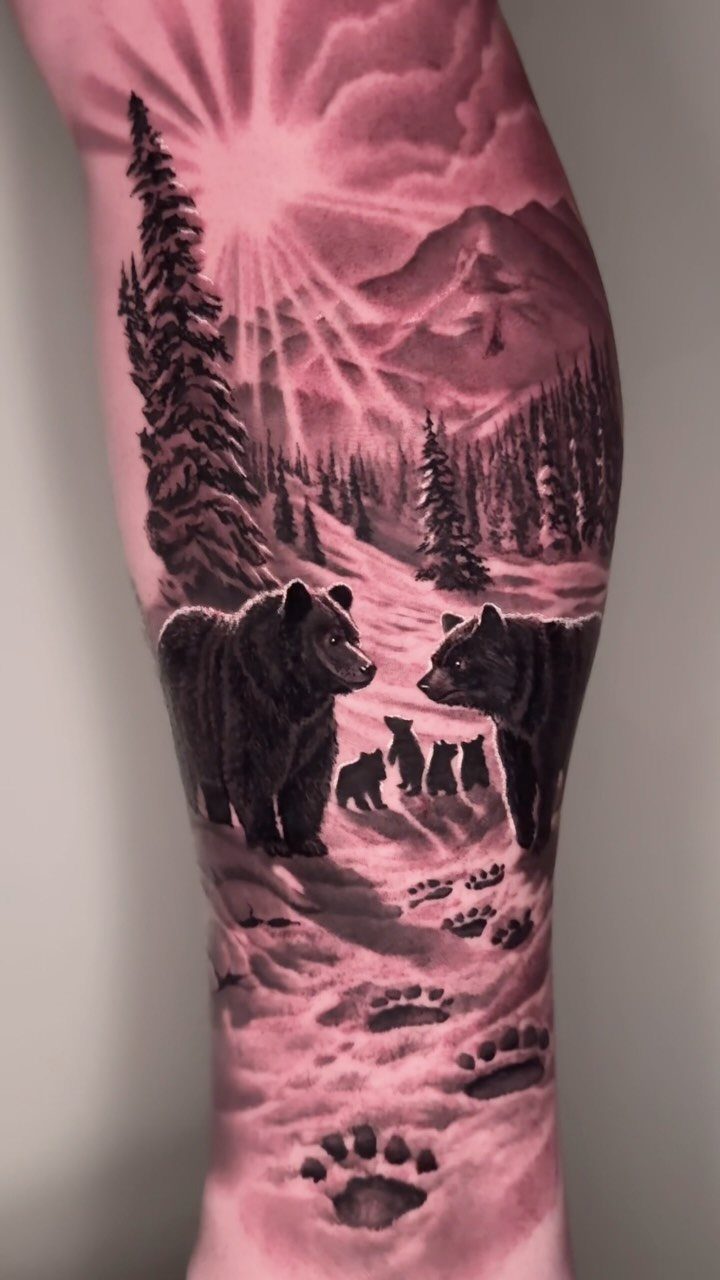
A bear family in a forest landscape marks protection and the instinct to defend what matters.
This one was done for a client who wanted his wife and four kids represented, and the snowy scene gives it a quiet weight that suits that meaning.
Realism needs space to breathe, so the leg or outer thigh works better than a narrow forearm.
Black and grey shading in the fur and trees keeps the detail from blurring as it heals, and the sun in the background lifts the composition without pulling focus.
Multiple sessions for a piece this detailed.
11. Tree of Life
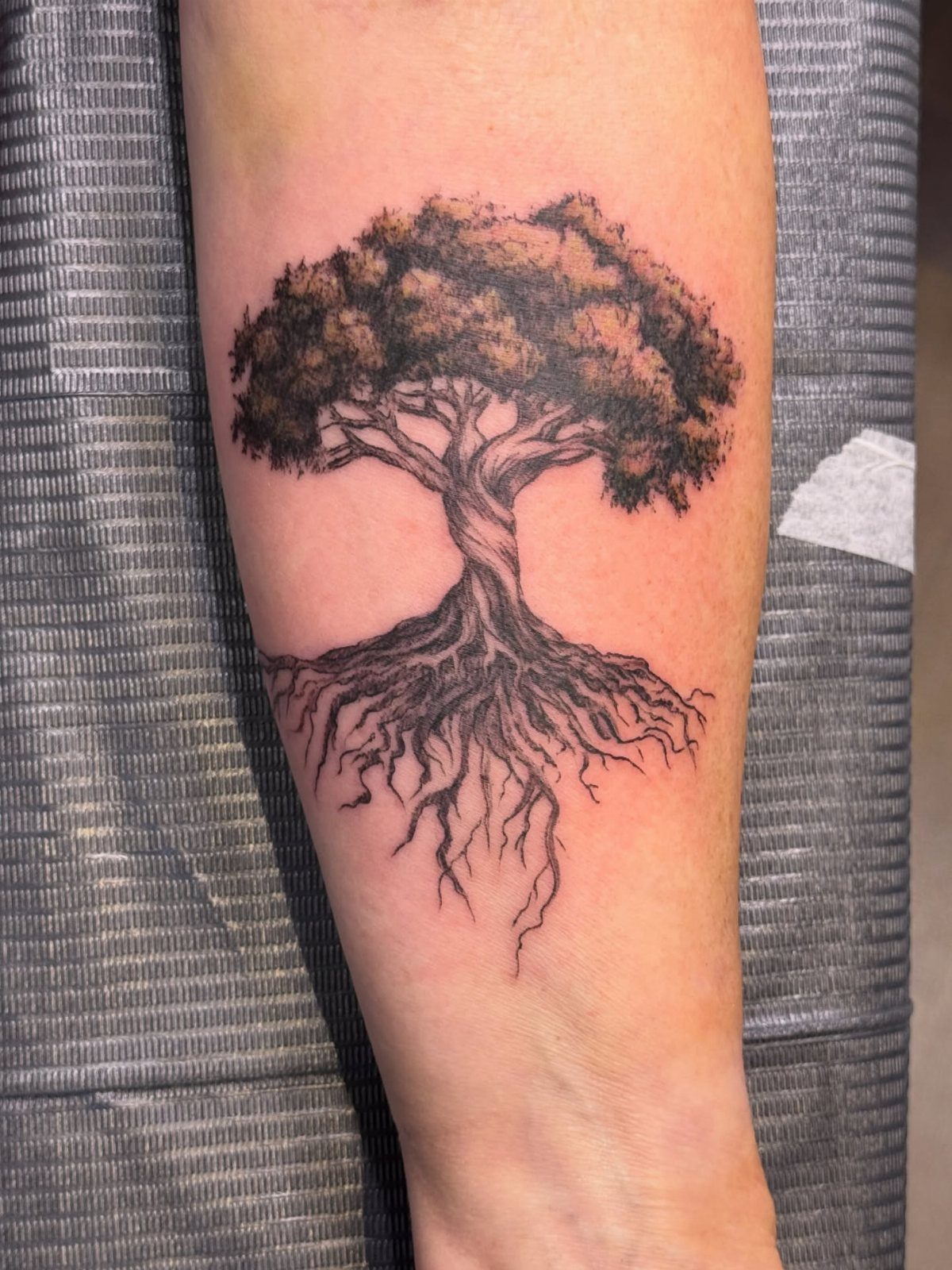
A tree with roots visible below and branches spreading above represents growth that comes from what you’ve already survived.
The symmetry between roots and canopy makes it read as balance, and men pick this to mark resilience that built over time.
Forearm placement keeps the design vertical, which suits the tree’s natural shape. Black and grey line work without heavy shading ages cleanly and doesn’t lose detail as it settles.
One session for a piece this size, and healing is straightforward.
12. Vegvisir Tattoo
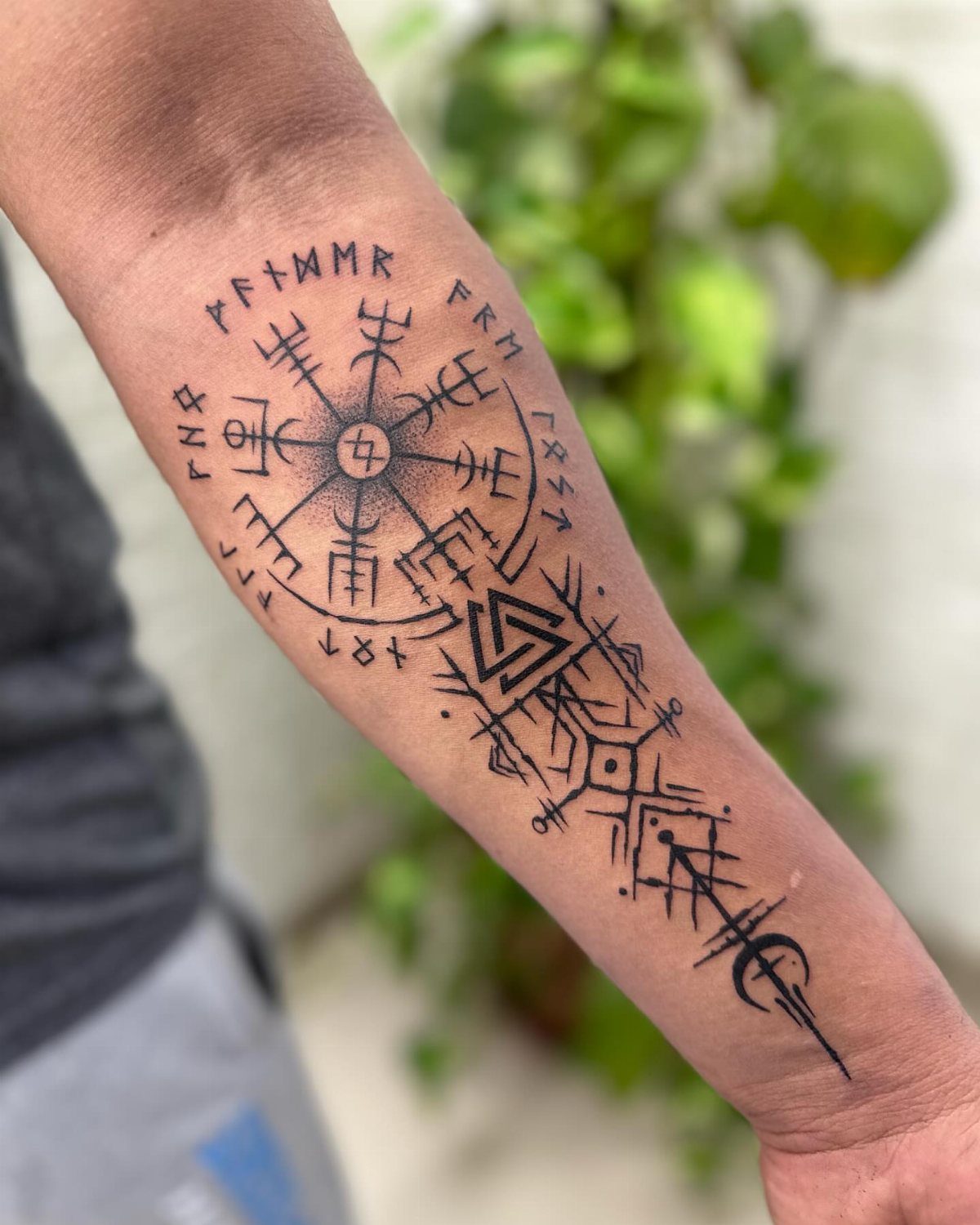
A Vegvisir surrounded by runes is a Norse wayfinder, the symbol that’s supposed to keep you from losing your path even when the weather turns. Men choose this when direction matters more than destination.
The runes and geometric patterns around the compass fill the forearm without crowding the center symbol, and black ink stays sharp longer than grey shading on a design this detailed. Forearm placement keeps it visible and suits the circular shape.
One session. This one heals fast since there’s no color.
13. Quote Tattoo
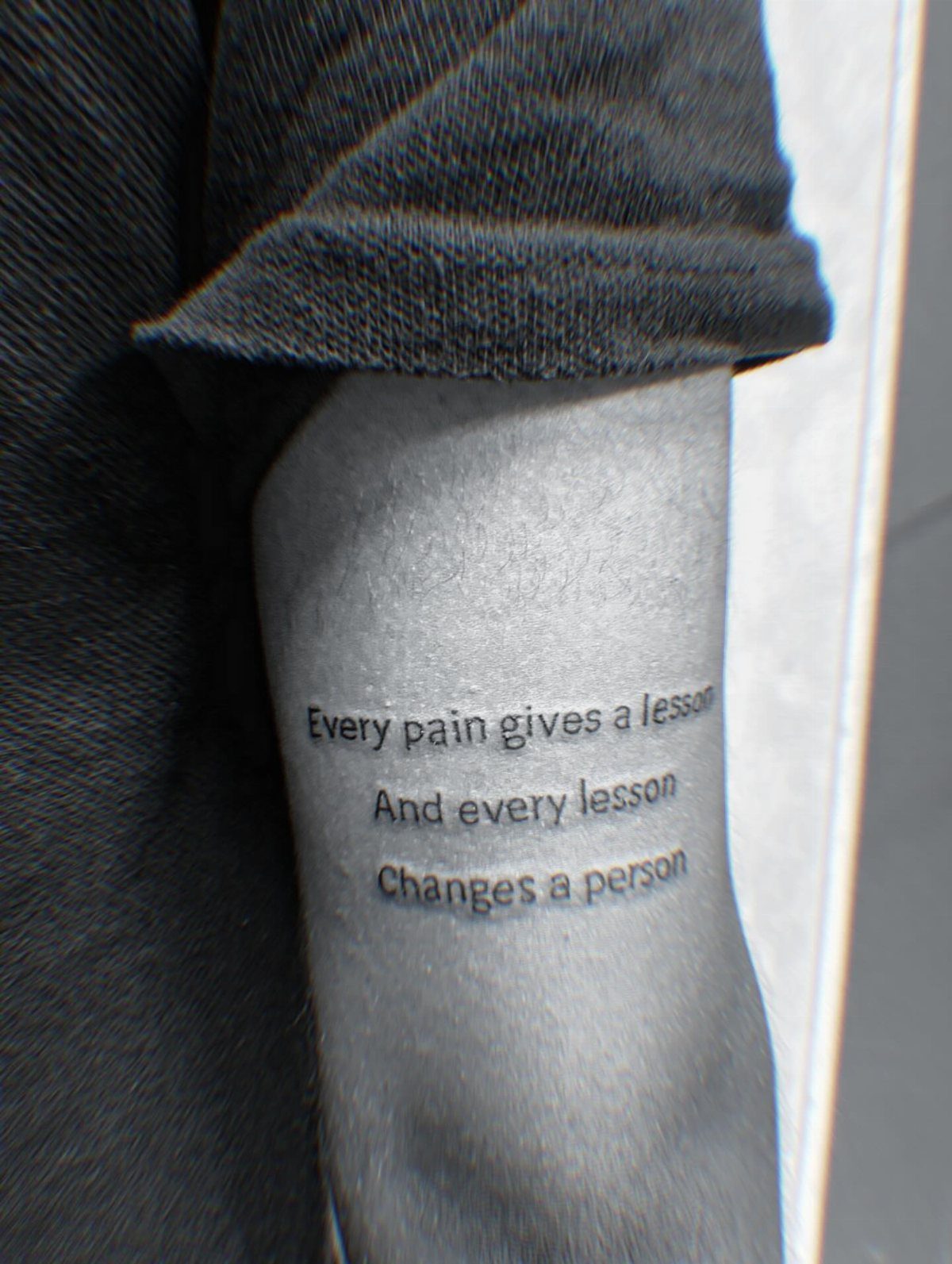
A quote that survived something with you works as a tattoo when the words already run through your head on the hard days.
This one turns pain into instruction, and the line breaks keep each thought separate enough to read clearly on the curve of your arm.
Script needs to be large enough to stay legible as it heals. Thin letters blur faster than bold ones, so ask your artist to keep the stroke weight consistent across all 3 lines.
Upper arm placement gives you the length for a multi-line quote without crowding the words together.
14. Hourglass Tattoo
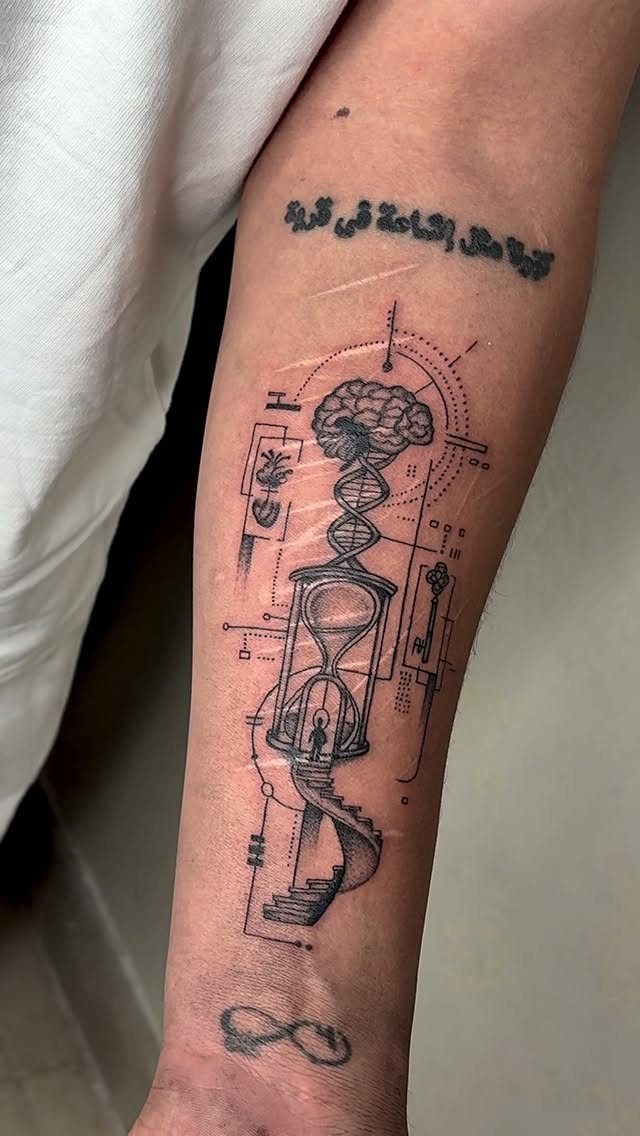
An hourglass paired with a brain and DNA strand says your time is finite and what you do with your mind and biology while the sand runs matters.
The Arabic text and infinity symbol add personal meaning if those details connect to your story.
The hourglass reads clearly in the center, and the surrounding elements fill the space without competing for the same weight.
Too many small details in one area can blur together as the ink settles, so make sure each element has enough breathing room.
15. Skull Tattoo
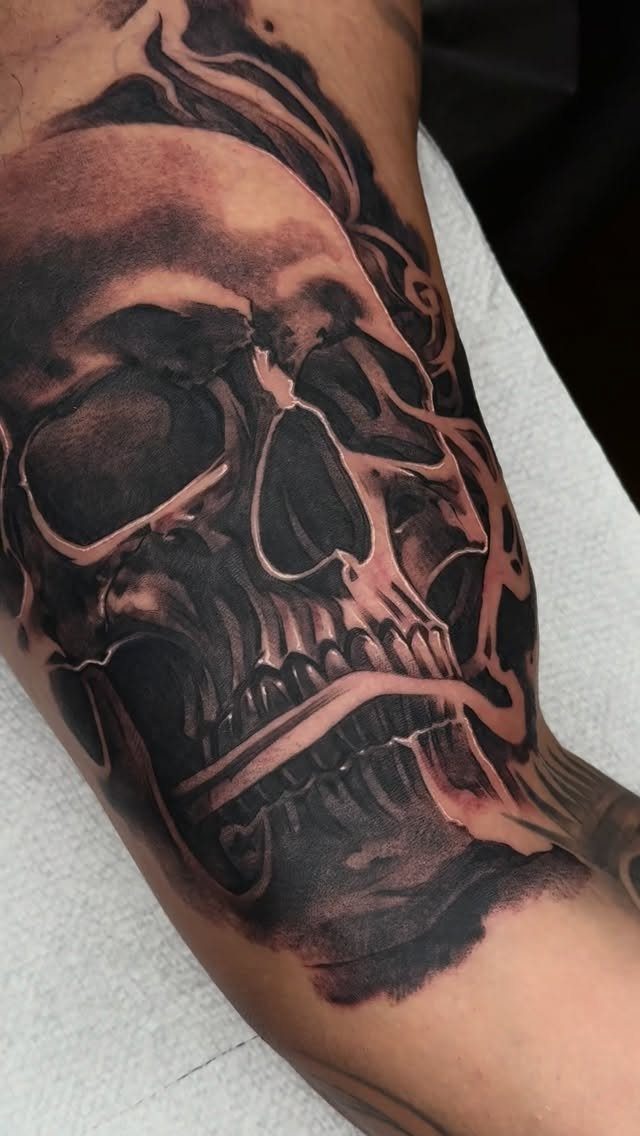
A skull facing forward accepts that nothing lasts, and realism in black and grey gives it the detail to hold attention without relying on color. Men choose this to mark perspective that came from sitting close to an ending.
The shading in the eye sockets and cheekbones keeps the shape from flattening as it heals.
The forearm tolerates ink well.
16. Demon Tattoo
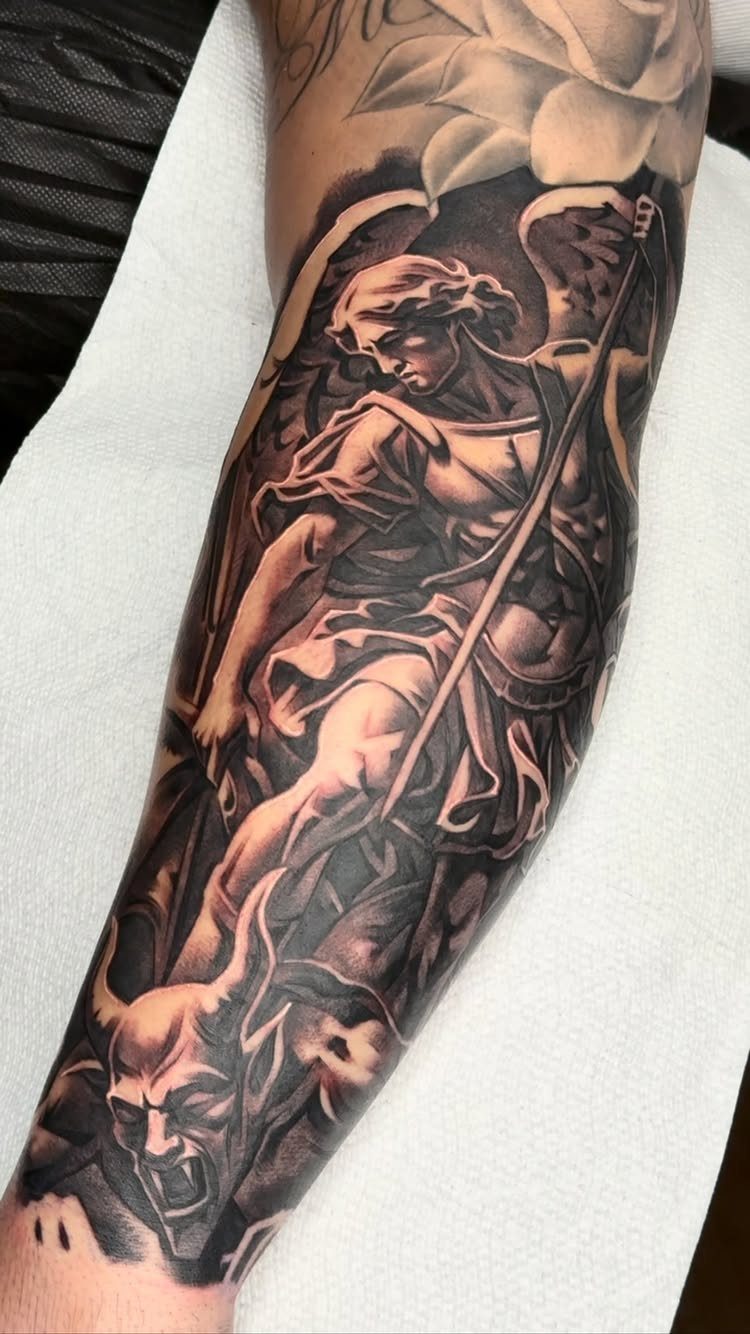
An angel defeating a demon says the better part won, and the sword in mid-swing gives the design movement instead of leaving it static. Men get this after a choice that could have gone the other way.
Shading in grey tones stops the 2 figures from running together. A vertical split like this uses the full length of the forearm without cramping either half.
The inner forearm stings more than the outer, but the design reads better there because it stays visible when your arm hangs naturally.
17. Spider Web Tattoo
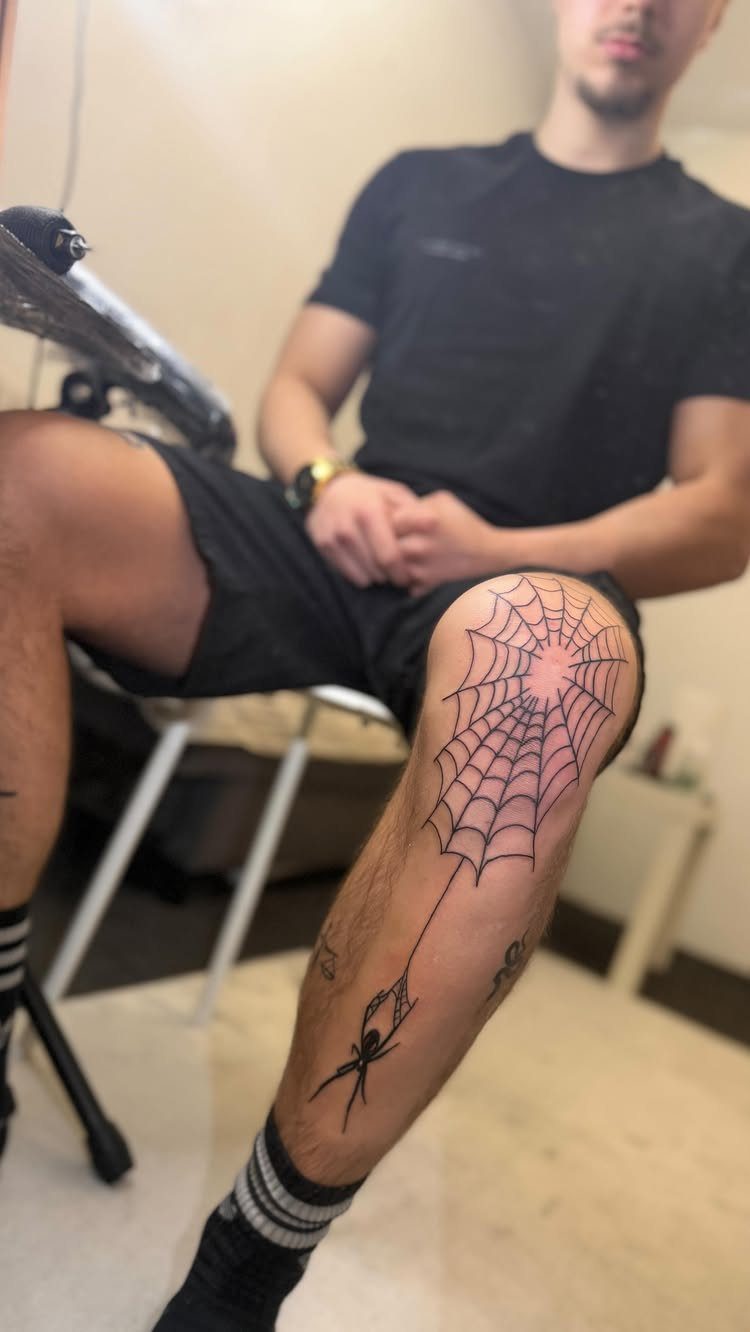
A spider web across the knee and shin represents the traps you build or the ones you’ve walked through, and the spider sitting in the web adds the presence that made it.
Knee placement follows the body’s natural lines when your leg bends.
The web’s radial pattern sits naturally over the knee’s round shape. Black ink without shading stays sharp on a design this geometric, and the knee itself tolerates the needle better than the shin below it.
Healing takes longer on a joint since the skin flexes constantly.
18. Japanese Mask Tattoo
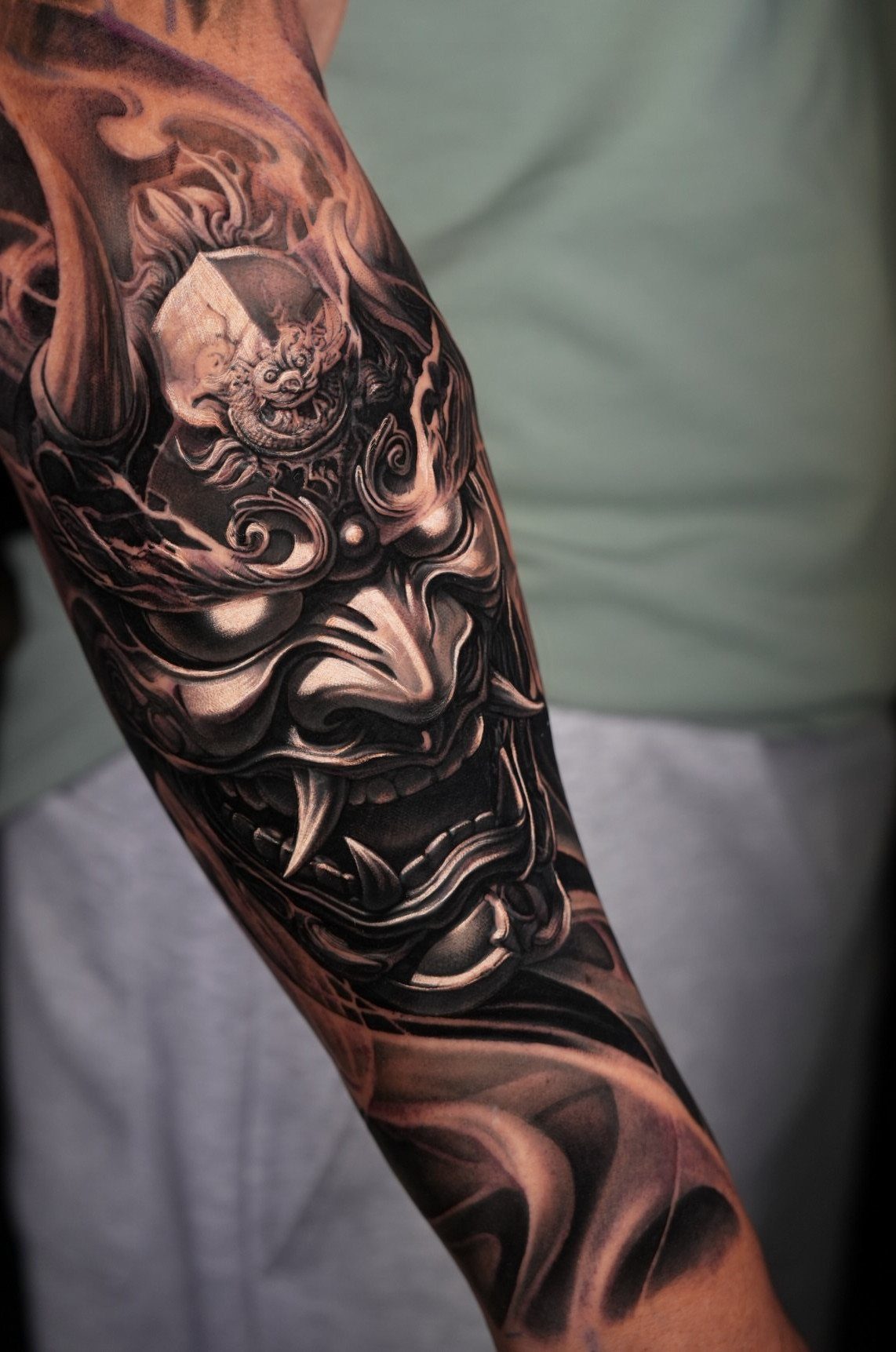
A Hannya mask represents jealousy that turned into something else, and the furrowed brow and horns make it read as rage that couldn’t stay hidden. Men choose this to mark emotion that changed them, not emotion they’re still carrying.
Black and grey shading in the face and horns keeps the expression clear as the tattoo heals. Forearm works because the mask is vertically oriented and the detail stays readable without needing a large canvas.
Japanese masks carry specific meanings, so know what yours says before you commit to it.
19. Roman Numerals Tattoo
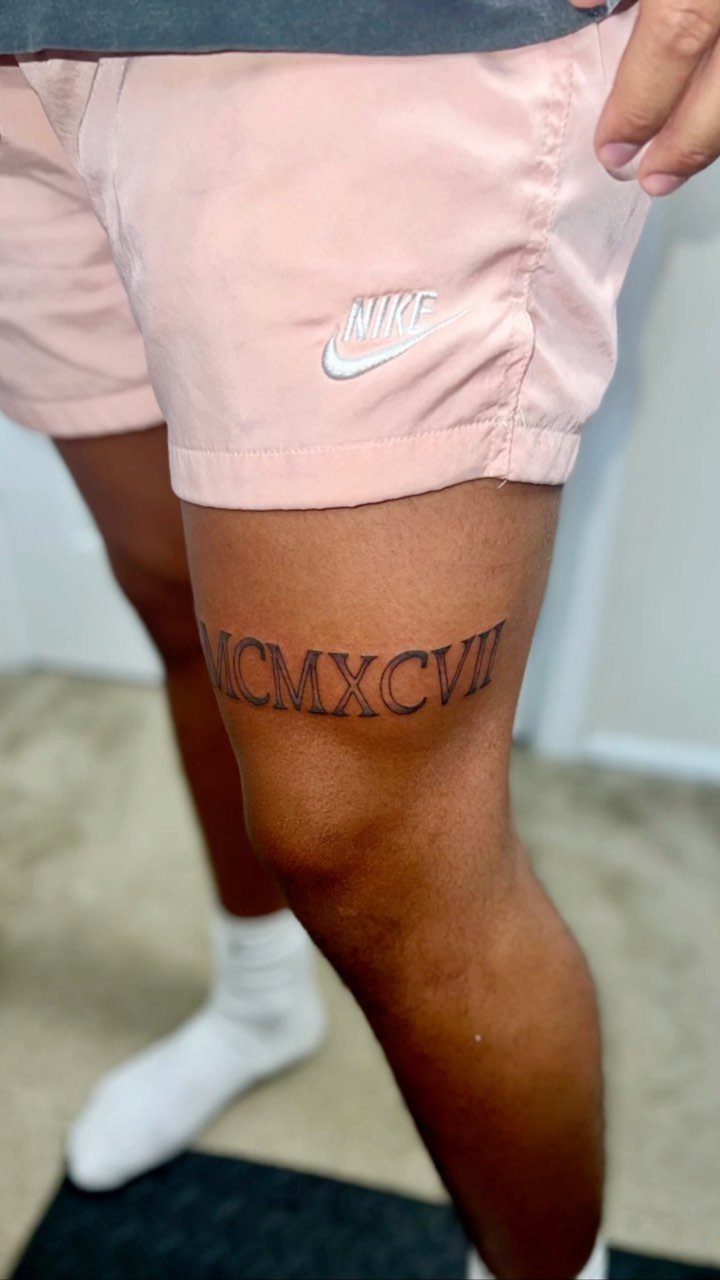
Roman numerals lock in a date that changed you without putting the explanation on your skin. Birth year, the day someone arrived or left, the year you walked away from something, whatever it was.
Thigh placement like this one keeps the tattoo private until you choose otherwise, and the size here makes the numerals readable without taking up more space than they need. Black ink on simple letters ages without blur.
I’d avoid tiny script. Numerals need weight to stay sharp after a decade.
20. Soundwave Tattoo
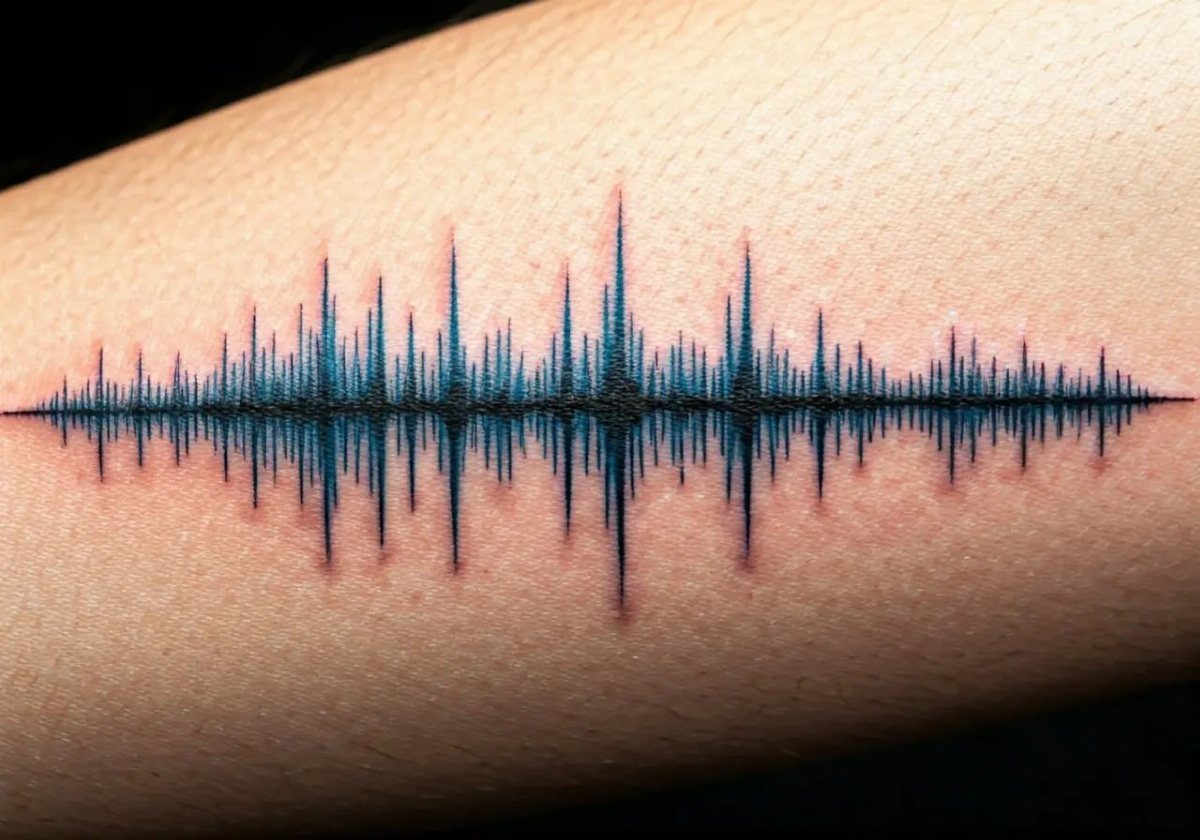
A soundwave pulled from an audio file turns a voice into a shape you can wear. Men get this for a parent’s last words, a child’s first laugh, or a phrase that kept them upright when nothing else did.
The blue and black here add contrast without needing shading, and forearm placement keeps it visible. The tattoo reads as abstract unless someone asks, which suits people who want the meaning close but not broadcast.
Bring a clean audio file to your artist. Distorted sound makes a messy waveform.
21. Tribal Chest and Arm Tattoo
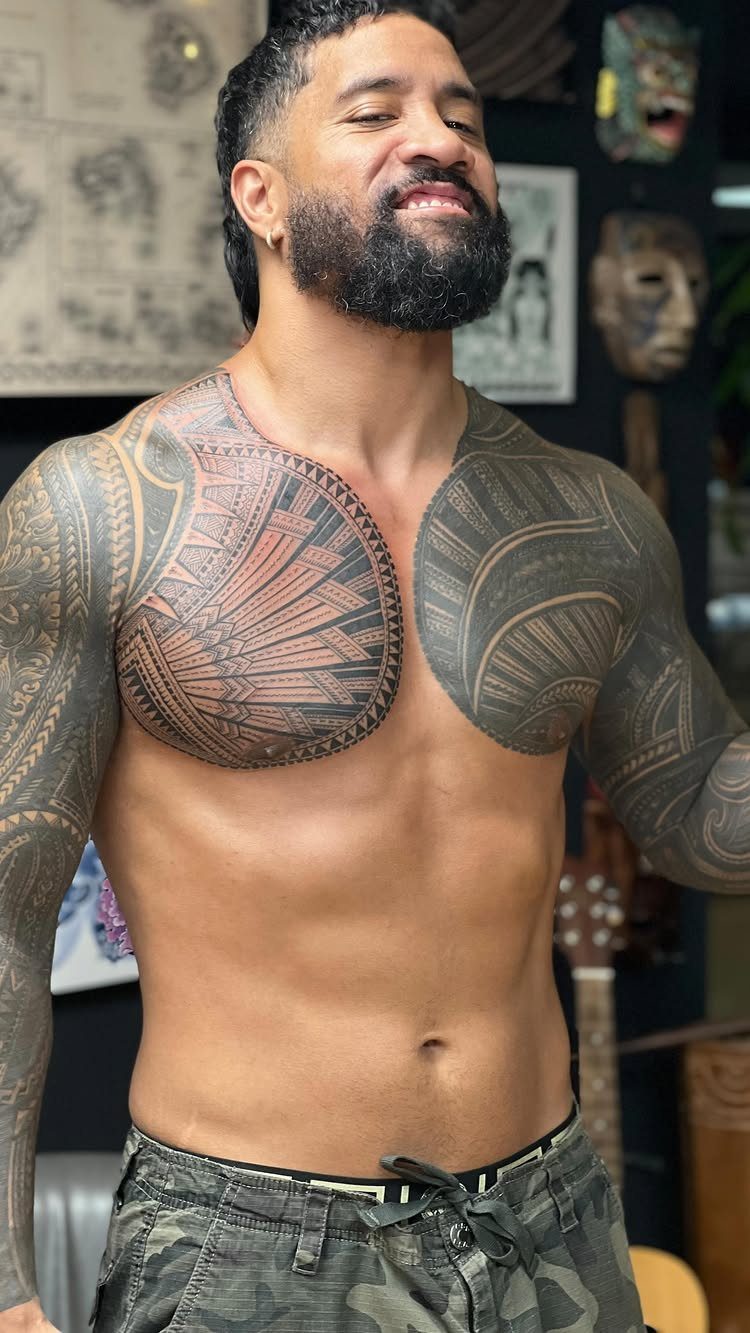
Tribal patterns that spread from chest to shoulder and down the arm mark strength built in the body, not just carried in the mind.
The bold black shapes follow muscle and fill space without shading, which keeps the design sharp as it settles.
This much coverage takes multiple sessions, and chest ink stings more than the arm. The design can expand later if you want more, since tribal work doesn’t rely on a single finished image.
I’d go to an artist who specializes in tribal. Bad tribal looks stamped on instead of fitted to you.
22. Hindu Spiritual Tattoo
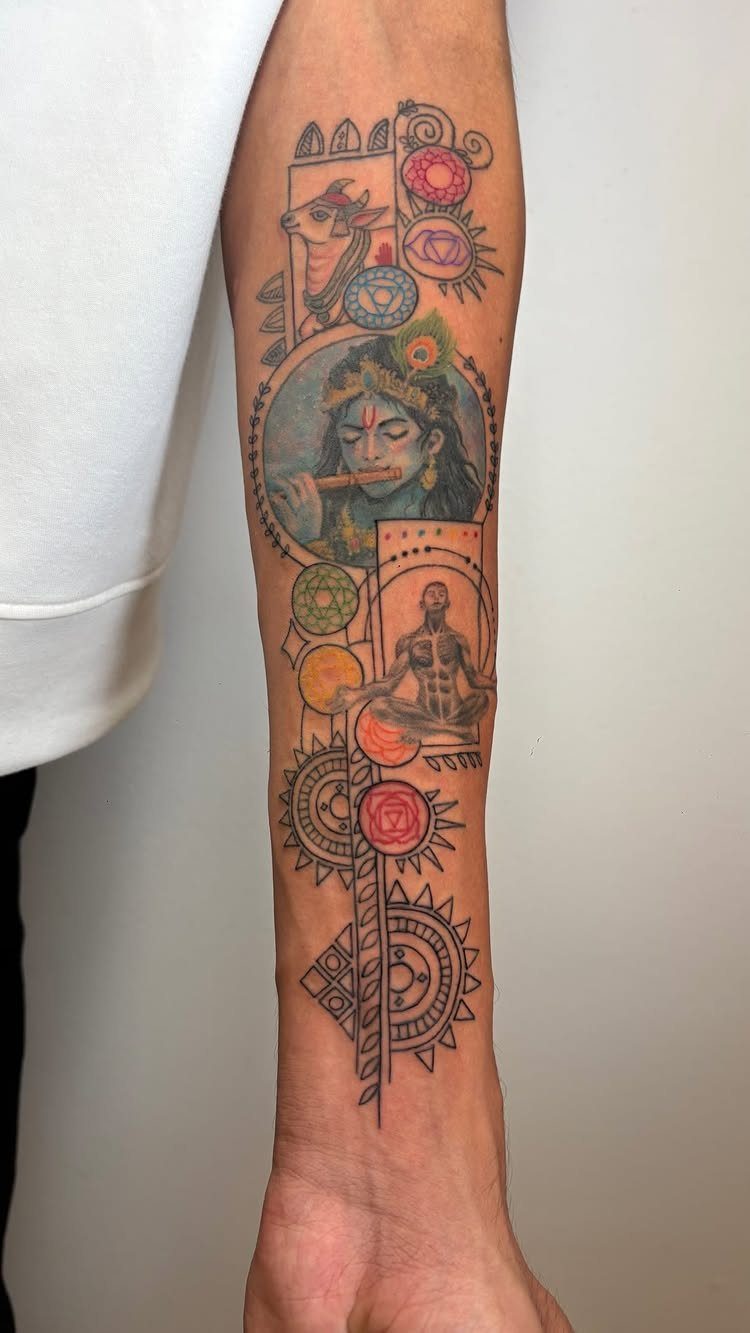
Lord Krishna playing the flute next to a meditating figure and mandalas says you’re marking a spiritual path, not just borrowing a look.
The seven chakras here represent the stages from survival instinct up to pure awareness, and the color makes each one distinct.
Forearm gives you the vertical space for stacked elements without cramping them together. The detail in the figures and patterns needs an artist who can handle realism and geometric work in the same piece.
Multiple sessions for color this saturated.
23. Samurai and Bonsai Tattoo
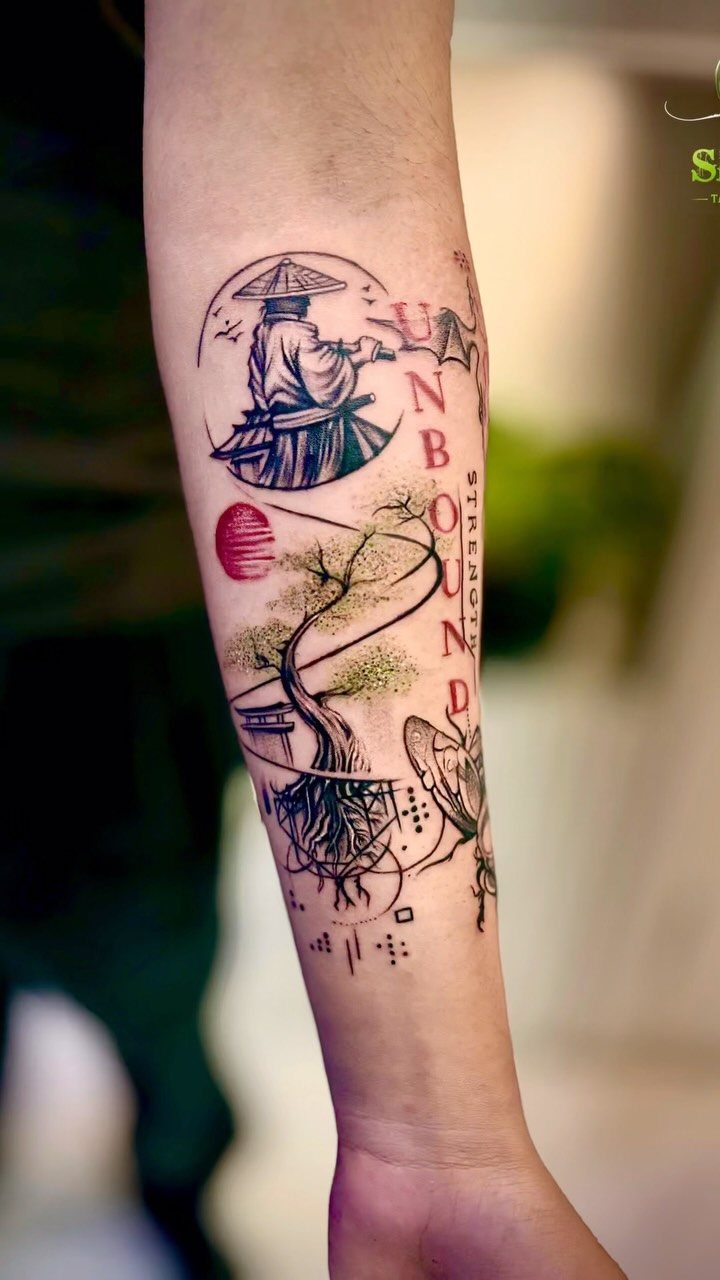
A seated figure in a conical hat paired with a bonsai and the red sun behind him says discipline that grew slowly, and the word "unbound" under it flips the meaning toward freedom earned through that same discipline.
The vertical layout uses the forearm’s natural shape, and black ink with one spot of red keeps the design readable without relying on full color. The tree branches out to fill the background, keeping the samurai front and center.
One or two sessions depending on detail level.
24. Glitch Word Tattoo
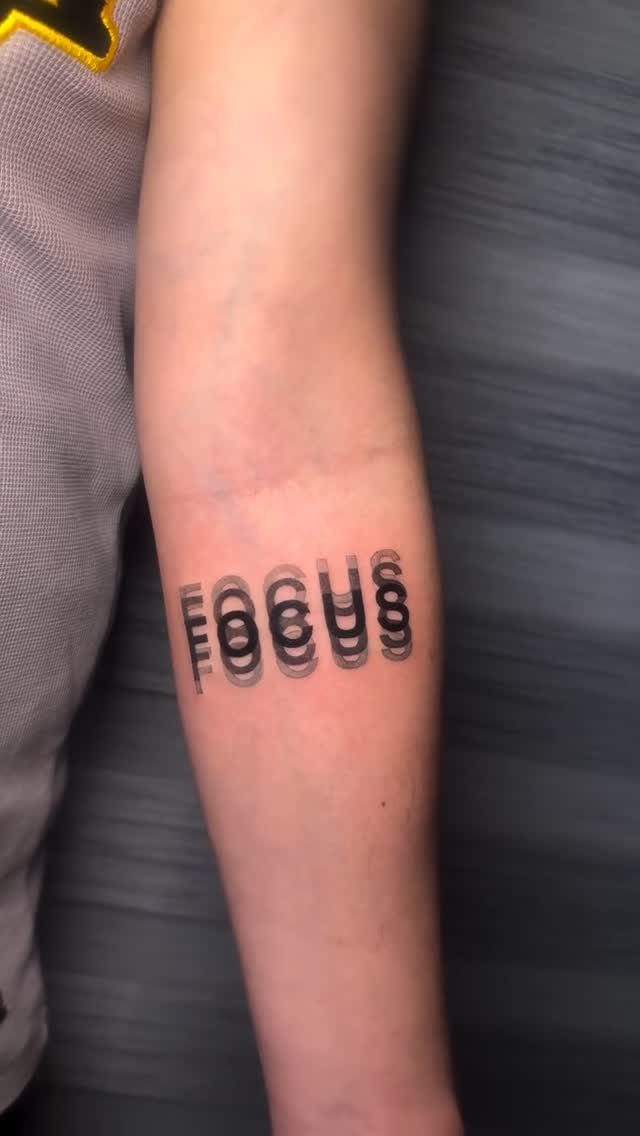
The word "focus" rendered in a glitch effect looks like a screen tearing apart and recomposing, which fits if staying on task feels like fighting distortion.
The broken lines and offset layers make the word harder to read from a distance, so this works better as a reminder for yourself than a message for someone else.
Wear it on the forearm and the reminder stays visible all day. Black ink without shading stays crisp, and the glitch style hides small imperfections better than clean lettering would.
One session.
25. Religious Portrait Sleeve Tattoo
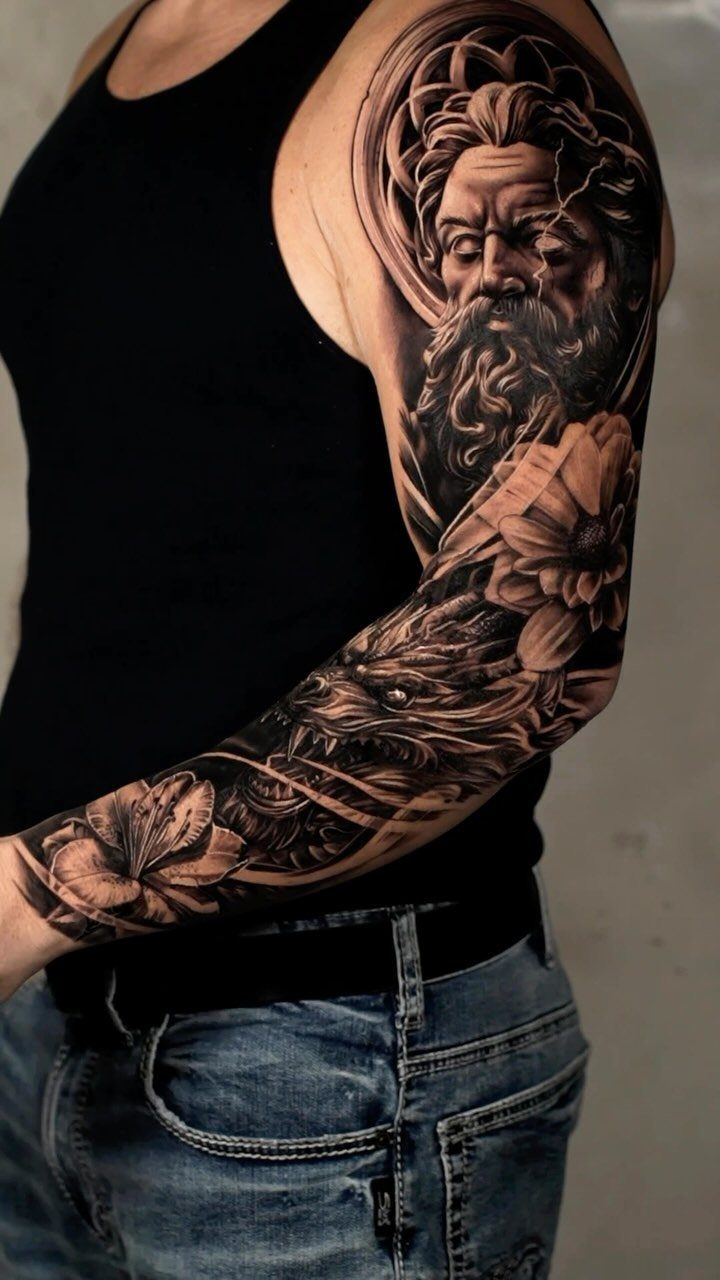
A portrait of a religious figure in black and grey with a halo and floral shading around it marks faith that survived testing.
The haloed face sits at the center, and the flowers and dragon fill the rest of the sleeve without competing for the same weight.
Full sleeve coverage takes multiple sessions, and the arm swells more after longer sits. Black and grey realism needs an artist who can handle portraiture, since a face that’s slightly off reads wrong immediately.
Outer arm heals faster than inner, but the design wraps both to fill the sleeve.
26. Acrostic Word Tattoo
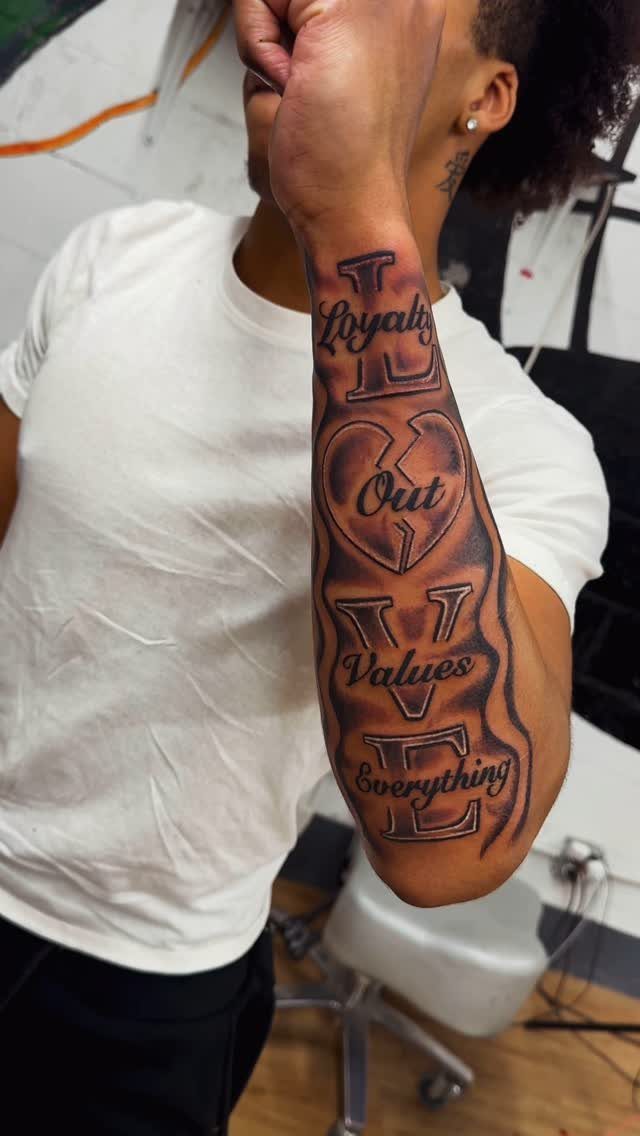
An acrostic spells one word vertically and hides the full sentence in the letters that start each line.
This one turns "LOVE" into "Loyalty Out Values Everything," and the cracked heart below it says what happens when one of those four breaks.
Forearm gives you the vertical space without crowding the letters, and bold black script stays readable as it heals. The heart keeps the design from feeling like pure text.
One session. Lettering this size heals faster than fine line script.
Choosing a Meaningful Tattoo
Pick something that already follows you around. The designs that hold up are the ones tied to a decision you made, a person who shaped how you see things, or a value that showed up when you needed it.
A symbol you borrowed because it looked good fades faster than one that connects to something you already carry.
Trends date themselves. A design that feels universal now may look dated later, and fixing that runs more than the first session.
If you’re drawn to a popular image, ask whether it says something about you or just about the year you got it.
Test the idea by living with it for a while.
Print it, hang it where you’ll see it daily, and check whether it still feels right after a month. If it doesn’t, you saved yourself a permanent decision.
Tattoo Placement Considerations
Pain tolerance changes by placement. Ribs, inner bicep, spine and anywhere close to bone hurt more than outer arm, thigh or shoulder.
If this is your first tattoo, starting on a less sensitive area lets you figure out how you handle the needle before committing to a painful spot.
Visibility affects job prospects in some fields.
Forearm, neck and hand tattoos are harder to cover, and not every workplace has caught up. If your industry still cares about ink, save exposed areas for later or pick placements you can hide with a long-sleeve shirt.
Large designs need flat, stable skin. Chest and back give you the canvas for detailed work, while narrow areas like wrist or ankle limit what your artist can fit without cramping the composition.
Tattoo Styles and Techniques
A bold outline holds its shape through decades of sun exposure and skin changes, while intricate patterns soften as the ink spreads slightly under the skin.
Reds and yellows fade faster than blues and blacks, and touch-ups on color work cost more because matching the original shade gets harder as the tattoo settles.
Portraits, wildlife and anatomical detail require shading skill that not every tattooist has, and a bad realism piece is harder to fix than a simpler design.
Check your artist’s portfolio for work that matches the style you want before you book.